Home Blog Page 708

Words of Solidarity and Leadership Stir the Women’s March

So, there was this march the other day. Nothing major. Just held in 18 cities across the globe. No big deal. Just millions of focused, determined and fed-up women and the people who love them, all showing up in solidarity acres deep. The marchers were inspired by the caliber of women – both on stage and a shoulder away – who showed up to support. Organizers were galvanized by the numbers of women present and the fortitude of their spirit.

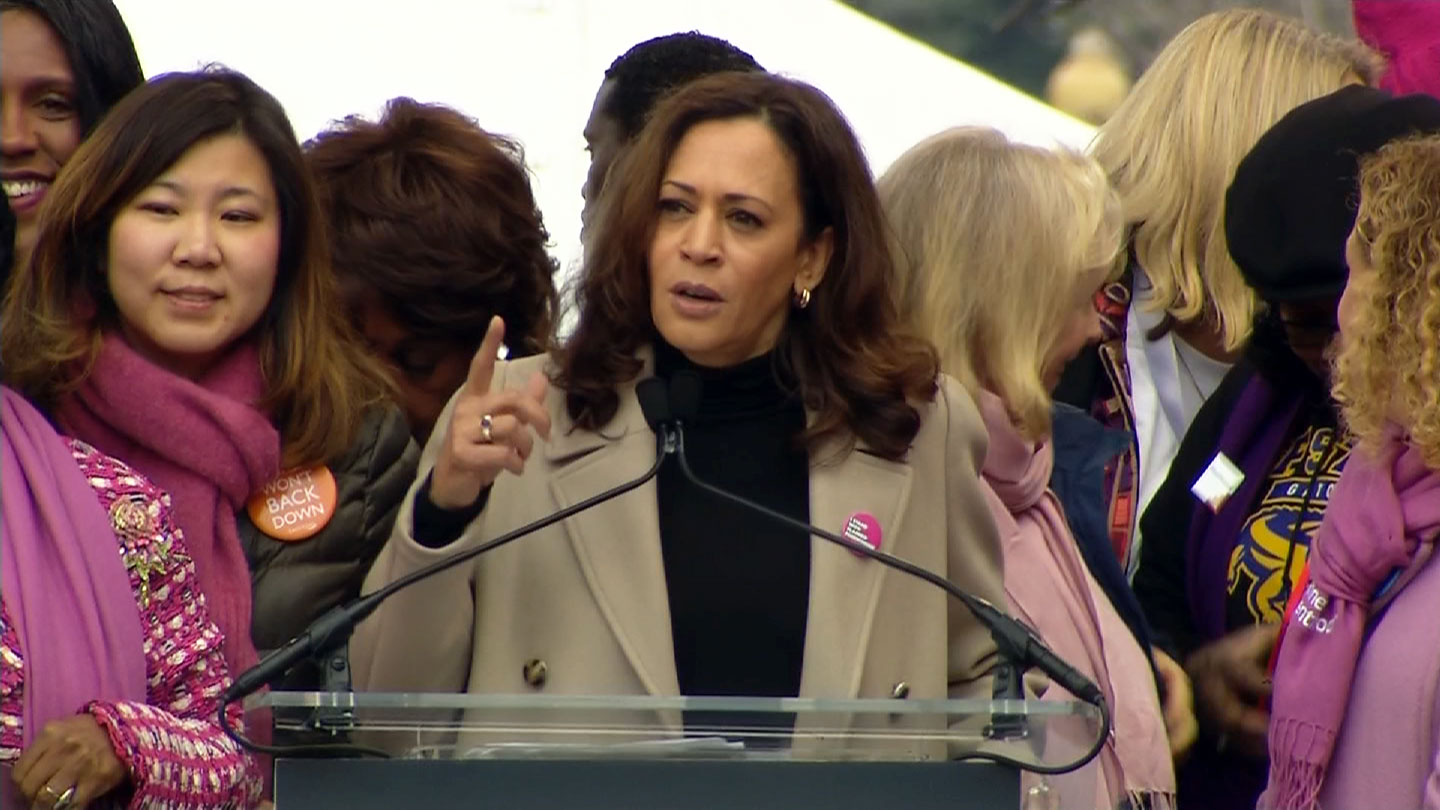
Yes, Tarana Burke’s #MeToo movement certainly supplied the magnetism and the electricity that made this year’s anti-Trump action irresistible to those now seeing how urgent the need for change is. No longer can women and girls be harassed and victimized with impunity, for sure. But many women are mothers, and they worry about their DACA children or their neighbor’s children. People are angry about the lack – still – of equal pay for women, the rolling back of voting rights and panels of men making decisions about women’s bodies. So yes, they came, they stayed, they spoke and they also listened. And wise words from three wise women, Sen. Kamala Harris, Rep. Maxine waters and actor Viola Davis were among the remarkable things they heard.

Sen. Kamala Harris   

“When I look out at this incredible crowd today, I know one thing: Even if you’re not sitting in the White House, even if you are not a member of the United States Congress, even if you don’t run a big corporate Super PAC, you have the power. And we, the people, have the power. There is nothing more powerful than a group of determined sisters marching alongside their partners, and with their determined sons, brothers and fathers, standing up for what we know is right. Here’s the thing: We know that it is right for this nation to prioritize women’s issues.

“Now here’s what I’m talking about in terms of women’s issues: So, when I was first elected District Attorney of San Francisco or Attorney General of California, or United States Senator from the State of California – in each of those positions I was elected as the first woman or the first woman of color. Folks would come up to me and they would say, ‘Kamala, talk to us about women’s issues’. I’d look at them and say, ‘I’m so glad you wanna talk about the economy’! I’d say, ‘Great, let’s talk about the economy because that’s a woman’s issue’! I’d say, ‘You want to talk about woman’s issues’? Let’s talk about national security. ‘You wanna talk about women’s issues, that’s fantastic! Let’s talk about health care, let’s talk about education, let’s talk about criminal justice reform, let’s talk about climate change.’ Because we all know the truths: If you are a woman trying to raise a family, you know that a good-paying job is a woman’s issue.”

Actor Viola Davis

Viola Davis at Women’s March in Los
Angeles, CA 2018

“In the words of my fellow American, Malcolm X, I’m going to make it plain: In 1877, America, the greatest country on this planet, put laws in place called the ‘Jim Crow laws’. And the Jim Crow laws restricted the rights to quadroons, octoroons, and there were Blacks, Hispanics, Indians, Malays… restricted medical, restricted relationships, restricted education, restricted life! It told us that we were less than and it came on the heels of the 13th Amendment. It came on the heels of 55 individuals, great Americans, writing the greatest document called The Constitution of the United States, saying, ‘We the people.’

“Now the reason why those destructive [Jim Crow] laws came into place, I think can be greatly described by Martin Luther King. What he said about time is, ‘I’m not ready to wait 100 or 200 years for things to change. Actually, I think time itself is neutral. It can either be used destructively or constructively. Human progress never rolls in on wheels of inevitability’.

“It is through human dedication and effort that we move forward. And when we don’t, ,what happens is that time actually becomes an ally to the primitive forces of social stagnation and the guardians of the status quo who are in their oxygen tanks keeping the old order alive. So the time needs to be helped by – every single moment, doingright. The reason why these Jim Crow laws are in place [and] have stifled my rights and   is because we fell asleep. We fall asleep when we’re moving ahead and we all look to the left and right and see that we’re not including people in this move ahead. Because reallyAt the end of the day, we only move forward and it doesn’t cost us. anything. But II’m here today saying that no one and nothing can be great unless it costs you something.

“One out of every five women will be sexually assaulted and raped before she reachesreaches the age of 18. One out of six boys. If you’re a woman of color and you wwere raped before you reach the age of 18, then you are 66% more likely to be sexually assaulted again. 70% of girls who are sex-trafficked are girls of color. They are arecoming out of the foster care system; they are coming out of poverty. It is a billion-ddollar industry. When they go into the sex-trafficking business – and they call it a abusiness, trust me. More than likely they are gang-raped. I am speaking today not just justfor the #MeToos, because I was a #Metoo. But when I raise my hand, I am aware of all the women who are still in silence, the women who are faceless. The women who whodon’t have the money, and don’t have the constitution, and who don’t have the theconfidence, and who don’t have the images in our media that give them a sense of ofself-worth enough to break their silence that’s rooted in the shame of assault. That’sThat’s rooted in the stigma of assault.

“Written on the Statue of Liberty is, *‘Come. Come you tireless, poor, yearning to be breathe free.’ To breathe free.* The quote on the statue reads: Every single day, your yourjob as an American citizen is not just to fight for your rights, it’s to fight for the right rightof every individual that is taking a breath. Whose heart is pumping and breathing oon this earth. Like the originators of the #MeToos, the Fanny Lou Hamers, the Recy RecyTaylors of 1944. She was gang-raped by six white men, and she spoke up! Rosa PParks fought for her rights. She was silenced. To the Tarana Burkes, to the originators, first women to speak out. it cost them something. Nothing and no one can be greatgreat wwithout a cost.

“Listen, I am always introduced as an award-winning actor, but my testimony is one ofpoverty, my testimony of one of being sexually assaulted, and very much seeing achildhood that was robbed from me. And I know that every single day when I think of that, I know that the trauma of those events are still with me today. And that’s what drives me into the voting booth. That’s what allows me to listen to the women who are still in silence. That’s what allows me even to become a citizen on this planet – is the fact that we are here to connect. That we are here as 324 million people living on this earth to know that every day that we breathe and we live, that we have to bring upeveryone with us. I stand in solidarity with all women who raise their hands because I Iknow that it was not easy and my hope for the future – my hope, and I do hope – that we never go back. That it’s not just about clapping your hands and screaming and shouting every time someone says something that sounds good, it’s about keeping it itrolling once you go home.”

Rep. Maxine Waters

Anna asked (Anna who?) Donald John Trump, are you disturbed that over 250,000 people – mostly women, led by women – are here in Washington today? And you know knowthat we’re here, rallying and protesting against your presidency. Let me tell you further why we are here: Your words, your actions, have shown us that you don’t, respect us; that both you and all of your nominees for your cabinet posts are dangerous for us and for all our families. I want to talk to you about those nominees and why they aare dangerous. First of all, you have Jeff Sessions. He has a history of racism. He votedvoted against the Violence Against Women Act. He threatened civil rights workersworkers who were just trying to register people to vote. And what about thatBetsy DeVos? A billionaire he’s picking to head education, who’s never seen theinside of a classroom! She has no experience; she has no background, that’sdangerous for our children! And what about that ex-CEO of Exxon? Tell me, something! Oh he’s a big friend of Putin and the Kremlin. And we know that he hid thereports on climate change so that we would not know what Exxon was doing to us andand our families.

“Oh, we know about your nominees Mr. Trump! And then there is Steve Mnuchin, thking predatory lender. He foreclosed on over 36,000 families and he put them out onon the street. Well, Donald. We’re here to tell you that we want you and Bannon tostop sending those dog-whistles to white supremacists. We have a lot that we need totell you today. We’re here because we want equal pay for equal women. And, Donald,in the final analysis, you’d better keep your hands off of Planned Parenthood!

“And so Donald, while we’re concerned, we’re rallying and we’re protesting, you don’t intimidate us. scare us. We’re going to fight against you and your policies. We’re going to struggle; we’re going to do everything necessary tto show you – you cannot take thisthis country down the path that you think you’re going to take it down. We are notnot going to allow you to do it. And so I wanna thank all of you for being here today.today. Are you ready for the fight? Are you up to the fight? Are you gonna continue fight? Thank you all so very much.

“Now you have all of these members of Congress here and all of us work together, so very well. But I’I’d like to introduce you to the Black women of Congress who belong to the Black Caucus. Who are struggling every day for justice and equality. First, our oorganizer Yvette Clarke, that powerful woman from Oakland, Barbra Lee, Gwen Moore, You just heard from Kamala Harris, Lisa Black Rochester, Sheila Jackson Lee, Terri Sewell, Val Demings and Brenda Lawrence. Give them all a big round of applause!”

*The quote on the Statue of Liberty referenced by Viola Davis, reads: “Give me yourtired, your poor, your huddled masses yearning to breathe free.”
Two Dynamic Young Women are Lifting as They Rise

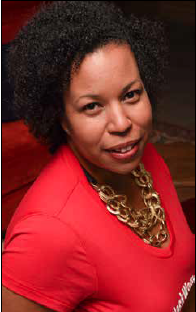
It’s said that 2018 will be the year of the woman! OTP welcomes the opportunity to include additional features to our ongoing focus on women’s issues and achievements. This week we introduce Glynda C. Carr and Kimberly Peeler-Allen, two young women who have had great impact in the pivotal positions they’ve held. They’ve now gone on to form their own organization, taking their leadership commitment and potential skyward.

Glynda C. Carr, Co-Founder of
the Higher Heights organizations;
contact: @GlyndaCarr

Higher Heights, the organization they’ve founded, is building a national infrastructure to harness Black women’s political power and leadership potential. Headquartered in New York, NY, Higher Heights for America, a national 501(c)(4) organization, and its sister organization, Higher Heights Leadership Fund, a 501(c)(3), are investing in a long-term strategy to analyze, expand and support a Black women’s leadership pipeline at all levels. Included also are strategies for strengthening Black women’s civic participation beyond Election Day.

Their threefold initiative aims to: First, reconfigure the makeup of decision-making tables to include Black women from across the socioeconomic spectrums at all levels. Secondly, to elevate Black women’s voices to shape and advance progressive policies and politics. And finally, to foster creative collaboration across constituencies and issues. This will ensure that race/gender equity and inclusion are incorporated in ongoing progressive-based building efforts, issue-based advocacy campaigns and in voter-engagement campaigns and electoral strategies.

U.S. Senator Kirsten Gillibrand is appreciative of this galvanizing vision for women and is a fan of these young women.

“Glynda and Kimberly are helping to change the world through Higher Heights,” said Gillibrand, “and in the process, are creating an extraordinary example of why women’s voices matter. Because of their extraordinary work, I have no doubt more women of color will be inspired to make their voices heard, hold their elected leaders accountable and run for office themselves.”

Gentrification or Colonization?

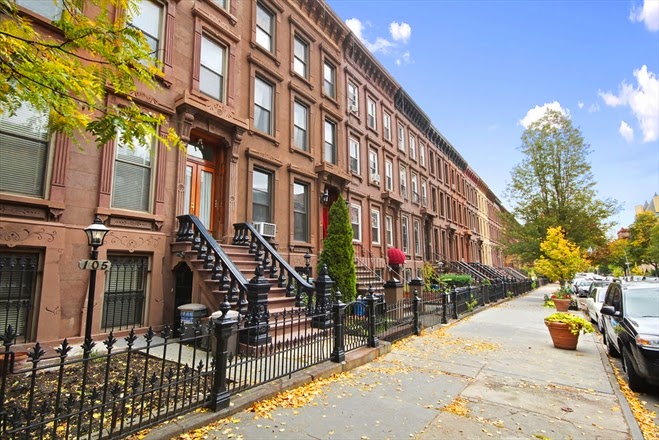
My work as a restaurant consultant places me right in the midst of a community’s social scene. My industry is all about relationships – between owners and staff, between staff and customers, between customers and customers. Visit any tavern or restaurant in your neighborhood, take a seat and look around you. The people sitting at the bar, or eating at a booth, they are your neighbors. They live in your neighborhood, or know someone who does, or they don’t live there but they enjoy your neighborhood enough to visit. As a lifelong resident of Brooklyn, I have watched the effects of gentrification. I’ve witnessed abandoned lots grow into new residential developments. I’ve seen weed spots raided by the cops, buildings confiscated due to RICO and renovated into burrito bars and Mr. Mango fruit markets. The Biggie mural on Quincy and Bedford and the beautiful mosaic likeness of Biggie that sits at the front of the Key Food on Fulton wasn’t always there. Biggie himself use to be there, posted on Fulton hanging out, way before he became a rap star and neighborhood icon.

There are many aspects of the redevelopment of Brooklyn that have been mind-blowing positives. As a kid, I never thought that there would come a time when I could walk down to Flatbush Avenue to watch the Nets play the Knicks. In the era of crack and murder, I never fathomed sidewalk cafes and organic coffee shops on Franklin Avenue. My father purchased the brownstone I grew up in for $30,000 in the late 70’s. I’m positive that he never thought the property would appreciate as it has. I am in favor of the improvements in our parks, the bike lanes, and even the muni-meters. The ideal of gentrification, at a surface level, is agreeable. Who would argue against community improvement?

I have a friend who is in the nightlife industry. We had a conversation recently where we discussed some of the changes taking place with our neighborhood pubs and taverns. We talked about two particular places that were forced to close their backyard spaces. Why? Because of neighborhood complaints. Too much noise, they said. The crowd was too rowdy, they said. One of the places relied on their backyard during the summer. The place is not at all a “rowdy” spot. I’ve watched World Cup games in that backyard and NBA Finals games. I’ve partied in that yard with Brooklyn artists and creatives such as Talib Kweli, Renee Neufville and April Walker. I’ve been there many a time, and I’ve never witnessed a fight or even a loud argument. So who? Who is making these claims about this place? My friend told me that the complaints were coming from the new luxury apartment building that recently opened on the same block. Apparently, a few of the tenants didn’t appreciate coming home late to crowds out front and so they colluded together to complain loud enough to make a change in the way the tavern handles their business. Anyone who knows about what restaurants and taverns go through in our city know that the “alphabet boys” are a big nemesis to business. The DOH, the SLA, the DOB and the IRS have brought down more businesses than anybody. As much as the restaurant community goes through, more often than not their main goal is to provide a satisfactory, safe and welcoming environment to the neighborhood. But what happens when the community wants to change your business model?

When a tenant moves into the Times Square area, do they lobby to have the businesses along 42nd Street cut their lights off at 2am because it’s too bright to sleep? If a tenant moves into the Bronx near Yankee Stadium, do they go to the Community Board demanding that the Yankees end their games by 8pm so that they don’t have to deal with the noise of fans pouring out of the place after 10pm? Part of the lure of this new Brooklyn to new tenants is our perfect combination of residential and commercial space. We enjoy being able to walk to our favorite hangout. We’d rather walk to Rustik than to take a train into Midtown just to guzzle some Stella. We cannot allow for the whims of some of our new neighbors to alter the scope of how we do things in Brooklyn. Colonization is defined as “the action or process of settling among and establishing control over the indigenous people of an area.” Gentrification is fine. Colonization is not. Old Brooklyn, please resist the actions of our new neighbors with regards to the establishment of new controls. We were just fine before they arrived.

WHAT’S GOING ON

NEW YORK, NY

What is the status of the search for a successor to Chancellor Carmen Farina, who retires from the Department of Education this year.   Hopefully, Mayor de Blasio will continue his “educators only” criteria.   I recently read that his first choice for chancellor, four years ago, was Barbara Byrd Bennett, former NY education administrator who wanted to complete her commitment to the Chicago school system but refused to leave her job as Chicago chancellor.   At the top of the chancellor’s work description list should be a requirement to desegregate NYC public schools. Born in Puerto Rico, Melissa Mark-Viverito, former NY City Council Speaker, who was term-limited, joins the Latino Victory Fund as a senior advisor to help recruit leaders, expand fundraising and increase public involvement aimed at improving Latino political representation around the nation.                                                                           

        Politicos are biting the dust during the advent of Mayor de Blasio’s second term.   Michael Kelly, NYC Housing Authority (NYCHA) General Manager and second in command, announced his resignation on Monday.   Why? Is he the fall guy for relentless NYCHA complaints or was it the lead paint inspection failures to tenants and the public. Meanwhile, NYCHA Chair/CEO Shola Olatoye seems secure in her job despite the thunderous calls for her departure, not the least of which is Public Advocate Letitia James. Her days could be numbered.

The 60th edition of the GRAMMYS, the entertainment industry’s ultimate music spectacle, is set for January 28 in NY at Madison Square Garden. This year’s GRAMMYS is a little different and more inclusive.  The Album of the Year category is filled with HIP-HOP artists, which is a sea-change for the GRAMMYS, which oftentimes, did not televise HIP-HOP awards.  New York’s own Jay-Z has 8 nominations and Kendrick Lamar has 7. It is guestimated that the GRAMMYS and ancillary events will generate about $200 million in revenues for NYC during GRAMMYS Week, which began on 1/21. [NYC Restaurant Week 2018 (1/22- 2/9)] More than 300 restaurants are participating and offering three-course meals at deeply discounted price points. Lunch: $29, and Dinner: $42.

BUSINESS MATTERS 

Hope Knight

Hope Knight, President of the Greater Jamaica Development Corporation (GJDC) since 2015, has a lot to say to Crain’s NY magazine about her turf, her vision and her immediate challenges.   She explains about GJDC: “Private capital does not necessarily take chances on untested markets. Economic development corporations help move the market in a certain direction and deploys a proof of concept.”   The GJDC is bound on the west with a transit hub, which includes NYC subway stations, the LIRR and AirTrain connections to JFK Airport; with CUNY’s York College on the south; the US FDA northeast testing facility and an emerging hospitality sector around the LIRR and AirTrain stations. Residential projects are in development.

It seems that an effective development corporation is about the deft and interesting interplay between residential and commercial development and juggling the private and the public sector interests.  NYC invested $150 million to help revitalize the “transit-rich” neighborhood during her first year at GJDC.    A native New Yorker born in East Harlem, Hope Knight, 52, graduated from Marymount Manhattan College who earned an MBA from the University of Chicago.   Prior to GJDC, Knight was Chief Operating Officer of the Upper Manhattan Empowerment Zone.

ARTS AND CULTURE

Oscar is a little more inclusive this year.   Nominees include GET OUT for Best Picture and Best Director Jordan Peele. Best Actor nods go to Denzel Washington for “Roman J. Israel, Esq.” and to Daniel Kaluuya for “Get Out”. The Best Supporting Actress finalists are Mary J. Blige for “Mudbound” and Octavia Spencer for “The Shape of Water”. The 90th Academy Awards for Excellence in the Film Industry airs on March 4.

The Schomburg Center’s “Live from the Archive” series hosts its next conversation, MILES, BALDWIN AND ME, QUINCY TROUPE, on January 30, 6:30-8 pm. Troupe is an award-winning poet, editor, biographer who will converse with Farah Jasmine Griffin, Professor of English and Comparative Literature and African-American Studies at Columbia University.   [Visit: Nypl.org/Schomburg]

The Second Harlem Classical Music Celebrations, co-hosted by Opera Ebony, Three on 3 Presents, Opera Noire of New York, the Harlem Chamber Players and Harlem Opera Theater, present the works of renowned operatic and spiritual composers in symposium and in concert. This collaboration series runs from February 1-24 at multiple venues and includes program titles like “A Tribute to the Spiritual”, symposium and concert; Opera Ebony and Three on 3 Presents with Jasmine Muhammad and Christopher Cooley; A 10th Annual Black History Month Celebration with works by H. Leslie Adams, spirituals and Nonet by Samuel Coleridge-Taylor; “Lift Every Voice and Sing”: A Tribute to John Rosemond Johnson; a two-act theatrical work, Harriet Tubman: When I Crossed That Line to Freedom; and the David I. Martin Music Guild of the National Association of Negro Musicians 2018 Scholarship Local Competition Winds & Percussion. For full calendar of events, visit HarlemOperaTheater.org; Harlemchamberplayers.org; Operaebony.org.

NEWSMAKERS

Leslie Wyche

RIP: Leslie Wyche 73, joined the ancestors last week. Harlem-born and bred, Leslie Wyche will be fondly remembered as the “Mayor of Harlem”, an appellation that he wore with distinction. A civil servant, his resume boasted titles like district manager of Harlem-based Community Boards 9 and 11; a community liaison for then-NYC Councilwoman Inez Dickens and stints at various NYC commissioners’ offices.   Wyche was a member of One Hundred Black Men of New York and the Omega Psi Phi fraternity.   No stranger to local political clubs, uptown real estate and business, he was familiar with most unfolding Harlem news. The Mayor of Harlem really soared when it was time for special events, a VIP birthday party, a Support Network New Year’s Eve Gala or Yacht party, a political fundraiser, an open house. He knew everyone and was a great facilitator of introductions to the Black local elites and power players.   There was a newspaper-sponsored election for Mayor of Harlem in 2003, which he won handily. Leslie was Harlem’s Hizzoner, one of a kind! 

RIP: South African-born Hugh Masekela, 78, died after battling prostate cancer for almost 10 years. Trumpeter, composer and vocalist, Masekela was known as the “Father of South African jazz” and one of the loudest opponents of South African apartheid, a system of oppression like Jim Crow. He went into exile in the 60s and lived in the United States and Britain. His music was informed by his politics and exile from SA.    His song, “Grazing in the Grass”, with its signature South African township rhythms, topped US and international charts in 1968. His music kept referencing South Africa’s struggles and apartheid.   Masekela returned home after freedom fighter Nelson Mandela was released from an almost-30-year prison ordeal and who became SA President in the 90s.  South African Arts and Culture minister described Masekela as “one of the great architects of Afro Jazz. A baobab tree has fallen”!

A Harlem-based management consultant, Victoria can be reached at Victoria.horsford@gmail.com.


China Bans Hip-Hop Culture


The Chinese Government has made smart moves in betting on the future of solar power, in their courtship of Africa and in their ban on elements of hip-hop culture earlier this week. With the ban, they were brutally clear: “Absolutely, do not use actors whose heart and morality are not aligned with the party and whose morality is not noble. Absolutely, do not use actors who are tasteless, vulgar and obscene. Absolutely, do not use actors whose ideological level is low and have no class. Absolutely, do not use actors with stains, scandals and problematic moral integrity.”

In the Time magazine report, A Chinese rapper, PG One, “was forced to apologize for lewd lyrics which critics said were insulting to women and encouraged the use of recreational drugs”. In effect, the Chinese have said, “if that’s what Black people do, disrespect women, idolize sex, consumption, mind-alteration and violence, then that’s who they are. Don’t imitate them”.

Are misogynist rappers now going to speak out, concerned about their exclusion from the Chinese market, bemoaning the assault on free speech and picketing the Chinese embassy? Or will they hope few notice and there is not a chord struck in the Black community against self-destructive, violent, negative imagery beamed into their children’s heads and express their displeasure as #novulgarity.

A Washington, DC Mess

For the first time in my life, there is the very unsettling feeling that no one is in charge in Washington, D.C., and that competing self-interests, driven by heavily gerrymandered districts reflecting a slice of America, are running the show. It is understood by all that the president is a delusional liar, with the New York Times counting over 2,000 lies in his first year in office.

And now we have what was once billed as the world’s greatest deliberative body devolve into senators calling each other liars, complaining about a lack of trust, coming together in small groups trying to find sanity and a way forward. And then there is the House of Representatives where, like the Senate, too many have law degrees teaching them to argue on behalf of the client, not the truth.

And with a far-right, all white constituency as their client, national issues like immigration, health care, or anything that is perceived as helpful to Black and Brown people, are efforts that must be challenged. The congressperson’s first job is to be reelected, therefore their constituents must be satisfied, and the larger public good be damned.

And then there are the Russians and their cyber assault on the US. The silence about stopping their incursions may be due to their being great friends of Donald Trump and any disruptions they do in the midterms promise to aid the Republican Party. Like the Republicans, the last thing the Russians want is a Democratic Congress looking into their activities and threatening their “useful idiot,” the President of the United States.