Home Blog Page 690

View From Here: New Report Reveals True Extent of the Racial Assault on Black Boys

What is wrong with Black people, particularly Black men? Why can’t they get it together?

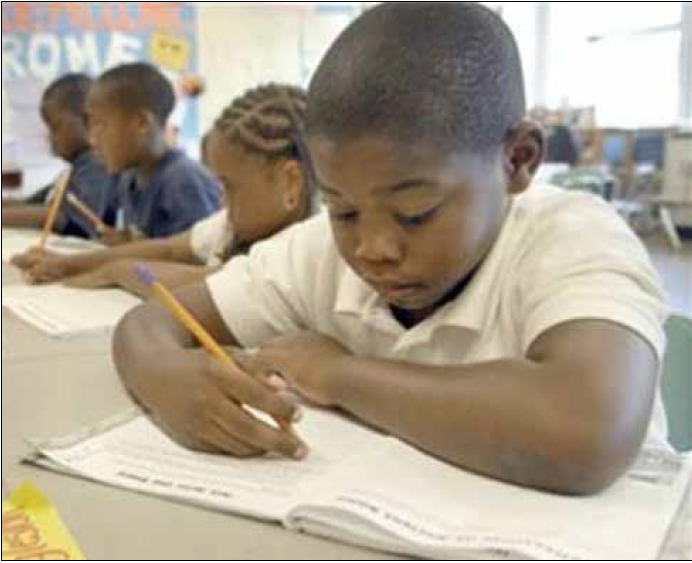
These questions and others are answered by a new report, “Race and Economic Opportunity in the United States, An Intergenerational Perspective,” that shows how racism permeates the culture like an evil thing intent on the destruction of Black men from their very beginning as boys. Confirming in all aspects the work contention for Jawanza Kunjufu in his book, “Countering the Conspiracy to Destroy Black Boys.” (see sidebar) The report shows that it does not matter where you started, life is different for Black boys. For them, class does not matter. Race and gender guide their destiny, and their destiny is to be poor.

As reported in the New York Times on March 19, “The study, based on anonymous earnings and demographic data for virtually all Americans now in their late 30s, debunks a number of other widely held hypotheses about income inequality. Gaps persisted even when Black and white boys grew up in families with the same income, similar family structures, similar education levels and even similar levels of accumulated wealth.”

The study is based on census data from millions of households and looks at poverty across generations. Among its many findings, Black boys from rich households are more likely to become poor while white boys in rich households are more likely to achieve upper middle class or rich households of their own.

Difference in income distribution for Black and White Men

White boys born poor rise to middle class, upper middle class and rich at a greater rate than Black boys born in poor, most of whom will remain poor as adults.

Why are there tables filled with Black women in restaurants but very few with Black men?

The economic wage gap is not true for Black girls who were found to achieve at the same level as white girls, rising at the same economic rate.

After examining the tendency toward poverty for Black boys under all circumstances, the Times said the report concluded, “If this inequality can’t be explained by individual or household traits, much of what matters probably lies outside the home — in surrounding neighborhoods, in the economy and in a society that views Black boys differently from white boys, and even from Black girls.”

The finding about Black boys that, “As early as preschool, they are more likely to be disciplined in school,” rings true for this writer, having been left back a year and suspended as well by the fourth grade at PS 138 in Crown Heights.

It takes a Village

Africans spoke truth in the Igbo proverb, “It takes a whole village to raise a child,” and it is reiterated by the results of the study showing that for Black boys in particular, the presence of fathers is very important. While father presence did not correlate with Black girls, “Black father presence at the neighborhood level predicts Black boys’ outcomes, irrespective of whether their own father is present or not, suggesting that what matters is not parental marital status itself, but rather community-level factors associated with the presence of fathers, such as role-model effects or changes in social norms.”

Even when a Black boy is born rich, he can still go to jail.

The racism of the criminal justice system is also evident in the report. “The new data shows that 21 percent of Black men raised at the very bottom were incarcerated, according to a snapshot of a single day during the 2010 census. Black men raised in the top 1 percent — by millionaires — were as likely to be incarcerated as white men raised in households earning about $36,000.”

And the report shows that the boxing legend Joe Louis was right when he said of an opponent, “He can run but he can’t hide,” because there is no moving away from the racist assault for Black boys.   It says, “The worst places for poor white children are almost all better than the best places for poor Black children.”

There are other questions raised by the report such as policy that does not have at its core an understanding of the effect on Black boys. For example, is the co-location of impressionable middle-schoolers with alternative high-schoolers in programs up to age 21 really a good idea? Perhaps a middle school with all-Black teachers and administrators is the best way to go.

Like back in the time of coming out of slavery and in the near-century after when Black teachers had little to work with but their passion and belief in the children turned out successive Great Generations of African-Americans who transformed the nation. Using what they had learned first by candlelight and with handed-down books, these students fought back against all the power of the nation’s racist nature and paved the way for oppressed others who now benefit most from the work of those student’s and the adults they became.


Cornegy, Black Clergy Question AQE’s Racial Makeup

By Stephen Witt, Kings County Politics

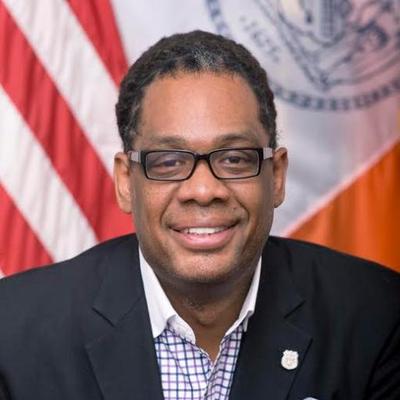
City Council member Robert Cornegy, Jr. (D-Bedford-Stuyvesant, Northern Crown Heights) and an organization of Black ministers from around the city are wondering why a nonprofit education advocacy organization, which purports to speak on behalf of Black and Brown students, does not have a Black or Brown executive director or any Black or Brown people on their board of directors.

The matter came to Cornegy’s attention from Mobilizing Preachers & Communities (MPAC) CEO and Rev. Dr. Johnnie Green, who is taking umbrage at Alliance for Quality Education (AQE) Executive Director Billy Easton, who hails from Albany but continues to speak out on behalf of Black and Brown students in New York City.

“I pastor in Harlem and MPAC churches are throughout 330 Black neighborhoods in New York City,” said Green. “We don’t know who Billy Easton is, and he has never reached out to us, but we do know he doesn’t come from our community and neither does the chair of his board. And whether they use frequent-flier points or not to visit our communities, it doesn’t change the fact that if Easton and his chair cared about Black and Brown students he would have a Black or Brown person as chair or executive director.”

This caused Cornegy, who has six children that have either attended in the past or currently attends both charter and regular public schools, to also question Easton and the AQE motives.

“It has been brought to my attention that African-American clergy in New York City have questioned the authority and ability of your organization to speak on behalf of Black and Brown students here in New York city because neither you, the AQENY board, nor the AQENY board chair are representative of communities of color and do not live in New York City. Furthermore, your board is not composed of educators or education experts but experts in other fields. If these claims are true, they would seem to undermine the credibility of AQENY in representing students of color,” Cornegy wrote in a letter to Easton yesterday.

Cornegy noted that he and other City Council colleagues of color take the education of their students extremely seriously and want to ensure AQENY is best equipped to advocate on behalf of the communities of color that its mission most directly impacts. As such, he asked:

* Is it true that both the AQENY board chair and executive director are white?

* Is it true that both the AQENY board chair and executive director do not live in NYC?

* How many times have you visited a predominantly Black or Brown school in NYC in the last year?

* How many times has the AQENY board chair visited a predominantly Black or Brown school in NYC in the last year?

“For years, AQENY has been at the center of education advocacy, holding itself out as a champion of the less privileged. Yet, there has been little scrutiny into where the organization is based and who operates it. I am sure that you can understand the concerns of communities of color in not wanting to be used by individuals outside of the community for other agendas,” Cornegy wrote.

AQENY Executive Director Billy Easton

Easton responded that, “Cornegy’s attempted attack on AQE is the result of the fact that AQE asked him several times to return a contribution from billionaire Dan Loeb after Loeb made an outrageously racist comment about NYS Senate Democratic Leader Andrea Stewart-Cousins.”

Easton, who e-mailed the response in a co-written statement with AQE Statewide Advocacy Director Zakiyah Ansari, who is Black, noted Cornegy didn’t return Loeb’s donation.

“Since we called him out for this, he has chosen to attempt to attack our work to win the $4.2 billion in school aid that New York State owes to schools statewide—74% of these funds are owed to Black and Brown students statewide.

“Unfortunately, Mr. Cornegy has been absent from this fight. It is well-known that AQE is a statewide coalition, our core organizational members are New York Communities for Change, Make the Road New York, Citizen Action of New York and New York City Coalition for Educational Justice, all of which are membership organizations that together represent tens of thousands of public school parents, students and families,” they wrote.

AQE has long been aligned with the United Federation of Teachers (UFT) in opposing charter schools, even though charters often outperform regular public schools in communities of color.

Additionally, AQE has also been playing a leading role in trying to unseat Independent Democratic Conference (IDC) State Senators Jesse Hamilton (D-Brooklyn), Jose Peralta (D-Queens) and Marisol Alcantara (D-Manhattan), all of whom are lawmakers of color with well-earned reputations of being hardworking on both legislative issues and constituent services.

AQE argues that because the lawmakers have a ruling coalition with the majority Republican Senate they shouldn’t represent their districts.

This partisan stance, which a number of white-run liberal “progressive” organizations take, is increasingly drawing a wedge between them and a growing number of Black Democratic lawmakers who believe a more bipartisan and issue-oriented stance better serves their districts.


BP ADAMS Campaigns Against Colon Cancer Free Health Screenings Across the Borough

Brooklyn Borough President Eric L. Adams kicked off Colon Cancer Awareness Month by hosting a community forum in the Courtroom of Brooklyn Borough Hall where he joined colon cancer survivors, gastroenterologists, and oncology nutritionists in highlighting that the disease is curable, treatable, and preventable.

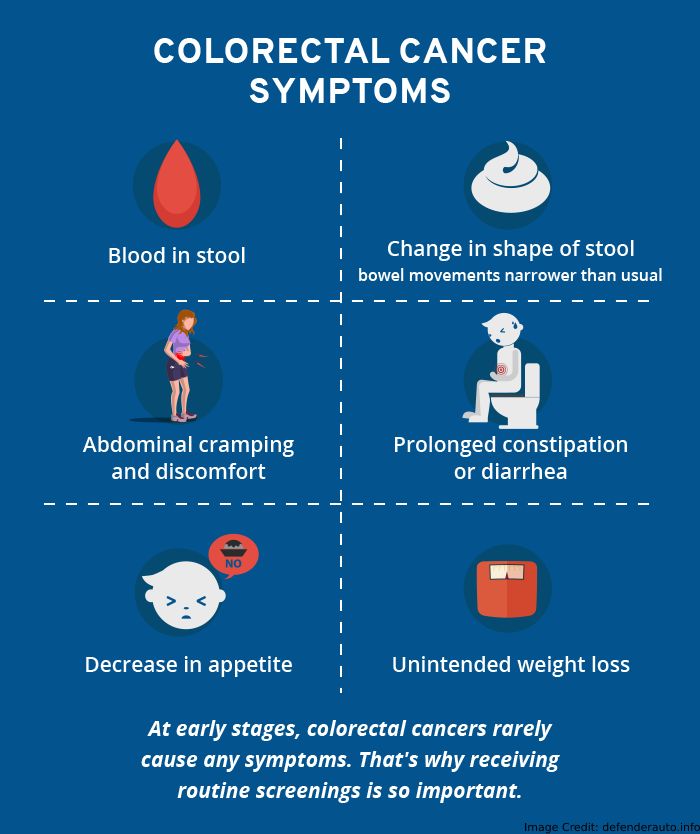
Central and eastern Brooklyn, in particular, have been hit particularly hard by colon cancer, especially among African-Americans; men in East New York have the highest death rate for this disease in the entire borough. Symptoms can include change in frequency of bowel movements, change in consistency of stool or any blood in one’s stool, weakness and fatigue, or unintended weight loss.

Colon cancer is the third-deadliest cancer in the United States, and the third-leading cause of cancer death in Brooklyn. The forum, sponsored by WellCare with partnership from Burger UrWay, P.C. Richard & Son, Target, and Whole Foods Market, included a discussion of the latest research on the disease, and important information on the impact of factors such as genetics and nutrition.  In discussing the importance of preventive health, Borough President Adams also promoted his month-long #nobuttsaboutit campaign to encourage mass participation in free colon cancer screenings being held for uninsured or underinsured persons, in partnership with the American Cancer Society, at 10 hospitals across the borough throughout the month of March. Borough President Adams emphasized the importance of early detection and getting screened in the fight against colon cancer.

“Colon cancer is one of only two cancers that can actually be prevented through regular screening tests,” said Borough President Adams. “We have lost too many lives across Brooklyn across every community to this debilitating disease, even when there are steps we can all take to proactively combat it. I urge all Brooklynites to get screened.”

Borough President Adams’ #NoButtsAboutIt campaign was inspired by his special assistant Gerald Marcus Harris, who survived a battle with colon cancer last year. In recent weeks, he has traveled around the borough to speak about the importance of getting screened, with an emphasis on the fact that he was diagnosed with the disease at 37 years of age; many medical professionals, including the American College of Gastroenterologists, recommend Black men be screened starting at age 45.

“Screenings are important because this disease is curable, treatable, and preventable,” said Harris. “I hope people can learn from my story and take control of their health. Thanks to Borough President Adams for amplifying my voice, and the voices of all colon cancer survivors, through this public awareness campaign.”

Free colon cancer screenings will be made available for uninsured or underinsured persons throughout March, as part of the #NoButtsAboutIt campaign, at Brookdale University Medical Center in Brownsville, The Brooklyn Hospital Center in Fort Greene, NYC Health + Hospitals/Coney Island in Sheepshead Bay, Interfaith Medical Center in Bedford-Stuyvesant, NYC Health + Hospitals/Kings County in East Flatbush, Maimonides Medical Center in Borough Park, New York-Presbyterian Brooklyn Methodist Hospital in Park Slope, SUNY Downstate Medical Center in East Flatbush, NYC Health + Hospitals/Woodhull in Bedford-Stuyvesant, and Wyckoff Heights Medical Center in Bushwick. To schedule a free screening at one of the participating hospitals, interested persons can call (718) 802-3847.

“I applaud the efforts of Borough President Adams in bringing people together to start this very important discussion on colon cancer,” said Dr. Cynthia Quainoo, internal medicine specialist at Brookdale University Medical Center. “Too many people have died from a very preventable and treatable disease. As an African-American gastroenterologist practicing in central and eastern Brooklyn, I have a unique perspective on seeing how colorectal cancer affects our community.”

“Thanks to Borough President Adams for leading this effort to raise awareness of colon cancer to the people of Brooklyn,” said Dr. Iuliana Shapira, chief of the Division of Hematology and Oncology at SUNY Downstate Medical Center. “Our data suggests that compassionate and candid explanations of the value of a screening visit increases participation in screenings for both primary and secondary colorectal cancer prevention.”

“At WellCare, we believe healthy communities help people make healthy choices,” said John J. Burke, state president at WellCare New York. “Through partnerships with Borough President Adams, the American Cancer Society, and others, we can address barriers our communities face to live better, healthier lives. One example is our commitment to join the American Cancer Society’s ‘80% by 2018’ pledge to increase colorectal cancer screening for our members, our associates, and the residents of Brooklyn.”

“We believe that a healthy body begins with the food we eat,” said Brendan Zanetti, metro marketing team leader at Whole Foods Market. “Our food quality standards emulate that philosophy — no artificial preservatives, sweeteners, colors, flavors, and hydrogenated fats are found in anything we carry.”


The Year of the Woman is in Full Effect at Bedford-Stuyvesant Based ‘For My Sweet’

In perfect timing for what is slated to be the “Year of the Woman,” Angela Hope Weusi graciously gathered African women delegates and interested community members alike in her restaurant business, “For My Sweet.” Attended by lawyers, professors and dignitaries, the purpose of the gathering was to network and shed much-needed light on pressing issues that pertain to women of the Diaspora, and by extension, all women. A key issue that came up on more than one occasion is the atrocity that is human trafficking.

After a filling dinner, the tone of the evening was set, and the event expanded from being merely a dinner into a full-fledged forum geared towards illuminating various topics pertaining to the status of women. The star of the evening was unquestionably a South African woman who shared her equal part-inspiring and equal part-tearjerking story of how she overcame circumstances not for the faint of heart. The courageous survivor recalled having been forced into selling drugs at a young age. What started out as selling drugs tragically spiraled into a series of unfortunate happenings, including her being forced into prostitution on multiple occasions. Despite, or in spite of, such dismal chain of events, this woman survived to tell her story and we are all the more better because of it.

Mirroring this survivor’s story of hope, other African delegates and dignitaries spoke on their work with the United Nations-sponsored “Commission on the Status of Women” and how they have been engaged in a prolonged effort to improve, for lack of better words, the status of women. The host of the event, Angela Hope Weusi, also briefly spoke explaining that “the space [‘For My Sweet’] was created for us to share” in a showcase of her love and unyielding advocacy of her people. She added that, “We’re here to find our commonalities,” in addition to warning against the “ploy to make Black people scared of one another” in detailing one of the pivotal purposes of the gathering.

The, of course female, President of the Pan-African Parliament, who is from Tanzania, also spoke proclaiming, among other empowering affirmations, “This is my second home,” with this being “For My Sweet.” How sweet. Another speaker from South Africa, whose name is Tandi, also delineated her long activism with women’s rights. In fact, she had been so entrenched with her work on the ground to improve the livelihood of women that she recalled some of her son’s earliest words being “African women.”

There was also, as one man who spoke so eloquently pointed out, “Three men in attendance.” To think they had the gall (just kidding). Though the hosts of the evening encouraged all to speak, only two of the three men in attendance spoke. One male speaker was a professor at Fairleigh Dickinson University and addressed all of the, in his own words, “Beautiful Black Queens” in attendance. Understandably so, this professor was particularly in awe of the resilience of the survivor who so bravely and articulately shared her story of triumph from a life of childhood and eventually adult prostitution. The other male speaker was, as he made it a point to mention, a 70 years young man.  This elder gave a history lesson, presumably in an effort to keep with the theme of the night: “The livelihood and well-being of women,” particularly women of the Diaspora. Interestingly enough, this man described a Black woman who saved George Washington’s life in the Battle of Brooklyn/Long Island during the Revolutionary War. Ashamedly, I have never heard this story, but to my consolation, according to the de facto griot telling the story, many people have not. The reason being is that this Black woman, whom his story pivoted, was one who would categorize as an unsung hero. Fittingly, his story closed the evening out and that’s when the dancing ensued.

Priscilla Mensah covers topics related to improving health, wellness and overall community empowerment. She is also a former Health Reporting Fellow at the CUNY Graduate School of Journalism and can be reached at pmensahbrooklyn@gmail.com.

Charlie Davis and the Wandering Baton

Charlie Davis was laid to rest this week. Charlie wasn’t a celebrity or some star that the entire world knew. Charlie was a friend to my parents, a guy that grew up right here in the community. He graduated from Boys High, served his country in Vietnam, returned home and made a decent life for himself, his wife Lenora and their family. No bells and whistles. No unbelievable acts or unheard-of struggles. Charlie was a regular Brooklyn guy.

His funeral was on Tuesday. Hundreds and hundreds of people packed into Emmanuel Baptist Church to pay their respects. There were people in that church that I hadn’t seen since childhood, elders that used to party with my folks, faces that I remember from barbecues and from Junior’s, all there to wish Charlie well on his journey from here. The Boys High Guys, a group of friends that all went to Boys High around the same time as Charlie, got up and spoke about their friend. He loved his wife. He was a good friend to have. He’d go out of his way for a friend in need. He was funny and loving. He cared about his community and for his neighbors. Over and over, those who spoke told the truth about Charlie Davis. Black Veterans for Social Justice, an organization committed to servicing veterans and their families, were at the funeral en masse. The staff and the Board of Directors filled the entire left side of the church. Charlie was on the board of BVSJ, and what he meant to their mission was evident in their commitment to being there for him now. Even the pastor performing the ceremony was friends with Charlie. Pastor Perry laughed with us as he discussed his friend. He talked about planning a boat party, and Charlie coming to him and asking him to hold the boat from leaving the dock because he had a friend in town that needed to get somewhere, and he was going to drive him to make sure he got there. Pastor Perry laughed about it, telling Charlie, “You’re lucky I’m the Captain!” He held the boat for Charlie and Charlie went and did what he had to do. The funeral wasn’t sad. Folks weren’t melancholy. Everyone was in a great mood, more than willing to talk about their experiences in Charlie’s presence.

We live in an era where social media likes are more important than actually interacting with people in real life. I know people who have thousands of Facebook friends and they don’t know any of them. I walk the streets and watch as most of us are too consumed with our smart phones to even see the world around us. We don’t know the kid from up the block anymore. Kids don’t play outside like they used to, don’t bag groceries at the local supermarket to make some change, don’t play stickball in the street during the summer. The personal things that made us community, the interaction between youth and the elderly, the communication between neighbors, the trust we had in one another, these things are dying. We bury a piece of it every time another elder transitions.

The importance in those things is that communication and camaraderie amongst neighbors strengthens the community’s consciousness. The Boys High Guys are a bunch of 70-something-year-old men that have been friends for 60, and in some cases, 70 years. Their children know one another. Their grandchildren know one another. Jesse Scott is one of the Boys High Guys, and every time I see him in passing he always asks, “How’s your parents? How’s your family? Give them my best.” He cares about more than just what’s going on with him. He cares about what’s going on with all of us.


They all do. That entire generation does, because they were raised with a kinship of struggle, a togetherness predicated on the ideal that the whole is greater than the sum of its parts. Nowadays, the individual identity supersedes the community. It is I before we, mine before ours, and that shift in ideals destroys loyalty, and friendship, and community.

What is to come of a community that can’t come together and speak honestly about being united, standing together, loving each other, being there for one another in times of need? That was what I was reminded of in that church as we said good-bye to Charlie. I looked out amongst the pews and saw the community that raised me. They all raised me, not just Hopie and Pops, but Ms. Joan and Ms. Ware, and even Uncle Blackwell. And it made me think, who am I raising? Who are we raising? Thank you Charlie for being a stand-up guy and a model example. The baton that you’ve passed shouldn’t be a wandering one. It should be taken and carried on.