Home Blog Page 69

In the Spirit of Nomsa

Remembering Helene Nomsa Brath

By Cinque Brath
In our community, we often celebrate the louder voices—the ones who grab the microphone, lead the marches, and always seem to speak from the podium. But there are other kinds of leaders, just as powerful, who work from the heart and the home. Helene Nomsa Brath was one of those people.


Nomsa—the name given to her by a South African artist—can be interpreted to mean one who is compassionate, kind, or joyful. And she was all those things when the time called for it. But what many people may not know is that Nomsa was also a fighter. A quiet rebel. She could be gentle, but she was not timid. She could be warm, but she never compromised her convictions.


In fact, her rebellious spirit was so distinct that she was one of only about eight women featured in a British documentary about women who defied expectations in industries that demanded conformity.

Even as a young girl, she was already sharpening her skills as a dissenter. In the 2019 documentary You Say You Want a Revolution: Records & Rebels 1966–1970 by Emily Harris, Nomsa shared a childhood story that said everything about her character.


One day, she told her mother she was no longer going to straighten her hair. Her mother, unwilling to deal with her feisty daughter, passed the matter off to her brother—Uncle Harry—a no-nonsense Korean War veteran.

It was his job to “straighten her out.” But by the time Uncle Harry came out of the room, his booming voice echoed down the hall—but hers never did. She hadn’t raised her voice once, but her mind was firm. He emerged, defeated, and told his sister: “Helene is not changing. Her mind is made up. Leave it alone.”
That was Nomsa. You rarely see her shouting, but you knew where she stood.


So much of the progress in our community rests on the shoulders of women like Helene Nomsa Brath—women who raise both the children and the collective consciousness. They may not always be in the spotlight, but they are the movement’s heartbeat.


I remember another day—more turbulent, more dangerous—that showed her fierceness in a more physical form. A friend of one of my siblings had been arrested and, during interrogation, told police that he had passed a weapon to one of my brothers.

He even gave them our address. Officers came knocking—more like banging—on the door. At the time, my mother was asleep on the living room couch, surrounded by several of us younger children.


When one of my siblings opened the door, the police rushed in—into our home, filled with minors, without pause or permission. My mother woke up to what she thought were strange figures in blue. She sprang up from her sleep with catlike reflexes, yelling for the officers to get out of her house.

One officer was making his way toward the bedrooms. She pushed him—and the others—out the front door in one clean, defiant motion. They vowed to return with a warrant. She didn’t flinch. Her courage filled the room like fire.


That moment told me everything I needed to know: my parents were made for each other. Many people know the name Elombe Brath—Pan-Africanist, media strategist, activist. His name rings from Harlem to the Caribbean to Africa. But fewer know about the woman who stood beside him—not behind, but beside him. Her influence ran deep, though often more quietly.


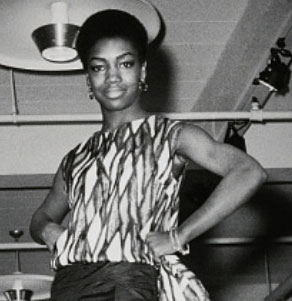
Helene Nomsa Brath was a founding member of the Grandassa Models and the only woman to ever hold the title of President of the group. The Grandassa Models didn’t just promote natural Black beauty—they revolutionized it.

In the 1960s, when straightened hair and lighter skin were considered the ideal, Nomsa and her sisters in the movement wore Afros, African fabrics, and the kind of confidence that declared to every young Black girl: “You are enough—just as you are.”


She raised seven children while staying deeply involved in community organizing, cultural programs, and education. She did not seek headlines or accolades. She did what she did because she believed in Black people.

She believed in us. She believed in the power of love, community, and self-determination. She reminded us that history isn’t just what we read in textbooks—it’s what we do every day in our homes, neighborhoods, and lives.


Today, we see her legacy everywhere. In young girls wearing their hair natural. In families who open their homes to teach, protect, and organize. That’s Nomsa living on. That’s the power of her example.


So often, history overlooks people like Helene Nomsa Brath. But for those of us who knew her, who learned from her, who were shaped by her—she is unforgettable. This article isn’t just a tribute—it’s a reminder. A reminder that leadership doesn’t always mean being in front. Sometimes, it means holding everything together from behind the scenes.

I—and so many others—learned how to serve our community by watching her, day in and day out.
Today, her legacy lives not only in memory but in action: through stories shared, a Harlem street co-naming in her honor, murals that carry her image, and lives she’s touched. It lives in every act of resistance rooted in love, in every person who chooses community over ego, in every young girl who grows up knowing she’s beautiful just as she is.
And for that, we honor her. We remember her. And we carry her light forward.

54th International African Arts Festival Joyfully Builds Community, Institutions

By Yvette Moore
The 54th International African Arts Festival at Commodore Barry Park in Brooklyn’s Fort Greene section July 4-6 did not disappoint. With a DJ-led funk dance party just off the main entrance, more than 170 vendors inside, and live entertainment and foods from across the diaspora, it was a joyous Pan-African community family reunion. Festival organizers estimated 7-10,000 people traversed the spacious venue over three days.


“This is the oldest festival of Pan-African culture in the United States, and arguably the world,“ said Segun Shabaka, IAAF board director and co-founder who’s been with the event since its inception. “We have maintained a high quality of artist and unique cultural presentation for the whole family— and rarely do you see that.”


Friday evening, straight from the stage of “The Lion King” on Broadway, South African artist Bongi Duma and his band were a headliner opening the festival’s musical offerings. His performance included an exuberant rendition of “Bring Back Nelson Mandela” as a tribute to Hugh Masekela, the late South African jazz trumpeter, and festival veterans of the global Anti-Apartheid Movement of the 1980s.

Youth from Brooklyn’s own Asase Yaa Cultural Arts Foundation also lit up the festival’s main stage Friday night with drumming and dancing that brought the audience to its feet.


Lectures and panels were featured throughout the event. A Sunday afternoon panel focused on the festival’s impact on building community and institutions critical to Black progress.
“You understand how institution building works,” said Adeyemi Bandele, vice chair of the IAAF board, panelist. “Five generations. 54 years. My grandchildren are now out here doing work at this Festival. And pretty soon I’ll be a great-great-grandmother. So, institution building is important now.


“How did it get here? One of the key components has been these vendors. Now we use vendors loosely, because they actually are craftspeople who bring out things that you may never see again. Oftentimes one-of-a-kind artifacts, clothing, etc.


“And don’t come here trying to lose weight. It doesn’t work. It’s not gonna happen! From Jollof rice to “Buss up” Rotti, patties, everything. This is a Pan-African Village. Whatever you want from the Pan-African World, you’re going to find it here—including people.”


Panelist Ayeshah Soaries is part of that institution building. She grew up in the festival spirit because her parents were nationalists. In high school, she joined the African Students Association and began working with the East and the Festival. This year, she set up the Ancestors Shrine.


Sunday afternoon’s natural hair show was another example of the festival’s lasting impact. Nekhena Evans is a Master Pioneer in the natural hair care industry with a specialty in creating hair accessories “fit for queens and kings.” This year marked her 25th year of organizing natural hair demonstrations at the event. Ms. Evans called the festival “a heartbeat” for the community. “The body can’t be without a heart,” she said.


Ms. Evans said that over the years, she has witnessed the enduring effect of the natural hair care industry, which events like the festival have helped nurture.


“A foundation has been laid in terms of natural hair,” she said. “There’s always going to be diversity and complexity with fashion going in and out [of style]. A woman can have a perm or whatever, but you see the little girls coming up with braids etc. Mothers are not perming their little girls’ hair. That’s a quiet foundation that has been set.”


As always, the festival was a family-friendly event offering space for children to run and play freely in a safe space and for adults to see old friends again.


That was Muslimah Mashariki’s experience.
“I can’t remember if I was at the first or the second festival, but I remember the stage and the music and the vendors,” she said. “It was no way as big as this, but it was joyous, so many people in that little street that was just packed in the street. And so, to see this after 54 years, it’s just been growing and growing and growing. This is a place to come to see anybody that you haven’t seen in years!”


And that is just the kind of community connections organizers seek to make possible.
“Black people from all different walks of life come to the Festival at peace,” Mr. Shabaka said. “I see the festival as a microcosm of the kind of community we should be interacting in and should be happening all over the country year-round.”


Yvette Moore is a contributing writer for Our Time Press.

Abolition Commemoration Day in NY–New York State

New York, NY, June 27, 2025 – The Abolition Commemoration Day Committee is presenting its fourth Abolition Commemoration Day in NY program on Monday, July 14, 2024, in three boroughs: Brooklyn, Manhattan and The Bronx.

The programs showcase how abolitionists in New York State fought to end slavery. New York State legislation enacted a law on July 22, 2020, granting the second Monday of July as Abolition Commemoration Day. This is in memory of the Abolition Act that was passed by the state legislature on March 31, 1817. The tri-borough programs seek to inform everyone of this important holiday and piece of history that is not widely known.


Just like Opal Lee is the grandmother of Juneteenth, Bessie Jackson, NYS Director of ASALH is the grandmother of Abolition Commemoration Day. She advocated for sixteen years to make this a legally recognized holiday in the State of New York.


Legendary Roxanne Shante will speak about her life’s work as one of the first female MCs in rap music at the Brooklyn program. She has a radio show on SiriusXM called “Have A Nice Day” from 4pm-7pm EST. When asked about this historical event, Ms. Shante said the following: “There’s a time in our lives where we all want our freedom. Once we reach our freedom let’s never forget who helped us get there.”


Historically, the Abolition Commemoration program has been in Harlem and The Bronx. This is the second year the program will be in Brooklyn, NY at The Abolitionist Place located at Willoughby Street and Albee Square West from 1pm-3pm.


Each program is free for the public to attend. For more information, please sign up via Eventbrite link: https://tinyurl.com/mtvdfe82

Carter Godwin Woodson (December 19, 1875 – April 3, 1950) was an American historian, author, journalist, and the founder of the Association for the Study of African American Life and History (ASALH). He was one of the first scholars to study the history of the African diaspora, including African-American history.

A founder of The Journal of Negro History in 1916, Woodson has been called the “father of black history.” In February 1926, he launched the celebration of “Negro History Week,” the precursor of Black History Month.

Woodson was an important figure to the movement of Afrocentrism, due to his perspective of placing people of African descent at the center of the study of history and the human experience. (From Wikipedia)

9 Students Awarded 46th Annual Randolph Evans Memorial Scholarship

It’s been 49 years since a New York City police officer shot and killed 15-year-old Randolph Evans returning from the store with last-minute items for his mother’s Thanksgiving Day spread in their Brooklyn apartment in 1976. But his name and legacy lived on at the 46th Annual Randolph Evans Memorial Scholarship Awards Ceremony on June 28 at the historic House of the Lord Pentecostal Church in Brooklyn.


Nine high school students received the $1000 scholarships named for the slain youth.
“This year, Randy would have been celebrating his 64th birthday,” said Dr. Karen S. Daughtry, coordinator of the scholarship’s awards ceremony. “We keep his memory alive by celebrating the lives of young people who exhibit all of the attributes that Randy possessed and who have the opportunity to actualize the wonderful possibilities denied to Randy.”
The 2025 Randolph Evans Scholarship awardees are:

  • Doniele Brown, W.H. Maxwell High School, who studies biology and business at Brooklyn College, City University of New York.
  • Marin Clarke, Institute for Collaborative Education, who will study political science at Vanderbilt University.
  • Myles Andrew Daughtry, Seton Hall Preparatory School, who will study music and business at Morehouse College.
  • Suri Dubois, W.H. Maxwell High School, who will study communications and business management at Baruch College, City of New York University.
  • Akil Francis, Brooklyn Lab Charter School, who will study psychology and counseling at University at Buffalo, State University of New York.
  • Amali Johnson, Teaneck High School, who will study health sciences at Howard University.
  • Makayla Latson, Success Academy High School of Liberal Arts, who will study political science at the University of Delaware.
  • Skylar Renee Moore, Toms River High School, who will study political science at Hofstra University.
  • Akilah Turner, Brooklyn High School of the Arts, who will study mathematics at Coppin State University.
    The awardees receive half of their scholarship at the awards ceremony and the second half upon completion of their first year of college.
    Congresswoman Yvette Clarke, a Randolph Evans Scholarship alum, sent a video message of congratulations to the 2025 awardees, as did New York City Mayor Eric Adams.

  • Brooklyn Deputy Borough President the Rev. Kimberly Council encouraged the students in a rousing keynote address that, among other things, urged them to stay on track at school by choosing associates who shared their “character, cadence, competency, capacity, and choice” to achieve.
  • Former Congressman Ed Townes, an initial member of the scholarship’s board of directors; and Russell Evans, Randolph’s brother, also congratulated the scholars on their achievements and encouraged them to persevere.

  • The Rev. Dr. Herbert Daughtry, Presiding National Minister Emeritus of the House of the Lord Churches and chair of award’s board, shared a brief history how of the scholarship came to be. Randy Evans’ killing was one in a stretch of police killing of young Black boys in the 1970s, he said, rehearsing a list of similar killings.
  • The community was very upset about Randy’s killing; but when Robert Torsney, the killer cop, was acquitted a year later and sent to Creedmoor Psychiatric Hospital for specious epileptic condition, something had to be done, he said.

  • “After exhausting numerous attempts to get a fair hearing of the case in the courts, Jitu Weusi, Sam Pinn Sr., City Councilman Al Vann, and the late Mrs. Annie Brannon, the mother of Randolph Evans—who’ve all since made their transitions—and I developed a strategy of protest and boycott of certain stores in the Downtown Brooklyn area to draw citywide attention and to enlist the public support of the Downtown Brooklyn business community in the demand for justice,” Rev. Daughtry said. “And we won.”
  • Several of the area’s large department stores, including Martin’s and EJ Korvette, closed not long after the targeted boycott. However, Abraham & Strauss, then Downtown Brooklyn’s marquee department store, agreed to fund the scholarship for its first five years and extended that financial commitment an additional five years because of the program’s success.

  • For the past 36 years, the community itself has raised funds for the scholarship. The 46th Annual Randolph Evans Awards Journal featuring the 2025 scholars, updates on the 2024 awardees and other important information about the grant and its community sponsors is available from The House of the Lord Church, 415 Atlantic Ave., Brooklyn, NY 10017, ksdmin@gmail.com.

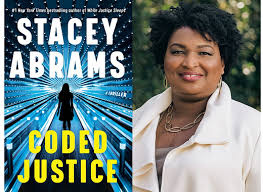
Stacey Abrams Discusses Coded Justice

BPL Presents welcomes nationally renowned author and leader Stacey Abrams, who discusses her latest thriller. Coded Justice follows the returning protagonist Avery down a dark rabbit hole into the breathtaking—and dangerously evolving—world of AI in the medical industry.


Former Supreme Court clerk Avery Keene is back…trying to put the past behind her at a prestigious high-end law firm in Washington, D.C. Head down and focused on a new life, Avery is now working as an internal investigator when a high-profile client seeks her out. Camasca Enterprises has a big problem and a short runway.

The tech company has developed a new integrated AI system poised to revolutionize the medical industry. To prove its potential, Camasca’s charismatic founder, retired Major Rafe Diaz, has picked a complicated target: delivering cutting-edge health care to his fellow veterans. The potential is staggering, but their prototype has been plagued by a series of disturbing anomalies—culminating in the mysterious death of a beloved Camasca engineer.


Avery and her colleagues, Jared, Ling, and Noah, are brought into the secretive company to investigate from the inside out. At the epicenter of a burgeoning, controversial industry, and with billions of dollars on the line, their task is simple: to determine whether Camasca’s technical troubles and rising body count reveal something sinister at work.

In Coded Justice, Stacey Abrams’s storytelling prowess is on full display—a deft combination of riveting twists and vibrant characters set against the fascinating landscape of the capabilities of artificial intelligence . . . and the moral boundaries that govern it. Coded Justice is Abrams’s most entertaining novel to date.