Home Blog Page 57

Left-of-Center Millennial Mamdani, Conservative Gen X Adams, and Moderate Boomer Cuomo: The Generational and Policy Divide

By Nayaba Arinde
Editor-at-Large

“I think the difference between Mayor Eric Adams and Assemblyman Zohran Mamdani–is largely a generational divide, as well as a policy divide in terms of one being more moderate, and the other being far more progressive,” political strategist and Columbia Professor Basil A. Smikle Jr. told Our Time Press. “I think there is a generational divide in the support he gets from African American voters. Mr. Mamdani does need to do some more work with older voters who are tied to traditional Democratic Party politics. And, there are older and more moderate voters who still like Eric Adams.”


On Monday, former Governor David Paterson held a press conference with some fellow Democrats who focused on Queens Assemblyman Mamdani. He said that he was inexperienced and that either the current mayor or the former three-term governor should drop out of their independent races and let folks coalesce around one main opponent.


“Some of the things Zohran Mamdani says are very difficult to deal with, including for the Black community,” Governor Paterson told Our Time Press. “He sees himself as the next mayor. My point to Adams and Cuomo is that if they both run against him, they are going to split the vote. He is on the Democratic line. They are not. Both of them are on independent lines. So he is in pole position and able to win.”


Cuomo lost the primary last month, with the frontrunner beating him by 12 points. Adams weighed up the fallout from the reaction to President Trump dismissing his five federal corruption and bribery indictments, and pulled out of the Democratic primary race, and decided to run as an independent.


With Mamdani battling Republican, Presidential, independent, and Democratic challenges, he says he will not be distracted from his five borough affordability agenda. As Trump has stated that he will pull money from his hometown, should Mamdani win, former Democratic State Chair Paterson said that, “It’s a job for someone who can make a plan work, and it’s got to be someone who is going to consider the people in the city and not single them out for some type of retribution.”


Cuomo’s campaign said, “We do not see any path to victory for Mayor Adams. This is the time to put aside the usual political selfishness and agree to do what is truly best for all New Yorkers.”
At the same time, Adams slammed the “arrogance” of Cuomo’s phone call request asking him to step aside.


“I’m the sitting mayor of the City of New York, and you expect for me to step aside when you just lost to Zohran by 12 points?” he asked on CNBC.
Mamdani’s campaign said that more than 545,000 New Yorkers voted for him, “The most votes any Democratic primary candidate has received in 36 years. In the coming months, Zohran looks forward to growing this coalition and reaching new voters with his vision for an affordable New York City and his plan to deliver universal childcare, fast and free buses, and a rent freeze for more than 2 million New Yorkers.”


In the media this past week, Adams and Cuomo have demanded an investigation, charged fraud, and disrespect, as they challenged the Ugandan-born, Indian-by-bloodline, South African and New York-raised Mamdani for his unsuccessful 2009 Columbia application self-description as a African American and Asian – as he ticked the designated race/ethnic description boxes.


“Eric Adams and Andrew Cuomo want you to believe that the biggest scandal amongst them is Zohran Mamdani and a denied college application,” said Public Advocate Williams.
The 2008-2010 NYS Governor Paterson said, “Adams has come a long way. Last year, we thought he might be convicted of some crime or something, but everything was dropped, and he has a free hand to run in this race any way he wants. Cuomo thought he won the primary, he says it wasn’t the polls, it was the turnout…whatever.. He got turned out. So now he is trying to be the candidate.”


Paterson said he does not see either of them dropping out. “In 2021, Adams got the people and mowed everybody else down. In 2025, because of his problems, the community is moving back towards him, but perhaps maybe not as quickly as he would like, because there is sort of a sense of a Trump connection. Then, that situation with Thom Holman, the immigration czar, when he was sitting next to him on Fox. He says if he doesn’t get things done, he will put his foot up his rear end, and Eric just sat here, and didn’t do anything. That was terrible. It made Eric look like a houseboy.”


Looking at the busy political landscape, Paterson added, “So, I made the gesture. None of the candidates seemed to be interested, which I respect. They want to stay in. If they want to talk about this later in the year when things are different, I am available..
“I wanted to raise the possibility of the candidates consolidating, but as it stands now I think Mr. Mamdani would win the General Election,” said the former governor, adding that concern is “his capacity to run the City, and in what direction…we don’t know enough about him to say one way or the other.”

Mamdani’s massive ground swell
“He certainly created a movement around his candidacy, because he is young, and relatively new to politics, certainly at this level, he has an opening to develop a narrative for himself that is more open and encompassing, and not tied to a specific or significant legislative record,” Smike determined. “I think it is likely that Mamdani will win because he is a Democrat in a predominantly Democratic city…There’s a lot of attention around wanting New Yorkers to stand up against Donald Trump.”


“If he does win, I’ll be the first to say ‘Give him a chance,’” declared Paterson. “I think, at this stage, Mayor Adams or former Governor Cuomo would be an easier fit. We are stuck because neither one of them wants to back down, and I don’t blame them.”


Mamdani recognized that visiting that old staple election move–Black churches, “I was able to reintroduce myself…So these next few months are an opportunity to continue to do just that.”
Smikle said, “I think a lot of African American voters have supported him, it’s just not the ones who are tied to traditional Democratic Party politics in New York City. So, he does have some work to engage with older African American voters. There’s time to do that.”


This mayoral race has also taken on national and even international standing, with Trump threatening to take away the Ugandan-born Queens assemblyman’s citizenship and deport him.


“The more the President attacks him, the more it raises his profile, and voters feel the need to rally for him as likely the next mayor of New York, and protect New Yorkers against threats by this administration,” said Smikle. “The attacks against him serve a very specific constituency of the president, but ultimately it can only serve to bolster Mamdani’s candidacy and within the party nationally.” (The President has said that if Mamdani “the communist” wins, he and the federal government will takeover.)

L. Joy Williams Leads the Legacy of NAACP New York State Conference

0

By Fern Gillespie
This week, veteran NAACP official L. Joy Williams is traveling to the national NAACP convention happening in Charlotte, NC from July 12 – 16. Although she’s been a panelist and a NAACP National Board Member, this time she’s attending as the President of the NAACP New York Conference of Branches, continuing the legacy of Spingarn Medal winner Hazel Dukes. Williams, an expert political strategist, has worked for over 20 years with the civil rights organization in fighting for social justice and racial equality. She made a memorable mark as President of the award-winning Brooklyn NAACP branch and host of the NAACP Image Award-nominated podcast “#Sunday Civics. Our Time Press recently spoke with L. Joy Williams about her new role leading the NAACP’s 54 New York branches as President of the NAACP New York Conference of Branches.

OTP: Hazel Dukes, the longtime president of the NAACP New York Conference, was your mentor. What advice did she give to you over the years when you were working with her on advocacy issues?
LJW:
Hazel Dukes had appointed me as legislative director for the NAACP New York State Conference. We were working alot hand in hand. I was engaging in legislative work on the state level, on behalf of the state conference. I was putting together legislative agendas for about five years. Organizing our Albany advocacy, among other things. So the advice was really focused on how to navigate those leadership roles. When there are times to speak loudly and firmly and when there are times to observe and speak softly and encourage and help guide things in a way rather than to directly have your hands on them. That is certainly advice that I use every day. Not only as we chart our course legislatively in the state, but also in engaging and building the NAACP’s 54 branches in New York State to ensure that we can be a stronger advocacy arm for Black people in the state.

OTP: In your role as the President of the NAACP New York State Conference, how are you dealing with the controversies facing DEI and diversity issues that are affecting Black residents in in New York State?
LJW:
Whether they are in government, public sector, or the private sector, a large portion of things targeted towards Black communities were classified as diversity, equity and inclusion programs. So, our focus is there still needs to be an investment in our community to ensure that there is equity across the board. So, we’re very much engaged not only in our school system, but also in corporate America. While we have New York State, who is not rolling back, as opposed to places like Florida that is rolling back their investment in diverse communities. Recognizing that the diversity that we have is our strength. But there’s still pockets of places across the state where that is not happening. Whether it’s the western part of the state or Long Island, which has also been increasingly conservative. There are places that we’re watching and that our branches are engaging in battle with as well.

OTP: Is the NAACP New York State Conference involved in migrant advocacy, especially in terms of the ICE deportations?
LJW:
One of the things during this process is people are under the impression that the people who are harmed and are targeted are only from Spanish speaking countries. Not that there are Black people who are also subject. Recently, a judge ruled in favor of ending the Haitian temporary protective status. That was also a population that the Trump administration was targeting. As you know in New York State there is a population of people from continental Africa and the Caribbean. And so, we are meeting in coalition with those groups that serve a Black immigrant population to ensure that their rights are protected and we uplift the issues of concern.

OTP: The national NAACP challenged the “big bill.” What is the NAACP New York State Conference doing in dealing with the Trump administration?
LJW:
The “Ugly Bill,” we know has disastrous impact on New York State in terms of Medicaid dollars as well as the SNAP cuts. The reason why I’m focused on building up the health and the infrastructure of the branches in New York State is so that we have an army of advocates who are continuing to push back not only on this administration, but then as these cuts trickle down to states. We’re looking ahead to the next state budget in the next state legislative cycle. We’re making sure that those cuts that may come is not on the backs of already vulnerable communities.


OTP: Why should Black New Yorkers across the state join their local NAACP branch?
LJW:
As President of the Brooklyn NAACP, we had success in building the largest branch in the state. It’s the most intergenerationally diverse. That was intentional in order for our community to advance forward. It’s not that we need one particular generation or just one solo leader. It requires all of us to bring our bricks and help build a hedge of protection around our community. But to also build and invest in our communities. And so, you want to be a part of it the NAACP because this is the entity that is going to litigate, agitate and advocate on behalf of Black people in this state. You don’t have to do it alone. Joining with us allows us to push forward an agenda. Whether it’s on a local level in cities like New York City, Buffalo or Rochester to the state level, and then combining our power with those across the country to push back on this administration.

What Is Your Soul’s Signature?

By Udhedhe Ojile

My soul signature or rather the unique rhythm of my life is soft.

Not soft in the lazy, passive sense. Soft like soil that holds roots. Soft like slow mornings. Like depth over speed. Before the “soft life” trend, softness was already my instinct, my resistance to unnecessary pressure and haste. Not because I fear ambition, but because I sense that what is meant for me doesn’t arrive through force. It flows.
I don’t move fast. I move deep.

That depth explains why I don’t take everything seriously, not in the cynical sense, but because I know I don’t have to grip life tightly to receive its gifts. I believe what’s mine will find me in divine timing, not societal timing.


But softness doesn’t mean smallness. My soul craves creativity and authenticity not just surface-level beauty, but the kind that explores the entire range of being human. My soul wants to feel all of it: grief, joy, heartbreak, elation. It’s drawn to the strange, beautiful complexity of human connection; across generations, cultures, and contradictions. I’m not interested in neat binaries. I want the grey. The nuance. The messy middle where truth lives.

Why I Don’t Set Goals
(And What I Do Instead)

Discovering my soul signature led me to a rather shocking revelation – I can’t set goals. For a long time, I thought something was wrong with me because I couldn’t stick to goals. I’d make elaborate plans and abandon them. I’d try to follow systems that worked for others but felt like shackles on me.
Eventually, I realized: it wasn’t a failure. It was a misalignment.

My soul doesn’t chase end goals. It moves through intention. I prefer to set rhythms over rules, practices over milestones. Intentions allow me to evolve. They’re spacious enough to hold change. And most importantly, they let the process be the point.


It’s not that I’m directionless, I’d say rather that I’m deeply guided. But I’ve never been able to name exactly what the destination looks like. And that’s because my soul needs room to become. My life has always unfolded like a series of breadcrumbs, not a straight path.


Last month, I tried to ignore that. I tried to live fast. I forced timelines. I abandoned rhythm. And I paid for it — loudly. I burned out, emotionally and mentally. Everything in my spirit said: This is not your way. I cannot do speed. I do planting. I do long-haul. I do sacred pace.

Soul vs. Society
Of course, there’s tension between my soul and the world. The world rewards hustle. Grind. Metrics. Viral success. It tells you to be everywhere, do everything, and win fast.
But I’m wired for the slow burn; tugging gently at my dreams, trying things out, pivoting when needed, and nourishing what’s real. The garden of my life grows slowly but meaningfully. And in that garden, mental health is the sunlight. Without it, nothing blooms.

To others, that may look undisciplined. But discipline isn’t just about rigidity, it can also mean protecting your peace. It can mean saying no to the algorithm and yes to alignment.
I remember something my father once told me on visiting day in boarding school. He looked up at the sky and said:
“See how vast it is? Everyone has their own lane, each with its own pace, trials, and victories.”
That stayed with me. Whenever I feel off-track, I remind myself: I am not behind. I’m just growing at my own rhythm.

On Soul Gardening
I think of soul signatures like plants. Some people are cacti. Some are monsteras. Some are wildflowers. They all need care; water, light, nourishment, but the dosage varies. What overfeeds one starves another.
So why do we garden our souls like everyone else?

Why do we take literal advice from people with completely different soil or care plans?

The work of life is to figure out what you are and how you grow. To study yourself like a garden. The universal principles may apply — rest, joy, nourishment — but the specifics are yours to discover.

The Role of Experimentation
Living in alignment with your soul signature doesn’t mean sitting idle. It means moving intuitively. Saying yes often. Trying things out. Figuring out patterns. Learning what sticks. You can’t know what works for your soul until you’ve tested it.


I’ve said yes to things that didn’t work — jobs, friendships, routines. But even those “wrong” turns taught me something. They helped me build the manual of me. They showed me my yeses and my hard no’s. They introduced me to amazing people who cracked me open and people who were purely lessons in passing. They gave me data.
Unfortunately, we don’t arrive in life with handbooks. We curate them as we go.

In Closing
If you’re in the middle of your own tug-of-war between the world and your soul — especially in a place like New York, where speed is a currency — I hope you pause.
Before you say yes. Before you commit. Before you compare. I hope you ask yourself; Does this feel right to my soul?


I don’t have it all figured out. But lately, I’ve started to see a shadowy outline of my soul’s signature. And I know it’s not fixed. It will morph and change. But I’m ready to stick around and watch it bloom.


And if you’re still in the fog, keep going. Keep observing. Keep experimenting. Life will whisper back eventually.


You’ll recognize your rhythm when it starts to feel like home. Happy soul searching!

Udhedhe Ojile is a Nigerian-born writer and creative based in Brooklyn. She explores identity, emotion, and everyday beauty through personal essays and her evolving food project, Didieats. She’s currently in a season of planting — experimenting, observing, and documenting as her work takes shape.

In the Spirit of Nomsa

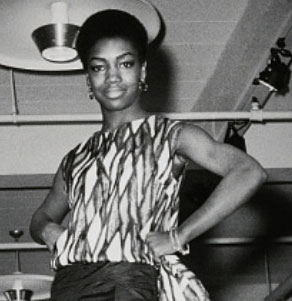
Remembering Helene Nomsa Brath

By Cinque Brath
In our community, we often celebrate the louder voices—the ones who grab the microphone, lead the marches, and always seem to speak from the podium. But there are other kinds of leaders, just as powerful, who work from the heart and the home. Helene Nomsa Brath was one of those people.


Nomsa—the name given to her by a South African artist—can be interpreted to mean one who is compassionate, kind, or joyful. And she was all those things when the time called for it. But what many people may not know is that Nomsa was also a fighter. A quiet rebel. She could be gentle, but she was not timid. She could be warm, but she never compromised her convictions.


In fact, her rebellious spirit was so distinct that she was one of only about eight women featured in a British documentary about women who defied expectations in industries that demanded conformity.

Even as a young girl, she was already sharpening her skills as a dissenter. In the 2019 documentary You Say You Want a Revolution: Records & Rebels 1966–1970 by Emily Harris, Nomsa shared a childhood story that said everything about her character.


One day, she told her mother she was no longer going to straighten her hair. Her mother, unwilling to deal with her feisty daughter, passed the matter off to her brother—Uncle Harry—a no-nonsense Korean War veteran.

It was his job to “straighten her out.” But by the time Uncle Harry came out of the room, his booming voice echoed down the hall—but hers never did. She hadn’t raised her voice once, but her mind was firm. He emerged, defeated, and told his sister: “Helene is not changing. Her mind is made up. Leave it alone.”
That was Nomsa. You rarely see her shouting, but you knew where she stood.


So much of the progress in our community rests on the shoulders of women like Helene Nomsa Brath—women who raise both the children and the collective consciousness. They may not always be in the spotlight, but they are the movement’s heartbeat.


I remember another day—more turbulent, more dangerous—that showed her fierceness in a more physical form. A friend of one of my siblings had been arrested and, during interrogation, told police that he had passed a weapon to one of my brothers.

He even gave them our address. Officers came knocking—more like banging—on the door. At the time, my mother was asleep on the living room couch, surrounded by several of us younger children.


When one of my siblings opened the door, the police rushed in—into our home, filled with minors, without pause or permission. My mother woke up to what she thought were strange figures in blue. She sprang up from her sleep with catlike reflexes, yelling for the officers to get out of her house.

One officer was making his way toward the bedrooms. She pushed him—and the others—out the front door in one clean, defiant motion. They vowed to return with a warrant. She didn’t flinch. Her courage filled the room like fire.


That moment told me everything I needed to know: my parents were made for each other. Many people know the name Elombe Brath—Pan-Africanist, media strategist, activist. His name rings from Harlem to the Caribbean to Africa. But fewer know about the woman who stood beside him—not behind, but beside him. Her influence ran deep, though often more quietly.


Helene Nomsa Brath was a founding member of the Grandassa Models and the only woman to ever hold the title of President of the group. The Grandassa Models didn’t just promote natural Black beauty—they revolutionized it.

In the 1960s, when straightened hair and lighter skin were considered the ideal, Nomsa and her sisters in the movement wore Afros, African fabrics, and the kind of confidence that declared to every young Black girl: “You are enough—just as you are.”


She raised seven children while staying deeply involved in community organizing, cultural programs, and education. She did not seek headlines or accolades. She did what she did because she believed in Black people.

She believed in us. She believed in the power of love, community, and self-determination. She reminded us that history isn’t just what we read in textbooks—it’s what we do every day in our homes, neighborhoods, and lives.


Today, we see her legacy everywhere. In young girls wearing their hair natural. In families who open their homes to teach, protect, and organize. That’s Nomsa living on. That’s the power of her example.


So often, history overlooks people like Helene Nomsa Brath. But for those of us who knew her, who learned from her, who were shaped by her—she is unforgettable. This article isn’t just a tribute—it’s a reminder. A reminder that leadership doesn’t always mean being in front. Sometimes, it means holding everything together from behind the scenes.

I—and so many others—learned how to serve our community by watching her, day in and day out.
Today, her legacy lives not only in memory but in action: through stories shared, a Harlem street co-naming in her honor, murals that carry her image, and lives she’s touched. It lives in every act of resistance rooted in love, in every person who chooses community over ego, in every young girl who grows up knowing she’s beautiful just as she is.
And for that, we honor her. We remember her. And we carry her light forward.

54th International African Arts Festival Joyfully Builds Community, Institutions

By Yvette Moore
The 54th International African Arts Festival at Commodore Barry Park in Brooklyn’s Fort Greene section July 4-6 did not disappoint. With a DJ-led funk dance party just off the main entrance, more than 170 vendors inside, and live entertainment and foods from across the diaspora, it was a joyous Pan-African community family reunion. Festival organizers estimated 7-10,000 people traversed the spacious venue over three days.


“This is the oldest festival of Pan-African culture in the United States, and arguably the world,“ said Segun Shabaka, IAAF board director and co-founder who’s been with the event since its inception. “We have maintained a high quality of artist and unique cultural presentation for the whole family— and rarely do you see that.”


Friday evening, straight from the stage of “The Lion King” on Broadway, South African artist Bongi Duma and his band were a headliner opening the festival’s musical offerings. His performance included an exuberant rendition of “Bring Back Nelson Mandela” as a tribute to Hugh Masekela, the late South African jazz trumpeter, and festival veterans of the global Anti-Apartheid Movement of the 1980s.

Youth from Brooklyn’s own Asase Yaa Cultural Arts Foundation also lit up the festival’s main stage Friday night with drumming and dancing that brought the audience to its feet.


Lectures and panels were featured throughout the event. A Sunday afternoon panel focused on the festival’s impact on building community and institutions critical to Black progress.
“You understand how institution building works,” said Adeyemi Bandele, vice chair of the IAAF board, panelist. “Five generations. 54 years. My grandchildren are now out here doing work at this Festival. And pretty soon I’ll be a great-great-grandmother. So, institution building is important now.


“How did it get here? One of the key components has been these vendors. Now we use vendors loosely, because they actually are craftspeople who bring out things that you may never see again. Oftentimes one-of-a-kind artifacts, clothing, etc.


“And don’t come here trying to lose weight. It doesn’t work. It’s not gonna happen! From Jollof rice to “Buss up” Rotti, patties, everything. This is a Pan-African Village. Whatever you want from the Pan-African World, you’re going to find it here—including people.”


Panelist Ayeshah Soaries is part of that institution building. She grew up in the festival spirit because her parents were nationalists. In high school, she joined the African Students Association and began working with the East and the Festival. This year, she set up the Ancestors Shrine.


Sunday afternoon’s natural hair show was another example of the festival’s lasting impact. Nekhena Evans is a Master Pioneer in the natural hair care industry with a specialty in creating hair accessories “fit for queens and kings.” This year marked her 25th year of organizing natural hair demonstrations at the event. Ms. Evans called the festival “a heartbeat” for the community. “The body can’t be without a heart,” she said.


Ms. Evans said that over the years, she has witnessed the enduring effect of the natural hair care industry, which events like the festival have helped nurture.


“A foundation has been laid in terms of natural hair,” she said. “There’s always going to be diversity and complexity with fashion going in and out [of style]. A woman can have a perm or whatever, but you see the little girls coming up with braids etc. Mothers are not perming their little girls’ hair. That’s a quiet foundation that has been set.”


As always, the festival was a family-friendly event offering space for children to run and play freely in a safe space and for adults to see old friends again.


That was Muslimah Mashariki’s experience.
“I can’t remember if I was at the first or the second festival, but I remember the stage and the music and the vendors,” she said. “It was no way as big as this, but it was joyous, so many people in that little street that was just packed in the street. And so, to see this after 54 years, it’s just been growing and growing and growing. This is a place to come to see anybody that you haven’t seen in years!”


And that is just the kind of community connections organizers seek to make possible.
“Black people from all different walks of life come to the Festival at peace,” Mr. Shabaka said. “I see the festival as a microcosm of the kind of community we should be interacting in and should be happening all over the country year-round.”


Yvette Moore is a contributing writer for Our Time Press.