Home Blog Page 524

Community Calendar

*NOTE: Due to the health crisis, check with venues to see if events are cancelled.

Friday, March 13th
Pay It Off Walk-in Office of Child Support Services Center, 330 Jay St., 12th Fl.
This limited-time program might help lower the amount you owe in child support. Offered until March 16th, Pay It Off doubles the value of lump-sum payments you make of $500 or more on child-support debt permanently owed to NYC Department of Social Services. In 2018 more than 600 parents reduced their debt an average of $3,400 with Pay It Off. To see if you are eligible, call 929-252-5200 before visiting the OCSS office. Ask for specific info on how to pay – credit, debit, check, etc.

Saturday, March 14th
Black Feminist Manifestos Weeksville Heritage Center, 158 Buffalo Ave., 1-5pm, FREE.
Structured as a three-part public program, Black Feminist Manifestos calls for a network of resistance and transformation through the enactment of documents written by Black women. They were written in different corners of the world during different moments in time that are resonant with the politically explosive reality we experience today. Throughout the day, the public can contribute to a collective manifesto and is invited to study books and archival materials from The Free Black Women’s Library. RSVP at Eventbrite.

Mind, Body & Soul Women’s Symposium The Brooklyn Hospital Center, 3rd floor, 121 DeKalb Ave., 11am-3pm, FREE. Attend a lecture on women’s health covering topics such as: Financial Fitness and Makeover; Estate Planning; What’s Your State of Mind? and Healthy Eating. Presenters are: Yvette Byer Henry, certified nurse midwife; Alice Barnes, financial advisor, Prudential Advisors; Kerry Archer, Esq., Douglass Radenacher, LLP. For more information contact Barbara Biggs Glover at 917-692-9899.

Thursday, March 19th
NYCHA Job Fair REES Offices 787 Atlantic Ave 1-4:30pm FREE.
NYCHA’s Healthy Homes Department is seeking to hire residents for seasonal (6-month minimum) job opportunities. Priority given to authorized NYCHA residents (18+) Bring updated resume and copies of all relevant certifications. These are 6-month jobs w/ possible extension. Applicants given a conditional offer of employment will be subject to controlled-substance screening and a criminal background check. The positions are: Community Service Aide – working with Lead Hazard Control Dept. to visually assess and clear lead paint conditions at NYCHA developments within the five boroughs. Starting salary: $29,360 with 200 positions available. Also Resident Communications Associate – working with The Healthy Home Unit, overseeing environmental hazard compliance efforts, quality assurance, performance management and providing technical assistance for mold remediation at NYCHA.
Starting salary: $38,333, 26 positions available.

Sunday, March 22nd
Fourth Annual Herstory Day Museum of the City of New York, 1200 Fifth Ave. at 103rd St., Manhattan 11am-2pm, FREE w museum $20 museum adm, 19 & under free.
Join in a day of activities to learn about the role women have played in shaping the game of basketball. With Keynote Speaker Priscilla Edwards, who grew up in Harlem and honed her skills playing in New York’s outdoor basketball courts, including the legendary Rucker Park. Activities around Herstory Day are designed for adults and children to complete together.

MARK YOUR CALENDARS

Monday, March 23rd
BKLYNWS: (two-channel newscast) Kahlil Joseph At three venues: Brooklyn Academy of Music, 30 Lafayette Ave., BAM Strong; Harvey Theater, 651 Fulton St.; and Weeksville Heritage Center, 158 Buffalo Ave. in Brooklyn.
Drawing on a variety of historical and contemporary sources, BKLYNWS is a brilliant and loving affirmation of Black culture by Los Angeles-based artist and filmmaker Kahlil Joseph. After premiering at the Venice Biennale in 2019 and being presented at the David Zwirner Gallery earlier this year (part of his brother Noah Davis’s exhibition), the two-channel installation will be on view at the three Brooklyn venues.
VOTE 2020
Tuesday, April 28
(Presidential Primary)

Tuesday, June 23
(Federal & State Primary)

Tuesday, November 3
(General Election)

What’s Going On

What’s Going On
By Victoria Horsford

CORONAVIRUS

Dr. Cheryl Smith delivered a coronavirus presentation at the Manhattan Community Board 10 general meeting last week. Presentation included color slides and charts and abstracted facts about how viruses develop and migrate. More importantly, the info was highly accessible. Her research sources include www.cdc.gov/coronavirus and www.nyc.gov/health/coronavirus. Visit www1.nyc.gov/html/mancb10 and go to “useful links” for Dr. Smith’s presentation, “CB10’s COVID-19 Coronavirus Update” on March 4.


A clinical professor at Mt. Sinai Health System and the Clinical Education Director of the NYS Department of Health AIDS Institute, Dr. Smith specializes in internal medicine. People 60+ years know: 1) to wash hands often and vigorously, 2) store enough food for 30 days and 3) avoid large crowds until more info is forthcoming regarding the COVID-19. They must race to the emergency room if they experience coughing, fever and shortness of breath. P.S.—Read the NY Times Charles Blow opinion piece, “You Can’t Gaslight a Virus: President Trump’s Usual Political Tricks Won’t Work Now.” Blow concludes that “Trump is as much a public health threat as the virus itself.”

On 3/10, Governor Andrew Cuomo said, “NY was the second-most afflicted state in America, with 173 coronavirus cases.” The largest cluster is in New Rochelle, where he plans some containment and mitigation measures: closing schools and large places of assembly. Worldwide, fear is spreading quicker than the virus pandemic. Stock markets are diving, airlines are cancelling flights to COVID-19 areas, schools and colleges are closing, as are sports and entertainment venues. March Madness and the NCAA games are played to anemic audiences. Sports franchises are undecided how to proceed. The crisis demands more facts from scientists. Last Saturday, a Chinese hospital used robots to manage COVID-19 patients, an effort to protect doctors. Moreover, Chinese and American researchers are looking for a vaccine, something ready for use this summer.

NY PERSPECTIVES

LAW AND ORDER: What is happening with our teens? Why did 15 Black Brooklyn teenage boys beat a young Black girl until she was unconscious, then stole her Air Jordan sneakers, a debit card and cell? Behavior is unacceptable. NYPD reports the beating was revenge because victim assaulted a young woman earlier that day. About nine of the teens were in custody at press time. These Black teens have destroyed life, theirs and the victims. How do adults address this Black teen dysfunction?

NYS Chief Judge Janet DiFiore, Court of Appeals, is confident that the Bail Reform Law will change, be amended and strengthened, allowing judges the ability to keep people in jail deemed too dangerous to release. This is one item that should have had a public debate last year before the votes were tallied in the Assembly and the Senate. Opponents of the law are diligent and have daily support in the tabloids like the NY Daily News and the NY Post.
Read the NY Times editorial, “Even 14-Year-Olds Who Kill Are Not Adults,” a reference to the tragic stabbing death of a 19-year-old white Columbia coed who was allegedly killed by three Black teens, a 13-year-old and two 14-year-olds. Editorial is a thoughtful reflection and its reasons against charging the 14-year-olds as adults. Editorial concludes that “crimes like Tessa Majors’ killing test the limits of forgiveness and redemption. But charging adolescents as adults make the state crueler, not safer.” Times cites a 1970’s NY law, which justifies the criteria for the 14-year-olds. Its application is inconsistent, depending upon which way the political winds flow and bend… and has power in Albany and a relationship with the NYPD.

New York legislators from congressmen to NYS Assembly members and senators who will be primaried this spring are: Congress members Yvette Clarke, Alexandria Ocasio-Cortez (AOC), Jerry Nadler, Adriano Espaillat, Hakeem Jeffries, Carolyn Maloney and Gregory Meeks.

Former 2020 Presidential hopeful Andrew Yang is considering a run for NYC Mayor 2021. He is supporting some hopefuls who advocate for “universal basic income” who will challenge/primary congressional incumbents in a number of states. Locally, he supports James Felton Keith, an engineer/economist in the June 23 NY primary who is running against Congressman Espaillat.

WOMEN IN THE NEWS

The Black Enterprise Women of Power Summit is a four-day convention attended by executive and professional women. New Yorker Harriet Michel, former president of the National Minority Suppliers Development Council, was honored as one of the “50 Most Impactful Women in Business Over the Past 50 Years” at the Women’s Summit held in Las Vegas last weekend.

A private memorial for the late Barbara (aka B.) Smith, restauranteuse, author, lifestyle maven, was held on March 3. Her B. Smith’s Restaurant in midtown Manhattan was a popular 80s destination for the Black middle class. The memorial was organized by her husband, Dan Gasby, and daughter, Dana Gasby.

Former XEROX CEO/Chair Ursula Burns donates $1 million to The
HistoryMakers to research the lives of African-American women for its new WomenMakers initiative. HistoryMakers is an oral archive which has recorded stories of more than 3000 Black newsmakers and achievers which is accessible digitally. Burns, the first Black woman to head a Fortune 500 company, enthuses, “We have to value our own stories.”

Stacey Abrams, attorney/author and erstwhile Georgia state legislator who founded FAIR FIGHT, a voters’ rights organization. Ms. Abrams ran for Georgia governor in 2018 and lost in a close race which I believe was stolen by the state’s ruling GOP, a customary practice. A rising star in national politics. Many speculate that she could be VP choice for the 2020 Democratic Presidential nominee.

ARTS/CULTURE

The Wilmer Jennings Kenkeleba Gallery’s new photography exhibit, “VISIONS 2020,” features the works of 42 Black fine-art photogs, including The Kamoinge Group. A partial list of the participating artists includes Tony Barboza, Howard Cash, Adger Cowans, John Dowell, Carl E. Hazlewood, Terrence C. Jennings, Hakim Mutlaq, John Pinderhughes, Ed Sherman, Coreen Simpson, Frank Stewart, Shawn Wallace and Mel Wright. Exhibit opens March 8 and closes May 2. Check with Kenkeleba about the exhibit’s panel discussion. Gallery is located at 219 East 2nd Street and Avenue B, Manhattan. Call 212.674 3939

MARCH CALENDAR

CANCELLATIONS: Rev. Jesse Jackson cancelled his PUSH Wall Street Project Economic Summit on March 10-12 in New York because of coronavirus health jitters. It will be rescheduled with a June date…the Schomburg Center cancelled its “Traveling While Black” Program on Wednesday, March 11 owing to COVID-19 concerns. Later, Schomburg cancelled all large assembly events until further notice.

A Harlem-based media and real estate consultant, Victoria can be contacted at Victoria.horsford@gmail.com.

World Health Organization (WHO) declares coronavirus pandemic

Director general says his organization is ‘deeply concerned … by alarming levels of inaction’

The world is now in the grip of a coronavirus pandemic, the director general of the World Health Organization has said, as he expressed deep concern about “alarming levels of inaction” in the fight against the spread of the disease.

In the past two weeks, the number of cases outside China has increased 13-fold, said Dr Tedros Adhanom Ghebreyesus, and the number of affected countries has tripled. There are 118,000 cases in 114 countries and 4,291 people have lost their lives.

“Thousands more are fighting for their lives in hospital,” Tedros said at a briefing in Geneva. “In the days and weeks ahead, we expect to see the many cases, the many deaths and the number of affected countries climb even higher.

“We are deeply concerned both by the alarming levels of spread and severity and by the alarming levels of inaction.”

The word pandemic should not be used lightly or carelessly, he said, nor should it be misused. “It doesn’t change what countries should do,” he said.

This pandemic was unlike any others in that it could be controlled, he said. The experience in China and South Korea, where the numbers of cases are falling, showed it was possible to turn things around. But many countries were not doing what was necessary.
“We have called every day for countries to take urgent and aggressive action. We have rung the alarm bell loud and clear,” he said.

Ghebreyesus was keen to stress that it was not too late to control the outbreak. The majority of cases – 90% of the 118,000 – are in just four countries: Italy, Iran, South Korea and China. “We can’t say this loudly enough or clearly enough or often enough: all countries can still change the course of this pandemic,” he said. He called on all countries to detect, test, treat, isolate, track contacts and mobilize their people in response to the pandemic.

“Some countries are struggling with a lack of capacity, some countries are struggling with a lack of resources, some countries are struggling with a lack of resolve,” he said.

Asked which countries were failing to do enough, he and WHO’s director of emergencies, Dr Michael Ryan, refused to be specific. “You know who you are,” said Ryan. The WHO would not criticize its member states in public. But, he said, it was not enough to limit testing to small numbers of people who fitted risk criteria that might be out of date – people over a certain age with a history of travel to China, for instance.

Some countries had not established sufficient capacity for isolating people, he said. Other countries were too willing to give up on contact tracing too soon, which could help slow the spread. Some countries were not communicating well with their people, giving them the information they need to keep themselves and others safe.

The WHO warning came as the death toll from the virus in Italy rose by 31% in 24 hours to 827, and the government there began considering imposing even tighter restrictions on daily life and announced billions of euros in financial relief to cushion against the economic shock. (The Guardian)

In Iran, by far the hardest-hit country in the Middle East, the senior vice-president and two other cabinet ministers were reported to have been diagnosed with Covid-19, the illness caused by the virus. Iran reported another sharp rise in the number of deaths, by 62 to 354, behind only China and Italy.

One Brooklyn Health System Prepares

LaRay Brown, President and CEO of One Brooklyn Health System, composed of Brookdale University Hospital Medical Center, Interfaith Medical Center and Kingsbrook Jewish Medical Center.
Our local hospitals are the frontline of defense against the spread of COVID-19, the coronavirus. We asked Ms. Brown what is One Brooklyn Health System doing to deal with this virus. Her response below has been edited for space.

LaRay Brown, President & CEO of One Brooklyn Health System


LaRay Brown: “We’re doing a myriad of things. First and foremost, we are communicating with our team member, our hospitals, nursing homes and outpatient center staff, giving them the facts about what COVID-19 is.
First and foremost, we have to make sure that our staff is safe and they take all the precautions they need to. We’ve developed an employee travel policy. We strongly discourage any international travel, and particularly to the countries that are the hotspots.
The Employee Health Service must be notified of all travel plans, and if the employee must travel, then upon return they must again contact the Employee Health Service and go through a screening process before being allowed to come back to work. If they do travel to a hotspot country, we will likely ask that they self-quarantine for 14 days, the time it takes for symptoms to develop and the disease is still communicable.
Domestic travel is also discouraged.
In terms of operational readiness, we’ve established a task force of staff from throughout One Brooklyn – hospitals, nursing homes, and our ambulatory care settings, to rapidly disseminate best practices. We are getting multiple messaging from local and state health departments and the federal Centers for Disease Control. We are making sure that as we implement policies, we know all the facets of the impact of the policy are considered.
The task force also ensures we maintain an inventory of supplies at appropriate levels.
As we get guidelines from NYC, the state Health Department and the CDC, the task force makes sure we stay on top of all those guidelines. This makes for a constant adjustment of protocols as we put in place new protocols to address the emerging numbers of people who are presenting with symptoms.
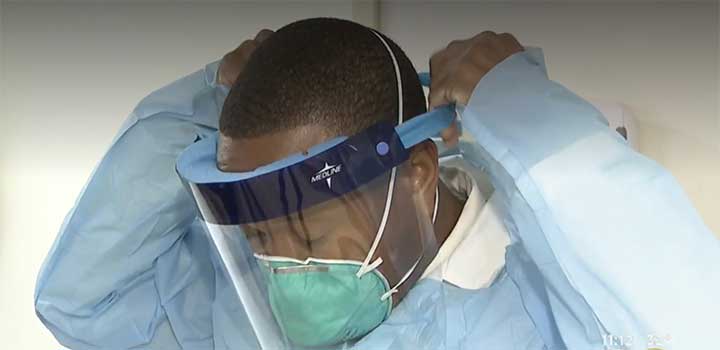
Because we have people coming in who may have the virus, we have to protect our staff. They are updated on protocols and the type of Personal Protective Equipment (PPE) they should be using and in which settings.
Sometimes the things your grandmother taught you will help in any circumstance. Hand hygiene is one of the biggest safeguards for our personnel and the general population.
People should wash their hands for at least 20 seconds using soap, and if not available, a hand sanitizer. We make sure these are available throughout the hospital. When folks are removing PPE, it has to be removed in a certain way, so we are routinely training on how to do that appropriately.
We are training all staff, particularly the environmental services staff, on cleaning of equipment and rooms and adhering to the appropriate environmental and cleaning processes. That, frankly, is no different than what has been used for other viral outbreaks.
Waste-management protocols put up signage everywhere about getting a flu shot. Many of the symptoms of the flu are similar to COVID-19.
We’re telling folks to take routine safeguards, not to go into places with largely congregated activities. Not to travel, particularly internationally, and if they’re planning on going on a cruise ship, they might seriously reconsider that.
We’ re impressing on our staff and patients that the greatest vulnerability are the people over 60 with chronic illnesses like diabetes, heart conditions, HIV and other health conditions which make them more likely to be susceptible to the most significant symptoms of the virus.
We’ve put in place visitor policies. Limiting the number of visitors to the inpatient units to two and no one under the age of 18. And they have to first go through a screening process. ‘Have you traveled? Where have you traveled? Are you feverish, coughing, sneezing, are you having trouble breathing?’ If folks answer any of those things in the affirmative, then it is a real caution for our staff that the folks cannot come and visit patients, because we don’t want to put vulnerable and already-hospitalized patients or staff at risk.”
The CDC is now allowing commercial labs to do the coronavirus tests.
QUESTION: Has the staff been tested? Is the hospital a virus-free zone?
MS. BROWN: I can honestly tell you there is no virus-free zone. We are not testing staff as a matter of course. If a staff person has traveled or are showing symptoms, then we will test. And we’re not the ones making the decision as to who gets tested. Even if the person has traveled and it comes to our attention they are showing symptoms, we have to confirm with the local department of health that we should test.
Even traveling locally in a subway in a densely populated city and borough and they begin to not feel well, we first ask them to call Employee Health. They will go through a screening and will be encouraged to call their private doctor. And not just come in to get tested.
QUESTION: How does that work?
MS. BROWN: They will be told to stay where they are unless they show symptoms, fever, coughing, sneezing and just feeling out of sorts and having a problem breathing. For the first ones I listed, you could have the flu with all those. But, for perhaps, difficulty breathing – unless you’re an asthmatic and anything that affects your capacity to breathe…
If you have a temperature or are just feeling out of sorts, don’t come to work and self-monitor. Come to an Urgent Center or come to an emergency room. We don’t want people getting so sick that they can’t breathe. They should monitor their temperature.
QUESTION: This thing is insidious. If they’re sick at home, how do they get to the hospital without infecting others?
MS. BROWN: That’s why, on the most part, people are being told do not go to your doctor’s office and sit next to other people. Do not come to the hospital. Again, unless their symptoms of having problems breathing, they are screened, a mask is put on them and they’re taken to isolation rooms or rooms where there’s a doctor.
The staff is protected with all the necessary protective equipment and the patient is squirreled away as far from other patients as possible, until such time as we go through the DOH on if they should be tested, taking a specimen and then sending it out. If it is confirmed that the person has COVID-19, there are very sophisticated protocols that the local Department of Health is requiring.
If the symptoms are not severe, they’re told to go home and self-quarantine, on what is called a precautionary quarantine, and there are specific things that they have to do. Things like separating yourself from the rest of the family and your pets. Constant hand washing is necessary. Taking liquids is necessary. Not sleeping in the same room as others. So, there are guides and tips for a precautionary quarantine – as compared to people in mandatory quarantine. The list of things gets longer that they must do. Moreover, the daily contact that they have to have with the city’s Department of Health.
QUESTION: It seems like you have the hospital and your caregiver situation under control. I just keep coming back to the transportation from the home to the hospital. Is there consideration for ambulance transportation or EMT help?
MS. BROWN: In fact, if a person is very sick, they are being transported by EMT ambulance services. One of the issues discussed in the meeting I was just in is that one EMT person had the virus.
We’re going to be reaching out to the ambulance services to get their protocols for the drivers and what we need for them to do as they are transporting a patient to our facilities.
QUESTION: This is really a full-scale reaction, isn’t it?
MS. BROWN: Some of the frequently asked questions are [about] ‘How serious is COVID-19 compared to the flu? What we don’t want is the general community to be extremely anxious. We do want people to be informed and take commonsense precautions. One thing we don’t want is people flooding emergency rooms if they don’t have to. We tell people you are at greater risk of contracting the flu than COVID-19. At this time, things change daily.
The flu has killed more than 15,000 people in the country so far. That’s why we encourage people to get a flu vaccine. Wash your hands. Don’t put your unwashed hands on your face. Avoid close contact with sick people in general. Avoid being in congested areas. Definitely avoid going on a cruise.
If a person has been in close contact with someone who has been exposed or, in fact, confirmed, that person does not have to get tested. Today, that’s what the CDC, the Centers for Disease Control, is saying, they’re not recommending testing. They are recommending symptom monitoring.
QUESTION: Without mass testing, how would you know how prevalent it is?
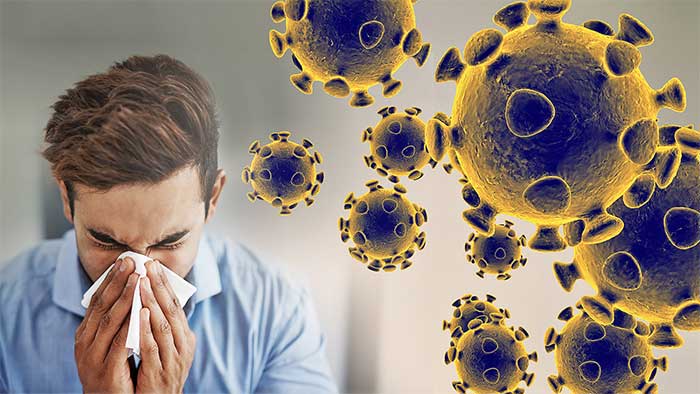
MS. BROWN: What I’ve read and what the experts have been saying, is that coronaviruses have been around a long time. And there is a large family of viruses that cause illnesses that are in that coronavirus family. The COVID-19 is the newest, the “novel” virus, but in general, in most, [cases], even of COVID-19, people have mild symptoms. The individuals who are most severely impacted are older individuals with chronic health conditions that create greater vulnerability, people in nursing homes as one example. Because it is a respiratory virus that can be spread with droplets, coughing, sneezing, nasal discharge from the affected person, that’s why the hygiene suggestions are being really emphasized.
To test everybody, or even everyone with symptoms, I think – I know – we’d quickly run out of the supplies. I know you’re covering that the governor, the mayor, are all demanding the federal government make more test kits available.
QUESTION: Was there something you wanted to add?
MS. BROWN: I appreciate that we have so many committed staff. From the doctors to the dietary workers, the environmental services workers who are continuing to work every single day. Understanding and wanting to be informed about the virus, understanding what the risks are, understanding what we are doing to minimize their exposure, following the rules to minimize their exposure, but still committed very much to serving people coming in who are sick. Protecting both themselves and patients from being exposed.

America’s Lack of Testing Programs Puts Everyone at Risk

The World Has Changed

We can now envision a dystopian future of masked figures moving through empty streets making a dash to buy food for another two weeks and then for another two weeks after that, and so on. That might be an exaggeration, but the point is, it may not be.

The world is different today and we don’t know where it’s headed. The future has suddenly changed for every single person in the country and in the world. Events we were planning to attend have suddenly been cancelled. Thousands of conferences, concerts and other gatherings small and large, including recent campaign rallies, have been either cancelled or postponed.

We are being told it is best to stay home and stay away from people. We are being advised to not get on crowded subways or buses.

Are taxi and car services required to disinfect their cars with each change of passengers?
Will hand sanitizer be mandated for every counter where money is exchanged?

In this health crisis, the poor, the Black and Brown will pay the highest price! They are more likely to have serious health issues! More likely NOT to have access to health care! Less likely to telecommute! And less able to withstand a sudden stopping of income!

What we need to know is: What is the extent of the spread here? How deeply is it imbedded in our community? What are the plans for testing me and my neighborhood?

South Korea has tested over 210,000 people. They are testing at 15-20,000 per day. They even have drive-through testing facilities. The US, on the other hand, has only tested a little over 8,000 people since the beginning of the crisis. Without testing, we have no idea if there are one thousand or a hundred thousand people carrying the virus in Brooklyn.

America lags because at the top of the decision-making process is a man who is aggressively ignorant. Trump insists he can still shake hands and hold large rallies (because he needs to hear the cheers), despite what every health professional says.
In his ignorance, he doesn’t realize he has met the foe that is more than his match. He does not comprehend that a virus cannot be bullied or name-called or lied away. None of his weapons will work here. The virus does not care about Donald Trump. It spreads.
We are a weakened nation going into an international health emergency. A virus is spreading. We don’t know what that portends for the November elections, the next flu season, or even Census-taking.

The world has changed. Our daily habits are affected, disrupting our routines and institutional behaviors. What we don’t know is how much and for how long.