By Eddie Castro The New York Jets fan base are once again frustrated by what they have seen from their beloved team this year. What was supposed to be a rebuilt year, is again turning into another year of agony. Part of this agony comes from how the Jets have been losing games. On offense, the play-calling has been very questionable in five games thus far leading to the team struggling to move the ball down the field.
The team has an issue holding on to the ball on offense. The Jets have 7 fumbles lost, which is currently a league high. The defense has not given the offense any breaks. Through five games, the Jets defense has zero takeaways on top of giving up too many big plays. On both sides of the ball, the team has committed several crucial penalties which display a lack of discipline. All of these miscues equals to the team’s first 0-5 start in franchise history.
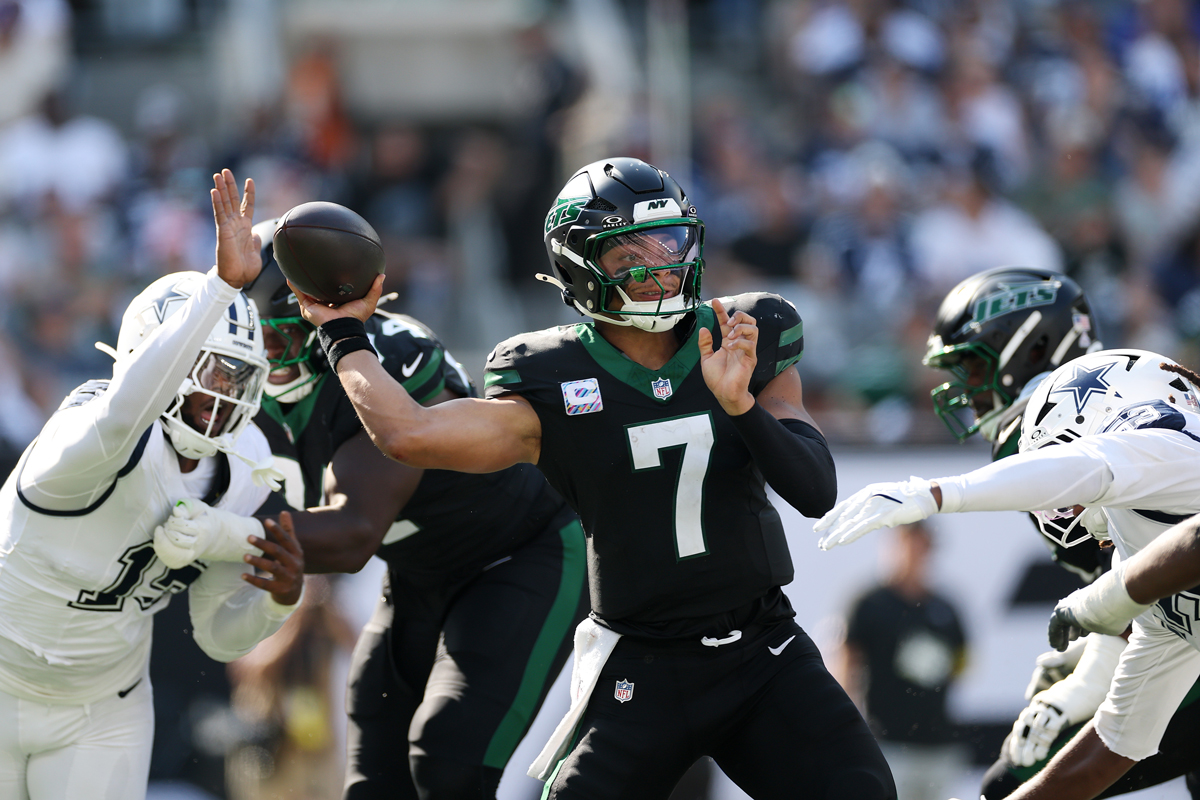
It’s only natural to blame two individuals when a team struggles this bad as the Jets have so far. One would be the head coach, two would be the quarterback. Coach Aaron Glenn is NOT the issue for the Jets. He is still trying to create an identity for this team; however, it has been the offensive line not giving quarterback Justin Fields and the penalties that have been self-inflicting in at least three of the five games.
Through 4 games Fields has thrown for 754 passing yards and 4 passing touch downs, 204 rushing yards (3 rushing touchdowns), to go along with a 100.1 passer rating. Clearly, Fields is not the issue in New York. Along with the fumbles lost on offense and the silly penalties the team has committed, the offensive line has not been sharp in protecting Fields, leading to the 26-year-old quarterback running for his life most of the time in games.
The defense has not been as advertised on paper. The inability of the defense to cover opposing receivers has also been a big issue for Gang Green. That issue was displayed during their 37-22 humiliating loss to the Dallas Cowboys last Sunday.
As I alluded to a few weeks back in an episode of Sport Talk With Eddie, I stated that part of a rebuild is showing the ability to progress. This Jets team has shown a lack of competitiveness when they find themselves down or in pressure scenarios in the game. Glenn has proven he is a good coach. We all see what he did during his time in Detroit.
The Lions are currently one of the top teams in the league. Glenn must find the identity and create a winning culture that the Jets desperately want to see. There’s still a good chunk of the season left for the team to finally show some life in these upcoming games.
There is hope that Glenn (a former Jet in his playing days) is still the right guy for the job. The Jets will look to finally take the first rebuilding step, collecting their first win of the 2025-26 season in a matchup against the Denver Broncos on Sunday morning in London.
Sports Notes: (Football) The New York Giants will face the division rival and defending Super Bowl champion the Philadelphia Eagles tonight. Tune in to another episode of Sports Talk With Eddie presented by Our Time Press live tonight at 5PM on the Our Time press You Tube channel. Have a question about your beloved New York team?
By Nayaba Arinde Editor-at-Large “There is no joy in [Sunday’s] announcement, even if there is some relief,” Public Advocate Jumaane Williams told Our Time Press after the announcement that Mayor Eric Adams would not be seeking re-election. “My hope is that the city can now begin to move forward — with lessons learned, and not soon forgotten by any of us.”
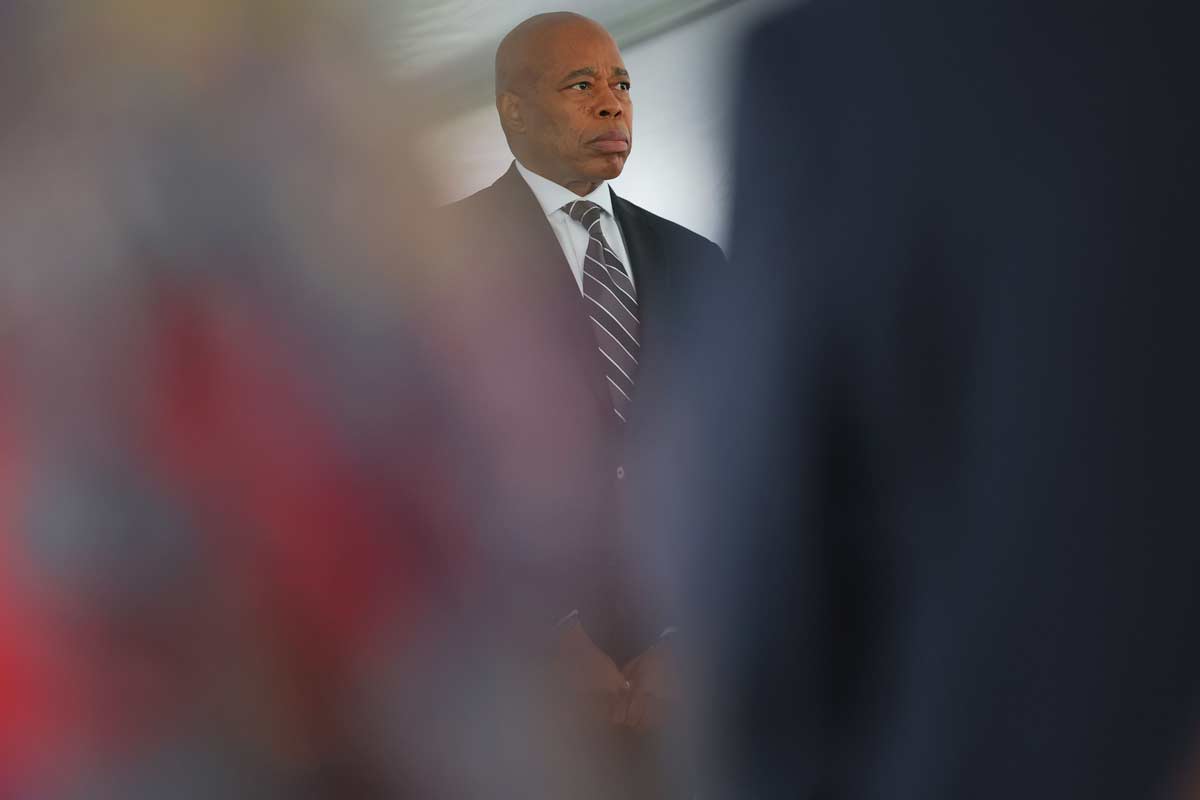
Reverberations are still shaking the city after Adams Sunday afternoon announcement that–despite passionate proclamations even the day before, that he would never pull out of his re-election bid–he did just that. Twenty-two years as an NYPD officer, almost as many as an NYC elected official, retired captain, and current incumbent mayor Eric Adams’ is looking for a new position in his fourth quarter.
“Despite all we’ve achieved, I cannot continue my reelection campaign,” he said in a video. “The constant media speculation about my future and the campaign finance board’s decision to withhold millions of dollars have undermined my ability to raise the funds needed for a serious campaign.” He proclaimed that it was not the end of the Eric Adams era.
“Although this is the end of my re-election campaign, it is not the end of my public service. I will continue to fight for this city, as I have for 40 years since the day I joined the NYPD to make our streets safer and our systems fairer.”
Many had predicted the political move as inevitable with his months-long numbers in the single digits. He made the announcement by video sitting on the stairs at Gracie Mansion next to big photo of his mom.
The flurry of breaking news headlines was immediate, as were the reactions from the remaining candidates–frontrunner and Democratic candidate Assemblyman Zohran Mamdani, Democrat-turned-Independent former governor Andrew Cuomo, and Republican Curtis Sliwa. “The lack of fundraising and voter defection to other candidates revealed in polling significantly narrowed his path to victory and likely pushed him to this decision,” Professor Basil A. Smikle Jr. told Our Time Press. “Given Adams’ support among older Black voters who tend to prefer more moderate, party-aligned candidates, Cuomo hopes to be able to pick up many of those votes”
Public Advocate Williams told Our Time Press, “When Mayor Adams was elected, there was real promise and potential to make progress on issues where New Yorkers broadly agree — and where a previous version of this mayor claimed he did.
Sadly, his tenure has been marked by an inability to self-reflect or course-correct after sustained and continued bad decisions, squandering potential and ensuring that the second Black mayor in our city’s history will, once again, not have a second term — overshadowing any real achievements along the way.”
Since 2022, Adams noted he had to balance a post-Covid-scarred city, followed by managing 237,000 migrants and asylum seekers arriving in the City. But, his administration was hit with scandal, bribery and corruption charges, five federal incitements – later squashed by President Donald Trump–in a largely reported alleged quid pro quo deal, dozens of administration leaving their jobs, and/or were questioned by the feds, plus four police commissioners in 3 and half years, and two Schools Chancellors.
This on top of close members of his team such as advisor Ingrid Martin-Lewis, and Jessie Hamiton facing serious corruption charges, prison time, or probation.
With the election just over a month away, folk are asking what is Adams next move, and will endorse any of the candidates? A source close to his camp denied emphatically that he would take a job in the Trump administration, but is taking time to contemplate what are his next options.
As for Mamdani’s campaign promises, Adams retorted, “That is not change, that is chaos…I urge New Yorkers to choose leaders not by what they promise, but by what they have delivered.”
Even as Trump has threatened to withhold any funds to New York if Mamdani becomes mayor, the DSA candidate said, “New York deserves better than trading in one disgraced, corrupt politician for another.” The 33-year-old Ugandan-born, Indian-heritage, Queens assemblyman stated, “On November 4th, we are going to turn the page on the politics of big money and small ideas and deliver a government every New Yorker can be proud of.”
Cuomo warned, “We face destructive extremist forces that would devastate our city through incompetence or ignorance, but it is not too late to stop them.”
Sliwa said despite any rumors, he is definitely staying in the race. While the Mandani camp has repeatedly not responded to Our Time Press requests for an interview, the voting populace is voicing discontent with the possible disconnect.
Public speculation that he may think that he does not need the Black grassroots vote to get into Gracie Mansion, as he visits churches and certain Black events, activists like Motanya Gladden said, “While I have become disillusioned by the other candidates, I’m extremely bothered by the fact that Mamdani’s team doesn’t appear to include many Blacks.”
“What will happen to Black New York City?” asked former Adams endorser Charles Billups. “Are African American and Black citizens in New York City going to be left out again?” The Chairman of the Grand Council of Guardians told Our Time Press, “We were left out right after [Mayor David] Dinkins lost. None of the other candidates are reaching out to the real grassroots community. We hear the sound bites, but they have not come to meet us face to face and explain what their plans are in the upcoming years.
“It is an error on their part not to meet with us, they are setting themselves up for failure. We have to be smart and pivot, and realize that none of these individuals will address our issues. We have to fortify ourselves for this change that is coming.”
Retired detective Marquez Claxton told Our Time Press, “Similar to David Dinkins before him, time will reveal the significance of the Eric Adams administration. From the restructuring of resources to MWBEs, adding jobs, the City of Yes housing plan, free WiFi for low-income New Yorkers, city-wide student loan forgiveness program, reducing subsidized child care costs to accomplishing historic low crime rates, the successes are impressive.
Additionally, Eric repeatedly made historic high level appointments which made his administration the most ethnically, and racially diverse in City history. These accomplishments ensured that in spite of polls and the papers, Eric was a formidable candidate for re-election. Unfortunately, the anti-Eric Adams forces starved his re-election campaign of any oxygen by denying him the funds that he rightfully deserved.”
Speaking to Our Time Press this week, AT Mitchell, the founder of Man Up, Inc., the Brooklyn-based internationally known Cure Violence organization, said, “I am very sorry to see this day.
The media used every tactic that they had and did a character assassination. It was so unjust how they used propaganda against him, but they never spoke about his record and the results.” Mitchell concluded, “Other people have confidence in someone new. I hope they are able to get what they need for their communities. I am hopeful, but doubtful.”
What you need to know for now is that it was just like this. I wasn’t running away. I was running toward myself.” From The American Daughters by Maurice Carlos Ruffin
We know that spies have always been necessary and crucial to people and countries engaged in warfare. During the Civil War, there were famous and secret networks of spies on both the Union and Confederate sides.
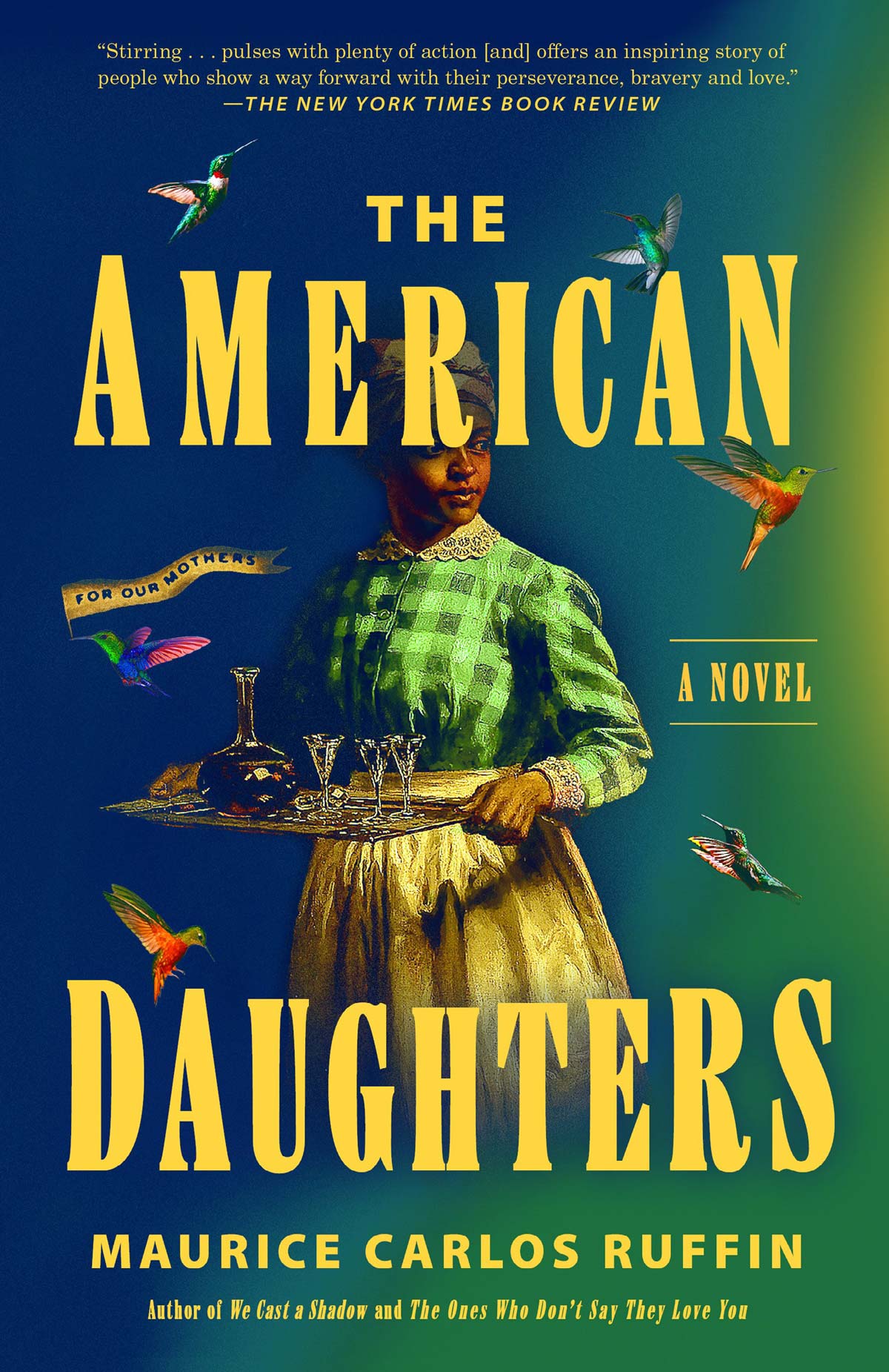
The most well-known Black spy on the Union side was the abolitionist Harriet Tubman who organized Black soldiers to scout behind Confederate lines. She is especially renowned for her extraordinary work as an underground railroad conductor and for leading at least 300 enslaved Black people to freedom. Maurice Carlos Ruffin’s novel The American Daughters (One World, 2025) introduces the Daughters, New Orleans Black women who served as spies in the Civil War.
The central themes underlying the novel are the impact of the “Daughters” on the development of the southern confederacy and the effect of the cruel and inhumane conditions of slavery on the love between a woman and her daughter.
In The American Daughters, Ruffin describes the ways and means that a network of enslaved and free Black women sow the seeds of resistance to secure freedom for themselves, their daughters, mothers, grandmothers, and inevitably for Black people throughout the south.
These acts include sabotaging efforts by slavers, running away, poisoning meals, slowing down work, forging documents, feigning illness, and sending messages through music, dance, and hidden materials. Resistance also involves taking on aliases. One of the American Daughters informs Ade the protagonist, that “My dear, most of the people who work here use aliases. It is the nature of our society that demands it.”
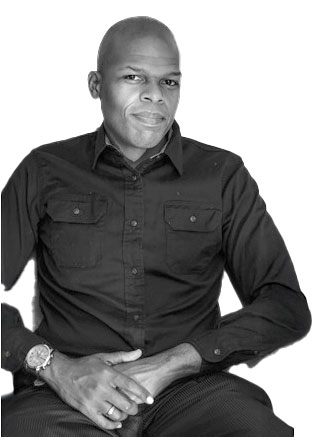
Maurice Carlos Ruffin
Sanite, the mother of Ady, is the first person who embodies resistance in Ady’s life. She keeps her daughter close and instills in her the importance of being free, doing what is necessary to work towards that freedom, and remembering that she is a person first. She says to her daughter, “What you need to know for now is that it was just like this. I wasn’t running away. I was running toward myself.” Running thus becomes a necessary act in acquiring one’s freedom.
Ruffin knows how to engage readers and his literary techniques foreshadow events and present readers with an omniscient narrator who goes back and forth in time. Readers also encounter original documents from slavers, newspapers, and letters that provide a context for this period in the history of New Orleans.
When the novel begins Ady is a grown woman. She describes her current situation as an “entertainer” in a New Orleans Hall and then reflects on her memories of lying beside her mother as they rode in a slave catcher’s wagon with other enslaved men and women who were shackled to the floor. Readers witness Ady’s growth and maturity as she loses her mother and is forced to find a way to cope with her devastating loss. Her meeting of The Daughters, a network of women spies, is a turning point in the novel. Ady desperately wants to become one of the Daughters.
The Daughters who had many aliases . . . had been operating locally since Napoleon handed the territory off to Thomas Jefferson, if not before. Many of the Daughters had been killed in their clandestine endeavors. Whatever actions they took-whether successful or failed- were elided from all records.
Ady understands that whatever the Daughters accomplish will be forgotten, but this knowledge does not deter her; rather it strengthens her resolve to work with them. We are familiar with the organizations Daughters of the Revolution (DAR), an organization for women who are directly descended from a patriot of the American Revolution and the United Daughters of the Confederacy (UDC) founded in 1984 for women descended from Confederate soldiers.
Ruffin’s The American Daughters, an imagined record of the acts of resistance by enslaved Black women, reminds us that all the stories of the perseverance of Blacks in America have not been told.
At a time when educational curricular across the nation are being revised to omit the presence of Black people in American history and literature, when books are being banned, when free speech is censored, and when constitutional rights are ignored or taken away, Ruffin’s novel is significant, in that it adds depth to the presence and resilience of Blacks in America and documents their strategies for resisting slavery.
Additionally, his novel emphasizes the bond between a mother and child and is part of a counternarrative that can provide readers with knowledge of the multiple forms of resistance that enslaved people may have used to secure their freedom.
The American Daughters is a New York Times Editor’s Choice. Ruffin is the recipient of many awards and the author of The Ones Who Don’t Say They Love You and We Cast a Shadow. He is an associate professor of creative writing at Louisiana State University.
Dr. Brenda M. Greene is Professor Emeritus and Founder and Executive Director Emeritus of the Center for Black Literature at Medgar Evers College, CUNY. For more information, visit https://www.drbrendamgreene.com
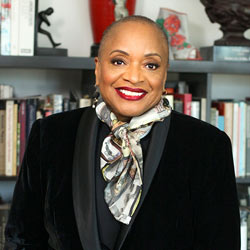
by Fern Gillespie In an era where federal arts institutions are cautious in exhibiting political Black culture that the Trump administration might deem “Anti-American DEI,” the National Gallery of Art has boldly organized an exhibition that explores the impact of the Black Arts Movement. “Photography and the Black Arts Movement, 1955–1985” through January 11, 2026 at the National Gallery of Art in Washington, DC, is co-curated by renowned Black photography historian, Dr. Deborah Willis and Philip Brookman, a consulting curator for photography at the National Gallery of Art.
During the Black Arts Movement, Black artists embraced Black Power through self-determination and redefined and revolutionized Black culture through visual arts, poetry, theatre, music, photography, fashion, journalism and film. Although the Black Arts Movement was launched by Amiri Baraka and Larry Neal from 1965 to 1975, this exhibit explores Black political and cultural photography pre-dating in 1955, the Civil Rights era, to 1985, the Black progressive period.
“When we think about the Black Arts Movement, it’s mainly painting or literature. Not having an opportunity to see to see photography as not just documenting the movement, but being a part of it and being an integral connection to what excited the image makers to make images,” Willis, a New Yorker, told Our Time Press.
Dr. Deborah Willis
“So, when we thought about some of the artists that made a difference during that time period, they were practitioners. They were not only developing the movement from the literary experience of Larry Neal and Amiri Baraka, but they were also creating their own legacy by making images and responding to their communal experiences.”
The exhibition has 150 examples tracing the Black Arts Movement from its roots to its lingering impacts from 1955 to 1985. It shows the bold visions shaped by generations of photographers including Billy Abernathy, Kwame Brathwaite, Roy DeCarava, Gordon Parks, Doris Derby, Ademola Olugebefola, Emory Douglas, Barkley Hendricks, Barbara McCullough, David Driskell, and Ming Smith. There is art by legends Romare Bearden and Betye Saar, who collected photographs and utilized Black photographer’s images in their artwork.
“The project was intended to look at a lot of work by photographers and artists who weren’t as really well-known as they could be,” Brookman told Our Time Press.
We really wanted to look at the connections between photography and the Civil Rights Movement and the Black Arts Movement. That’s why the exhibit begins in 1955 and ends in 1985 because the connections are broader than I think we initially thought.”
“Phillip and I have co-curated a couple of shows together over time. We’re both photography curators and photographers, always looking at activism in our work,” said Willis. “We were thinking about this five years ago during post COVID. We just we lost a number of people we love and care for during that time period like artist David Driskoll, and many of them were actively in the Black Arts Movement writing and creating work.
So, we thought it was time to consider ways to preserve their memories and also preserve the collections and the collective experiences of what artists were doing.”
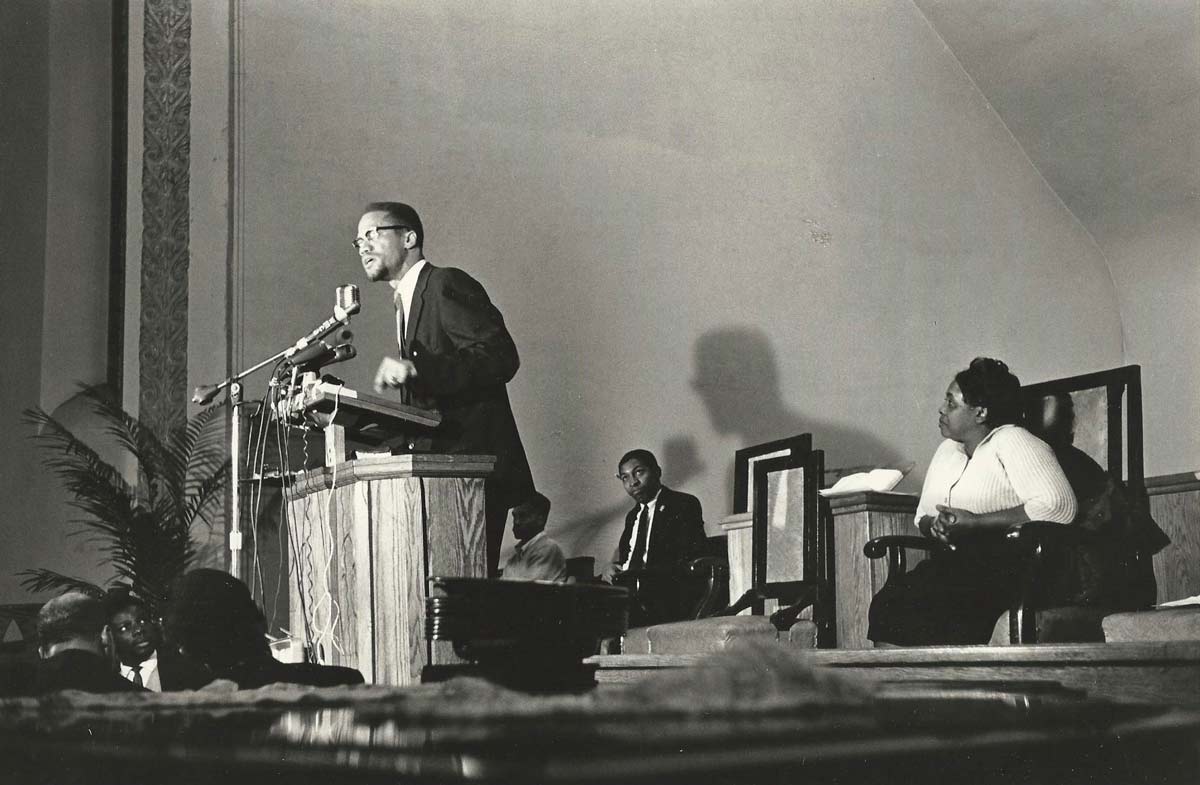
Vintage photos spanning community activism from Harlem to Chicago to Los Angeles to Atlanta are on view. The exhibit shows the impact of the Black Arts Movement on the African Diaspora encompassing Black Latino, European and African photographers. There are landmark photographs of Martin Luther King, Malcolm X, Fannie Lou Hamer, Bobby Seale and others.
Work by Gordon Parks is spotlighted. “Gordon Parks’ work does have a major impact on the Black Arts Movement,” said Brookman, who has curated major exhibitions on Gordon Parks’ photography. “Going back to 1955 and 1956, he went to Alabama on assignment for Life magazine and photographed the story about segregation in the South.
It’s a time, when Parks becomes more of an activist in his work as he as much as he could for Life magazine. He began making photographs that were about the idea of segregation and desegregation in the aftermath of Brown versus Board of Education.”
There are images in the exhibition by noted New York photographers like Eli Reed, Alex Harsley, Darryl Ellis, Adger Cowans, Dwight Carter, Anthony Barboza, and Coreen Simpson. In addition, Kwame Brathwaite, who is now getting the recognition he deserved. “I just think it’s fantastic. I first met Kwame when I moved to New York in 1969.
He was such a giving, generous photographer who was part of the movement with his Grandassa Models and the ‘Black is Beautiful’ movement,” Willis said. “During the later years of his life, he traveled and talked to people about his photography collection. A number of collectors and curators would see the importance of his work.”
Willis has gained the reputation as the leading scholar and author on African American photography. She is chair of the NYU Department of Photography & Imaging and director of the NYU Center for Black Visual Culture. A prolific author of over 15 books on Black historical photography, she holds a bachelors in art from Philadelphia College of Art, art master’s degrees from Pratt Institute and CUNY and a doctorate in cultural studies from George Mason University.
She’s held key arts positions at the Schomburg, Duke University and the University of North Carolina at Chapel Hill. Willis has earned numerous honors including a MacArthur Fellowship “genius grant,” a Guggenheim Fellowship, a Harvard University fellowship and an honorary doctorate from Yale University.
In addition to “Photography and the Black Arts Movement, 1955–1985,” the National Gallery of Art also has an exhibit by a major Black artist. “In the Tower: Chakaia Booker: Treading New Ground,” through August 2, 2026, features the Newark-born artist renowned for repurposing discarded rubber tires into sculptures.
This exhibition spotlights three massive rubber sculptures, which span 20 to 21 feet wide, that encompass masses of curled tire rubber, spiky shards, coiled strips, and loops made from inner tubes.
Recently, the National Gallery of Art was in the news stating the Trump administration requested that the famed photograph of an enslaved man, “Scourged Back,” be removed. A spokesperson from the National Gallery of Art told Our Time Press this is not correct. “It is not accurate that the work is set to be removed from the National Gallery of Art. A copy of this photograph is part of our collection of over 160,000 works but has not been displayed since 2022,” said the statement. A catalogue is available on “Photography and the Black Arts Movement, 1955–1985.” For more information on the National Gallery of Art, visit www.nga.gov
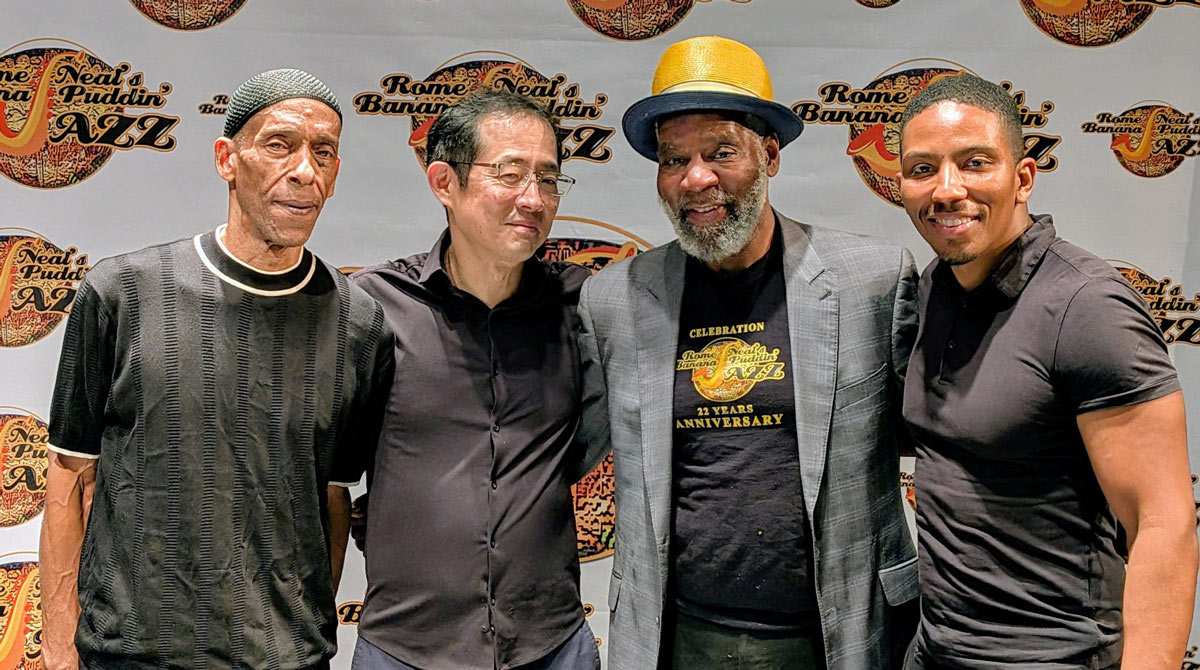
On the evening of September 29, Rome Neal, the quintessential artist, celebrated his 73rd birthday as part of a Rome Neal Banana Puddin Jazz Production presented by Theater for the New City.
The birthday concert celebration honored the life of the director/actor/producer/writer/jazz and black theater advocate in the soul-stirring production titled “TIME FLIES,” under the artistic direction of Crystal Field.
And it was great, and typically Neal doing his atypical thing. The evening concluded with an open mic jazz session with musicians and vocalists joining in the “spirit of improvisation and collaboration” and Rome’s complimentary home-made offering.
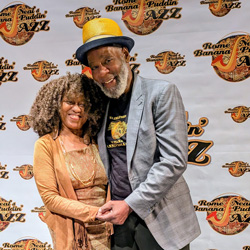
Jackie Jeffries (President of the the AUDELCO Awards) and Rome Neal.
Rome famously took Banana Puddin’ out of his kitchen and made it a universally known treat for attendees at his concerts. Ever the innovator, Neal brought back another end-of-concert dessert, Tuesday night. His audience cooked up their own word-ingredients for a jazzy group poem. At our request, Neal generously shares it with our readers.
Rome Neal Speaks About His Favorite Things: Jazz, Creativity, Monk, Music’s Future On Monk: Monk, the play by Laurence Holder, changed my trajectory as an artist because it brought Jazz into my life and with that a willingness to perform the music as a vocalist; and promote and produce the music and the artists who make and perform the music honoring the progenitors of the music — a for the past 22 years via my Banana Puddin’ Jazz series!
On Time: Some would say “Time Flies,” matter of factly, however it wasn’t til this year that I stop to reflect on that phrase at 73 years young, from a Smokey Robinson tune I was requested to sing for my good friend, Stephen Davis’ 40th wedding anniversary. Hence, the title of my Birthday Concert and the opportunity to share some of the stories which got me to this point in my life and how precious and grateful I am to be a part of this life and, dare I say, make a difference for the betterment of others.
On Joy: For those who feel the world is void of joy and there’s nowhere to find it, I would say listen to the music and go to a live jazz concert. Go see good theatre, find the joy in the creative arts! On Inspiration In this constantly changing world, I am inspired by the beautiful creative folks I meet and have lived with for so many years of my life.
On Genius. Genius? Me? No, I just love to do what I do in Jazz and Theatre with strong passion! However, when the great Playthell Benjamin laid that moniker on me it was an honor. So as “Time flies”, I have been fortunate to pass it on to my musical director/ pianist Andre Chez Lewis and my musical nieces violinist/vocalist/composer Mimi Block and pianist/ composer Leonieke Scheuble. If you don’t know of them, you will. Stay tuned. They are collectively our future of the music!