Home Blog Page 45

Adams Pilots Brownsville Stress-Free Zone for Pregnant and Postpartum New Yorkers

On Tuesday, the New York City Health Department launched the City’s first-ever pilot of the Neighborhood Stress-Free Zone (NSFZ) in Brownsville, Brooklyn, to address priorities voiced by pregnant and postpartum New Yorkers and their families and the recommendations of New York City’s Maternal Mortality Review Committee.

In partnership with Brooklyn Perinatal Network (BPN) and Public Health Solutions (PHS), the pilot will be located in the Health Department’s Brownsville Neighborhood Health Action Center’s Family Wellness Suite. This initiative expands resources for maternal health education, social needs support, and connections to mental and behavioral health services.

This groundbreaking pilot is a critical part of the Health Department’s Healthy NYC initiative, an ambitious plan to increase New Yorkers’ life expectancy to 83 years by 2030 and reduce maternal death by10 percent. A new annual report issued today by New York City’s Maternal Mortality Review Committee (MMRC) demonstrates urgency.


The MMRC report showed that the number of pregnancy-associated deaths in New York City increased 13.7 percent, from 58 deaths in 2021 to 66 deaths in 2022, the highest number of pregnancy-associated deaths since 2016. Black non-Hispanic women and people who gave birth accounted for 42.4 percent of pregnancy-associated deaths compared to 17.5 percent of live births. The leading cause of pregnancy-associated deaths in 2022 was mental health conditions followed by cardiovascular conditions as the second-leading cause.

Neighborhood Stress-Free Zones can improve maternal health by offering stigma-free access to health and social support for pregnant and postpartum people in high-priority neighborhoods, with a focus on chronic conditions, mental health, and substance use disorders.

“Our administration has been laser focused on addressing the historic inequities in maternal health, especially from Black and Brown women,” said New York City Mayor Eric Adams. “Thanks to the Citywide Doula Initiative our administration launched, we have already served over 3,200 mothers — increasing the citywide doula coverage in New York City by 25 percent and going these three years without any maternal deaths for program participants.

This pilot is another example of how our administration is delivering for families right in their communities. It’s about complementing clinical care with holistic support, including mental health care and vital social services where they can access this support.

Every pregnant and postpartum New Yorker deserves dignity and the resources to thrive, and the Neighborhood Stress-Free Zone is an essential component of our HealthyNYC plan to extend life expectancy and build a healthier, fairer city for everyone.”

“The opening of this Neighborhood Stress-Free Zone is another step toward achieving our HealthyNYC goal of reducing Black maternal mortality by 10 percent by 2030,” said Deputy Mayor for Health and Human Services Suzanne Miles-Gusatave. “New and expectant parents need a safe, supportive, and accessible space in their community to connect to resources and networks of care. The NSFZ is just that space and is made possible throughout our partnerships with Brooklyn Perinatal Network and Public Health Solutions.”

“Brownsville, Brooklyn—which has experienced decades of disinvestment, redlining, and unfair barriers to care—has the highest pregnancy-associated mortality rate in New York City,” said Acting Health Commissioner Dr. Michelle Morse.

“That’s why we are piloting Neighborhood Stress-Free Zones in Brownsville first. Pregnant people and new parents deserve access to the full continuum of care, from mental health support to help meeting the economic demands of parenthood. We cannot let our systems fail Black women, and this is a first step towards a new future for maternal health in our city.”


“Brooklyn Perinatal Network, Inc. is always excited about collaborating with the NYC Health Department and has done so since our inception over 35 years ago. We are exceptionally pleased to be able to partner with the Neighborhood Stress-Free Zone at the Health Action Center, where we are co-located with the Health Department,” said Ngozi Moses, Executive Director, BPN.

“It is vital for our maternal population to have a place to go where we are able to address some of the stresses that they encounter. The NSFZ is expected to help so many individuals and help reduce some of the barriers that our pregnant and parenting individuals face. We know that social and health care barriers and other stresses have such a negative impact on birth outcomes.

We look forward to the success of this collaborative partnership
This week, October 1, 2025, Brooklyn Perinatal Network will become a formal partner with the Health Department to provide on-site screenings for health-related social needs and social care services, and facilitate referrals for housing, nutrition, and transportation programs.
The Health Department’s Family Wellness Suite services in Brownsville will be expanded to provide perinatal clients access to stress-reduction activities such as perinatal massages and yoga classes.

New maternal health-related education programs will be offered to all community members on topics including perinatal mental health, gestational diabetes and hypertension, lactation, and nutrition.

The NSFZ is an important step forward as the Health Department advances its broader Maternal Home Collaborative aimed at addressing birth equity through clinical and community care linkages.
For more information, see the Brownsville Neighborhood Health Action Center webpage.
Building a Sensory Safe Haven for Children with Special Needs and their Families

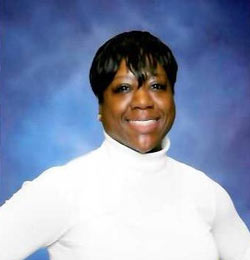
By Deon Jones,
Founder & Executive Director,
Uniquely Me Creative Arts


In Brooklyn, families raising children with special needs live with constant challenges. Services are limited, waitlists are long, and truly safe spaces where children can thrive are too rare. Parents search endlessly for environments that welcome their children as they are, but too often they hear “we are not equipped” or “this program isn’t the right fit.” The weight of this reality grows heavier for minority families, who face both systemic racial inequities and the gaps in disability services. When these barriers intersect, access to high-quality programs and resources becomes even more elusive.

I know this struggle personally. My son Elijah was born with Down Syndrome and later diagnosed with autism. As a result of his dual diagnosis he struggles with sensory processing disorder, which means his brain struggles to organize and respond to information from his senses. Loud noises, bright lights, or unexpected changes can overwhelm him, while at the same time he often craves movement or deep pressure to feel grounded.

Deon Jones


His dual diagnosis has made navigating the system even more complex. Schools, therapy providers, and community programs often do not know how to meet his needs. There were times when I felt completely isolated, overwhelmed, and unsure where to turn. That experience is why I founded Uniquely Me Creative Arts, or UMCA.


UMCA was created with a simple mission and profound purpose: UMCA’s mission is to improve sensory processing disorder for special needs children through sensory-focused creative arts activities while their families engage in family chats led by experts in the field. In just over a year, we have grown into a network of more than 100 families across Brooklyn.

Our “Sensory Saturdays” bring children together for music, art, dance, drama, STEM, and visual arts in environments tailored to sensory needs. At the same time, parents gather in family chats to learn from physical, speech, occupational therapists, attorneys, family advocates, and doctors. Moreover we share love, strategies, and emotional support.

The impact has been undeniable. Children find new ways to express themselves and experience joy. Parents, many of whom arrive weary from the daily grind of advocacy, leave with hope and renewed strength. They gain something that is often missing in their lives: respite. For a few hours, they can exhale, knowing their children are safe and cared for.
But UMCA is more than a program.

It is a community. Families who meet through our events build bonds that extend far beyond our walls. They lean on one another, go out together, and create memories they once thought were out of reach. This fall, UMCA families will see Broadway’s Hell’s Kitchen and have dinner at Carmine’s, all at no cost to parents. These moments are more than outings; they are reminders that inclusion means full access to life, culture, and joy.

Unfortunately, the need for spaces like UMCA far outweighs what currently exists in Brooklyn. Families continue to face systemic inequities that leave them struggling to access therapies, safe environments, and culturally affirming programs. For Black and Brown families, those inequities are compounded. This is why our work is not only about creativity and community, it is also about equity and justice.

Brooklyn deserves a place where children with special needs can learn and grow, and where families can find both support and rest. That is why we are proud to take the next step in our journey with the opening of the UMCA Sensory Zone.


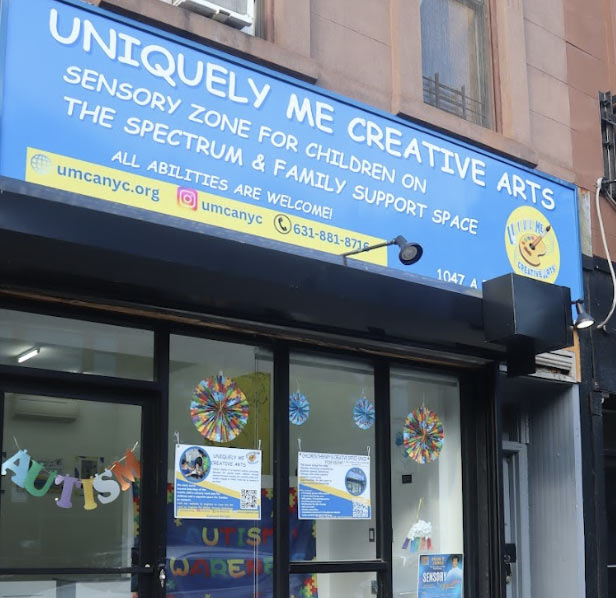
Located at 1047A Fulton Street in Clinton Hill, the Sensory Zone will be Brooklyn’s first dedicated creative arts hub for children with special needs and their families. It will include therapy rooms, sensory play areas, arts spaces, and family support programming, all under one roof, intentionally designed to meet the needs of our community.

On Saturday, October 4, 2025, from 10 AM to 2 PM, we invite the community to join us for the Grand Opening celebration. The day will include performances, sensory activities, family chats, food, and prizes. But the true purpose of the day is to mark a milestone: Brooklyn families who are raising children with special needs will have a permanent, safe, and affirming space built for them.

The Sensory Zone is more than a building. It is a promise. It says to every child: you are welcome here. It says to every parent: you do not have to do this alone. And it says to New York City: we can build a community where all families belong.

To learn more about UMCA, our programs, and how you can become part of this movement, visit www.umcanyc.org. Together, we can ensure everyone is uniquely valued, uniquely celebrated, and uniquely themselves.
Deon Jones
Founder & Executive Director
Uniquely Me Creative Arts (UMCA)
admin@umcanyc.org
www.umcanyc.org

Crossing Paths with Assata Shakur

by Segun Shabaka
Assata Shakur’s passing last week was a bittersweet moment in that we lost a Black freedom fighter who joined the ancestors but will more so be remembered as the Black woman who escaped captivity to live free for four and a half decades out of the reach of a $2 million United States bounty on her life.

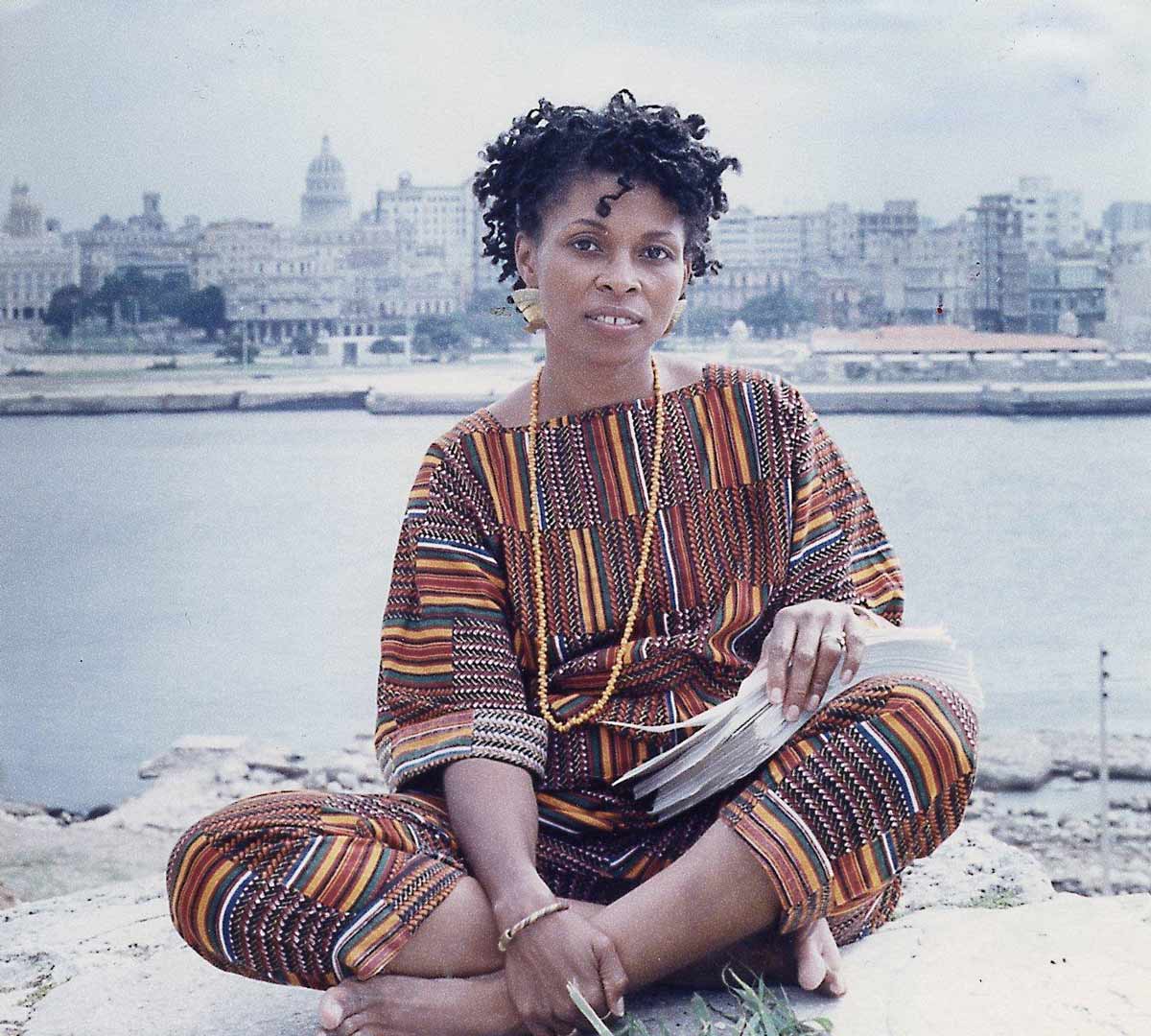
I met Assata Shakur once in Cuba, while traveling there in 1985 as an undergraduate student with City College. If one were to see the photo we took, you would think we were old comrades (and in some ways we were). As many of us visiting students and staff sat to take a picture with iconic sister, the unexpected happened when my turn came.

Assata put her head on my shoulder. The noise and words of surprise that ensued from crowd could be heard throughout the venue. I smiled. I often wondered who had a copy of that picture. It, in addition to photos I took with Prime Minister Maurice Bishop of Grenada a few years earlier, are pictures I wish I had copies of. Because of her safety I never tried to connect with Assata again on my many visits to Cuba.

It wasn’t as if Assata Shakur and I did not have some history. While teaching at the EAST’s Uhuru Sasa Shule, under the direction of the visionary headmaster and institution builder, Jitu Weusi, we took a group of students to her trail in New Jersey. We were in the back of the courtroom where she was barely visible.

The East’s history was rich with supporting all segments of our community, including our forgotten incarcerated family. (Remember what Haji Malcolm X taught us – “America means prison.”) At the East, we not only sent free copies of Black News, but also offered employment once freed and allowed for memorial and funerals at our facilities.

But it was when Sister Assata was incarcerated that I as editor (from 1978-1985) of Black News and Executive Director of the East became more involved and entangled in her case. When Assata was freed from prison I received and published in volume 4 Number 11 edition of Black News a statement from The Movement, another from the Black Liberation Army Coordinating Committee as well as a Black Solidarity Day Statement from Assata herself, along with her picture on the cover with ASSATA LIBERATED.

This put us on the Joint Terrorist Task Force list. A few years later we received a letter on the Justice Department’s stationary that they had tapped our phone for 2 years. The East organization had already experienced a number of spies and infiltrators.


This was heightened when Bibi Angola, who was part of Assata’s legal team came to my office in the early part of 1979 for assistance in putting out a book on Assata’s writings entitled, Assata Speaks, which was published several years before Assata’s autobiography (’87). The FBI was further under the false impression, based on the agent/informant Sayeed they planted into Bibi Angola’s life by flattening her tires that Assata Shakur was being harbored in the Uhuru Cultural Center at 357 Marcus Garvey Blvd., formerly Sumner Avenue. This would lead to a late April of 1980 massive conversion and raid by the FBI on the Harlem home of nurse Ebun Adelona.


These plans started as agent/informant Sayeed continued to lie that Assata was being harbored in the Black News office in the armory over several weeks we were working on the book. With these lies, he stayed out prison and was given money, several vehicles (he crashed) and other resources. It came to a head when former EAST member Shukuru came to town.

She made several calls on the Black News phone to plan a gathering with her nursing friends on that Saturday evening at the Harlem home of Ebun. We are pretty sure they mistook Shukuru to be Assata.

Earlier that day while in a class at the Uhuru Center I received an urgent call from Afeni Shakur (Tupac’s mother) warning me that ‘if I had anything in the Uhuru center, I needed to get it out because the FBI was about to raid it.’

Later that day the Harlem raid took place. That raid in late April of 1980 was supposed to take place at the Uhuru Center but the hundreds that gathered every Saturday at the armory and fear of a community backlash delayed it. Sayeed went back to prison and Assata would surface to safety in Cuba in 1984.

Ben Crump Pledges $50K to the Black Press, Challenges Others to Follow His Lead

By Stacy M. Brown
Black Press USA
Senior National Correspondent
The Conrad Hilton Hotel in Washington, D.C., pulsed with history and urgency as the Black Press of America gathered for its Annual National Leadership Awards and Reception. The evening honored House Minority Leader Hakeem Jeffries, Congressional Black Caucus Chair Yvette Clarke, and Communications Workers of America President Claude Cummings Jr. Cummings, who now serves on the executive committee of the Democratic National Committee, put the night into sharp focus.

Speaking to the Black Press’ Let It Be Known morning news show hosts on the Red Carpet, Cummings declared, “Democrats need to spend money now with the Black Press. The Black Press has always been that vehicle in our community that we’ve all needed and that has always been the trusted voice. With what’s happening in Washington and what they are trying to do to our community and our history, everyone should be supporting the Black Press of America.”

The words carried the sting of truth. For decades, the Black Press has stood as the trusted voice for African Americans, telling stories ignored or distorted elsewhere. It carried the mutilated image of Emmett Till when white newspapers looked away.

It published Dr. King’s words when others labeled him a troublemaker. It guided families through Jim Crow’s terror and chronicled the triumphs and tragedies of migration, struggle, and resilience. Today, two years before its 200th anniversary, this institution is fighting for its life. Then Attorney Ben Crump, known as “Black America’s Attorney General,” took the stage.

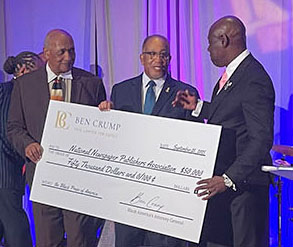
He did not come to flatter. He came to help, and he came with fire. “I will ask for personal privilege because I see my leaders in the room. The National President of the NAACP, Derrick Johnson, and Chair of the Board, Leon Russell,” Crump began. “The men who i stand with this evening, I want to come and demonstrate my appreciation to them and the Black Press. Right now in America we’re under attack like we’ve never been in our lifetime.”

The weight of his words fell heavily. “So now more than ever, we have to make sure that we have institutions that are disseminating information to our people, being the clarion call for us to be able to be ready to stand up for our children and our communities, to be ready to speak up for our children and communities, and to be ready to fight for our children in the community. And nobody carries the Black narrative and the Black information to Black communities more passionately than the Black Press.”

Crump then turned to those seated in the room. “Y’all, right now, y’all know this attack on DEI and everything, they’re cutting funding to all our institutions. And it isn’t right, but part of me says that’s okay. We don’t need them to save us. We are going to save ourselves. We are all we need.”


He reminded the room of the lessons of struggle and obligation. “Everybody got to give a little more when they can. If you’ve been blessed, you got to pass the blessing on. You just can’t keep it to yourself,” Crump told the packed ballroom. “Our fraternity teaches us we must lift as we climb. So tonight, I’m trying to lift as we climb to make this donation, and I pray that others will join us if you’re able to. If you’re able to.” “Because, like Dr. King said, we all got a role to play.

He pointed the way for others. With the bicentennial of the Black Press approaching, supporters are being urged to step forward through sponsorships, advertising, and partnerships to ensure that the Trusted Voice of the Black Community remains alive.

Even for Let It Be Known, ever rising in its import to the Black Press and its growing audience, survival is paramount. There’s an official GoFundMe at https://gofund.me/240152783.
“That’s why I’m making this donation to the Black Press,” Crump declared, his words cutting with urgency. “Because right now the Black Press is needed more than ever before.”

Twitter /Handles:
@AttorneyCrump @DrBenChavis

Ghana & Kenyan Leaders Demand African Representation on the U.N. Security Council

0

By Jeffery Kazembe Batts
IG: @kazbatts
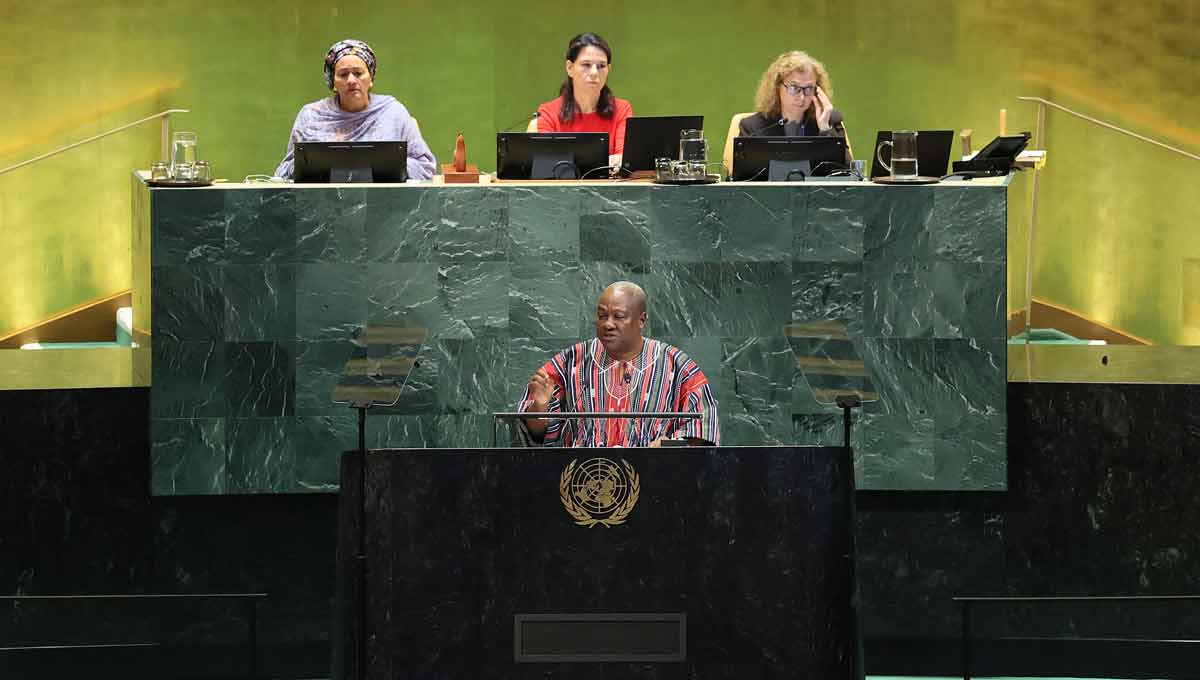
President of Ghana John Dramani Mahama and President of Kenya William Ruto came to NYC to address the assembled diplomats at the General Assembly among other agenda items. The Ghanian and Kenyan leaders took advantage of the stage and came with words that if manifested into policy, could change the socio-political conditions of millions of people around the world by adding African nations to the highest decision-making body of the world’s most inclusive institution.


Wearing a mostly red with blue, grey and white striped dashiki Ghanian President Mahama said in 1945 the role of African nations in the founding of the United Nations was insignificant with only Egypt, Ethiopia, Liberia and South Africa at the table. Prior to the United Nations and formed because of World War 1, the League of Nations was set up to prevent major wars in the future. It failed miserably as World War 2 evolved during the 1930’s.

Mahama then went back further recalling the Berlin Conference and the “scramble for Africa” among the European nations. This imperialist burden of exploitation during the 19th & 20th centuries weakened Africa and led to the miniscule African input during the founding of both the League and the U.N. Mahama urged the diplomats to now recognize that “the future of the world is African” he enthusiastically repeated. “When it comes to representation in this august assembly the most powerful post-World War 2 nations are still being rewarded with an almost totalitarian guardianship over the rest of the world.” he pleaded.

Hands clasped in front, the president then humbly asked for one permanent seat on the security council for Africa with full rights and an end to veto power being absolute and restricted to only five nations. Mahama then reminded the diplomatic delegations that 30 years ago at the same podium former South African President Nelson Mandela said “the United Nations has to reassess its role, redefine its profile, reshape its structures, it should truly reflect the diversity of our universe and ensure equity among the nations and the exorcise of power within the system of international relations in general and the security council in particular.”

Clad in a blue blazer with white shirt and red tie, early in his speech Kenyan President Ruto also reminded all about the failure of the League of Nations. He then declared the purpose of the U.N., eighty years ago, was to promote collective global security, disarmament, peaceful dispute resolution, and build cooperation on social and humanitarian issues between the nations of the world. Ruto also explained the urgent need for change that allows for African leadership at the highest levels within United Nations decision making.

Ruto then added “History is a lesson and a warning. Institutions rarely fail because they lack vision or ideals, more often they drift into irrelevance when they do not adapt, when they hesitate to act, and when they lose legitimacy, to remain relevant institutions must be reimagined, must be reformed, renewed and aligned with emerging realities.”

Continuing Ruto asked “Is the United Nations relevant to the demands of our time? Can it continue to serve humanity in the face of current realities or has it become a relic of a by-gone era?” He reminded the gathering that twenty years ago the continent was unified on the way forward. Adopted in early 2005 by the African Union, the Ezulwini Consensus demands two permanent and five non-permanent African seats on a reformed UN Security Council, with full veto powers for all permanent seats. In an assertive tone Ruto’s was forceful in demanding that the Ezulwini Consensus be respected.

Both presidents highlighted the enormous suffering by the people of Sudan where currently a humanitarian catastrophe with 12 million refugees is happening while garnering insignificant global media attention. Ghana president Mahama stressed the need for the U.N. to help the suffering refugees.

“It is not a mystery that when leaders of Western nations complain of their migration problems they are often referring to immigrants from global South” Mahama said in comparing global response differences between Ukraine and Sudan refugees. Hoping for peace in Sudan Ruto stated, “We fully endorse the QUAD, consisting of Egypt, Saudi Arabia, the United Arab Emirates and the United States in affirming that there cannot be a military solution and only political dialogue provides a viable path forward.”

Although climate change & the urgent need to reform and create fair global financial institutions were mentioned the urgency of Security Council reform was the common demand by the two statesmen. Both said the time for building African empowerment by joining the Security Council is long overdue.

So how can Africans force the overdue issue of permanent security council membership to be dealt with? Although strongly implied as to what might happen, neither of the two presidents during their presentations offered a specific action plan for the African Union or a timeline for responses from the current security council.


It has been 30 years since Mandela stated the need and 20 years since Ezulwini codified the process, yet the continent and leaders are still asking the same question. Can the current security council members ever agree to African seats at a table of power? Next year will African leaders and nations even want to speak and attend the 81st United Nations General Assembly?