Home Blog Page 366

A Breath of Fresh Air: “Undesign the Redline” Exhibition & Symposium

By Maitefa Angaza

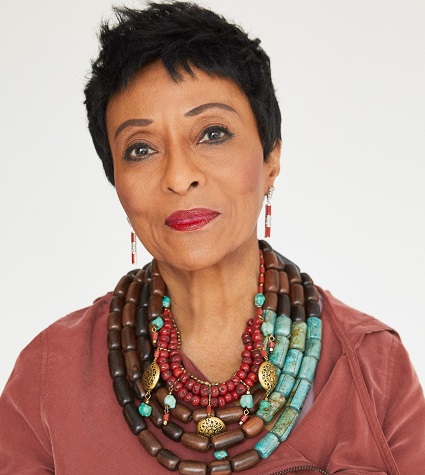
There is hope—both on the horizon and here in hand—for some measure of justice and redress concerning the egregious effects that redlining has had on our communities. Students and faculty, environmental, community and political activists, historians and other scholars, technology experts, etc., were treated to a captivating keynote speech given by environmental activist Peggy Shepard, founder of WE ACT for Environmental Justice, the legendary West Harlem based organization. Attendees were gathered late last month for the Undesign the Redline two-day symposium at Barnard College in Manhattan, convened and hosted by Barnard Library & Academic Information Services on the Columbia University campus.

We await the release of the official video recording of the symposium, which covered not just the environmental, but the housing, economic, social justice and other impacts of the practice of redlining. In the meantime, Our Time Press shares here some of Shepard’s keynote remarks. The history she told was unflinchingly honest, but she was also inspiring and empowering. First, a blit about the background framing this event.

The symposium was organized around an eye-opening exhibition at the library examining the history and effects of redlining in the Upper West Side neighborhood in which Columbia University and its Barnard College are located. “Undesign the Redline” has traveled across the nation to numerous colleges, universities, private institutions, community organizations, and other hosts. It was last in NYC hosted by a venue in Gowanus in 2019 and New York City Health and Hospitals has featured the exhibition here as well. The current exhibition is on display at Zora Neale Hurston’s alma mater  until May, 2022. Free tours are conducted on Friday afternoons to allow visitors to experience it.

April De Simone of Designing the WE, a Manhattan social and civic justice organization, created the foundational model for the Undesign the Redline exhibitions. The organization works closely with host teams in communities and institutions, helping them to input their neighborhood specifics, making the exhibitions their own. (At Barnard she worked alongside Miriam Neptune of the Barnard Center for Research on Women and Mary Rocco of Barnard Urban Studies, and others team members as well.) The result is something people involved in each local installation, as well as residents and former residents of the surrounding area, can clearly see—the roots of structural racism and inequity in their local histories. In many cases, the conveners’ own roles in this history are revealed in undeniable clarity.

So, as to be expected, Columbia University had lots to confront, having displaced countless residents for decades in what was widely considered to be a profiteering land-grab. In discussions at the Barnard event people unfamiliar with the term “redlining”— though they’d lived through it—interacted with those who’d studied it and attended in order to understand it fully. The fundamental definition and impact realities offered for consideration by Designing the We, include statements like this: 

“Redlining demonstrates how the explicit racism of the Jim Crow era was designed into the structural racism that continues to plague cities across the nation. Massive post-war era programs would go on to reinforce these divisions, such as the Federal Housing Administration’s requirement to only insure loans made in “racially homogenous areas” and the targeting of Urban Renewal programs in redlined neighborhoods, which disproportionately displaced communities of color. The devaluation of many communities through redlining resulted in the deepening of segregation and wealth inequality throughout the United States. This is a legacy we are still grappling with today.” 

Shepard has, for decades, shared with fellow advocates, the community and legal and government representatives, the human health, and environmental aspects of the unjust practice of redlining. In her keynote address at the symposium she explained how she got into this field of endeavor.

“I valued that all people have the right to clean air, clean water and a toxic-free future,” said Shepard. “And there’s just compelling evidence that we’re all exposed—whether it’s at home, in schools or in our communities—to toxic allergens that have lifelong and intergenerational effects on our public health, our reproductive outcomes, human development and the sustainability of the planet.”

Shepard, originally working at her dream job of magazine editor, entered politics, becoming a Democratic district leader. But she felt that some of the community’s critical needs were unmet by the people and organizations positioned to make the biggest difference. Eventually, it was a few ordinary citizens who lit her fire.

“I interacted with key leaders around the state… and it was a trio of elder women who provided my insurgency and my leadership position with a real energized surge of support. And they really became my political-based community mentors. They told me it was my generational turn to take over the organizing and community action that was necessary to improve West Harlem’s quality of life.

“And that effort to grow new, progressive leadership in West Harlem became the foundation of the struggle for environmental justice in Northern Manhattan. And so through strong organizing efforts, we got the City to commit $55 million to fix the North River Plant, which was spewing odious emissions that were making people sick. …And 18 years of advocacy (you’ve gotta be in this for the long haul, folks) has made the MTA diesel-fuel bus line one of the cleanest in the nation.“

Shepard also mentioned a critical factor in the ways inequity shows up in the real estate-development process.

“Communities need legal support and technical support to analyze and respond to, say a thousand-page environmental impact statement in 30-45 days, because that’s the way large environmental impact projects are rolled out… thousands of pages produced over a year’s time by engineers and suddenly a community has 30-45 days to assess and analyze that. These communities need the same sort of access to regulators as industry has, instead of getting three minutes to testify at a public hearing — even if one is held! Even when we understand the permanent process, regulators are biased and they assume community members are exaggerating the conditions.”

As mentioned, these excerpts from Shepard’s keynote address represent the depth and breadth of the Undesign the Redline two-day symposium. Clearly Our Time Press won’t be able to mine all the riches, but for next week, we’ll select some information to share with readers and will include the link to the full (edited) symposium as well.
Our Time Press Remembers Brooklyn’s Own Lt. Col. John Mulzac

(Reprinted from Our Time Press, August, 2002)

The recent death of General Benjamin O. Davis Jr., commander of the legendary Tuskegee Airmen, the pioneering black fighter pilots of World War II, prompted us to spend some time with Bed-Stuy’s own Tuskegee Airman, Lt. Col. John Mulzac, U.S.A.F.,  Ret.  As part of a wide-ranging interview, Mr. Mulzac told the following story.


John Mulzac:  When we were young, we weren’t afraid of what we were doing.  Nobody was afraid of getting killed or dying or doing anything.  We were all getting training and we knew what we were doing.  If anything happened to us, it was because we did something stupid.  I’ll tell you one story that gave me confidence:  When I was in basic training at Tuskegee, I was about halfway through my training and I had a hard time solo.  For the first time, you go off and take the plane around and bring it back on your own.  Every other time you went with an instructor.


When I went to basic, we went to the big airplanes at the big field.  My instructor now is a white instructor.  I go up with him for 2 hours and he solos me in the new plane.  He was a fighter pilot; he had just come back from overseas.    He said, “John, I want you to go up and get about two hours of acrobatics in.  But get back here by 5 o’clock.”  He wanted to build up my time and build up his time.  So I said,  “okay.”  I go up and I practice slow rolls, spinning around.


I’m almost down to Montgomery, Alabama.  I turn around and this plane that I’m flying has gravity-fed gas tanks.   If you’re going upside down, the gas doesn’t get in the carburetor.  I’m practicing slow rolls and rolling all around.  I get on my back and, all of a sudden, I can’t move my stick.  My stick is way over in a corner.  It’s just stuck there.  The engine cuts out; everything gets quiet and all I hear is the air.  I’m falling upside down like a leaf coming down.  I’m hanging by my seat belt.  I open the hood-the canopy-and I loosen my headset because it’s connected to the air phones.


I’m getting ready to pull my safety belt and drop out.  I looked back to see what happened to the airplane and everything’s all right in the back, but then I look in the back seat.  The stick where the instructor sits in the back and his microphone cord had looped around my stick like a lasso and held my stick in the corner.  I couldn’t move it.  Remember, this thing is going fast.  I’m coming down thousands of feet at a time.  I tried pulling it, and I didn’t want to break my stick.  If I broke my stick, then I couldn’t do anything.  I’m pulling it and pulling radios out of the back.


Then I realized that I hit the high-lift rung and she comes back around and picks up; the engine starts up again.  Now I hook up my headset and everything and I call, “Mayday, Mayday, Mayday.”  I say that my controls are jammed.  So, right away, everybody comes up.
All the big white instructors come up into the tower and ask me what’s happening, and I explained to them what was happening.  Now I’m down to 2,000 feet.  I come from like 6 down to 2.  They say, “Well, bail out, bail out.”  I told them that I could bring it in.  He said, “bail out, bail out.”  I said, “No, I’m not going to bail out.”  So, I said that I would bring it in.  I keep using the rudders just to turn the plane around back toward the field.
The engines are running all right and everything, but my stick is way over there.  The stick is what controls the turning and the banking and moving the nose up and down.  All I have are rudders that can only go back and forth.

One of John Mulzac’s grandsons, Thomas, is making his mark offering a selection of special spices he’s created for collard greens and veggies, mac and cheese, pasta and other favorites. His company is MealZac and can be found at www.MealZac.com


Finally, they realize that I’m not gonna bail out, and I’m bringing it back toward the field.  Now it’s after 5 o’clock.  I look down and here are the fire trucks and ambulances; everybody is out there.  They say that there’s gonna be a crash up there.


I put my head back in and I get lined up.  They’re talking to me and telling me what to do.  I line it up with the runway and as I get closer, I bring my throttle back and let the plane settle down.  I bring it down and I cut my power.


Then I reach on the side.  We have what they call a trim tab, a big wheel that when you have somebody in the back you have extra weight.  You can trim the airplane with nose-up or nose-down.  You don’t have the stick but you use the trim tab to compensate for your weight in the back.  I hit my wheel and I turn it back.  The nose went up and the airplane lands.  I started to get out but I said, “No, let me take it back to the ramp.”  I taxied it back to the ramp.  The mechanic jumps up on the wing and asks, “What happened, cadet what happened?”  I point to the back and show him all his radios and stuff.  By that time, the major, the colonel and the captain from the tower come down.


I’m standing up.  They walk past me.  They walk up on the ramp and they look in the airplane and they see what’s happened.  They come back down; they don’t say nothing to me-these are all whites-they walk right by me.  So I go back into the pilot’s room by myself.  My instructor is there, this white guy.   He said, “John, if that was me, I would’ve bailed out.”  I threw the parachute on the table and I told him that I quit.  I actually quit.  I said I’m not gonna do this anymore.  I started walking up the hill to my barracks to get all of my stuff.


My classmates come back marching up to our barracks in formation.  I’m up there starting to get my stuff and they didn’t know I had quit.  So they started asking me, “What happened”?   We had something to drink and I’m telling them the story.  They were so elated that one of us got in trouble and was able to come out of it safely.


So that night I thought in bed, “They don’t know I quit and one day I’m gonna be a private and they’re gonna be all pilots and lieutenants”.  Because of them, I’m not gonna quit; I’m gonna stay here for whatever I can do.  The next morning when I went down, my instructor saw me and he was so elated.  He took me up and let me do what I wanted.  He said, “I want to show you some new things to do.”  That got me going again.  I went on to basic and advanced without any more trouble.


It wasn’t until graduation day when they called my name to get my second lieutenant bars and my wings that the colonel stopped the whole graduation and told the story.  I was only halfway through my training.  He said,  “These are the kind of pilots that we want.”  The word was out that I was gonna graduate.  My instructor was sitting next to me and I asked him if he knew the word was out that I was gonna graduate.  He said, “Sure, John; the word was out that no matter what else you did, you were going to graduate.”  I asked him why he didn’t tell me.  He said he didn’t tell me because I would’ve goofed off all the time, and I wouldn’t study like I did.”

FDNY Remembers John Mulzac
John Mulzac was one of the original Tuskegee Airmen who distinguished himself, along with the other airmen in the now-famed segregated squadron. In 1947 he was appointed to the FDNY and rose to the rank of Lieutenant. His career with the Department ended with his retirement in 1967. During his time in the FDNY he was activated twice for military duty, first to be sent to the Korean Conflict and later to Vietnam. With 15,000 hours flying during his service from 1942 to 1983 in the US Army Air Corps, the US Air Force, the US Air Force Reserve and the New York Air National Guard, he attained the prestigious rank of Lieutenant Colonel.

Can We Just Take a Moment to Give Halle Berry Her Flowers?

Halle Berry’s directorial debut with “Bruised” is an inspiration for all of us who are pursuing creative careers

By Touré  
It’s time to celebrate the legendary Halle Berry. She’s back on top. She was a superstar who could win almost any role in the 90s and early 00s and she won the Oscar for Best Actress in 2002, but at some point, in the decade after that her career went kinda cold. She continued working, but she wasn’t getting the big opportunities.
Then she made her own lane — she found a good script about a washed-up MMA fighter who returns to the octagon. It was meant for a 21-year-old white actress, but she had it reshaped to fit an older Black woman. She pitched it around, but no one bit. It’s hard to resurrect a Hollywood career, even when you’ve got a glittering resume like Berry’s. Studios and audiences are constantly on to the next.

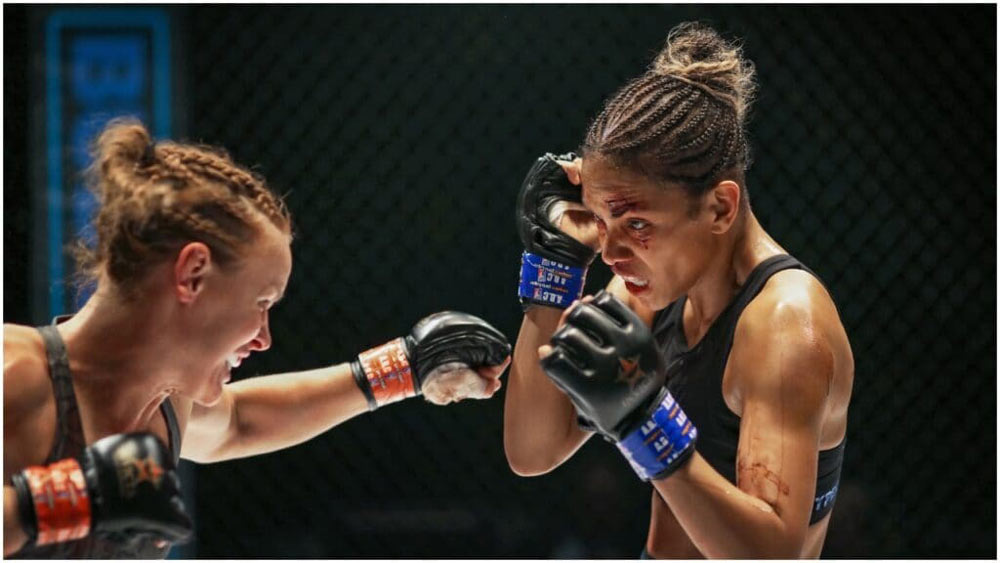
More than a model, Sheila Atim deserves an award for her portrayal in Halle Berry’s “Bruised”. Photograph: Chris McAndrew/Camera Press


So Berry decided to direct the film herself. It’s called Bruised and it’s a great, gritty story about an old MMA fighter returning to the ring and a mom dealing with a child who does not speak. After it was made Netflix bought it and now it’s one of their biggest films of the year. Berry now has a top-ranked film on the streamer, a solid place in the battle for Best Actress and a new multi-film deal with Netflix. She’ll be directing and starring in films for years to come. Once again, her career is en fuego. 


It’s really interesting that Berry is known as one of the most beautiful actresses of her time and yet most of the biggest moments of her career come when she puts her beauty aside. She first exploded in Jungle Fever as a washed-out crack addict. She won an Oscar for Monster’s Ball as a waitress and the wife of a criminal whose execution sets the story in motion. Now she’s back thanks to a film where she’s a fighter who spends most of the film with the black eye or the puffy face of someone who just got out of a fight.


Bruised is powerful and gripping, the story of a fighter and a mother who’s down on her luck, needing to resurrect her career all while living on the edge of society. The film has Berry’s character Jackie Justice fighting at home with her abusive and toxic husband, fighting in the world to get respect, and of course fighting in the ring. It’s inspiring to see her grit and her resilience and her toughness while all sorts of punches are coming at her from all angles.


In many ways it’s a typical sports drama — she’s lost in life and has no money, but she still has talent, so she finds a great coach, she works hard in the gym, she has a crazy fight with a tough opponent that goes down to the wire. But it’s inspiring to watch Berry go through all of this after all she’s been through in her long career. She’s much more than just beautiful, she’s charismatic in a way that shines through even when she has a black eye.


This is not just great for Berry, it’s inspiring for all of us who are pursuing creative careers, a moment where you see someone saying if the institutions won’t make space for me, then I’ll find a way to make space for myself. If you, creative person, aren’t happy with the chances you’re getting, you could try to create opportunities for yourself. If you prove you can do it on your own, then you’ll see if you can force some doors open.


When Berry’s career was stagnant and a project she loved wasn’t getting made, she found a way to direct it herself. You may not be trying to make movies, but perhaps you can do your own version of this by using Patreon or Kickstarter or Substack or other tools like those to give you the space to do your thing in public and show people how great you are.

What’s Going on – 12/9

NEW YORK, NEW YORK
NYC: Eric Adams will be sworn in as the 110th Mayor of NYC on January 1 and walks into a lion’s den of challenges, corona virus/variants and vaccinations; economy resurgence; gun violence; a public school system in disarray; food insecurities; affordable housing, and the criminal justice system in disrepair. We wait with eager anticipation the Adams’ correctives and dream team. Will Phil Banks, retired NYPD Chief of Department, be named Public Safety deputy mayor? His brother Dr. David Banks, is on Adams’ short list for Education Chancellor. Political pundits are not sure about who emerges as NYC City Council Speaker.


NYS: According to a recent Siena College poll, Governor Kathy Hochul leads the crowded field of 2022 Gubernatorial contenders with 36%. Letitia James comes in second with 18% and Jumaane Williams with 10%. Poll reflected that NYC Mayor de Blasio, who may run for Governor is disliked by 70% of statewide voters. Economic opportunity and crime are major concerns of people polled.
Disgraced former Governor Andrew Cuomo is weighing victory opportunities and is looking at the AG race.
THE NATION: We end the second year of this decade with promise and hope. The Democrats must hold their majorities in Congress and the US Senate if President Biden’s agenda is to have a shelf life. In 2021, the DC Democrats, with reluctant bipartisan help, accomplished a new stimulus package. They passed a $1 trillion infrastructure bill which benefits the nation. They anticipate the passage of Biden’s BUILD BACK BETTER, social and environment initiative by year’s end, a plan which will impact and stimulate national growth and development. Dems are to be commended for their aggressive COVID containment protocols.

The Democratic majority failed to get a voting rights bill or to manage gun reform, despite the national epidemic of school shootings and carnage.
The good news out of Georgia last week is that Democrat Stacey Abrams will be a 2022 candidate for Governor opposite incumbent Republican Brian Kemp, who narrowly defeated her in a questionable 2018 election. Last year, Georgia went from a red to a blue state thanks to Abrams political activism. In 2021 Kemp and the legislature introduces voter repression laws, designed to dilute Black votes.

HEALTH WATCH
Since Omicron, the last coronavirus variant arrived stateside, it has been the best motivation for Americans to get the booster shots. The anti-vaxxers remain adamant. According to CDC stats, nearly 60% of US population is fully vaccinated. About 70% have had one dose with near universal coverage among the 65+ age demographic.
Last week, NYC launched the nation’s first safe injection site for supervised drug injections with medical professionals present. Opened these sites in response to overdose death rates in NY and nationally. nation. More than 93,00 people died in the US from drug overdoses in 2020. These sites are located in East Harlem and Washington Heights, Manhattan. More than 15 lives have been saved by 12/7

THE WORLD
HAITI: Nothing has changed in the first Black republic in the New World. The nation has been reduced to a failed state. Two of the 17 missionaries abducted a few months ago were freed. Read 12/5 New York Times Opinion piece, THE US IS HINDERING OUR PLAN TO SAVE HAITI, by Monique Clesca, a Port-au Prince based journalist, former UN official and member of the Coalition to Search for a Haitian Solution to the Crisis.
BARBADOS, that easternmost Caribbean Island, held double celebrations on November 30, 2021, which is the nation’s 55th Independence Anniversary Day from Great Britain, and colonial rule, and which was the day that it formally became a republic. Queen Elizabeth is no longer that nation’s head of state. She has been replaced by African-Caribbean local, Dame Sandra Mason, who was elected Barbados President. Pomp and circumstance dominated the proceedings, which were attended by Prince Charles and Bajan native, RIHANNA Fenty, billionaire/philanthropist, who was named a National Hero.

EUROPE: Will the world greet 2022 with a Russian invasion of Ukraine? Russia has mobilized more than 90,000 troops along its border with its western neighbor, Ukraine. Invasion, war…..not now! Europe says that it will present a united front on Ukraine.

ARTS & CULTURE
FINE ARTS: Visit African American photographer Carrie Weems’ exhibit, THE SHAPE OF THINGS, a multi-work, large-scale installation about “the pageantry and circus-like quality of contemporary American political life” especially during the past year, at the Park Avenue Armory, Manhattan, through December 31.
James Van Der Zee Photographs: A Portrait of Harlem, focused on the 20s, 30s, concurrent with the Harlem Renaissance is a new exhibit housed at the The National Gallery of Art, in Washington, D.C. through May 30.
BOOKS: The Center for Black Literature at Medgar Evers College, a CUNY City University of NY campus, hosts its 16th Annual National Black Writers Conference, March 30 to April 2. Scholars, literary professionals, students, and the public will participate in the virtual Conference themed “The Beautiful Struggle: Black Writers Lighting the Way.” Founded in 2002 by Dr. Brenda Greene, the Center for Black Literature and the NBWC is one of the most coveted events for literary lions. Poet Tracy K. Smith: author Jacqueline Woodson; journalist Herb Boyd; and scholar Eddie S. Glaude, Jr. are the 2022 NBWC honorees. The Call For Papers (Dates and Guidelines) deadline is January 7 at writers@mec.cuny.edu. Visit centerforblackliterature.org.


DANCE: The Alvin Ailey American Dance Theater’s annual season began last week with live performances through December 16 at the NYC Center. The season, includes two stage premieres by Theater’s creative director Robert Battle and by Jamar Roberts. Visit nyccenter.org.
Robin Williams’ Uptown Dance Academy will host its 26th Annual Black Nutcracker Holiday show, at the Oberia Dempsey Center, located at 127 West 127 Street, Harlem, on Friday, December 17 at 10:30 am, 12:30 pm; 3:30 pm. Visit uptowndanceacademy.com
FASHION: Harlem Fashion Week co-founder fashionista Yvonne Jewnell hosts an Art of Style Holiday Fashion Event, at the Aloft Harlem Hotel, on Saturday, December 11 at 6 pm. Registration is necessary to attend the runway show, network, access vendor space. Visit HarlemFW.com


BUSINESS: RESURGENCE 2022 is a year-long Black Church/Black Business Conference Project in collaboration with Rev. Dennis Dillon’s NY Christian Times and community-based organizations such as NYC Small Business Service Bedford Stuyvesant Restoration Corporation, Greater Jamaica Development Corporation, Greater Harlem Chamber of Commerce and the Harlem Congregations for Community Improvement. Conference will kickoff at the Brooklyn Navy Yard, Building 303, 21 Flushing Avenue, Brooklyn, NY, on December 16, 8 am to 3:30 pm and will include the 30th Anniversary celebration of the NY Christian Times’ Clergy/Corporate Awards Lunch at 1:30 pm. Conference admission is free.

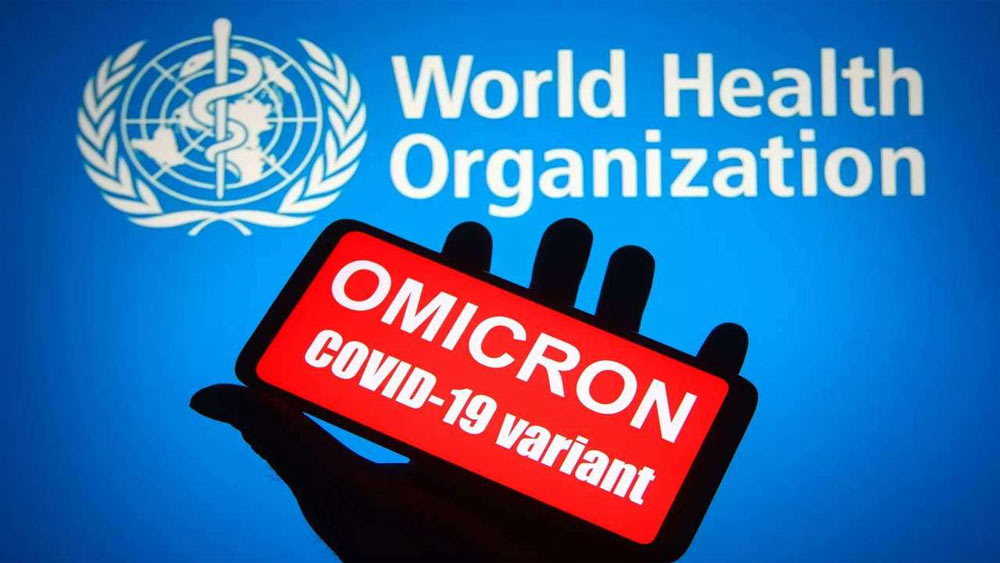
What you need to know about the Omicron Variant

Omicron is the newest Covid-19 “variant of concern,” according to the World Health Organization.

A new Covid-19 variant, now named the omicron variant, was detected in South Africa on Wednesday, prompting renewed concern about the pandemic, a major stock market drop, and the imposition of new international travel restrictions to stop the spread.
Though the variant’s existence was first reported by South Africa, it has also been found in Belgium, Botswana, Germany, Hong Kong, Israel, Italy, and the United Kingdom, meaning the variant has already spread — though how far is unclear, as new cases continue cropping up around the world.
While it will take scientists some weeks to understand the omicron variant, including how quickly it can spread and what the illness from infection with the variant looks like, the World Health Organization has already labeled omicron a “variant of concern,” which means it could be more transmissible, more virulent, or more able to evade the protection granted by vaccines than the original strain of Covid-19.
More information about the new variant is sure to emerge over the coming days and weeks, but here’s what experts are saying so far.


What do we know about the new variant?
Early evidence suggests that the omicron variant is highly contagious, possibly more so than the delta variant. With more than 30 mutations on the spike protein — the part of the virus that binds to a human cell, infecting it — omicron could both be more transmissible and have more mechanisms to evade immunity already conferred by vaccines or prior infection.


On Friday, President Joe Biden announced new travel restrictions on eight southern African countries, which will take effect on Monday. Travel from Lesotho, South Africa, Eswatini, Namibia, Zimbabwe, Mozambique, Malawi, and Botswana will be restricted, though those restrictions won’t apply to US citizens or green card holders, among other groups.
As Wen said on Friday, travel bans don’t necessarily do much overall to prevent the spread of the virus, but they can buy time for governments to learn more about diseases and variants and better protect their populations.
“I’ve decided that we’re going to be cautious,” Biden told reporters on Friday. “But we don’t know a lot about the variant except that it is of great concern; it seems to spread rapidly.”


Other nations — including the UK, Australia, Israel, France, and Germany — are also restricting travel from southern African nations in an effort to contain the new variant, despite criticism from the South African government.
“This latest round of travel bans is akin to punishing South Africa for its advanced genomic sequencing and the ability to detect new variants quicker,” South Africa’s foreign ministry said in a Saturday statement. “Excellent science should be applauded and not punished.”


As of Saturday the US has not imposed any new travel restrictions on the European or Asian nations where the omicron variant has appeared.
In addition to imminent travel restrictions on a number of southern African nations, Biden urged vaccination and boosters for US citizens as a response to the new variant.
To that end, Biden on Friday also called on wealthy countries with the capability to donate vaccines to do so to low- and middle-income countries, as well as to waive intellectual property rights on current vaccines and treatments so that poorer countries can produce generic versions.


Accessibility isn’t the only issue when it comes to a global vaccination campaign, however. Vaccine hesitancy has proven to be a global problem, including in South Africa, where last week the government asked drug companies to delay delivery of new vaccine doses in response to declining demand, despite less than 30 percent of its adult population being inoculated. Europe is presently struggling with a new outbreak at least partly due to its uneven vaccine uptake and vaccine resistance.


Omicron is likely already in the US, given the loosened restrictions on international travel earlier in the month and that the variant dates at least as far back as November 9. And even if it’s not yet, it soon will be, experts say.
“It’s not going to be possible to keep this infection out of the country,” Fauci told the New York Times. “The question is: Can you slow it down?”
While there are still many unknowns about the omicron variant, experts agree that it’s a troubling development in the Covid-19 pandemic.
“We’ve seen variants come and go, and every month or two we hear about one,” Dr. Ashish Jha, dean of the Brown University School of Public Health, told PBS on Friday. “This one is concerning. This one is different. There are a lot of features here that have me and many of us concerned about this.”


Stopping the spread also means stopping the possibility of harmful mutations to the virus. Mutations — changes to the makeup of the virus — are bound to happen, and many of them are harmless to people. The more opportunities the virus has to spread, however, the more chance it has to mutate into a variation that spreads faster, is more resistant to antibodies and treatments, or creates worse health outcomes — or even all of these negative traits.
Existing tools, however, should still be effective in stopping omicron — PCR tests appear to detect the variant, according to the WHO, and Dr. Francis Collins, director of the National Institutes of Health, told NPR on Friday that “there is no data at the present time to indicate that the current vaccines would not work [against omicron].”


Additionally, masking and social distancing both are proven strategies to stop the spread of Covid-19, as are getting vaccinated and getting a booster shot.
Those steps are especially crucial as the holiday season and cold weather bring people together indoors, where transmission occurs. According to the New York Times’s Covid-19 tracker, cases in the US have increased 10 percent over the past two weeks, with daily averages of new cases over 85,000, hospitalizations over 52,000, and about 1,000 deaths each day. As of November 24, almost 75 percent of vaccine-eligible Americans have received at least one vaccine dose.