Home Blog Page 346

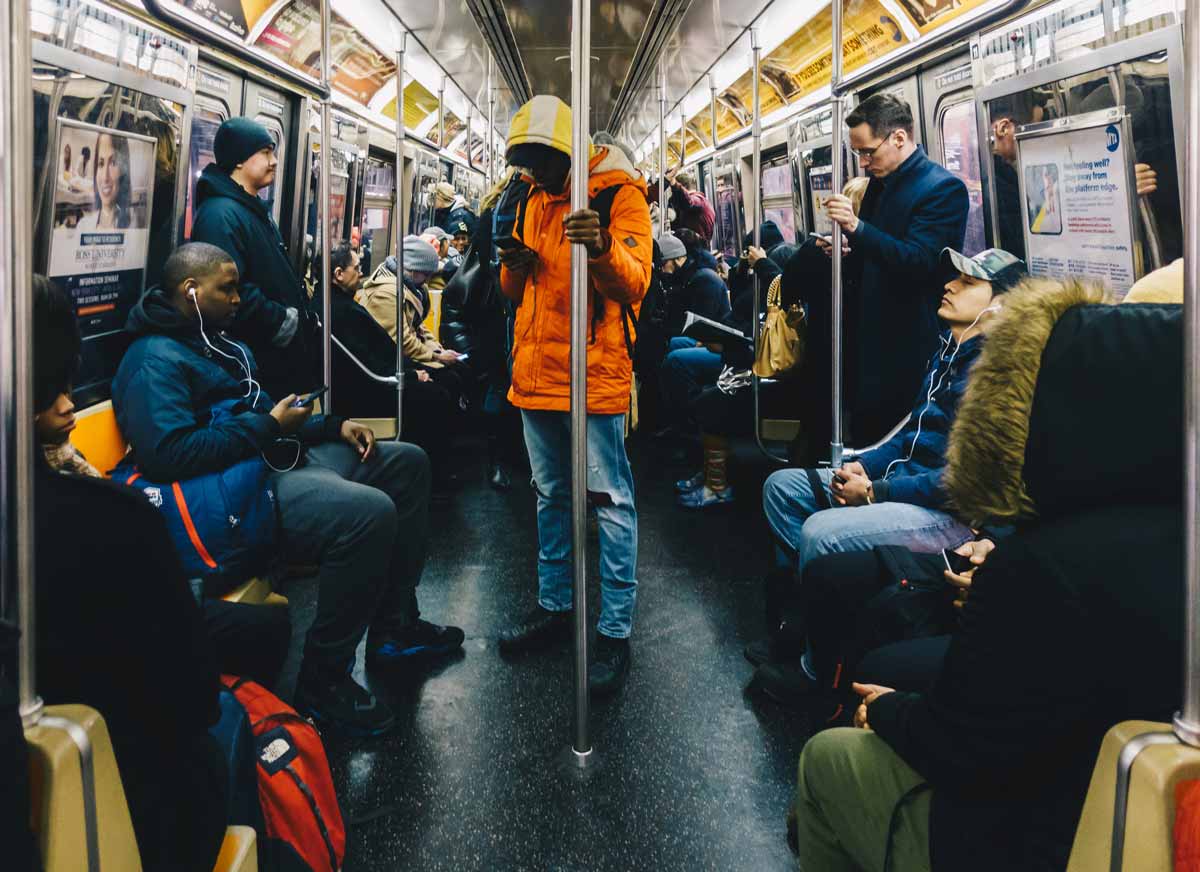
Mayor, Governor, Unveil Public Safety Initiative

Mayor Eric Adams, a former NYPD captain, and New York Gov. Kathy Hochul held a press conference, last week, Friday (2/18) to announce the subway safety initiative, highlighting the local, state and federal resources the city will employ to combat mental health and safety.


The joint initiative, which will go into effect on Monday, will involve the deployment of up to 30 inter-agency collaborative teams that bring together the Department of Homeless Services (DHS), the Department of Health and Mental Hygiene (DOHMH), the NYPD and community-based providers in “high-need” locations, the plan states.
The new efforts come as crime in the city, particularly within its transit system, has garnered national attention.


“The subway system and our bus system, they are the lifeblood of our city,” Adams said. “If we don’t get them right, our city won’t continue to recover from Covid. Millions of New Yorkers use the system to go to school, to go to their place of employment and just to visit their loved ones. It provides a vital service.”


The mayor’s announcement on Friday took place just one day after a 22-year-old man was stabbed on a Brooklyn-bound train in an apparent unprovoked attack by a male stranger, according to police. The NYPD has arrested a 44-year-old man in connection to the attack on charges of second-degree assault, it said.


The incident followed the death of Michelle Alyssa Go, an Asian American woman who was pushed in front of a Times Square subway train on January 15. Roughly one week later, a 62-year-old man suffered minor injuries after he was pushed onto the subway tracks at the Fulton Street subway station in Lower Manhattan, police said.


The new subway safety measures are laid out in the second phase of New York City’s plan to improve and modernize a 113-year-old system that was forced to scale back its services early in the pandemic amid staffing shortages and declining ridership. Since the first phase of the effort was announced in January, NYPD officers have conducted some 115,000 inspections in the system, Adams said.


Other key initiatives in the plan include training NYPD officers in the subway system to enforce MTA and New York City Transit Authority rules of conduct; incorporating medical services into DHS sites to serve people  experiencing unsheltered homelessness; requiring everyone to leave the train and the station at the end of the line; transitioning people from the subway system to “safe” spaces.


NYPD officers will enforce subway violations such as “sleeping across multiple seats, exhibiting aggressive behavior to passengers, or creating an unsanitary environment,” the city said in a press release.


Five people were stabbed in separate incidents in New York City subway stations this weekend since officials on Friday vowed to combat crime and address homelessness in the city’s transit system as part of a new public safety initiative, according to the New York Police Department. 
Source: CNN

CRT: An Overview

Critical Race Theory (CRT), attributed to and pioneered by former Harvard Law professor Derrick Bell and legal scholars Kimberlé Crenshaw and Richard Delgado, among others, has lived for almost 50 years within the hallowed halls of advanced academic institutions. That is, until it was invoked in the late summer of 2020 by an ultra-conservative activist. Today CRT has become a cultural flashpoint in the United States, with the debate over its merit roiling state legislatures and K-12 school board meetings.
How did this once-obscure, and still widely misunderstood, concept come to be a lightning rod in the current debate over race relations in America? In this edition of Elevate the Conversation, we examine CRT and invite you to weigh in on the conversation.

Origins
In the late 1970s, Black legal scholars at some of the country’s most prestigious law schools developed a theory to connect law, history and race in the United States. These scholars believed that the effects of racial bias could not be combatted merely by enacting anti-discrimination laws to guide individual behavior, but also required reforming social institutions shaped by endemic racism. Like the theory of Originalism (which argues that the U.S. Constitution should be interpreted by determining its original meaning), a view that was also emerging at this time in legal scholarship, advocated by conservative legal scholars, CRT asserted a different viewpoint on the U.S., its history of slavery and the effects of this past on our present.

Defined
CRT argues that racial bias does not just exist within the individual, but that it is embedded in the very fabric of society, in our laws, policies and institutions. At its core, CRT maintains that our institutions and society are a reflection of our most fundamental beliefs. Thus, historic racism in America, it claims, continues to influence U.S. institutions and hinder equitable access in American society.

‘The risk was everywhere’: New heart research shows long-term health effects of Covid

Erika Edwards
Reynolds Lewis
Judy Silverman
NBC News

As far as Michelle Wilson knew, she’d recovered from Covid-19.
Wilson, 65, contracted the virus in November 2020. Her illness, she said, was mild, and she was feeling ready to go back to work as a nurse in St. Louis by early December.
That’s when her heart problems began.


“I literally woke up one morning, and my heart was racing and beating erratically,” Wilson recalled. “I was having intense chest pain.”
Fortunately, Wilson was not having a heart attack. But she did develop long-term heart problems, including high blood pressure, putting her at risk for further cardiovascular issues.
Despite her age, she had no prior medical history to suggest she was at risk for heart disease — other than Covid-19.


Indeed, it appears the coronavirus can leave patients at risk for heart problems for at least one year following infection, according to one of the largest analyses of post-Covid health effects to date.
The study, published last week in Nature Medicine, found that the illness increased the possibility of heart rhythm irregularities, as well as potentially deadly blood clots in the legs and lungs, in the year after an acute infection.


Covid also increased the risk for heart failure by 72 percent, heart attack by 63 percent and stroke by 52 percent — even among those, like Wilson, whose original illnesses were mild.
The study’s lead author, Dr. Ziyad Al-Aly, a clinical epidemiologist at Washington University in St. Louis, said he and his colleagues expected to see some elevation in heart problems following Covid, but assumed it would be limited largely to people whose health wasn’t robust previously.


The elevated risk remained when researchers accounted for age and race, he said.
“It was a bit of a moment for us when we realized it was evident in all of these subgroups,” Al-Aly said, “including younger adults, older adults, Black people, white people, people with obesity and those without.”
“The risk was everywhere,” he said.


Al-Aly’s team examined the rates of new heart problems among 153,760 Covid patients for up to a year following their illness. The participants were patients who’d sought care within the Department of Veterans Affairs, and most were white men.


Cardiovascular outcomes were compared to two control groups: 5.6 million people without Covid, and another 5.9 million patients whose data was collected before the pandemic began.
Covid-19 patients in this study were infected before vaccines were available, so it is unclear how the shots might alter the findings.


But physicians on the front lines of treating Covid and its effects suspect vaccinations do cut heart risks because they reduce Covid infections in general.


“I’ve taken care of patients with heart problems” after Covid-19 infection, said Dr. Steve Nissen, a cardiologist at the Cleveland Clinic. “The vast majority are unvaccinated.”
That Covid-19 appears to increase long-term risks of cardiovascular problems is not surprising to doctors. Other viruses, such as influenza and certain enteroviruses, have long been known to carry the same risks.


“Anybody who is hospitalized with any kind of pneumonia that they acquire in the community has these risks for six to 12 months,” said Dr. Donald Lloyd-Jones, president of the American Heart Association. “The open question for me is, is this something unique about Covid? Or is this the same story we already know?”
Covid’s heart risks may be showing up with more regularity just because the virus spread so quickly.


“It’s very concerning because so many people will be getting Covid in the next however many years, and so many have already gotten it,” said Dr. Jennifer Haythe, co-director of the Women’s Center for Cardiovascular Health at the Columbia University Irving Medical Center in New York. “This may really increase the burden of cardiovascular disease across the board.”
Al-Aly’s research is not the first to suggest long-term heart risks following Covid-19.
A study of recovered Covid patients in Germany found that 78 percent of patients had heart abnormalities. Swedish research, too, found an increased risk of heart attack and stroke following Covid-19.


It is not entirely clear how Covid could cause heart problems over the long term, though it is known that the virus can affect blood vessels all over the body and in multiple organs, including the heart.
For Wilson, the irregular heartbeat has endured.
She has had to sleep nearly upright for months.
“It got so bad that when I laid down, I couldn’t sleep because my heart was so erratic,” she said.


Her physicians are now monitoring her for any indication of heart failure.
Regardless of infection, the pandemic itself is also upping the risk of heart health problems.
“Too many patients are delaying getting back into their routine within the health care system,” Lloyd-Jones said. “We’ve seen marked increases in overall blood pressure levels, weight gain, worsening control of diabetes, and all of those things are contributing to increased risk.”

Anyone whose Covid recovery stalls, or who experiences a sudden onset of new symptoms, such as chest pain, intense muscle weakness or shortness of breath, should call 911 immediately, Lloyd-Jones said.


Those aren’t just red flags, he said. “Those are flashing lights.”

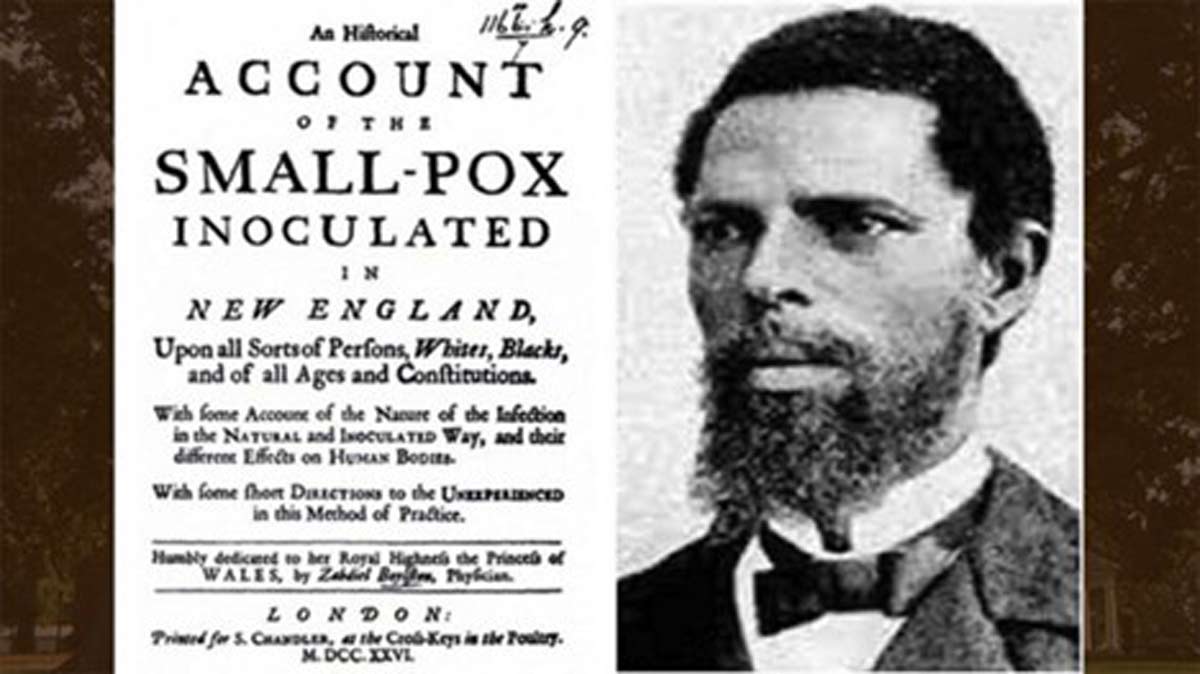
Recognizing Medical Contributions by Africans and Black Americans

From early inoculations to modern medical devices

OTP and Kenneth Crosby, MD
The contributions made by African and Black American medical professionals to health and wellness are many. While determining just how many lives these trailblazers saved is impossible, we know that without their imagination, knowledge, and desire to help others many lives would have been lost.

1783 – James Durham
Born into slavery, Durham, just before turning 21, purchased his freedom from James Kearsley Jr., a medical doctor.
Durham did not hold a medical degree, but he gained knowledge about issues related to health and wellness from Kearsley, who specialized in sore throat diseases.
During his time with Kearsley, Durham learned how to care for patients and mix medicines. His experience as an assistant gave him the same medical apprenticeship that the majority of the 3,500 schooled physicians experienced as they moved through their medical training programs.
Durham dreamed of having his own medical practice, and brought this dream to fruition in New Orleans, thus affording him the title of the first doctor of African descent in the United States.
In 1788, Dr. Benjamin Rush, considered one of the top physicians in America, was so impressed with Durham’s paper on dyptheria that he personally reads it before the College of Physicians of Philadelphia.
In 1789, Durham returned Durham treated and saved more yellow fever victims than any other physician. His success rate is impressive: of 64 patients he treated, only 11 were lost.
Durham’s medical practice flourishes until the city of New Orleans decides to restrict his practice in 1801 because he has no formal medical degree.


1911 – Solomon Carter Fuller, MD
In 1897, Fuller received his medical degree from Boston University School of Medicine and started an internship at what was then called “Westborough Insane Hospital.”
From 1904 to 1905 Fuller studied at New York’s Carnegie Laboratory and traveled to Germany to study degenerative brain disorders at the University of Munich.
In 1911, Fuller identified one of the causes of Alzheimer’s disease and published his findings. He is widely published and considered a pioneer in Alzheimer’s disease research.
In 1912, the American Psychiatric Association awards Solomon Carter Fuller, MD, the title of America’s First Black Psychiatrist.
Fuller published the initial comprehensive clinical review of Alzheimer’s cases that had been reported at that time. In addition, Fuller translates much of Alois Alzheimer’s work into English.
In 1921, Fuller was named Boston University School of Medicine’s associate professor of neurology, and from 1928 to 1933 he functioned as chair of the neurology department, but was never officially named department chair. He retired from BU in 1933.
In 1943, Livingstone College of Rutgers University in New Jersey awarded Fuller an honorary degree: Doctor of Science.
Besides pioneering Alzheimer’s research, Fuller also advanced the study of numerous other neurodegenerative diseases, including manic depression and schizophrenia.
In 1969, the American Psychiatric Association established the Solomon Carter Fuller Award, which honors a Black citizen who has pioneered in an area that has brought significant improvement to the quality of life experienced by Black people. Additionally, in order to honor the contributions Fuller made to psychiatric research, one of Boston University’s buildings bears his name: The Solomon Carter Fuller Mental Health Building.


1915 – Ernest E. Just, PhD
Biologist and embryologist, Just received the National Association for the Advancement of Colored People (NAACP) Spingarn Medal for his ground-breaking research on the egg fertilization process and cell division.
1927 – William Augustus Hinton, MD
William Augustus Hinton created a test to diagnose syphilis. Initially, the test was referred to as the Hinton test, but when he improves the test in 1931 with a colleague, J.A.V. Davies, Hinton changed the name to the Davies-Hinton test.
In 1936, Hinton’s medical textbook, Syphilis And Its Treatment, became the first African American medical textbook ever published.


1940 – Charles R. Drew, ScD
(“Father of Blood Banking”)
In 1940, Drew visited New York’s Columbia-Presbyterian Medical Center to present his thesis, “Banked Blood,” which represented two years of his research into blood, including his discovery that whole blood transfusions can be replaced with plasma.
He pioneered storage methods for blood plasma, and during WWII, organized the first large-scale blood bank in the United States.
Once the war ended, he started work on a storage program for the blood at the American Red Cross. After learning that the officials planned to segregate the blood according to ethnicity, however, Drew resigned. Nonetheless, he went on to become the chief surgeon at Washington, D.C.’s Freedmen’s Hospital (now Howard University Hospital), as well as the first Black examiner for the American Board of Surgery.


1964 – Jane Wright, MD
Wright is an accomplished surgeon and revolutionary cancer researcher. Her work elevated chemotherapy from a last-ditch effort for the treatment of cancer to a feasible therapy option.
While working with a team at New York University School of Medicine, Wright developed a way to deliver heavy doses of anticancer medications to tumors located within the spleen, kidneys, and other hard-to-reach places. In 1967, she served as the head and associate dean of the Cancer Chemotherapy Department at New York Medical College in New York City.

1986 – Marilyn Hughes Gaston, MD
In 1964, as Gaston worked as an intern at Philadelphia General Hospital, an infant with an infected, swollen hand was admitted. Once Gaston learned that the infant had sickle cell disease, she committed herself to learning more about it, eventually becoming a top researcher for this disease.
Gaston became the deputy branch chief of the National Institutes of Health’s Sickle Cell Disease Branch. Her research shows the effectiveness of the antibiotic penicillin to prevent sepsis infection (which can be fatal for children with sickle cell disease) and the benefits of screening newborns for the disease.
Due to her extensive career, Gaston received every Public Health Service award available.

1987 – Benjamin S. Carson Sr., MD, Neurosurgeon
In 1987, Carson was a neurosurgeon leading a 70-member surgical team separating a set of Siamese twins who were conjoined at the cranium. The separation is successful, which makes Carson the only neurosurgeon to successfully separate twins who are joined at the back of the head.
In 2016, Carson runs unsuccessfully for the Republican presidential nomination; but after the election, President Trump nominates him to serve as secretary of the Department of Housing and Urban Development; the appointment is confirmed on March 2, 2017, and he served through the entire Trump presidency.

1988 – Patricia Era Bath, MD
In 1988, Bath was the first Black female physician to receive a patent for a medical device.
As an ophthalmologist, Bath noticed that there were differences in the number of Black patients and white patients experiencing visual impairments and blindness. She decided to conduct a study to determine the prevalence of visual impairment and blindness based on race, and found that the prevalence of blindness is two times higher in African Americans than in Caucasian Americans.
Bath’s technique and device, the Laserphaco Probe, are used during cataract surgery.
Bath stated that eyesight is a basic human right, and in 1976 founded the American Institute for the Prevention of Blindness.

2007 – Emmett Chappelle
Chappelle, a WWII veteran, is a NASA inventor and a biochemist. He holds 14 patents in the United States. In 2007, he was inducted into the National Inventors Hall of Fame for his bioluminescence work. His research makes it possible to detect bacteria more accurately in water.
So, to celebrate Black History Month this year, take some time to learn more about these amazing individuals.
Kenneth Crosby, MD, is a breast imaging radiologist at Raleigh Radiology in North Carolina.

What’s Going On – 2/17

NEW YORK, NY

Manhattan District Attorney Alvin Bragg dons the cover of CITY & STATE New York Magazine which includes an interesting trend piece about “The Shift In Black Power from Harlem To Brooklyn.” Check out the CITY & STATE New York issue which includes Real Estate Power 100, which reflects the forces shaping the next phase of development in New York. The RE power elite is short on diversity. Like most power lists, it is dominated by white males.

Adolfo Carrion, newly appointed NYC Commissioner of Housing Preservation and Development and former President/CEO Of the Greater Jamaica Development Corporation Hope Knight, who Governor Kathy Hochul nominated President/CEO of the Empire State Development Corporation ranked in the top 20. Other Black RE elites include Alicka Amprey-Samuel, Regional HUD Administrator, Congress member Ritchie Torres; Kyle Bragg, President 32BJ SEIU; City Council Subcommittee Chairs, Farah Louis and Kevin Riley; real estate baron Don Peebles, The Peebles Corporation; Meredith Marshall and Geoff Flournoy, BRP Companies, real estate developers in Brooklyn and Queens.
NYC Mayor Eric Adams and NYC Council Speaker Adrienne Adams agreed to set aside $75 million for Fair Fare funding, which would make discounted Metro Cards available to low-income New Yorkers. Adams named NY Urban League President/CEO Arva Rice as Interim Chair of the NYC Civilian Complaint Review Board. There are lots of key administrative posts to fill. Hizzoner visited Albany for the first time since becoming mayor. He failed to get Democratic Legislative Leaders, Assembly Speaker Carl Heastie and Senator Andrea Stewart-Cousins, to consider reforms to NYS criminal justice machinery re: no-bail and the role of judges. The NYS Democrats 2-day Convention begins on February 16 in NYC.
Midterms/NY: Redistricting is taking its toll on Congressional incumbents from coast to coast. Redrawn districts will force many into highly competitive Primary races, where loss is an outcome. NY Rep Kathleen Rice from Long Island will not run for re-election. Former NYC Mayor Bill de Blasio decided against a 2022 Congressional run.

THE NATION
Are there some cracks in Republic Party unity? Loyalist/former VP Mike Pence admitted that Trump was wrong saying that Pence had the right to overturn the 2020 election. A few days later Republican Senate Minority leader Mitch McConnell admits that January 6, 2021 was a “violent insurrection,” not a “legitimate political discourse” as described by the Republican National Committee. Is there a wing of the GOP which does not fear the wrath of Trump?
What’s happening behind closed doors at the Democratic National Convention? Rumors abound about an early exit for DNC Chair Jaime Harrison. He has not promoted a victory strategy for Democrats this year. Media prognosticators say Democrats will lose their majority in the House and that Republicans need only one more seat for a Senate majority in November. Then there is the voting law changes in highly populated states and battleground states, designed to dilute the Black vote. Election 2022 is going to be as important as the 2020 elections.
President Biden will announce his Black female Supreme Court nominee by month’s end. From a field of about 14 talented women, there is a short list of three, J. Michelle Childs, US District Court, SC; Leondra Kruger, Supreme Court California, and Ketanji Brown Jackson, US Court Of Appeals, DC.

BLACK ENTERPRISE
In 1972, Harold E. Doley Jr. was the first African American individual to buy a seat on the New York Stock Exchange. There are no longer NYSE individual memberships. Ambassador Harold Doley is an investment banker and the founder of the oldest African American owned investment banking firm in the United States. Co-founder of the US-Africa Chamber of Commerce, Doley served as the US Representative to the African Development Bank and Fund (AfDB) from 1983 to 1985 when the U.S. became a Bank stockholder. Born in New Orleans, Louisiana, he began his career in investment banking in 1968.
HIPHOP icon, Calvin (Snoop Dogg) Broadus, one of Super Bowl 2022 half time performers, bought DEATH ROW Records, the label that propelled him, Dr. Dre and Tupac Shakur and a large roster of HIPHOP rappers to international wealth and fame. He bought DEATH ROW from hedge fund owners. No purchase price was disclosed.

NEWSMAKERS
Simone Biles, seven time Olympic medalist and her National Football League beau, Jonathan Owens, a defensive back for the Houston Texans announced their engagement on Valentine’s Day.
New Yorkers Kendall Sidberry and Alyah Horsford, owner of Cove Lounge, Harlem’s popular GenX retreat, celebrate their 21st wedding anniversary at a Sandal’s sanctuary in the Caribbean this week.
RIP: A man for all seasons Cliff Frazier, 87, died on February 3. Born in Detroit, Harlem became his home. An accomplished actor in Detroit, he fell into the NY acting scene when he arrived in 1965. He ran training programs in acting and theater arts for young people of color and was named Chair of Woodie King’s New Federal Theatre for 15 years. Fixated on acting, his life purpose changed when Dr. Martin Luther King died.

Frazier decided to dedicate his life to King’s vision of a “Beloved Community,” one devoid of racism, violence, and poverty. To that end, he founded organizations and forged partnerships with people who shared his values. He worked with Ossie Davis who helped train and prepare more than 2000 young people of color enter New York’s media world. Through his Harlem-based nonprofit, International Communications Association, which he co-founded with partners Voza Rivers and Ademola Olugebefola, they acquired the Dwyer Warehouse on 123 Street on St. Nicholas Avenue which was converted to a 10- story, 51- unit Condominium complex, which houses the Dwyer Cultural Center. His funeral will be held on February 19 at Harlem’s historic Abyssinian Baptist Church on West 138 Street.

A Harlem-based management consultant, Victoria Horsford can be reached at
victoria.horsford@gmail.com