Home Blog Page 332

Skincare for Spring with Diana King

By Fern E. Gillispie

Diana King, known to millions of New York City radio listeners as “Miss Thang Diana King,” has been a staple on the New York City airwaves since the early 1980s. Diana’s been in the spotlight hosting morning drive time, afternoon spots, nighttime shifts and weekend programs at top stations including WBLS-FM, 98.7 Kiss FM, Jammin’ 105, WMCA-AM and WWRL-AM. This year, Wendy Williams, her former Northeastern University classmate and KISS-FM colleague, tapped Diana to appear in her acclaimed Lifetime documentary Wendy Williams: What a Mess. Diana can be heard on ISoul Radio every Sunday.

Although broadcasting brought her fame, the fashion and beauty industry was her passion. Several years ago, she decided to put broadcasting on hold and become a New York State licensed esthetician. Today, Diana specializes in skin facials and skin therapy. She consults New York City salons and beauty organizations giving facials with glowing skin results. Now that spring is in the air, Our Time Press spoke with Diana King about advice for springtime skincare.

OTP – Do you recommend a daily skincare routine?

DK – First, you need to cleanse your skin. There are skin cleanses for every skin type. You need to know your skin type. Some people have oily skin like me and others have very dry skin. Some people have combination skin. They have cleansers that address those issues. After you cleanse your face, you can use a toner, or you can use witch hazel. But you shouldn’t have a toner that has a lot of alcohol because it could burn your face. When you first clean your skin, you’re opening up your pores, and then you’re putting that toner in there as like an antiseptic. And then use a moisturizer that keeps the face hydrated. When you moisturize your face, you should also moisturize your neck. You should keep the moisturizer on all day.

OTP – What about skincare in the evening? What do you recommend?

DK – When you get up in the morning, you wash your face, and you brush your teeth. But before you go to bed at night, you must cleanse your face because you have the elements of the day on your face. In the morning you, must do the cleansing process.  You slept on a pillow and there’s stuff on it that can also make your face dirty. Also, try to sleep on your back.  I used to sleep on my side but stopped because of back problems. Sleeping on your back prevents your face from rubbing on the pillow and getting moisturizer on the pillowcase. Also, sleeping on your back can help your facial skin look smooth.

 OTP – Avocado and egg white masks are popular. How can you make these homemade masks?

DK – To make an avocado mask, you just have to mash the avocado up finely like making guacamole out of it. After you apply the mask, you keep it on your face for 15 or 20 minutes and then you rinse it off with water. Afterward, you apply a moisturizer.  For an egg white mask, you mix one egg white in a bowl. I would recommend applying the egg white with a face brush or a light brush. After it’s on, your face will feel tight. Let it stay on your face for 10 to 20 minutes and then rinse it off. For both masks, rinse and pat your face dry with a towel. Apply a moisturizer to your face and neck. Always remember the neck! 
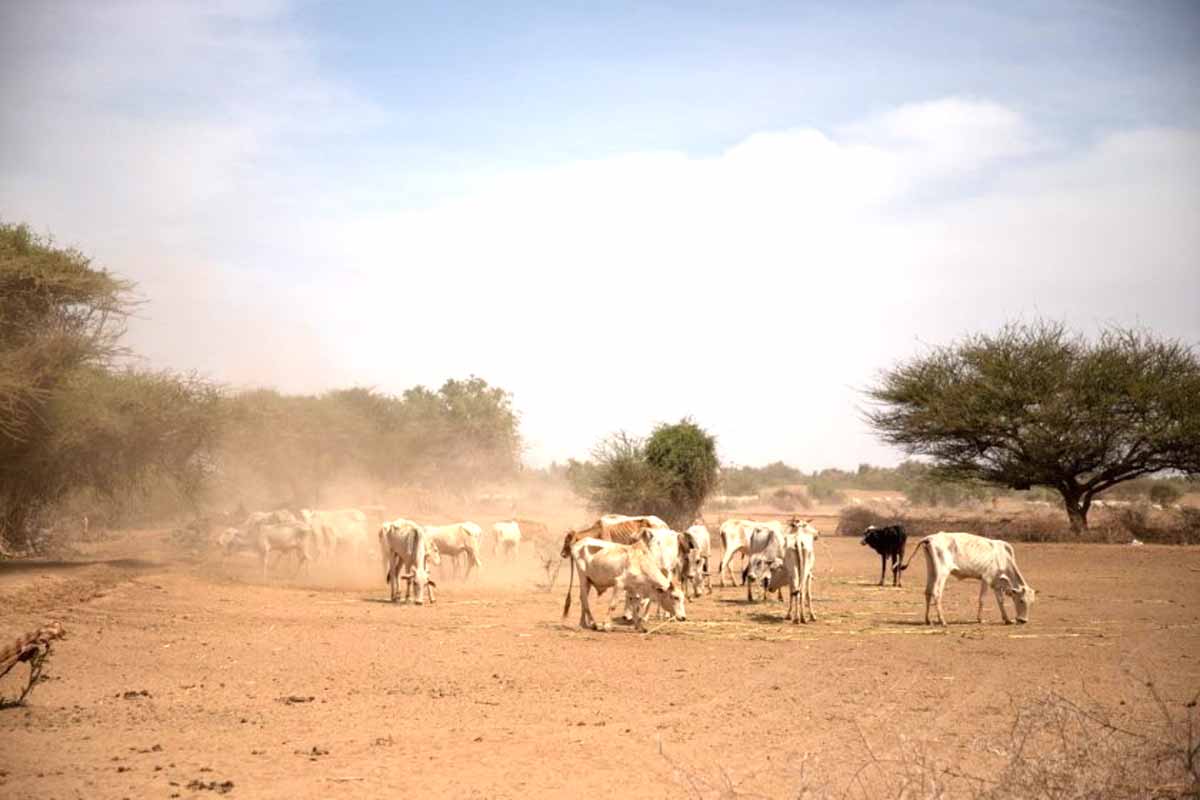
On verge of record drought, East Africa grapples with new climate normal

Reuters/Feisal Omar / 28 Mar 2022
In November 2021, scientists at the Famine Early Warning System Network sent out a warning that an unprecedented drought in the Horn of Africa was imminent if poor seasonal rainfall continued into 2022. Tragically, their prediction is turning out to be prescient. 
East Africa, and in particular, parts of Somalia, Djibouti, Ethiopia, and Kenya, are experiencing the driest conditions and hottest temperatures since satellite record-keeping began. As a result, as many as 13 million people are currently experiencing acute food and water shortages and a projected 25 million will face a similar fate by mid-2022.


Scientists are blaming climate change for the current crisis in a part of the world that is least able to cope. Africa as a whole contributes to about two to three per cent of global emissions that cause global warming and climate change.
However, the continent suffers the heaviest impacts of the climate crisis, including increased heatwaves, severe droughts and catastrophic cyclones, like the ones that hit Mozambique and Madagascar in recent years.


Furthermore, scientists project things will only get worse for Africa if current trends continue. According to the 2022 Intergovernmental Panel on Climate Change report, “key development sectors have already experienced widespread loss and damage attributable to anthropogenic climate change, including biodiversity loss, water shortages, reduced food production, loss of lives and reduced economic growth.”


The current drought hitting East Africa has been particularly devastating to small-scale farmers and herders across the Horn who are already vulnerable to climate related shocks.
This is why the United Nations Environment Programme (UNEP) is currently supporting 22 African countries to use Ecosystem-based Adaptation solutions that are already present in their environment to buttress communities against the deadly effects of climate change.
In the small East Africa nation of Djibouti, for instance, UNEP has undertaken three ecosystem-based adaptation projects, including a drought mitigation project specifically aimed at assisting subsistence farmers and herders whose crops are failing and livestock are dying.


“Ecosystem-based adaptation approaches, such as planting indigenous, rapidly growing species of plants that can have immediate impact on the ground, combined with long-term solutions is incredibly effective at protecting communities from the impacts of climate change,” said Eva Comba, a Task Manager at UNEP’s Climate Adaptation Unit.
She said that restoring already existing ecosystems, by planting more Acacia and mangrove trees, for example, is vital in countries like Djibouti that are vulnerable to droughts, storms, flash-floods and coastal erosion.


Some of the ecosystem restoration Comba and her colleagues at UNEP are working on include planting trees in 15 hectares of land. The greenery includes Acacia trees, which are ideal plants for providing a cooling shade and prevent soil erosion on farmlands—a must in a hot and dry climate like Djibouti’s.


Another key component of the project is building boreholes and underground water tanks that enable subsistence farmers to water their crops in ways that are sustainable over time.
Replanting and protecting already existing mangrove forests is also an important part of UNEP’s ecosystem-based adaptation approach, especially in coastal regions of Djibouti. Mangroves are effective for protecting local communities from storms and supporting alternative livelihoods, such as fisheries and tourism.


Despite the dire impacts of climate change in Africa, there is cause for optimism. UNEP is working with many countries across the continent to ensure that climate change adaptation is embedded in national policy and planning. UNEP is also working with the European Union and The Africa LEDS project to support Low Emissions Development (LEDS) across the continent in order to unlock socio-economic opportunities whilst fulfilling the climate objectives of the Paris Agreement


UNEP also worked with ministers of the environment from 54 African countries to create The African Green Stimulus Programme. It supports a comprehensive green recovery from the COVID-19 pandemic , which has already cost the continent tens of billions of dollars in lost gross domestic product.


However, a lot more work needs to be done to mitigate the worst effects of climate change that is yet to come, say experts. According to UNEP’s 2021 Adaptation Gap Report, the “estimated adaptation costs in developing countries are five to ten times greater than current public adaptation finance flows.” The report also found that the costs of adaptation are likely to hit as high as USD 280-500 billion per year by 2050 for developing countries. 


The current drought in East Africa has sent humanitarian agencies scrambling to prevent another famine like the one that hit the same region in 2011 in which an estimated 260,000 people died.


If the April rainy season turns out to be as disappointing as the last three, it will mark the longest drought to hit the region since the 1980s, potentially leading to a famine of tragic proportions.


“At the moment in the Horn of Africa we are witnessing vulnerable communities being disproportionately affected by climate change who are least able to buffer against its impact,” said Susan Gardner, the Director of UNEP’s Ecosystems Division. “To prevent a major humanitarian crisis in East Africa, we must provide urgent humanitarian assistance to those in need, while also thinking long term by investing in ecosystem-based adaptation solutions that will save lives, build green economies and protect the environment.” 

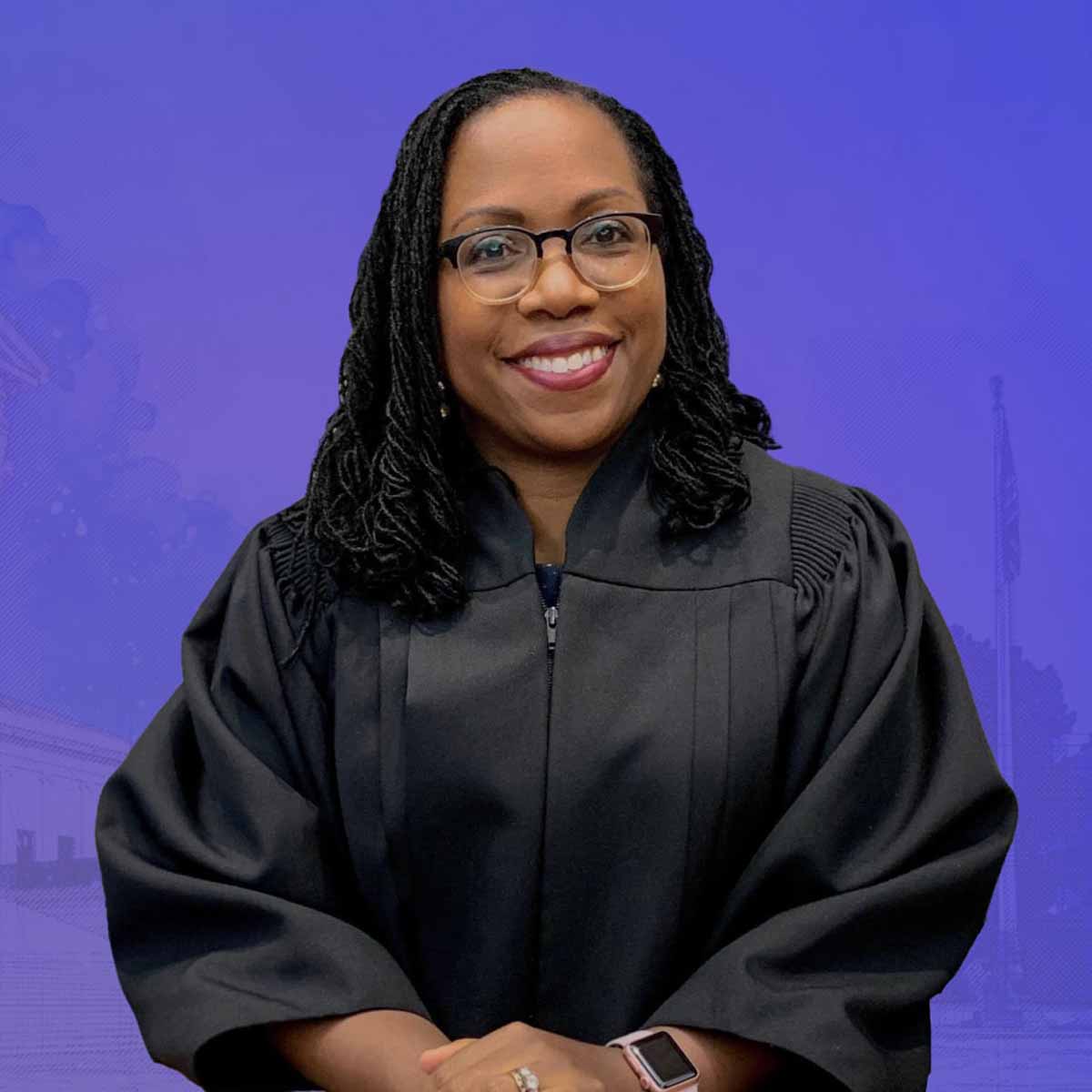
Ketanji Brown Jackson To Be the First Black Woman confirmed to the Supreme Court

Behold my sister! Ketanji Brown Jackson has been confirmed as an Associate Justice of the Supreme Court of the United States. There is a chance that, in time, things will get better, because a person such as Judge Jackson, will be on the Court.


FROM THE WHITE HOUSE
Since Justice Stephen Breyer announced his retirement, President Biden has conducted a rigorous process to identify his replacement. President Biden sought a candidate with exceptional credentials, unimpeachable character, and unwavering dedication to the rule of law. And the President sought an individual who is committed to equal justice under the law and who understands the profound impact that the Supreme Court’s decisions have on the lives of the American people.


That is why the President nominated Judge Ketanji Brown Jackson to serve as the next Justice on the Supreme Court. Judge Jackson is one of our nation’s brightest legal minds and has an unusual breadth of experience in our legal system, giving her the perspective to be an exceptional Justice.


About Judge Ketanji Brown Jackson
Judge Jackson was born in Washington, DC and grew up in Miami, Florida. Her parents attended segregated primary schools, then attended historically black colleges and universities. Both started their careers as public school teachers and became leaders and administrators in the Miami-Dade Public School System. When Judge Jackson was in preschool, her father attended law school. In a 2017 lecture, Judge Jackson traced her love of the law back to sitting next to her father in their apartment as he tackled his law school homework—reading cases and preparing for Socratic questioning—while she undertook her preschool homework—coloring books.


Judge Jackson stood out as a high achiever throughout her childhood. She was a speech and debate star who was elected “mayor” of Palmetto Junior High and student body president of Miami Palmetto Senior High School. But like many Black women, Judge Jackson still faced naysayers. When Judge Jackson told her high school guidance counselor she wanted to attend Harvard, the guidance counselor warned that Judge Jackson should not set her “sights so high.”


That did not stop Judge Jackson. She graduated magna cum laude from Harvard University, then attended Harvard Law School, where she graduated cum laude and was an editor of the Harvard Law Review.
Judge Jackson lives with her husband, Patrick, and their two daughters, in Washington, DC.

From the Washington Post:
Jackson, a daughter of schoolteachers who has risen steadily through America’s elite legal ranks, will become the first Black woman to sit on the court and only the eighth who is not a White man. She will replace Associate Justice Stephen G. Breyer after the Supreme Court’s term ends in late June or early July.
Thursday’s 53-to-47 vote represented the culmination of a six-week whirlwind confirmation process for the 51-year-old federal appeals judge.
https://www.washingtonpost.com/politics/2022/04/07/jackson-confirmation-vote-senate/