Home Blog Page 330

What’s Going On – 4/22

SPRING IN AMERICA
NYC continues to dominate the national news cycle, willy-nilly. Gun violence is as ubiquitous here as it is in other American cities, despite additional NYPD personnel. Last week’s subway shooting in Brooklyn only complicated NY post-COVID dysfunction. By firing shots into a crowded train, injuring ten strap hangers and dropping smoke bombs, alleged terrorist African American Frank James, does not sound like a mentally stable man. The subject of an FBI, Homeland Security and NYPD manhunt, he is an individual who needs immediate psychiatric attention, by his own admission. He was active on social media, which was incriminating. Arrested without bail which his lawyer did not argue, she did request a psychiatric evaluation for him during detention.


A week later, the public knows little about his life journal, which probably included time in the US military, deployed to an overseas war zone. NYC is filled with Frank James types, who are also homeless.


NYC Housing courts are filled with landlords who want to get eviction nods from the judges, for tenants with large arrears. These tenants are unemployed, and unable to hire lawyers or get public defenders for evictions, which will add a new layer to NYC’s homeless culture. Some ERAP (Emergency Rental Assistance Program) monies are available but not enough to pay all rent arrears. NYC has gun violence, too many mentally challenged people roaming the streets and a homeless population that grows exponentially. The April 12 shootings on the train will put a pause on the City’s return to normalcy, back-to-office brick-and-mortar jobs and tourism.


It was interesting to watch Mayor Eric Adams conduct NYC Business while in quarantine after a COVID positive test. Every day, a press conference opened with a preface by Adams. Last week like all previous weeks this year, there are few extemporaneous exchanges between city commissioners and the media. According to Politico, Mayor Adams does not like his commissioners to call press conferences without his approval. Failure to deal with his order can result in a lieutenant “being fired.” It sounds like DeBlasio micromanagement!

ALBANY: Who is the next NYS Lieutenant Governor designate now that Brian Benjamin is out of the picture, not on the Primary ballot. A convenient choice would be Kathryn Garcia, who ran in the 2021 NYC Democratic mayoral race, and who is part of Gov. Hochul’s inner circle? Will it be Ana Maria Archila, supported by the Working Family Party or Diana Reyna, former NYC Councilwoman who is running as LG with Congressman Tom Suozzi? Latinos would like to see one of their names on an NYS ballot.

HEALTH WATCH
COVID 19: A federal judge in Florida strikes down the Center for Disease Control CDC, masks mandate for airports, planes trains, and other transportation outlets. Too many mixed signals for a nation that is still COVID vulnerable, but treatable at home.
Black Enterprise presents the next Economic Equity & Racial Justice Town Hall Series: How Black People Can Live Longer and Better, on April 28, 7-8:30 pm EST. Panelists are Kirk Charles, Fit Beyond 40; Dr. Ian Smith, MD/Author; Shanell McGoy, Ph.D., MPH, Gilead Sciences, and Jacqueline Dow, Public Health Expert, J Dow Fitness. Visit blackenterprise.com/townhall to attend.

ARTS CULTURE
FINE ART: Camille Ann Brewer was appointed the new director of the San Jose Museum of Quilts and Textiles, in California. Brewer will have oversight of the Museum, vision, strategies, and directions and will guide overall operations like exhibitions, programming, and collections. Veteran artrepeneur, Brewer was Executive Director of the Black Metropolis Research Consortium at the University of Chicago and served as curator of contemporary art at the George Washington University Museum and the Textile Museum at GWU in Washington, DC.

Hi-ARTS and Black Women Photographers partner to showcase works by seven acclaimed and emerging artists, including Iliana Carter, Andrea Castillo, Poochie Collins, Maria Hackett, Myesha Evon Gardner, Ashli Owens, and Edolia Shroud, for a show running through April 29 at Hi-ARTS space PS109, located at 215 East 99 Street. Visit hi-artsnyc.org.

EDUCATION: Howard University President Dr. Wayne A.I. Frederick, 50 retires in 2024. A triple alumnus of Howard, an HBCU, President Frederick leaves after a 9-year tenure, with a $1 billion endowment. An MD, Dr. Frederick recommended that his successor should be a woman. Columbia University President Lee Bollinger and NYU President Andrew Hamilton recently announced their retirement.

JOURNALISM: NY Times executive editor, African American Dean Bauquet, 65, one of the most powerful and coveted titles in American journalism, retires after an 8-year term in June. His successor is currently managing editor Joe Kahn,

NEWSMAKERS
Sending birthday wishes to Taurus the bull natives: retired social worker Davies Burton; editors Wanda Ballard Winfield; Patricia Pates Eaton, Harlem-based diva; Willie Egyir; Toni Faye; Bernice Elizabeth Green, co-founder and editor-in-chief of Our Time Press, Brooklyn based newspaper; 2018 Congressional Candidate Richard Habersham, Solutions Now President and cofounder; flutist Bobbi Humphrey; Janet Jackson; Dwayne Johnson; Ed Lewis, “Man From Essence” co-founder/publisher; LIZZO; Harriet Mandeville, spiritualist/author; Roy Miller, Jamerica Travel; Harvard Professor, Dr. Khalil Gibran Muhammad, former Schomburg Center CEO; Brenda Neal, investment banker; Roy Paul, Executive Director, Financial Literacy Nonprofit, Cents Ability; Jeanne Parnell, WHCR-FM “City Lights” host; Miatta Smith, NY Beacon Publisher; Sandy Tate, Lifestyle Consultant; Margaret Porter Troupe, Harlem Arts Salon curator; Dr. George Williams, DDS;  Donald Sutton, founder of Global Artists Management of NY and Trustee, Ntozake Shange’s Literary Trust; Stevie Wonder, Gabourey Sidibe, Damon Dash, Dwayne Johnson.  And a birthday salute, Notorious B.I.G. (May 21, 1972 – March 9, 1997).


Congrats to New Yorker Ny Whitaker, named Director of Scheduling and Advancement in the office of the US Department of Agriculture under Secretary Tom Vilsack. The Central Harlem politico launched a consulting firm, was adjunct NYU professor who earned Bachelor’s and Master’s degree in psychology at the John Jay College, CUNY,

SPRING DATES
APRIL 22 is EARTH DAY.

The HCCI Harlem Commonwealth Congregation for Community Improvement will host the 19th Annual “Let Us Break Bread Together Awards Dinner Gala, which will be held on May 5, beginning with a 6 pm reception, at the Marina Del Rey, Throgs Neck, NY. The black-tie Gala honorees are NYC Black A-Listers such as Rev. Dr. Calvin O. Butts, III; Actor Malik Toba; Willie Walker, Civic Leader/Philanthropist; Olumide (Miday) Wilkey, UBS Financial Services; Melba Wilson, Restauranteur; and Union Baptist Church, a founding HCCI member.
For reservations, visit hcci.org/gala2022.


The Municipal Arts Society to host Jane’s Walk Tour, a free 3-day festival, from May 6 – 8, the first since COVID arrived, in NYC. Walking and virtual tour visits city’s iconic neighborhoods, including Harlem’s Mt. Morris Park Historic District, Central Harlem Historic District; Strivers Row; and the Dorrance Brooks Historic District which got landmark status last June. Jane’s Walk Tour is named after the late urban activist Jane Jacobs, who championed input from local residents over a car-centric city planning. Jacobs’ book, “The Death and Life of Great American Cities” is required reading for students of city planners everywhere. Visit mas.org/janeswalk.
A Harlem based consultant, Victoria Horsford can be reached at victoria.horsford@gmail.com
President Joe Biden Plans to Rescind Controversial Immigration Policy Title 42 in May

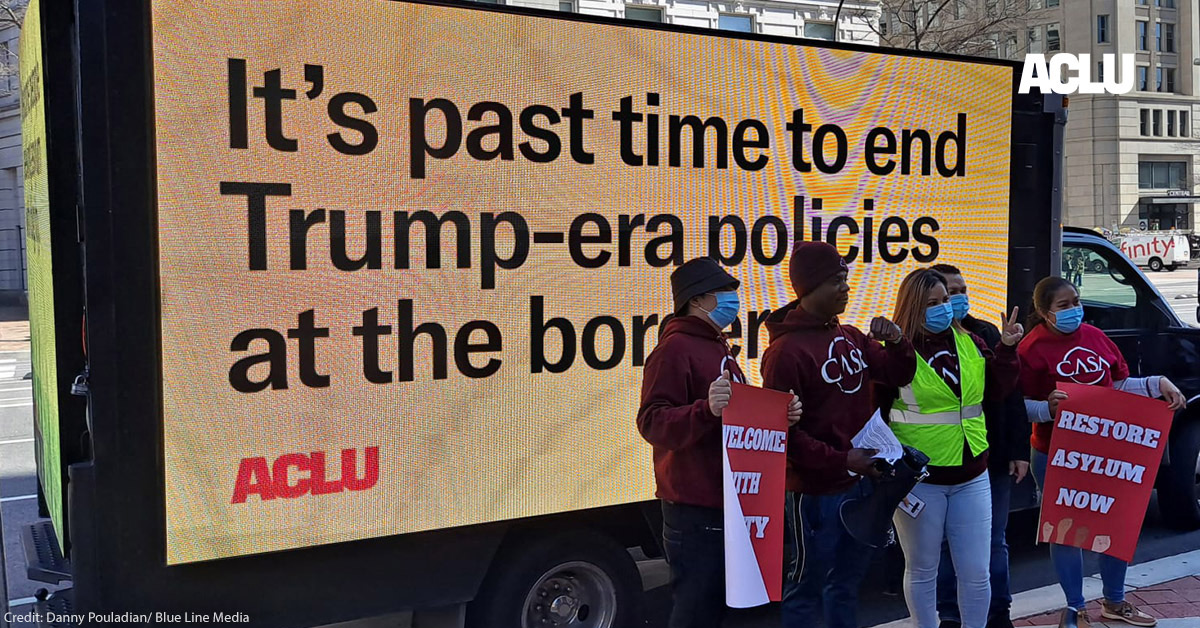
President Joe Biden and the Centers for Disease Control and Prevention (CDC) have announced plans to rescind Title 42, the controversial pandemic-related expulsion immigration policy that has limited asylum at the U.S.-Mexico border.
The decision to lift the Title 42 public health order, which will take effect on May 23, is seen as long overdue by immigration advocates who regard the order as inhumane. The CDC, which issued Title 42 in March 2020 in response to the coronavirus outbreak, said it was no longer needed.


Title 42, a Trump Administration policy, was established in May 2020 by CDC officials to limit the spread of COVID-19. Title 42—named for a 1944 public health law – has been criticized as an excuse to keep migrants out of the U.S. It has effectively closed America’s asylum system at its border with Mexico.


However, Republicans and some moderate Democrats, several up for reelection, are against Title 42 being removed. They have warned of chaos at the border. These Democrats have been vocal about their fear that rescinding the rule in May is not enough time for the administration to establish an adequate plan to handle the uptick in migrant crossings that is expected to ensue.


In September 2021, the Biden administration had the largest Title 42 air expulsion blitz to date. It expelled 10,000 deportees to Haiti in three months after the sudden arrival of thousands of migrants from the Caribbean country in Del Rio, Texas. The public was horrified to watch U.S. officials on horseback chasing Haitian migrants.


Congresswoman Cori Bush of Missouri, who has urged Biden to review the disparate treatment of Black migrants under Title 42, said: “This racist, inhumane relic from the Trump era has been devastating for migrants fleeing persecution, war, poverty, climate catastrophe and violence in their home countries and who have been forced to seek asylum in the United States.”


Most migrants processed under Title 42 have been expelled by land to Mexico. However, the Mexican government has only formally agreed to accept the return of expelled migrants if they are Mexican, Guatemalan, Honduran or Salvadoran.


A smaller number of migrants are expelled through deportation flights, usually to their home countries. The U.S. is currently expelling some migrants to Brazil, Colombia, the Dominican Republic, Ecuador, Guatemala, Haiti, Honduras and southern Mexico.


Brooklyn Congresswoman Yvette Clarke is the daughter of immigrants and a lifelong advocate American dream. “The Biden Administration’s decision to lift the harmful, malicious, and discriminatory policy that is Title 42 is a welcome blessing and one that I have long awaited,” she said. “While this policy endured, countless hopeful migrants suffered under its authority as we circumvented our obligations under international and domestic law. This harmful policy disproportionately affected Black migrants and created life-threatening conditions for immigrants seeking refuge at our borders. Untold unaccompanied children, families, asylum seekers; none were spared the denial of due process entitled to them by law.” 

The Black Vote: More Important Than Ever

The View From Here
By David Mark Greaves

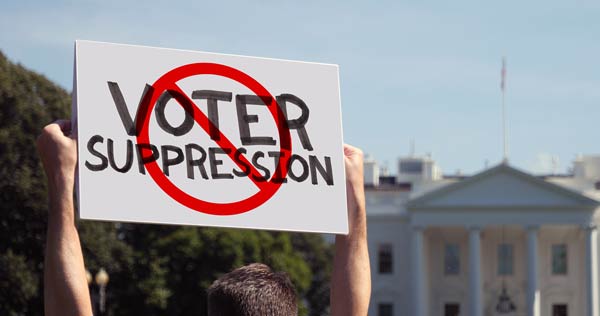
What is going on? War in Europe with millions of refugees, famine in Somalia with 350,000 children projected to die, the United States threatened to be ruled by autocrats, the climate crisis is quickening, and the manipulation of information through the internet is fragmenting American consciousness into its sometimes ugly parts. And suppression of the Black vote is threatening to make it all worse.


An authoritarian state in the United States would bring back to power the same strain of mankind who so successful during slavery as the planters, overseers, buyers and sellers of people. Men, so aware of their nature, that today they ban books where people might learn what their ilk has done and what they are capable of.


These are the people who would be coming to power. Men like Donald Trump who called Putin’s invasion, “genius”. For him, Putin’s disregard for human life and lust for power is recognized and is to be admired. Game knows game.


Putin’s biggest problem with the war in Ukraine is the United States. He needs regime change here to give his campaign a boost. And working to suppress the Black vote as he’s done in the past, this time for the midterm elections, must be part of Putin’s strategy headed into November. His misinformation teams of cyber, political and social influencers will have the advantage of working at a time when a major political party has the same goal, to transform the United States into an authoritarian state. If Putin can achieve that, then the future brightens for him, with representatives from the “Putin wing” of the Republican party holding House committee chairs.


If the thought of a Republican led House, Senate and Executive branches of government doesn’t make the skin crawl, then you have to pay closer attention.


If the Republicans win both houses in the Fall, they will put the country in a holding pattern while states continue to degrade voting rights and put Trumpers in the election-decision making loop. Then in 2024 they will install an electoral college president, no matter how many fewer popular votes they received. It could be Trump, Florida’s Gov. Ron. DeSantis, or a person now unknown. Whichever way, it will bring a very different time to America.


What were we thinking when we let it come this far? This slipping away of democracy and risking the worst of America to come power. And once the white supremacists and demagogues, backed by the mob that is the Republican base, grab that power, they will not give it back.


If the country is to be saved, the Democrats better figure this out. Not only for the nation’s sake, but the world as well. With climate change deniers in office, we are going to go from bad to worse with drought, famine, flooding, storms, wildfires, mass migrations, extinctions, and more impacts of a changing climate than we can count. All of it met with the response from autocrats to whom humanity and the future is not their concern.


Which brings us back to the importance of the Black vote.
The history of Africans in the Americas is one of constant struggle against evil. Whether it was the enslavers, the lynchers, or the racism and hate, it has been our constant struggle against all of it that has made the Declaration of Independence and Constitution, written originally by and for white male landowners, applicable to all persons and lit the beacon that is looked to around the world.


And now here we are again. Fighting the resources and relentless evils of racism, power and greed. Again, with implications across the planet. We are holding the future of democracy and the future of the world in our hands when we vote.


The great historian, Dr. John Henrik Clarke told us this in a 1996 interview:
JHC: I say if Black people don’t unite and begin to support themselves, their communities and their families, they might as well begin to go out of business as a people. Nobody’s going to have any mercy. And nobody’s going to have any compunction about making slaves out of them.


And the new slavery won’t need metal chains. We need to remember that and spread the word to vote and financially support candidates in competitive races like Rep. Val Demings in her Florida Senate race and Senator Ralph Warnock trying to hold on to his office. That’s one of the practical things we can do from the safely blue borough of Brooklyn.

World Trade Head Predicts Food Riots in Poor Countries Due to Ukraine War

By Lisa Vives

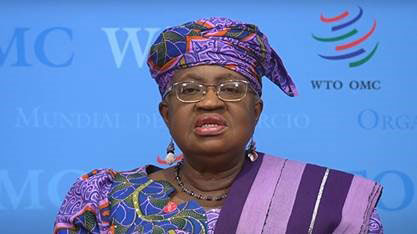
Mar. 28, 2022 (GIN) – Ngozi Okonjo Iweala, the head of the World Trade Organization, is warning that skyrocketing global food prices as a result of the war in Ukraine could trigger food riots from people going hungry in poor countries.

WTO Director General Okonjo-Iweala urged food-producing countries against hoarding supplies and said it was vital to avoid a repeat of the Covid pandemic, when rich countries were able to secure for themselves the bulk of vaccines.

In an interview with The Guardian of the UK, the WTO director general noted the dependence of many African countries on food supplies from the Black Sea region.

“I think we should be very worried. The impact on food prices and hunger this year and next could be substantial. Food and energy are the two biggest items in the consumption baskets of poor people all over the world,” Okonjo-Iweala said.

“It is poor countries and poor people within poor countries that will suffer the most.”

Okonjo-Iweala, a former Nigerian finance minister, said 35 African countries were dependent on food imported from the Black Sea region, adding that Russia and Ukraine were responsible for 24% of global supplies of wheat.

After being strongly critical of the “vaccine apartheid” that affected Africa during the pandemic, she said WTO member states had to resist the temptation of protecting their own food stocks.

“It is a natural reaction to keep what you have – we saw that with vaccines. But we shouldn’t make the same mistake with food.”

The last time rising food prices sparked food riots was between 2006 and 2008. Protests broke out in developing countries as  prices in a wide range of food, oil and other primary commodities increased in dramatic fashion, in some cases more than doubling within a few months. Policymakers were presented with the challenge of simultaneously addressing hunger, poverty, and political instability.

In Africa, food riots swept across the continent, from Egypt and Tunisia in the North, to Burkina Faso and Senegal in the West, and Madagascar and Mozambique in the South (Fig. 1). The crisis reinforced the

extent to which oil and food markets have become highly interdependent, and highlighted the relative inability of national governments and the international community to adequately deal with dramatic surges in food prices.

“We must make sure we learn the lessons from vaccines and previous food crises,” Ms. Okonjo-Iweala said. “I am not sure we can fully mitigate the impact of the war in Ukraine because the numbers involved are huge, but we can mitigate some of it.” w/pix of N. Okonjo-Iweala

 Lisa Vives, Global Information Network, Member, National Writers Union

Famine in Africa, War in Europe,
Violence in Brooklyn

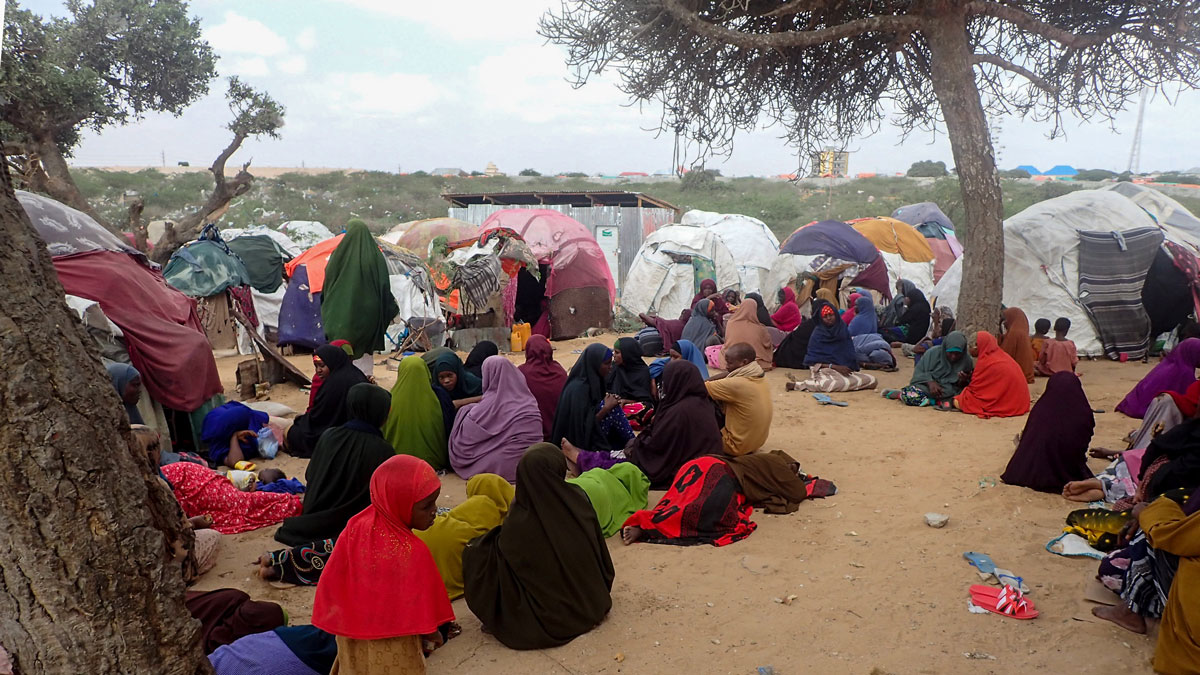
Somalia drought: ‘Act now or 350,000 children will die’

By Mercy Juma
BBC News, Galkayo

As Somalia faces what experts call its worst drought in a decade, children are bearing the brunt. Parents are struggling to feed them, with nearly half of the country’s under-five population likely to suffer from acute malnutrition by June.


Nimco Abdi gently places her six-month-old baby girl onto a plastic basin supported with sisal ropes. The weighing scale from which the basin hangs reads 0.6 stone (4kg). That is almost less than half of what the child’s ideal weight should be.


She is too tiny for her age. Her eyes are sunken, bones are protruding and her skin is wrinkled and pale. She lets out a feeble, barely audible cry as Nimco picks her back up.
“I used to breastfeed her. But I became so sick from lack of food. And she got so thin, I decided to bring her here. At least she can get milk and drugs,” says Nimco.


Nimco has just arrived at a malnutrition stabilization center in Luuq, 310 miles (500km) from Mogadishu in south-western Somalia. She is given a bed inside the facility, which she will have to share with another mother.
Her story is one among many mothers who are facing the potential death of their children by malnutrition.


“If nothing is done, it is projected that by the summer of this year, 350,000 of the 1.4 million severely malnourished children in the country, will perish,” warns Adam Abdelmoula from the United Nations Office for the Coordination of Humanitarian Affairs (Ocha).


“Already in this country, 70% of school-age children are not attending school. In just one state in Juba land, the drought has led to closure of 40 schools and that is going to be the trend in many drought-affected areas,” he continues, adding that some girls are being married off early because their families cannot feed them.

Villages deserted
Fatuma Mohamed, a nurse at Luuq’s malnutrition center, says the bed capacity is 18, but more than 50 children and their mothers are here.
“Our worry is the big numbers that we are getting. We are overloaded and operating beyond our full capacity. We have been running short of medical supplies,” she says.
“The women are coming with severely malnourished children. And most of them also have acute watery diarrhea and measles,” she continues.


This center is only a glimpse of the situation across Somalia. The drought has affected 4.5 million people. The Juba River, the largest in Somalia, has barely any water left.
According to the UN, almost 700,000 people have been forced from their homes in search of food and water for them and their animals, and the numbers keep rising.
There have been four seasons of failed rains and temperatures are unbearably high – 90% of the country is dry.


Along the roads in rural areas, carcasses of animals are strewn all over – dead goats, donkeys and camels. This is catastrophic for the many Somalis who earn their living by raising and selling animals.
The prices for food and water are surging. Villages have been deserted as people move nearer to the urban centers in search of relief.
Those who remain behind are the elderly, who wait – either for the rain to fall, or for their young ones to come back with water.


The drought is affecting not only Somalia, but the rest of the Horn of Africa and many other parts of the continent. The International Committee for the Red Cross (ICRC) says at least a quarter of all Africans are facing a food security crisis.
There is also a dramatic rise in the numbers of displaced people. The hunger crisis is also being overshadowed by the Russia-Ukraine war, as all efforts, aid and funding are focused there.


The camps for internally displaced persons are scattered all over the country. And new ones keep springing up. Some people had not even recovered from the 2017 drought, which was declared a national disaster, before this one struck.

The worst is yet to come
In a camp in Galkayo, hundreds of miles north of Luuq, seven-month pregnant Hawa Fargod sits with her two small children. Her makeshift hut, like hundreds of others here, is made from sticks and covered with gunny bags and clothes. Her fireplace has been cold for days.
Next door to Hawa Fargod, Hawa Sharif narrates her three-day journey to the camp on a donkey cart, with her five children. The donkey died immediately when they got to the camp.
“That donkey was the last surviving animal we had. Everything else died.”


The drought has forced families apart – the men have gone to the towns to earn a living, while the women and children move where they can get aid.
Humanitarian agencies say there is a huge funding crisis. They have just 3% of what is needed to intervene in the country.


They are trying to send water trucks, food supplies and medical aid. But this cannot reach everyone – and in the next few weeks, it will not be possible unless more funding and donations are made available.


With April rainfall forecast to be average or below average, there are fears that the worst is yet to come.
The feeling of an impending sense of doom is one Hawa Fargod knows all too well. Struggling with kidney disease herself as well as sick children, she is not hopeful for the future.
“I fear for my children,” she says ominously.

President Biden Aims at Regulating Ghost Guns

This Monday, President Joe Biden took new steps aimed at regulating “ghost guns,” those untraceable, homemade weapons created by 3D printers.


Biden announced executive actions pointed at regulating ghost guns. The new rules require anyone purchasing a gun kit to undergo a background check, which is required for other kinds of firearm purchases. Those selling kits will also be required to include a serial number on the components that make up the weapon, so the firearm can be traced. Additionally, the new rules mandate firearm dealers add a serial number to already-assembled ghost guns they come across. Ghost guns are sometimes called privately made firearms, or PMFs, because did not have serial numbers.


“It’s no longer a ghost,” Biden said. “It has a return address. And it’s going to help save lives, reduce crime and get more criminals off the streets.”


Ghost gun weapons are made from plastic or polymer parts. They are untraceable, self-assembled firearms, sometimes put together with parts sold online. Ghost gun blueprints can be easily downloaded. To print out a gun’s lower receiver takes approximately 12 hours, but the metal upper receiver has to be purchased separately. It can take as little as 30 minutes to assemble the firearm.


According to the NYPD, there has been a rise in the use of these untraceable, homemade weapons in violent crimes. Last week, a ghost gun was used in the murder of a teenage girl, a 16-year-old high school student in the Bronx. A few days earlier, NYPD seized a cache of ghost guns during a raid in Brooklyn. This included eight complete AR- or AK-style rifles and five handguns. They also found a brand-new 3D printer. In March, a gun dealer in Brooklyn was caught with two 3D printers. As of April 6, NYPD has seized 131 ghost guns — almost one out of every eight guns recovered by the police this year. Mayor Eric Adams announced that since January 2022, the NYPD has recovered 163 ghost guns, compared to 29 over the same period in 2021.


In 2019, former Queens Council Member I. Daneek Miller, as co-chair of the Black, Latino, and Asian Caucus, sponsored Introduction 1548, which requires the NYPD to report on the number of seizures of ghost guns and 3D printed guns.


“The ability for criminals to get their hands on dangerous and virtually untraceable ghost guns is unacceptable,” Miller said in 2019. “In my Southeast Queens district, as well as throughout the City, we have witnessed a troubling uptick in gun violence. We must continue to be proactive in keeping our communities safe.”


According to the Giffords Law Center to Prevent Gun Violence, at least 10 states and Washington, DC, have already taken steps to restrict or ban the purchase or use of ghost guns. 

World Trade Head Predicts Food Riots in Poor Countries Due to Ukraine War

Mar. 28, 2022 (GIN) – Ngozi Okonjo Iweala, the head of the World Trade Organizer, is warning that skyrocketing global food prices as a result of the war in Ukraine could trigger food riots from people going hungry in poor countries. 

Ngozi Okonjo Iweala


WTO Director General Okonjo-Iweala urged food-producing countries against hoarding supplies and said it was vital to avoid a repeat of the Covid pandemic, when rich countries were able to secure for themselves the bulk of vaccines. 


In an interview with The Guardian of the UK, the WTO director general noted the dependence of many African countries on food supplies from the Black Sea region. 
“I think we should be very worried. The impact on food prices and hunger this year and next could be substantial. Food and energy are the two biggest items in the consumption baskets of poor people all over the world,” Okonjo-Iweala said. 


“It is poor countries and poor people within poor countries that will suffer the most.” 
Okonjo-Iweala, a former Nigerian finance minister, said 35 African countries were dependent on food imported from the Black Sea region, adding that Russia and Ukraine were responsible for 24% of global supplies of wheat. 
After being strongly critical of the “vaccine apartheid” that affected Africa during the pandemic, she said WTO member states had to resist the temptation of protecting their own food stocks. 


“It is a natural reaction to keep what you have – we saw that with vaccines. But we shouldn’t make the same mistake with food.”
The last time rising food prices sparked food riots was between 2006 and 2008. Protests broke out in developing countries as  prices in a wide range of food, oil and other primary commodities increased in dramatic fashion, in some cases more than doubling within a few months. Policymakers were presented with the challenge of simultaneously addressing hunger, poverty, and political instability. 


In Africa, food riots swept across the continent, from Egypt and Tunisia in the North, to Burkina Faso and Senegal in the West, and Madagascar and Mozambique in the South (Fig. 1). The crisis reinforced the extent to which oil and food markets have become highly interdependent, and highlighted the relative inability of national governments and the international community to adequately deal with dramatic surges in food prices. 
“We must make sure we learn the lessons from vaccines and previous food crises,” Ms. Okonjo-Iweala said. “I am not sure we can fully mitigate the impact of the war in Ukraine because the numbers involved are huge, but we can mitigate some of it.”


LISA VIVES
Global Information Network
Member, National Writers Union