Home Blog Page 3

Freedom School Kick-Off at Medgar Evers College 

By – Nehemi’EL Ibrihim-Simms

On Saturday April 18th, 2026, at Medgar Evers College Campus the long-awaited Saturday Freedom School began. The program is being initiated as a partnership between powerful community stakeholders including Inspiring Minds NYC, the NAACP, and the Medgar Evers Center for Law and Social Justice. The Saturday Freedom School provides a comprehensive blend of educational programming aimed at increasing the self-knowledge and self-efficacy of students and their parents in the Crown Heights, Brooklyn area as a tactic to invigorate a fresh, new generation, a new electorate, that can be mobilized to take the polls, and to the community. This program is leading the charge in New York City as it attempts to answer the question of youth mobilization and an informed, electrified electorate as well as chart the territory of educational activism in a time when so many community facing non-profits, schools and social agencies are struggling to respond effectively to the needs of the City’s black youth. 

The entire program is based on a framework that is family-oriented, community-specific, and grounded in a long history of civic engagement and social change activism. What’s more, it is being led by a more than capable team of seasoned organizers, educators, attorneys, and executives who hold a cumulative 100-years of experience working for the improvement of families and neighborhoods of New York City. Its namesake directly connects the program to the Student Non-Violent Coordinating Committee (SNCC) “Freedom Schools” used as a tactic for voter registration during the 1964 campaign dubbed “Mississippi Freedom Summer.” Instead of being employed as a tactic for voter registration, this Freedom School is being used to combat the systemic challenges that are resulting in gun-violence, gang activity, and mental health crises rising in our communities; specifically, amidst the youth. More specifically, the program is being used to figure out how we can increase the political enthusiasm of young people and their families in Brooklyn. In the wake of the murder of 15-year-old Jaden Pierre this program is right on time. 

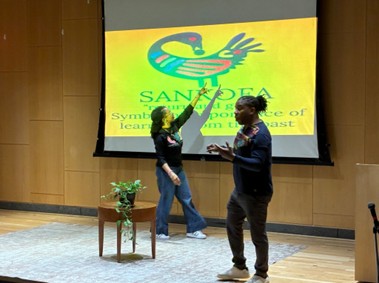
At the beginning of the day, the Committed Four responsible for this program – L. Joy Williams (NAACP), Lurie Daniel-Favors (Center for Law and Social Justice), Brian Favors (Inspiring Minds NYC) and Katrena Perou (Inspiring Minds NYC) – addressed the student body of about 50 ranging in ages from 6 to 19, and their parents, in the Edison O. Jackson Auditorium. The program began with a libation that invoked the power of the Almighty Creator and our Ancestors of the participants. The Favors gave an explanation of the guiding philosophy of the program, a brief exposition on the program’s history, and dissemination of the day’s schedule. In addition, Brian and Lurie also explained the meaning of the Akan symbol “Sankofa,” its connection to their own 25 year history of community organizing, and its application to the meaning and purpose of the entire program: learning from our past to move our community forward. Excitedly, Katrena Perou exclaims that the initiative has “been a long time coming.” She told Our Time Press that “the NAACP NY Freedom School creates the space on Saturdays to go deeper, strengthen relationships with students and deliver a more meaningful, transformative experience.” 

After this introduction, everyone went outside onto the steps of the 1638 building and engaged in what proved to be an incredibly communal and spiritual modality of learning called the “Harambee Circle.” Brian Favors explains that the Harambee Circle is meant to increase the energy and positivity of the students in preparation for them to enter the classroom. First, Haitian drummer, recording artist and cultural archivist Baba Oneza engaged everyone in traditional songs from Haiti, Benin and Central Africa reaffirming the program’s firm stance on participatory cultural immersion. Then, Brian and Lurie brought some Hip-Hop bop and groove, and began to lead the circle in call-and-response chants that included songs about the Red, Black and Green Flag and the struggles of our Ancestors to be free. By the end of the session the students, engulfed in their forebears’ spirit, were full of energy and prepared to enthusiastically engage the classrooms!

In the classrooms, the student body was split into two groups: 3 grade – 6 grade and 7th grade and higher. The first class of the day is Know Your History – where students are initially challenged to think critically about the assumptions and biases about African/Black History; followed up by civics – where students are again challenged to think about how they, as youth/students, can use that information to inspire change in their communities. The facilitators led discussions that dug deeper into the topic of the meaning and application of Sankofa into the personal and family history of the students, as well as their communities-at-large. The discussion was based on Nana Jawanza Kunjufu’s Lessons From History: A Celebration in Blackness which was selected by Freedom School’s Director of Education Mr. Brian Favors as the primary material because of its straight-to-the-point diction and the easy-to-read print. The insightful additions to the lesson and their willingness to commit to embodying the traditional African principle of social order and harmony, or Ubuntu, in and outside of the classroom is exactly what Brian Favors – Director of Culturally Responsive Teaching at Inspiring Minds NYC, and 30-year educator and community organizer – explains is the ultimate aim of the initiative. In a statement to Our Time Press Mr. Favors summarized the philosophy and approach of the Freedom School as one of partnership with the neighborhoods, and of believing in the community’s ability to cultivate and nourish itself. He says  “one thing this program shows us is that there is no shortage of brilliance and leadership in our community. Oftentimes, it just needs to be cultivated. The Freedom School allows us to do just that.” 

The Freedom School, holistic in outlook, recognizes parents as an important community stakeholder whose education and development as a group is fundamental to its mission. Lurie Daniel Favors, attorney and head of the Center for Law and Social Justice at Medgar Evers College explains that “while the students were participating in their weekly programming, the Center for Law and Social Justice at Medgar Evers college will provide advocacy and civic skills training for their parents and caregivers.” When asked to comment on the utility of this feature of the program Mrs. Favors, who is also the host of Sirius XM’s “Lurie Daniel Favors Show,” made sure to emphasize that the program is “designed to ensure that as the students are expanding their horizons, their family units will similarly be empowered to further advocate on their behalf.” 

After a lunch that began in the solidarity of prayer students selected their creative tracks. The Freedom School offers dance, theatre, music production, podcasting, drumming, and martial arts. These tracks – which are meant to allow the students a creative outlet to birth art that reflects what they are internalizing intellectually earlier in the day – are facilitated by members of the community who specialize in that specific form of creative expression.

In addition, 20 high-school students from around the city have been recruited and named “ambassadors.” These students are expected to help promote the Freedom School to other young people and play an active part in shaping the initiative in exchange for an hourly wage and an opportunity to win Inspiring Minds NYC’s Shark Tank –  a component of the overall program where five participants will be awarded $2,000 each through a Shark Tank style pitching competition called “IMconnected.” Since 2021, Inspiring Minds NYC has supported more than 50 students in launching pilot programs and businesses, many of which have since been contracted by schools across New York City. Inspiring Minds NYC CEO Katrena Perou explained that “many of us were taught that success means leaving our communities behind. We believe success means investing in them to make them stronger. That’s why we fund businesses that address critical local challenges and encourage our young people to see community advancement as inseparable from their own growth.”

Finally, the program ended where it began – in the Edison O. Jackson Auditorium with a reflection session where the youth participants along with the facilitators and administrators are able to discuss what went well and what could work better. This is a part of keeping the student voice at the center of the program. After the feedback was given everyone engaged in the closing ceremony – the “Now More Than Ever” chant. This chant encourages everyone in the room, the youth especially, to take a good look at the conditions around them and resolve themselves to find a way to change them. It was an appropriate way to end the program.
Justice Leaders Championed

From Exclusion to Leadership: Black Women Lawyers and the Legal Organizations they Established

By Hon. Rhonda Tomlinson, Kings County Supreme Court

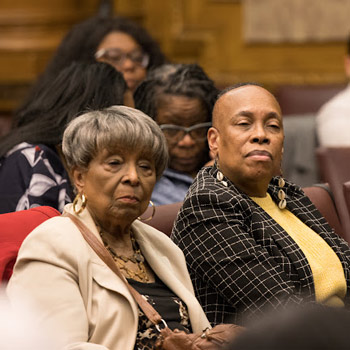
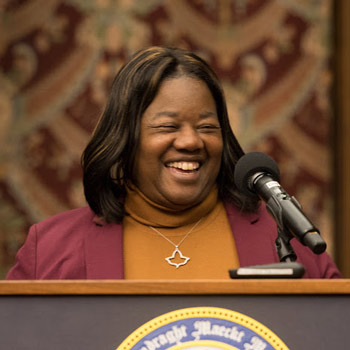
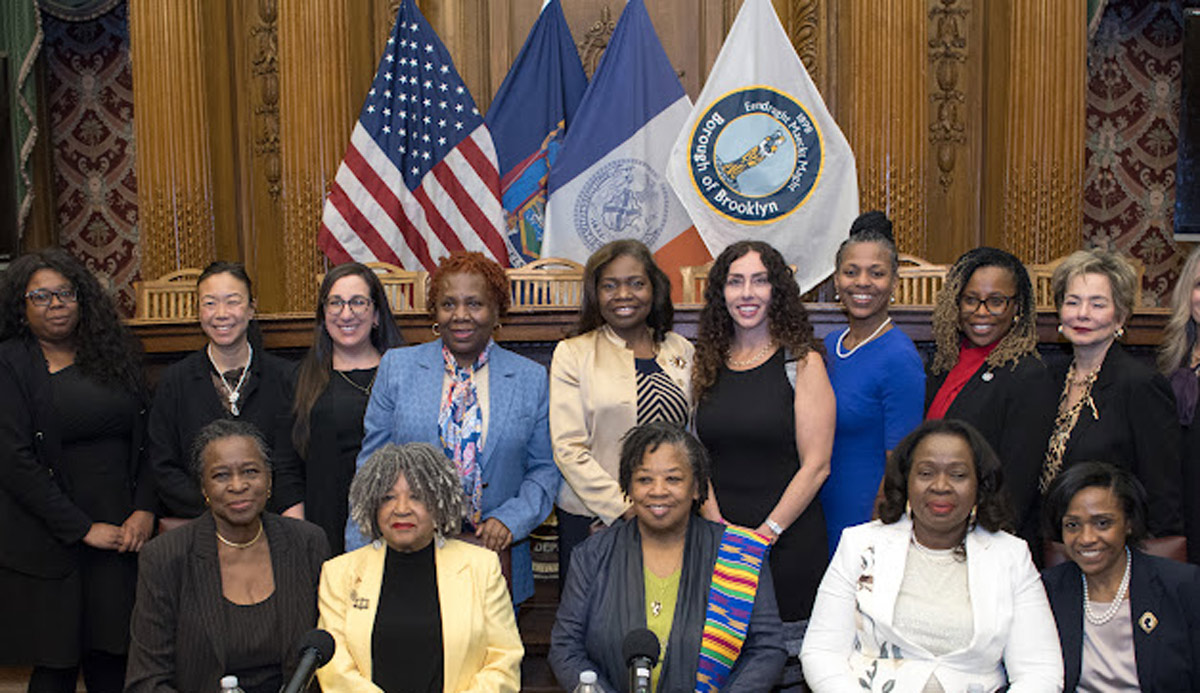
The Brooklyn Women’s Bar Association, the Caribbean American Lawyers Association and Brooklyn Borough President, Antonio Reynoso, co-sponsored a centennial celebration of Black History Month. The celebration was hosted at Brooklyn Borough Hall on April 8, 2026, with Deputy Borough President Kim Council serving as master of ceremonies.

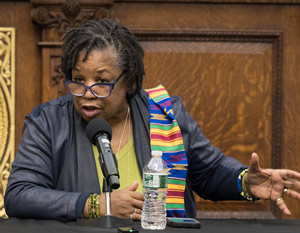
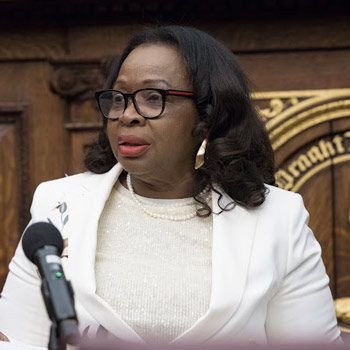
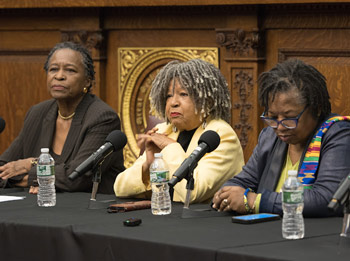
The panel featured Hon. L. Priscilla Hall (Ret.), Hon. Yvonne Lewis (Ret.), and Esmeralda Simmons, Esq., with the discussion moderated by Hon. Sylvia Hinds-Radix (Ret.), President of the Caribbean American Lawyers Association (CALA), and Hon. Rhonda Tomlinson.


The history of Black women lawyers in the United States is not simply a story of individual achievement. It is a story of collective advancement—built through institutions created in response to exclusion. From Reconstruction to the present, Black women have entered the legal profession by confronting two overlapping barriers: racism and sexism. Their progress has depended not only on individual perseverance, but on the strength of organizations that created pathways where none existed.

Hon. L. Priscilla Hall (Ret.), Hon. Yvonne Lewis (Ret.),and Esmeralda Simmons, Esq.


In the late nineteenth century, pioneers like Charlotte E. Ray—who became the first Black woman to earn a law degree in 1872 from Howard University School of Law—and Mary Ann Shadd Cary, who earned her law degree eleven years later in 1883, entered a profession that largely refused to recognize them. Both were educators who used their training to serve their communities. By 1900, fewer than ten Black women lawyers existed in the United States.

When denied access to courtrooms, they advanced justice through suffrage, education, and community organizing, laying the foundation for future generations.
A major institutional turning point came in 1925 with the founding of the National Bar Association (NBA), the first Black bar association in the United States. Established after Black lawyers were denied entry to the American Bar Association—and notably including Gertrude E. Rush as the only woman among its founders—the NBA became a national platform for mentorship, advocacy, and professional development. It provided a space where Black lawyers could be trained, supported, and heard, helping to cultivate generations of legal leadership.


From that institutional base, Black women began to make historic gains on the bench. In 1939, Jane Bolin became the first Black woman judge in the United States, appointed to the New York City Domestic Relations Court. Yet it was not until 1966 that an African American woman was appointed to the federal bench, when Constance Baker Motley broke that barrier. Her appointment marked a shift from symbolic inclusion to real judicial authority.


The decades that followed saw continued breakthroughs. In 1979, Judge Amalya Kearse became the first Black woman appointed to a United States Court of Appeals. In 2013,
Judge Sheila Abdus-Salaam became the first Black woman to serve on the New York Court of Appeals, the state’s highest court. In New York’s trial courts, Hon. Yvonne Lewis’s election to the Civil Court in Kings County in 1986—and her subsequent service on the Supreme Court—reflected the growing presence of Black women across all levels of the judiciary.

Hon. Sylvia Hinds-Radix (Ret.)


At the same time, Black women were shaping the law itself. Pauli Murray, a graduate of Howard University School of Law and a founding member of the Congress of Racial Equality (CORE), authored States’ Laws on Race and Color, often described as a civil rights handbook. Her work became a foundational resource for civil rights litigation, including arguments used in Brown v. Board of Education. In 1994, Judge Deborah Batts further expanded representation as the first openly LGBTQ Black federal judge.
These advancements did not occur in isolation. They were supported by Black legal organizations.

In New York, Esmeralda Simmons played a central role in this institutional development. She became the first woman to lead the Bedford-Stuyvesant Lawyers Association, which later merged with the Harlem Lawyers Association to form the Metropolitan Black Bar Association (MBBA) in 1984. For decades, she also served as the founding Executive Director of the Center for Law and Social Justice at Medgar Evers College in Brooklyn, building a model that connected legal practice with community empowerment.


Organizations such as the MBBA, the Association of Black Women Attorneys (ABWA), and CALA—working in conjunction with community-based institutions—have created an enduring professional ecosystem. Through mentorship, advocacy, and pipeline programs, they have ensured that Black lawyers, particularly Black women, are not only entering the profession but advancing within it.


As President of CALA, Hon. Sylvia Hinds-Radix emphasized the organization’s mission: to respond to the needs of Brooklyn’s large Caribbean community by addressing legal issues affecting that population—particularly immigration—while ensuring that Caribbean attorneys have a professional home. Central to that mission is building trust between lawyers and the communities they serve and supporting students who aspire to become attorneys committed to serving those communities.


Equally important are organizations specifically centered on Black women. The ABWA, founded in 1976 by alumnae of Howard University School of Law, has provided a space to address the distinct challenges Black women face in the profession. As Justice Hall noted, Black women lawyers often confront disrespect and assumptions about their roles in the courtroom—making it essential to have spaces for mentorship, strategy, and mutual support.
While Black legal organizations created pathways from the outside, Black women also began to transform institutions from within.


In 2015, Paulette Brown became the first Black woman elected President of the American Bar Association—the very organization that had once excluded Black lawyers. In 2020, Sheila Boston became the first woman of color to serve as President of the New York City Bar Association. These milestones reflect a broader shift: Black women not only gaining entry into majority institutions but rising to lead them.
This dual strategy—building independent institutions while ascending within established ones—has been central to the advancement of Black women in the law.


The influence of this history is both structural and deeply personal. As Hon. Yvonne Lewis reflected on the legacy of Judge Jane Bolin, the role of a judge is grounded in purpose: to do the right thing and to assist wherever possible. That ethic continues to guide generations of Black women on the bench.


Today, the work continues. Black women remain underrepresented in law firm partnerships and judicial leadership. Yet the institutions built over the past century—beginning with the National Bar Association and extending through organizations like the MBBA, ABWA, CALA, and the Center for Law and Social Justice—continue to provide the infrastructure for advancement.
As Taa Grays, President-Elect of the New York State Bar Association, has emphasized, diversity, equity, and inclusion are not abstract ideals. They are essential to professional success, equal access to justice, and the integrity of the rule of law.


As we mark the centennial of Black History Month’s origins—beginning with Negro History Week in 1926—this history offers a clear lesson. Progress is not inevitable. It is built through collective effort, institutional support, and sustained leadership.
Black women lawyers have moved from exclusion to authority. They have built institutions where none existed—and then transformed the institutions that once excluded them.
That is not only a history of progress. It is a blueprint for the future.
all photos by Roderick Randall

Celebrating the Life and Legacy of Woodie King Jr.

By Dr. Brenda M. Greene


The Woodie King Jr. Memorial Tribute at the Barrymore Theater on Monday, April 27, was an event that will be cherished and remembered in the theatrical, literary, and performance arts community.


On the stage of August Wilson’s Joe Turner’s Come and Gone, with an image of a smiling Woodie King Jr. in the background, the program opened with a stirring tribute to the “King” by Debbie Allen. This was followed by tributes from luminary actors, playwrights, producers, directors, and writers who included Kenny Leon, Pauletta Washington, Kelundra Smith, Ron Himes, S. Epatha Merkerson, Ruben Santiago-Hudson, LaTanya Richardson Jackson, Samuel L. Jackson, and Denzel Washington, among others.


The message from all of the speakers was resounding: Woodie King Jr. touched the lives of numerous people and had a generous and selfless spirit.
There were many highlights in the program. Here are a few:
∙Denzel Washington shouted “Hallelujah, Hallelujah” when he came on stage and said that Woodie was responsible for catapulting his acting career and was probably casting from Heaven.


∙Ruben Santiago-Hudson read a poem, “For Woodie: the King.” Woodie told him that if he wanted to make it in acting, he would have to leave Detroit and come to New York.
∙When Elizabeth Van Dyke, Woodie’s wife, came to the stage, she received a standing ovation. With stirring emotion, she recounted how Woodie had her heart and that she was committed to sustaining his legacy at 154 Christopher Street, the future site of the New Federal Theatre.


Attendees also expressed their admiration:
∙ “Woodie loved everybody and was in the business of setting the foundation for great Black theater professionals. He paid no attention to the word “No.”
-Diane Richards, Executive Director, The Harlem Writers Guild


Woodie flew from New York to California and returned right after seeing my performance. He just wanted to see my performance for himself.
-Levy Lee Simon, Playwright and Actor

Actor, Producer, and Jazz Vocalist Rome Neale, continued the public celebration with Jazzy Thespians Night, a public celebration of Woodie King Jr, as part of his acclaimed Banana Puddin’ Jazz series. In the words of Rome, “Woodie was not simply a King; he was a mansa, a king of kings, an emperor of a Black theatre dynasty.”
Let us remember Woodie King Jr., who charged us with nurturing and sustaining the beloved Black community through theater.

Trump Administration Meddling in Congo

By Jeffery Kazembe Batts
IG: @kazbatts


Whether the rubber that fueled early industrialization or the uranium that shaped the nuclear age, and now cobalt, the Congo has been indispensable to modern life. Yet the Congolese people remain locked out of the prosperity and a decent quality of life that those resources should make possible. This is not an accident of history. Since the turn of the century, demand for smartphones, electric vehicles, and renewable energy storage has surged. Cobalt has become one of the world’s most strategic resources.

The central African nation holds some of the world’s richest deposits of cobalt, copper, coltan and lithium and accounted for 76 percent of global cobalt output in 2024, according to the US Geological Survey. A building block for a powerful Africa – Congo should be at the heart of African development. Non-Congolese forces, whether corporate on national want the cobalt and other resources. Recent trump administration facilitated maneuvers underscore how high the stakes have become.


Last December Presidents Félix Tshisekedi of Congo and Paul Kagame of Rwanda traveled to the Washington DC to sign a minerals partnership agreement intended to secure cobalt and other critical minerals for global supply chains. The deal was brokered with U.S. involvement, reflecting Washington’s growing interest in stabilizing the mineral rich east. Yet the violence continues, and the United Nations recently warned that the conflict is expanding, with drone warfare now threatening civilians and complicating humanitarian access.

Peace remains distant, and security forces shape who extracts the minerals from the earth. The optics of the meeting foreshadowed problems as the two heads of state could barely look at each other. The agreement immediately sparked public concern inside the DRC and in February, the Congolese government was forced to deny accusations that it was “selling off” national mineral wealth under the deal. “The DRC has not sold off anything at all.

The DRC has not sold anything at all,” minister Louis Watum said on the sidelines of the African Mining Indaba conference in Cape Town. Although many Congolese citizens know history and have seen foreigners enriching themselves while leaving their communities dirt poor.


Possibly compromising its sovereignty, “the DRC has submitted a list of strategic projects to Washington that will be reviewed in coming weeks by a joint steering committee”, Vice Premier Daniel Mukoko Samba said at Davos in January. Building up its security / military options, since the Kagame / Tshisekedi summit the Congo has announced the creation of a $100 million paramilitary mining security unit, backed by funding from the United States and the United Arab Emirates.

The stated goal is to protect mining sites from illegal exploitation and armed interference. a region where armed groups, foreign backed militias, and criminal networks operate in the shadows of cobalt and coltan mines. But the move raises critical questions.

Who will this force ultimately protect, Congolese communities or foreign commercial interests? Will militarization bring order, or will it deepen tensions with artisanal miners who depend on cobalt extraction for survival? And how will this new force interact with existing security actors in a region already crowded with militias, private contractors, and foreign troops? Is an American initiated military response needed.

The new unit will be deployed gradually, with an initial 2,500 to 3,000 personnel expected to be operational by December following six months of training in military collaboration, the IGM said in a statement. The paramilitary force is projected to have more than 20,000 personnel across all of Congo’s 22 mining provinces by the end of 2028.


Development and quality of life challenges are profound in the region. Creating the wealth but not benefiting from it, more than a million Congolese work in artisanal mines, often in dangerous conditions without safety equipment or legal protections. Entire communities are displaced when miners come calling. Living with environmental degradation, from contaminated rivers to stripped farmland, undermines long term development and public health. Raw cobalt is exported, refined abroad, and sold back to the world as high value products. The Congolese nation and people capture only a fraction of the wealth generated from their own land. Despite billions in mineral exports, the DRC is seeing little development.


How to build a sovereign, powerful Congo and Africa without the USA overtly and covertly undermining African interests and being a major problem? For Congo recent agreements with the United States and Rwanda, and the creation of the new mining security unit, will shape the prospects of the cobalt sector in the near future. Congo’s new strategic relationship with the Trump administration could help bring order to a chaotic industry, or history shows it could entrench the current militarized model of extraction that leaves local communities marginalized.

The path forward must be guided by a simple principle: the minerals that power the world should also power the development of the people who live atop them. The Congo has paid the price of global progress for centuries. For African people the 21st century must be different. It must be the century in which African nations, not foreign corporations or external powers, determine the destiny of their own resources. Only then will the wealth of the Congo finally build Congo.

Jets/Giants 2026 draft

0

By Eddie Castro
The NFL Draft is one of the most anticipated offseason events. It’s where some of the very best college football players witness all their hard work and dreams come true. It’s where the parents and loved ones see all their sacrifices come into good fortune as they see their son’s dream of becoming an NFL player come full circle.


For the typical New York Football fan, it’s witnessing the next step of your team rebuilding in hopes of capturing the ultimate goal, the Lombardi trophy. For the New York Giants, they had many holes to address both on the offensive and defensive sides of the ball. The team held the No.5 and No.10 picks in the first round.


At No.5, the Giants selected Arvell Reese, the 6’4/243-pound linebacker out of Ohio State. Reese along with edge rusher David Bailey were considered the best defensive player in the draft. At just 20 years old, Reese is the third youngest player to be selected in the top five of the draft. Reese played two seasons with the Buckeyes gathering a total of 960 defensive snaps. He ended his college career with 112 tackles, 13.5 for a loss, seven sacks, and two passed defended. 6.5 of those sacks came in 2025. Reese is considered an explosive and versatile player.

He was a 2024 National Champion and was an All-American in 2025 while winning the Big Ten linebacker of the year award. Reese will now be lined up with a tremendous front-seven that includes Abdul Carter, Kavon Thibodeaux and Brian Burns. The Giants would go on and select Offensive lineman Francis Mauigoa out of Miami with the 10th overall pick. The 6’6, 329-pound lineman is considered to be a top-tier pass blocker that will strengthen the team’s offensive line providing more protection for quarterback Jaxson Dart.


As far as the New York Jets go, we all know all too well the team’s now 16-year playoff drought continues to hang over the heads of owner Woody Johnson, General Manager Darren Mougey, and Head Coach Aaron Glenn. The Jets had three first-round picks and they made sure to solidify the many holes they have as a team. Gang Green had the No.2 overall pick in which they selected edge rusher David Bailey out of Texas Tech. Standing at 6”3, 251 pounds at 23-years old.

Bailey is a very explosive player who will provide interior pressure instantly for new Jets defensive coordinator Brian Duker. Last year, the Jets ranked 31st in total sacks at 26. Bailey by himself last season had 14.5 sacks for the Red Raiders. The Jets’ next pick at No.16 drafted tight end Kenyon Sadiq out of the University of Oregon.

Sadiq has been regarded as a “steal” for the Jets at No.16. He provides speed and athleticism to a Jets team that lacks just that. The 21-year-old opened many scouts and observers eyes at February’s NFL combine when he ran a 4.39 40-yard dash, the fastest time recorded by a tight end in 20 years. Sadiq also had a 43.5-inch vertical jump and an 11.1 board jump. Sadiq caught 51 passes for 560 yards (11 yards per catch) and 8 touchdowns on his way to being named second-team All-American.

Mougey would make another move in the draft jumping back into the first round to select wide receiver Omar Cooper Jr., out of Indiana. Cooper Jr. provides another weapon on offense across from their already polished Super Star in Garrett Wilson.


To put a bow on the draft for both the Jets and Giants, I think it is safe to say both organizations got it right with their picks. Both teams tackled the positions that were needed. These moves don’t necessarily mean franchise turnover by any means. However, this is a good start for both franchises to develop these young and promising players in the hope that these players along with other potential off-season moves could lead to a breakout year or at least something promising for fans to look forward to in the future.

Both the Jets and Giants look to change the narrative of being laughingstocks in their respective divisions. It’s only a matter of time before we can both see these two storied franchises not only make the playoffs, but once again start competing for division titles and perhaps beyond that. All in all, it was a good few nights to be a New York Football fan.


Sports Notes: (Baseball) The New York Yankees return to the Bronx after a 9-game round trip. They will welcome the Baltimore Orioles tomorrow night at Yankee Stadium to kick off a four-game series. The Mets wrap up their three-game set at Citi Field with the Washington Nationals tonight. They will then head West to begin a three-game set with the Los Angeles Angels tomorrow night.

As we go to press, Sports Talk With Eddie Presented By Our Time Press aired this past Wednesday. Make sure you haven’t already tuned in to our YouTube and Facebook channels to catch what was an exciting week in New York Sports.