By Eddie Castro The New York Giants were expected to show some improvement this past season from their disappointing 3-14 campaign last year. Team owner John Mara has taken accountability and emphasized that the team needs to improve in all aspects, and changes to the roster are needed to improve their recent results.
Unfortunately, those results were not achieved at any point during this season, as New York finished last in the NFC East division with a record of 4-13. Although the record books will indicate the team won one more game this year than last year, this Giants team statistically was worse this year.
A lot of it could be viewed as self-inflicted; a lot of it was simply Giants fans looking away after another failed third-down conversion. Here’s exactly what went wrong this year for Big Blue.
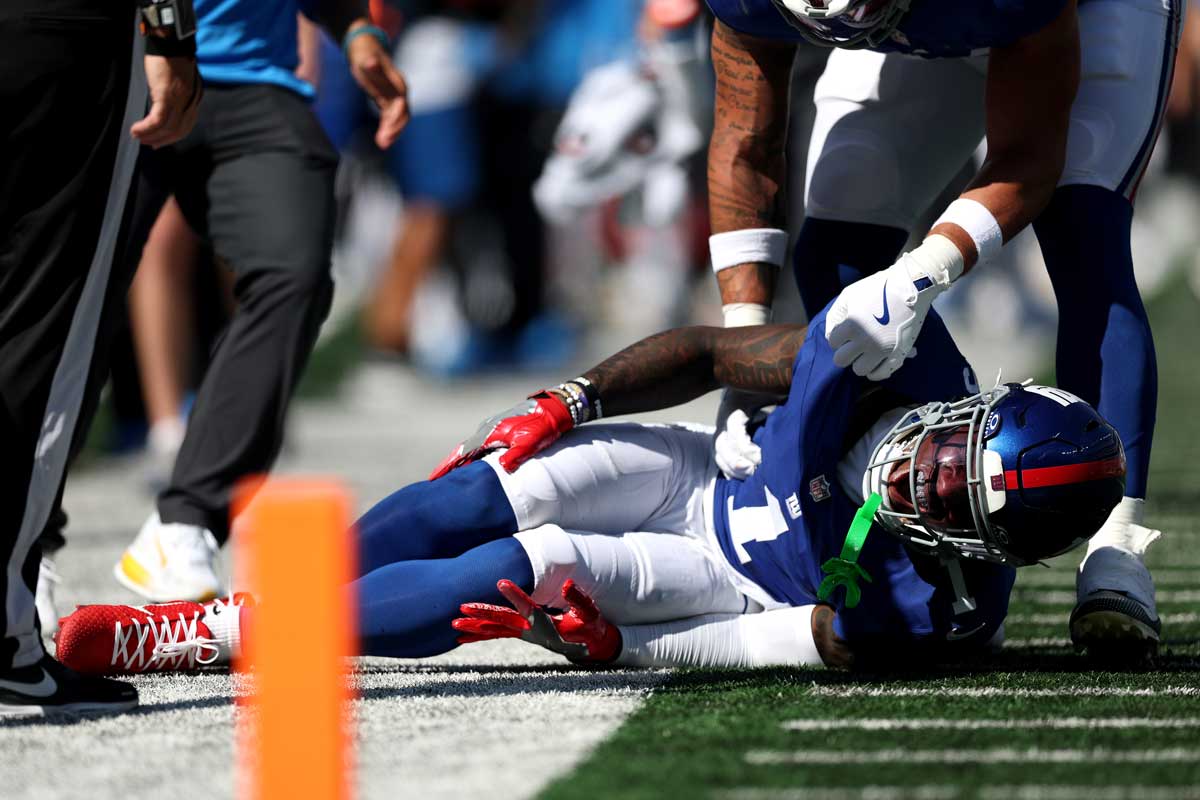
For starters, a wave of injuries impacted the team, and those injuries really impacted how the roster was constructed moving forward. Two key injuries in particular were their top receiver, Mailk Nabers, who tore his ACL, and Cam Skattebo suffered a serious ankle injury.
Quarterback Russell Wilson’s Giants Career lasted only three games this year due to inefficient play. Coaching also paid dividends for New York in the long season, as the play-calling was simply abysmal all year long.
The team fired then Head Coach Brian Daboll in November following a late-game collapse in Chicago. The one highlight this year was the offensive line, which was ranked 4th in pass blocking, a significant jump from their 30th ranking last year.
The line allowed 15 sacks this year, which was half of what they gave up last year; however, whether it was Wilson, Jameis Winston, or Jaxson Dart, the Giants’ quarterbacks simply could not move the ball down the field. The defense was just as bad for New York this year.
They were ranked 16th in the league in pass defense allowing 214 yards a game, 21st in points allowed (27.3) per game, their run defense was amongst the worse in the league giving up 5.3 YPC (yards per carry) 21 rushing touch downs giving up, which ranks dead last (31st) and ranked 28th in total yards allowed (359.5). The defense was a major weakness for the team ranking in the bottom of the league in most defensive metrics.
This will be one of the most active off-seasons for the New York Giants in sometime. The team currently holds the No.5 pick in the NFL. The Head-Coaching search will definitely be crucial as the team continues the rebuilding process. With many coaches available like former Cleveland Browns coach Kevin Stefanski, the clear cut answer for the team to hire is John Harbaugh.
Harbaugh was recently fired by the Baltimore Ravens after 18 seasons with the team that included a resume of 180 regular season wins, (193 if you include the playoffs) which is the third most wins in the NFL during that span.
His resume also includes six AFC North Division Championships, 13 playoff wins and a Super Bowl title win in 2012. With Harbaugh as a possibility hire, the Giants will address one huge need. The others which include drafting a potential top college prospect and maybe a big free agent signing or trade is still up in the air. We shall see how this Giants franchise the steps back to their once championship-caliber glory days.
Sports Notes: (Basketball) The Knicks play their final game of their four-game West-Coast trip. The team will play Steph Curry and the Golden State Warriors tonight. The Brooklyn Nets will return home tomorrow night to battle the Chicago Bulls.
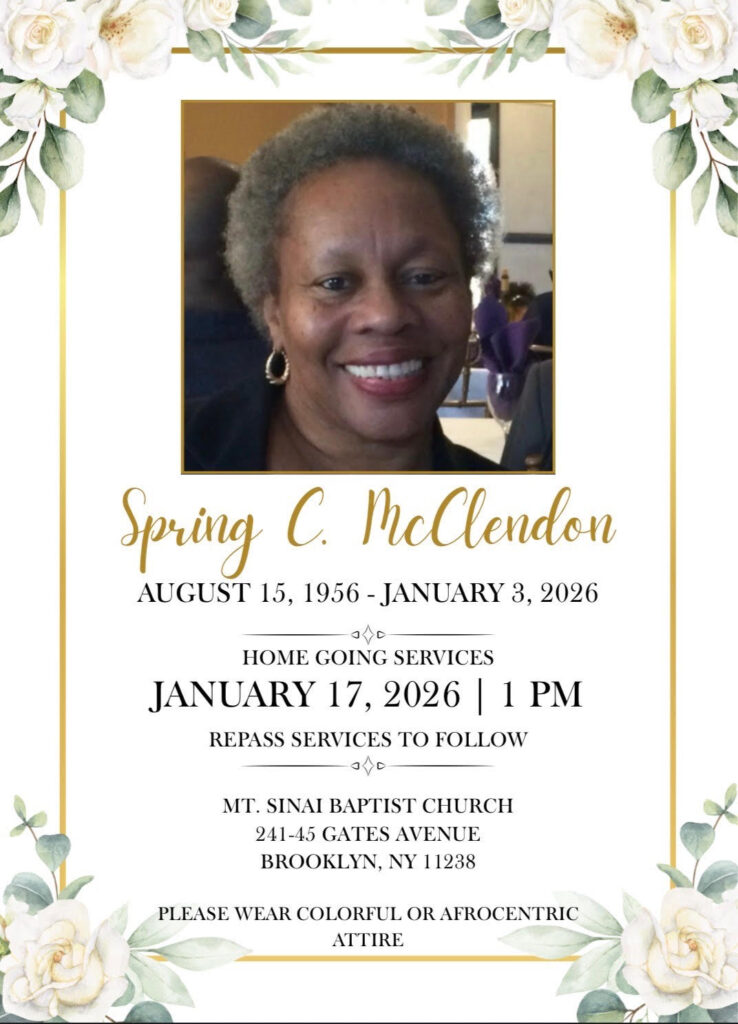
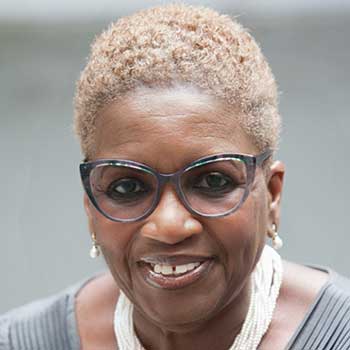
It is with profound sadness and heavy hearts that the McClendon Family announces the passing of Spring C. McClendon, who left us on January 3rd, 2026.
Spring was born in Camden, South Carolina, and raised in Connecticut; she graduated from Central Connecticut State College in New Britain with a Bachelor of Science in Business Administration. Spring moved to New York in the mid-1980s to advance her professional career.
Together with her late husband, James Mitchell, she was an active member of the Bedford-Stuyvesant community. Spring was a founding member of The Cooperative Cultural Collective; since 2001, she was the key force behind the Fort Greene Brooklyn Juneteenth Arts Festival, established many years before Juneteenth became a national holiday.
Spring was also an accomplished insurance expert with over 45 years of success in the insurance industry, including direct support to clients through extensive claims management, consulting, and technical advisory services. She brought her expertise to the community she loved by opening and managing insurance businesses in Brooklyn, first on Fulton Street and later on Atlantic Avenue. Spring was hyper-focused on assisting people of color to secure and maintain their hard-earned assets and pass their legacies to the next generation.
Spring was a collector of art by African American artists and a passionate supporter of local African American artists. All who had the joy and fortune to know her will forever remember her sense of style, grace, dignity, and kindness.
Spring favored Afrocentric style and colors; the Family invites all those who plan to attend the funeral service to honor her by wearing bright colors. Services will be held on Jan. 17, 2026, 1pm at Mt. Sinai Baptist Church, 241-45 Gates Ave, Brooklyn NY. Please wear colorful and/or Afrocentric Attire.
Keep your head up, and on a swivel, could be hardy advice as New Yorkers enter 2026 with all the local, national, and international concerns.
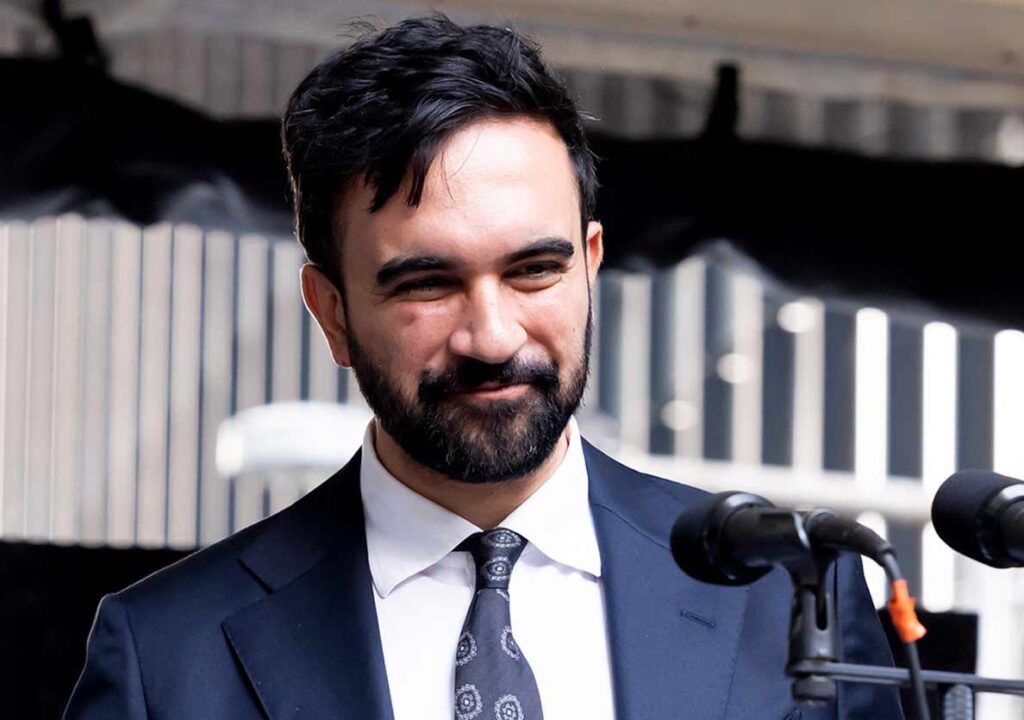
Zohran Mamdani, seen here during the NAN March on Wall Street on August 28, 2025 in New York City, was inaugurated mayor of New York City, Jan 1st, 2026 (Photo by BG048/Bauer-Griffin/GC Images)
As Mayor Zohran Kwame Mamdani took office on January 1, 2026, he is facing a panorama of citywide problems including: housing issues, education concerns, conflicting crime rate reports and community perception, public safety reality-based anxiety, burgeoning NYC homelessness–with around 100,000 people sleep in shelters, including over 35,000 children, striving for effective youth engagement, addressing economic and political tribulations, and handling these increasingly frequent weather emergencies.
As he named key members of his cabinet in this last few days, Mamdani said, “The rule-of-law is the bedrock of good governance, effective leadership, and a city that works for working people.”
New Yorkers are bracing for New Year changes. In the city, affordability is the latest top of mind. Some healthcare premiums will double or triple as of January 1st, 2026.. After last year’s government shutdown, and Congress failing to come up with a workable solution, and the expiration of enhanced premium tax credits, more than 20 million people who have the Affordable Care Act (ACA) Marketplace may lose their coverage. There will be big changes for recipients of SNAP benefits too, with expanded work requirements, and new purchase restrictions.
With the sprawling housing crisis amid avenues filled with new million-dollar condos, Mamdani says he is committed to creating new housing and rent freezes for those in rent-regulated homes.
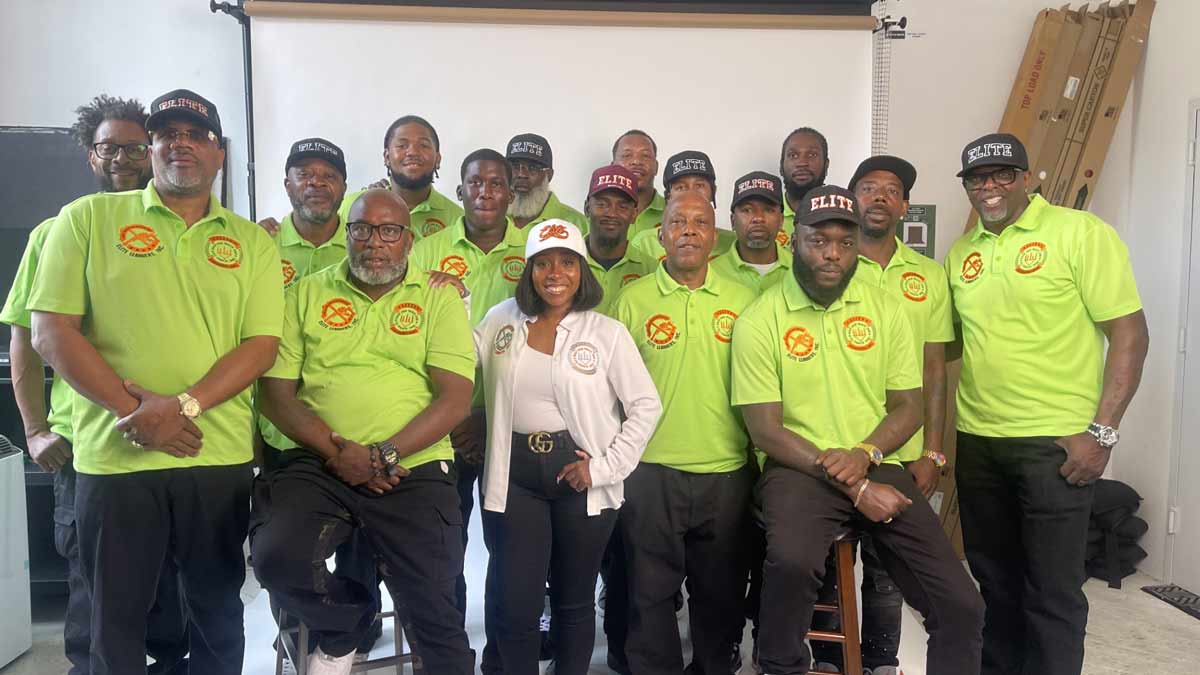
Then there are the young people shooting each other in broad daylight on busy streets, with complete and total disregard for theirs or anyone else’s life or safety. Camera Jackson, CEO of Elite Learners Inc., told Our Time Press, “The path to safer communities runs directly through our commitment to our youth…We will expand our advocacy for policies that ensure every young person has access to the resources they need to succeed. And we will continue to demonstrate that when we invest in our youth—truly invest in their whole well-being—we create lasting public safety.”
On New Year’s Eve eve (Tuesday, December 30, 2025), Jackson told Our Time Press, “As we stand on the threshold of 2026, I am filled with both pride in what we’ve accomplished and determination for the work that lies ahead.
Yesterday’s recognition from Mayor Eric Adams, receiving a key to the city alongside 28 other dedicated organizations, validates what our communities have long known: that violence is preventable when we treat it as the public health crisis it truly is.”
Like Jackson, Man Up Inc., founder A.T. Mitchell-Man also received a key to the city from outgoing Mayor Eric Adams on Monday morning. However, he is wrestling with monitoring the recovery of his niece, who was shot three times while waiting for an Uber last month, outside her friend’s sweet 16th birthday party in East New York.
‘It is bittersweet because today is my niece’s 16th birthday,” said the Cure Violence leader and Adams administration Gun Czar. “She is the worst of the six victims,” said Mitchell-Mann. “She got shot three times. She got struck once in her chest, once above her waist, and another bullet in her knee.”
He told Our Time Press that everyone is distraught and trying to handle the situation in a strong, supportive family manner.
“This hits home,” he said. “My thoughts are with the other victims too. Our community should not have to worry about allowing our children to go out to a Sweet 16 birthday party, and it turns into a mass shooting. My niece is asking why did it happen to her. But even though her complete recovery may take time, she is strong and has her family and community to see her way back to normalcy.”
Camara Jackson declared, “Effective violence prevention requires addressing root causes. Young people don’t need just conflict mediators; they need stable housing, nutritious food, quality education, and accessible mental health support. These aren’t luxury services; they’re fundamentals that underpin safe, thriving communities.”
Looking toward 2026, Jackson stated that Elite Learners is calling on all New Yorkers to join in as Crisis Management work has shown to be effective continuously. “The historic low numbers in homicides and shootings this year didn’t happen by accident,” she proclaimed. “They happened because organizations like ours, working in partnership with communities and city leadership, chose to see young people not as problems to be controlled but as individuals deserving of support, opportunity, and hope.”
Grassroots activism will be increasingly active in 2026. Dr. James McIntosh, co-founder of the Committee to Eliminate Media Offensive to African People, in the wake of their victory to have Netflix cancel the “offensive” reboot of ‘Good Times,’ told Our Time Press, “Every time you feel tired,defeated or even pessimistic, say to yourself, ‘Harriet Tubman and Nat Turner wouldn’t feel sorry for me.’” The retired psychiatrist declared, “Remember our Ancestors during the enslavement period would pray for our worst day. We are blessed with the freedom to fight.”
It is thick and pressing in the field of fighting for justice, equality, and recompense. “Courage is free to all those who want it,” professor and author Gloria Browne-Marshall, told Our Time Press. “Don’t be a freedom freeloader. What can you give to help the cause of justice for our community?”
Seemingly channeling the same energy and community advice as the veteran community activist McIntosh MD, the author and CUNY educator continued, ““We must hope for the future we need to have. That’s what our Ancestors did. They had less, worked against worse opponents, with less. Yet, we are here because they fought the good fight.” Professor Browne-Marshall concluded, “I remind myself (and others) that God does not reside at 1600 Pennsylvania Avenue.
“Ask yourself. What would Harriet Tubman do??” As America launches its 250-year anniversary celebrations, alongside the about-to-be historic midterms, folks are going to be inundated with agitprop. Art activism has always been an option.
“As we move into 2026, dance, music, and art continue to be powerful ways to bring people together centered around a common interest and shared goal,” said Zakiya Harris, Artistic Director, School of the Arts, Asase Yaa Cultural Arts Foundation.
She told Our Time Press this week, “Through dance and music, we move in rhythm, build discipline, and experience joy collectively. Through art appreciation, we learn to observe, reflect, and value perspectives beyond our own. These practices remind us that connection happens not just through words, but through shared experiences.”
Art is an integral, moulding, and informing part of people, a city, and indeed the globe. As Asase Yaa celebrates 25 years of dynamic creativity, “Harris continued, “We are reminded that arts education, especially for young people, creates a lasting sense of belonging and purpose.
In community-based arts spaces, students learn collaboration, focus, and care for one another. When we gather to create, rehearse, and perform, our minds become clearer, our relationships stronger, and our community more unified. Art helps us move humanity forward together with intention, balance, and hope.”
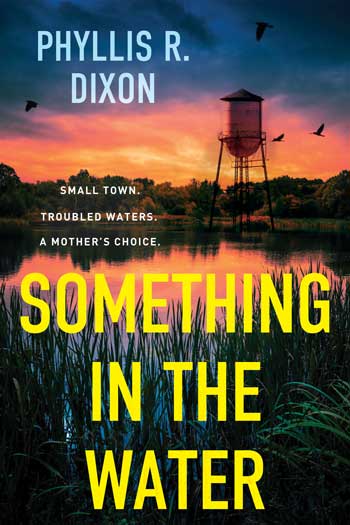
“Something in the Water” by Phyllis R. Dixon – Review by Dr. Brenda M. Greene
Phyllis Dixon’s novel, Something in the Water (Kensington, 2025), based on a compendium of facts in our environment, portrays the underlying reasons for troubled waters in a family and community. The troubled waters are a metaphor for opioid addiction, pollution, corruption, criminal acts, death, and marital conflict.
When we trouble the waters, we invite trouble into our spirit, our lives, our bodies, our homes, our places of worship, and our sites of memory (as Toni Morrison informs us in her essay, “Sites of Memory”.) Morrison posits that water has a perfect memory, and it seeks to get back to where it was, despite natural obstacles and destructive environmental elements.
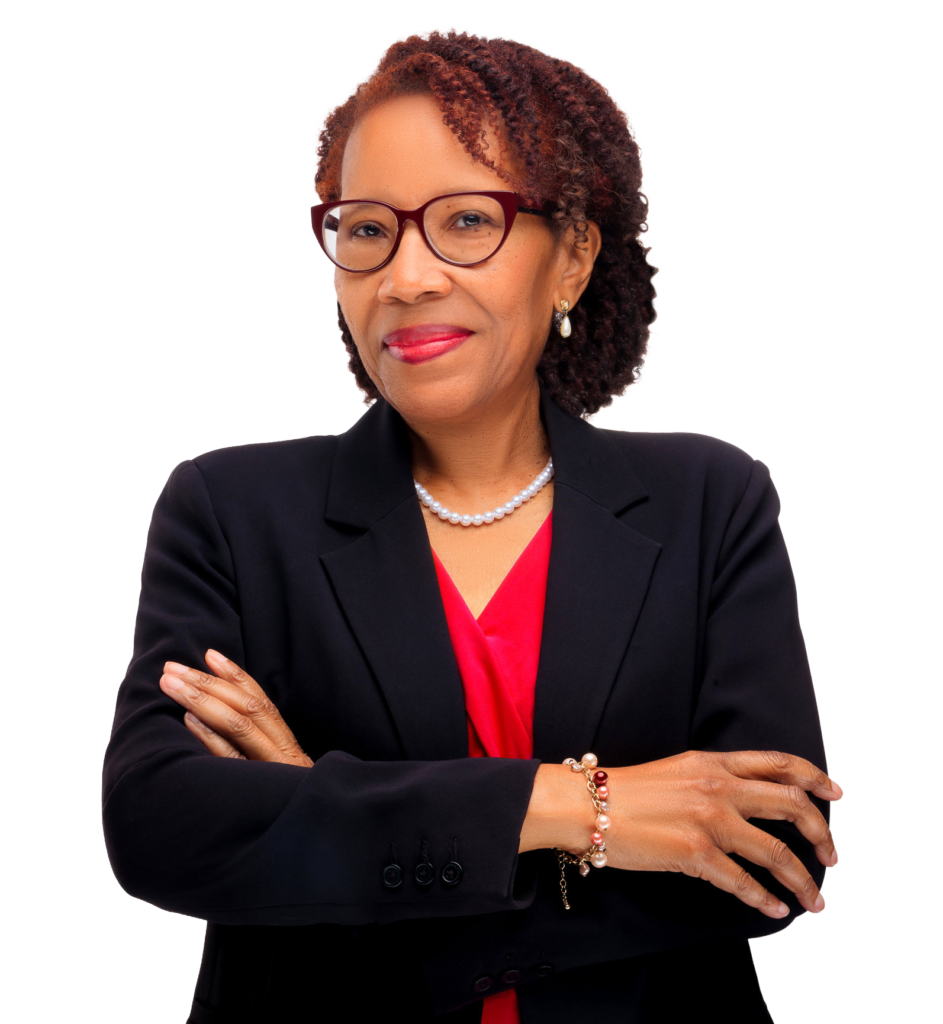
Phyllis R. Dixon
Billie Jordan, a talk show host, investigative journalist, and environmental and social activist, is the protagonist of Something in the Water. Related themes in this novel include the role and impact of Historically Black Colleges (HBCUs) and the importance of family legacy. The novel begins when Billie is forced to get a new job because she loses her full-time position after the family-owned radio station for which she works is sold to a major corporation.
Faced with finding a new job, a son who has become addicted as a result of the misuse of opioid medication, and mounting debt, Billie and her husband Cole decide to relocate to Calderville, Texas, the small, predominantly Black community where her husband was raised. He has a job offer as a tenure-track professor in economics and a chance to coach a baseball team at Calder State College, the HBCU that he attended.
Dixon structures the book into six sections: Troubled Waters, Fish Out of Water, Like Oil and Water, Rough Seas, Making Waves, and Unchartered Waters. These sections focus on opioid addiction and water pollution and symbolize troubles in Billie’s personal life, workplace, and community. What begins as medical condition for her teenage son Dylan results in addiction for a promising athlete who is on his way to college and who has received awards and scholarships for his swimming. Dylan is constantly in and out of costly rehabilitation centers, thus putting a financial and emotional strain on Billie and her husband Cole.
When Billie begins an investigation into the water problem and discovers various forms of corruption and the resulting impact of this environmental crisis on the health, quality of life, and water treatment centers in Calderville, her position at work is threatened. Cole warns her that a pursuit of the water problem could negatively impact his position as a professor. Her cousin Lovey states that she does not worry about the water: “I been drinking this water for eighty years and other than a little arthritis, I’m still alive and kicking with no complaints. Plenty stuff to worry about other than water.”
Her sister-in-law Joellen informs her that: “My family has been prominent in this country for a long time. Nothing happens without people making money from it. That’s the way the world works.” Billie has been an activist all of her life and is persistent. She faces many obstacles as an outsider in Calderville, as the mother of an addicted son, and as a Black woman who refuses to overlook the crisis in her community.
A passionate advocate for her son, she comes to understand that her son’s addiction spiraled as a result of the overuse of prescription drugs and she will not give up on him. She also understands that solving the water problem is a slow and tedious process that requires perseverance. Billie refuses to be complicit as a result of inaction. She navigates the challenges facing her with resolve. Her advocacy epitomizes James Baldwin’s words that “Not everything that is faced can be changed, but nothing can be changed until it is faced.”
The issues raised in Something in the Water are timely and will resonate with many people. Opioid addiction is still a major public health crisis in this country and climate change and pollution have resulted in a critical environmental crisis. Current government efforts dismantling environmental justice policies and funding efforts are negatively affecting disadvantaged populations, Brown and Black communities, and rolling back the initiatives of previous administrations.
The water crisis was highlighted in Jackson, Mississippi in 2022 when a state of emergency was declared because of the failure of a water treatment plant. In Memphis, Tennessee, local residents protested the installation of a pipeline transporting crude oil from Texas and Oklahoma. The project was initially cancelled, but the Tennessee state legislature passed a bill that allowed it to preempt local authority over oil and gas projects. Support for our public health and environmental justice crises must be vigilant.
Phyllis R. Dixon is the author of the novels Forty Acres, Down Home Blues, Intermission, and A Taste for More. For more information, visit her website at https://www.phyllisrdixon.com.
Dr. Brenda M. Greene is Professor Emeritus and Founder and Executive Director Emeritus of the Center for Black Literature at Medgar Evers College, CUNY. For more information, visit https://www.drbrendamgreene.com
In recognition of the New Year, Our Time Press reached out to Brooklyn’s influential leaders in healthcare, the arts, and advocacy to examine their programs’ impact on Black Brooklyn residents in 2025 and explore their goals for 2026.
Dr. Divinah “Dee” Bailey, Founder, Watchful Eye As a veteran healthcare advocate working with Brooklyn’s Black residents, what were some of the accomplishments of Watchful Eye in 2025? In 2025, we did very well in terms of involving prominent leaders around HIV and AIDS. Putting HIV and aids on the agenda. There still is no cure. But we were also very successful in being able to bridge the gap between HIV and AIDS and regular healthcare. We really concentrated on the Black clergy. The clergy is the most respected leader in our community.
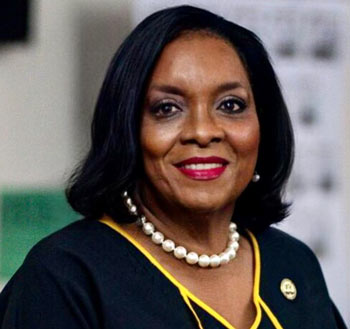
Dr. Divinah “Dee” Bailey
They helped us get the word out in terms of going to the doctor and getting the proper care. To not use the urgent care centers as your primary care physician. We partnered with health centers and doctors’ offices in 2025 bridging the gap of communication.
We did wonderful work with Brooklyn One Healthcare. They partnered with us and other healthcare providers in the community so that the hospital is the ultimate place that you go. It shouldn’t be where you just go when you don’t feel well.
Also, we worked well with the legislators like Congressman Jeffries on the government shut down, and how many people would be impacted with their healthcare, Medicare and Medicaid. In Brooklyn, we brought community leaders and people together and said our people are still dying.
They are not accessing care and continue to suffer in silence. I’m very pleased about the relationship we have with the New York City Department of Health and Mental Hygiene and their new programs that support mental health care. Watchful Eye has been working hard in developing new community partners and bringing people on board.
What is the goal of Watchful Eye in 2026? In 2026 we plan to do outreach and messages the way we used to years ago. With social media, we lost the personal approach. We are going back to holding community meetings, senior meetings and working with our legislators so that healthcare is on their agenda.
That’s meeting people and seeing that I’m reaching them and making sure they have your phone number so they can call. We are using the clergy even more. They are having health ministries in the churches. Watchful Eye wants to serve, knowing our accomplishments, and know that we are making a difference.
Rasu Jilani, Executive Director, Brooklyn Arts Council With a presidential administration that is anti-DEI, did Brooklyn Arts Council face challenges funding the arts in 2025? Yes. 2025 was a particularly tight and uncertain funding year across the arts sector, and those pressures were felt well beyond public funding alone. Across Brooklyn and beyond, organizations and artists were forced to make difficult decisions—cutting budgets, scaling back programs, and in many cases reducing staff—to make it through the year.
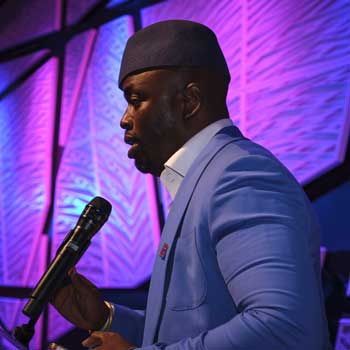
Rasu Jilani
We saw this at every level of the ecosystem, from large-scale museums and institutions to mid-size and small organizations. As a mid- to small-sized organization, Brooklyn Arts Council was somewhat more nimble. We were able to make targeted adjustments, manage expenses carefully, and stay responsive without losing sight of our mission. Still, the year required discipline, adaptability, and constant recalibration.
Toward the end of the year, however, sustained advocacy and collective action began to yield gains. Increased support from the New York City Department of Cultural Affairs strengthened both our organizational capacity and our regranting programs – meaning more direct funding flowing to artists. So, while 2025 was challenging and, at times, precarious, it ultimately reaffirmed the importance of arts councils as trusted intermediaries; organizations capable of holding complexity, stewarding resources responsibly, and advocating for artists during moments of uncertainty.
What is the mission for Brooklyn Arts Council in 2026? In 2026, Brooklyn Arts Council’s mission is deeply shaped by BAC 60: our 60th anniversary. Also, by a forward-looking reimagining of what an arts council must be in the 21st century. BAC 60 is not simply a celebration of longevity; it is a recognition of 60 years of service to artists and communities. Our mission in 2026 is to reimagine the arts council as a facilitator of collaboration rather than a siloed entity to move from individual institutional awareness toward collective cultural awareness. This means prioritizing partnership over competition, participation over hierarchy, and ecosystem health over singular organizational growth.
As we enter our seventh decade, Brooklyn Arts Council is focused on helping shape a future where artists are supported not in isolation, but as part of a connected, resilient, and collective cultural landscape. That is the pathway forward and the promise of BAC 60.
Celeste Morris, President, Morris Allsop Public Affairs and Founder, Advocacy Academy As an advocacy advisor, what did you see were the primary problems facing Brooklyn residents during 2025? For 2025, Brooklyn’s affordability was the overwhelming concern. From my observation, housing and food are the primary culprits. Three aspects of housing raise red flags – rents, homeownership, and homelessness. Developers have found ways to circumvent the new laws the city council has adopted. Rents are higher than ever, particularly for rent-stabilized dwellings. Property taxes, deed theft, foreclosure, and Airbnb rules are concerning small homeowners.
Celeste Morris
Food insecurity is rampant. Longer food lines are evident. Wages and government benefits are not keeping up with the true cost of living. Suspension or changes in snap benefits have resulted in the need for more pantries and more donations. Nonprofits are struggling to keep their doors open and to meet increased demand.
In 2026, do you think there will be a rise in community activism during the upcoming NYC progressive mayor administration, and also dealing with the conservative presidential administration? The challenge for 2026 is to find truly workable solutions. The recent municipal elections demonstrated the power of voting, civic engagement and group voices.
Increased activism and advocacy must be the goal, especially from those who have lived and invested here for decades. There has been a call for “backup” from some elected officials. Policymakers need to hear from constituents. This helps to support their fight for the people they represent. The power of calling, writing, and attending meetings of elected and government officials, community-based non-profit organizations, and tenant/block association groups is more critical than ever.
Crisis often brings wake-up calls. The Advocacy Academy that I lead at the Center for Law and Social Justice at Medgar Evers College has recently graduated our largest class ever. I am hopeful that “woke” leads to unprecedented levels of activism.