Home Blog Page 190

Dr. King Honored by Leaders at BAM

0

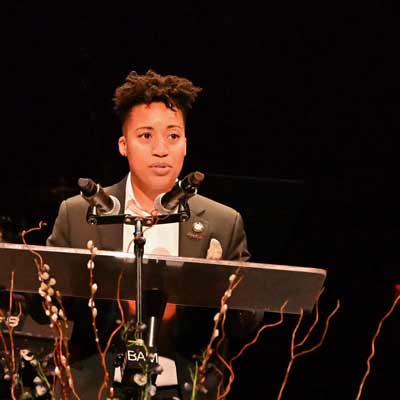
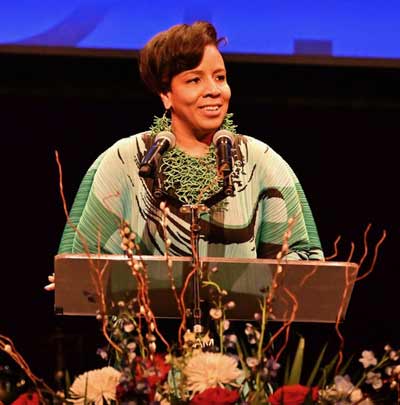
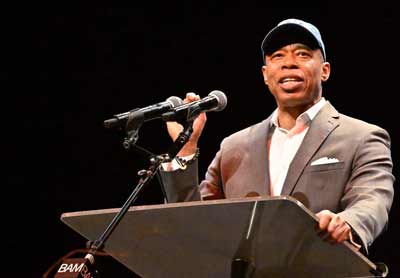
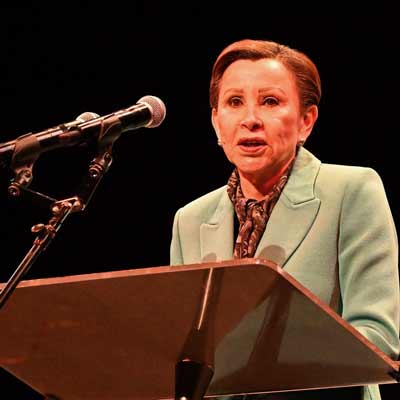
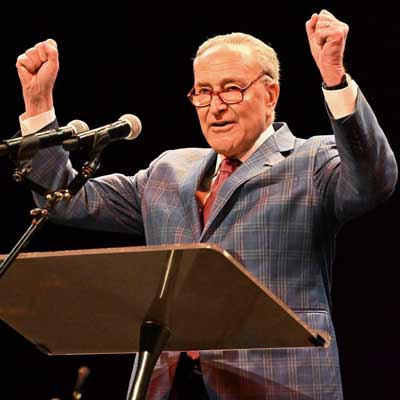
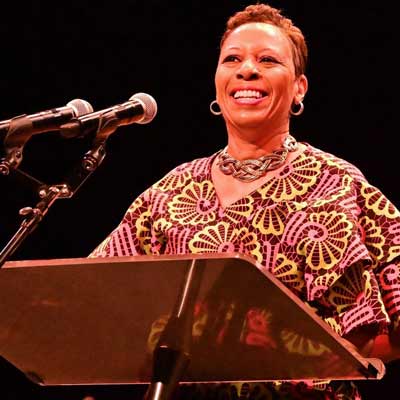
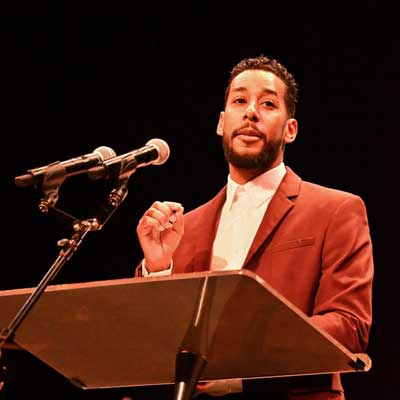
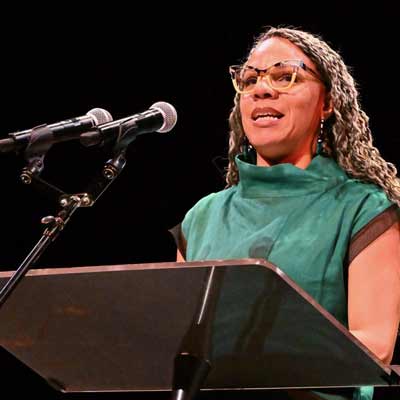
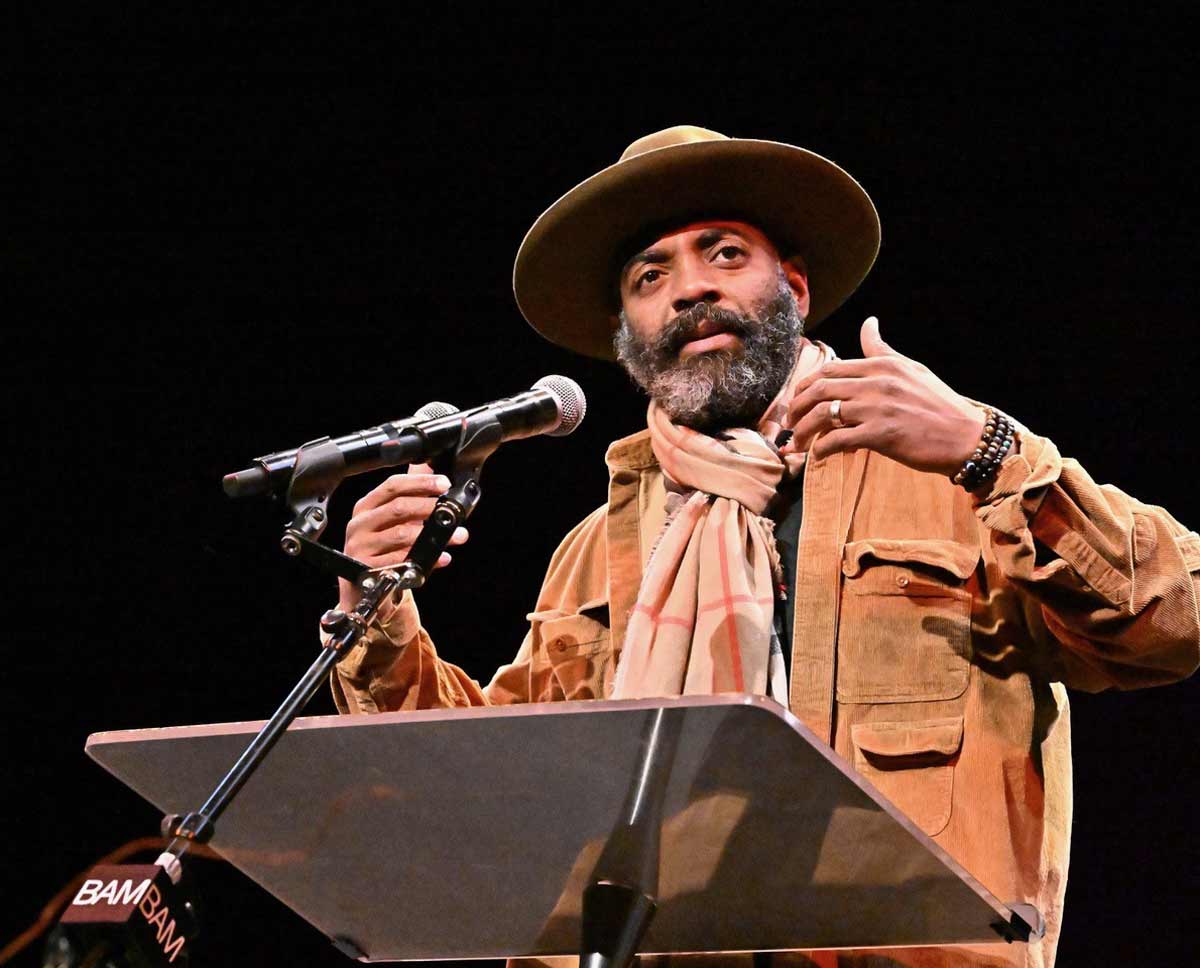
New York City’s largest public celebration in honor of iconic civil rights leader Dr. Martin Luther King, Jr. returned to BAM for the 38th year. This annual tribute invites us to reflect, recharge, and support one another as we carry on Dr. King’s relentless pursuit of equality and justice.


Reginald Dwayne Betts, a poet and lawyer was the inspirational keynote speaker. A 2021 MacArthur Fellow, he is the Founder and CEO of the Freedom Reads, an organization that opens libraries in prisons, transforming cellblocks into Freedom Libraries. For over twenty years, he has used poetry and essays to explore the world of prison and the effects of violence and incarceration on American society. The author of a memoir and three collections of poetry, Betts transformed his latest poetry collection, the American Book Award-winning Felon, into a solo theater show. He has been awarded a Radcliffe Fellowship from Harvard, a Guggenheim Fellowship, an Emerson Fellow at New America, and a Civil Society Fellow at Aspen. Betts holds a J.D. from Yale Law School.

Viola Plummer, Last of Original December 12th Movement Co-Founders, Rests; Struggle Continues

by Nayaba Arinde

Editor-at-Large

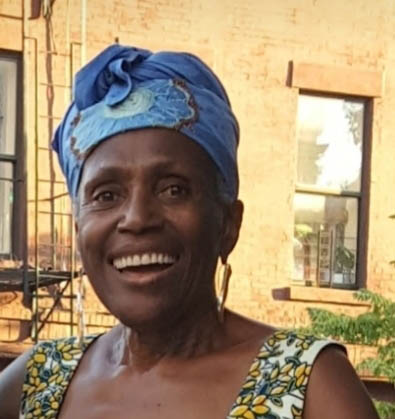
On the day after the January 15th death of Viola Plummer, friends and family gathered at her Sista’s Place jazz and community venue in Bed-Stuy, to commune, reminisce, and share food prepared by Attorney Esmeralda Simmons and others. Tears were held, but barely. Toasts were made to bless her journey, as her favorite song The Commodores ‘Heroes’ played in the background. “Viola Plummer was the last of the five original core founders of the December 12th Movement: Sonny Abubadika Carson, Coltrane Chimurenga, Elombe Brath, and Father Lucas, they are all gone now,” activist Omowale Clay told Our Time Press.

A snowstorm swept through New York City on Dr. Martin Luther King Day, Monday, January 15th, 2024, as news broke of the passing of activist Viola Plummer, 86, co-founder of the Bed Stuy, Brooklyn-based civil and human rights organization, The December 12th Movement.

In the official announcement Tuesday evening, Attorney Roger Wareham of The Movement said, “It is with a heavy heart that we announce the Black Liberation Movement’s loss of Comrade Viola Plummer, Chairperson of the December 12th Movement. Funeral arrangements will be announced in the next few days.”

Preliminary funeral arrangements at press time have a private wake in Queens on Friday, January 26, 2024, and a public funeral at Rev. Herbert Daughtry’s House of the Lord Church (415 Atlantic Avenue, Downtown Brooklyn) at 5 pm on Saturday, January 27th, 2024.

Charles Barron, former Assemblyman/City Councilman, told Our Time Press. “My heart Is heavy, and my tears are soaking my soul! My beloved friend of over 40 years has gone.”  With Viola Plummer passing on Dr. King’s national holiday, Charles Barron continued, “It is fitting that two people who loved our people will now be forever linked in history. My sister Viola Plummer was completely committed to our community.”

‘It snowed heavily because this is how the strong ones leave their mark,” said Divine Allah, Youth Minister of the New Black Panther Party. “She was a bold, fearless, uncompromising Black woman.  She was our sister, mother, grandmother, and auntie – our Powerful Black Warrior Queen. We are already missing her. We are thankful that we knew her, though, and we are grateful that we were able to be led and taught by her.”

Rev. Herbert Daughtry told Our Time Press that he has had seven family members and friends pass away in the last two weeks, including; “John Flateau, Sekou Odinga, and now Viola Plummer. You called her the ‘Matriarch of the Movement. I’ve been in it 70 years,” the 93-year-old ‘People’s Pastor,’ declared, “and as far back as I can remember she was on the case; fire in her eyes, her strong voice, articulate, persuasive. A voice that makes an impact – slow, deliberate, forceful way of making a point, of arguing the case.”

Pensive, Rev Daughtry continued, “Yeah, we had some disagreements, but we always agreed on one thing–that we wanted to see our people free. That united us. People with whom you have these arguments, you sometimes get brought closer – like a committed husband and wife because you realize that the person’s passion is not about themselves, but about the movement.”

He reflected on the beginning stages of the “Black United Front in 1980, with over a thousand people gathered in Brooklyn Armoury – Sumpter Avenue [now known as Marcus Garvey Blvd.]. Can you imagine all these super-Black ranking radicals, revolutionary brothers and sisters – all you can name, they were all there, argued and argued..and Brother Jitu Weusi – he was the center of it, they held it together. But, finally, they got a temporary constitution. I was voted temporary chairman, “ and tasked to go all over the country to bring back “all the people who were most passionate about their argument, the ones who went away the angriest, we realized that if we couldn’t bring these people back we weren’t going to have a National Black United Front. If you can’t bring people together with different ideas involved, then you don’t have a National Black United Front.

But, Viola was special. December 12th.

We lose her ubiquitous presence. We lose her voice, her passion and vigor, and her articulation of the causes that Vi espoused. We miss her. She was always on the case. In the movies they had a saying that bravery means you ride to the sound of the gun, wherever the battle is. 

Wherever the cannons are booming, that’s where you want to go. Viola would be present where the issues were. She would ride to the sound of people debating the issues, and be in the middle of it all. She was fearless, and forceful with fire in her eyes and fury in her voice, and an absolutely loyal comrade. I’m glad that she’s coming home in our church.

December 12th Movement’s usually jovial Omowale Clay was somewhat somber when he told Our Time Press, “Over the past 50 years of my life, I have had the privilege and honor to be tutored and learn and follow the lead of my comrade Sister Viola Plummer in struggling to make fundamental change in the quality of life for the people. My legacy to her is to continue the struggle.”

An activist from her teenage years, Mrs. Plummer became a stalwart of staunch grassroots community advocacy. She was known for her love for people, whether it was in Brooklyn from her headquarters at Sista’s Place, to anywhere in the USA where support was needed, or in the Caribbean or on the Continent of Africa when the call was raised. She organized thousands of meetings, protests, rallies, and community actions. She was forever on the front lines. The mainstream would cite her as being a member of the (ultimately acquitted) New York 8, who beat several conspiracy charges, including attempted government overthrow in 1985. Sis. Plummer stated at the time, “We are eight people who were doing nothing more than organizing and fighting for freedom.”

Taking on big topics was her favorite space, like arguing against racism at the United Nations, fighting for the people of Zimbabwe, Haiti, South Africa, or Venezuela, and getting into the details and minutiae of law and politics at the State Capitol in Albany or City Hall in New York City, as chief-of-staff for both Assembly/City Councilmembers Inez and Charles Barron.

 “Inez and I are deeply saddened by the transitioning of our dear friend, Sister Viola Plummer. Our relationship with her spans more than four decades of battling on issues impacting the Black communities here in New York, in states across the nation, and in countries across the world. Viola Plummer was a forthright, unyielding, undeterred, bold, outspoken, unequivocating warrior-leader who stood flat-footed and did not retreat. Her strident voice was a clarion call that challenged and motivated our people to get involved and take a stand. She thought no issue was too big, too strongly entrenched, or insurmountable.”

And then there she was fighting overt racism in housing, education, and police brutality, and against drugs, gun violence, gentrification, and poverty alongside colleagues Sonny Abubadika Carson, Elombe Brath, Coltrane Chimurenga, the Barrons, and Father Lucas – Viola Plummer had an impact. All the while she stood on the Harriet Ross Tubman stance of “‘I freed a thousand slaves, I could have freed a thousand more if only they knew they were slaves,’ what change we could have if we all united in great numbers.”

“I didn’t just want to be a witness,” she once said. “I wanted to be a part of the movement.”  She was a local, national, and international leader on so many issues over her 50 years of people-centered activism. She left an indelible mark. 

Perhaps the last victory she saw was the signing of the Reparations Bill last month, when New York State finally agreed to at least look into the demands she, the December 12th Movement, N’Cobra, Institute of the Black World, and the NAACP, and others had been making for decades to look into the impact of slavery on the Black people in New York.

“We are deeply saddened by the news of the passing of a great Movement Matriarch Viola Plummer, co-founder of the December 12th Movement,” State Senator Cordell Cleare told Our Time Press. “Viola Plummer was a community organizer for the majority of her 86 years of life. With her no-nonsense approach to advocacy, Viola was a fighter until the very end. My sincerest condolences to her family, friends, and everyone who knew her at home and abroad.”

A flurry of phone calls. There were tears. And wailing.

“We just love her,” said A.T. Mitchell, community organizer and CEO of Man Up! Inc. “Her legacy will live on through all of us who she embraced and showed the way of dedication to our people. If Sister Vi loved you, she showed you. And we will continue her work, I promise you.”

Colette Pean, a member of the December 12th Movement, told Our Time Press that Viola “was a trained teacher of elementary school and college, and she taught throughout her life. In her work, teaching was an important part of it. She taught people how to be better revolutionaries and to struggle for self-determination of the people. She traveled widely, including Vietnam during the Vietnam War, Namibia, South Africa, Ethiopia, Tanzania, and China – in support of liberation struggles.’

Retired East New York electeds Charles and Inez Barron reflected to Our Time Press, “She was not fearful, could not be intimidated, and refused to be silent. The countless battles that she waged on behalf of Black people are innumerable. Her legacy is broad and deep. Her leadership effectiveness is a model to be emulated, and her accomplishments are testimony to her mantra, ‘Do the work.’ We will miss our dear friend, but we are pleased to join the many voices who pay tribute to her life and her work. To our beloved comrade and “real” close friend, our hearts are heavy, and tears are soaking our souls. We’re going to miss you, Vi! Rest in peace and power, our sister, for a job well done. Viola, we love you forever.”

The People’s Republic of Brooklyn is in mourning of her passing, especially as it happened just one day after the Janazah and burial of political prisoner advocate Sekou Odinga, 79.  There had been a decades-long concerted community campaign to release the former Black Panther and Black Liberation Army member from prison after 33 years in prison.

Atty. Roger Wareham, December 12th Movement International Secretariat, told Our Time Press that he met Viola in 1974. He knew her for half a century. “50 years of struggle and love, and ups and downs, almost a lifetime in jail with the New York 8, and the December 12th Movement. Long live Viola Plummer. She’s alive as long as she is alive in our memories.”

The international lawyer said that to him, the pint-sized dynamic woman who was Viola Plummer symbolized “Resistance, revolution, never give up, commitment, love for her people, patience in terms of real faith in people, that they will make a revolution to change our conditions.”

“Viola Plummer is EVERY WOMAN,” cultural activist and mega clothing designer Brenda Brunson-Bey told Our Time Press. “She was kind when needed. Generous when something was asked for. Dedicated when called on. Committed when she believed in something. Strong when she had to face obstacles. Devoted to our culture through music and art. Loving to all of us, all the time. I strive to be like HER…Every Woman. Sister Viola, rest in Peace and Empowerment.”

“Mama Viola was fighting on the battlefield for Black people long before most of us got there and kept fighting long after some of us left,” said activist Bomani Mayasa of the United Front. “She was a true warrior. She taught this young warrior how to struggle. Long live Mama Viola Plummer.”

(Nayaba Arinde, a friend of Sister Plummer, is editor-at-large for Our Time Press.)
Counting on the Wisdom of Heroes in our Midst

View From Here
by David Mark Greaves

Rev. Dr. Martin Luther King, Jr. would have to be very disappointed with the turn the country has taken, leading further away from the Promised Land he saw for us in the future. He would be appalled at seeing a lifetime of work lost with the Voting Rights Act eviscerated, and voter suppression battles he imagined won by now still raging.
There are “teeming masses” of Brown and Black people at the southern border and urban city bus drop-offs, and the current presidential election is essentially a referendum on whether the United States will remain a democratic republic or become a fascist state.
There would be much for Dr. King to think about internationally as well, with wars in Ukraine and Israel, with thousands killed. The war between Russia and Ukraine would be unexpected, but the war between the Palestinian militant group Hamas and Israel would not be. Dr. King would have thoughts about all of this and give us hope in his belief that “what self-centered men have torn down, other-centered men (and women) can build up.” He would not be shaken from his mission, No doubt he would require all to vote, believing that “The arc of the moral universe is long, but it bends toward justice,” but only if the people’s collective efforts are applied to bend it.

Why Congestion Pricing Benefits New York City’s Poor and Low-Income Commuters

By Fern Gillespie
When the prospect of congestion pricing on motor vehicles traveling in Manhattan was introduced several years ago, it was suggested the fee would impact low-income New Yorkers.
In 2017, the Community Service Society conducted the analysis “What Does Congestion Pricing Mean for Outer-Borough New Yorkers in Poverty?” The study became widely cited by advocates to debunk the idea that a congestion fee would be burdensome for large numbers of low-income New Yorkers. In 2022, CSS revisited the study. It showed that in outer-borough New Yorkers who live in poverty, only two percent will be eligible to pay a congestion price. Of the 2,217,000 New Yorkers who rely on mass transit for work, 350,000 are low-income essential workers, and 257,000 are working poor.


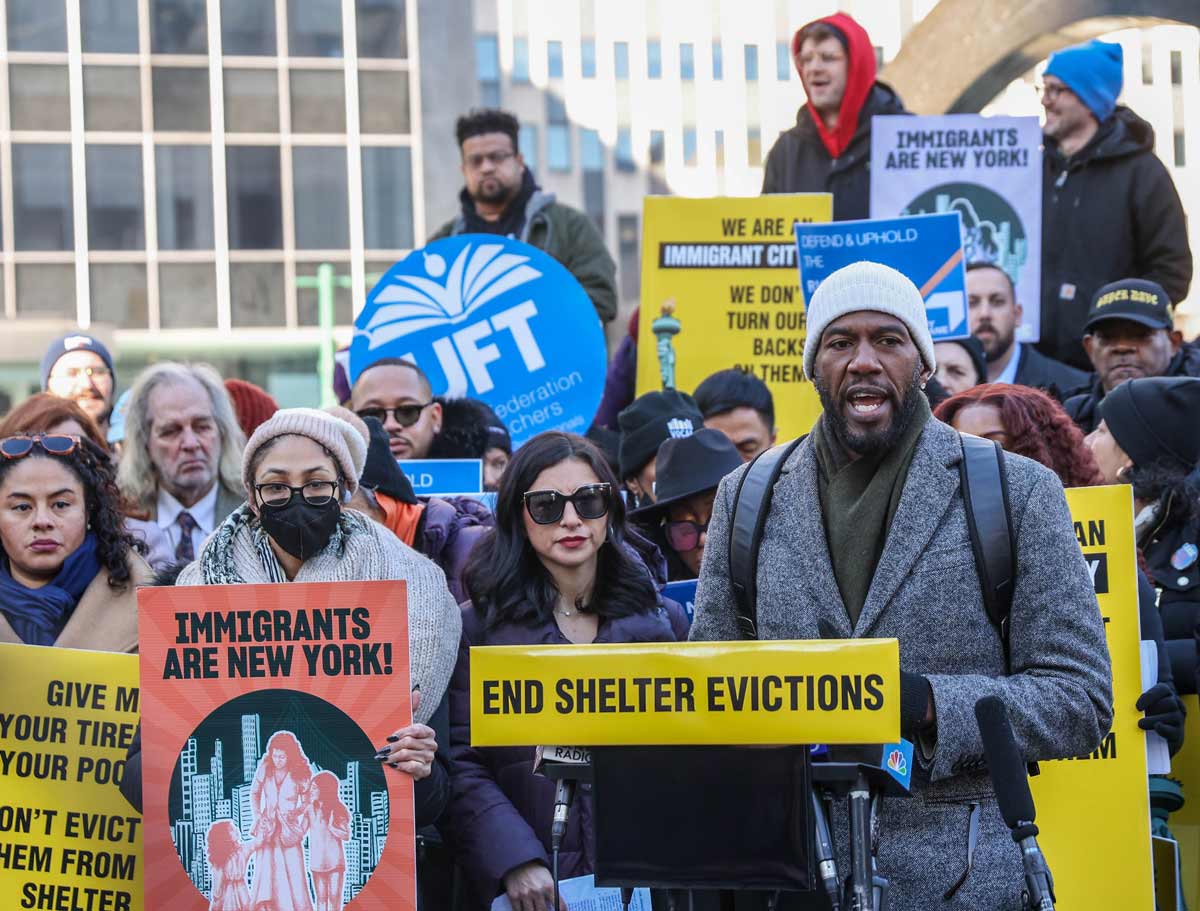
However, congestion pricing is being challenged by several unions representing members who drive to Manhattan from Staten Island, New York suburbs, New Jersey, Connecticut, and Pennsylvania. Last week, the United Federation of Teachers joined Staten Island Borough President Vito Fossella to file a suit to try to stop the MTA’s congestion pricing plan. The UFT argues congestion pricing would impose a disproportionate financial burden on public-sector workers and “inflict environmental and economic damage” on outer borough residents and neighborhoods. Union leaders representing firefighters, EMTs, and paramedics believe that the cost of congestion pricing will create a flight from EMS and fire stations in downtown Manhattan.
The MTA says the congestion pricing plan would generate $1 billion annually to help the MTA finance up to $15 billion in repairs, improvements, and expansion projects across its network of subways, railroads, and buses. The congestion pricing covers cars entering Manhattan south of 60th Street, which would pay $15; trucks pay $24-$36; motorcycles pay $7.50; taxis pay $1.25 and $2.50 for rideshare vehicles. Mayor Adams supports congestion pricing but said school buses and yellow cabs should be exempt.
Our Time Press reached out to Debipriya Chatterjee, Senior Economist at Community Service Society, regarding congestion pricing. She was one of the authors of the CSS study on congestion pricing’s impact on poor and low-income New Yorkers.
Why did CSS conduct a study on congestion pricing affecting low-income New Yorkers in 2017 and 2022? Were there any major changes over the years?


Debipriya Chatterjee (DC): CSS, as an organization devoted to improving the lives of struggling New Yorkers, regularly conducts in-depth research of impacts of existing and proposed policies on the economic well-being of low-income individuals and families. Analyzing the proposed congestion pricing plan through the income lens was one such example. The first study was published in 2017 and an update of the same using more recent data was published in 2022.
Does CSS think that congestion pricing is beneficial to low-income MTA riders due to promoting cleaner air with less traffic and funding MTA upgrades?
DC: Yes, CSS thinks that any policy that disincentivizes the use of automobiles and incentivizes greater use of public transport is a worthy cause. Congestion pricing is designed to discourage driving into the city, thereby improving traffic, reducing pollution, and generating revenue. The additional revenue, if and when, invested to upgrade and strengthen the city’s mass transit system through MTA, will ultimately improve the quality of life and productivity of the city’s eight million residents. Out public transit system is a lifeline for the city’s working-class Black and brown residents. Congestion pricing will provide a steady source of funding to upgrade the public transportation infrastructure they depend on.
CSS is a union proponent. What does the organization think about the Teachers Union suing the MTA over congestion pricing?


DC: CSS is aware of concerns that UFT and other entities have raised that congestion pricing will increase asthma rates in certain neighborhoods as vehicles choose the longer detour to avoid paying the congestion toll. We share this concern but would like to point out that the federal National Environmental Protection Agency did a thorough review of the potential impacts in a 4,000-page study and we believe it has looked at possible health and environmental impacts as best as possible. Additionally, as our reports have shown previously, a very slim proportion of households will be paying the congestion tax on a regular basis, i.e., as part of their daily commute, and most of them cannot be deemed low-income using the federal poverty standards.

Leadership, Voting, John Flateau Legacy were the Focus of the AACEO’s First Meeting of the Year

“This will be an important year for us to hold together and to make America the best version itself.” Cong. Hakeem Jeffries

By Mary Alice Miller
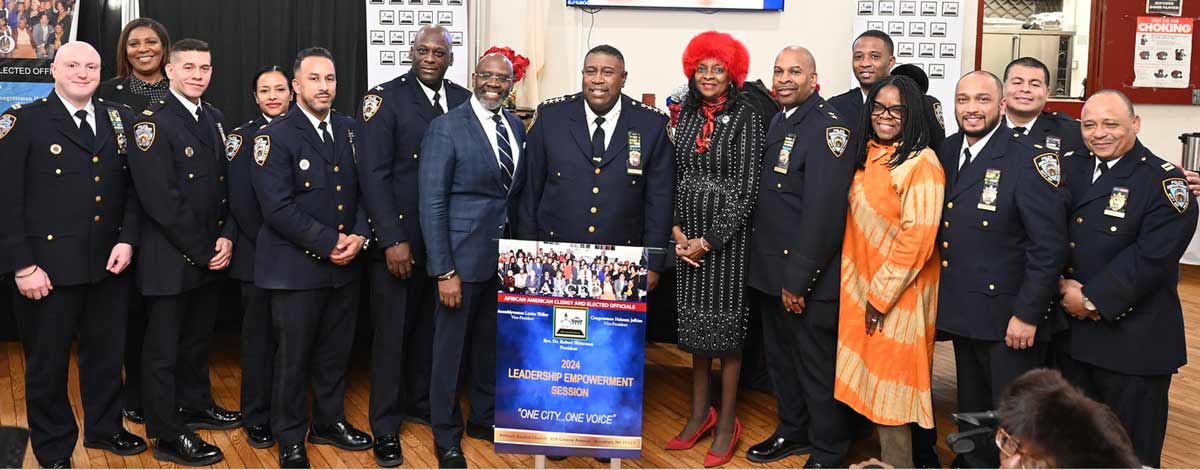
The African American Clergy and Elected Officials organization, now celebrating 34 years, opened this year’s first session on Friday, January 5, with a call for unity and empowered leadership in the community.
Rev. Dr. Robert Waterman, AACEO President and pastor of Antioch Baptist Church, set the theme for the dozens of community leaders in the church community room: “We need to take an inventory of ourselves,” alluding to the power of voting, adding “We can no longer have a one-term Black Mayor.”
Among those present at the meeting were NYS Attorney General Letitia James, by video Minority Leader and AACEO Vice President Hakeem Jeffries, Brooklyn District Attorney Eric Gonzalez, NYPD Chief of Department Jeffrey Maddrey, NYPD Chief of Brooklyn North Scott Henderson, NYC Chief Diversity Officer Michael J. Garner, and AACEO Chief of Operations Dee Bailey.
In Congressman Jeffries’ special message to the gathering, he said, “I appreciate representing a wonderful community in the 8th congressional district and I look forward to continuing to work hard on your behalf.”


“Everything we care about is on the line: justice, democracy, freedom, Social Security and Medicare. The progress that we have made over the last few years under the leadership of President Joe Biden and Vice President Kamala Harris will be on the line.
“We believe in truth, progress, and reconciliation. There are others who want us to believe that slavery was a job training program that personally benefited African Americans. We are dealing with wickedness in high places. This will be an important year for us to hold together as community leaders, as elected officials, as members of the clergy, as people of conscience who care about making America the best version itself.”
AG James, the host of the gathering, remembered the recently departed Dr. John L. Flateau and his impact on NYC electoral politics. “John was the brainchild behind the Challenge here in Brooklyn against former Mayor Ed Koch. We challenged district maps and the reapportionment here in New York City. They went all the way up to the Supreme Court and argued before Thurgood Marshall,” said James.
“They were successful in creating more council and assembly districts, particularly in central Brooklyn and communities of color. We have so many elected officials who look like me and all of you in this room because of John Flateau’s brilliance.
James added, “He was a statistician and someone who was strategic in his politics. He believed in democracy and the fundamental right to vote.
We should honor him for all he has done for Brooklyn and the City and State of New York.”
James gave a shout-out to Anthony Wells, president of SSEU Local 371 NYC’s largest public sector employee union. “For those who don’t understand the power of the labor movement, the reason we have a minimum wage, childcare laws, overtime, pension, and weekends off is because of labor. It’s because of the power of unions. That is why New York will always be a union town.”


Acknowledging an 1199SEIU Health and Hospitals union representative, James said, “When I was council to Al Vann, we were responsible for saving Interfaith not once but twice when it filed for bankruptcy. We need to ensure we get full funding for Medicaid and urge the state legislature and the governor to fully fund Medicaid for all of our hospitals.”
Chief Henderson credited Chief of Department Jeffrey Maddrey for creating a blueprint for community policing and public safety. “We delivered safety in Brooklyn North in 2023. There were ten fewer homicide victims in Brooklyn North in 2023 and 81 fewer shooting victims.”
DA Gonzalez spoke of a community partnership in which 30 men in the 79th and 81st precincts who were at high risk of committing violence or becoming victims of violence participated in an Inside Circle restorative justice program hosted by Bridge Street Church. “We are trying to come up with a treaty between themselves to lay down the arms. As District Attorney, it is my job to never give up on our young people,” said Gonzalez. “In the past two years, we have had five major gang takedowns of violent people. The combination of helping and working with our young people and using enforcement as appropriate has led to a 27% this year alone reduction in shooting victims in Brooklyn.
Chief Maddrey said, “The work that I do, I cannot do alone. I depend on the men and women of this department every day to think outside the box about what they can personally do to make this city better and make communities safe,” said Maddrey. “It is not an easy task. We drove down crime this year: 400 fewer shooting victims across this city and 50 fewer homicides.
The goal in 2024 is to bring all five boroughs together, working creatively with the community, celebrating community values, and ensuring we keep people safe.”
I don’t want history to repeat itself. I remember in 1991 and 1992, the media was bad for Mayor Dinkins. Just like now, they were anticipating that he would not get another term,” said Bailey. “That’s not going to happen again. If our mayor is in trouble, we are going to fix it. It’s unfair to us to elect another black man as the mayor of the City of New York and let him hang out there while they are all coming for him, and we did not come together to say ‘No.’ We stick together no matter what. Let’s use these next couple of years to ensure that history does not repeat itself.”


Michael Garner, the first Chief Business Diversity Officer, echoed Bailey’s remarks. “On Giuliani’s first day in office, he rolled back all the minority business programming that Dinkins had installed. Eric Adams has put your issues at the forefront. This is the most diverse administration in the history of New York since 1625,” said Garner. “If we allow the forces to prevent Eric Adams from getting re-elected, shame on us.”