Home Blog Page 191

Bed-Stuy Smoke Shops

“Shut them down. Period. If they are illegal, then they need to be shut down.” Kayla M

By Nayaba Arinde
Editor-at-Large

Walking through heavy clouds of marijuana smoke blown out freely on busy Brooklyn streets is a common occurrence these days.
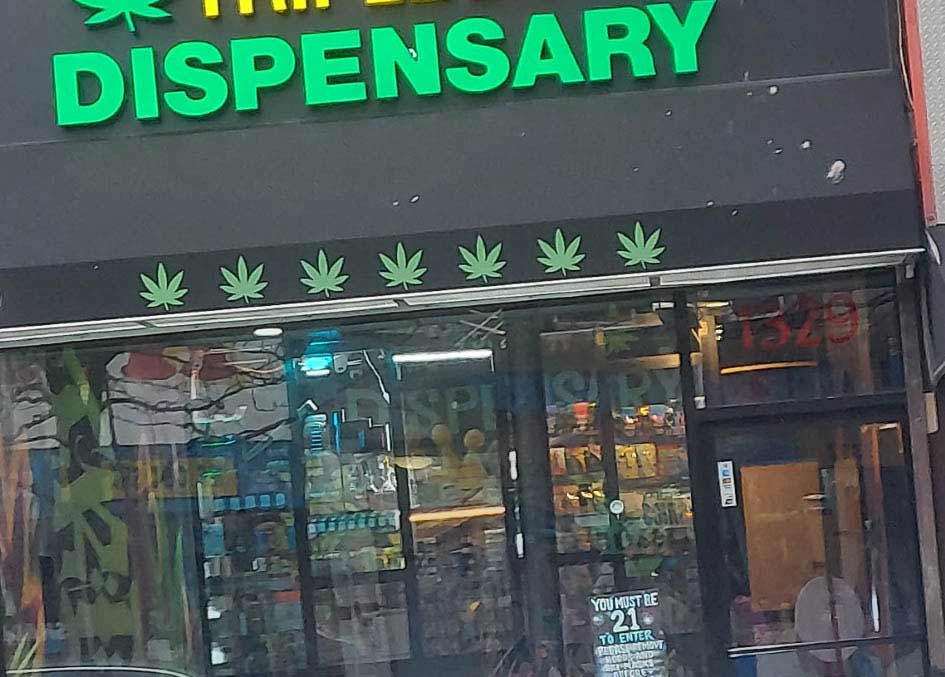
The new ‘liquors’ stores are the weed spots on many Brooklyn commercial strips. There can be as many as five smoke shops within 50 yards of each other.
What are people really imbibing? Fentanyl. Embalming fluid. Extra addictive additions?
Gummy bears that can take a life? Edibles not fit for consumption?
Reports out of Brownsville have three children recently taking ill allegedly after consuming gummy edibles. It is a severe concern.
“Marijuana is not going to kill you, but we have to figure out what the illegal market is lacing it with; that’s the problem,” Assemblywoman Stefani Zinerman told Our Time Press. “We don’t even know if we have anecdotes for what this is so that we can get people away from it. Fentanyl is the thing that we should be up in arms about. We have to figure out how to get it off our streets.”


Around the area of the Nostrand Avenue and Fulton Street crossroads, there are at least seven marijuana spots. Some have security. Some are walk-ins. Some have bright lights, colorful merchandise, and hookahs in the window.
Kayla M. is a Brownsville teacher, parent, and grandparent. She told Our Time Press that she is concerned about children in school uniforms on Fulton Street in Bed Stuy, going into two smoke shops/weed spots after school, and purchasing products.
“I am very concerned with the access that our children are being granted to gummy types of edibles,” she said. “I am concerned with the way it is being marketed. It looks like candy, chips, cotton candy—everything to entice our youth. There are students who are going into these establishments right after school with their uniforms on. They know they are children and are still giving them access to these items. I have seen it with my own eyes more than once in two separate locations – on Fulton Street and Kingston Avenue, and Fulton Street and Marcus Garvey Blvd.
“When I called 311, they told me that I had to wait there for the police to make the report. I thought that was insane because I live in the community and want my voice to be heard, but I don’t want to be identified as the person who called.
I even stopped the kids and explained that you don’t know whatever it is in what they are selling [to] them.”
Speaking to Mayor Eric Adams through Our Time Press, the activist-mom-teacher said, “We need oversight. There needs to be some sort of protocol in place so that our children are not granted greenlight access to these items.
Shut them down. Period. If they are illegal, then they need to be shut down. Anyone else who is operating illegally is shut down.”
Kayla said that she was irked by the obvious double standard.


“So, there are restrictions on smoking cigarettes, but you have the green light to smoke marijuana. I feel sorry for the kids because it’s a contradiction. In the past, when our children were selling, they were drug dealers. Now, these people are pharmaceutical engineers. We were criminalized.”
The adult use of cannabis became law on March 31, 2021, with the Marijuana Regulation and Taxation Act. The Office of Cannabis Management was established, they say, to “implement a comprehensive regulatory framework to cover medical, adult-use, and cannabinoid hemp programs.”
The NYC Department of Small Business Services said that they launched Cannabis NYC “to make our city the global leader for cannabis industry excellence in education and equity across business, science, and culture…Cannabis NYC will support the creation of good jobs, successful small businesses, and sustainable economic opportunity to address the historic harms of cannabis prohibition.”

“We need to put every so-called illegal store on notice - ‘Stop selling this stuff to our children.’ They need to be shut down,” said Daniel Goodine, co-founder of Brownsville’s Men Elevating Leadership.

 This week, Mayor Eric Adams put the ball firmly in Albany’s court. “We are hoping that we get some real teeth in cannabis,” he said. “I want to close these cannabis shops in our city. This is a problem that has become extremely widespread, and we can do it. We can clean it up if we’re given the teeth to do so. I thank Assemblywoman Rajkumar for her bill. What she is introducing is a good step in the right direction.”

There are 40 ‘legal’ weed shops statewide and about 3500 ones operating without a license. That’s 11 legal ones in New York City and 1500 illegal ones.
Queens New York State Assemblywoman Jennifer Rajkumar introduced her ‘Smokeout Act’ bill to give cities and municipalities the power to close unlicensed weed shops statewide. “These smoke shops are deeply unpopular,” she said in a broadcast interview. “They are hotbeds of crime. They endanger our children. And it’s time to shut them down once and for all.’
Mayor Adams said if the bill passed, he would move on the spots within 30 days.
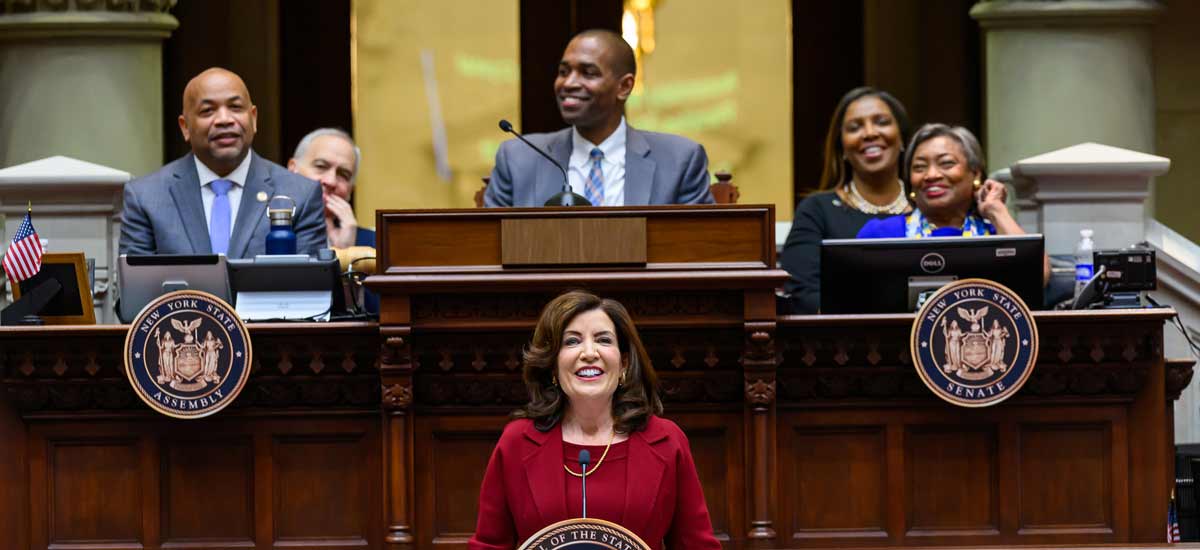
At press time, during her State of the State address, Governor Hochul said that they would “propose legislation to strengthen the Cannabis Law to better enable the Office of Cannabis Management (OCM), as well as local government agencies, to seal or padlock an unlicensed cannabis business. These are necessary steps towards shutting down unlawful and unlicensed cannabis operations that jeopardize public safety and the integrity of the State’s legal cannabis market.”


“Literally, people are playing chemists, and they are not chemists,” Assemblywoman Zinerman told the paper.
The American Academy of Pediatrics published an article entitled “Pediatric Edible Cannabis Exposures and Acute Toxicity: 2017–2021.”
The article states, “There has been a consistent increase in pediatric edible cannabis exposures over the past five years, with the potential for significant toxicity.”
The New York Times reported on the study, “There were more than 7,000 reported cases of accidental ingestion by children five and under between 2017 and 2021.”
“To decriminalize marijuana was to ensure the safety and integrity of the plant from seed to sale,” said Bed Stuy elected and mother Assemblywoman Zinerman. “Unfortunately, that did not stop the proliferation of illegal smoke shops on our commercial strips. The health and safety of our citizens – especially our children – who it is illegal for them to purchase, consume, and to be sold to…It is illegal to sell to this vulnerable population. This has exposed our children to the danger of an illegal and unregulated substance. The state and the city must work together to ensure greater enforcement. The landlords who rent to these establishments must be held accountable.
This issue is so pervasive that it’s going to take citizens, government, and community-based organizations to shut down these illegal operations in our community.
“We have to educate parents and children, in conjunction with the DOE… you used to have DARE, the Drug Abuse Resistance Education program in schools, and so the students should have access to a nurse and a social worker to figure out why are they self-anesthetizing? What’s going on at home?


Most people self-medicate because they are dealing with something traumatic. But, whatever it is, we need to get to the root of it and ensure that they have the social services to help them deal with what really is becoming endemic in an addictive way. If you are smoking weed once or twice a day – you are addicted.”
She concluded, “The question is, ‘Who owns those buildings, those bodegas?’ The Office of Cannabis Management says that they don’t have enough people to investigate and enforce, but they should have thought about that beforehand.”
In the chaotic drug-fueled 80s, Bed Stuy’s Black Men’s Movement Against Crack (BMMAC) campaign closed down crack houses throughout the neighborhood independent of any public policy. It’s what was needed: community action. Now weed, the once criminalized drug, is making millionaires out of soccer moms and Wall Street types.
“The fact that an illegal substance that can now be legally sold as the most explosive new commercial business venture for Black men to run – note, I did not say own, is an irony not lost on those of us who are conscious,” BMMAC co-founder Omowale Clay told Our Time Press. “This trick, which is easily condoned by the greedy and self-indulgent, can only punish our people and target our children.”
Governor Hochul Pushes ‘Back to Basics’ to Improve Young People’s Reading Proficiency

Last week, Governor Kathy Hochul unveiled her Back to Basics plan to improve reading proficiency in New York as a part of her 2024 State of the State mission.
To transition New York to reading instruction that teaches students the foundational skills they need to become proficient readers, Governor Hochul is introducing legislation that ensures evidence-based best practices are used throughout New York. She is proposing $10 million in state investments to train 20,000 teachers in Science of Reading instructional best practices and announced an expansion of SUNY and CUNY’s micro credentialing programs for teachers focused on the Science of Reading, to ensure our current and future teachers seeking advanced education are best prepared.


“We’re going to turn the page on how we teach young people to read,” she said at a press conference in Watervliet, NY.
“This is a long overdue opportunity to help young people have the best opportunities they can. We’re going to be reforming how we teach reading and bringing our State’s curriculum in line with the nation’s accepted best practices.
“Now, this builds on a lot of work we’ve done before. We believe in our teachers. We love our teachers. We invested in the Master Teacher Program, investing over $5.3 billion in our education program. It’s a huge increase, but there’s still a problem called illiteracy. There’s still too many people who don’t know how to read. And that’s a real problem, isn’t it? That’s a real problem. If you don’t know how to read, how do you get along in life if you really can’t read and understand things?
“ Young people need to have a better chance, it’s hard to find a good paying job someday. But if you can read, so many doors open for you, right? You can go to college, you can go get skills, you can go work any place you want to work. But too many young people aren’t succeeding.
“And here’s the reason. Our teachers are great, they work hard. Our schools are great, we give them a lot of money to make sure that they have what they need. But also, what are they teaching? What is the curriculum? And not just math, we’re talking about reading today. And so, there was a problem because people were being taught a certain way for a long time. When I was younger, we used to learn about phonics. There’s a basic way. It’s called back to basics. How you learn to read. And what happened was, they decided to change it.
“There was this idea about 20 years ago. They thought, ‘Hey, there’s a whole different way of learning. Why don’t we just put kids in a room with books? And they’ll figure it out.’ You think that’s very smart? It’s what they’re talking about when they deemphasize phonics-based learning and they push students to learn by using contextual clues instead.


“Teaching programs in colleges have focused on that program as well. So, the teachers were taught, this is how you’re supposed to do it, and they did. They were told, this is what works. And they carried out the duties they’re supposed to do. But despite the best efforts, it’s showing that it’s not working anymore. It’s not working. So, study after study has emerged over the last few years, showing it’s not getting the job done. This outdated curriculum is still, even though we know it’s not good, it is still the most common way they’re teaching reading and literacy in our schools. It’s the most widely used. It’s called the Lucy Calkins Balanced Reading Approach, and many experts have said it doesn’t work, they’ve discredited it.
“So, we’re going to take an important step. One was that we signed a new law to improve how reading is taught to students with dyslexia, and I want to give a special shout out to Assemblymember Bobby Carroll and Senator Brad Hoylman, who have sponsored this bill.
“But we have more work to do. Our job is not done. Third grade is a critical point. By third grade, if you’re not reading good, it’s hard to read better later. It’s bad if young people don’t learn how to read at that age, and there’s something that we need to be doing, and that’s teaching with phonics.
“Direct instruction, guidance: it’s not just science, it’s common sense. It’s like if you’re– anybody here play music instruments? Do you play musical instruments? Yeah? Well, if you’re taking piano lessons, for example, you have to learn the basics first. You don’t just go listen to some beautiful concert music from Beethoven and say, “Oh, I can go do that.” You have to learn the fundamentals. You have to learn the basics. No one questions that.
“But we’re going to make sure that our kids learn the basics. Other states are doing this – Connecticut’s doing it, New Jersey’s doing it, even the City of New York’s doing it. And as Governor of the entire State of New York, I think every child should have the best shot at life, the best shot to learn how to read, best shot to become completely literate by the time they leave school and make sure that our families deserve better as well.


“That’s what we’re going to do. The first day of school is like a fresh start. We’re going to have a fresh start. We’re going to do things differently, and we really expect different outcomes.
“It’s a set of solutions to, to design, to reset how our schools approach reading. We’re setting a bold goal to transform how reading is taught in the State of New York. And we’ll make sure that students receive what they learn. So, we’re going to be teaching phonics, decoding, vocabulary and comprehension.
“We’re going to get back to common sense basics (and) to help our teachers we’re going to be investing $10 million in teacher training programs to make sure we can fund over 20,000 more teachers to learn how to do this.
“It doesn’t sound like a big deal maybe to you sitting in the front row, but it is. It is, okay? This is a very big deal because for a long time, people realized what was going on was not working, but nobody stood up and said it needs to change. And sometimes it takes a little bit of will and ambition and a bold idea for what our State can be.
“We will do better and I’m going to set high goals for us to make sure that we achieve highest because this is New York, my friends. This is New York State. This is the greatest State in the nation, and I’m looking at a room full of young people that represent young people all over New York.
“We’re going to throw away the old method, say ‘goodbye, it didn’t work,’ and get back to basics and learning and make sure that you have a great chance to learn the easiest and best way you can.”

Remembering the Life of Dr. John Flateau

A Beloved Friend and Political Ally

By Roger L. Green
As I reflect on the distinguished life of my beloved friend and political ally, John Flateau, I’m moved to recall and celebrate the charge that the late Ozzie Davis presented to the Congressional Black Caucus in 1981.
Davis, an “activist artist” who prioritized “innertainment” before entertainment, articulated this illuminating insight for the African American body politic and our larger community when he charged:
“It’s not the man, It’s the plan, it’s not the rap, it’s the map”
To be certain, the life of the indomitable John Flateau validated a typology of leadership that embraced this important charge.
Through Dr. John Flateau’s public service, our community could touch and see a unique role model who processed an unbending discipline that enabled him to “dot the I’s and cross the T’s” in pursuit of a form of community empowerment and democratic self-governance that would transform for the better the citizens and denizens who originate from the African diaspora and a larger community of color.
In fact, Dr. Flateau was a penultimate scholar-activist who consistently harnessed his exceptional intellect to challenge the structural racial and economic inequality that continues to challenge our community.
Allow me to present a few examples of my late friend’s extraordinary public service that contributed to empowering our community and enhancing equal justice and democratic self-governance throughout New York State:

A Legislative Professional
John was the first executive director of the New York State Black and Puerto Rican Legislative Caucus. While serving in this position, he provided a sterling example of the professionalism and legislative mastery that benefited me and other members of the state Assembly and Senate.
Numerous laws, policies, and funding opportunities were directed to our Communities of Color because of John’s commitments.

The Proponent of Economic Democracy
John’s legislative achievements eventually paved the way for his appointment as the Deputy Director of the New York State Economic Development Corporation. During his tenure in this position , John collaborated with Michael Nairne, Audrey Bynoe, and me as we orchestrated the enactment of the first state laws, policies, and programs that provided affirmative opportunities for the minority business community.

An Advocate For Voter Rights
Before reaching the ripe old age of 29, John aligned with attorneys Esmerelda Simmons, Paul Wooten, and Assemblyman Albert Vann to initiate a scholarly, legal, and legislative strategy that transformed the inequitable and anti-democratic structure of a New York City and state government that contributed to marginalizing the political representation of Communities of Color.
John was the lead plaintiff in a case entitled Flateau v Anderson. As a result of his vision and tireless support for representative democracy, the governance and body politic of our city and state are mostly informed by the values inherent in the historic Civil Rights Act of 1965 and the principle of 1 person, one vote.
To be certain, the unprecedented number of contemporary elected officials originating from Communities of Color can , in part, trace their ascension to this tenacious organizer, whom his allies affectionately entitled, “Map Man.”


Anchoring the Dinkin’s Administration
In 1990, John joined Albert Vann and me as we crossed the Brooklyn Bridge to convince a Harlem elected official named David Dinkins to enter a campaign to become the first African American mayor of New York City.
Our Brooklyn delegation had to ensure Borough President Dinkins that he would secure support from the Coalition for Community Empowerment (A progressive cohort of African American elected officials) during this anticipated campaign.
After Dinkins entered the campaign for mayor, John, the ultimate organizer, would collaborate with a “rumpled genius” named Bill Lynch to guide David Dinkins to a historic victory.
Following this monumental electoral victory, John would serve as David Dinkins’ accomplished Chief of Staff. This public service assignment was another first for the African American community and another example of our brother’s groundbreaking commitment to public service.

Inspiring A New Generation of Scholar Activist
In time, this esteemed community empowerment activist would embrace his academic aspirations when he found a second home at Medgar Evers College. While serving in this learning domain, he would unite with Dean Richard Jones as they worked to cultivate a new generation of civic-minded scholar-activists. As a result of Dr. Flateau’s educational ethic , a growing number of graduates originating from Medgar Evers College became distinguished public servants within federal, state, and city governance.

A Celebrated Thought Leader
Dr. Flateau’s career included his distinguished leadership of the DuBois – Bunche Center for Public Policy, an institution that served as a platform for the numerous studies and books that he authored. His Magnum Opus is a book entitled BLACK BROOKLYN: The Politics of Ethnicity, Class, and Gender. This scholarship provided a comprehensive history of Brooklyn’s Black body politics, a civic infrastructure that he contributed to seeding and building when we were young men.

An Enduring Model for Community Empowerment
A few days before John transitioned to become a sacred ancestor, I had an opportunity to communicate with him as we participated in one of our periodic phone calls. Recently, these lengthy discussions would serve as a rite of passage, a time when we would share updates about our families and friends while envisioning new goals that we might undertake as we entered our eco-careers. To this end, we proposed organizing an event on the birthday of Dr. W.E.B. DuBois that occurs during Black History Month. We hoped that this gathering would encourage a network of students and youthful organizers to envision the benefits that originate from an enduring struggle for community empowerment and democratic self-governance.
Consistent with his disciplined history, John asked: Ok, my brother, who will plan and organize this idea?
Again. “It’s not the man, it’s the plan. It’s not the rap, it’s the map”
Rest in peace and power, Dr. John Flateau. You have bequeathed a progressive and enduring model of leadership for this and future generations.
Roger L. Green served in the New York State Assembly for 26 years, from 1981 to 2007. He was the first Muslim member of the assembly.

How Do We Fight Back?

“Flesh on the Ground in the Trump Era”

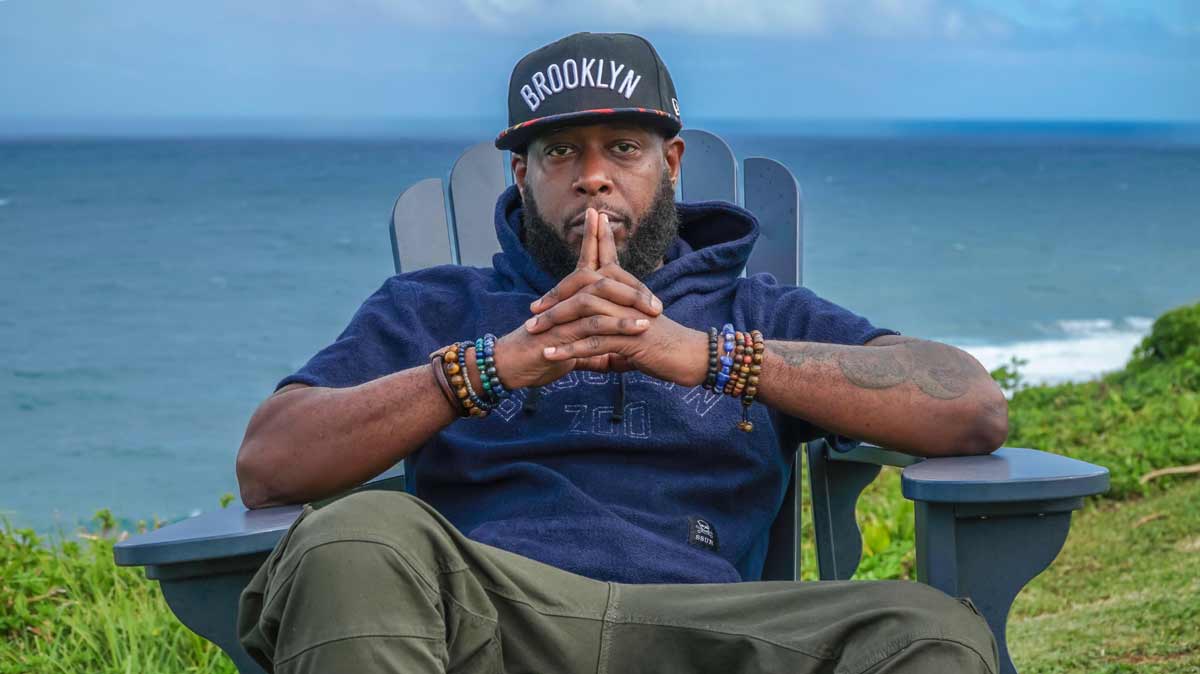
By Talib Kweli Greene

This is the first of a 3-part essay , “Flesh On the Ground in the Trump Era” by hip-hop artist and activist Talib Kweli Greene.

If you grew up in New York City in the 1980s, avoiding the orange phenomenon known as Donald Trump was damn near impossible. He was everywhere, attending parties and premiers, and dating fashion models. His first mention in the mainstream media ever was a 1973 story in the New York Times about how he was being sued for housing discrimination. Much like the gaudy, decadent TV show Lifestyles Of The Rich and Famous, Donald Trump represented every stereotype the poor and working-class masses had about rich people in the 80s. That spoiled, entitled, hyper-violent, sexist villain seen in so many 80s teen comedies? Donald Trump was a father figure to that caricature. And it was fine, because as long as all he was doing was making sure poor New Yorkers of color had a hard time living in his buildings, he was tolerated. Scratch that, he was celebrated. Donald Trump, son of a billionaire slumlord and Ku Klux Klan supporter, was seen as a symbol of the American Dream, the physical embodiment of wealth itself.
So when Donald Trump put out a full-page ad in the New York Post demanding that the Central Park Five, black teenagers who were later exonerated by DNA testing, and set free, should be given the death penalty for a crime they had yet to be found guilty of, it was dismissed by mainstream media as Trump just being Trump. When reports began to surface about Donald Trump saying things like “laziness is a trait in the blacks” and “the only kind of people I want counting my money are short guys that wear yarmulkes every day,” they were dismissed as Trump just being Trump.


Personally, I always recognized Donald Trump’s racist dog whistles. I would cringe whenever my favorite rappers would mention him in lyrics as a symbol of opulence. When he began doing reality TV, while overseeing failed business venture after failed business venture, while declaring bankruptcy four times, Trump began to make more sense to me. He was a clown, a court jester, an empty suit. I was fine with letting him pretend to be the boss and fake-firing people on TV. Donald Trump’s tangible effect on my life wasn’t realized by me until he was triggered by the election of the first black president in United States history, Barack Hussein Obama.
And triggered he was. There was something about Obama that just didn’t sit
right with Donald Trump, and being a famous white man he was given an incredible platform to speak on this at length on Fox News, often. As the world’s most famous birther, Donald Trump went out of his way to normalize the very racist lie that Obama was not born in America. According to Trump, Obama had to be lying. He offered no proof of this, other than Obama seemed foreign to his sensibilities. If you grew up the son of a billionaire Ku Klux Klan supporter, you were promised a world in which no black man would ever have authority over you. Barack Obama’s mere existence destroyed Donald Trump’s world, and so he made disparaging Obama his main focus.
Dedicating his life to destroying Obama’s credibility made Donald Trump a darling of the far right and the Tea Party. The party of no now had a celebrity spokesman, one who was fun to watch whether he made sense or not. And as long as Trump was anti-Obama, it didn’t matter whether he aligned with so-called conservative Christian values. Being anti-Obama was all that was needed to elevate Trump from a reality TV show star to a serious GOP presidential contender. Like many left-leaning progressives, I was naive to how much of a shot Donald Trump truly had.


As a working artist, I’m blessed to travel the world seeing humanity at its very best. The people who come to my shows are compassionate and intelligent and they stand for justice. I am blessed to choose who I want to work with and be around. My friends who aren’t artists for a living don’t have this luxury. They are forced to commute daily to jobs that help some boss get richer than them while working around people they may not even like. These people had a more realistic view of Trump’s chances. My friend Seth Byrd, a plumber by trade, told me Trump had the election in the bag. I bet him a dollar Trump would lose. I still owe him that dollar.

This is the first of 3-part essay, “Flesh On the Ground in the Trump Era”  written in 2016 by hip hop artist, activist, and writer Talib Kweli Greene and republished with permission of the author. 

Gentleman Scholar Dr. John Louis Flateau

Giant in Public Service and Community Self-Empowerment, Passes

Dr. John Louis Flateau, PhD. passed on December 30th, the 5th day of Kwanzaa, on which we traditionally observe and celebrate the principle of Nia, Purpose.
The announcement by his sister Adele Flateau — the last sibling-voice the community leader heard that morning — spoke of the shock and the suddenness of his passing. The response to her message was immediate. Condolences poured forth, yes, but with each and every condolence came a word of gratitude and appreciation – in the style of John Louis Flateau forever smiling that smile even under the weight of great pressure.
Collected here are comments sent to Dr. Flateau’s family and to the public. They herald his genius, his life, his legacy, and his decades-long embrace of his purpose: to love and serve his family and his community, the latter for whom he soldiered, for fifty years, the role of being a voice for the voiceless. In that regard, he was the embodiment of the Nia, the principle devoted to building and developing community “in order to restore our people to their traditional greatness.” And that is what he envisioned for our future.
Dr. Flateau is survived by his wife, Lorraine; his two sons, Marcus, Jonathan, Chaunee, and their families; and four siblings, Anne, Alice, Adele, and Richard.
Note to readers: Funeral services for Dr. John Louis Flateau will be held at 10:00 AM on Wednesday, January 10th, with viewing to take place between 9:00 am and 10:00 am at Bridge St. AWME Church, 277 Stuyvesant Avenue in Brooklyn, NY. – Bernice Elizabeth Green