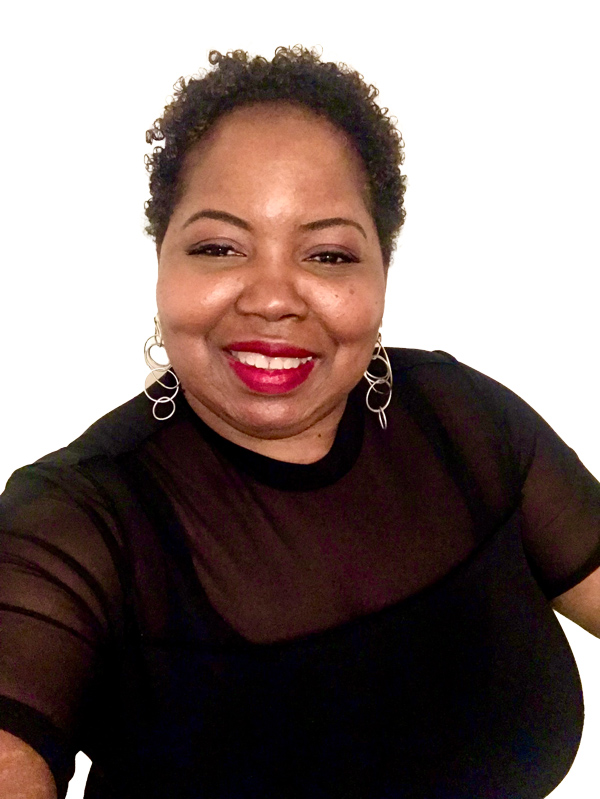
by Renee L. Harris President and Founder I.E. Spa Indulgences LLC
Twelve years ago, my sister-friend was diagnosed with breast cancer. During her diagnosis, we learned we were consuming many unhealthy chemicals through our skin. From there, we started researching organic ingredients and remembering the natural remedies we grew up on lessons from our ancestors.
I would share my learnings with her, and she would encourage me to stay on my quest. In her goal to practice a healthier lifestyle, I began making natural skin-moisturizing products, selecting the best ingredients that she could have confidence in using while undergoing her treatments.
At the time, I was in another career, so I gave the skincare products away. I was not planning to start a wellness business, but I could not ignore the demand for the products, my entrepreneurial spirit, and my dream of owning a spa.
I took a year to perfect my recipes, gather feedback from a diverse market, conduct deeper research and testing, set up the legalities, produce marketing collateral, and marry all of that with my love of spas.
In 2015, my I.E. Spa Indulgences was born. My objective was for it to be a healthy-lifestyle brand, accessible to everyone at an affordable price. I wanted everyone to feel the love poured into my handmade products and remember to treat themselves to an at-home spa experience with something special and good for them.
My sister-friend stayed on course with her medical regimen and is cancer-free now. We remain each other’s strongest champions. The I.E. Spa Indulgences product names do not make any claims nor are they intended to treat or cure any condition or disease. The names are intended to describe the properties associated with the products.
Customers purchase products with the expressed agreement and a clear understanding that they are using the products at their own discretion. www.ie-spa-indulgences.com
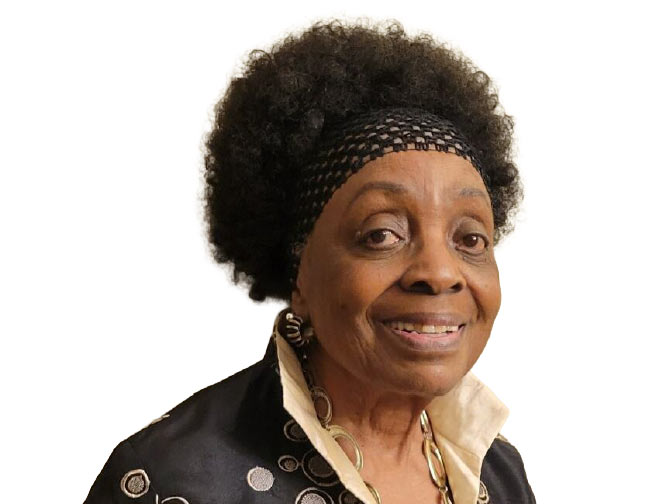
by Yvette Moore March International Women’s “Herstory” Month is a time for spotlighting remarkable women and their amazing gifts. Women like Cynthia Doris Pinn, treasurer of Brooklyn’s Community Board 3; chair of its Housing and Land Use Committee, and treasurer for many other community organizations.
“I have been fortunate to be able to lose myself in service to some extraordinary organizations doing some very important work,” Ms. Pinn told Our Time Press in a recent interview.
“My professional career was mostly in nonprofit in the area of women’s health and, as a volunteer, for more than 30 years, in organizations empowering older adults; enriching the lives of our children and providing political information to the community.” In addition to her work on Community Board 3, Ms. Pinn also serves as treasurer of the Bedford Stuyvesant Early Childhood Development Center Inc., an organization caring for children and supporting families for more than six decades; and as a consultant for Fort Greene Council Inc., providing services to older adults in Central Brooklyn for more than 50 years, including the renown Jazz966 music program.
Ms. Pinn also serves as treasurer of Vanguard Independent Democratic Association, Inc. (VIDA), the 52-year-old Black political club founded by the late Brooklyn-based, nationally known political leader Albert Vann. “Al Vann named me community treasurer because I’ve been treasurer of 90 million organizations!” she said. “The thing is that accountants don’t volunteer for boards. You can get volunteer treasurers, but they’re not necessarily financial professionals. That’s what I’ve done with my degree.”
And volunteering is also how Ms. Pinn got into accounting in the first place. From childhood, she was known to be good with numbers. Born in Brooklyn to immigrant parents from Barbados, she married and was wife for 58 years to the late Dr. Sam Pinn, Founder and Chair of the Fort Greene Council and Co-Founder and Director of Jazz966. She always considered herself a “numbers person,” but when she returned to school after raising her children at home for 13 years, she did so as a social work major.
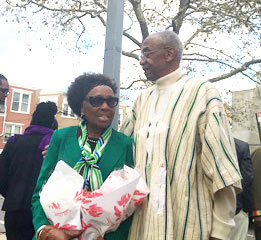
C.Doris Pinn and late husband Sam Pinn. Photo by Berrnice Green
“When I went to college, you became a nurse, a teacher or a social worker. Those are the professions that you were supposed to go into,” Ms. Pinn said. “I didn’t want to do those things, but I didn’t know to do anything else.” Fortunately, she was starting school the same year her husband, Sam, was starting the Fort Greene Council, and she volunteered to help where there was a need. She then attended The City of New York’s training program for bookkeepers for new community organizations. “The Fort Greene Council didn’t have any staff, so I thought, as a volunteer, I will go to the training then come back and train the person the Council hired,” she said.
“So, I went to the training. Poof, a light went on: ‘This is what I’m supposed to be doing!’ I immediately switched my major.” Ms. Pinn pursued a degree in accounting from Brooklyn College, a Master’s in Business Administration with Distinction from Long Island University (LIU), and a post- graduate certificate from New York University (NYU) in management for not-for-profit organizations.
“It was always my desire to work to serve in the community,” she said. “I always said, I had no desire to help rich people and corporations count their money. With the super-rich, there’s never enough money. “As an accountant, just looking at it from that perspective, they’re spending the same amount of money that they don’t want to pay in taxes on lawyers and accountants to keep them from paying taxes! They are spreading the wealth to other people who are also wealthy as opposed to spreading the wealth to those in need. That’s the issue.”
“Doris has actively promoted political education and financial responsibility in Bedford Stuyvesant. As our longest-active member, she is a valuable asset in serving the VIDA community,” said Henry Butler, State Committeeman/District Leader.
Ms. Deborah Knight, Executive Member of Bedford Stuyvesant Early Childhood Development Center, Inc. Board said, “Doris does much more than oversee figures; her commitment and guidance consistently make a difference in the lives of our children enrolled in our Head Start program.
“It is both an honor and a privilege to collaborate with Mrs. Cynthia Pinn,” stated Ms. Claudette Macey, Executive Director of Ft. Greene Council, Inc. She added, “All of her actions are clearly guided by her genuine commitment to serving the older adult community.”
“For more than forty years, Doris has been deeply devoted to the House of the Lord Church. Her active presence and unwavering loyalty have touched so many lives—including mine—and her generous contributions continue to inspire those around her. She’s not just a valuable member but she is my tribe sister and an essential part of our community,” Rev. Dr. Karen S. Daughtry, Pastor.
“Cynthia Doris Pinn is truly a woman of distinction, a role model, an influential leader in the community and someone who exemplifies volunteer excellence. Her dedication to Community Board #3 has been evident for more than 25 years. Doris exemplifies what it means to be a volunteer agent of change in today’s world,” Anthony Buissereth, Chairperson, Community Board #3K.
And serving community-based organizations is what Ms. Pinn has done with distinction for over 50 years. In Ms. Pinn’s paid professional life, four of her three positions were with startup organizations, establishing their financial systems and practices. Her last job before retirement was executive director of one of those startups. Under her leadership that organization’s funding grew from $700,000 to $5 million.
Then she returned to her love: volunteering. “Mahatma Ghandi famously said, ‘The best way to find yourself is to lose yourself in the service of others.’ I have been fortunate,” she said. Ms. Pinn has words of wisdom for young people seeking to find their way in the city and world: First, she states adamantly, “Know your history!” “Know about the struggle so you don’t lose the power that you should have as a result of the struggle we have come through,” she told Our Time Press. Second, keep the faith! “I am a woman of faith,” said Ms. Pinn, a longtime member of the House of the Lord Pentecostal Church, known for its justice activism over the years. “You have to believe. And you have to understand that with faith, even when things are not as you might want, God is always on time. ‘He may not come when you want Him, but He’s always on time.”
(Yvette Moore is a contributing writer to Our Time Press and an YA author living in Crown Heights.)
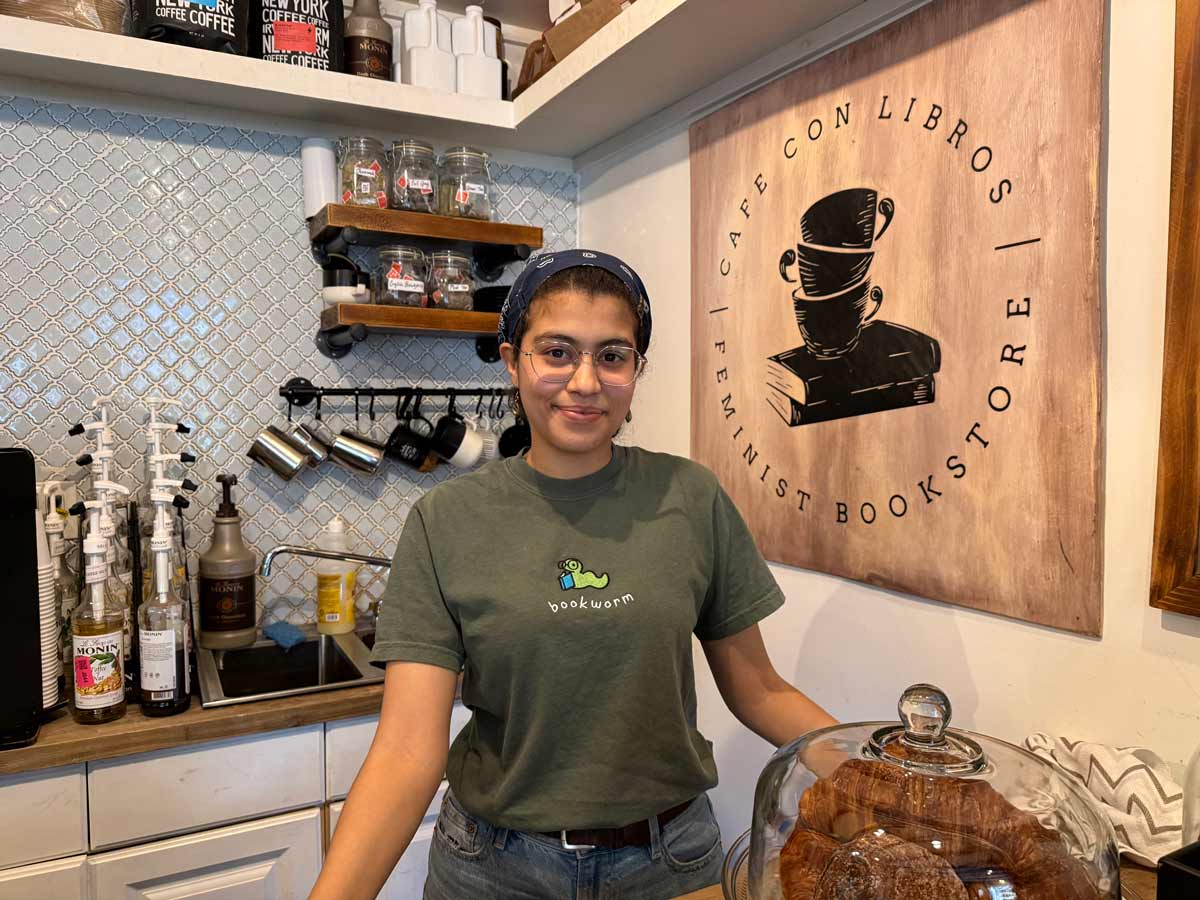
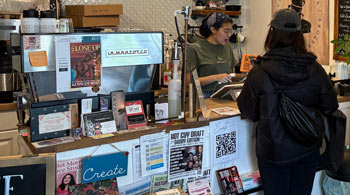
By Enoch Naklen The inside of Cafe con Libros is a bibliophile’s dream where floor-to-ceiling shelves line the left and right walls to create a corridor of stories. Nestled among the mixed names of literature, colorful handbags hang from racks with their textures adding a domestic warmth to the room. The newly released handbag was added at the beginning of Women’s History Month as a collaborative graphic bag with the labeling NYC Black Woman Bookstore Crawl.
This bag serves as a physical testament to a movement that was catalyzed by Jeannine A. Cook, the founder of Philadelphia’s Harriett’s Bookshop. Cook, a curator and author, is widely credited with providing the blueprint for the modern bookstore crawl. Her mission to celebrate women authors and activists through “literary tourism” sparked a viral template for solidarity that directly influenced the New York City scene. Saige, one of the bartenders and administrators of the Cafe con Libros team, explains that the crawl was born from that specific energy of togetherness.
“It was at that event that a bunch of the bookstore owners were like, ‘Oh my God, is this the first time that we’ve all been in the same room together?’ And it was,” Saige tells Our Time Press. “From that momentum and from that energy, it was sort of just like, we need to do something with this.”
Beyond the marketing, Saige emphasizes a deeper necessity for the alliance that Cook’s model inspired. “I feel like there’s times where we’re all struggling and we want to build a space in a community where we feel like we can support each other because we’re the only people who kind of know what it’s like to go through what we’re going through.”
Saige can be seen opening the cafe and setting up the pastry display before grounding coffee beans in a handmade grinder, the silver machine whirring as she prepares a fresh brew. She moves with precision, roasting and tamping the grounds before pouring a choice of milk to complete a cappuccino or a steaming hot chocolate.
This sensory experience is set against a backdrop of comfort; chairs are positioned conveniently to look out into the city streets, while others face inside for a panoramic view of the books. Located on Rogers Avenue in Crown Heights, the shop is positioned conveniently next to a K-12 school, two bus routes, and a couple of newly opened apartment buildings on the block, leading to a diverse customer base of teachers on lunch breaks and crossing guards.
This vision of a community living room was central to why Kalima DeSuze founded the shop. Saige explains that DeSuze noticed her own family “don’t really read as much,” and so “she just wanted to build a space for people like her to come in and have community and be able to share the stories and get to know them.”
The intersection of a bookstore and a cafe was a natural extension of her heritage. “Coffee is a huge part of the culture,” Saige says. “Morning, noon, at night, you’re always drinking it. So that’s a combination of the traditions of her culture with her compassion [for] community.”
However, navigating that identity comes with the challenge of resisting categorization. Saige mentions that DeSuze often struggles to get support as who she is authentically because “she either has to align herself as being a black bookstore or being a Latina bookstore owner with the realities that she’s both.”
DeSuze envisions Cafe con Libros as a niche third space for the community and by the community. By keeping the space small and intentional, she has rejected the desire to become a big chain, opting instead to maintain a “cult classic” environment where neighbors can find themselves represented on the shelves and welcomed at the counter. All photos by Enoch Naklen
In his own words, Terrel Duval Harper aka: Relly Rebel
Interviewed by Kazembe Batts IG: @kazbatts
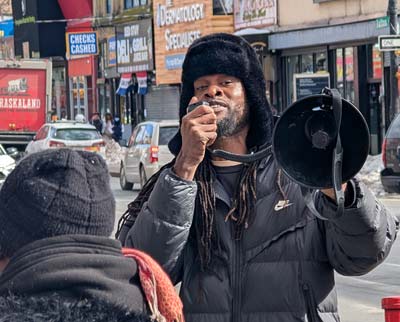
Tell us a little about yourself. I used to be a comedian, just living in the neighborhood. I’m from New Jersey. Before I came and started doing activism I’ve been locked up over 100 times and worked three jobs before I came to NYC in 2020. I came for my kids. They wanted me to get a dog to protect myself during the uprising of George Floyd and I been here ever since.
I wanted my activism to be protesting and also to practice what I preach and that is why I started doing mutual aid, I didn’t want to just be outside protesting cops and I wanted to also do more and try and create the system we want to see.
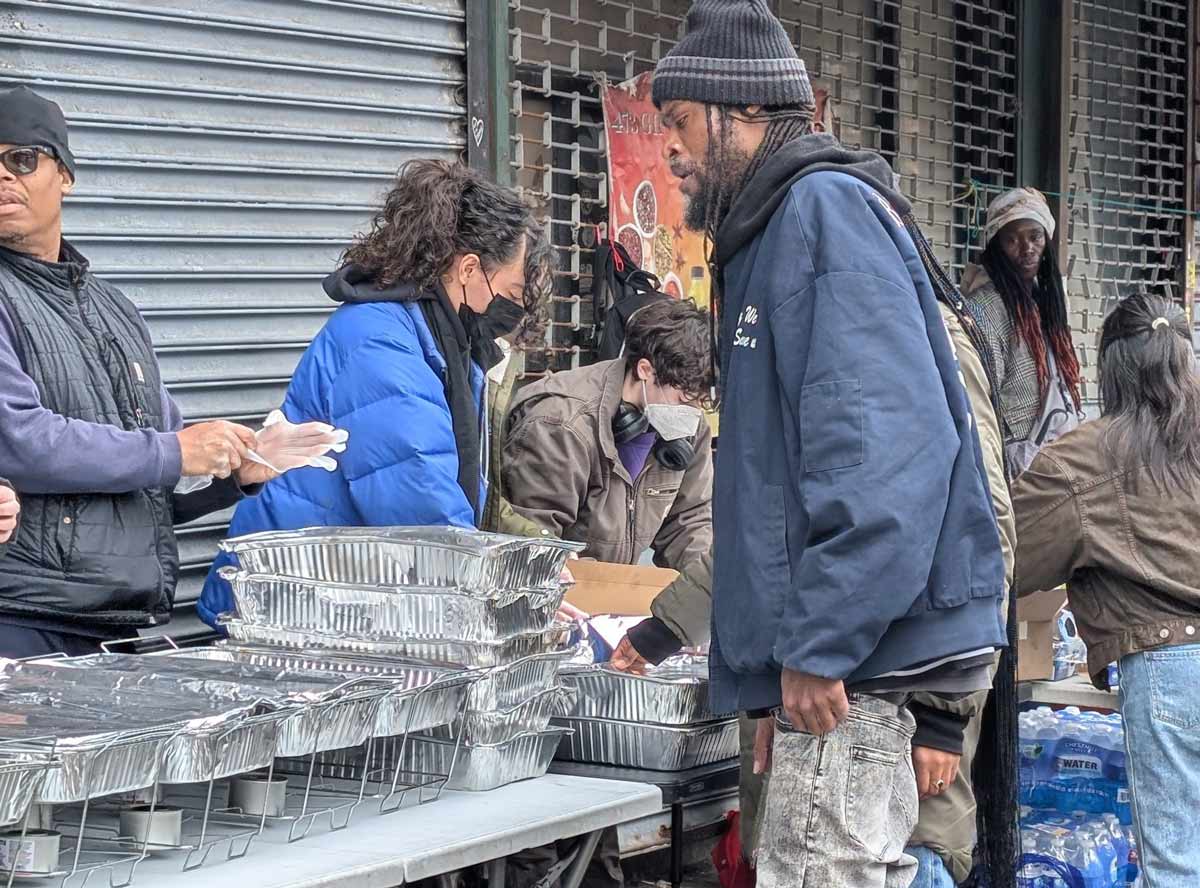
Tell us about your organization. “We the People NYC” org started towards the end of 2020. It was an idea in November 2020 and I put the idea into motion in January 2021. We started doing mutual aid before protesting, It just started off with us buying food. We just wanted to produce food so the houseless people could get a good meal, a good hot meal without it being a bagged lunch.
We wanted houseless people to eat good. It expanded from there with me connecting with another comrade. and all our ideas coming together to be a support system for our neighborhoods and provide everything we need for each other.
How did you come to set up at Nostrand & Fulton? We started as a coat drive. The coat drive was supposed to go and touch every borough, but I live in Bed-Stuy. My first stop was Nostrand and Fulton cause there is a high level of people there, and we figured its right down the block from me. We started there as a coat drive. We saw so many people, so we bought over $600 worth of items, coats and blankets. Everything left in a half hour, we didn’t even make it to the other boroughs, so based on that we decided to come back out next week and bring our food.
How do you get the food? Is the organization self-sufficient, has key partners, or get government grants? We started distributing food with myself. I took $200 and just cooked some food with my own money. Once we posted the pictures on social media, we posted flyers for the next week people saw what we were doing and donated money and we kept going from there, then we got large sums of money ands now not to get caught up with the government and taxes and all that, we partnered up with Pact Collective which is a grassroots org out here.
They are a fiscal host for groups that do mutual aid. They take care of all the paperwork. Our money gets donated to Pact Collective and to receive the money we have to show receipts. We don’t get government grants. We are not a 501c-3. We want to see if we can make this sustainable off people power without going to the government, see if we could do it through the community, we been going on five years now. So its been sustainable. We have been able to start a new distro in Harlem.
Who are your key teammates and what new plans do you have? Some of my key teammates are Che, Krispy, Rudy, Sarah, Koren, Marissa, so many more are heavy organizers and key players in the organization, but we try to make everyone an organizer. We have a mobile distro coming. We’re stationery in Bed-Stuy and Harlem but now we are putting the mobile distro into effect in the afternoon, possibly calling for bikers or using the trains, giving people a opportunity to help us out, hitting different areas weekly. The mobile distro should start in April
Incidents have happened with the police. What is the relationship on the street? We had a couple of run-ins with law enforcement. I feel they do it at least once a year. Sometimes it’s new cops and they don’t know so we have to break them in and they panic and call for backup, so backup cops would pull up and let them know who we are. You don’t have to have a permit to give out free food and stuff. One day cops got physical and tried to take stuff off our table and locked up two comrades. The most powerful thing is we never stopped the line.
We had people handle that situation and deal with the cops when they come but the line keeps going. They ended up locking up eleven people all together but we say that is the fight to show them that we coming back out next week. We showed that we gonna do for our community no matter how they feel about it. We’re trying to strengthen our community, and we don’t need permits to do that. Our eleven people have heavy lawsuits on hand.
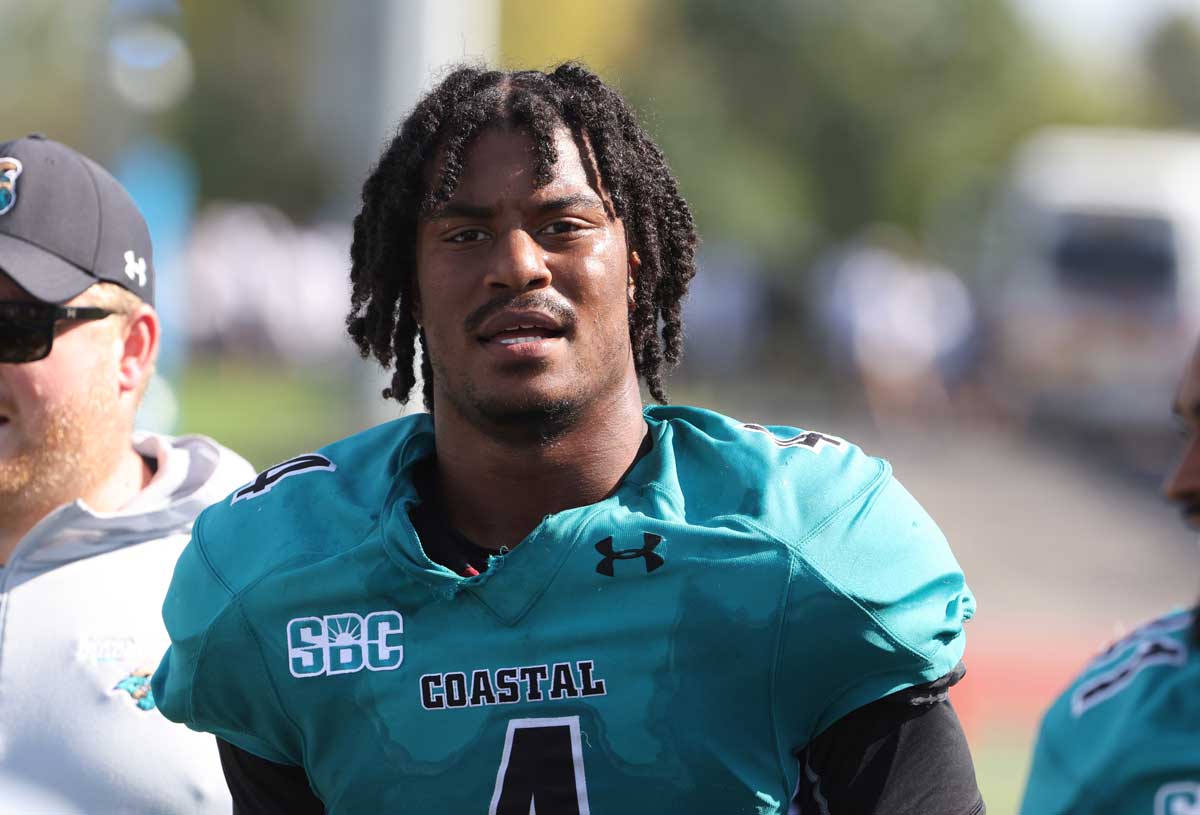
By Eddie Castro Aside from the actual NFL games themselves, if football fans had to pick a No. 2 exciting moment, it would be two things. The release of the NFL schedule, which reveals who your favorite NFL team will be going head-to-head with throughout the year, and the start of free agency. For the New York Giants, the team is looking to make a splash in free agency after an abysmal 2025-26 campaign, in which they finished in last place in the NFC East division with just four victories.
Before free agency kicked off, the Giants made a few changes to their coach staff. The team was able to come to terms with former Baltimore Ravens Head Coach John Harbaugh, who was sought out to be the hottest coach on the market after 18 seasons in Baltimore.
The team also hired a new offensive and defensive coordinator for the upcoming season in Matt Nagy and Dennard Wilson. With the coaching staff now in place, General Manager Joe Schoen wanted to make a statement that “Big Blue” is serious about taking the next step forward in building a winning culture.
As we go to press, the Giants wasted no time adding talent to the roster on day one of the legal tampering period. The team signed Tight End Isaiah Likely to a 3-year/$40 million deal, the first player to reunite with his former coach. He becomes another weapon for quarterback Jaxon Dart with Wan’Dale Robinson leaving the team and signing with the Tennessee Titans on Monday. Other notable signings are Tremaine Edwards (3 years).
The former bears linebacker will now be the “quarterback” for the defense. Cornerback Greg Newsome II and punter Jordan Stout were other pickups for New York. The Giant’s next move should be on the offense seeking a No.2 receiver to compliment Malik Nabers, who is returning from a Torn ACL he suffered early last season.
As for the New York Jets, on day 1 of the NFL’s legal tampering period, the Jets signed six players on defense to free agent deals highlighted by a trade they made with the division rival the Miami Dolphins that sent Minkah Fitzpatrick to the Jets in exchange for a 2026 seventh-round pick. A potential high reward with less capital Gang Green had to give up.
The Pro-Bowl safety went on to sign a 3-year/$40 million extension with New York. The Jets are also bringing back linebacker Demario Davis(2-years/$22 million). Davis returns for what will be his third stint with the Jets. He brings leadership to a defense that has not had that signature voice on that side of the ball since C.J. Mosley retired.
At 36, Davis is still playing at an elite level as he is coming off a career-high in tackles in 2025 with the Saints. The Jets would add more to their defense adding former Bengals defensive end Joseph Ossai (3-years/$36 million) and two other players on defense on 1-year deals. On the offense, as we go to press, the Jets are bringing back a familiar face to play quarterback for the team in 2026 in Geno Smith. Smith was acquired via trade with the Las Vegas Raiders now returns to the franchise that drafted him back in 2013.
Free agency officially kicked off yesterday (Wednesday March 11). It is expected that but the Giants and the Jets will still be wheeling and dealing as they attempt to put a stop to the bleeding that has seen the Giants not make the playoff since the 2022 season and their neighbor Jets franchise not make a playoff appearance since 2010.
Free agency and of course the draft are many ways our beloved New York Football team can end their respective droughts and stop us from turning away from our televisions. We shall see what the rest of a busy football week brings.
Sports Notes: (World Baseball Classic) As we go to press, Team USA Baseball is 3-0 and more than likely on their way to the knockout stage of the tournament with wins against Brazil, Great Britain, and Mexico whom they have not beaten in 20 years until this past Monday.
The match ups for the Knockout stage have not been announced at this time with the round Robin round still in progress.