Home Blog Page 14

Community Works to Save a Treasure on Stuyvesant Avenue

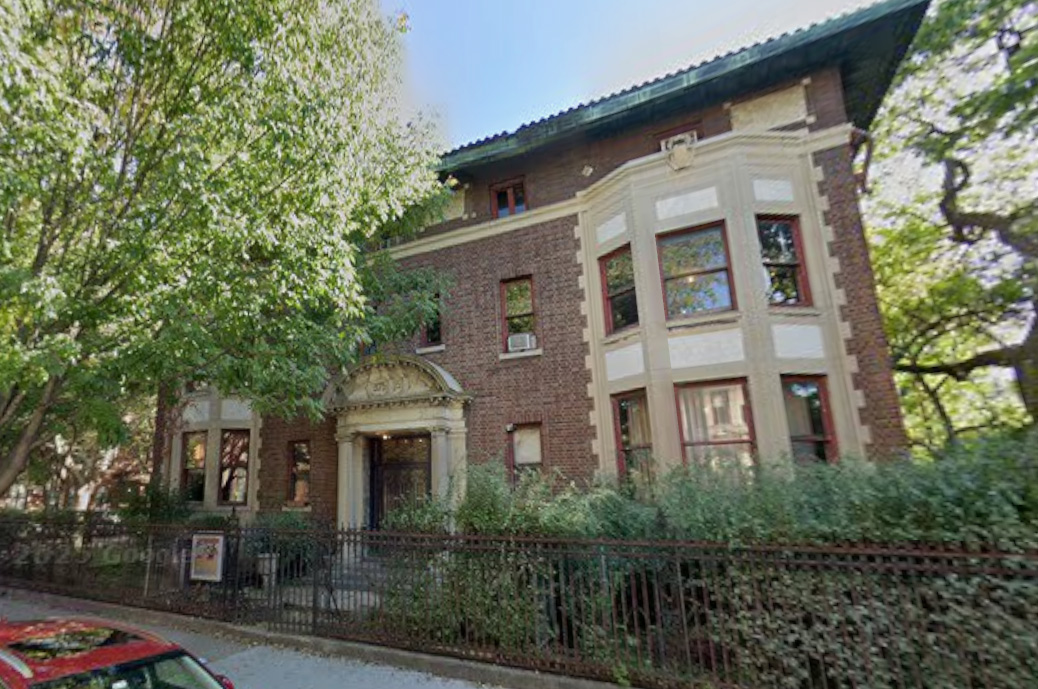
Historically, in black communities, there are sacred spaces. Not just churches, not just schools, but buildings that hold our footsteps, our struggle, our brilliance, and our first victories. Places that provide space for healing, radical thought, youth development, elder support, safety, art, and liberation. 375 Stuyvesant Avenue in Brooklyn is one of those places. And right now, its story stands at risk of being erased.

It is not only the bricks and beautiful architecture that will be erased, but Memories, Legacy, and Community culture. Right now, a group of concerned community members are taking action to prevent this from happening, because they adamantly oppose allowing another piece of Black history to quietly disappear in the name of profit.

This group, led by black women who are former stewards of the Mansion, organizers, and neighborhood entrepreneurs know that at the heart of this story is Dr. Josephine English, a trailblazing Black woman whose life represents exactly why this building matters.
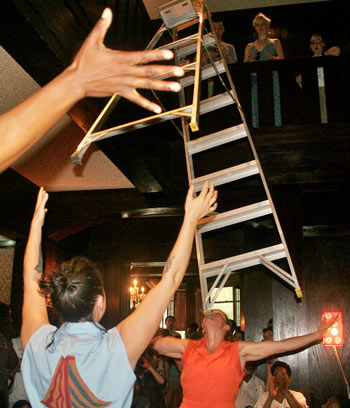
Balancing act at the mansion


Shanna Sabio founder of Growhouse and BLAC, Monique Scott, Founder of Freebrook Academy, and Karyn Wyche, founder of Gombo Workshop know well the history of this Mansion and the significance of the leadership of Dr. Josephine English and have spent the last few months working with the community and ensuring that the Mansion stays front of mind.

375 Stuyvesant Ave
Represents Black Firsts

375 Stuyvesant Ave was built in 1914. In 1973, it was purchased by Dr. Josephine English. She was a pioneer. She became the first Black woman to open an OB-GYN practice in the state of New York at a time when racism and sexism tried to block every door—so instead of waiting for permission, she built her own. She cared for generations of Black families. She delivered over 6,000 babies, including the children of Malcolm X and countless Bed Stuy residents. She supported mothers. She provided dignified healthcare when many hospitals treated Black patients as afterthoughts.


Beyond her practice, Dr. English purchased multiple buildings including the Paul Robeson Theater at 40 Greene Ave. She believed in art. She believed in paving the way for future young leaders. She inspired artists, doctors, and more. She also put money in the hands of people who needed it. She gave funding to people who were trying to do something good, but repeatedly faced closed doors.


In the 1970’s to 1990’s, the Mansion operated as the Bed Stuy Senior Center run by former director Verda Olayinka. It was a place where elders could nourish themselves, let loose, be creative, and find camaraderie. As she became older, she ensured that the building could continue to support the community, entrusting it to her children.


In 2011, three neighborhood women Shirley Paulino, Ginger Spencer, and Monique Scott came together and re-activated the space. The primary tenants included Freebrook Academy, a small developing private school. Scholar League developed its programming, supported interns and participants with a balance of academic support and athleticism, while supporting outreach for the Mansion.
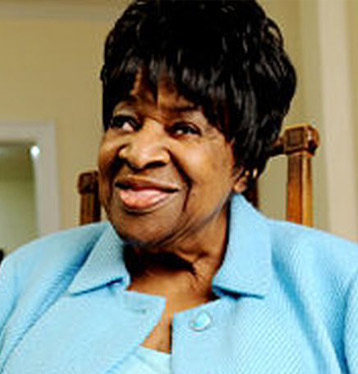
Dr. Josephine English,
Trailblazer


Then Brooklyn Movement Center joined as the doors opened. Brooklyn Movement Center (BMC), one of the oldest tenants, developed local organizers and advocates. BMC organized youth and adults alike around food justice, education, and street harassment.


The Carriage house was first used by Seasons (Plant Nursery) with pine trees for the holidays. After Seasons, Breadlove, (formerly Breadstuy) created a community gathering space with their cafe, movies, and fun family setting. People would work, meet, and become inspired there. There were community members of all ages connecting and caring for one another.


For some time, Baileys operated out of the space as well with intergenerational afterschool and summer programming. Ancient Song Doula Services found a home at the mansion where there could be focused Doula training, reproductive justice programs, and advocacy. Kweb Collections by Khalilah Williams-Web used space for styling and then short retail projects and then outgrew the Mansion.


Cultural Erasure Comes Quietly
Too often, cultural erasure doesn’t come with headlines. It comes quietly on the wings of a sale; a redevelopment plan; a renovation that removes the story; a luxury conversion that forgets who came before.
In late October of 2025, Freebrook Academy, Brooklyn Movement Center, Growhouse, and Gombo Workshop were informed that the court ordered the Heirs of Dr. English to sell all the properties left by Dr. English in advance of foreclosure due to liens. These parties were subsequently asked to stop programming and remove all their property by the end of the month. The Mansion market price was $4.6 million.


Scott, Sabio, and Wyche recognized the path toward erasure. They knew that to sell the building meant to invite developers with little cultural reverence or community commitment. They solicited over 8,000 signatures for a petition, reached out to multiple public officials, and held the first of two Town Halls where the local community and those connected to the Mansion could discuss next steps. The result was proof that the community opposed this path toward erasure.


Afterwards, there were protest signs, visits to Community Board Meetings, Street Teams, Meetings with elected officials, and bi weekly (weekly at first) organizing meetings, fundraising, and more. “I know that this means very little unless we can garner the funds to buy the building or convince local officials to commit to ensuring that the building ownership will be transferred to the community. This is not like pie in the sky wishing. We have a plan,” says Scott. These women and community members taking action are not doing so without being practical by identifying the resources, strategy, and coordination necessary.


One of the key strategies being advanced to protect 375 Stuyvesant Avenue is placing the building into the BLAC Land Trust (Black Land Access Community Land Trust) – a community land trust created to preserve culturally significant Black spaces and ensure they remain permanently rooted in community stewardship.


Community land trusts (CLTs) are a proven model used across the country to prevent displacement and protect neighborhood assets from speculative markets. In this structure, the land is held by a nonprofit trust on behalf of the community, while the buildings and programming remain stewarded by local organizations and residents. By removing the land from the private real estate market, a CLT ensures that spaces like 375 Stuyvesant cannot be flipped, luxury-converted, or quietly erased over time.


The BLAC Land Trust is being incubated by GrowHouse Design and Development Group, Inc. a nonprofit co-founded by Shanna Sabio and Warner Sabio, Jr., lifelong Brooklyn residents alongside collaborators in the GrowHouse ecosystem, as part of a broader effort to reclaim and steward Black cultural and economic spaces in Brooklyn.

The CLT focuses on spaces in historically Black Brooklyn (Bed Stuy, Crown Heights, Clinton Hill, Fort Greene) to create housing, commercial corridors, and to preserve sites that carry deep community meaning – places where generations gathered, organized, learned, and built institutions that served Black life in the face of exclusion from mainstream systems.


“Too many of our historic spaces disappear the same way,” Sabio explains. “A building that held community memory becomes financially distressed, the market steps in, and the story is erased. The land trust model interrupts that cycle by putting the property under community stewardship so that it cannot simply be sold to the highest bidder.”


For 375 Stuyvesant Avenue, the goal is to bring together philanthropic partners, community investors, and public resources to acquire the property and place it into the BLAC Land Trust. Once secured, the Mansion would operate under a community-informed stewardship model that can include cultural programming, educational initiatives, workspace for local organizations, and spaces for intergenerational gathering – ensuring that Dr. Josephine English’s legacy continues to serve the people she dedicated her life to.


Rather than treating the Mansion as a piece of real estate, the CLT approach recognizes it as something far more valuable: a living cultural institution. Through the BLAC Land Trust, organizers hope to create a permanent structure that protects the building, honors Dr. English’s legacy, and ensures that future generations of Bed-Stuy residents can continue to learn, gather, and build community within its walls.


The Bed Stuy community and those touched by Dr. English and 375 Stuyvesant Ave are not willing to let this culture and history go quietly, they are fighting for this legacy to remain, inspire, and teach the future. As realtors and developers exchange culture for dollars, the community – elders and youth, entrepreneurs and creatives, lose something deeper than property. In this case, they lose the proof that a black woman can lead the way and they can follow their dreams despite the odds. Our youth lose a foundation to stand on.


The team is not moving recklessly, but with a concrete and community informed use plan to address funding issues of the past. With the advice of business and organization leaders, neighbors, legal teams, and more, they have developed a plan that provides event rentals, co-working space, a school, a makerspace, art honoring Dr. English’s legacy, cafe, long term rentals and more.


What Is Next?
The courts and heirs to Dr. English’s estate have found their prospective buyer—Joseph Safdie of JSAF Management, infamous slumlords who have been in the news most recently for depriving Brooklyn residents of heat during this past winter. Joseph himself currently occupies #62 on Public Advocate Jumaane Williams’ “100 Worst Landlords” list.


However, in early 2026 Pinestone Green LLC, a development corporation whose plan to demolish the Mansion’s historic carriage house for luxury condominiums was struck down by neighborhood organizers and the Landmarks Preservation Commission in 2017, has re-emerged to dispute the sale of 375 Stuyvesant and the Paul Robeson Theater claiming that the agreements made with them by the Heirs to Dr. English’s estate entitle them to partial ownership of the properties.

“Their suit against the estate for claim to the properties has put a freeze on the court’s ability to sell them, and with the judge assigned to the case ruling in favor of hearing both sides out, the estate v. Pinestone case and active bank foreclosure have been adjourned to early May 2026.” Wyche explains.


In the meantime, the Bed Stuy community continues to rally around saving the Mansion, stopping the sale, and preserving Dr. English’s legacy. In March, a second town hall meeting was held at the nearby Gladys Books & Wine on Malcolm X boulevard, where community members were brought up to speed on the developing legal situation as well as paths to acquisition and plans for the usage and operation of the Mansion as a community center.


Even in the midst of adversity, Bed Stuy continues to dream of its “Black Utopia”. This tragic tale has unfortunately become synonymous with Black communities across the country: land and legacy is fought to be secured, is carefully cultivated and passed down, and then lost or stolen—most famously in Bed Stuy and Crown Heights, through predatory deed theft—but just because we’ve seen it before does not mean we should allow it to happen again.

Stopping the sale of 375 Stuyvesant Ave can become an integral part in strengthening a new era of communities rallying around their support systems in the face of disenfranchisement and displacement, organizing to save their histories, and staking their claim on the cultures they’ve created in defiance of those who seek to exploit the aesthetics of Blackness for profit.
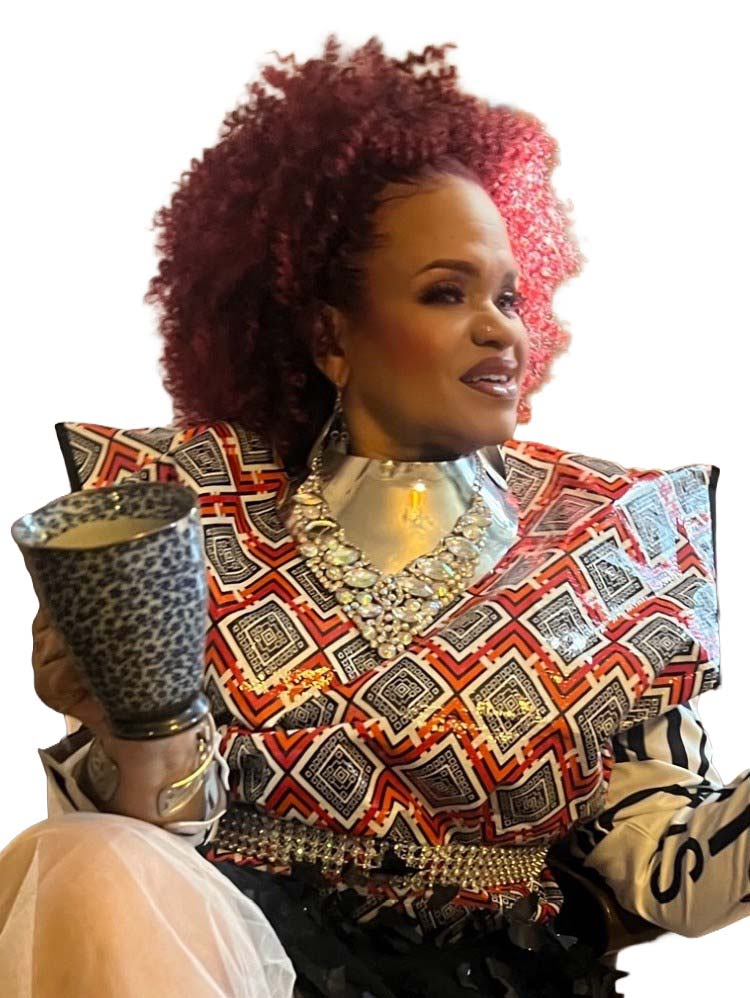
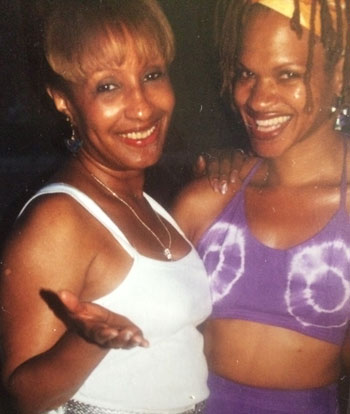
Sister, Who Do You Think You Are? Gha’il Rhodes-Benjamin: “Still Listening”

A Salute to Sisters Helping Sisters

Part III of IV – Guest Editor: Brenda Brunson-Bey, Founder & CEO, Tribal Truths

by Gha’il Rhodes Benjamin
(spokenword performance artist)

I was always listening. As far back as I can remember, I was paying attention. I listened when my father took the mic on WJLB radio every Sunday morning, and later on during church service as he made the weekly announcements .His voice was full of confidence and authority, each phrase clear and distinct.
However, it was the women, many of them, that pushed me to the stage.


Three of the names I won’t forget are Magnolia Taylor, Floretta Harvey and Daisy Cole. These women frame my childhood memories with precision. They were always present, guiding me toward the microphone and instructing me to make those announcements when my father was hosting other events mostly on the East side of Detroit. These Sunday morning hat wearing women recognized my calling early on.

I listened to their instructions, gradually becoming my father’s understudy. They helped me to honor my gift of public speaking. I was never scared. It came naturally; and was much more than memorizing a Christmas or Easter Speech. It was more like empowering the people and giving them hope; while discovering the power in my own voice.


I also remember, so clearly, my oldest sister Marguerite standing at the top of the stairs when I came home from school with stomach cramps. She hugged me as if I had passed a test. She told me I was becoming a young lady and taught me the importance of cleanliness, pride and style.

She had the remarkable ability to move into a new home, paint it and decorate it and by nightfall it would be ready for a Good Housekeeping photo shoot. I carry that same sense of color and spacial definition with me, always aware of how each scene or backdrop unfolds visually. I’m often imagining as I enter or exit the stage that my sister who transitioned during Covid, is my angel of encouragement cheering me on from the wings.

Marguerite Rhodes McIntosh, Gha’il’s mother


It was Momma who washed, pressed and curled our thick kinky hair and made our clothes on her Singer sewing machine. On any random day she would line us up and give us a lesson on posture and etiquette. She would place a book on our heads and make us walk across the room without letting the book fall.

One day while Momma was at the stove cooking ..I found my words and my courage and told her that a member of our community was touching me inappropriately…she listened in the silence…I don’t know what action Momma took, but it never happened again.


I barely listened when my cousin Launa chased me down and scolded me when I told her I needed a break from school. She pushed harder and asked me what my plan of action was. I didn’t have one. Thankfully I gave in and followed her wisdom, graduating from undergrad and grad school. Her dream of me being an educated woman was fulfilled. She was prouder of me than I was of myself as I walked across to receive my degree at both graduation ceremonies.


I had seen her lots of times walking or driving around Brooklyn. She was beautiful, confident with a smooth low cut. Her clear skin and strong cheek bones proudly exposed her truth. I listened to every single word as Brenda Brunson Bey the creative force of Tribal Truths Fashions spoke to me. Her language was tribal and poetic. She told me I was an artist. I echoed her affirmation.
“I am an artist”


It was the words of these women, the hands of these women, the wisdom and artistry of these conscious, purposeful women that nudged and molded me into the woman that I am today. Every stage I stand on is because they saw the vision long before I did.

What will African-American Leaders do when South Africa & Israel Differ?

0

By Kazembe Batts
IG: @kazbatts

Relations between the United States, South Africa, and Israel are complicated. The current Trump administration has overtly frozen and downgraded relations with Africa’s most industrialized nation, South Africa. During a May 21 meeting in the White House, President Donald Trump attempted to embarrass South African President Cyril Ramaphosa by raising unsubstantiated claims of “white genocide” and showing what critics described as a misleading video of a funeral car caravan.

Trump also criticized South African legislator Julius Malema for using the historic liberation slogan “kill the Boer.” At the same time, Israeli Prime Minister Benjamin Netanyahu has visited the White House at least six times since Trump returned to the presidency. Under Trump, the United States has moved in lockstep with Israel in its confrontation with Iran—an action Netanyahu has urged the United States to take for decades.


Meanwhile, diplomatic relations between South Africa and Israel have deteriorated sharply. South Africa successfully brought a case against Israel at the International Court of Justice (ICJ), accusing it of genocide against Palestinians. The ICJ ruled that the allegations were “plausible,” a decision that deepened the diplomatic rift between the two countries.

Since Nelson Mandela walked out of prison in 1990, most American presidents—George H.W. Bush, Bill Clinton, George W. Bush, Barack Obama, and Joe Biden—have acknowledged the historic struggle against apartheid and maintained generally supportive relations with the ANC-led government in South Africa. Trump, however, has taken a markedly different approach.


The MAGA dominated administration demanded that the South African ambassador to the United States Ebrahim Rasool leave his post because he spoke up for African sovereignty and then appointed L. Brent Bozell III as the U.S. ambassador to South Africa.

Bozell quickly echoed Trump’s controversial views about conditions in South Africa and was later rebuked by South African Foreign Minister Ronald Lamola, who stated: “Broad-based Black Economic Empowerment is not racism, as regrettably insinuated by the ambassador.” Trump has also cut bilateral aid to South Africa, affecting health and nutrition initiatives.

At the same time, his administration has prioritized immigration pathways for white South Africans, even chartering planes to bring some migrants to Virginia. South Africa’s foreign policy has also contributed to tensions with Washington.

Since the end of apartheid, South Africa has aligned itself with the Global South and maintained diplomatic and economic relations with countries such as Russia, Iran, and China. Washington often views these ties as contrary to Western strategic interests, while South Africa insists that they reflect its sovereign right to pursue an independent foreign policy.


Economically, South Africa benefits from the African Growth and Opportunity Act (AGOA), particularly in the automobile sector. Although Trump reluctantly extended AGOA last year, his administration has hinted that it could be revoked to pressure South African political leaders. In contrast, Israel remains firmly embedded in the United States’ strategic framework.

For decades it has been the largest recipient of American foreign aid. Pro-Israel organizations such as the American Israel Public Affairs Committee (AIPAC) and the Anti-Defamation League (ADL) have successfully lobbied to maintain this assistance and to reinforce Israel’s influence in U.S. politics and global affairs. As a result, the contrast is striking.

The United States under Trump is openly aggravated with South Africa and increasingly out of sync with its leadership. Israel, on the other hand, continues to enjoy extraordinary support—often described by critics as being treated almost like a 51st state by successive American administrations.


The question then becomes: what is the status of South Africa–Israel relations? The answer is that the relationship is severely strained. Since South Africa filed its ICJ case in 2023 and the court ruled that the allegations of genocide against Palestinians were plausible, bilateral ties have deteriorated sharply. Israel denies the allegations. Adding to the intrigue, three planeloads of Palestinians recently arrived in South Africa without prior public notice. Observers have questioned whether individuals from the Occupied West Bank or Gaza could have traveled without Israeli approval.

Many South African leaders and activists have drawn parallels between the treatment of Palestinians and the treatment of Black South Africans under apartheid. Israel strongly rejects this comparison. Diplomatic tensions escalated further when Israeli chargé d’affaires Ariel Seidman was declared persona non grata by South Africa and asked to leave the country for allegedly abusing diplomatic privileges. Israel retaliated by expelling South Africa’s ambassador to Palestine, Shaun Edward Byneveldt.


Within the United States, these developments raise complicated questions—particularly for Black America. Historically, African Americans played a crucial role in the global anti-apartheid movement. When Nelson Mandela visited the United States after his release from prison, he thanked the community at Boys and Girls High School and at City College on 125th Street in Harlem before beginning his national tour.

Recently, after his tense White House meeting with Trump, President Ramaphosa traveled to Chicago to pay tribute at the funeral of Rev. Jesse Jackson. At the podium he reminded attendees that Jackson not only ran for president but had also traveled to South Africa shortly after Black Consciousness leader Steve Biko was murdered by apartheid police.

For decades, Black America has stood firmly with South Africa and its people. Today, however, the geopolitical landscape is more complicated. Several influential U.S. political leaders—Hakeem Jeffries in the House of Representatives, Chuck Schumer in the Senate, and Yvette Clarke in the Congressional Black Caucus—represent Brooklyn constituencies.


When South Africa and Israel pursue conflicting geopolitical agendas, what positions will Black American leadership take? Will they continue to support South Africa and push back against Trump administration policies? Difficult choices lie ahead—choices that will shape the future of Africa’s most industrialized nation and determine how Black America continues its long tradition of engagement with South Africa.

No Mets-ing Around: Mets Reload for War

0

By Eddie Castro
With the recent change in daylight savings and the Brooklyn temperature flirting with 70-degree weather, this is just a sign that the 2026 baseball season is officially near. If the 2026 World Baseball Classic is any indication of what we can expect for the upcoming Major League season, all Baseball fans are in for quite the treat. One of the team’s that is expected to be in the middle of it all will be the New York Mets.

During the off-season, the Mets made key additions to the team in hopes of becoming a serious playoff contender this year following a disappointing 2025 campaign. It was clear this off-season General Manager David Stearns’ approach to free agency was to make the necessary additions to avoid those failed high-leverage situations New York failed to capitalize on in the second half last year. What Stearns was able to do was improve the roster by getting upgrades both athletically and defensively.


In the infield, the Mets traded Brandon Nimmo to the Texas Rangers in exchange for second basemen Marcus Semien. Although Nimmo was a fan favorite and the longest tenured Met at the time of the trade, bringing in Semien improves their defense tremendously despite his offensive numbers going down the past three years. The moves also provide the team with financial flexibility.

Nimmo was owed $101.5 million over the next five seasons. The Mets also signed shortstop Bo Bichette, Center Fielder Luis Robert Jr. And Jorge Polanco to solidify their infield/outfield upgrades.

As far as pitching goes, the team currently has six starting pitchers on the roster lead by Freddy Peralta whom the team acquired via trade with the Milwaukee Brewers back in January.

Kodai Senga, Nolan McLean, Sean Manaea, Clay Holmes, and David Peterson round up the potential starting pitching for the Mets for 2026. It is unknown whether the Mets will go with a rare six-man pitching rotation to begin the season, however, you can pretty much pencil in Peralta as the team’s Opening Day starter next Thursday against the Pittsburgh Pirates. Bullpen upgrades were also made lead by former Yankees Devin Williams and Luke Weaver.


With the flurry of moves the Mets have made, the team is poised to compete and contend in 2026, however, it is important to point out they are in one of the most competitive, if not the most competitive divisions in all of baseball (National League East). The Mets now have a balanced offense minus Pete Alonso who left via free agency and signed with the Baltimore Orioles.

The offense will be led by Super Star Juan Soto. The expectations are once again high for this team. The dedication to improve was present with the free agent moves. Now, for the Mets is all about finding their identity as a team and bringing the excitement back to Citi Field. We are officially less than a week away from Opening Day.


Sports Notes: (Baseball) We are less than a week from Opening Day for the Yankees and Mets. (Basketball) The Brooklyn Nets will try to salvage the fourth and last regular season meeting with their cross-town rival the New York Knicks. The two teams will play at the Barclays Center tomorrow night.

Champions on the Ground, Anchors of the Culture

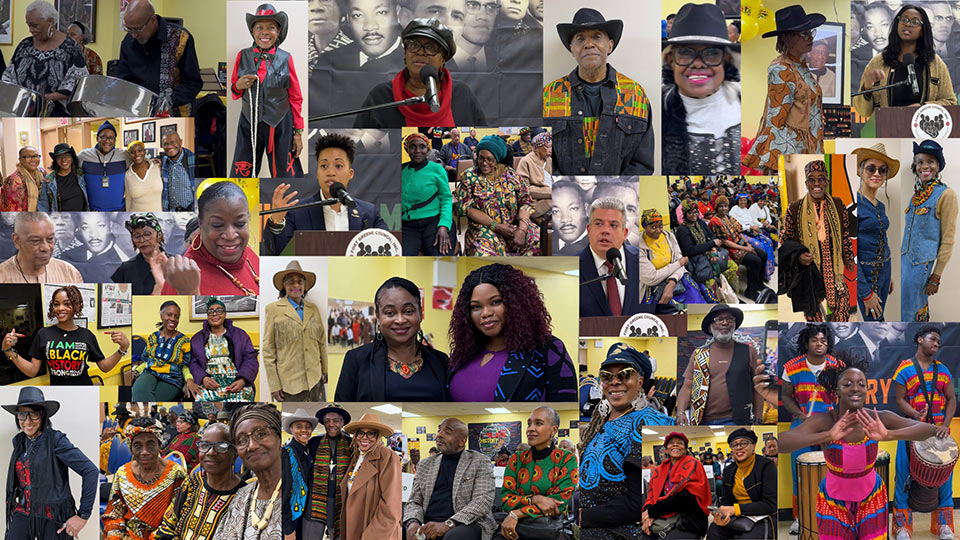
“Women’s History Month is not only about the well-known names in history books. It is also about the everyday leaders, mothers, caregivers, educators, advocates, community organizers, and elders whose dedication strengthens neighborhoods and inspires future generations. These women serve as cultural anchors, storytellers, and protectors of traditions, ensuring that history, resilience, and wisdom are passed down from one generation to the next. In Brooklyn and throughout New York City, Black and Brown women have played a particularly vital role in building strong, vibrant communities. They have led grassroots movements, created safe spaces for youth and older adults, and championed programs that address the real needs of families; from food security and education to healthcare and social support.” Above, Fort Greene Senior Citizens Council, Inc., celebrates Black History and Women’s History months.