
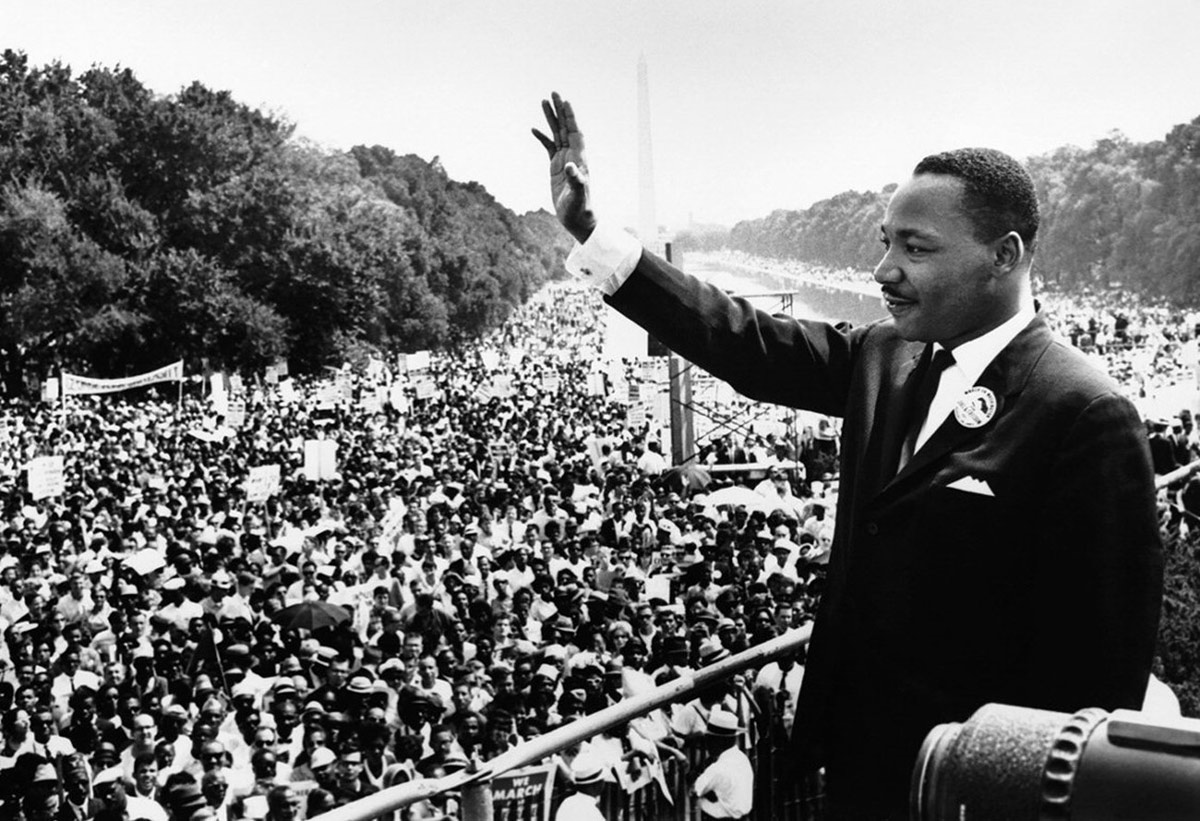

Each year, the nation and the world pause to remember the assassination of Rev. Dr. Martin Luther King, Jr. and to reflect on the impact of his teachings on true peace, the dignity of all people, and nonviolence – a philosophy that continues to have a profound impact on the global landscape.
Dr. King provided critical leadership to facilitate the passing of foundational legislation that helped to address division in this nation—including the Civil Rights Act of 1964, the Voting Rights Act of 1965, and the Fair Housing Act of 1968.
The King Center, which was founded by Mrs. Coretta Scott King, stands as the official living memorial to the enduring influence of her husband’s life and legacy. It is a legacy that disinformation connected to unjust government surveillance cannot corrupt.
Dr. King’s assassination was investigated by the FBI in 1968, by the House Select Committee on Assassinations from 1976 – 1978, by the Department of Justice in the 1990s, and again with a wrongful death trial, brought by the King Family, in 1999.
The Memphis civil court’s unanimous verdict in 1999 found that James Earl Ray was not that shooter. The verdict also validated the family’s belief that Loyd Jowers, a Memphis businessman, along with other parties, including various government agencies, conspired to murder Dr. King and frame Ray.
The wrongful death trial verdict begs the question, ‘Why would these entities conspire to murder Dr. King?’ Ensuring economic justice and racial justice, particularly in the areas of employment, livable wages, and voting rights, was the work in which Dr. King was engaged when then FBI Deputy Director, William Sullivan, described Dr. King as “the most dangerous and effective Negro in the country.”
Deputy Director Sullivan wrote these words in a memo dated September 25, 1963, a month after the March on Washington for Jobs and Freedom, during which Dr. King delivered his prolific ‘I Have a Dream’ speech.
Government discontent with and malignment of Dr. King deepened with his public opposition to the Vietnam War, as most profoundly expressed in his speech, ‘Beyond Vietnam: A Time to Break Silence.’ The speech was delivered at Riverside Church in New York City on April 4, 1967, exactly one year before Dr. King was assassinated and included his rebuke of the United States, calling the nation “the greatest purveyor of violence in the world.”
And so, as we prepare for a heightened focus on Dr. King, we underscore the work central to Dr. King’s dream: engaging Kingian Nonviolence, which The King Center has rebranded as Nonviolence365, for the strategic eradication of the Triple Evils of racism, poverty, and militarism.
We invite the global citizenry to join us in working to rid our “World House” of these interconnected, debilitating conundrums. This righteous work should be our collective response to renewed attention on the assassination of a great purveyor of true peace.
The King Center believes it is unfortunate and ill-timed, given the myriad of pressing issues and injustices affecting the United States and the global society, to distract from the critical needs and traumatic outcomes resulting from these issues and injustices.
Further, we cannot afford to be diverted from how we each can contribute to changing the trajectory of our “World House.” If we are not careful, that is what the release of the FBI files could precipitate for many.
As Dr. Bernice A. King, youngest child of Dr. and Mrs. King and CEO of The King Center, stated upon the conclusion of the 1999 trial, “The reality is that it is not who killed Martin Luther King, Jr…but what killed Martin Luther King, Jr. Because whenever we get to what killed Martin Luther King, Jr., then we will deal with the various injustices that we face as a nation and ultimately as a nation that leads this world.”