

By Kazembe Batts
IG: @kazbatts
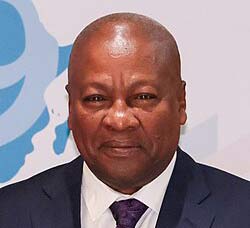
Ghanian President John Dramini Mahama visited the United States last week. While in NYC he continued his countries vanguard role in encouraging Pan-Africanism and its current leadership in fighting for reparations for African people. He validated the long-time organizing of pan-Africanist by endorsing a historic anti-slavery resolution.
Also on that same recent March 24th Day, Ghana signed a new Security and Defense Partnership with the European Union marks a major strategic shift, making Ghana the first African country to enter this framework.
The “Declaration of the Trafficking od Enslaved Africans and Racialized Chattel Enslavement of Africans as the Gravest Crime Against Humanity” General Assembly resolution (A/80/L.48), led by President Mahama, was front and center last week on the East Side of Manhattan.
Veteran NYC based, human rights leaders Prof. James Smalls, Queen Mother Deloris Blakely, Dr. Ron Daniels, and others were among the attendees who witnessed and were acknowledged by presenter Rev. Al Sharpton when he shared an African American perspective during the March 24th “anti-slavery reparations resolution” hearings inside the United Nations Headquarters.
President Mahama stated “We come together in solemn solidarity to affirm truth and pursue a root to healing and reparative justice. The adoption of this resolution serves as a safeguard against forgetting.”
The formal resolution passed by most of the world, including 123 countries, recognizes the transatlantic trafficking and chattel enslavement of Africans as “the gravest crime against humanity.” It calls for reparatory justice. Described as: 1) Full and formal apologies, 2) Restitution of stolen cultural artifacts, 3) Compensation and rehabilitation, 4) Structural reforms to address systemic racism, 5) Guarantees of non repetition and emphasizes the enduring global inequalities rooted in slavery’s legacy. Only three countries, the United States, Argentina and Israel voted “No” on the resolution.
The USA’s formal position is “to reject the notion that modern-day nations should pay compensation for historical actions that were not illegal under international law when they occurred. Does the United Nations have the capacity to implement the resolution? Historically, due to the structure of the Security Council, where five-member non-African nations possess veto authority, the implementation of African priorities and commitments has remained unfulfilled. Will the resolution be purely a symbolic victory?
Meanwhile, although not prominently mentioned in the American news media, an understanding that could immediately effect Africa was codified. On the very same day the anti-slavery resolution was debated Ghana signed a defense treaty with the European Union. The new Security and Defense Partnership with the European Union marks a major strategic shift.
The West African state becomes the first African nation to join the EU’s global security partnership network, which includes the UK, Canada, Norway and Japan.
The agreement deepens cooperation on counter terrorism, cybersecurity, maritime security, and crisis response. The United States is known to have military assets stationed throughout Africa, including Ghana.
Some see Ghana’s leaning on “the West” for assistance as a practical necessity to maintain security of the state. Others, acknowledging history and current global geopolitical situation, see the agreement as entrenching a neo-colonial relationship between Africa and Europe that runs counter to true independence and sovereignty.
A step back from the promise of Ghana’s founding President Kwame Nkrumah’s vision. Ghana borders Burkina Faso, one of the three nations that make up the Alliance of Sahel States (AES).
Ghana is a member of the Economic Community of West African States (ECOWAS) which threatened to start a war with the AES after the AES withdrew from ECOWAS on January 29, 2025. The three West African allied states foreign relations have gone the opposite way with the expulsion of European military forces, especially France. This has inspired African people, especially youth, worldwide.
Initiating and moving within the global stage are responsibilities of African national leaders. Can words, meetings, and resolutions lead to a better quality of life for the masses of people. Are demanding reparations and resources as compensation for undeniable historic racial oppression, then agreeing to allow the outgrowth of that historic racial oppression to have a major say in how your nation maintains security a compatible strategy? Maybe or maybe not.
For sure, Black people need reparations and security to build a better future society. Can global Black leadership be strategic and get what we need? Are African leaders confronting the right issues and moving the masses of people forward? Demanding choices and hard decisions are needed in these fast-changing times.