
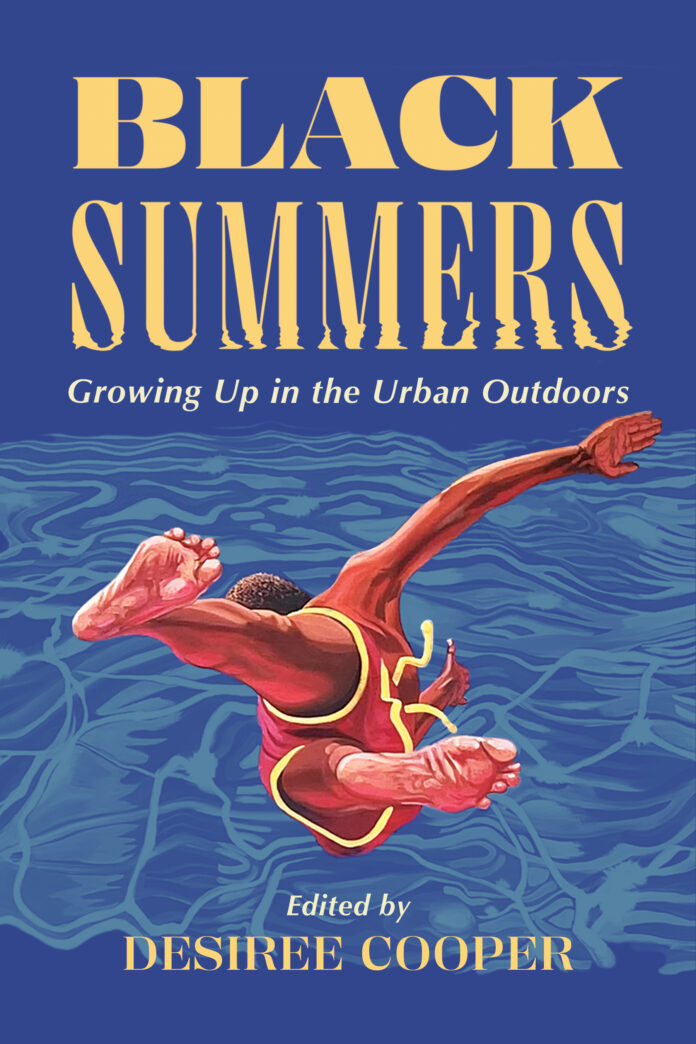

“Black Summers also became a powerful, tender, and hopeful collection about the personal and racial traumas of Black childhood.” – Desiree Cooper, Black Summers
By Dr. Brenda M. Greene
When Desiree Cooper, a Pulitzer Prize-nominated journalist, first conceived of Black Summers: Growing Up in the Urban Outdoors (Wayne State University Press, 2026), she imagined that it would be a collection of prose and poems that captured the fabric of the city and the stories of Detroit’s families and communities.
What emerged were stories and poems from writers that spoke to the experiences of Black people in Detroit as well as in urban cities throughout the nation. The recurring theme was the resilience of Black people whose lives reflected the ways in which their childhood and teen years were framed by their adjustments and experiences to racism, white flight, and the underfunding of services in urban areas. Cooper opens the collection with “We Water,” a prose poem that lays the foundation for the narratives of people whose lives are intertwined with water.
We have broken the waters ever since, raising our dark generation in Detroit’s rich Black Bottom . . . Over troubled water, we built our bridges . . . We had wade-the-water Sundays. We sang of still water. We didn’t wait until our water ran dry. . . We have never been afraid of strong currents. Long before there were condos and gates, we were living on canals that fed into those straits . . . In Detroit, we water.
The reality faced by many Blacks in urban areas is conveyed in “Feral Fields’ by Esperanza Cintrón. The speaker vividly describes the decay of the neighborhood when federal funds are withdrawn.
So the city ran out of money
laid off the folks who cut the grass
and wielded shears, but the wrecking balls
kept swinging, razing neighborhoods
as federal funds purged the land
fading homes to rubble . . .
Detroit was also the home of one of the largest and most fatal riots in U.S. history. Bridgett Davis in “Backyard Balm,” describes being afraid at home when riots erupted in 1967.
Under the instructions of her parents, she did not leave the house. She recounts how the realization that the world could be a hostile place motivated her to go within herself to find peace and to allow her creative impulses to emerge. During her childhood, her family lost their home because of two fires, but her mother started a numbers-running business and was able to buy a house.
Black youth in Detroit needed outlets to motivate them, and in “Where the Run At” by MARS, Marshall underscores the role that sports played in the lives of Black youth. MARS describes how the reality of what it would take to become a star player hit her while she was in middle school. She reminisces:
From the high of winning games to the grueling practices after we lost, Coach instilled within our team messages about dedication. Beyond the high of playing, I also found a sense of belonging. Girls who started as strangers became my friends by the end of the season.
Biking was another physical activity engaged in by many youth across the city. Cassandra Spratting’s “Biking Detroit” highlights the freedom and history lessons that biking gave her. She recounts: “I never could have imagined how profoundly bike riding, once widely viewed as a White pastime, would connect me to my Black past.” Spratting took an historic eight-day bike tour from Buffalo, New York, to Owen Sound, Ontario, a place that was part of the Underground Railroad.
She also made 55-mile bike journeys from Selma to Montgomery to celebrate the 50th and 55th anniversaries of the historic march for voting rights. Biking became a way for her to create community and to form deep friendships as well as multi-racial coalitions around the history of her people.
And of course, Detroit is the epicenter of Black music, jazz, Motown, gospel, R & B, and hip hop. Kahn Santori Davison, a hip hop “kid,” describes his experience in being introduced to another form of Black music. In “Afro Nation: The Summer Experience I Didn’t Know I Needed,” Davison recounts how he felt guilty and ignorant when the Afro Nation Festival came to Detroit.
When he attended the festival and was asked to photograph it, he became aware of Afrobeats made popular by the West African performer, Fela Kuti. In Davidson’s words, “I had been celebrating hip-hop all year while Afrobeats was taking over the world.”
Black Summers is a testament to the power of storytelling. Stories preserve and rekindle memories, feed our spirit, and remind us of how we persist in the face of trauma, grief, illness, and tragedy. Cooper’s Black Summers reminds us that we are not alone and, in the words of Desiree Cooper, is “a powerful, tender, and hopeful collection about the personal and racial traumas of Black childhood.”
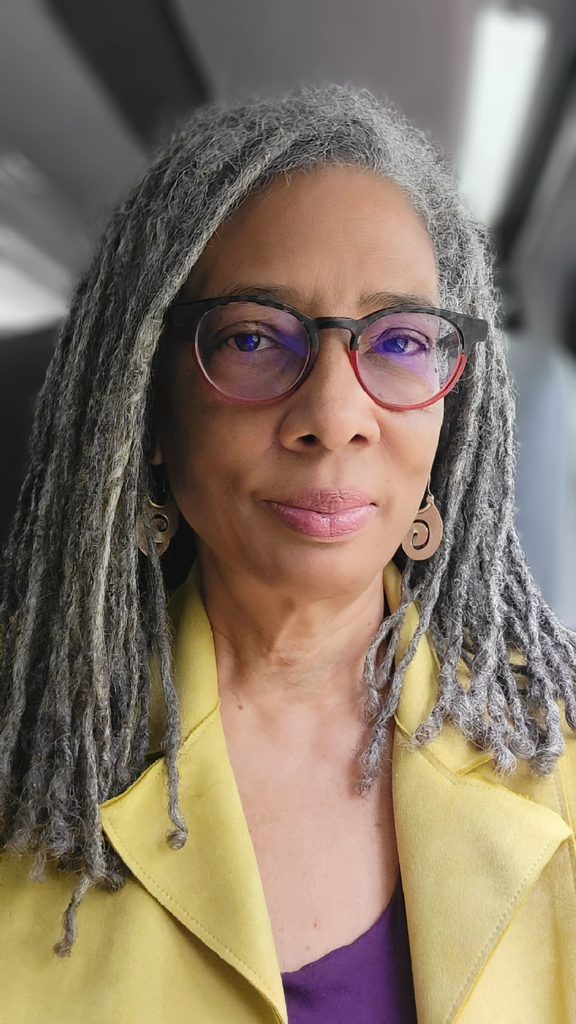
Desiree Cooper is a Prize-nominated journalist and the author of Nothing Special and Know the Mother. BIO — Desiree Cooper
Dr. Brenda M. Greene is an Author, Professor Emerita, and Founder and Executive Director Emerita of the Center for Black Literature at Medgar Evers College, CUNY. For more information, visit https://www.drbrendamgreene.com