

By Jeffery Kazembe Batts
IG: @kazbatts
We know that Black history is world history and it is timeless, but we can still respect the time designated by Dr. Carter G. Woodson as “Negro History Week” back in February 1926 and then officially expanded by President Gerald R. Ford into “Black History Month” in February 1976.
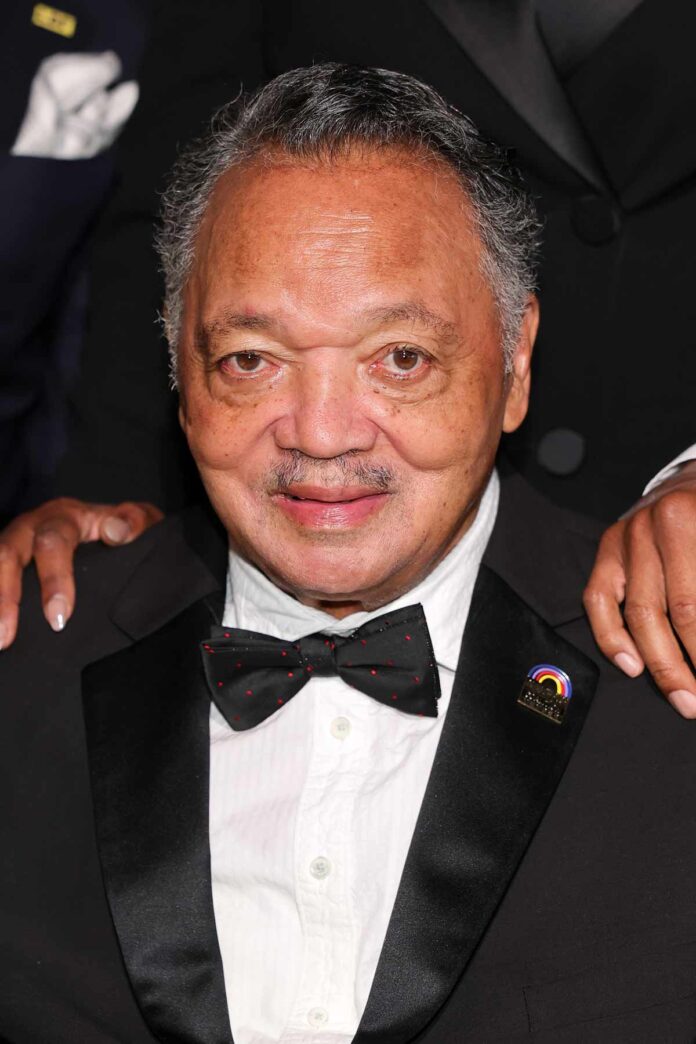
One hundred years after the founding we remember Black people’s glorious history of creating art, culture, and science. New ancestor Rev. Jesse Jackson’s life includes working with many historical personalities like the great Dr. Martin Luther King Jr. and Nelson Mandela. But when it comes to presidential ambitions then Bed-Stuy made Jesse.
A provocative statement, maybe. Chicago, Jesse’s long-time base probably would object to this claim, but follow the connections. During his two Democratic primaries Central Brooklyn voters flooded the polling sites helping Jesse to win the city, although not the state.
Brooklyn delivered not only votes but also advice, logistics, money, resources and experience to assist in spreading the growing chants of “Run Jesse Run” nationwide.
Brooklynites like elected officials Albert Vann, Annette Robinson, Velmanette Montgomery, Roger Greene, Ed Towns, and activists Jitu Weusi, Rev. Herbert Daughtry, Sonny Carson rallied their resources to boost the Jesse for President campaign while the Harlem established political leadership at first supported Walter Mondale and did not back the radical, insurgent Jackson campaign.
Bed-Stuy Restoration Plaza, House of the Lord Church, Bethany Baptist Church are some of the sites where enthusiastic crowds of old women, young men and all, gathered to see and hear the uplifting message of “I am somebody” and “Now is the Time”.
During the summers of 1984 & 1988 Rev. Jackson’s spirit could be felt as you transversed a neighborhood filled with campaign posters and local leaders serious about making change. Bed-Stuy was not new to this energy. Ten years earlier Shirly Chisolm, the first Black woman in Congress, representing Bed-Stuy, ran the first major presidential campaign for president of the United States by a Black person.
When future candidate Rev. Jackson, with his large Afro, was the featured speaker at the 1972 Black Political Convention (BPC) in Gary, Indiana, Congressperson Shirley Chisolm was upping the ante by running for president. Nonetheless she was not invited to speak at the BPC because of sexism and political in-fighting.
Nonetheless back in Brooklyn people were excited because the “Unbossed” Ms. Chisolm was encouraging community consciousness and developing structures that others would build upon later.
With the election of Assemblyman Al Vann, Senator Annette Robinson, Congresspersons Ed Towns, Roget Greene, Major Owens within the Coalition of Community Empowerment, Central Brooklyn and Bed-Stuy in particular, had a formidable and capable operation hat was ready to support a more robust Jesse for President campaign.
Al Vann became State Campaign Director for Jesse’s campaign. Rev. Herbert Daughtry, travelled with Rev. Jackson when he went to Syria in January 1984 to successfully negotiate the release of U.S. Navy Lieutenant Robert O. Goodman Jr.
NYC is America’s largest city. In the 1980’s Central Brooklyn was the largest continuous community of Black people in America. Back then you could walk from East New York all the way to Downtown Brooklyn without missing the presence of Black people in what today are gentrified neighborhoods.
Bed-Stuy in the 80’s hosted the African Street Festival at Boys & Girls H.S, the revolutionary Slave Theater, a thriving Restoration Plaza business and event center, Spike Lee & Mike Tyson loudly representing the hood, Majid Al-Taqa & Concord Baptist Church giving spiritual blessings, people relaxing at Von King Park, or strolling through the busy Nostrand & Fulton intersection.
Bed-Stuy was uniquely situated to assist a Black man vying for the American presidency. Black people were the strongest constituency in Jesse’s Rainbow Coalition and Bed-Stuy was the strongest community delivering votes and organizing capacity. Jesse Jackson never won the presidency, but he changed the rules.
No more “winner take all” after Jesse’s campaign. Proportional representation for delegate allocation is part of Jesse’s legacy. This new formula allowed for Barack Obama to win the democratic party nomination twenty years later in 2008.
Shirley laid a foundation. Al built on it and led Jesse’s campaign. Jesse changed the rules that made it possible for Barack to win the presidency. Jesse walked with Dr. King, met with Yassar Arafat and Fidel Castro, was friendly with Nelson Mandela, led boycotts of corrupt corporations, and much more.
When it comes to his presidential campaigns one can argue that if he had not done well in the NYC primary, his candidacy would have faltered and history would be different. Future mayor David Dinkins was convinced he could win after seeing Rev. Jackson’s vote totals in 1988.
Dinkins did win and become the first Black mayor of NYC in 1989. Sankofa, look back and move forward. Study the past and build the future.