

by Dr. Brenda M. Greene
The persistence and resilience of Africans in America are documented in the novel Barracoon (Amistad, 2018) by Harlem Renaissance writer Zora Neale Hurston and in the film Descendant, directed in 2022 by filmmaker Margaret Brown and produced by Quest love (Ahmir Thompson) and Black Thought (Tariq). Africatown, located north of Mobile, Alabama, was formed in 1860 by a group of formerly enslaved Africans who were part of the last known “Black cargo” brought on the ship Clotilda to Alabama after the trafficking of Africans during the international slave trade was declared illegal in the United States. Africatown is also known as AfricaTown USA and Plateau.
Zora Neale Hurston’s novel Barracoon provides a window into the story of Africatown through the last surviving Black man, Kossala, from the Clotilda. When Hurston decided to conduct a series of interviews with Kossola, also known as Cudjo Lewis, in 1927, she stated that “He is the only man on earth who has in his heart the memory of his African home, the horrors of a slave raid, the Barracoon, the Lenton stories of slavery, and who has sixty-seven years of freedom in a foreign land behind him.” Thus, Cudjo’s story provides a first-hand perspective of the loss, suffering, and inhumanity of slavery and details what it was like for him to gain his freedom and build a town during the period of Reconstruction and amid the Jim Crow south. Hurston was interested in capturing the exact words of Cudjo. She did not want to reinterpret his story; hence the reader witnesses oral language on the page. After conducting the interview, she wrote an introduction describing her research process, detailing different phases of Cudjo’s life and providing the reader with copious notes supporting the story and the personal stories he told her.
Cudjo describes how the formerly enslaved Africans in Africatown wanted to return to Africa after they gained their freedom; however, after realizing that they did not have the funds to return, they decided to build the community of Africatown. They asked for land from Tim Meaher, the Clotilda’s owner. When he refused, they decided to save and purchase their land by using the principles of collective economics and self-determination. Drawing from their African background, they interwove African traditions and rituals into their community. They built and established their schools, church, and businesses and set up a governing system based on a structure similar to those of traditional African towns. Cudjo’s story is an emotional and riveting first-hand account of a man who has strong memories of his life as both free and enslaved.
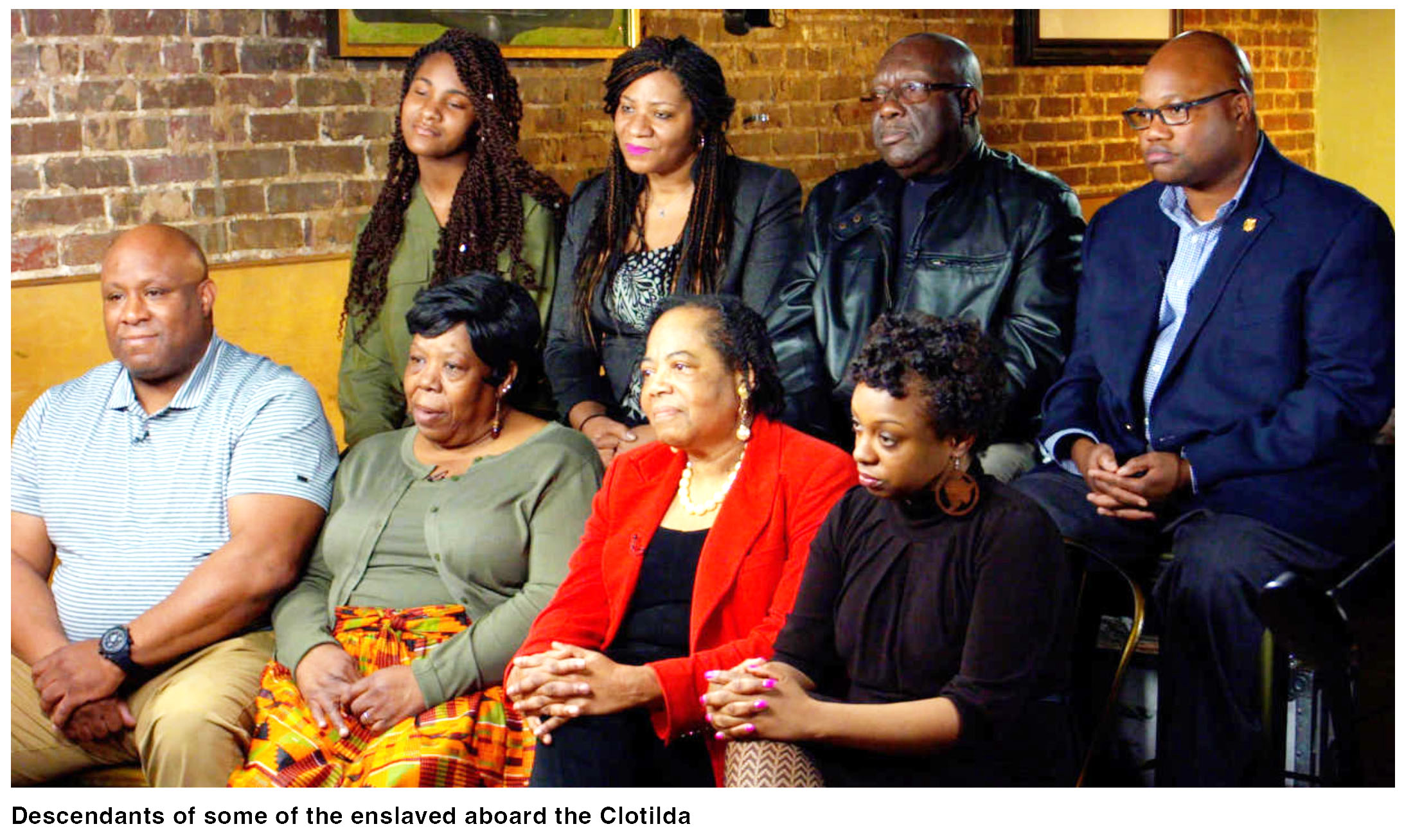
The documentary film Descendant recounts how the survivors of the Clotilda have collectively worked to ensure their survival and the survival of the town they formed. Interviews of the descendants of the Clotilda were conducted over a series of four years before its remains were discovered. In 2019, a National Geographic team detected the remains of the burned ship that brought 110 enslaved men and women from Africa into a river near Mobile, Alabama. The film recounts the discovery and uncovering of the Clotilda and its artifacts. Residents of Africatown now have evidence of their origins. The film corroborates Cudjo’s stories as told to Zora Neale Hurston.
Survivors of the Clotilda never gave up the land. This historical land became a way to ensure they had a voice in Mobile, Alabama. They also believed in listening to the voices of their ancestors, who they viewed as guides and who encouraged them to keep their stories alive. Sustaining and preserving their legacy was a source of pride and validated the early founding and presence of an African American community founded in the south.
After the Meaher family sold their “Black cargo,” they held onto the land through the Civil War and leased it to heavy industrial plants. The descendants of the Clotilda have lived with trauma and faced severe environmental issues due to the town being surrounded by the International Paper Plant and heavy industrial waste. They have survived cancer and safety issues and have attempted to bring a lawsuit against Tim Meaher. The lawsuit was settled with very little compensation for the residents of Africatown.
Slave vessels tell a story, and the story of the Clotilda and residents of Africatown will be sustained through an upcoming exhibition at the African Heritage House in Mobile, Alabama. The exhibition, scheduled to open in July 2023, will detail the story of the enslaved Africans brought to Mobile abroad, the Clotilda. African Heritage House, along with the film Descendant and the book Barracoon, provides a window into the legacy of Africatown.
Dr. Brenda M. Greene is a Professor of English and Founder and Executive Director of the Center for Black Literature at Medgar Evers College, CUNY.