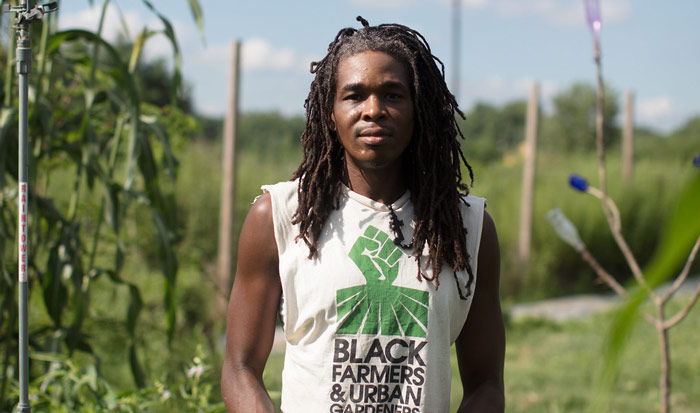
By Brooklyn Botanic Garden Staff
When African people were taken to North America during the slave trade, they brought the knowledge of the food crops and growing traditions of their homes with them. Hundreds of years later, many of those crops and traditions offer an important link to the past.
“African people were able to create an enduring legacy using our food, our crops, and our know-how in powerful ways to sustain us in the lands in which we found ourselves,” according to Christopher Bolden-Newsome.
Okra, purple hull peas, and African rice, for instance, are crops that originated in Africa, where they had been cultivated in nutrient-poor soil, says Bolden Newsome. African people were able to grow these and similar crops in the American South during slavery and later. They also brought agricultural techniques like burning and interplanting of different crops to the plantations where they worked.
Some slaveholders would allow enslaved people to have their own plots, called truck gardens, says Bolden-Newsome. “It was often black women, who after hours of brutal work in the field, were given some time, sometimes on Sunday if you had benevolent slave masters, sometimes at the end of the day, where they could come and tend these truck gardens and thus ensure that the foods that had nourished us would continue to nourish their families in slavery and beyond.”
Bolden-Newsome talked about how traditional African agriculture was adapted in the United States; how he and other Black farmers are preserving these traditions in urban settings, and the wider importance of traditional African American food and culture in She Hid Seeds in Her Hair: The Power of African Ancestral Foods, his keynote address for Making Brooklyn Bloom on Saturday, March 20 and Sunday, March 21.
“One of the most important aspects of the work that we do is cultural connectionFor me that’s why I’m here. Particularly for our young African-American folks who are not informed about some of the tools of cultural resilience — that have allowed their ancestors to survive mentally, psychologically and physically — that were left behind as people assimilated into an urban experience.”
Bolden-Newsome, who also works with Farm School NYC, speaks nationally. He also (says)that farming is an ideal way to help people dealing with trauma. “Being on the land, being in the land, hands in the dirt, that’s a big big piece of the trauma story for us,” he explains. “[With] African-American kids…the first week is spent de-programming people around working outside — that it’s not slavery. Kids will sing spirituals or make jokes about slavery. As a person who comes from that trauma, I recognize that as trauma manifested, peeking through…I’m really blessed to be able to help them think and talk about that.”