Home Blog Page 85

Tywan Anthony:

Brooklyn’s Crusader for Homeownership and Football

By Fern Gillespie
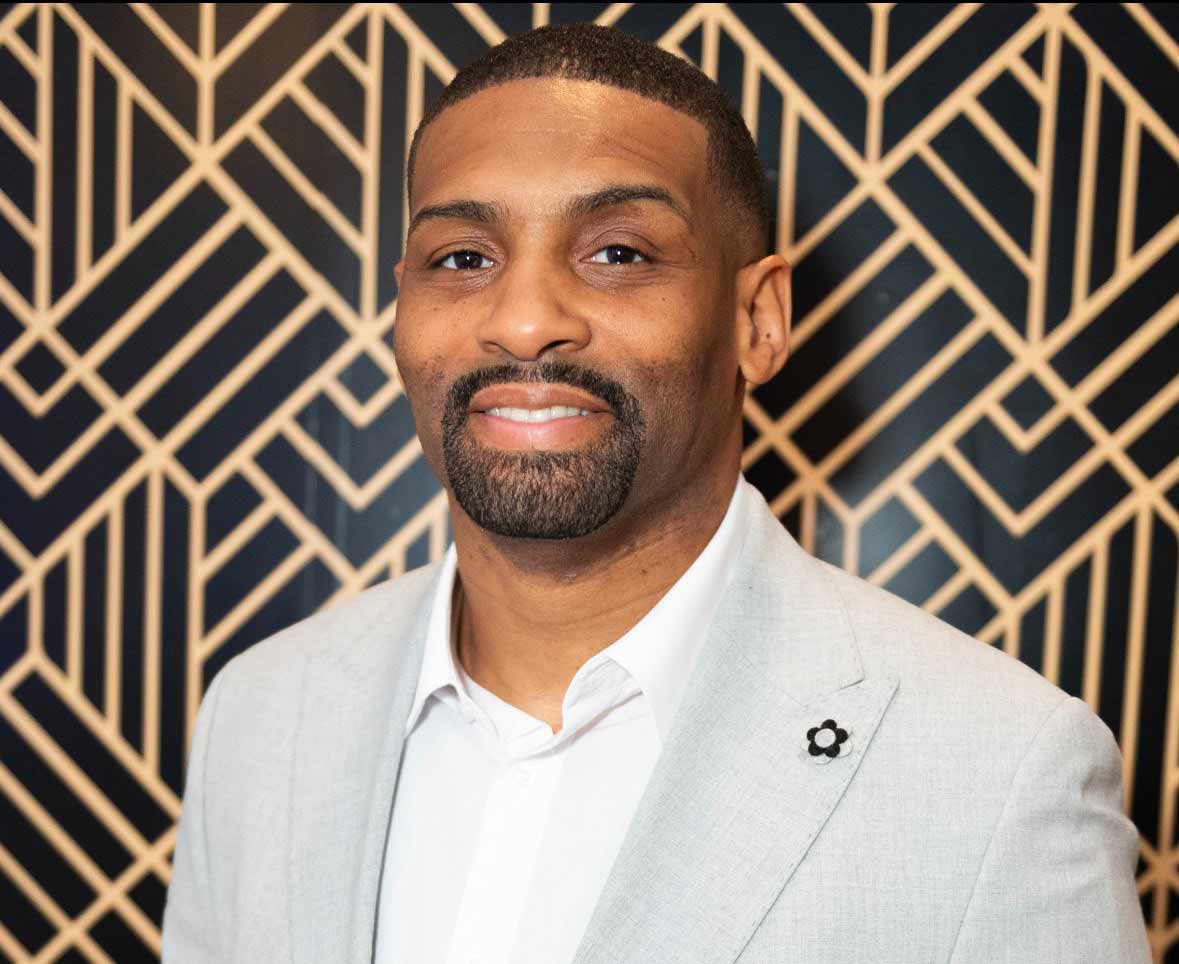
Football and Real Estate have always been intertwined in Tywan Anthony’s life. He balances a longtime career in real estate as Director of Property Management & Real Estate Training at Neighborhood Housing Services of New York City with his passion project as the founder and Executive Director of Brooklyn’s nonprofit football team, the New York Crusaders.

Born and raised in Bed Stuy, he moved to Florida with his family to play high school football as a teen. While at Pittsburg State University in Kansas, majoring in political science and business management on a football scholarship, a friend introduced him to the value of a career in real estate.

For over the last 15 years, as a licensed real estate broker, he’s been a commercial property manager specializing in retail open air shopping centers throughout the Northeast and Midwest; worked in real estate asset management, taught real estate courses at Baruch and Medgar Evers Colleges; operated as a real estate inspector and is also an officer in the Bedford Stuyvesant Real Estate Board. In 2014, he founded the nonprofit New York Crusaders football team.

In addition to sports, it focuses on academics and job training for Black male athletes between 18 and 32. Our Time Press recently spoke with Tywan Anthony, who is married with two small children, about balancing his dual careers in real estate and nonprofit football.

OTP:How do you advise Black homeowners on real estate asset management?
TA:
Your home is your asset. What do we do with this asset? Maintenance is always an issue. It’s the maintenance that will hinder individuals from making the needed repairs. That will cause the home to go into disrepair. If it goes down that rabbit hole, eventually that home will be sold. Apparently, that family can’t afford to maintain that home properly.

So, what I’m looking at is ensuring what plan we can create to manage this asset better to make the needed repairs. In Brooklyn, the housing stock is old. So, we have issues and types that need to be repaired regularly. If you go years without repairing, you could be looking at $20,000 – $15,000 for repairs. Not many of our folks have 15,000 or $20,000 on hand to make the repairs. Financial planning is key. I have a couple of different brackets of where I put my money. Every month I’m putting money aside.

My wife and I do it together for general home repairs and maintenance. We look at a project every year that we want to do. Whether it’s inside repair, roof repair, garage repair or painting. Places like Neighborhood Housing Services of New York City have loans that they give out. Like emergency loans there are programs for roof leaks. There are resources that homeowners can access to make sure these things get done.

OTP: Growing up in Bedford Stuyvesant, were your family homeowners?
TA:
My Grandmother was the first one in her friends’ circle to purchase a house. That house was on Spencer Street and DeKalb in Bed Stuy. My family moved around Brooklyn. The price of the housing stock was a lot less than what it is right now. My grandmother bought her house working at Kings County Hospital with an annual salary of no more than $30,000.

My great aunt was able to buy her property in the 1960s or 1970s for $ 15,000 or $20,000, the same as my grandmother. At one time, my family has six or seven properties all at one time. My family was big on home ownership. Homeowners are vested in what’s happening on their block in their community.

OTP: Is it realistic that Black Brooklyn residents with average incomes can afford to buy a home in the borough?
TA:
It’s still there, but you have to be creative as you approach that process. A good strategy, in terms of being able to buy a home, is buying it with a significant other. Using the power of both your incomes. The good news is that if you have a 401(k) or a job where you can ask for a loan, you can use those funds for a down payment.

OTP: What inspired you to launch a nonprofit organization, New York Crusaders, dedicated to football?
TA:
Football took me through college. It helped me keep focus. For a lot of us, it’s something–whether it’s sports or art or something else–it grounds us and it propels us to be good in other aspects of life. I wanted to reiterate my college football experience. That’s what I try to do with the young athletes that we have on our team.

Some played football in college. Some of them will never go to college. Or experience college football outside of what we do when we play our games at Boys and Girls High School. We have a marching band. We have vendors. We try to create a college football environment. We play teams in the Big East League.

The New York Crusaders are not just about the football. Our organization is also about making better young men. We try to empower our young athletes, economically, academically, and athletically through our program.

TA: Everything that I’ve done, real estate-wise and community-wise, has helped me with my team and vice versa. I served on Community Board 3 for over 10 years. While there, I was the vice chair and chair of the economic development committee. Being involved in development projects and meeting different people helped me get funding for my football team. My business skills help me run my team. It all kind of blends together in an interesting, creative way.  How community, politics, real estate, and my nonprofit football team merge together to create who I am.

I’m a mom. All I cared about at the time was to survive.Well, they left me to die.

The First Black Maternal Health Walk of April 11, 2025 conceived by community leaders and event architects Brooke Durrah and her mother Dr. Valerie Durrah in their Bedford Stuyvesant home a year ago, was officially launched last month at Brooklyn Borough Hall, a site for many firsts.


Among the historic addresses ever delivered in the hall was President Antonio Reynoso’s emotion-infused 2022 unveiling of his bold plan to attack grave disparities in maternal health services and resources for the underserved ( www.brooklynbp.nyc.gov/maternal-health-agenda/). The April event speakers’ stories, like Reynoso’s three years earlier, walked into the hearts of all attendees in the packed hall.

Testimonies delivered by women leaders from all walks of life who endured painful pregnancies, attacks on mental health, and lack of services were similar to those experienced by their constituents and followers, the women they lead.

Our Time Press, in a limited-run series, is presenting the testimonies of Black Maternal Health Walk women leaders. It will end next month with a story on experts’ solutions, also shared at the event. The series continues this week with Brooklyn Democratic County leader and State Assemblywoman Rodneyse Bichotte-Hermelyn sharing her remarkable story of tragedy, self-triage, and eventual triumph. (Bernice Elizabeth Green)

Rodneyse Bichotte-Hermelyn, State Assemblywoman (AD-42), Brooklyn Democratic County Leader

We’ve been hearing statistics about black maternal health care, and the injustices and inequities that cause black maternal loss, affecting far too many. And, you know, we hear these statistics, and they have been the same statistics. The United States, a developing country, is the third-highest country with the highest mortality rate. That’s an issue. Top third in the world? That’s a problem.


We’ve been hearing these statistics: it’s about eight or nine times more likely for a black woman to die than a white woman. What are we doing? How do we make people care? How do we make changes?


Many of you know about my story. In 2016, I went to the top hospital. I was doing everything I could. I was carrying two babies. I lost one in the middle of my journey. When I was having some pre-term issues and my baby was bulging out, the hospital turned me away. They did not want to touch me because of insurance.

They didn’t want me to be liable, so they told me to go home, make things happen, and just call 911. They did not know I was an elected official, and at that moment, I wasn’t thinking about being an elected official. I’m a mom. All I cared about at the time was to survive. Well, they left me to die. I was turned away. I was rushed, then by my friends, to a community safety-net hospital, where they did everything that they could to save my life and my baby. They stitched me up.

They had me upside down. It was a very painful process, both emotionally and physically. I didn’t know what was going on. Unfortunately, my son, Jonah, did not make it. I delivered him pre-term. He died two hours later, and that was that. And you know, I didn’t know what to do. The doctor called me from Colombia the next day after all of this had happened, and I asked, “Why are you calling me? You didn’t care. You pushed me out. Why are you calling?”


For a long time, I lived with this pain. I didn’t go to therapy. I had nowhere else to go, but I thought about an opportunity to help other people’s lives, and that my voice needed to be loud. I didn’t want my late son to die in vain. So, we wrote a bill that took four years in the name of my son, called The Jonah Bichotte Cowan Law, which was a bill that mandates hospitals to take care of women, any woman who is undergoing preterm risk. We can’t turn them away. And it was hard passing that bill for many years. And, in 2020, the bill finally passed. (Applause)


I know that you know, I didn’t want to sue. I wanted to write this law instead. I got admitted to Brooklyn Law School because I felt I was not only going to fight on the floors of Albany, but I would also fight in the courts. I wanted to fight for all the voiceless, all these people who don’t have a safe way or know their whereabouts in the court of law. During my very difficult journey in Law School, I graduated with a B+!


I went to work. I got married. I lost my mom. I was studying. I got pregnant and I had a baby. And yes, in the middle of law school, and then I was interning in the middle of law school, pregnant, gave birth, went back to my internship, a white a white male firm construction, and they had a room for me to lactate that is so I was able to come and breastfeed my son for a year and a half while in law school.


And, you know, I just think about my mom, who unfortunately didn’t get to see Daniel, but her spirit stayed with me, and I always hear her words, “You’re doing this not for you. You’re doing this not for Daniel, but you’re doing this for many!” So, I am happy that God gave me another opportunity in life to live and to give birth, after almost dying to give it. The three-hour blood transfusion was complicated, but I’m here. I’m here standing so that I can march with you. I can move with him, and I can help bring awareness to these issues. I thank Crystal, people like Crystal, who are also mothers and mouthpieces, to share our stories.


And so, I just want to thank Dr. Durrah for letting me stand before everyone. We’re pushing legislation in Albany as it relates to maternal care, as it relates to all the things that we need, like doulas, midwives, birthing centers and all of those things that make a difference. Like understanding when black women say, “I’m in pain,” they are in pain. When they say, “I’m bleeding,” you must address the hemorrhaging. We need people to listen!


We need to upgrade our hospitals so that we have resources that can quickly determine these things that we go through as women, from fibroids to other medical complications, and we also need to understand that we have to fund our safety net, the hospitals. And these hospitals that most of us go to need to incorporate cultural competency so that doctors, especially white doctors, understand when we say, “I need help, I’m in pain”, and that we should not be expected to take on pain and bear it.


So, again, Dr. Durrah, thank you so much. I want to thank all of you. Thank you, Reverend Karen Daughtry, for your prayers, your steadfastness, your strength in the Lord, and your words of God. Thank you all for being here. I look forward to seeing those babies grow. Thank you for bringing your babies. Thank you to the singer earlier, a beautiful violinist. My son wants to be a musician. So, thank you for that. We videotaped that. Thank you for your story. Love you all. (Applause)

The Grandassa Models Celebrate their Mothers

“Mothers are the peace on Earth that make the world go round. The love they give is always of hope and blessings so good and pure.”— from The Spirit of a Woman by E. Ballard-Balewa (aka Ameiye— Original Grandassa Model, 1967)

Ndola Brathwaite Carlest (Grandassa Model Next Generation)
During this Mother’s Day season, I reflect on the strength and grace of my daughter, who has grown up embracing her natural hair in a world that often challenges its beauty. During her middle and high school years, we were living in a suburb of Maryland; a town that was specifically created with diversity in mind. Ironically, diversity didn’t always mean acceptance.

From a young age, my daughter faced teasing—not from those outside our community, but from other African American girls who had already internalized the idea that straight hair was “better.” They mocked her coils, called her hair “unkempt,” and urged her to get a relaxer like them. As her mother, it was heartbreaking. But I had made a promise to myself long before she was born: that she would know her hair, and herself, as beautiful, just as she is.

It was how I was raised, in the midst of the Grandassa collective, with parents who reinforced my beautiful, black heritage. I taught her the language of self-love through weekly wash days; watching movies as I combed, moisturized, twisted, and cornrowed her hair. She usually fell asleep in my lap. When she awoke the next day and saw her reflection in the mirror, she was always pleased with her beautiful natural style.

Together, we explored the legacy of our ancestors, women who wore their afros like crowns and turned defiance into style. Today, she walks confidently, her natural locs bouncing with every step. She now shares her journey with women who were not exposed to the beauty of self-love and cultural pride.

This Mother’s Day, I’m not just proud of the woman she has become—I’m proud of the path she chose, even when it was lonely. Raising a daughter who loves her natural self hasn’t always been easy, but it has been worth every tear, every deep conditioner, and every hard-earned smile. Because in her reflection, I see the future—and it’s beautiful. #blackisbeautifullegacy

Dr. Amber Ann “Nzingha” Lyons (Grandassa Model Next Generation)
As a Black mother of three adult children—two daughters and a son—I carry forward a powerful legacy of strength, courage, and hope even through the most difficult times. I draw inspiration from the Grandassa Models, who challenged the narrow standards of beauty.

I strived to uplift my children by affirming their worth, resilience, and unique identities in a world that too often overlooks us. This has been a cause of mental anguish for many of our young black kings and queens. My goal is to raise awareness and spread the healing love of God all year, although May is mental health awareness month.


Working globally as a mental health and youth advocate within our COPE To HOPE (Youth & Young Adults Mental Health Matters Too) Program deepens this commitment. Through in-person and virtual Check-In events, speaking engagements, interviews, and mentoring, we offer safe spaces where families can share their struggles without stigma.

Whether guiding someone through depression, anxiety, or helping a mother navigate the loss of a child who succumbed to suicide, I see firsthand how healing transforms lives—and ripples outward to strengthen entire communities.


Reminiscing on being a young mother, I am grateful for God in my life and all the life lessons that were taught to me. I am so honored to have my oldest daughter and son work with me to help others.
By intertwining maternal devotion with mental health activism, I aim to reignite the same fire that fueled the Black Is Beautiful Movement and sow seeds of empowerment for future generations.
“Find what Ails you, Seek what Heals you, Forgive what Damages you & Embrace what Builds you!”

Zena Robinson-Wouadjou (Grandassa Model Next Generation)
When I think about what it means to be a mother, I am reminded of the most vulnerable moments of my own journey– the learning curves and the “am I doing this right?” crossroads that every mother faces.

And I am overwhelmed with gratitude, first for the two beautiful human beings who entered my life more than 26 years ago and gave me the honor of becoming their mom; second, for the community of women who have continued to step in and around me to support my growth as a mother when I have needed it most.

If it takes a village to raise a child, it most certainly takes several villages to raise a mom. The Grandassa has been one of those villages for me– a home away from home that I have returned to throughout my life. More than the iconic images of beautiful Afrikan countenances and intricately coiffed hair in photographs that graced the walls of our home and strengthened me as a young woman, the Grandassa were real women– aunts and Godmothers who remained a presence in my life.

When the foundation of self-love and natural beauty that was instilled in me by my own mother was tested in the world, there was always an inspired encounter with a Grandassa. A word of encouragement, an affirmation, and now a circle in which to raise up my own daughter, as she continues the Grandassa Legacy.

Fofie Aboagyewa (Grandassa Model Next Generation)
In celebrating Mother’s Day, I often think of what it means to parent, particularly as a person of African descent in New York City. Identity is a concept that comes to mind because it lays the cultural groundwork for one’s life which directly influences the way we parent. What a person believes about themself will be reflected in the way they behave.

My mother, a Grandassa Model, believes that being a natural woman is most beautiful and she raised her children with the same belief. The Black is Beautiful framework is the basis of parenting as a Grandassa Model because it teaches self love, through setting the standard that natural is beautiful— fostering self acceptance and confidence.

As a Grandassa mother, Black is Beautiful is displayed by reflecting positive images through simple efforts, such as sporting a beautifully styled crown, curating selections by authors of African descent, choosing intentional home decor, music and clothing. The Lifestyle and culture of a Grandassa Mother is specifically attuned to nurturing the Black is beautiful framework. Growing up in the 70s meant our home was decorated with Great Kings and Queens of Africa posters, African masks, statues, or wooden carvings of Black women.

Entertainment was paper dolls of Dorothy Dandridge, Josephine Baker, and the like, the Baby Brother doll, and Golden Legacy comic books, which taught Black history. Early in life, I was exposed to movies and shows that reflected what I saw in the mirror and reinforced the basis of my identity.

Our music sang praises of the Red, Black and Green. Surrounded by the love of our Africanness— this is how a Grandassa Mother raises her children. Black is Beautiful becomes a part of their identity. All of these little things became the foundation of who I am; so, to my Grandassa mother, Nana Baakan, I say “thank you”, for my Black is Beautiful.

Nzingha Gumbs (Grandassa Model Next Generation)
Mmmmmm, Mothers Day… Where do I begin with the tribute to my Grandassa Mum. Most Mother’s Days after Mum passed were emotionally difficult. The day used to feel like torment because we were so close. I would try to ignore it altogether— not going outside, turning off social media— everything to avoid reliving the loss of Mum’s presence.


Now, 25 years after her physical passing, I’m truly grateful for her life. I see her sacrifices through a new lens. When you’re younger, you don’t see your parents as human; you see them as superhuman— untouchable. My mum had a whole life before she came into being a full time mum. She didn’t have to, but she decided to be a hands-on mother.


Mum, Mama Jean, Omma, Umi, Queen Egyptia Jean was the first woman in my life. The blueprint for all that’s good and refined in me, she’s the spirit I pull on when I need to present myself in a refined way.

Even when I want to pop off at all I find offensive, she’s the spirit I pull from my DNA when I give respect and love (although sometimes tough love) unconditionally.
Mum’s interpretation of motherhood was to “walk in light.” This meant having GODLY foresight, unconditional love, and wisdom— the kind that made you think beyond the now, ask critical questions, develop fearlessness against obvious and covert dangers, possess regal dignity in the way we presented ourselves to the world, and show kindness, which shaped my ability to be generous.

She walked gracefully, her ladylike ways teaching me uncommon modern day manners. I watched her be brave and courageous as well. She cultivated and believed in the gifts GOD gave me. And when I focused on my life’s career, she indulged and encouraged me.


A creative artist and writer, teacher, and founder of “The James Baldwin Literacy Center,” I marvel at how she crafted me to move in the world by her example. Was she perfect? No Mum is, but the ones who strive to be excellent even in their imperfections deserve to be recognized for their earnest efforts in my opinion. She was to me what a Grandassa is— a Mum, Sister, Niece, Wife, Friend, Teacher, Lover, Cheerleader, and World Mother to those who needed her help. 


So, as we reflect on motherhood, I salute the woman she was and still is…living in and through me. Thank you Grandassa Queen. Your labors were not in vain. I’m so grateful to you for all you sacrificed to make me a Lady. Through your grace, I know you now more than ever. Bless you for all eternity. And bless all the Mums, Step Mums, Aunts, Nieces, and the women who serve as “World Mums.”

Comptroller DiNapoli Speaks on New York State Finances

By Mary Alice Miller
“Deep uncertainty surrounding tariffs, the economy, and actions in Washington casts a long shadow on this budget,” said New York State Comptroller Thomas D. DiNapoli in response to news that the state budget has been finalized.
DiNapoli cautioned that “Market volatility and declining business and consumer confidence may upend the state’s revenue projections and increase the already sizeable out-year budget gaps.”


“Retirees shouldn’t worry. Our plans are very well funded. In response to the volatility in March and early April, we didn’t make any changes in terms of how we invested. We have a very conservative long-term investment goal,” DiNapoli told Our Time Press in a recent interview. “Our state fund, the last time we did a valuation, we were over 93% funded. New York pension funds are in the top tier nationally.”


New York State tax revenues have been coming in higher than projected. “Part of that is because Wall Street had a very good year for the bonus pool, and the profits are higher than have been projected, but that is for the situation today benefiting from the performance in 2024,” said DiNapoli.


DiNapoli did say that he would have liked to have seen, as part of this year’s state budget, some of the money coming in beyond what was projected to put some of it in a special reserve to deal with possible federal cutbacks.


But New York experiences a lot of foreign trade activity. A Report from the comptroller’s office outlines imports and exports in the New York City area, with Canada, Europe, and East Asia (specifically China) being the state’s biggest trade partners.


DiNapoli sees the impact of a decrease in tourism on upstate New York, not just people coming in for a week to stay in New York from Canada but also people who would usually just come into the U.S. for a day trip to go shopping.


“It’s too soon to see what the numbers are in terms of a real impact of the disruption of tariffs [and] what that means [for] foreign visitors, foreign spending, the cost of imports,” said DiNapoli. “At the end of the day, it really affects consumers. Consumers will not have the supply. [But] it’s not just the empty shelves. They will also have to pay more for these goods and services.”


DiNapoli’s office recently issued a report that analyzed all the federal dollars for specific programs that come to New York City. “A lot of it is housing, social assistance, education. [It gives] a sense about what potentially is in jeopardy,” he said.


For the state, DiNapoli said the most significant hit would be Medicaid. “If the most extreme cuts were to happen, the state’s not going to have the money to fill that hole,” he said. “This is really a concern because, particularly, the most vulnerable New Yorkers – those needing housing assistance, Title 1 funding for students, the Medicaid program, people who need that care – those are the programs that potentially are in the most jeopardy.”
The other issue that is still being debated is the cap on SALT deduction, the state and local tax deduction. “That really hurt New York,” said DiNapoli.


DiNapoli added, “The concern is that they will target blue states like New York on this kind of program and do these cutbacks to fund their tax cuts for wealthier Americans. That, from my point of view, is totally unacceptable.”


The solution is political from DiNapoli’s point of view.
“We are all trying to figure out how to respond to these very hurtful threats to cutbacks. Unfortunately, we don’t have Hakeem Jeffries as Speaker of the House, which we were hoping was going to happen and still think it will happen sometime soon, but it is not there yet. Chuck Schumer is no longer the majority leader. And for now, Trump seems to have a great deal of sway with the House and Senate Republicans,” said DiNapoli.


“The only hope I think we have, especially in New York, is that those handful of Republican members of Congress who will be up for reelection next year from Long Island and Upstate New York, that they will feel the pressure if severe cut backs go through and their constituents get hurt that they will be voted out of office, and because the Republicans have such a slim lead – there are two seats on Long Island and a couple of seats upstate you could flip House of Representatives right in New York,” said DiNapoli, adding, “So if they go too far they could lose there majority just in New York, not counting the other states.”


Regarding innovative responses to potential cuts to federal funding like the RECOURSE Act sponsored by mayoral candidate State Senator Jessica Ramos and Assemblyman Micah Lasher, DiNapoli said, “It’s a bill. It hasn’t been adopted.
My understanding of the bill is that what triggers it would be the federal government implementing cutbacks in defiance of a court order.


DiNapoli explained, “I think the problem is – and I am not a lawyer – but the question is, would the state have standing under the U.S. Constitution where the federal government has supremacy to do something like that. So if they do the cutbacks, we’ll end up in court. [Attorney General] Tish James has already been very effective in bringing suits to stop Trump’s excesses. The state will sue the federal government over cuts. The federal government could sue is if we try to hold taxes back. You could spend a lot of time where lawyers will be working all this out.”


DiNapoli likes a different response.
Recently, Maryland Democratic Congressman Jamie Raskin came to a Republican district covering Patchogue, Long Island, and had a town hall meeting because the Republicans don’t do town hall meetings anymore because everybody comes out and yells at them,” said DiNapoli. “I think it is going to get back to political pressure on a handful of New York Republican members of Congress that are in these marginal districts, to keep the pressure on them to make sure that they soften, if not eliminate, the kind of cutbacks that Trump is talking about.”


In the meantime, DiNapoli said, “We certainly keep looking, reporting, analyzing.
We have nothing in my power directly to stop it, but we are going to keep shining that spotlight on what’s happening.”

Closing Time?

0

By Eddie Castro

As we go to press, the New York Knicks, led by their superstar player Jalen Brunson, were able to take a 3-1 lead in Game 4 at Madison Square Garden, winning in comeback fashion once again by a score of 113-112. Brunson had a team-high 39 points to go along with 12 assists. He was magnificent, scoring 18 of his 39, igniting yet another Knicks double-digit comeback. The team was also able to get some balanced scoring from Mikal Bridges and Karl-Anthony Towns, who each had 23 points, and OG Anunoby made yet again some big baskets, as well as a huge steal in the fourth quarter after scoring just 2 points in the Game 3 loss. It was undoubtedly the most significant victory for the franchise in 25 years. New York now has a commanding 3-1 lead as they head back to Boston.


The Knicks will also likely receive an unfortunate sigh of relief to say the least, as Celtics star Jason Tatum went down clutching what appears to be his right Achilles with 2:58 left to go in the fourth in what was a non-contact injury. Tatum was lighting up Madison Square Garden, dropping a game-high 42 points and knocking down seven threes. It was unfortunate for the Celtics fans as Tatum was seen backstage in a wheelchair with his hands over his face. ESPN bet now has the Knicks as the favorites to win the Eastern Conference.

The Knicks now head to Boston for Game 5 in what will be a hostile environment, but it will be an excellent opportunity for them to close out the reigning defending champion Celtics on their home floor. If Brunson and company can take care of business, it will be the Knicks’ first trip to the Eastern Conference Finals since 2000. Regardless of Boston most likely being without their star player, the team still has great depth within the roster, as their number one scoring option will shift to Jaylen Brown and Derrick White.

The Celtics were 8-2 without Tatum during the regular season. This is a scenario no one expected, as the Knicks came into this current playoff series as heavy underdogs. Now they look to close out the champs in what currently looks like an Eastern Conference finals rematch between the Knicks and the Indiana Pacers, the team that eliminated New York in last year’s postseason. By this time next week, the NBA’s version of the final four should be set. There’s still a lot of great basketball ahead.

SPORTS NOTES: (BASEBALL) An unfortunate injury for the New York Yankees third baseman Oswaldo Cabrera as he injured his left ankle attempting to reach back for home late in the 9th inning in Seattle. Cabrera is just 23 years old but is already one of the most popular Yankees to the fan base and in the clubhouse. Cabrera was stretchered off the field. On behalf of myself and everyone here at Our Time Press, we want to send our deepest prayers to Cabrera and his family. Juan Soto will play his first game at Yankee Stadium since he elected to sign with cross-rival Mets this Friday, as the two teams begin a three-game set in the Bronx.

(Basketball) The Brooklyn Nets’ first pick in this summer’s NBA draft will be pick No.8. The team has four first-round picks this year. Could they possibly make a blockbuster trade with those picks? Stay tuned. The NBA draft will be held on June 25-26 at the Barclay’s Center.
Starting May 22nd, Our Time Press presents Sports Talk with Eddie Castro Live every Thursday at 5 pm. The Call-in # 718-568-7073. Scan the QR Code above for a direct link to Eddie’s LIVE page.