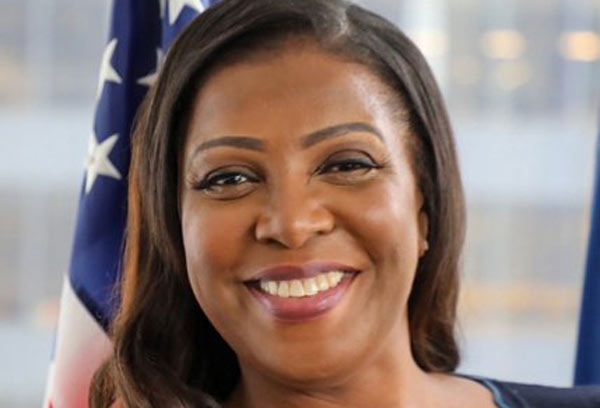
The preliminary injunction issued today by Judge Edgardo Ramos of the United States District Court for the Southern District of New York orders ED to immediately restore states’ access to these critical funds as the case continues.
Judge Ramos’ preliminary injunction bars ED from blocking states’ access to ARPA funding. The preliminary injunction order issued today prevents ED from enforcing a March 28, 2025 letter from Education Secretary Linda McMahon rescinding states’ ability to access their awarded ARPA funding.
“The Trump administration’s illegal decision to cut off essential education funding put some of our most vulnerable students at risk of falling behind in school,” said Attorney General James. “This is a major win for our students and teachers who are counting on this funding to help them succeed. I will continue to defend New York’s schools and ensure they get the resources they need to provide a quality education to everyone.”
Background: To combat the long-term effects of the COVID-19 pandemic, ARPA funded three education-related programs to help support states’ school systems and direct more resources to the most vulnerable students. These three programs – Homeless Children and Youth (HCY), Elementary and Secondary School Emergency Relief (ESSER), and Emergency Assistance to Nonpublic Schools (EANS) – provide essential resources to help schools and students recover from the lasting impacts of the pandemic. In New York, EANS and ESSER funds support critical repairs and improvements to school buildings like the construction of additional classroom space, the purchase of additional library books and playground equipment, and the addition of wheelchair-accessible buses.
Attorney General James and the coalition asserted that ED’s arbitrary and abrupt termination of the states’ access to these funds is causing a massive, unexpected budget gap that will hurt students and teachers by cutting off vital education services.
Joining Attorney General James in filing this lawsuit are the attorneys general of Arizona, California, Delaware, Hawaii, Illinois, Maine, Maryland, Massachusetts, Michigan, Minnesota, New Jersey, New Mexico, Nevada, Oregon, and the District of Columbia, along with the Governor of Pennsylvania.
By Nayaba Arinde Editor-at-Large Brooklynites were front and center in the ongoing support for Burkina Faso. On April 30th, there were two protests in New York. The first, led by Burkinabe nationals, was at Times Square in the morning; that afternoon, the Brooklyn-based December 12th Movement organized a rally outside the Permanent Mission of France to the United Nations.
“It is very critical for African Americans to play an active role in the unification of Black people worldwide,” Kojo Odesanya, a Brooklyn businessman, told Our Time Press. “African Americans’ knowledge, influence, and resources are very critical to counter the imperialists; besides, they know how to deal with the colonizers better than the Africans.”
Organic and Continental homegrown, there is exuberance overload for President Ibrahim Traoré, the Burkinabé military officer who has been the interim President of Burkina Faso since 2022, in the face of hostile western opposition.
April 30th rally in support of Burkina Faso President Ibrahim Traore outside the Permanent Mission of France to the United Nations. Photo: Nayaba Arinde
“The December 12th Movement pulled this together in less than 24 hours,” said activist Pam Afrika. “When the call came out across the African Continent and here in the United States–we heard the call…We will continue to be on the frontline. This is what Black power looks like.”
Burkina Faso-supporting Brooklynites were well represented at the rallies, with folks such as Operation Power head former City Councilman Charles Barron, CEMOTAP – Committee to Eliminate Media Offensive to African People co-founder Dr. James McIntosh, activist and CUNY adjunct professor Dr. Rosemari Mealy, and Dr. Segun Shabaka, Chairman of the International African Arts Festival (IAAF).
“For our people in Brooklyn examples of self-determination are critical for us, because the reality is that we have been landless, and even now with ethnic cleansing of our neighborhoods, we have been homeless, and so example of African people through self determination taking backing their country and their resources is enlightening, and inspiring for us,” December 12th Movement chairman Omowale Clay told Our Time Press.
“Finally, we see a young African brother standing up that’s representing all of us,” rally attendee Dr. Rosemari Mealy told Our Time Press. “He’s taken on imperialism. He’s exposing the hypocrisy of not just France, but this country. We in Brooklyn should care about it because conditions globally impact us.
What’s happening there, on another level, is happening here–repression, the role of the State now. You can’t even go anywhere without showing your ID.” This April, Traore survived yet another one of multiple alleged Western-linked assassination attempts, as he tries to deconstruct de facto French colonial influence and imperialist control. Traore is faced with armed factions creating unrest and organized elite opposition, amidst populist support.
This is as he is developing the nation’s first gold refinery, building new schools, roads, and airports. At the same time, he expelled French diplomats and thousands of troops, declared French no longer the national currency, or language, as did Mali, and Niger.
“We all came out from the African Nation, all the Black people,” Burkinabe Mady Kalmogo told Our Time Press at the April 30th rally. “The protests are going on everywhere, saying ‘Leave Traore alone– France, United States.’ This man came to power two years ago, what he has done is unbelievable.
The reason why they are trying to kill him is that he is making all the Black people wake up. Thank you for everybody saying ‘Enough is enough.’ The wake-up call is now.” Prof. Shabaka told the excited crowd. “We’ve got to start putting our skills, our labor, our expertise to start developing independent organizations, institutions that our people will be needing in these trying times.”
Charles Barron said, “Revolution has come to Africa. This Brother said ‘France, America get the hell out of Africa, and on your way out leave the gold behind, leave the uranium, leave the cobalt, leave the copper behind.’”
December 12th Movement chair Omowale Clay commended how protestors in Times Square “came together out of their Pan African unity, Brother Charles Barron and I were there, and it was a beautiful feeling as they welcomed us, and we welcomed them…because we can’t let European languages…culture–distance us. We have to find our way back together.”
He criticized General Michael Langley for trying to “insult President Traore in the U.S. Senate, to say that he was stealing the gold for himself..well Negro what was going on when the French were stealing it for centuries? They stole people…But this young brother’s love is for our people…we cannot continue to be exploited by [the west]. Today was just a small act of us coming together.”
Rally attendee Tene Ouedraogo is the founder of Ancetres Azaaban, an organization focusing on “African ancestry, to bring our Black brothers and sisters home because we are the same.” The Burkinabe entrepreneur told Our Time Press. “African Americans didn’t come here by themselves. Somebody brought them here by power. We all need to come together to get that power back. ”
IZIZI Africa reported that Traore’s agenda concerns “national sovereignty, economic self-reliance, and cultural revival.” Assassinated in 1961, Burkina Faso President Thomas Sankara changed the nation’s name from Upper Volta to Burkina Faso, meaning ‘land of the upright people.’
“Our predecessors taught us one thing: a slave who cannot assume his own revolt does not deserve to be pitied,” said Traore. “We do not feel sorry for ourselves, we do not ask anyone to feel sorry for us. The people of Burkina Faso have decided to fight, to fight against terrorism, in order to relaunch their development.”
Traoré took control of Burkina Faso in September 2022, ousting interim-president Paul-Henri Sandaogo Damiba. Prof. Milton Allimadi told the paper that “Ibrahim Traore is the reincarnation of Thomas Sankara. He has expelled the French and he has taken control of his country’s resources. He wants to make sure Burkina Faso gets the fair price for its minerals. Africans, and friends of Africa throughout the world, are not going to stand by and watch him get murdered by another agent of imperialism.” Brooklyn-based activist Brother Oji told Our Time Press that, “We have tools to disseminate our own narrative and we should.”
The quick transference of information through Google, Instagram, and other tools makes controlling the actual narrative easier. So, even though the mainstream media largely ignored the tens of thousands of people who rallied in support of Traore, the message was heard from Ouagadougou to London to Jamaica to Toronto.
While warning against romanticizing the reality, Oji assessed, “The energy that was unleashed was welcoming, people have locked in. There’s a unifying theme in the global Black activist diaspora.”
The 32nd edition of the New York African Film Festival (NYAFF), currently running through May 31, is the biggest-ever, featuring a record number of films this year. African Film Festival, Inc. (AFF) is screening 125 contemporary and classic films from Africa and its diaspora in partnership with Film at Lincoln Center (FLC), the Maysles Documentary Center, and the Brooklyn Academy of Music.
Under the banner “Fluid Horizons: A Shifting Lens on a Hopeful World,” this edition of the festival celebrates the African youth who have turned to their cameras to document their experiences and the influence of those who came before them. Genres include comedies, dramas, thrillers, documentaries, experimental films, and more.
“In a world of uncertainty, this year presents a vision of the future through the eyes of Africa’s youth—bold, determined, and endlessly creative. As the youngest and fastest-growing continent, Africa is brimming with stories that demand to be told, not just as reflections of today’s challenges but as blueprints for a future shaped by resilience and possibility,” said Mahen Bonetti, NYAFF founder and AFF executive director.
“This year’s festival is a testament to the power of cinema to inspire, provoke, and remind us that hope is always in motion.” Special programs include a free panel presented by AFF and OkayAfrica, this Sunday, May 10 entitled “From Then to Now: Celebrating 15 Years of African Cinema.” Panelists include NYAFF alums Fatou Cissé, who also honors the profound legacy of her father, the late Souleymane Cissé; Congolese animator and filmmaker Jean-Michel Kibushi; and Afolabi Olalekan, director of the festival’s Opening Night film Freedom Way.
Two free art exhibits ongoing through May 13 in the Amphitheater at the Elinor Bunin Munroe Film Center include “Congo RE-Vue: A Fresh Perspective by Emerging Congolese Talent,” a dynamic digital photo exhibition dedicated to highlighting the vibrant talent of the next generation of Congolese artists; and Bereket Adamu’s “All Night We Waited for Morning, All Morning We Waited for Night,” a welded steel light sculpture and animated video that reflects on African resistance, migration, and global interconnectedness. For FLC film tickets, visit filmlinc.org/african.
The festival continues at Maysles Documentary Center from May 15 to 18. At this Harlem venue, the NYAFF will invite audiences into the backyard of our communities — specifically those of the Senegalese, wider African and African-American communities — illuminating our commonalities, calling out our distinct issues and celebrating our dynamic cultures. The Opening Night film, The Man Who Plants Baobabs by Michel K. Zongo, brings viewers into the world of climate champion El Hadji Salifou Ouédraogo, who has spent the past 50 years of his life planting baobab trees in his village in Burkina Faso, transforming barren lands into thriving ecosystems.
This segment will also feature the North American premiere of The Last Shore by Jean-François Ravagnan, a poignant documentary about the viral drowning death of a young Gambian migrant in Venice’s Grand Canal while onlookers hurled racists taunts; the U.S. premiere of Timpi Tampa a debut by Adama Bineta Sow, a social critique of colorism; and a wide range of documentary films. For tickets, visit https://www.maysles.org/.
On Friday, May 23, NYAFF lands at the Brooklyn Academy of Music under the name FilmAfrica, during DanceAfrica and runs through May 29. Similar to DanceAfrica, this leg of the festival shines the spotlight on Mozambique, with the African nation’s first feature film Mueda, Memória e Massacre (Mueda, Memory and Massacre), a 1979 film by Ruy Guerra.
Other Mozambiquan titles include Kuxa Kanema: The Birth of Cinema by Margarida Cardoso and Granma Nineteen and the Soviet’s Secret by João Ribeiro Opening Night at BAM will see the North American premiere of Angèle Diabang’s So Long A Letter, the stirring adaptation of Senegalese author Mariama Bâ’s celebrated 1979 feminist novel, which won the first Noma Award for Publishing in Africa and which was rated among the top 12 in a tally of Africa’s 100 Best Books of the 20th Century at the Zimbabwe International Book Fair in 2002.
Katanga: The Dance of the Scorpions, Étalon d’Or de Yennenga (Best Film) at FESPACO 2025 by Burkinabé director Dani Kouyaté, which interprets Shakespeare’s Macbeth through an African lens, will have its New York premiere. For tickets, visit https://www.bam.org/film/2025/filmafrica.
By Mary Alice Miller Day Two of the Black Brooklyn Empowerment Summit II promised solutions. And it delivered. The Honorable Annette Robinson addressed the morning plenary session by telling the attendees that we must strengthen our community.
“When you come to my house, I would ask if you are registered and voting. I’d stop a party at my house to let the children know that this is what you are supposed to be doing. You have an obligation and a responsibility,” said Robinson. “We can’t have people lying on our couches and all kinds of stuff, lying around the house, not being productive, not having jobs, not going to school. We can’t allow for that. Our ancestors worked too hard for that. If they are not going to school, they will work. They have to be doing something.”
Nailah Amaru, Advocacy and Policy Strategist, Women Creating Change, spoke of building community power through advocacy. She stressed having a diverse coalition to push your advocacy forward. Amary said one of her most notable advocacy achievements was in 2018-19 when she helped raise awareness for Early Voting which was enacted in New York State.
When opening the Economic Agenda workshop, Dr. Zulema Blair said, “We are trying to get Black venture capitalists, people who invest, to give us that jump-start.” She told of plans to establish a satellite Small Business Development Center at Medgar Evers College under the DuBois-Bunche Center and the School of Business.
Dr. Darlene Williams, CEO of Union Settlement, spoke of succession planning to ensure Black businesses are not just one generation. “In my business, my husband and children are part of it, so that, god forbid, something would happen to me, the business would stay in the family, and we can turn it over to our grandchildren,” said Williams.
Johnny Celestin, Senior Vice President M/WBE, EDC, said financial literacy – budgeting, estate planning, putting structures in place to protect our businesses – is essential. “A lot of businesses in Brooklyn, particularly in the Haitian community that I know, could not get the free [COVID] money because you cannot show the taxes that you paid for your employees because they are paid off the books,” he said. “As a result, you are essentially locked out.” In addition, Celestin spoke of the succession challenges with small businesses, particularly restaurants.
“I know a number of, particularly restaurants, that the parents worked very hard to build. I think what happens is we want to protect our children and don’t want to involve them in the business, so when the parents retire or pass away and the kids get the business, they don’t know how to run it,” Celestin said. “And then you run into issues like tax problems and that kind of stuff. There are lawyers available to read that contract and protect your interests.”
Jean Pierre, Assistant Vice President, Strategic Investment Group, EDC, spoke of the importance of cultural competency. “Show us your track record and how you understand the needs of that community,” said Pierre. “This is not vulture capitalism where you come in to extract.”
Harry Wells, Small Business Development Center, CUNY, recalled a situation about ten years ago during the development of a JFK Airport project. “In order to get a concession, you need to have $1.6 million,” said Wells. “These people had a chance to get a concession stand, but the owner did not have the financial strength to move forward. So my advisors suggested that the family invest so that the whole family owned the concession to take advantage of this opportunity.”
“This week, a guy wanted to buy a recording studio that cost about $3 million. We talked to him about getting his whole family to invest in the project,” said Wells. “My grandfather was illiterate, couldn’t read or write, and he died a millionaire. There is always hope.” Wells added that Congressman Meeks was an active participant in making sure M/WBEs got contracts at the JFK redevelopment project.
Celestin said that when the EDC “puts RFPs out, we are there at the beginning to make sure that small businesses are not put in the position where they are excluded.” He added that “When there is a policy decision that needs to be made (related to the RFP process), you need to engage with your city council member so that they can make policies that can be done fairly across the board for everybody.” The closing plenary, moderated by Dr. Divine Pryor, Executive Director of People’s Police Academy, focused on hard solutions.
Rev. Dennis Dillon, founder and president of New York Christian Times, talked about how he takes African Americans to Africa every year to do business and brings Africans to the United States to do business with African Americans. “It is time for Black people in America and around the globe to develop a culture of commerce,” said Dillon. “Our attitude ought to be around business and ownership. We have to switch from the consumer mindset.”
Dillon emphasized that “Black people have to go to Africa. We have to understand that the economic resources are in Africa. There are tons of Black billionaires in Africa. We have to get them to America. We have yet to create collaboration between Black billionaires who are American and the Black billionaires in Africa.
We have to create those Partnerships. Expanding on the idea, Dillon said, “We in America have to buy African-made products. We can’t buy them because they barely exist. The only way they are going to exist is if more of us are creating partnerships so that we are manufacturing in Africa and in the Caribbean and bringing them here.”
“We have to start putting our pennies, our nickels, our dimes together,” said A.T. Mitchell, NYC Gun Violence Czar. “There have been occurrences in our history, but when we unite and unify, we are unstoppable. Whether we put together our dollars or our coalition building, we have to put aside our differences. I have overwhelming confidence in us as a people.
I built a family-based organization, a community-based organization,” said Mitchell, referring to ManUp Inc. Rev. Conrad Tillard, African American Clergy for Economic and Political Power, said “In 2025 NYC, do not give away political power. To me, it doesn’t make sense that a city full of Black folks would turn out Black political power. Hold the line. Hold what you got. You can’t say you want power and when you get it, you just throw it away.”
In addition, Tillard said we must embrace certain principles: faith, family, positive culture, political engagement, economic empowerment, and coordination with each other. Dr. Blair closed the Summit by outlining the next steps. “We are going to convene a working group to put this policy agenda together. We are going to submit it to our Black leaders on the city, state, and federal levels, and we are going to circulate information to get people’s input,” said Blair. “We want people involved.”
Fern Gillespie New York City tenants facing eviction in Housing Court have access to free legal representation thanks to the 2017 Right to Counsel law. Black and Hispanic New Yorkers are more vulnerable to eviction. They are more likely to live in rent-stabilized or low-income housing, work in lower-wage jobs, and face barriers to legal representation.
The Right to Counsel NYC Coalition is an advocacy, tenant-led group with organizers, advocates, and legal services providers. It was formed in 2014 to challenge the role of the Housing Court and fight the eviction crisis. In 2017, the Right to Counsel NYC Coalition was instrumental in the Right to Counsel law.
Unfortunately, the courts are currently prioritizing moving cases forward regardless of whether a tenant has an attorney. Ultimately, prioritizing landlord profits over tenants’ rights. Our Time Press interviewed Brooklyn-based Khadija Hussain, Campaign Organizer for Right to Counsel NY Coalition, about New York City tenants facing eviction being entitled to free legal representation.
OTP: Why was it important to have the Right to Counsel Law in New York? What has been the impact of the Right to Counsel law on NYC tenants facing eviction? Khadija Hussain: 84 percent of tenants with Right to Counsel (RTC) win their cases and can remain in their homes. When RTC is properly implemented and upheld, landlords are less likely to initiate eviction lawsuits. Tenant associations and community organizations have used RTC as a powerful organizing tool to defend and advance tenants’ rights. It has helped shape a more just body of housing case law, reduced rents, re-stabilized apartments, and compelled landlords to make necessary repairs. Evictions and housing instability disproportionately impact people of color, especially Black women, as well as children, seniors, and people with disabilities.
These disruptions have far-reaching consequences on individuals’ education, employment, family life, and both physical and mental health. RTC is critical to achieving greater economic, gender, and racial justice. Today, Black and brown folks are more likely to live in rent-stabilized or low-income housing, work in lower-wage jobs, and face barriers to legal representation, making them more vulnerable to eviction. Without RTC, a profound power imbalance remains in NYC Housing Court—one that prioritizes landlords’ profit motives over the fundamental need to keep New Yorkers safely housed.
OTP: Are tenants aware of this free legal counsel, and are they utilizing it? KH: The courts are supposed to make tenants aware of this right, but they are currently not upholding their responsibility to tell tenants about their right to counsel. That’s why our Coalition is doing Court Watch – every week, RTC organizers, tenant leaders, and our Court Watch Outreach volunteers are at housing courts in The Bronx, Brooklyn, Manhattan, and Queens talking to tenants about their rights. We make sure tenants know they have the Right to Counsel and that they can ask the judge for an adjournment to ensure that they have the time they need to connect with an RTC attorney. We also let tenants know they are not alone – That there are thousands of tenants across NYC fighting for tenants’ rights and that they too can join the fight to defend Right to Counsel and stop evictions. This year, we’ve talked to more than 7,000 tenants in NYC housing court.
Many tenants who are facing eviction in housing court don’t know they’re being denied RTC and are therefore negotiating directly with the landlord’s attorney, defending themselves alone, or agreeing to things they don’t want to agree to. Court Watch Outreach volunteers talk to tenants as they stand in line waiting to enter the courthouse and in the hallways of the courts, letting them know about their rights and how to get involved. Doing Court Watch is essential for the tenants facing eviction alone AND it also helps build the political power and pressure we need to win our administrative, budget, and legislative demands that would force the courts to uphold the law, so we don’t have to fight to defend our rights.
OTP: Is it difficult for tenants facing eviction in NYC to get a free attorney? KH: It is currently difficult to get a free attorney because the courts are violating tenants’ rights by scheduling eviction cases faster than tenants can access legal representation. The Office of Court Administration (OCA) and Chief Judge Rowan Wilson have refused to pause these cases until eligible tenants can receive Right to Counsel (RTC). As a result of this inaction, over 55,895 tenants have faced eviction proceedings without legal representation, despite many of them qualifying for RTC.
This approach prioritizes speed over due process and justice. New York City’s Office of Civil Justice (OCJ) was created because of the tireless efforts of the tenant movement. However, OCJ has been unresponsive, ineffective, and, at times, even obstructionist under the Adams administration. One of the fundamental challenges is that state housing courts are not legally required to implement the city’s RTC law unless compelled by state legislation. Yet OCJ has shown little political will to demand that OCA, the Chief Judge, the state legislature, or the city take the necessary steps to fully defend, fund, and uphold RTC.
In August 2023, OCJ issued a Request for Proposals (RFP) that undermines the intent of Local Law 53, which mandates that the city work directly with tenant organizing groups to educate tenants about their right to counsel. Instead of contracting directly with these organizing groups, the city has funneled funds through legal services providers, weakening the vital role that community organizers play in ensuring tenants know and can exercise their rights. OCJ has also implemented an Administrative Pilot in Brooklyn Housing Court that requires tenants to first apply for emergency assistance with the Human Resources Administration (HRA) before being connected with an RTC attorney.
This effectively turns housing court into a debt collection tool for landlords and erodes tenants’ ability to use the court system to secure critical repairs and safe living conditions. Finally, the city is severely underfunding RTC, compromising tenants’ ability to access the protections they are legally entitled to.
OTP: When a resident receives an eviction notice, what should they do? KH: Only a judge can evict you. Do not self-evict. Respond to the eviction notice as soon as possible by going to your local housing court and filing the relevant documentation (as directed by the clerk), and ask for an adjournment to have time to seek legal counsel. The tenant should seek legal counsel or advice. Utilize Housing Court Answers, the Met Council, and other legal services and tenants’ rights groups.