Home Blog Page 832

Child Support Finances The Future

By Akosua K. Albritton

The saying, “Children are the future”, is heard in many quarters of society, from church pulpits to school auditoriums, to City Hall chambers. Not only are they the future, but they are people living now. Unfortunately, some parents are not paving the way to a solid future for them when they choose not to financially support their children’s development once the relationship between mothers and fathers disintegrates. It seems too many parents forget a lasting agreement is made evident through the presence of children. They forget to make and keep a pact to raise children into adulthood.

Parents left with the responsibility of childrearing, the custodial parents, resort to the NYC Office of Child Support Enforcement (OCSE) to get the noncustodial parents to contribute their share of childrearing expenses. The first task is establishing paternity. Establishing paternity includes voluntary disclosure and DNA testing. Once established, child support orders may be granted through Family Court. This is advantageous to the children and the City of New York because it averts applying to the Supplemental Food Assistance Program (SNAP), HRA Child Care Vouchers and the Home Energy Assistance Program (HEAP).

Lourdes Centeño, Human Resources Administration (HRA) Press Secretary, explains “Before a child support order can be issued, paternity must be established, it is in effect until the order is terminated–typically because the child reaches 21 years of age—or the child emancipates. In New York State, the child can be viewed as having become emancipated when he or she marries, joins the military or moves out and becomes self-supporting”. The child support order must be adhered to regardless of whether the noncustodial parent knows where the child is domiciled. The main issue is establishing paternity. Payments may be taken from the noncustodial parent’s salary, pension, military allowance, Social Security, disability or unemployment insurance. Parents may send payments to OCSE at the Albany location. It is important that payments are not sent directly to the custodial parent, unless the noncustodial does so as a gift outside the terms of the court order. HRA produces the Handbook for Custodial Parents and the Handbook for Noncustodial Parents in hard copy and downloadable PDF forms.

As of December 2015 (the latest figures), there were approximately 218,000 children, age 18 years and under, who were on a HRA case that had a child support order. The gender of the noncustodial parents is preponderantly male. Centeño states, “The most recent data we have on hand is from 2013-2014. It estimates that 95% of noncustodial parents are men and 5% are women. We do not believe this number would have changed appreciably in the intervening period”.

Given paternity is established and Family Court orders support payments, what is the performance of the noncustodial parents? In May 2016, OCSE collected $61 million in child support payments. Between January 1, 2016 and May 31, 2016, a total of $324 million was collected. Unfortunately, a large minority tend not to pay regularly. For example, the $61 million collected in May 2016 represents 60% of OCSE cases with a current child support order.

In the month of June 2016, OCSE ran the Pay It Off campaign from June 1 – 22. Low-income noncustodial parents were encouraged to visit OCSE at 151 West Broadway to work out terms to reduce their child support debt due to inability to pay the current court-ordered amount. The inability may be due to not presenting one’s financial information in court, loss of job, downturn in business or incarceration. For other noncustodial parents, the city offered to match payments of $1,000 or more, dollar for dollar.

Negotiating child support can be trying on the emotions of both parents. In fact, bringing a child into the world may not have been in the mind of either person in the moment of intimacy. The reality of unplanned pregnancy—particularly for those involved in casual sex–behooves couples—married, common law or dating–to discuss such childrearing options as setting up trusts and completing parenting plans.

The Internal Revenue Service(IRS) defines a trust as “a relationship in which one person holds title to property, subject to an obligation to keep or use the property for the benefit of another. A trust is formed under state law”. The trusts for children or minors tend to fall into the testamentary trust category. They identify the custodian and minor child; transfers the funds or assets to be part of the trust; restricts the use of trust funds and the provisions for dissolving the trust; and transferring to funds or assets to the named beneficiary.

Parenting plans, as the name suggests, lays out how a child will be raised to adulthood. These plans tend to be prepared due to divorce but are helpful to unmarried couples who have children or plan for the eventuality of children. The plans may give custody to one parent or both share custody. Areas covered include primary residence; weekday, weekend, summer and holiday schedules; the number of overnight stays with the noncustodial parent; decision-making in day-to-day and major issues; agreement to mutual respect of both parents; and parent-child communication.
The Nation’s on an Olympic High, as Trump Sinks Low

By Bernice Elizabeth Green

Cease wondering how the Republican Party — and die-hard “Apprentice” viewers — can be so blind about Donald Trump.  The party’s marketing teams are probably no longer romancing the White House throne.  They are all over themselves developing a strategy for the 2020 presidential campaign whether the unplugged Don “wins” or loses the presidential race.  Every time Trump says “Give me a break”, we’re certain his colleagues are thinking they would love to give him a break  … from their party.

Trump claims the media harangued and beat up on him, distorted his views.  In actuality, they have been just as complicit in perpetuating the myth for a long time.  Some local New York mainstream papers, like the New York Post and the New York Daily News, thankfully came out early this year in their criticism of the Republican presidential nominee, with one even deeming him “a clown”.

Lately, many others have waited with bated breath, along with Trump’s marketing team, for the other shoe to drop.  And Trump didn’t disappoint — or he did —  with his “Second Amendment” comment on how Hillary Clinton possibly could be stopped.  Media immediately jumped Trump and connected his words to gun lobbyists.

Where Trump stood came early on: the last straw for this writer was his totally disrespectful shutdown of what some refer to as the Walter Cronkite of Latino journalism. Early in his campaign, an unplugged Trump, whose grandparents, the Drumpf’s, were German immigrants, scapegoated “illegal” immigrants and “others”.

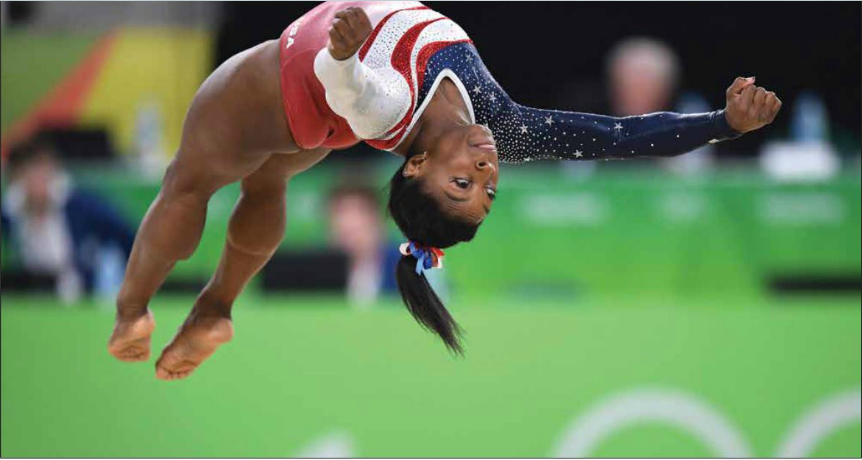
Ironic that what is making America great, right now, in the midst of Mr. Trump’s huge brouhaha, are the individuals and others — sons and daughters of “others” — who are the epitome of class; we should be grateful the world is watching them. And not giving time to Mr. Trump, who the folks on the street say never wanted to be president.  He just wanted to see how far he could go, and if the people would fall for his deal.

View From Here: NYC Purchasing Promotes Inequality

NYC Spending FY 2016 Source: NYC Comptroller By David Mark Greaves

By David Greaves


NYC Population by Race – 2010 Census
Data Source from NYC Comptroller WebsiteBy David Greaves

(Note:  This column has been corrected due to a misattributed quote and includes the administration’s responses to questions.)

Despite efforts by the de Blasio Administration, the legacy of racism continues to cause New York City to spend its money in a way that is grotesquely unequal; promoting segregation, gentrification, poverty, crime, broken lives and lost futures. The accompanying illustrations show that African-Americans and Hispanics, representing over 50% of the population, together received less than 1 (one) % of the vendor spending in 2016. The city actually spends more with Black and Hispanic firms than calculated here, but the percentage of the NYC budget spent with Black and Hispanic firms that we do know about is a civic crime, and if the $16 billion ten-year plan for MWBE spending were for them alone, then we would be impressed. However, at the current Black and Hispanic share of the program, it is only promising a policy of an ever-increasing pie flaking off larger crumbs than before.

Last year, Comptroller Scott Stringer issued “Making the Grade”, a report on the progress the city was making in the area of MWBEs.   The report contained a number of recommendations such as enforcing the requirement that prime contractors report on the subcontractors they actually use, and that non-mayoral agencies be subject to all of the M/WBE reporting requirements. It was a call for accountability throughout the purchasing chain. Since then, the Small Business Services say, “From the beginning of this administration, we noticed that prime contractor utilization of the Payee Information Portal was low. This is also why the comptroller, in his own report, acknowledged that his data was incomplete and provided an inaccurate picture of the M/WBE subcontracting landscape. Utilization of the Payee Information Portal did not provide an accurate picture of the utilization of M/WBEs. However, we have seen utilization of the Payee Information Portal, along with utilization of M/WBEs, increase each fiscal year since the beginning of this administration. This requirement continues to be enforced”.

More hope is pinned to the state increasing to $200,000 the discretionary “small purchase” orders which would be impactful, as are the outreach efforts the administration is already making through the SBS program.

We also asked SBS if there was an effort to have the non-mayoral agencies, including the New York City Housing Authority, the School Construction Authority and the Department of Education, subject to the parameters of LL 1. They responded, “As agencies under the jurisdiction of both federal and state laws, agencies like NYCHA, the SCA and the DOE have different M/WBE legal requirements. Recognizing this, the administration implemented the OneNYC Plan for M/WBEs which goes above and beyond LL1 to provide reporting structures and M/WBE accountability to such city-affiliated entities. For the first time ever, the city is capturing and reporting on contract awards to M/WBEs at these agencies”.

All of these actions, while good for small businesses, can only be seen as the very first steps in a long journey to vendor equality and achievement of full economic rights.

We asked the comptroller and Small Business Services if it is possible for the share of public spending with Black and Hispanic businesses to ever look more like the Black and Hispanic percentages in the population.  If not, why not, and if so, what would have to be done, over what period of time, to make that happen? Comptroller Stringer issued a statement saying: “Every M/WBE firm in our city deserves a chance to compete for their fair share of the city’s $14 billion procurement budget. But too many M/WBE firms are stuck in first gear when it comes to competing for large contracts. That’s why we must empower all business owners by ensuring prime vendors use M/WBE subcontractors, pay them on time and support their growth. With a level playing field, more African-American and Hispanic business owners can bid on and win contracts which promotes competition, creates more jobs and grows our economy in all five boroughs.”

SBS responded by saying: “There are many successful minority and women-owned businesses for whom selling to government is not part of their growth plan.”

Will it ever be possible for the share of public spending with Black and Hispanic businesses to ever look more like the Black and Hispanic percentages in the population? Not the way the city calculates it, no.  The goal is not to increase spending to approximate population percentage, the goal is to decrease “disparity”.   The “Making the Grade” report describes the disparity discovery process this way: “Disparity Studies are commissioned by an agency to determine if there is disparity between the availability of firms owned by minorities and women in a market area and the utilization of those firms by an agency.”   Does this mean that if there are no Black or Hispanic firms available for the contract then there is no disparity?   Or, if there are 2 Black and Hispanic firms of 100 industry-wide, and both are being used, then again is there no disparity measured?  We’ve asked SBS for a clarification.

What we are certain what has to be done is that we have to insistently invest in widening the horizons of our young people and expanding the universe of Black and Hispanic businesses if we are to have any hope of having the economic engine of New York be a positive force for all.


14th Annual Martha’s Vineyard African-American Film Festival

91

The 14th Annual  Martha’s Vineyard African-American Film Festival unspools August 8-13.   One film generating lots of buzz is “MUHAMMAD ALI: The People’s Champ”,  which plays on 8/10. For full schedule, visit MBAAFF.com

The African Food Festival

0

The African Food Festival will be held at the Brooklyn Navy Yard on August 13/14 from 12-8 pm.   [Visit nycafricanfoodfestival.com]