Home Blog Page 830

THE KANGAROO TRACK CLUB AND BLACK FAMILY DAY

45

By Noelle Weekes

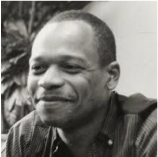
Douglas Terry – Founder of The Kangaroo Track Club

Mr. Douglas Terry was a young man in the 1960’s when the Black community was in the midst of a struggle for civil rights, believed empowerment and equality were the keys to justice. Born and raised in Brooklyn, New York, he graduated from Brooklyn Technical High School and was awarded a track and field scholarship to Texas Southern University, experiencing firsthand the negative effects of segregation in Houston, Texas, decided to transfer after his first year. He returned to Brooklyn and resumed his studies at St. John’s University where he received a Bachelor’s Degree in Education with a concentration in Social Studies. Determined to further explore his passion for social studies and deepen his understanding of education, Mr. Terry pursued and obtained a Master of Arts Degree in Education from New York University. He continued his educational endeavors by entering a Doctoral program. However, the birth of his daughter interrupted his studies and precipitated a shift in focus from education to the development of his career.

In 1964, Mr. Terry began teaching Social Studies at Boys High School where he introduced and implemented a Black History syllabus. His life experiences and passion for education and social studies helped him teach students the values of equality and civic collaboration. Mr. Terry was also the head coach of track and field. “From 1965 to 1974, he led Boys High School (known by friends and rivals as “The High”) to numerous New York City and Eastern State titles as well as championship victories at the prestigious Penn Relays in Philadelphia. Throughout his tenure at “The High”, Mr. Terry baffled rival coaches with his ability to transform great sprinters into great distance runners and have “dedicated” sprinters competitively to compete at distances up to three miles.

In 1966, he started the Kangaroo Track Club. This alumni club, which uniquely combined his dedication for academics and track and field, brought past track runners back to the school to motivate current athletes to continue their education. He is very proud of the fact that ninety percent of his athletes went on to higher education with seventy percent graduating with a degree. “If he said you could do something, then you could do it,” said James Jackson, his first champion distance runner who would go on to coach the Boys High team after graduating from Purdue University. “You could not be on the team unless you were doing well in class, Jackson said. He was the total coach.” In 1969, when the civil rights struggle raised tensions in the Black community to an all-time high, Mr. Terry, along with the Kangaroo Track Club, started hosting Olympic development track meets.   These meets established an opportunity for children aged six to eighteen to improve their track and field skills while simultaneously proving a safe and welcoming outlet outside of the tenuous social situation that enveloped the Black community.

In 1974, he was appointed the head coach of track and field at Brown University in Providence, Rhode Island. He was the first Black head coach and as such he wanted to encourage more participation in track and field on the part of the Black community. Mr. Terry realized that African-Americans were underrepresented in positions of sports judges and officials. He sought to improve this lack of representation by encouraging qualified African-Americans to pursue such positions and by suggesting their appointment to his superiors. His advocacy for the Black community directly led to increased diversity in sports officials and set an important precedent for the future of track and field. He then established the Olympic development track meets at Brown University, and in 1977 the meets became national. This offered opportunities for inner-city children across the country to come to Brown for a track meet weekend where they were exposed to an Ivy League institution. This experience exposed these children to the possibility of attaining a higher education which they may not have considered.

In 1980, Mr. Terry was awarded the Jefferson Award for his work with the community.

In 1979, Mr. Terry was appointed by the pastor of the Ebenezer Baptist Church to be the editor of the Ebenezer Grapevine, Rhode Island’s only Black newspaper. This publication focused on the Black community locally, nationally and internationally. Then in 1984, he was given permission to establish the Ocean State Grapevine, which he distributed in Providence, parts of Massachusetts and Connecticut.

Mr. Terry was awarded the NAACP Community Service Award in 1987 for his commitment and achievements with the Black print media for his work with this newspaper.

In 1989, Mr. Terry’s career came full circle when he returned to – what is now – Boys and Girls High School to teach Social Studies. Upon discovering that his African-American History syllabus had been set aside in his absence, he reintroduced his old curriculum and promoted contemporary students’ exposure to themes of equality and civic engagement.

In 2001, he joined the ranks of the F.O.I. (Fruit of Islam), the military arm of the Nation of Islam. He was given the role of business manager of Muhammad Mosque No. #7 gift shop and after 4 years in that position he was appointed secretary treasurer of Muhammad Mosque No. #7, which he held for 6 years.

Presently, he is a distributor for the N.O.I.’s Historical Research Department. Instilling social change within his daughters, they continue his tradition of helping the community in their own ways. One daughter teaches law at Howard University, and the other is a social worker at Columbia High School in Maryland. At seventy-nine years old, despite his many illnesses, he still contributes to his community by writing and distributing Our Time Press as well as staying involved in the events around the city. Activities include events such as the International African Arts Festival, Harlem Book Fair, Harlem Week Festival and the West Indian Carnival.

Mr. Coach Terry hopes to reestablish the Kangaroo Track Club in order to revive Black Family Day, which did take place forty years ago at Randall’s Island on Memorial Day in 1974.

In keeping with the Million Man March slogan, “Justice or Else”, 10-10-15, a movement not a moment, Mr. Terry is planning a Black Family Holiday Bazaar on Black Friday and Saturday. The two days after Thanksgiving at Boys & Girls High School, along with an Olympic development track meet on Thanksgiving Day.
Street Naming for John Lewis Steptoe

By Bweela Steptoe

A Writer Celebrates her Father on the Eve of a Community Salute to his Awesome Legacy

Classic work by Steptoe

For the past three years I have worked passionately for this day to come! The commemoration of the life and legacy of my father, John Lewis Steptoe. There will be a celebration for the John Lewis Steptoe Monroe Street Co-Naming and the forthcoming Nationwide Tour of the play, “Mufaro’s Beautiful Daughters.” I am inviting several children’s authors and illustrators to read John Lewis Steptoe’s Books. Community residents and leaders, spoken word artists, musical performers, storytellers, and many more will be in attendance for this !

Javaka and John at 840A Monroe Street, in John’s work studio that he designed and constructed himself. 1987

On Saturday, August 27th, 2016 at 11:30am join us, the John Lewis Steptoe Estate, Family and Friends in celebrating the Street Co-Naming of this beloved African-American Children’s Book Author and Illustrator, on his childhood block Monroe Street between Ralph and Howard Avenue in Bedford-Stuyvesant, Brooklyn. So …

Who is John Lewis Steptoe?

John Lewis Steptoe, creator of award-winning children’s books, and a pioneer of African American artists, writers and illustrators, was born in Brooklyn NY on September 14, 1950.

Raised on Monroe Street in Bedford-Stuyvesant. John Lewis Steptoe began drawing as a young child and received his formal art training at the High School of Art and Design in Manhattan.

John with children Bweela on the left of John and Javaka on the left of Bweela at the ice cream store with a woman helping to pose for a scene in Daddy Is A Monster Sometimes. Manhattan New York on Broadway near our old apartment on Riverside Drive at 151 Street Washington Heights, May 1977.

In 1969, at age 18, his first bookStevie’, a story based on his experiences growing up at 840 Monroe Street in Bedford-Stuyvesant., received national attention when it was published in its entirety in Life magazine. It was hailed as “a new kind of book for black children.” John Lewis Steptoe, began work on Stevie at the age of 16.

In his 20-year career, John Lewis Steptoe illustrated 16 picture books, ten of which he also wrote. He received honors and accolades including the American Library Association’s Caldecott Honor for children’s book illustration for: The Story of Jumping Mouse in 1985 and Mufaro’s Beautiful Daughters in 1988, He also received the Coretta Scott King Award for Illustration, for Mother Crocodile (text by Rosa Guy) in 1982, and Mufaro’s Beautiful Daughters, in 1988.

The same day at the grocery store for Daddy Is A Monster Sometimes May 1977

John Lewis Steptoe hoped that this books would lead children, especially African American children, to feel the pride of their origins. Growing up he did not see many images of African American children and wanted to change that. He frequently spoke to audiences of children and adults about his work. While accepting the Boston Globe/Horn Book Award for Illustration of Mufaro’s Beautiful Daughters, an African Cinderella story was acknowledged by reviewers and critics as a breakthrough, he said, “I am not an exception to the rule among my race of people I am the rule. By that I mean there are a great many others like me where I come from.”

While accepting the Boston Globe/Horn Book Award for Illustration he said, “I am not an exception to the rule among my race of people I am the rule. By that I mean there are a great many others like me where I come from.”

John Lewis Steptoe remains an inspirational artist, a visionary who highlighted the best of Bedford-Stuyvesant/ African American culture with pride.

While living on Monroe Street he was an active member of his community. He was a strong advocate for the children on the block and would frequently hand out his books to the children in the neighborhood. He felt it was important for children to have realistic role models. He was someone that you saw every day yet was known nationally for all for his great achievements. John Lewis Steptoe was the Block Association President for several years where he was an active participant of community events for the neighborhood children. He would often visit P.S.309 to talk to the students about his books.

Following a long illness, he died on August 28, 1989, at Saint Luke’s Hospital in Manhattan at the age of 38.

When we lived in Peterborough New Hampshire 1973/1974

Since his death there has been an exhibit of this artwork at the Transit Museum, his name is engraved in the Brooklyn Botanical Gardens Celebrity Path, Public School 181 has been named the John Lewis Steptoe School of the 21 Century. His named is etched in glass at the African American Heritage Center at the Macon Branch of the Brooklyn Public Library, his artwork from his first children’s book, “Stevie” are permanently displayed in the Raymond Bush playground in Bedford Stuyvesant. Public School 181, Flatbush, Brooklyn is named the John Lewis Steptoe School of t

he 21st Century. ‘Mufaro’s Beautiful Daughters’ has been adapted as a play traveling nationwide and was chosen by the children’s librarians at the New York Public Library as one of the ‘100 Great Children’s Books/100 Years.

My father was a role model for me, my brother Javaka and all children of all cultures in his great efforts to break through barriers to change society and literature for the better. On August 27, join us in remembering and honoring John Lewis Steptoe. For more information on this historic event, visit: www.johnsteptoe.com

Thank you Olympians, Goodbye Donald Trump

August 9, 2016 – Rio De Janeiro, BRA – US gymnast Simone Biles competes in the floor exercise. The U.S. women’s squad captured the gold medal in the team competition.

By David Mark Greaves

I don’t know that we’ve ever seen opposite sides of humanity more clearly than the juxtaposition of U.S. Olympian gymnast Simone Biles with her teammates Laurie Hernandez, Aly Raisman, Gabby Douglas and Madison Kocian versus Donald Trump these last few days. After their years of hard work, these young women defy gravity with their ability to dismiss fear, showing the joy and possibilities that the human spirt is capable of, while Trump calls up fear as his ally and uses it to sink the national discourse ever lower. What else is left to say about this person? After suggesting that “Second Amendment people”, afraid that Hillary Clinton will take away their rights, may have a solution, there are no words left to describe the man. We can only look with sadness at what he’s doing to the country. How he’s made it a meaner, more stressful and more dangerous place. There is nothing left to do except count down the days to election and get everyone of voting age into the booths and seeing that everybody back home does the same.   Donald Trump has to be wiped clean from the nation and flushed into history.

Big Wave Heading for Spain: Brooklyn Soccer Player, Victor Ogunwale

65

There’s a big secret being kept in the Borough of Brooklyn. A name to watch for. A potential soccer star from Jefferson High School, and his name is Victor Ogunwale. Ogunwale put his name on the map last season. As a junior, the young striker led the A Division with 31 goals. His contribution helped lead the Orange Wave to a strong playoff run. Now this young goal-scoring phenom has his sights on joining an international team in Europe. This past Sunday, he and many other youngsters from the Public School Athletic League’s Boys and Girls squad while on their week-long trip, Ogunwale seems motivated to make quite the impression on Spanish soil.

When asked about his views upon his trip to Spain Victor said, “I’m just looking forward to getting out on the field. I want to use this opportunity. I’m focused on myself to get the most of this chance”. Sounds like a poised young athlete.

Ogunwale has a bright future ahead of him. His talents thus far are impeccable. He has dribble ability to go along with his dominating style to score which should be a beneficiary to him while in Europe. He is determined to leave his mark at the international level. When he comes back to the States, Ogunwale has one thought in mind and that’s to bring a championship for Thomas Jefferson. “This year, I want to win a championship because I’ll be a senior. That’s my goal, it’s as simple as that.” With the positive mind-set he already has, Victor hopes his goal-scoring capability leads to a team recognizing his talents and a final championship run in his senior year. Go get ‘em Victor!

Sports Notes: (Olympics) Congratulations to American swimmer Michael Phelps becoming the first athlete to ever capture multiple Gold medals in four different Olympics.  USA Women’s Gymnastics wins Gold led by Simone Biles with an impressive score of 184.897. Team USA Men’s and Women’s Basketball continue their impressive starts in Rio. Both teams are currently 2-0.


Why Black Lives Need to Matter Since Blue Lives Already Do


By Professor Wallace Ford

 The varying responses to the Black Lives Matter movement have been instructive and illustrative of what is still wrong in these United States. At various times the BLM movement has been described as “racist” (Rudy Giuliani), “silly” (NYPD Commissioner William Bratton) and that it “promotes cop killing” (Katie Pavitch).

What is instructive is that throughout American history, when black Americans claim the same rights and humanity as white Americans, black Americans have been called “racist” (Malcolm X), “radical” (Martin Luther King, Jr.) or simply “troublemakers” (Marcus Garvey). Consider this quote by James Baldwin:

“The Constitution gives you the right, as a white man, to have a rifle in your home. The Constitution gives you the right to protect yourself. Why is it ‘ominous’ when black people even talk of having rifles? Why don’t we have the right to self-defense? Is it because maybe you know we’re going to have to defend ourselves against you?”
James Baldwin, One Day When I Was Lost

The salient and key point about the BLM movement is that its overarching message is that black lives should matter, ought to matter and too often do not matter in this country. The available data show that this is not simply a matter of rhetoric. Black unemployment rates, infant mortality statistics, incarceration levels and life expectancy statistics reflect undeniable disparities when compared to the national white community.

If white unemployment rates were at the level of the black community a national crisis would be declared. If young white men were going to prison at the rates of young black man massive resources would be committed to “saving the youth of America”. And we have clear evidence of how the drug problem in the black community should have been treated for decades because now that opioids have become a national (white) epidemic we hear demands that the victims (addicts) should not be treated as criminals and that drug abuse is a disease and should not be treated as a crime. The irony is apparent except to those who refuse to see.

Perhaps a marketing firm could have suggested to the first BLM organizers that “Black Lives Matter Too” would have made it clear to all that the movement is not racist or separatist or some kind of threat to the American Way of Life. But upon further thought, there is no doubt that there are still too many Americans for whom the thought that black lives matter as much as white lives is offensive.

And so we now see the (over)reaction to this sense of offense with the proposal (New York) and passage (Louisiana) of “Blue Lives Matter” legislation. These Blue Lives laws are legislatively wrong and the motivation behind them is immoral, insensitive and racist.

Consider that the federal law and the law in virtually every state and municipality in this country imposes more serious penalties when the victim of a murder or an assault is a law enforcement official. There has been little to no challenge of these laws as most reasonable people understand that an assault on a police officer is an assault on society and that such actions endanger everyone.

Treating an assault on law enforcement officers as a “hate crime” totally distorts the purpose of hate crime laws – which have been enacted to protect classes of individuals who have been subjected to a tradition of violent and racist/sexist attacks – and does nothing to further protect law enforcement officers. And adding even more prison time laws that already treat assaults against law enforcement officers as special cases simply reflects that distinctly American response of using incarceration as a blunt instrument, bludgeoning any and all problems into a cell.

But the stench immorality, racism and insensitivity attached to these legislative proposals is impossible to ignore. The Baton Rouge police shot and killed Alton Sterling at point blank range when it was clear that he did not have any kind of a weapon in his hand.

And though his memorial service had not been concluded, the legislators and governor of Louisiana thought that it was important to emphasize the importance of “blue lives” while simply letting the mourning of another black life to go on without notice, recognition or governmental action (except for another “investigation” that may or may not result in justice for Alton Sperling.

If the supporters of the Blue Lives Matter legislation wanted to be clear that, in their universe black lives do not matter, they have accomplished that by proposing these superfluous, unnecessary and offensive laws.

And that is why there is a Black Lives Matter movement and that is why it should and must continue.

Professor Wallace Ford is Chairman of the Department of Public Administration at Medgar Evers College and the author of the Point of View weekly contemporary commentary blog – www.wallaceford.wordpress.com