Home Blog Page 733

Boys High School Basketball Legend, The Great Connie Hawkins, Passes

Hall of Fame forward died on Friday at the age of 75

The Phoenix Suns released the following statement: “‘The Hawk’ revolutionized the game and remains to this day an icon of the sport and one of basketball’s great innovators,” the team issued the following statement. “His unique combination of size, grace and athleticism was well ahead of its time and his signature style of play is now a hallmark of the modern game. A flip of the coin changed the Sun’s fortunes and he helped put Phoenix on the map as the city’s first professional sports superstar. Rightfully, he became the first Suns player inducted into the Basketball Hall of Fame and his No. 42 hangs in the rafters at Talking Stick Resort Arena as part of our Ring of Honor. Connie’s passion for the game was only matched by his desire to give back to the Phoenix community, a role which he played proudly as a Suns community ambassador, spreading warmth and kindness to everyone he encountered. We will miss Hawk dearly. Our thoughts and prayers go out to his family and friends as we mourn the passing of a true Suns legend.”

From his NBA bio: Connie Hawkins’ career holds as much mystique as that of any other NBA Hall of Famer. A man of remarkable talent who played much of his career in the shadows, he didn’t put up legendary numbers during his seven years in the NBA: only 16.5 points and 8.0 rebounds per game. Nevertheless, Hawkins was voted into the Hall of Fame in 1992, an acknowledgment that he had been unjustly denied the opportunity to show his talent in his most productive years, and that most basketball fans had likewise been denied the opportunity to see the best that this innovative player had to offer.

Most of what Connie Hawkins did was never caught on film. He was a New York playground legend who was exiled for years to exhibitions with obscure teams in half-filled arenas. Accounts of his finest moments circulated by word of mouth, and he never lost his hold on the imaginations of those fans who did catch him in his prime.

Praised by his contemporaries as perhaps the most talented forward ever to play the game (this was before Julius Erving and Larry Bird), the 6-8 Hawkins was known as one of the first players capable of swooping, soaring flights to the hoop, followed by acrobatic, throw-down dunks.

Cornelius Hawkins was born on July 17, 1942, in the Bedford-Stuyvesant section of Brooklyn. By the age of 11 he was dunking. Word flew through the neighborhood. Pretty soon there were stories that had him jumping off the planet. They claimed he broke the laws of gravity. “Someone said if I didn’t break them, I was slow to obey them,” he told the Philadelphia Inquirer.

In 1960 he was a Parade magazine High School All-American. But in 1961, when he was a freshman at Iowa, a gambling and point-shaving scandal broke out in New York. Hawkins was not arrested, indicted or even directly implicated. But it was suggested that he had introduced other players to a man convicted of fixing games. The principals in the scandal claimed that Hawkins had no knowledge of any fixed games. Nevertheless, he was linked to the scandal and therefore tainted. Before he even suited up for one game, Iowa said, “So long.” The NBA, a young league struggling for growth and mindful of its image, said, “No, never.”

So Hawkins became a nomad. He toured the world with the Harlem Globetrotters and played with fledgling leagues while hoping that he would eventually be allowed to fly with the big birds.

At age 19 he played a season for the Pittsburgh Rens of the American Basketball League and was named the league’s Most Valuable Player. The best thing about the ABL, said Hawkins, was that it had a team in Hawaii. The ABL folded during its second season, and Hawkins circled the world with the Globetrotters for two years. It wasn’t competition, but Hawkins needed the paycheck. “There was a chance that I couldn’t have gotten a job at all,” he recalled in 1992.

Hawkins played 70 games for the Pittsburgh Pipers in the inaugural 1967-68 season of the American Basketball Association. The ABA was a little flaky, but its teams did have a lot of great talent on their rosters. And unlike the Globetrotters, and to a large extent, the ABL, it was a bona fide professional league.

The ABA had expected its star attraction to be a Rick Barry, who had been lured over from the NBA’s San Francisco Warriors, but Barry was forced to sit out the season as the result of a legal ruling. So Hawkins became the foremost star in the new league. Roger Brown and Doug Moe, two other players who had been tainted by the college betting scandals but, like Hawkins, were never convicted of any wrongdoing, also hooked up with the new league and were among its best performers.

Hawkins led Pittsburgh to a 54-24 regular-season record and into the playoffs. The Pipers waxed the Indiana Pacers in three straight games in the opening round, then trounced the Minnesota Muskies, four games to one, to enter the first ABA Finals. Their opponent was the New Orleans Buccaneers. The New Orleans squad took a 3-2 series lead, but the Pipers regrouped to take the final two contests and claim the ABA Championship.

Hawkins led the league in scoring with 26.8 points per game and pulled down 13.5 rebounds per contest, second in the circuit to Mel Daniels of Minnesota. He shot .519 from the field, second in the ABA to teammate Tom “Trooper” Washington. Hawkins’s numbers earned him the ABA Most Valuable Player Award for 1967-68. He was joined on the All-ABA Team by Doug Moe, Mel Daniels, Larry Jones, and Charlie Williams.

The next year the team moved to Minnesota, and Hawkins played about half of the season. In 47 games he averaged 30.2 points (second in the ABA to the Oakland Oaks’ Barry) and 11.4 rebounds (fifth in the league), while shooting .503 from the field. He repeated as an All-ABA selection, joining Barry, Daniels, James Jones and Larry Jones.

The Pipers moved back to Pittsburgh for the 1969-70 season (and changed their name to the Condors the season after that), but the Hawk was about to fly to greener pastures. In two ABA seasons Hawkins had averaged 28.2 ppg and 12.6 rpg. His playoff scoring average was also 28.2 points per game.

Hawkins was an awesome offensive force in one-on-one situations — a shot creator who was quick, agile and a great leaper. A decent outside shooter, he was most in his element when exploding past defenders, wheeling toward the basket with giant strides, and packing the ball through the hoop. “He was the first guy on that Dr. J, Michael Jordan level,” said Doug Moe in Sports Illustrated. “Long strides. Hold it in one hand. Wheel it around. Nobody could match him for that.”

In 1969 a couple of significant events occurred. A Life magazine article strongly suggested that Hawkins was innocent of any wrongdoing in the gambling scandal of nearly a decade earlier. The article painted Hawkins as a terrified teenager who had been trying to mollify his questioners by agreeing with them. While the article was causing a stir, Hawkins’s lawsuit against the NBA was working its way toward a resolution. Later that year NBA Commissioner J. Walter Kennedy lifted the ban against Hawkins after settling his antitrust suit for more than $1 million. That allowed Hawkins to join the Phoenix Suns at age 27.

Hawkins was generous in his feelings toward the league. “I was so happy to play, I didn’t have any problems with animosity or bitterness at all,” he told reporter Ron Rapoport. “As soon as I got that Phoenix Suns uniform, I just wanted to play.”

Having found redemption, Hawkins now set out to prove that he was as good as his legend. In 1969-70 Hawkins played 81 games with Phoenix and poured in 24.6 ppg, sixth in the NBA. His scoring average was tops on the Suns, who had two other 20-point scorers in Dick Van Arsdale and Gail Goodrich. Hawkins also hauled in 10.4 rebounds per contest and doled out 391 assists, nearly 5 per game. He was named to the All-NBA First Team along with Willis Reed, Walt Frazier, Jerry West and Billy Cunningham.

Although Hawkins’s numbers slipped slightly over the next two seasons, he was still a star. He averaged 20.9 and 21.0 ppg in 1970-71 and 1971-72, respectively, but his rebounds per game fell to single digits.

Those would be considered fantastic seasons for most players, but Hawkins came into the league with a reputation. Some writers and fans began to make critical comments. There were questions about his desire to win. The athleticism was there, but the passion seemed to be lacking. Maybe, it was said, the intensity had been left on the playground, on the ABL and ABA courts or in clowning with the Globetrotters.

Opponents would have none of it. “If Connie Hawkins has slowed down,” Detroit Pistons Coach Ray Scott was quoted as saying in the Seattle Times, “I wish he’d show it against us.”

By 1972-73 Charlie Scott was the scoring workhorse for Phoenix, averaging 25.3 ppg. Hawkins’s skills were beginning to fade a bit, but he was still able to score 16.1 ppg on guile and savvy. After eight games in 1973-74 he was traded to Los Angeles. The Lakers were aging; Wilt Chamberlain had retired, and injuries limited Jerry West to just 31 games. Hawkins, too, had entered the stage of his career where, although he was still playing solid minutes, his numbers were declining — for example, his scoring dropped to 12.6 ppg.

In 1974-75, appearing in 43 games with the Lakers, Hawkins was a spot player, averaging 8.0 ppg. In 1975-76 he moved on to Atlanta and contributed 8.2 ppg. Hawkins retired after that season at age 33. In his seven NBA seasons Hawkins averaged 16.5 ppg, bumping that up to 19.3 per outing in playoff games.

His election to the Hall of Fame was due in large part to his showmanship. Hawkins was the first player to demonstrate the style, flash and cool that were trademarks of later players such as Erving and Michael Jordan. His enshrinement also acknowledged that not all of the greatest basketball was played on the NBA courts. Some of the most poetic ball was played in dimly lit recreation center gyms and on blacktop courts with chain nets. That’s where Connie Hawkins really built his reputation. By the time he finally made it to the NBA, he had just enough juice left to prove that, yes, the things they said about him were true.

For Hawkins, the honor was a dramatic vindication. He had always maintained his innocence in the betting scandal and had conducted himself without rancor once he was allowed into the NBA. The phone call in 1991 that brought the news that he would be inducted into the Hall of Fame came at 8:30 one morning. “After I realized what the call was about, I cried,” he told writer Don Williams at his induction. “I think maybe I’ve grown an inch or


The Miracle Month

0

Jets Head Coach Todd Bowles had a pretty emphatic demeanor following his team’s gritty win over the Cleveland Browns last Sunday. Although his team won their third game in a row, you would not be able to tell that by Bowles’ approach. “We haven’t done anything yet,” the words of Gang Green’s head coach as the Jets find themselves in a 2-way tie for first place in the AFC East. When I wrote my introduction football article a few weeks back, I’ll be quite honest, if someone would have told me that the New York Jets would be one win away of sole possession of first place, despite all the key departures that had left during the off-season, I would find that very unlikely to happen. Here we are.

Since the calendar hit October, the Jets simply have been hotter than a Phoenix cactus with victories against the Dolphins and Jaguars to add on to their three-game winning streak. With the current and unexpected position the team is currently in, is it enough for Coach Bowles to keep his job? The jury is still out on that outcome; however, believe it or not, this year could be Bowles’ best or worst job as the team’s head coach. For now, let’s give him his due. This is not a football team that is winning with talent on their roster. In fact, the Jets are ranked 26th in total offense and 25th in total defense. The craziest stat is with their first-place record, they have been outscored 47-14 in the fourth quarter. For now, the team is gelling with a group of young players who are sticking like glue to go along with a journeyman quarterback in Josh McCown who had been doing just enough with his play to answer the critics that this Jets team will not be the laughingstock of the league.

In comes a showdown with the Patriots this Sunday with first place on the line. Although Bowles has seemed to be getting a good vibe from his young and inexperienced ball club, he hopes it can continue through the second half of the season. The Jets late-season schedule is brutal. There’s really no other way or word to put it. The team has games against the Panthers, Chiefs, Broncos, Saints and another battle with the Patriots on New Year’s Eve, the team’s season finale. Can the Jets withstand their upcoming schedule? Or are we looking at this year’s “Cinderella team” in the NFL. Stay tuned!

Sports Notes: (High School Football) Scores of last week’s high school games. Boys & Girls 6, South Shore 22; Midwood 56, Grand Street 6; Lincoln 42, Kennedy 8; Fort Hamilton 6, Tottenville 35; Canarsie 16, Campus Magnet 8; Erasmus Hall 39, Dewitt Clinton 0; Jefferson 12, Lehman 30.

View From Here

By David Mark Greaves

The worst impulses of spirit that caused the horrific massacre in Las Vegas, killing 58 people and injuring 489 more, was countered by revealing the selfless and heroic response of everyday people and the professionalism and teamwork of the hospital trauma unit and first responders. They represented the best in us in the face of heavily armed terror.

The images of the legal weaponry with illegal modifications scattered around the hotel room looks like something fit for a war zone, and yet, if history is any guidance, there will be absolutely no gun control response, except perhaps postponing the bill and allowing the purchasing of silencers, the only item (thankfully) missing from the shooter’s arsenal.

We are all told to be surprised by the ordinariness of the shooter, a 64-year-old, retired accountant. A white male, quiet, worth a couple of million, liked to gamble, lived in a retirement community. Being not Black or Brown or religiously impaired, MSNBC’s Christopher Hayes called his behavior “resistant to meaning”, because it fits none of the convenient profiles of someone placing no value on human life.   And yet he does fit a profile, because he is not unlike people we see every day; the difference is that they are able to work in the open and indulge their pathology as well. Take the Secretary of the Environmental Protection Agency, climate change denier Scott Pruitt for example. He is systematically destroying or disabling every environmental regulation he can. All the science says those actions lead to flood and famine, mass migrations, storms and death, but he does not care about the science because as the definition of a sociopath says, he “lacks a sense of moral responsibility or social conscience”, although he seems like an ordinary guy.

However, Pruitt is only one example of the many such people being placed throughout this administration and the adage “a fish rots from the head” has never been more true than now. Every utterance he makes proves Donald Trump to be a man in deep emotional distress, a sociopath unfit for the office he holds. The most current examples, and this is only in the last week, begins with him blaming San Juan Mayor Carmen Yulín Cruz, who was wading in waist-high water to help people, for being “nasty” to him when she begs for help for the island’s 3.5 million American citizens.

And then, setting the U.S. Virgin Islands aside entirely, on his day-trip to Puerto Rico he left no opportunity to congratulate himself to say what a great job the administration is doing and how much everyone thinks he’s doing such a great job. He goes on to say how Hurricane Maria was not as bad as Katrina because fewer lives were lost. And when speaking to community leaders, people trying to deal with the devastation he says, “I hate to tell you Puerto Rico, but you’ve thrown our budget a little out of whack,” driving Mayor Cruz to say, “I would hope that the President of the United States stops spouting out comments that really hurt the people of Puerto Rico because rather than commander in chief he sort of becomes miscommunicator in chief.”

Speaking about miscommunicating, the NY Times reported that he tweeted the following with nuclear war implications: “I told Rex Tillerson, our wonderful Secretary of State, that he is wasting his time trying to negotiate with Little Rocket Man,” Mr. Trump wrote, using the derogatory nickname he has assigned to Mr. Kim. “Save your energy Rex,” he added, “we’ll do what has to be done!” This is not a well man who can only be made to sound sane when he is reading from a teleprompter. Otherwise, he grabs some words and tells us what is on his mind and his staff, the citizenry and nations around the world shudder and Republicans in Congress hide.

We can only hope that Robert Mueller hurry and indict the President and hopefully flush out the Republicans to impeach and rid us of this dangerous man. I know that leaves us with Mike Pence, but sometimes the devil you know really is worse than the devil you get.


What’s Going On

NY POLITICS

Conventional wisdom says that Primary victories for incumbent City Council members were tantamount to a November win in NYC. Two people disbelieve CW.  Dr. Tyson-Lord Gray, a lawyer, Ph.D. and pastor, 37, will challenge District 9 City Councilman Bill Perkins on the Liberal line. Dr. Keith Taylor will host an October 6, 6-8 PM fundraiser in support of Dr. Tyson-Lord Gray’s candidacy at Ponty Bistro, located at 144 West 139th Street at Seventh Avenue, Harlem. Brooklynite Christine Parker, a former Democrat-turned- Republican, will challenge incumbent Democrat Councilwoman Laurie Cumbo.

NYC/NYS power politics addicts should read Crain’s NY magazine essay, “A Tale of Two de Blasios”, by Greg David, which is an anatomy of Hizzoner’s first term with a breakdown of his policy hits and misses which explains his popularity, or lack thereof, with certain constituents. Columbia Professor Ester Fuchs asks: “Why Would the Mayor of the City engage in a fight with the Governor, who holds all of the structural power?” Piece covers the waterfront of NYC/NYS business.

HURRICANES: PR & USVI

Will US territories Puerto Rico and the US Virgin Islands be President Trump’s Caribbean version of Katrina. The world’s eyes are poised on the White House and its inability to provide recovery aid to Puerto Rico and the USVI during the aftermath of two Category 5 hurricanes, the worst ever regarding devastation. FEMA and the Army Corps of Engineers’ recovery response to those islands are inadequate, two weeks after Irma and Maria.  Ships with supplies sit idled on PR docks, unable to move cargo to areas of great need.

Kenneth Mapp

What happened to fabled FEMA, the American disaster warrior (usually) with a capacity to navigate all manner of damaged terrain?   TV networks in PR show the slow levels of PR recovery, mostly in cities. There are zero optics on the USVI – St. Croix, St. Thomas, St. John and Water Island – which is alleged to be in ruins. USVI is predominantly Black-populated? We know that almost 2000 USVI homes are without roofs since the storm and that Trump will not visit the area after his Puerto Rico tour on Tuesday. USVI Governor Kenneth Mapp will meet Trump in PR to discuss the level of devastation in his islands.   Texas and Florida got rapid responses to their post-storm recovery. Why not PR and USVI? Puerto Rico is a land of 4 million people, and the combined USVI population is about 105,000.   Is recovery slow because affected islands are populated by people of color?

BUSINESS NEWS

Mellody Hobson

Read the Fortune magazine essay, THE BLACK CEILING: “African-American Women are Rising Through the Corporate Ranks – Just Not to CEO Jobs”, plus “Here’s What It Will Take to Get Them to the Corner Office” by Ellen McGirt. Piece runs the gamut, interviewing everyone from Ursula Burns, former Xerox CEO/Chair and first Black woman to make the Fortune 500 list to Ann Marie Campbell, Home Depot EVP to Carla Harris, Morgan Stanley’s Vice Chair, Wealth Management to Mellody Hobson, President of Ariel Investments, a Black-owned company….and many more. Tiffany Dufu, Chief Leadership Office of LEVO, says that Black women need mentors to help navigate “the culture of unspoken expectations”. Burns, an engineer by training, whose one job at Xerox, enthuses: “The juice lies with people who are close to the product and the money.”

The 100th Anniversary Issue of Forbes magazine is filled with essays by the  100 Greatest Business Minds, seven of which are Black who include Sean Combs; Berry Gordy, genre creator and founder of Motown Records; Patrick Motsepe, South African mining magnate, Africa’s first Black billionaire; Shonda Rhimes; Russell Simmons; Robert Smith, private equity billionaire, Vista Equity Partners; and Oprah Winfrey.

According to BlackTechWeek and NerdWallet, the Top 10 Cities for Black Business in the US, in cities with more than 100,000 residents, are:   1. Memphis, Tennessee; 2) Montgomery, Alabama, which boasts the highest percentage of Black Businesses nationally; 3) Atlanta/Sandy Springs/Marietta, Georgia; 4) Washington, DC/Arlington/Alexandria, Virginia; 5) Savannah, Georgia; 6) Baton Rouge, Louisiana’s petrochemical industry with the 4th-largest refinery in the USA and the 10th-largest in the world; 7) Durham, NC; 8) Baltimore, Maryland; 9) Miami/Fort Lauderdale/Pompano Beach, Florida; and 10) Richmond, Virginia, alleged birthplace of Black capitalists.

ARTS/CULTURE WORLD

The On Stage at Kingsborough, an organization located at Brooklyn’s Kingsborough Community College, kicks off its 2017-2018 season on October 13 with the “Jazz at The Lighthouse” series, presenting Eddie Allen and his six-piece ensemble who will perform a swinging tribute to icon American jazz legend Louis Armstrong. Twitter: On Stage at KCC, Facebook: OnStageKingsborough.

FILM/TV: Thirty years ago, Spike Lee unspooled his independent film, SHE’S GOTTA HAVE IT (SGHI).   The Netflix TV Network will revive SGHI, the multiple close encounters of Nola Darling, a Brooklyn African-American woman and her three lovers, as a TV series in 10 episodes with Lee reprising his directorial chores.   The SGHI TV series begins on Thanksgiving Day.

On September 27, the Schomburg Center hosted a tribute to Sonny Rollins, tenor saxophonist/composer and jazz master, which included music by the Braxton Cook Quintet; a photo essay by John Abbott, who worked with Rollins for 25 years; and remarks by Rob Crocker of WBGO Jazz Radio. The Braxton Cook musical tribute was almost a total Rollins immersion – lots of bebop and ballads – ending the set with Rollins’ beloved “St. Thomas”.

NEWSMAKERS

Lori Stokes

Lori Stokes, former WABC-TV Eyewitness News host, joins Rosanna Scotto of “Good Day New York”, Channel 5 Fox TV. She succeeds Greg Kelly, who exits show after 9 years. ……. Jeanne Parnell and friends are en route to the Middle East, to Dubai, United Arab Emirates for a 10-day vacation. ……Politics consultant Celeste Morris visits South Africa to attend the annual JOY OF JAZZ Festival in Johannesburg, celebrating its 20th Anniversary.

THE AFRICA CENTER

The Africa Center presents TOP OF THE MILE Community Day in partnership with El Museo & Museum of the City of NY on October 14 from 11 am to 6 pm at 1280 Fifth Avenue at 110th Street, Harlem.   The family-friendly Community Day boasts megadoses of African culture and its Diaspora. There will be food trucks and tastings, an art and fashion installation, children’s activities, African music and live performances, and a Harlem Vendors Expo.

Aliko Dangote

The Africa Center was launched in 2013 as a venue which would be the epicenter of African business and culture in the USA. African-born billionaire Mo Ibrahim was associated with the new Africa Center. His daughter and Chelsea Clinton served as the organization’s first co-chairs.   Last year, Nigerian billionaire Alike Dangote and the Dangote Foundation took over the helm at the Africa Center. His daughter, Halima Dangote, is the Board President. [Visit  Theafricacenter_communityday.com]

A Harlem-based management consultant, Victoria Horsford can be contacted at Victoria.horsford@gmail.com.

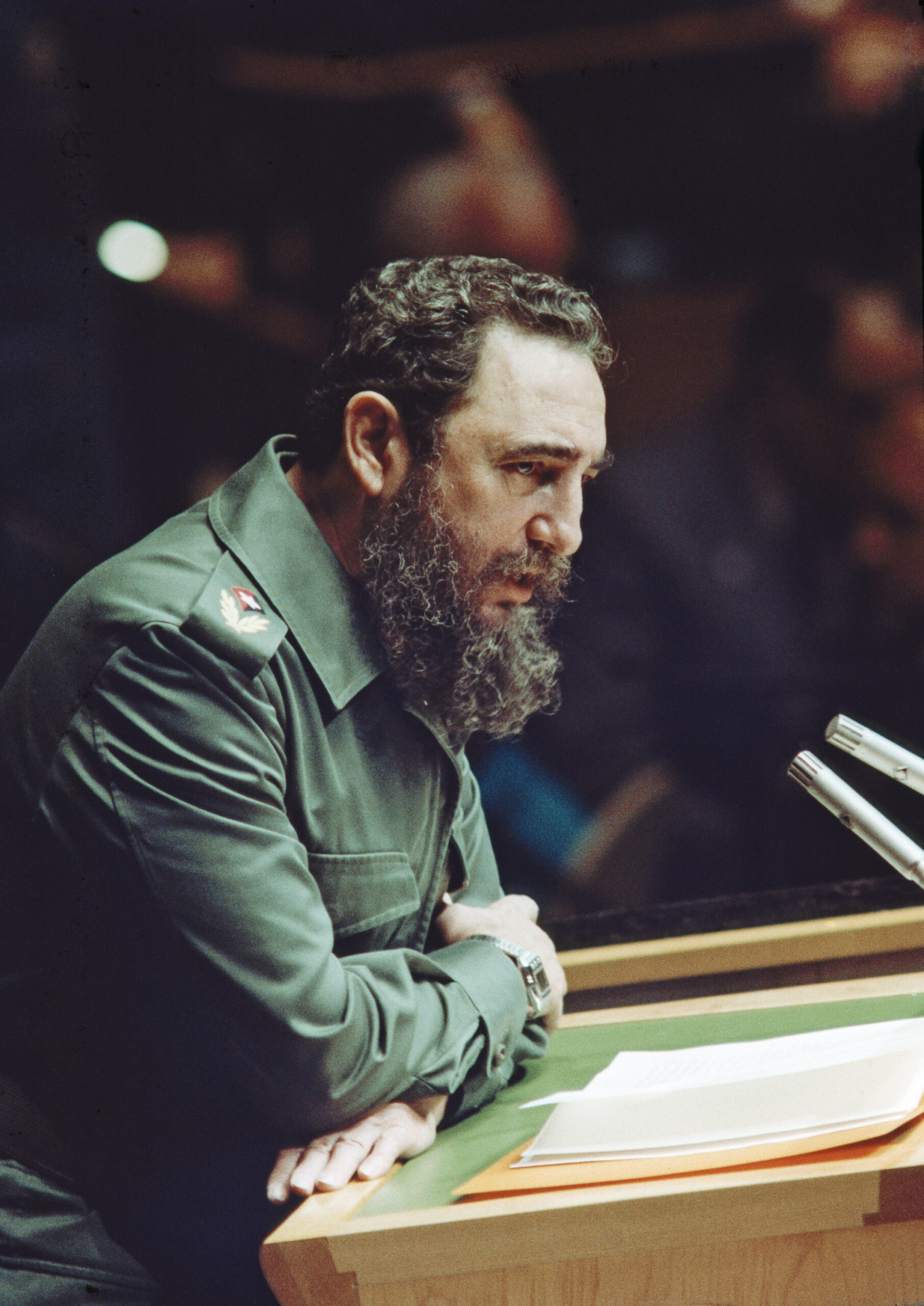
Developing World Honors Fidel Castro

There is so much information coming and going that some moments get lost but are too important to be forgotten. One such time at risk was December 20, 2016 at the United Nations General Assembly. There, representatives of developing nations from around the world rose and spoke with passion honoring the memory of that friend of Africa and health provider to the world, Cuban President Fidel Castro. A few of their thoughts have been captured below. DG

Diplomats representing a majority of the world’s people pay tribute at the United Nations General Assembly

30 Ambassadors — 23 representing their own country, seven representing associations of countries, and collectively representing the vast majority of the people of the world — spoke at a Special Session of the General Assembly of the United Nations in Honor of Fidel Castro Ruz held on December 20, 2016, articulating the majority-world opinion of Castro as a defender of poor and oppressed people and of the right to national sovereignty, and as a leader in the development of the Global South and in supporting human development through health, education, science, the arts and sports.

President of the General Assembly Peter Thomson presided over the event, giving opening remarks and holding a minute of silence during which the scores of diplomats assembled on the floor of the General Assembly and the many dozens of guests who filled the balcony and available for visitors who stood in silence to express their respect.

The seven ambassadors speaking on behalf of associations of countries spoke first, representing the positions of the Non-Aligned Movement (NAM), the Group of 77+China (G77+China), the Association of South East Asian Nations (ASEAN), The African Group, the Caribbean Community (CARICOM), the Bolivarian Alliance for the Peoples of Our America (ALBA) and the Community of Latin American and Caribbean States (CELAC).

Venezuelan Ambassador Samuel Moncada, speaking on behalf of NAM, pointed out that Fidel Castro was the only Latin American representative at NAM’s founding in 1961 at the Belgrade Conference. He held the rotating chairmanship twice. Remarking that Castro was an advocate for the Global South and defender of the developing world, the ambassador stated, “Our movement lost a leader of enormous character”.

The representative from Thailand, speaking for the G77+China, a caucus of 133 developing nations, noted Cuba’s massive investments in social projects, education, health care, infrastructure and housing under Castro’s leadership, as well as the country’s ability to achieve universal vaccination against childhood diseases, the highest literacy rate in the world, a lower infant mortality than most developed countries, training of the best doctors in the world and being the first country in the world to eliminate mother-to-child transmission of HIV.

Speaking for The African Group, the representative from Burkino Faso described Castro as “a major source of hope” for Africans, and said Castro made Africa “a cornerstone of his policy”. The ambassador noted that after being released from Robben Island Prison, Nelson Mandela made his first foreign visit to Cuba to meet with Fidel out of respect for the great contributions Cuba made toward the defeat of apartheid in South Africa.

Additionally, Cuba continued its cooperation with Africa by sending doctors as well as training new doctors in Africa. When the Ebola epidemic struck in 2015, Cuba was the first country to send teams of dozens of specialists and nurses.

He ended his presentation by stating that The African Group insists on the final lifting of the U.S. embargo against Cuba, saying that this would be the greatest homage to Castro. Several other ambassadors also spoke of the injustice of the U.S.-imposed blockade and the need to end it.

The South African representative described how, in 1977-78, thousands of Cubans lost their lives fighting for the people of Angola and South Africa, stopping the apartheid South African troops from expanding into Angola, forcing them back to South Africa.

He stressed the fact that Cuba was not looking for gold or diamonds or oil in Africa; instead, Cuba only wanted to see freedom for Africans and an end to the exploitation of Africans.

He noted that Castro’s life demonstrated a “continuous thread of putting the welfare of others ahead of his own”, giving the example of over 2,000 poor Black children in South Africa receiving medical care in Cuba and said that South Africa will never forget Fidel Castro.

The representative from Angola described Castro as a “committed and unmatched defender of the liberation of oppressed people”, and said that, for Angola, Castro will forever be present and occupy a prominent place as a friend.

She also spoke of Cuba’s aid to a newly independent Angola when Angola was faced with invasion from the north and a more serious invasion from the south by the highly militarized South African racist regime. Cuba trained thousands of teachers at Cuban schools and universities, after which they were dispatched to Angola to fill the immense shortage of teachers. In the years immediately following independence, many would have lost their lives if not for the Cuban doctors willing to work in the most desperate conditions.

Representatives from several countries spoke of the important place in world history that Castro’s accomplishments in his own country have attained.

The Angolan ambassador listed accomplishments of Cuba under Castro’s leadership: eliminating illiteracy in Cuba in one year, lowering infant mortality from 42 to four deaths per 100,000; training more than 130,000 doctors and sustaining the highest per capita number of doctors in the world with one doctor for every 130 people, while still maintaining over 30,000 doctors serving around the world; ending child malnutrition in Cuba and ending child homelessness.

The representative from Suriname described Castro as one of the most prominent world leaders who selflessly gave his life for oppressed people and equality, particularly for the peoples of Latin America, the Caribbean and Africa. He noted that hundreds of students from Suriname received scholarships to study at universities in Cuba, and that “the Government of Suriname wants to put on record and express unwavering and consistent support for Cuba”.

In total, 30 representatives spoke on behalf of their own countries and for their regional organizations, mostly from the Middle East, Asia, Africa, Latin America and the Caribbean, as well as the Russian Federation and Belarus.

WPC member Elaine Song, who attended the General Assembly meeting as a visitor, was struck by the absence of these comments from the U.S. press coverage of Castro’s death. “Most of what I heard in U.S. media reports described Castro in negative terms,” she said. “It was refreshing to hear comments coming directly from world leaders without the filter of clichés and generalities.”

Reprinted from Collective Endeavor, the official publication of Women’s Press Collective (WPC), an all-volunteer association dedicated to organizing independent grassroots media in the interest of low-income and working people, especially low-income working women. To find out how you can get involved, please call WPC at 718-222-0405.