Home Blog Page 73

A Letter to Brooklynites: Protect Your Home from the Tax Lien Sale

Dear neighbors,
As we celebrate the arrival of Spring and the sense of joy and optimism it brings to our city, I am sorry to write with a dire warning.


On June 3rd, in just a few days, the City of New York will hold a tax lien sale on properties with unpaid debts such as property taxes, water/sewer bills, and other City charges. Once sold, homeowners will be on the hook to pay off debt with astronomical interest rates to private investors looking to make a quick buck.

And if the debt remains unpaid after one year (or even sooner in some cases), the owner of your debt is entitled to foreclose your property and force you out of your home. People who have lived in the same home for generations, who have built lives and legacies in their communities are now at risk of losing everything.


The threat to Brooklyn is massive. In Brooklyn alone, over 7,000 properties are on the sale list. Working-class communities with high homeownership rates like Bed-Stuy, Crown Heights, East New York, and Flatbush are especially at risk. While many residents in these communities are fortunate to own their homes, we know they are struggling enough as it is to make ends meet. The added burden of the lien sale will simply put countless homeowners over the edge.


For months, I’ve heard from too many families who are at risk of losing their homes. According to the Center for NYC Neighborhoods, Black homeowners are six times more likely to be on the tax lien sale than a comparable white homeowner. But let’s be clear, many of the folks on the list are not negligent property owners. We’re talking about older adults, first time homeowners, and working families who’ve fallen behind on bills as they try to stay afloat in the most expensive city on the planet.


The tax lien sale is not new. For decades, the City has relied on the tax lien sale to balance its books and, in the process, put often unwitting New Yorkers’ housing stability and generational wealth at risk. The last tax lien sale took place in December 2021, as the Mayor and City Council paused the practice amidst the economic turmoil from the pandemic.

Since then, the sky has not fallen. The City’s finances have not collapsed. We created a reality where the tax lien sale was not necessary, and yet the City wants to bring us back to the past.
Fortunately, there’s good news. Homeowners at risk have until May 19 to act and have their properties removed from the sale list.


First, visit the NYC Department of Finance website to find out if your property is on the list. If your property is on the list, there are multiple avenues for relief.
For long-term relief, you can sign up for a payment plan for up to 10 years to ensure you’re on track to pay off your debt. There are three kinds of payment plans that are designed to meet the unique circumstances of varying homeowners.


There are also several property tax exemptions that can keep your property out of the lien sale. If you are aged 65 or older, a person with disabilities, or a veteran, the NYC Department of Finance lists several applications for exemptions.


Finally, New York City recently created the Lien Sale Easy Exit Program to remove qualified homeowners from the lien sale for one year. To qualify you must own a one-, two-, or three-family home or condominium unit. The property must have been your primary residence for the past 12 months and you must not own any other properties in New York City. The combined annual income of all owners (whether they reside at the property or not) and of spouses who reside at the property must be no greater than $107,300.


Trust me, I know this is complicated. Fortunately, the City has partnered with the Center for NYC Neighborhoods which is offering free, one-on-one sessions with certified housing counselors and attorneys. You may call their Homeowner Help Desk at 1-855-HOME-456 for additional guidance and personalized support.


While I’m glad there is more support for homeowners, the tax lien sale should simply not exist. New York City should not be in the business of displacement. We can’t afford to balance our books on the backs of our most marginalized communities. The properties at risk aren’t just houses and Brooklynites aren’t just line items on a spreadsheet. This is about protecting the well-being and stability of the families who’ve built this city and preserving what limited pathways to generational wealth exist.


Please take action to make sure your home is protected. On my end, I will continue to fight displacement and the many ways it arrives in our communities whether it’s gentrification, deed theft, or the lien sale.
Sincerely,
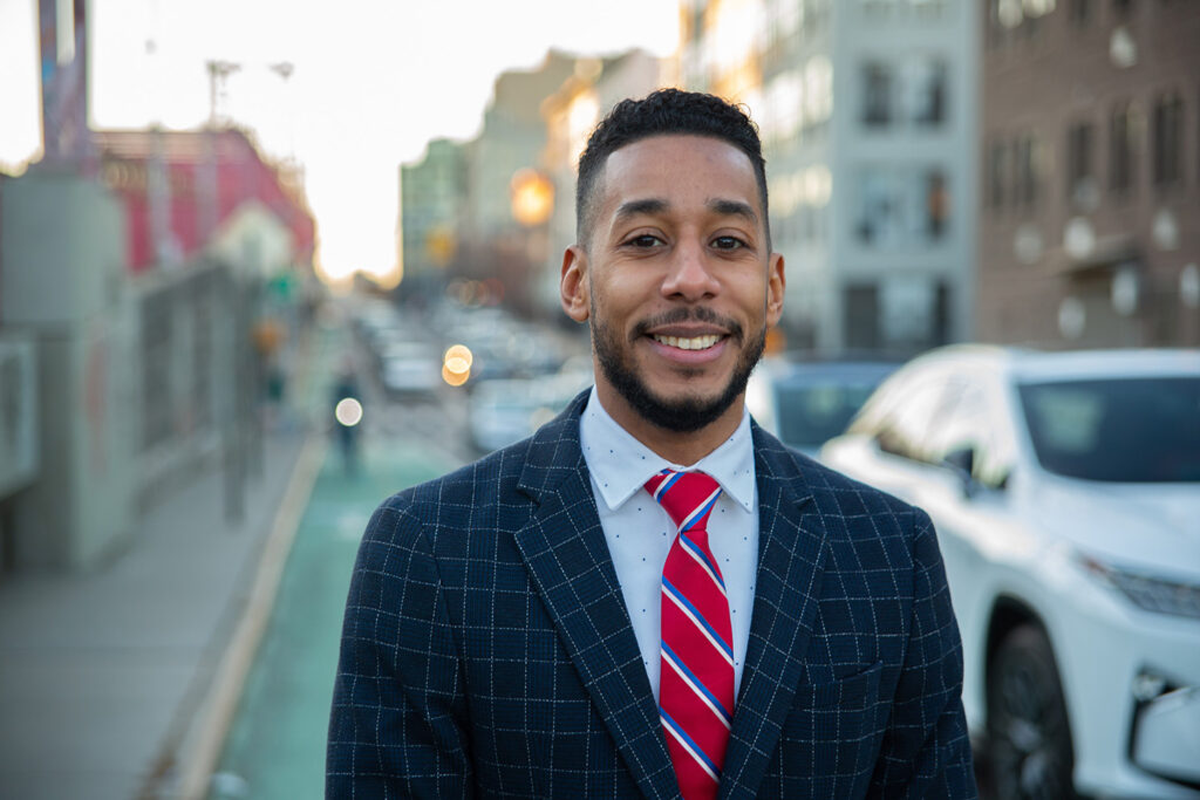
Antonio Reynoso
Brooklyn Borough President

Adams and Cuomo’s Independent Line Choice: Shrewd Move or Panic Decision?

By Nayaba Arinde
Editor-at-Large
Independence is a great thing. But switching lanes in a two-party system can have either positive rewards or drastic consequences.
Mayoral candidates, incumbent Eric Adams and high-polling former Governor Andrew Cuomo, are about to find out. Perhaps.


Cuomo created a new buzz in the race when he announced that, like Adams, he would now run on the Independent line. Was this political savvy, desperation, or a certified chess move?
Will November be a Brooklyn–Queens showdown? Or will it be a Queens versus Queens mayoral candidate face-off with Adam, Cuomo, Speaker Adrienne Adams, or Assemblyman Zohan Mamdani?


“Whoever wins the Democratic Primary will win the General Election,” predicted former Assemblyman and City Councilman Charles Barron. The primary occurs on Tuesday, June 24th, 2025.
A leading Brooklyn clergy member told Our Time Press, “Cuomo knew he was in trouble on the Democratic line. Zohan Mamdami is high in the polls, and he could not guarantee the win, so he thought he would increase his chances by running on a second line.”

In declaring that he was also running as an Independent on his “Fight and Deliver Party” line, Cuomo said, “Over the last several months, as I’ve been out talking to New Yorkers, one thing has become clear: there is a disillusionment with the Democratic Party by some—a feeling that the party has been hijacked, that it doesn’t produce real results, and that it doesn’t fight for working people anymore”


As “proof” of his electioneering theorizing career-long Democrat Cuomo statement continued, “in the election in 2024, when, right here in New York City, 500,000 Democrats stayed home rather than vote for Kamala Harris; and in 2022, when we had the closest gubernatorial election in nearly 30 years.”
“This November, in addition to securing the Democratic nomination, my campaign will work to build the largest possible coalition and secure the biggest possible mandate…by starting the Fight and Deliver Party to appeal to disillusioned Democrats, as well as to independents and Republicans.”


Mamdani retorted, “I guess ‘Close Hospitals, Neglect Transit and Cut Taxes for Billionaires’ line was too many words for the ballot?”
Mayor Adams has repeatedly said that Cuomo is simply copying his ideas and playbook.
As he runs on his “Safe & Affordable” and “EndAntiSemitism” line, Adams shrugged off the move. “I mean, it just seems like he’s just going through the motions. Isn’t it strange to you that he now wants an independent line like Eric?”
Criticizing Cuomo’s similar housing strategy and questioning his similar patronizing of Black churches, Adams quipped, “I thought the word was ‘I’m going to be like Mike, not I’m going to be like Eric.’”


Operation POWER co-founder Charles Barron is not impressed with any of the candidates: “New Yorkers don’t have any good choices. It seems that with Eric Adams, Andrew Cuomo, and Trump, crime pays. These are corrupt individuals who shouldn’t even be in politics.”
Investigated by Attorney General Tish James during his third term, then-Governor Cuomo resigned after 11 women accused him of sexual harassment. Then there was the question of the actual number of fatalities during the COVID-era scandal of seniors sent back to nursing homes from hospitals.


As for Adams, he saw his five-count federal corruption and bribery charges dropped, after an alleged quid pro quo deal with President Trump’s administration and his immigration deportation policy.


This past Monday, while Cuomo received $1.5 million in matching funds, the Campaign Finance Board threatened to withhold $622,056 from his campaign, as they investigated the charge Gothamist reported “for breaking campaign finance rules by improperly coordinating with a super PAC dubbed Fix the City.”


At the same time, the campaign finance board determined that Mayor Adams once again did not qualify for matching funds. He faces several Independent candidates on November 4th, 2025, including Cuomo, Republican Curtis Sliwa, and lawyer Jim Walden.
Fusion voting will add to two-line candidate totals, Barron pointed out, so “Anything can happen, but it seems like Cuomo is ahead in the Democratic race. They have fusion voting in New York. So whatever Cuomo gets on the Democratic line, plus the Independent line, will be added up to his overall vote.”


As for Cuomo extending his political range, Barron said, “It doesn’t make a big difference at all. He is selling out his own party by going on another line to take away from what Eric Adams may take away from him on his Independent line.”


Republican mayoral candidate Curtis Sliwa told Our Time Press, “They may be running as an Independent because more people than ever before in NYC consider themselves to be Independent,” plugging his own campaign, and saying that his numbers were running at “30% on the Independent line.”


“Cuomo deciding to run as an Independent was a shrewd move. He is making sure that he can play in the General Election,” said political strategist Basil Smikle.


However, the Professor of Practice and Director of Columbia’s M.S. in Nonprofit Management Program, told Our Time Press, “Rank choice voting makes figuring out a definite winner at this point complicated, but, I think Cuomo has a lot of number one votes, but, I don’t know if Cuomo has a number two, and I don’t know anyone who has Cuomo as number one – who they have as a number two. I don’t know ideologically who that would be. It would have been Eric Adams, but he is no longer running in the Democratic Party. Adrienne…Mandami…Landers are a lot of people’s number one. There are a lot of twos in play, so it is really hard to say. The rank choice voting makes for a very uncertain environment.”


Roger Toussaint, the former President of Transport Workers Union, told Our Time Press, “It is hard not to get excited about and behind Mamdani’s campaign. His ultra progressive program – free buses, rent freezing, free childcare, $30 minimum wage–would be considered farfetched, but his success speaks volumes, especially in this political climate, and to me indicates the populace is saying no more pussyfooting, go hard or go home. He should be supported.”


The one-time head of Local 100 New York, who helped coordinate the December 2005 MTA strike, which shut down public transport for 3 days, added, “Cuomo is the father of Tier 6. Tier 6 was the first rollback of pension progress in some 35 years, since the 1970s. He did more damage to labor than any governor in the past several decades, imposing layoffs to extract historic concessions across the public sector.

Those were his commitments to real estate and business interests in New York to whom he was completely beholden. And now he is willing to say anything to get back in the business.”

“The Black Tax” Puts NYC Property Tax Lien Sales in Historical Context

By Mary Alice Miller
With New York City’s impending tax lien sale scheduled for May 20, Assemblywoman Latrice Walker hosted Professor and Historian Andrew W. Kahrl at Mt. Ararat Church to put New York City’s tax lien system in historical context. Professor Kahrl is the author of “The Black tax: 150 Years of Theft, Exploitation, and Dispossession in America”.


Attorney Yolande Nicholson moderated the event and began by declaring, “It is imperative that they get off the tax lien sale list,” referring to owners whose properties are on the list. “The tax lien list includes charges that remain against a property for at least 12 months. Properties are put on the list by the NYC Dept. of Finance, the Dept. of Environmental Protection, and the NYC Dept. of Housing Preservation and Development.”


Nicholson noted, “This year, a significant number of properties are on the list just for water bills. Over the course of time before they become a lien, those charges bear interest, from as low as 3-9% up to 18%. Once they become a lien, they are eligible to be sold by the city, and once sold, they will start earning interest at 18% compounded daily. Once they are sold, additional costs and fees are added, including legal fees, collection costs, and penalties.”
Nicholson spoke of one of her clients, “who started out with a $5,000 lien and by the time it entered the trust, it was close to $15,000 in less than two years.”


“New York City’s tax lien system is designed less for equitable enforcement and more for financial extraction, disproportionately harming homeowners in historically Black and Brown neighborhoods, destabilizing communities, and accelerating displacement. A significant percentage were properties in Bed Stuy/Crown Heights and East Flatbush/Flatbush,” said Nicholson.


In NYC, tax liens are claims the City places on properties when owners fail to pay charges like property taxes, water bills, or emergency repair costs. These liens are sold to private investors, transferring collection rights, often leading to foreclosure.
NYC’s last lien sale was in 2021, during the pandemic. The sale included 2,841 properties citywide, 1148 of which were in Brooklyn.
Many of the properties in 2025 are single-family homes, 1-4 family homes, and small buildings, many of which are owned by families.


In 2025, approximately 18,000 properties on the 90-day list are queued up to go into liens. Over 65% of those properties are in Bed Stuy, Brownsville, East New York, Flatbush, East Flatbush, and Canarsie.
There are 3,479 properties listed on the 2025 30-day Notice in Water Debt Only. Of those, 2562 are located in historically Black neighborhoods and are to be sold on May 20, 2025. This accounts for 73.64% of all water debt only liens.
“The intensity and propensity for tax liens in historically Black communities correlates to ten years ago, which showed a propensity and intensity of subprime loans that were going into foreclosure,” said Nicholson.


Professor Kahrl said he commenced writing his study to understand the past and the present and ultimately change the future.
“My work examines the history of racial discrimination and inequity in local tax systems,” said Kahrl. “The Black Tax looks at how these local patterns and practices undermine and stall [Black people’s acquisition and retention of] land, property, and wealth.”
Some of Professor Kahrl’s findings are familiar to Black New Yorkers, particularly the higher tax rates that Black homeowners are assessed compared to White homeowners.


“This was the case in the rural South at the turn of the 20th century, it was the case in post-War Northern cities African Americans migrated to, and it remains the case today,” Kahrl said. “For all the taxes that African Americans pay, they have been systemically and grossly underserved when it comes to the public goods and services that their tax dollars support. We are discussing public education, local infrastructure, water and sewer services, sidewalks, parks and playgrounds, and fire and public safety.”


Kahrl continued, “Black Americans, especially the elderly and the poor, have been disproportionately victimized by tax-delinquency laws that allow private investors to purchase tax debts for profit, charge them exorbitant interest and fees, and take people’s homes and land if they don’t pay. This has resulted in massive amounts of land, homes, and wealth that have been taken from African Americans over the past 150 years. We are talking about no less than $600 billion by the most conservative estimates.”


He asked, “How does this happen, and how does it continue to happen?”
“In the aftermath of Reconstruction, African Americans have been stripped of their rights and denied equal protection under the law. Black landownership acquired critical importance. Land ownership became a shelter in the storm. It became the means of gaining a measure of freedom.

During the late 19th century, African American land ownership increased rather rapidly and dramatically. By 1910, African Americans owned 16 million acres of land in the U.S. Owning property became synonymous with citizenship and gaining the ability to make claims on the state because they were paying taxes on that land,” said Kahrl.


He added, “But at the same time, owning land made Black people more vulnerable to other forms of discrimination, such as those being carried out in the form of local taxes.”
“Professor Kahrl’s book will make you angry,” said Assemblywoman Latrice Walker. “It will force you to think about how the tax system was used to steal billions of dollars in property from Black people in America. For more than 150 years, there has been a systemic campaign to rob people of the chance to attain generational wealth.”


Walker continued, “The stories in the book are compelling and infuriating, but they are also timely. New York City’s controversial tax lien sale is scheduled for May 20. This is a program that disproportionately targets Black and brown residents, including here in Brooklyn. It can lead to increased debt, foreclosure, and the loss of property over unpaid water bills or property taxes. This well-researched book is a must-read.”

Tywan Anthony:

Brooklyn’s Crusader for Homeownership and Football

By Fern Gillespie
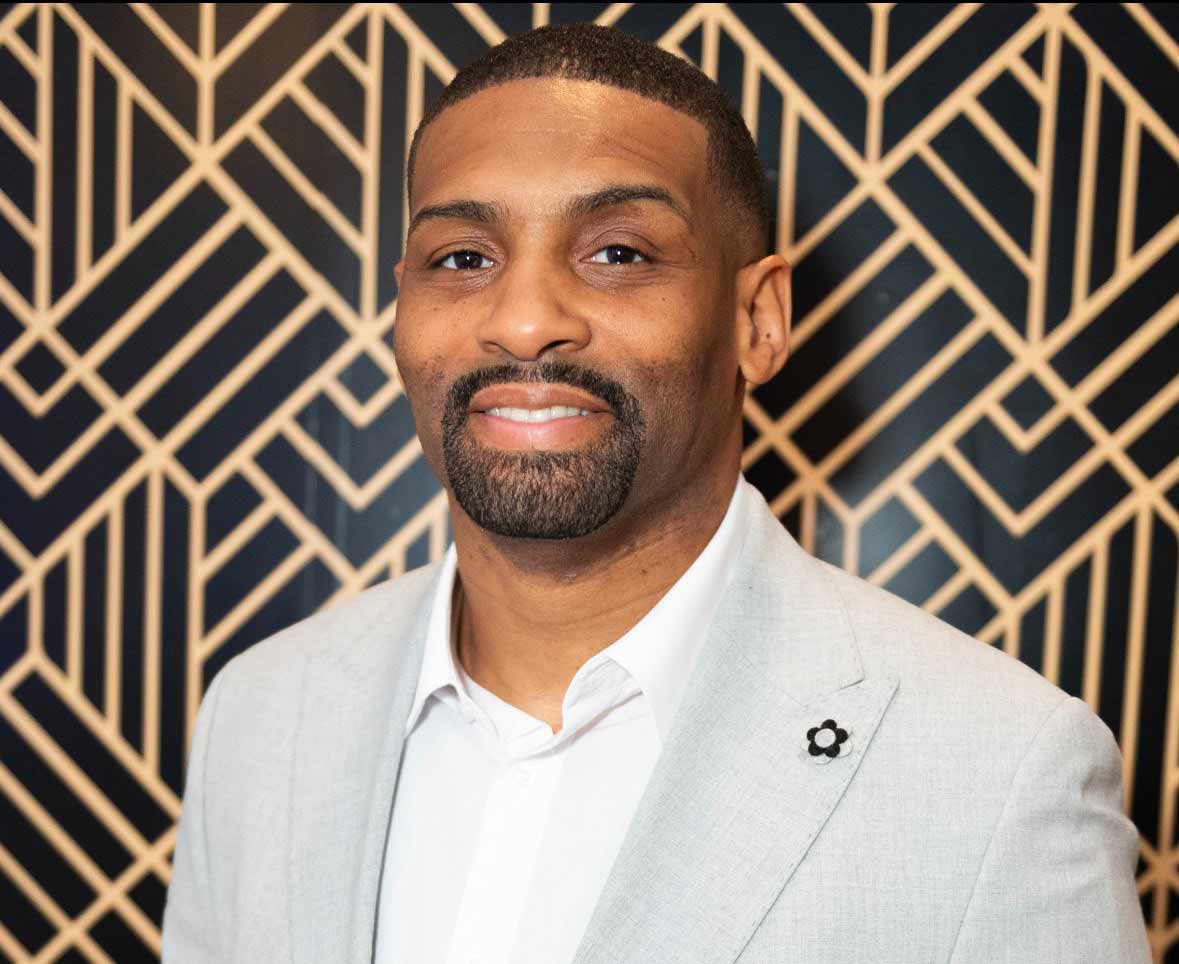
Football and Real Estate have always been intertwined in Tywan Anthony’s life. He balances a longtime career in real estate as Director of Property Management & Real Estate Training at Neighborhood Housing Services of New York City with his passion project as the founder and Executive Director of Brooklyn’s nonprofit football team, the New York Crusaders.

Born and raised in Bed Stuy, he moved to Florida with his family to play high school football as a teen. While at Pittsburg State University in Kansas, majoring in political science and business management on a football scholarship, a friend introduced him to the value of a career in real estate.

For over the last 15 years, as a licensed real estate broker, he’s been a commercial property manager specializing in retail open air shopping centers throughout the Northeast and Midwest; worked in real estate asset management, taught real estate courses at Baruch and Medgar Evers Colleges; operated as a real estate inspector and is also an officer in the Bedford Stuyvesant Real Estate Board. In 2014, he founded the nonprofit New York Crusaders football team.

In addition to sports, it focuses on academics and job training for Black male athletes between 18 and 32. Our Time Press recently spoke with Tywan Anthony, who is married with two small children, about balancing his dual careers in real estate and nonprofit football.

OTP:How do you advise Black homeowners on real estate asset management?
TA:
Your home is your asset. What do we do with this asset? Maintenance is always an issue. It’s the maintenance that will hinder individuals from making the needed repairs. That will cause the home to go into disrepair. If it goes down that rabbit hole, eventually that home will be sold. Apparently, that family can’t afford to maintain that home properly.

So, what I’m looking at is ensuring what plan we can create to manage this asset better to make the needed repairs. In Brooklyn, the housing stock is old. So, we have issues and types that need to be repaired regularly. If you go years without repairing, you could be looking at $20,000 – $15,000 for repairs. Not many of our folks have 15,000 or $20,000 on hand to make the repairs. Financial planning is key. I have a couple of different brackets of where I put my money. Every month I’m putting money aside.

My wife and I do it together for general home repairs and maintenance. We look at a project every year that we want to do. Whether it’s inside repair, roof repair, garage repair or painting. Places like Neighborhood Housing Services of New York City have loans that they give out. Like emergency loans there are programs for roof leaks. There are resources that homeowners can access to make sure these things get done.

OTP: Growing up in Bedford Stuyvesant, were your family homeowners?
TA:
My Grandmother was the first one in her friends’ circle to purchase a house. That house was on Spencer Street and DeKalb in Bed Stuy. My family moved around Brooklyn. The price of the housing stock was a lot less than what it is right now. My grandmother bought her house working at Kings County Hospital with an annual salary of no more than $30,000.

My great aunt was able to buy her property in the 1960s or 1970s for $ 15,000 or $20,000, the same as my grandmother. At one time, my family has six or seven properties all at one time. My family was big on home ownership. Homeowners are vested in what’s happening on their block in their community.

OTP: Is it realistic that Black Brooklyn residents with average incomes can afford to buy a home in the borough?
TA:
It’s still there, but you have to be creative as you approach that process. A good strategy, in terms of being able to buy a home, is buying it with a significant other. Using the power of both your incomes. The good news is that if you have a 401(k) or a job where you can ask for a loan, you can use those funds for a down payment.

OTP: What inspired you to launch a nonprofit organization, New York Crusaders, dedicated to football?
TA:
Football took me through college. It helped me keep focus. For a lot of us, it’s something–whether it’s sports or art or something else–it grounds us and it propels us to be good in other aspects of life. I wanted to reiterate my college football experience. That’s what I try to do with the young athletes that we have on our team.

Some played football in college. Some of them will never go to college. Or experience college football outside of what we do when we play our games at Boys and Girls High School. We have a marching band. We have vendors. We try to create a college football environment. We play teams in the Big East League.

The New York Crusaders are not just about the football. Our organization is also about making better young men. We try to empower our young athletes, economically, academically, and athletically through our program.

TA: Everything that I’ve done, real estate-wise and community-wise, has helped me with my team and vice versa. I served on Community Board 3 for over 10 years. While there, I was the vice chair and chair of the economic development committee. Being involved in development projects and meeting different people helped me get funding for my football team. My business skills help me run my team. It all kind of blends together in an interesting, creative way.  How community, politics, real estate, and my nonprofit football team merge together to create who I am.

I’m a mom. All I cared about at the time was to survive.Well, they left me to die.

The First Black Maternal Health Walk of April 11, 2025 conceived by community leaders and event architects Brooke Durrah and her mother Dr. Valerie Durrah in their Bedford Stuyvesant home a year ago, was officially launched last month at Brooklyn Borough Hall, a site for many firsts.


Among the historic addresses ever delivered in the hall was President Antonio Reynoso’s emotion-infused 2022 unveiling of his bold plan to attack grave disparities in maternal health services and resources for the underserved ( www.brooklynbp.nyc.gov/maternal-health-agenda/). The April event speakers’ stories, like Reynoso’s three years earlier, walked into the hearts of all attendees in the packed hall.

Testimonies delivered by women leaders from all walks of life who endured painful pregnancies, attacks on mental health, and lack of services were similar to those experienced by their constituents and followers, the women they lead.

Our Time Press, in a limited-run series, is presenting the testimonies of Black Maternal Health Walk women leaders. It will end next month with a story on experts’ solutions, also shared at the event. The series continues this week with Brooklyn Democratic County leader and State Assemblywoman Rodneyse Bichotte-Hermelyn sharing her remarkable story of tragedy, self-triage, and eventual triumph. (Bernice Elizabeth Green)

Rodneyse Bichotte-Hermelyn, State Assemblywoman (AD-42), Brooklyn Democratic County Leader

We’ve been hearing statistics about black maternal health care, and the injustices and inequities that cause black maternal loss, affecting far too many. And, you know, we hear these statistics, and they have been the same statistics. The United States, a developing country, is the third-highest country with the highest mortality rate. That’s an issue. Top third in the world? That’s a problem.


We’ve been hearing these statistics: it’s about eight or nine times more likely for a black woman to die than a white woman. What are we doing? How do we make people care? How do we make changes?


Many of you know about my story. In 2016, I went to the top hospital. I was doing everything I could. I was carrying two babies. I lost one in the middle of my journey. When I was having some pre-term issues and my baby was bulging out, the hospital turned me away. They did not want to touch me because of insurance.

They didn’t want me to be liable, so they told me to go home, make things happen, and just call 911. They did not know I was an elected official, and at that moment, I wasn’t thinking about being an elected official. I’m a mom. All I cared about at the time was to survive. Well, they left me to die. I was turned away. I was rushed, then by my friends, to a community safety-net hospital, where they did everything that they could to save my life and my baby. They stitched me up.

They had me upside down. It was a very painful process, both emotionally and physically. I didn’t know what was going on. Unfortunately, my son, Jonah, did not make it. I delivered him pre-term. He died two hours later, and that was that. And you know, I didn’t know what to do. The doctor called me from Colombia the next day after all of this had happened, and I asked, “Why are you calling me? You didn’t care. You pushed me out. Why are you calling?”


For a long time, I lived with this pain. I didn’t go to therapy. I had nowhere else to go, but I thought about an opportunity to help other people’s lives, and that my voice needed to be loud. I didn’t want my late son to die in vain. So, we wrote a bill that took four years in the name of my son, called The Jonah Bichotte Cowan Law, which was a bill that mandates hospitals to take care of women, any woman who is undergoing preterm risk. We can’t turn them away. And it was hard passing that bill for many years. And, in 2020, the bill finally passed. (Applause)


I know that you know, I didn’t want to sue. I wanted to write this law instead. I got admitted to Brooklyn Law School because I felt I was not only going to fight on the floors of Albany, but I would also fight in the courts. I wanted to fight for all the voiceless, all these people who don’t have a safe way or know their whereabouts in the court of law. During my very difficult journey in Law School, I graduated with a B+!


I went to work. I got married. I lost my mom. I was studying. I got pregnant and I had a baby. And yes, in the middle of law school, and then I was interning in the middle of law school, pregnant, gave birth, went back to my internship, a white a white male firm construction, and they had a room for me to lactate that is so I was able to come and breastfeed my son for a year and a half while in law school.


And, you know, I just think about my mom, who unfortunately didn’t get to see Daniel, but her spirit stayed with me, and I always hear her words, “You’re doing this not for you. You’re doing this not for Daniel, but you’re doing this for many!” So, I am happy that God gave me another opportunity in life to live and to give birth, after almost dying to give it. The three-hour blood transfusion was complicated, but I’m here. I’m here standing so that I can march with you. I can move with him, and I can help bring awareness to these issues. I thank Crystal, people like Crystal, who are also mothers and mouthpieces, to share our stories.


And so, I just want to thank Dr. Durrah for letting me stand before everyone. We’re pushing legislation in Albany as it relates to maternal care, as it relates to all the things that we need, like doulas, midwives, birthing centers and all of those things that make a difference. Like understanding when black women say, “I’m in pain,” they are in pain. When they say, “I’m bleeding,” you must address the hemorrhaging. We need people to listen!


We need to upgrade our hospitals so that we have resources that can quickly determine these things that we go through as women, from fibroids to other medical complications, and we also need to understand that we have to fund our safety net, the hospitals. And these hospitals that most of us go to need to incorporate cultural competency so that doctors, especially white doctors, understand when we say, “I need help, I’m in pain”, and that we should not be expected to take on pain and bear it.


So, again, Dr. Durrah, thank you so much. I want to thank all of you. Thank you, Reverend Karen Daughtry, for your prayers, your steadfastness, your strength in the Lord, and your words of God. Thank you all for being here. I look forward to seeing those babies grow. Thank you for bringing your babies. Thank you to the singer earlier, a beautiful violinist. My son wants to be a musician. So, thank you for that. We videotaped that. Thank you for your story. Love you all. (Applause)