Home Blog Page 693

Charlie Davis and the Wandering Baton

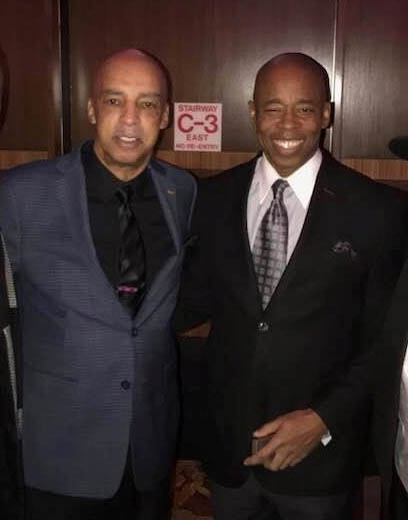
Charlie Davis was laid to rest this week. Charlie wasn’t a celebrity or some star that the entire world knew. Charlie was a friend to my parents, a guy that grew up right here in the community. He graduated from Boys High, served his country in Vietnam, returned home and made a decent life for himself, his wife Lenora and their family. No bells and whistles. No unbelievable acts or unheard-of struggles. Charlie was a regular Brooklyn guy.

His funeral was on Tuesday. Hundreds and hundreds of people packed into Emmanuel Baptist Church to pay their respects. There were people in that church that I hadn’t seen since childhood, elders that used to party with my folks, faces that I remember from barbecues and from Junior’s, all there to wish Charlie well on his journey from here. The Boys High Guys, a group of friends that all went to Boys High around the same time as Charlie, got up and spoke about their friend. He loved his wife. He was a good friend to have. He’d go out of his way for a friend in need. He was funny and loving. He cared about his community and for his neighbors. Over and over, those who spoke told the truth about Charlie Davis. Black Veterans for Social Justice, an organization committed to servicing veterans and their families, were at the funeral en masse. The staff and the Board of Directors filled the entire left side of the church. Charlie was on the board of BVSJ, and what he meant to their mission was evident in their commitment to being there for him now. Even the pastor performing the ceremony was friends with Charlie. Pastor Perry laughed with us as he discussed his friend. He talked about planning a boat party, and Charlie coming to him and asking him to hold the boat from leaving the dock because he had a friend in town that needed to get somewhere, and he was going to drive him to make sure he got there. Pastor Perry laughed about it, telling Charlie, “You’re lucky I’m the Captain!” He held the boat for Charlie and Charlie went and did what he had to do. The funeral wasn’t sad. Folks weren’t melancholy. Everyone was in a great mood, more than willing to talk about their experiences in Charlie’s presence.

We live in an era where social media likes are more important than actually interacting with people in real life. I know people who have thousands of Facebook friends and they don’t know any of them. I walk the streets and watch as most of us are too consumed with our smart phones to even see the world around us. We don’t know the kid from up the block anymore. Kids don’t play outside like they used to, don’t bag groceries at the local supermarket to make some change, don’t play stickball in the street during the summer. The personal things that made us community, the interaction between youth and the elderly, the communication between neighbors, the trust we had in one another, these things are dying. We bury a piece of it every time another elder transitions.

The importance in those things is that communication and camaraderie amongst neighbors strengthens the community’s consciousness. The Boys High Guys are a bunch of 70-something-year-old men that have been friends for 60, and in some cases, 70 years. Their children know one another. Their grandchildren know one another. Jesse Scott is one of the Boys High Guys, and every time I see him in passing he always asks, “How’s your parents? How’s your family? Give them my best.” He cares about more than just what’s going on with him. He cares about what’s going on with all of us.


They all do. That entire generation does, because they were raised with a kinship of struggle, a togetherness predicated on the ideal that the whole is greater than the sum of its parts. Nowadays, the individual identity supersedes the community. It is I before we, mine before ours, and that shift in ideals destroys loyalty, and friendship, and community.

What is to come of a community that can’t come together and speak honestly about being united, standing together, loving each other, being there for one another in times of need? That was what I was reminded of in that church as we said good-bye to Charlie. I looked out amongst the pews and saw the community that raised me. They all raised me, not just Hopie and Pops, but Ms. Joan and Ms. Ware, and even Uncle Blackwell. And it made me think, who am I raising? Who are we raising? Thank you Charlie for being a stand-up guy and a model example. The baton that you’ve passed shouldn’t be a wandering one. It should be taken and carried on.
Les Payne: A Giant of Journalism, Passes

During both his reporting and administrative days, Payne e was known for his passion for justice and unvarnished truth. In 2006, his editor at the paper said that Payne’s column was, “so strong, so provocative and generated so much hate mail, that Newsday editors got to know the names of all the Suffolk County Police Department’s bomb-sniffing dogs.”

Payne was at the helm of Newsday’s’ Queens edition, whose staff members won three Pulitzer Prizes and other prestigious awards. Payne, himself, won a Pulitzer Prize as apart of a Newsday team reporting a 33-part series, “The Heroin Trail,” traveling the world to trace the drug trade from the poppy fields of Turkey to the streets of New York City. He was also a Pulitzer finalist for his compelling reporting on location during the Soweto uprisings in South Africa. (And while there he first became a passionate art collector.)

His published books over these years included, The Heroin Trail and The Life and Death of the Symbionese Liberation Army. He also received many awards, among them the United Nations’ World Hunger Media Award, honorary doctorates from Medgar Evers College and Long Island University, and the Ace Award, which is cable TV’s highest honor, for an interview with Mayor David Dinkins on his show, “Les Payne’s New York Journal.”

Some of Payne’s most significant contributions was as a founder of the National Association of Black Journalists and as a journalism professor at Columbia University. And he remained committed – of course. Friends say that he took daily calls from former students and colleagues seeking advice on the direction or tone of a story. His fellow journalists have only praise and gratitude for his friendship and his example.

Herb Boyd, himself an award-winning journalist, venerated author and educator, was a longtime friend who shared Payne’s Alabama roots. He will miss not only Payne’s company, but also his invaluable – and everyday – contributions as an educator.

“Last summer,” Boyd recalls, “he enthralled my City College students with a spellbinding recollection of Malcolm X during one of our stops on a tour of Harlem not too far from his home and where Malcolm X worked at Jimmy’s Chicken Shack… Any situation was a teachable moment for Les, and the real lucky ones in this process were his students at Columbia University Graduate School of Journalism, where he was the inaugural professor for the David Leventhal Chair.  Les was also awarded honorary doctorate degrees from Medgar Evers College and Long Island University.”

Payne had just completed a book on Malcolm X that he’d been writing for over 20 years. Along with his daughter Tamara, he was polishing the finished product for publication. It is expected to be the definitive book on the icon, with comprehensive research and many interviews, bringing the subject into focus with Payne’s careful clarity and discipline.

Don Rojas, another journalism icon and currently director of communications for the Institute of the Black World 21st Century, remembers his friend and colleague with love and honor. “Bro. Les Payne was a pioneer in paving the way for an entire generation of Black journalists,” he said. “He exposed racism and racial inequality wherever he found it. He leaves us with a rich legacy of ground-breaking journalism, conducted at the highest professional standards, that inspires us to emulate his brilliant work.”

Pioneering television journalist and anchor Melba Tolliver cherishes the time she spent working near Les.

“Les Payne was an inspiration to people like me who wanted to be like him: Committed to social justice for everyday people, smart and funny,” she said. “Les was respected across the journalism spectrum, especially on Long Island, where I worked for half a dozen years.  For Black journalists, Les was a pathbreaker before some of them were even born. And he shared his light, NABJ being just one example.”

Award-winning journalist and publisher of the Black Star News, Milton Allimadi, said, “I loved Les like an older brother. I think he was one of the smartest journalists anywhere in the world and I read global media. Certainly, the smartest in so-called mainstream media, as well. What I liked the most is that he worked at Newsday but maintained his Pan African outlook. His heroes were Malcolm X, Kwame Nkrumah, Steve Biko, Dr. King.

“His journalism took him all lover the world and he covered many stories in Africa. South Africa’s liberation struggle, Zimbabwe’s, Uganda during Idi Amin’s tyranny.
He was an intellectual journalist, a quality badly missed and lacking today. Yet he was also always cracking jokes, as those who knew him well will attest. He was humble and came to share his skills with my Guerrilla Journalism workshop many times. He now joins another giant— Gil Noble.

Cheryl Wills, host of NY1’s “In Focus with Cheryl Wills” said, “Les Payne was a reporter in the truest sense of the word. I grew up reading his award-winning work and I was honored to know him both as a colleague and as a friend.”

Payne is survived by his wife, Violet, and their three children, Tamara, Jamal and Haile. Although the date of his funeral service has not yet been announced, it will be held at Abyssinian Baptist Church in Harlem.


The angels came down on Sunday, March 11, 2018 to carry one of God’s faithful servants, Robert Washington, to his heavenly home. Robert–more widely known as Bob–was born on July 30, 1943 in Chidester, Arkansas to Booker T. and Irene Washington. He was the youngest of four children. Regarding his three siblings, Robert was preceded in death by Eleanor (Washington) Harris and Johnny Washington.
Robert’s surviving sibling is his sister, Mary Jean (Washington) Noel of Milwaukee, Wisconsin. The Washington family had deep religious roots in their community, culminating with Robert joining the Mount Willie Baptist Church at the age of 10.

Robert grew up in a rural community in South Arkansas generally called “William Center.” In fact, the first public school that he attended was the William Center School, a two-room school for grades 1-8. He graduated from Lincoln High School in Camden, Arkansas as the salutatorian of the Class of 1959 at the age of 15.

Afterwards, Robert attended the Oakland (California) Community College for a time before returning to Arkansas to complete his college education at the University of Arkansas at Pine Bluff (UAPB), earning a B.S. in Chemistry (cum laude) at the age of 19. Robert was a mathematics teacher at Peake High School for one year prior to leaving Arkansas to become a research chemist at the National Institutes of Health in
Bethesda, Maryland.

Upon moving to Brooklyn, Robert began working at Pfizer, Inc., where he served as a laboratory staff analyst, product release supervisor and GMP specialist. He obtained a Master of Science degree in Chemistry from Long Island University in 1975. While working at Pfizer full-time, Robert attended Brooklyn Law School and earned his Juris Doctor degree
in 1985. He later transitioned into practicing law full-time. Robert served as a National Black Law Students Association delegate and as a Brooklyn Law School Student Bar Association representative. He also won American Jurisprudence awards in Administrative Law and
Legal Profession (Ethics), and was selected as a member of the Moot Court Honor Society. Robert also received honors from Science Skills Center, Kiddie Academy, the Attorney General-State of New York (Distinguished Legal Service) and NGO Peace Caucus in Cooperation with UNESCO (United Nations Citizen Peace Award).

He is a member of the New York State Bar Association, Brooklyn Bar Association and American Immigration Lawyers Association. As a private Attorney-at-Law, he has handled matters dealing with business incorporation, religious and not-for-profit organizations, bylaws, real estate, immigration, and wills and estates.

Robert’s greatest accomplishments, however, were achieved as a husband and father. Robert married Mary Ann Webb of Windsor, North Carolina in 1980. They had two children: James Lateef Washington and Dr. Sarah Irene Washington.

Marrying Mary, Robert’s extended family grew to include several brothers-in-law and sisters-in-law, cousins, nieces and nephews whom he cherished.

Robert excelled in his commitment to the service of the Lord and his local community. Robert joined Concord Baptist Church of Christ under the leadership of Rev. Dr. Gardner C. Taylor–this is also the church where he married Mary ten years prior. He continued under Rev. Dr. Gary V. Simpson and has served his church community for the past 25 years. He was appointed Deacon of Concord Baptist Church in 1993.
He was a very active member at Concord as a Deacon, member of the Brotherhood and he served as the church attorney.

Robert was kind, soft-spoken and always had time to answer a question or solve a problem, no matter how small. He is dearly missed by his loved ones, who celebrate the fact that he is at peace with his Creator.

He volunteered time to assist community organizations such as the Westbury Tenants Association (President), the Allied Homeowners Block Association (President), First Family Theater (Executive Director), Brooklyn Law School Minority Alumni Association (Board of Directors), City Bar Association Project on Immigration (Attorney), Shirley Chisholm Cultural Institute for Children, Science Skills Center (Board of Directors), Youth Services Coalition (Board of Directors) and Kiddie Academy Parents Association (President). He also was a proud member of the historic African-American, Brooklyn-based, Comus Social Club.

The family appreciates all prayers, flowers, words of condolences, memories, donations and other forms of received support.

The family has established the Robert Washington Memorial Scholarship as an education scholarship for students pursuing careers in science and law. Donations can be made at www.robertwashingtonmemorial.com.

Robert (Bob) will be remembered as a dedicated Christian, a devoted husband and father, an excellent lawyer and a leading figure in the community.

A GED Program to Be Cut in Half So Charter School Can Expand

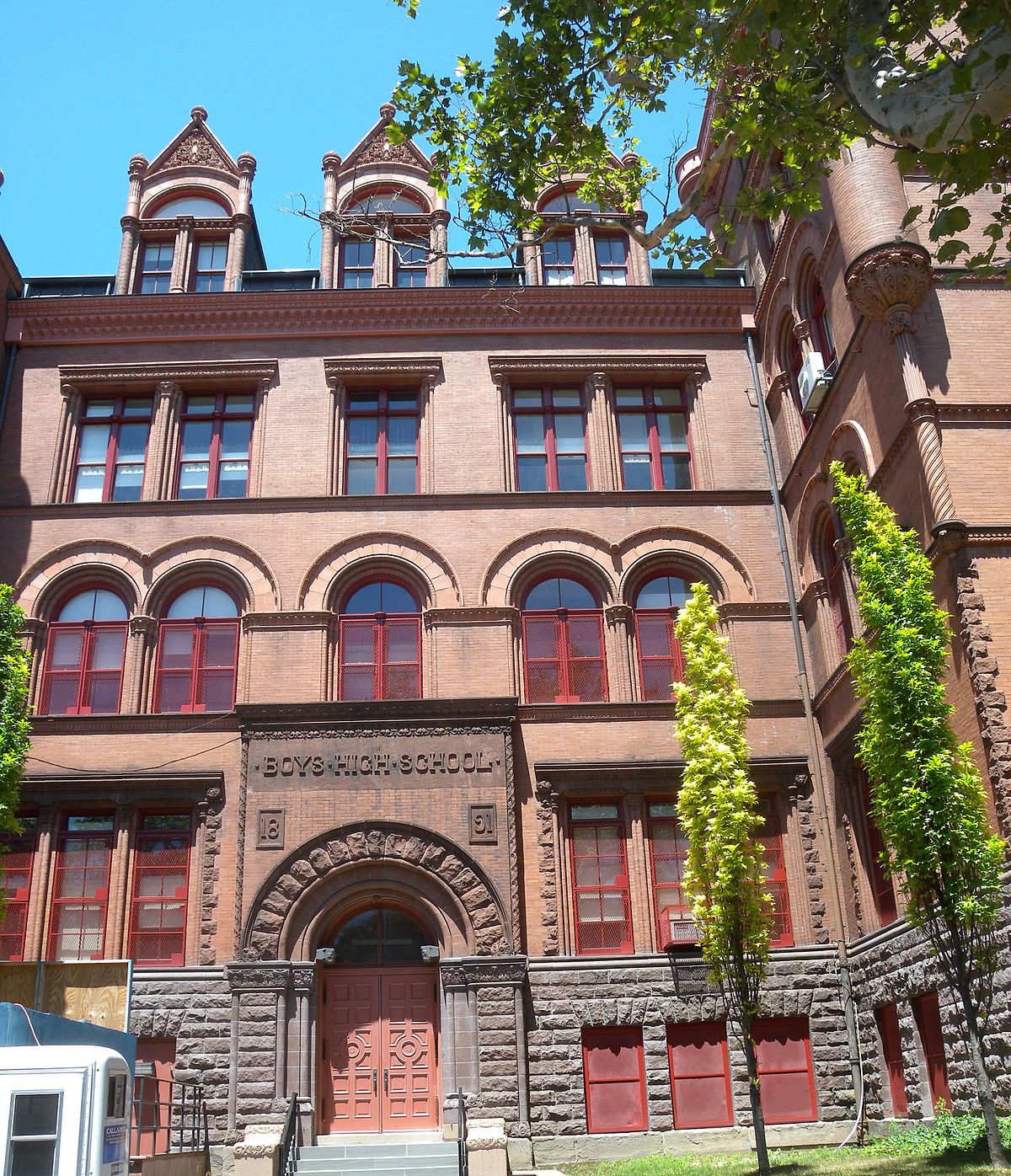
A successful program located in Bedford Stuyvesant is in danger of losing classroom and administrative space to a charter school. Pathways to Graduation (P2G), which has serviced community members ages 17-21 for more than 20 years, would see four of its classrooms, an office and a storage room, reallocated to Uncommon Collegiate Charter High School. The charter school is also currently located at Old Boys High building on Marcy Avenue.

Five programs in all are housed in the historic building, including the Brooklyn Academy High School, Bed-Stuy Prep High School and the LYFE Center, which is a daycare program for the children of students taking classes in the alternative schools located there. Department of Education and the PEP (Panel for Educational Policy) are proposing to take space away from P2G and would consolidate Brooklyn Academy and Bed-Stuy Prep – each of which had a floor of space – into one school with one principal, on one floor. All this so that Uncommon Collegiate can relocate its middle school from P.S. 9, which has wanted them gone for some time.

P2G has been a lifeline for young adults in need of an assist and is particularly successful at servicing young adults facing a number of challenges. It prepares students for the GED exam, which, though still widely known as such, was renamed TASC (Test Assessing Secondary Completion) by the Department of Education.

“Our students essentially fall into two categories.” said P2G teacher Nicole Greaves, “Either they didn’t finish high school for whatever reason – whether it’s incarceration, dysfunction at home, homelessness, (living in shelters) or foster care, The other category is our very large immigrant population. These are students who are new to the country and they are either too old to enter a regular high school or they do not speak the language. We have an amazing ESL teacher at our program, Dr. Bradley Jordan, who speaks seven languages.”

P2G Bike Repair program

P2G has been celebrated for its Bike Repair Program and Citibike just hired seven students from the program. So skill-attainment and job placement are success stories at the school. It also has an internship program preceded by a boot camp for readiness. Many students have been asked to stay on with the employers.

Greaves predicts that these programs will be disrupted or eliminated if space is not available. She also believes it not wise to expose middle-school children to an environment both high-school and adult prep students.

“There will be fifth-graders and 21-olds in the same building,” says Greaves. “It leaves it open for a child to be exposed to something that could potentially be dangerous. And fifth-graders do not pass through metal detectors. So if the youngest population in the building does not have to go through metal detectors, that leaves them open to possibly being forced to bring a weapon into the building by an older child.”

Those seeking fair play for P2G and the other schools at Old Boys High are not anti-charter. P2G once had two floors in the school, but it was reduced to one floor of space four years ago. Now the proposed cut would remove half of that one floor, including the room where students learn the bike-repair skills. Its long history in the building makes P2G a fixture in a neighborhood where it’s still needed, despite gentrification. And parents of the Uncommon Charter middle-school students would likely be open to other options – particularly those that don’t involve a wide age-gap among students in the building.

This is not a done deal, but could be if the public does not raise its voice. A discussion of the issue is scheduled for Thursday, March 22nd at 5:30 at P.S. 9, 80 Underhill Avenue. (*To be certain that the meeting is not postponed due to weather, call Ms. Greaves at (718) 6736-5770 ext. 2202. The final vote on the reallocation is on Wednesday, April 25th at 5:30 Murry Bergtraum H.S. There may also be information shared at the upcoming Community Board 3 meeting on Thursday, April 12th at 7pm at Restoration Plaza, 1360 Fulotn St., 2nd floor.

14th National Black Writers Conference at MEC Through Sunday, March 25

Tananarive Due, author
and educator.

The Center for Black Literature at Medgar Evers College of the City University of New York (CBL) is presenting its 14th National Black Writers Conference (NBWC) scheduled to start today and run through Sunday, March 25, 2018 in Central Brooklyn. The four-day event features the works and talents of emerging and established scribes for this Black Writers Conference, an Intergenerational Gathering of Black Readers and Writers of All Genres.


Steven Barnes, science fiction writer,
and lecturer

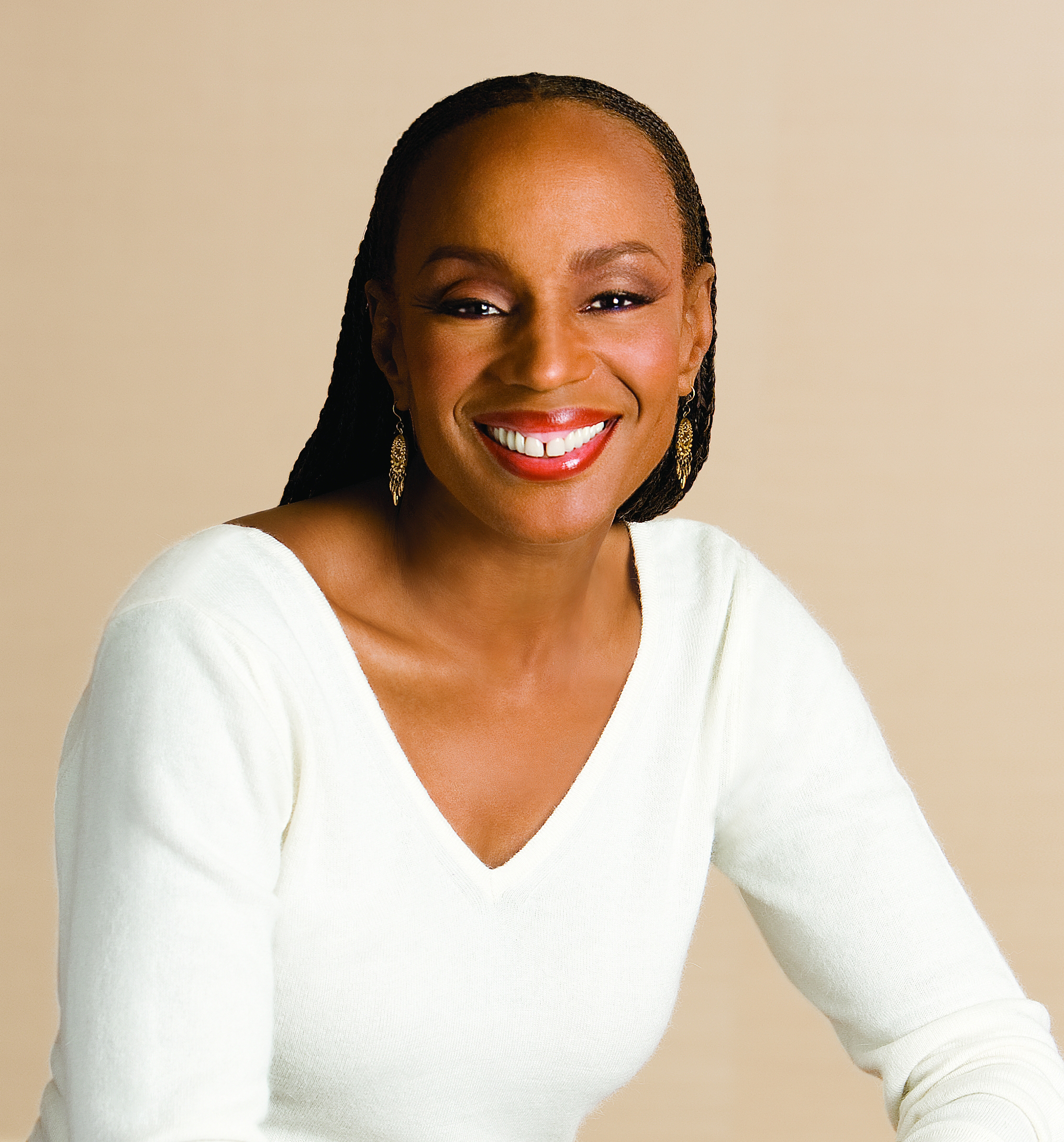
Local, regional and nationally celebrated writers, scholars, literary professionals, students and the community-at-large are convening for four days to discuss topics related to the conference theme, “Gathering at the Waters: Healing, Legacy and Activism in Black Literature.” The honorees are Colson Whitehead, Kwame Dawes, David Levering Lewis, Susan L. Taylor, Steven Barnes, Tananarive Due and Eugene B. Redmond. Dr. Myrlie Evers-Williams is serving as this year’s Honorary Chair. For writers’ bios, the full program schedule and registration information, call (718) 804-8883 or visit www. centerforblackliterature.org. Program subject to change.