Home Blog Page 59

Is Free access worth the fight? Rethinking NYC Public Pool Safety 

By Jackson Henry 

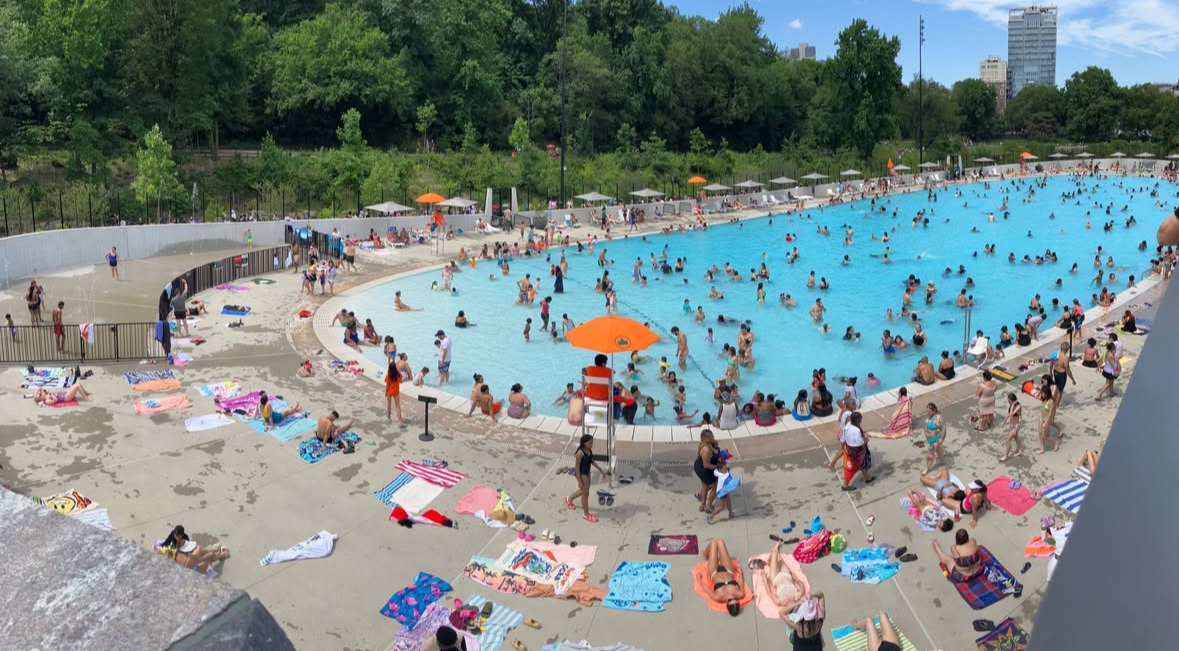
Many people were excited when a new pool was added to Central Park. On June 27th, the Gottesman Pool officially opened to the public following a record-breaking heat wave. Just two days later, a fight broke out due to the long line.

During the altercation, one individual was allegedly struck with a lifeguard chair.

A similar incident occurred in 2012, when McCarren Pool was reopened in the Williamsburg and Greenpoint neighborhoods of Brooklyn, New York City.

A day after the reopening, a fight erupted and lifeguards were attacked by an unruly crowd. As a safety measure, police supervision was introduced and surveillance cameras were installed. 

In 2022, another violent incident took place at the Betsy Head Pool in Brooklyn. A 38-year-old female staff member was using a leaf blower when she was suddenly struck multiple times with a metal chair.

Fortunately, she was taken to the hospital and made a full recovery. Following the incident, the city increased police presence at pools citywide.

If violence continues, the Gottesman Pool may not stay open for long. Several fights have already broken out, and because the pool is free, more and more people are showing up—leading to longer lines, which contributed to the initial conflict. For those who witnessed the fight, concerns about safety are understandable. 

It almost seems like New Yorkers don’t know how to appreciate public resources like the Gottesman Pool or the public Beach for that matter. To abate the violence suggestions like: charging an entry fee, which could help promote accountability have been made.

The pool was intended to offer relief during the heatwave, but it has turned into a battleground. If this continues, the city may be forced to consider adding cameras, to ensure 24/7 monitoring or simply shut it down permanently.

City officials may need to reassess safety protocols, including the possibility of increased police presence at public pools. It could make a difference when it comes to quickly stopping fights or keeping things under control. But there’s a tradeoff—more police could also make the space feel less relaxed and more tense.

Pools are meant to be a break from the heat, not a place that feels stressful. After everything that’s happened so far, it’s worth asking if opening the Gottesman Pool to the public was the right move, or if it needs a better safety plan in place.

Supreme Court Ends 2025 Term with Far Reaching Decisions

By Mary Alice Miller
From 1619 in Virginia and 1626 in New Amsterdam until the Emancipation Proclamation in 1863, the legal status of African Americans in the United States was continually in flux. An African American could be enslaved in one state and travel to a free state where they gained citizenship rights, then be kidnapped back to a slave state where they “had no rights a white person was bound to respect.”


It took a bloody Civil War and the enactment of the 14th Amendment to establish that “all persons born or naturalized in the United States, and subject to the jurisdiction thereof, are citizens of the United States,” also known as birthright citizenship.
Donald Trump, a third-generation immigrant himself, is currently married to an immigrant, has an odd fixation with immigration.


During his first term as president, he enacted a so-called Muslim Ban, established the child separation policy, and revoked Temporary Protected Status for Haitians and others.


Birthright Citizenship
On his first day of his second term, Trump ramped up his anti-immigrant policies. He issued an Executive Order that prevents automatic United States citizenship to persons born in the United States “1) when that person’s mother is unlawfully present in the United States and the father was not a United States citizen or lawful permanent resident at the time of said person’s birth, or 2) when that person’s mother’s presence in the United States at the time of said person’s birth was lawful but temporary and the father was not a United States citizen or lawful permanent resident at the time of said person’s birth.”


Several pregnant mothers sued the Trump administration on behalf of their unborn children.
Trump complained that individual judges should not be allowed to hinder his agenda. However, the lower courts used nationwide injunctions to stop Biden’s agenda on immigration and student loans.


Trump is testing the limits of his presidential powers. The courts have been the only ones able to limit or slow down his perceived unconstitutional executive actions.
By a 6-3 decision, the Supreme Court decided district court judges likely exceed the authority Congress gave to the courts to impose nationwide universal injunctions.
The Supreme Court did not decide on the merits of birthright citizenship, rather the decision limits court’s ability to check executive power.


The ruling could mean that someone could be born not a citizen in one state then move to another state where they are a citizen then move to a third state where they are once again not a citizen.


States can continue to sue for nationwide injunctions, as can class actions. But the Supreme Court has steadily limited the grounds under which class actions can be formed.
As it stands, an individual can sue, but an affirmative ruling for the individual would not apply to others in the same situation. This will overwhelm the courts.


In addition, the Trump administration made deals with law firms to conduct pro bono work for itself, limiting their capacity to take pro bono cases for individuals or states
Ketanji Brown Jackson in her dissent called the 6-3 decision an “existential threat to the rule of law.”


Jackson, a former federal District Court judge, wrote, “It is important to recognize that the Executive’s bid to vanquish so-called ‘universal injunctions’ is, at bottom, a request for this Court’s permission to engage in unlawful behavior.

When the Government says ‘do not allow the lower courts to enjoin executive action universally as a remedy for unconstitutional conduct,’ what it is actually saying is that the Executive wants to continue doing something that a court has determined violates the Constitution – please allow this.”


“By limiting the federal judiciary’s ability to issue nationwide injunctions against the Trump administration’s extremist and authoritarian policies, the conservative supermajority on the Supreme Court is once again bending the law to serve President Trump instead of defending the Constitution and the American people,” said Congressional Black Caucus Chair Yvette D. Clarke and members of the Congressional Black Caucus.


“While this ruling makes it harder for courts to fully block the unlawful policies of the trump Administration, the judicial fight to protect birthright citizenship and our fundamental rights will continue,” said Clarke and members of the CBC.


The Supreme Court retains its right to rule on the merits of birthright citizenship.
Trump’s birthright citizenship executive order cannot take place for another 30 days, providing time for further arguments.


Christian Religious Liberty in Public Schools
The Supreme Court sided with parents who want to opt their children out of classroom discussions of LGBT themes. Religious schools are an option, but they are expensive. Therefore religious parents want the right to opt out of certain classroom lessons, putting the responsibility on public schools.


ObamaCare Preventative Care Mandate
The Supreme Court upheld an Affordable care Act requirement that insurance companies must cover certain preventative care.
A Texas small business objected to a recommendation that pre-exposure prophylasis (PreP) for HIV be included as a preventative care service.

The business argued that covering PreP would violate their religious beliefs and would “encourage homosexual behavior, intravenous drug use, and sexual activity outside of marriage between one man and one woman.”


Ironically, the Trump administration defended the law, despite many vows to abolish the Affordable Care Act. However, Trump’s Health and Human Services under the leadership of anti-vaxxer Robert F. Kennedy, Jr. may change which preventative services are covered.
Age Verification for Online Porn


Texas’s age verification law for porn websites was deemed constitutional by the Supreme Court.
Obviously, no one want minors under the age of 18 to access sexually explicit online content. But the Free Speech Coalition, an adult content trade association, argued that the law violates the First Amendment by creating barriers for adults to access the content by mandating age verification in the form of credit cards or government issued identification like a driver’s license.


Adults may not want to be identified as accessing porn from the mild to the bizarre, protecting their online privacy. But states have an interest in protecting minors from things that can harm them and their development, like alcohol or driving motor vehicles.


Subsidized Internet Access for Rural Areas
The Communications Act of 1996, passed by Congress, included a subsidy program that would ensure high quality telephone access in rural areas. That program, known as the Universal Service Fund administered under the Federal Communications Commission, has been expanded to subsidize service for low-income and underserved groups.


A conservative group, Consumer’s Research, challenged the law, arguing that the Universal Service Fund is a tax and that only Congress can levy taxes.


The Supreme Court decided that Congress acted within its authority when it created a program that subsidized free and low cost internet access for rural areas and underserved groups throughout the country.

International African Arts Festival – Brooklyn Cultural Pride in a Long-Lasting Effect

0

By Nayaba Arinde
Editor-at-Large
Summer in Brooklyn means the welcome return of the International African Arts Festival, where thousands of participants enjoy 3 days of indulging in the replenishing and rejuvenating cultural event. Their cultural nationalists can revisit the reinforcement of the acceptance of the African Diasporic world contribution to global civilization, arts, and the elements.


The five-decade-long celebration returns to Downtown Brooklyn’s Commodore Barry Park on July 4th, 2025. “The International African Arts Festival (IAAF) is the nation’s oldest, continuously running, Pan African celebration of music, dance, and culture,” Dr. Segun Shabaka, IAAF Board Director and co-founder, told Our Time Press proudly. “We are celebrating our 54th Year, and we are back again at Commodore Barry Park, where we have been since 2002.”


Some folk fondly remember the then-named African Street Festival held at Principal Frank Mickens’ Bed Stuy Boys and Girls High School. After a multimillion-dollar running track was laid down in the school field, the festival moved to Fulton Street directly outside the school. Later, it was relocated to its current home at Commodore Barry Park.


Dr. Shabaka said that last year, they were told that they had to move the festival because ” the city commissioner of the Parks Department said that the park was being renovated. So, after our 23 years there, we could no longer use the venue. They told us there is no park in Brooklyn that is big enough to hold the festival.”

Not Fort Greene Park, Prospect Park, Linden ‘Sonny Carson’ Park?
“They said they had no park at all for us at all, and that we could not use Commodore Barry Park. Of course, we did not accept that, and we fought the decision. However, they postponed the renovations, so we still have this year to be at Commodore Barry Park. It is for 3 days this weekend, not four, because we are beginning the festival on Friday, July 4th, then Saturday until Sunday.”


Speaking on Back to Basics to InceptionFMRadio.com, Shabaka said, “It was just in the early spring this year that IAAF organizers announced that everything is back on at the park for at least one more year. This presented several challenges, including the late start in raising funds and inviting artists. Usually, we begin organizing each festival at the end of the last one. We were put at a bit of a disadvantage, but we have been working really hard to ensure that we put on another great Festival for the community.”


Organizers of “the oldest celebration multi-day PAN-african celebration in the nation” are still not accepting what would be a devastating decision.
“We have started a campaign to fight to stay in Central Brooklyn,” said Shabaka. “This is what the community is asking for. None of us wants the Festival to be relocated to the outskirts of Brooklyn, sent to unfamiliar neighborhoods that don’t know us, and will probably fight any effort to place us there. We do not want to be in areas that do not support our 54-year-old traditional festival.”


Historically, it is a long weekend of family-friendly programming with the theme of African expression and excellence, from music, art, and fashion to food and children’s activities. Artists, entertainers, educators, and cultural nationalists come from West and East Africa–countries like Nigeria, Ghana, Kenya, Jamaica, Haiti, Trinidad, Puerto Rico, and all over the Americas.


“We celebrate ourselves, our African descendant culture,” said Shabaka. “This has always been about unity and recognition of bringing our different communities together peacefully, with the focus that we deserve to honor ourselves.


It must be noted, too, that we have never had a serious police-related incident, even as thousands come every year to Central Brooklyn as we celebrate African culture.”
Founded in 1971, the IAAFl is a 501 (c)(3) non-profit. The community- and vendor-supported festival also receives public funds from sources such as the NYC Department of Cultural Affairs in partnership with the New York City Council members, including Council Speaker Adrienne Adams, Council Members Crystal Hudson and Rita Joseph, and former member Charles Barron.


Shabaka said that with the performers, the artists, the vendors, presenters, and the attendees in mind, the IAAF’s purpose is to recognize the right and importance of catering to people of African ancestry.


“People fly in worldwide, setting their calendars with the Festival in mind. They know this is an annual event, and vendors come in from all over Africa to bring their art and goods to an audience they know are waiting to see what they can buy.”
The economic portion brings out rows and rows of vendors selling everything from musical instruments to African furniture, fine art, books, unique clothes, and lots of handcrafted jewelry.


Shabaka said, “We come out of the Black Power organization –The East. We are multifaceted, and we have year-round programming for the community, such as hosting Kwanzaa events, awarding community leaders, organizations, and activists, and promoting the mission and principles of The East. We recently showed the wonderful documentary on Doctor Frank Mickens – the Chancellor of Futon Street, made by some of his students. We work year-round.”
Since 1989 there has also been the Symposium, the “intellectual component,” with serious programming, deep discussions led by many major thinkers and psychologists. It has been co-presented by Dr. Maulana Karenga, and the New York Chapter of the National Association of Kawaida Organizations (NAKO).


The 36th Symposium will take place at PS 287, opposite the festival, located at 50 Navy Street, Brooklyn, from 10:00 a.m. to 4:00 p.m.
“The symposium is one of the best-kept secrets of the festival,’ said Shabaka. In full disclosure, both Our Time Press publisher David Greaves and this reporter have appeared on a panel at the symposium. Panelists include Congo’s former Minister of Foreign Affairs and historian Professor Theophile Obenga, philosopher Molefi Asante, and Dr. Maulana Karenga.
The IAAF showcases artists and music, including jazz–the original African American-created genre—R&B, Afrobeat, reggae, Gospel, Gullah-Geechee music, soca, and calypso. This year’s artists include Wazumbians, Soul Science Lab, Jahmedecine, Felix Gamboa, Bodoma, and Roy Martinez.


IAAF alumni include Fela Anikulapo-Kuti, Hugh Masekela, Third World, The Mighty Sparrow, The Last Poets, Lauryn Hill, India Arie, Erykah Badu, Abbey
Lincoln, Hezekiah Walker, Randy Weston, Talib Kweli, Yasiin Bey, Roy Hargrove, Mtume, Pharoah Sanders, Sun Ra, Roy Ayers, Denroy Morgan, Norman Conners, Tito
Puente Jr., Jessica Care Moore, Nana Camille Yarbrough, and Sonia Sanchez.
“We thank you,” say the organizers. “Asante Sana! Medaase! Shukran! Gracias! E Se Gan!”
As the calendar falls, this year festivities begin rain or shine on Friday, July 4th, to Sunday, July 6th, 2025 (from 10:00 am to 9:00 pm). Email info@IAAFestival.org, or call (718) 638-6700,
or visit IAAFESTIVAL.org.
Noel Pointer’s Music Mentoring Legacy Lives

Fern Gillespie
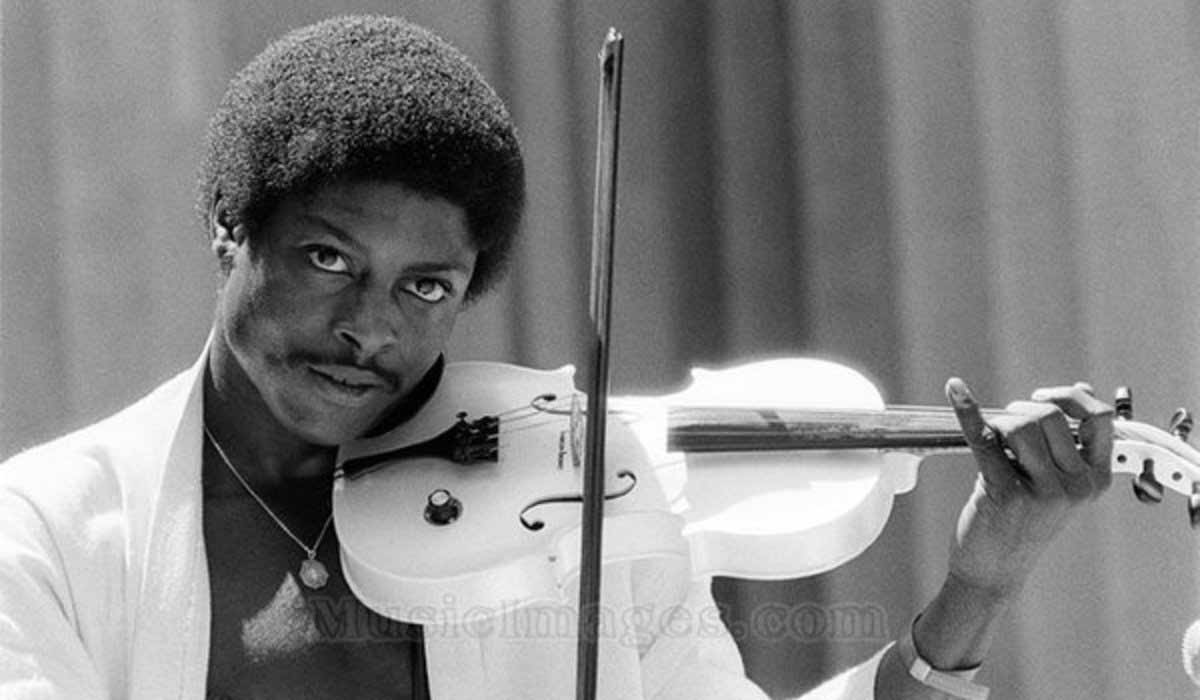
Noel Pointer burst on the music scene in the 1970s as a young brilliantly talented jazz violinist. The Brooklyn-born musician had studied classical violin at the High School of the Performing Arts and at the Manhattan School of Music. By 1982, radio stations from jazz to R&B were playing his melodic smooth jazz-fusion sound.

His albums All My Reasons and Direct Hit were nominated for Grammy Awards. His debut album, Phantazia went platinum and five albums were listed on Billboard’s jazz chart. As a freelance musician, his credits included the Apollo Theater Orchestra, Love Unlimited, Dance Theater of Harlem Orchestra and Broadway shows, including Guys and Dolls and Dreamgirls.


A community activist, Pointer was an early advocate for the African Burial Ground in New York. He also received special citations from the United States Congress, the US Congressional Black Caucus, and the African National Congress. In 1994, at age 39, he suddenly died of a stroke leaving his wife Chinita, a school administrator, a widow with three children.


In 1995, with the support of the Pointer family, Chinita Pointer founded the Noel Pointer Foundation. It continues to provide music instruction and performance opportunities for Black and Hispanic children ages 3 to 18 in New York City public schools and out of school programs. Over the years, its music professionals have worked with 37,000 children in 50 Title 1 schools and daycare centers who have learned to perform with a string musical instrument. Headquartered in Bed Stuy Restoration Plaza at 247 Herkimer Street, the Noel Pointer Foundation also holds professional music classes for children and adults.


The Noel Pointer Foundation’s young alumni have been accepted at New York City’s specialized middle schools and high schools and have gone to America’s prestigious colleges like Juilliard, Berklee College of Music, Harvard, Yale, Howard, Syracuse, Duke and Amherst. Many have returned as mentors and counselors to work with the young students.
Our Time Press spoke to Chinita Pointer, President and CEO of the Noel Pointer Foundation about the impact of introducing Black and Hispanic youth to the world of string music.

OTP: What makes The Noel Pointer Foundation program unique?
CP:
Our program is unique because the majority of our students are of color. That’s what I wanted. My goal was to make sure students of color received quality music education.

OTP: The Noel Pointer Foundation specializes in teaching string instruments to Black and Hispanic youth –violin, viola, cello, double bass, piano and classical guitar. Why is it more complex to learn to play string instruments?
CP:
Noel used to always say that learning how to play a string instrument is the hardest instrument. There’s coordination and the dexterity of having to play a string instrument. Not only are you having to use your hands and your eyes, but you have to be able to be able to have one hand holding the bow. The other hand is holding the instrument.

Then you have to be able to read the music and have your hands positioned in a way where the intonation is clear. You’re doing three things at one time to create a piece of music. You have to make sure that the bow is in a certain position so that it’s not out of tune. Because if you don’t have that bow in that certain position, that’s when you hear that screeching noise. It just sounds horrible. So intonation is very important, and technique is very important when it comes to playing the string instrument.

OTP: The Noel Pointer Foundation Players are known as an elite chamber ensemble of Black and Hispanic youth. What has been the impact of the NPF Players?
CP:
Our Noel Pointer Foundation Players are the string ensemble that we send out to represent the Noel Pointer Foundation. They played at Lincoln Center, Carnegie Hall, political inaugurations and special events. They have performed all over the New York metropolitan area. We’re looking forward to bringing in more students to join that ensemble.

Not only do they do classical music, our kids are learning different genres of music. We do a Fiddle Fest concert every year. What we do for our Fiddle Fest concert is choose a theme. Last year, our theme was Motown, so the kids got to play pieces from Motown. Which was amazing. This year, we’re doing musicals that were on Broadway. They get a kick out of it.

The music is familiar to familiar with some of the kids. It gives them an opportunity to play not just play classical, but to be able to play the other genres of music, which makes it more exciting.

OTP: What type of life skills do children learn by performing music?
CP:
Classical music is our foundation because it’s very important that our kids learn how to read music. It’s important that they understand intonations, understand that they know technique and poise. It builds character, learning how to play with your peers. Even if it’s a duet or a quartet or a larger ensemble, you have to listen to your peers while you’re playing. You’re able to blend those sounds and that melody and able to project.

You’re building character and developing your self-esteem along the way. We do studio recitals every year as well so that kids can perform solo. It’s difficult getting in front of the audience and speaking and performing. I don’t care how old or young you are.

It’s a bit nerve-wracking. This is something that really helps our children develop their skills and their confidence by playing and performing in front of other people. For the studio recitals, its small audience that’s made up of their parents and special guests that takes place in on our campus at Bedford Stuyvesant Restoration.

OTP: The Noel Pointer Foundation teaches string musical instruments to youth ages 3 to 18. How do you teach music to a 3-year-old?
CP:
They say you have 20 minutes to work with a three-year old. If you keep them engaged, you’re great. You must have games. You must have exercises and repetition in order to keep their attention. They learn quickly and they retain information quickly. It has to be hands on. So, if you have a tambourine or you have a piano, you can use clapping and stomping exercises and singing exercises.

They love to sing songs that they are familiar with. You do those things that they are familiar with in order for you to teach them. Then you incorporate the instruments and different sounds, counting and numbers. You’re telling a story as well. You have “Twinkle, Twinkle” and they do it in variations. They start off with one note and then they’ll develop that one node into a song. There are other variations that our teachers use.

It’s pretty much the Suzuki method in terms of teaching them the fundamentals of music. Then as time goes on, you want to teach them what the notes are because the notes are very important. Posture is very important, technique is very important, intonation is very important, and having fun is really, really important.


The Noel Pointer Foundation has received a $11.6 million grant from New York City to restructure a firehouse in Cobble Hill as it’s new headquarters. For more information on the music program, visit www.noelpointer.org

Poets Speak of Impact of War on the Youth

For Gaza’s Children: Black, Brown, and Jewish Writers and Poets Speak Out
Marc Lamont Hill, Haki R. Madhubuti and Keith Gilyard, Editors
Third World Press Foundation, 196 pages, 2025.

What they don’t tell you
What’s not recorded for news
Is the screaming drowned
Out by bombs that rattle bones
Burst eardrums steal parent’s breath.

  • -From “Gaza Suite” by Tony Medina

The words from Medina’s poem “Gaza Suite” make clear how the sounds of war remain etched in the minds of parents who have lost their children in the Gaza War. Marc Lamont Hill, Haki R. Madhubuti, and Keith Gilyard, editors of For Gaza’s Children: Black, Brown, and Jewish Writers and Poets Speak Out (Third World Press Foundation, 2025), have compiled a powerful collection of essays and poems that provide personal stories, observations, and historical documentation of the impact of the war in Gaza on its children.

As Haki Madhubuti states in his opening essay, “Dare to Accurately Name the Horror of Gaza,”, “. .. it is often the poets who bring clarity, who warn us to think beyond the possibility of one’s own life and death.”
For Gaza’s Children is divided into three sections, each section containing approximately twelve essays and poems depicting the complexity, history, impact, and harrowing details of the war on the children of both Israel and Palestine.

As of May 25, 2025, more than 50,000 children have reportedly been killed or injured since October 2023. Images and videos of burned and dismembered children are part of a list of unimaginable horrors that we continue to witness as we view the effects of this war. ‘Unimaginable horrors’: more than 50,000 children reportedly killed or injured in the Gaza Strip.


Hill’s essay “The Denial of Palestinian Childhood,” reminds readers that the attacks on Gaza’s children must be measured in trauma as well as in death and injury. He adds that schools, universities, libraries, museums, and monuments have all been destroyed in what is in essence a conscious attempt to erase the history and culture of the Palestinian people.

Lara Friedman, president of the Foundation for Middle East Peace (FMEP) opens her essay by describing how in July 2014, an Israeli gunboat fired at a group of Palestinian boys playing soccer on a beach outside of the hotel where she was staying. She notes that the Israeli response following the investigation of this attack was “the attack process in question accorded with Israeli domestic law and international law requirements.”


Award-winning novelist, short story writer, poet, and activist Alice Walker reminds us that women are very much a part of the resistance in the Gaza War. The speaker in her poem “Talking to Hamas” expresses surprise upon learning that the dreaded terrorist that she has been told to fear is actually Huda Naim, a woman with whom she has spoken with about wanting a sane world for the children. Brian Gilmore, a poet and public interest lawyer posits the complicity of the United States in prolonging the war.

He points out that the last 75 years of Palestinian history would have been different if America had pulled back its support.


After being called an anti-Semite by a Jewish person for comparing the situation in Israel to the Native Americans in the United States and citing it as settler colonialism and ethnic cleansing, Gilmore conducted research by academic historians and scholars who knew the history of the conflict.

His findings and his friendships with Palestinians, Jewish people, and others affirmed his belief that many young people from various backgrounds: Jewish, Palestinian, Arab American, Asian, and Latino were in support of the Palestinian struggle for equal justice, peace, and human rights in the world.


A major outcome of this book is that support of the struggle in Palestine does not mean that one is anti-Semitic. Hip hop activist and writer Talib Kweli Greene reiterates this in his essay, “The Sin of Neutrality or the Tail of the Mouse.” He states:
As hate crimes against Jewish people to continue to rise, I will continue to stand in solidarity with Jewish communities against all anti-Jewish ideology and action. I also continue to support a free Palestine and I always will. These are not mutually exclusive concepts.


Scholar, poet, and short story writer Keith Gilyard also emphasizes this in the Addendum of For Gaza’s Children. He argues that we must recognize anti-Zionism and anti-Semitism as false equivalents. Expressing opposition to the Zionist project espoused by people such as Herzl and Ben-Gurion is to reject a policy and proposal of conquest.


This is not anti-Semitism. Speaking out against mass deportation of immigrants who have followed the rules of law, denying free speech to immigrants and all Americans, and critiquing Islamophobia, and xenophobia does not equate to anti-Semitism. People who speak for the children and against the war in Gaza have refused to be silent and are human rights advocates for peace and social justice throughout the world.


For Gaza’s Children: Black, Brown, and Jewish Writers and Poets Speak Out is a poignant reminder of our responsibility for the children from a diverse range of scholars, poets, and public intellectuals.

Dr. Brenda M. Greene is Professor of English and Founder and Executive Director Emeritus of the Center for Black Literature at Medgar Evers College, CUNY.