Home Blog Page 495

What’s Going On

SUMMERTIME IN AMERICA

Congressman John Robert Lewis, 80, the U.S. Representative from Georgia’s 5th district, since 1987, died on July 17, while battling pancreatic cancer. Lewis was a civil rights leader, a visionary, and a man of great moral authority. His legacy is as a peace warrior and, yet, a fighter for justice. His life’s purpose was laser-focused on equal rights for all.

During his early college days at Fisk University, Lewis was one of the original Freedom Riders. He worked to integrate lunch counters throughout the South in places like South Carolina, Alabama, Mississippi. And had the battle scars to prove it. He chaired the Student Nonviolent Coordinating Committee (SNCC), 1963-1966, which he co-founded in 1960. Throughout his life, he encouraged people to “get into good trouble” like the pursuit of civil rights.
An architect of, and a speaker at, the historic 1963 March on Washington, Lewis, then 23, was one of the “Big Six” leaders of groups who organized the historic event alongside The Rev. Martin Luther King, Jr. He also was an organizer of the March for Black voting rights across the Edmond Pettus Bridge in Selma, Alabama, Spring 1965 where he was beaten and ended up with a fractured skull. A few months later, the US Voting Rights Bill was enacted. Lewis was active in local Atlanta politics until 1986 when he was elected to Congress where he continued his fight for equal rights and justice for all, far beyond his Atlanta constituency.
In 2013, the Roberts Supreme Court cut the muscle out of the Voting Rights Act, allowing 9 states to change their election laws without prior federal approval. In 2019 Congress passed a voting rights bill to restore protections removed by the Supreme Court in 2013. The Bill was sent to Senate Majority leader Mitch McConnell where it collects dust. But perhaps, not for long. Currently, there are national campaigns to memorialize Lewis’ lifelong work: to rename the Edmund Pettus Bridge in Selma, Alabama to the John Lewis Bridge and to pass the Voting Rights Bill and call it by Lewis’ name, as well.

“His Truth is Marching On: John Lewis and the Power of Hope,” a biography by Pulitzer Prize winning historian Jon Meachum, is set for publication August 25.

COVID19 UPDATES
NYS Homes and Community Renewal commits to $100 million COVID Rent Relief Program for NYS tenants with rent arrears, from April 1 to July 31. This one-time rental subsidy will be paid directly to landlords. There is no tenant repay obligation. Application deadline is July 30. Visit HCR.ny.gov/RRP and check with your NYS assemblyman and senator immediately.

ARTS/CULTURE
TELEVISION: MSNBC’s new highly anticipated prime time show, REIDOUT, hosted by Joy Reid got off to a good start on July 20. The show is 60 Minutes on steroids from a GenX perspective. Reid’s guests were 2020 Democratic Presidential candidate Joe Biden, the 2016 Democratic presidential nominee Hillary Clinton; and embattled newsmakers Atlanta Mayor Keisha Lance Bottoms and Chicago Mayor Lori Lightfoot. Mayor Bottoms is under attack by Governor Brian Kemp who wants to enjoin her from talks with the press about her COVID19 mask mandate. Georgia is a COVID hotspot. Chicago Mayor Lightfoot, a former Federal prosecutor, says that Trump’s threat to send uninvited Federal law enforcement camouflaged agents, without IDs, in unmarked cars, to her city like he did in Portland, is unconstitutional. She’s ready to fight. The REIDOUT show airs, Monday to Friday, 7-8 pm EDT.

BOOKS: Presidential historian Jon Meachum has written the definitive John Lewis memoir is at the top of our must-read list. It’s due next month.
The Mary Trump tell-all book, “Too Much and Never Enough: How My Family Created the World’s Most Dangerous Man,” about her infamous Uncle Donald, was published on July 14 and sold more than 950,000 copies that day. The book delves into the most dystopian corners of the Fred Trump household. Clinical psychologist Trump says her uncle cheated to get into UPenn’s Wharton School of Business and that he should get professional psychiatric help to identify his multiple neuroses. She was a guest on the Rachel Maddow MSNBC TV show on 7/16, which pulled in more than a record 5.5 million viewers, besting networks and cable competition.

NEWSMAKERS
Three out of eight nominees for the coveted WTO, World Trade Organization, Director General post are Africans, including Ngozi Okonjo Iweala, an economist and global finance expert, who is former Nigerian Finance Minister and Foreign Affairs Minister. A candidate for the World Bank Presidency in 2012, Ngozi Okonjo Iweala is Chairperson of the Board of the Global Alliance of Vaccines and Immunization (GAVI).

Birthday greetings to Leo lions/lionesses: Leah Abraham, Settepani; Anthony Anderson; Angela Bassett; Rev. AR Bernard, Christian Cultural Center; Halle Berry; Charles Blow, NY Times; NYS Senator Leroy Comrie; fashion baron Dapper Dan; Sarah Dash; Ambassador Alice Dear; Laurence Fishburne; Vivica Fox; Barbara Harris, realtor; Michael Horsford; Victoria Horsford; Amari Jacobs; US Rep. Hakeem Jeffries; Magic Johnson; Martha Jones, designer/visual artist; Vernon Jordan; Woodie King Jr., New Federal Theatre; Lois Knox, NJ Perle Mesta; Debra Lee, BET: Mari Moss, CB10 member; Mona Wyre-Manigo, Antigua Progressive Society President; President Barack Obama; Danny Simmons, theater and fine artist; Wesley Snipes; Yvonne Stafford, real estate entrepreneur/author; Professor Yinka Stanford; Professor Keith Taylor; Marlon Wayans; and Duchess of Sussex Meghan Markle.

AUGUST OUTINGS
The July 10 WGO column misstated the 2020 HARLEM WEEK celebration, observing its 46th anniversary. Corrected info: HARLEM WEEK 2020 is moving from the streets of Harlem to the virtual world, in the time of COVID-19. HW2020 dates are from August 16 to 23, with the theme, “Movement of the People.” The HW calendar includes: A Great Day in Harlem; A STEAM (Science, Technology, Engineering, Arts and Math) Youth Technology Education and Career Conference and Expo; NYC Eco Development Day; NYC Sr. Citizens Day; and Harlem Day. Visit HarlemWeek.com for full events menu.

MARCHES: The NAACP will host a Virtual March on Washington, August 27/28, the 57th Anniversary of the MARCH, which is the day after the GOP Presidential nomination convention. Visit NAACP.org

Last month, Rev. Al Sharpton’s National Action Network announced its plan for a March on Washington, DC on August 28, the 57th Anniversary of the historic March on Washington, where Dr. Martin Luther King delivered his I HAVE A DREAM speech. The March protests police brutality. The route: Lincoln Circle to the Martin Luther King Jr. Memorial. Participating organizations include the NAACP, National Urban League, Legal Defense Fund, and the Lawyers’ Committee for Civil Rights Under Law. Visit nationalactionnetwork.org to register for event.

A Harlem –based media/branding specialist, Victoria is reachable at Victoria.horsford@gmail.com
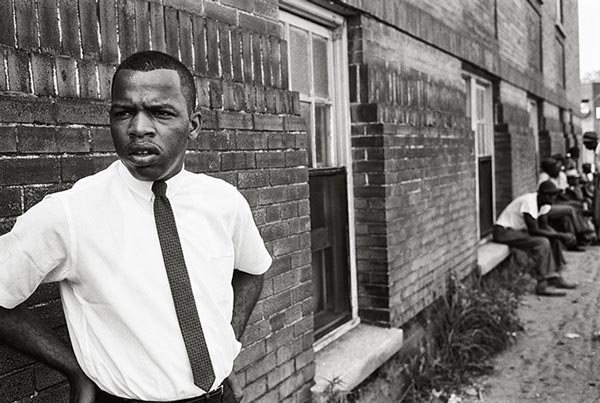
John Lewis… A Remembrance

David Cohen
Politico


John Lewis, who went from being the youngest leader of the 1963 March on Washington to a long-serving congressman from Georgia and icon of the civil rights movement, has died. He was 80.
In December 2019, he was diagnosed with pancreatic cancer.
As a leader of the Student Nonviolent Coordinating Committee, Lewis was a committed participant in some of the key moments of the movement — an original Freedom Rider in 1961, a principal speaker at the March on Washington in 1963, one of those brutally clubbed during a 1965 march in Selma, Ala. Through it all, he faced taunts, beatings and dozens of arrests.


“In the face of what John considered the evils of segregation, he was fearless,” said longtime SNCC activist Courtland Cox.
By his middle years, he was in Congress and sometimes referred to it as its “conscience.” Years later, he was a witness to the inauguration of Barack Obama, the first African American president.


“Generations from now,” Obama said when awarding him a Medal of Freedom in 2011, “when parents teach their children what is meant by courage, the story of John Lewis will come to mind — an American who knew that change could not wait for some other person or some other time; whose life is a lesson in the fierce urgency of now.”
John Robert Lewis was born in Troy, Alabama, on Feb. 21, 1940, one of 10 children of Eddie and Willie Mae Lewis. According to “March,” his three-part autobiography in graphic novel form, he dreamed from a young age of being a preacher. He was in charge of taking care of his family’s chickens and would practice sermons on them: “I preached to my chickens just about every night.”

On “Bloody Sunday” (March 7, 1965), about 600 civil rights marchers, protesting the shooting death of a young activist Jimmie Jackson, were en route from Selma, Alabama to the capitol in Montgomery. The were violently driven back by Alabama State Troopers, Sheriff’s deputies, and a horse-mounted posse after they crossed the Edmund Pettus Bridge. Among the marchers was John Lewis, seen here in center, who was beaten within an inch of his life.


His early years predated the big burst of activism that would begin in the mid 1950s. “Growing up in rural Alabama,” he wrote in “March,” “my parents knew it could be dangerous to make any waves.” Even after the 1954 Brown v. Board of Education decision, nothing much changed in his rural community.


As a teen, Lewis met both Rosa Parks and Rev. Martin Luther King Jr. In 1957, he went to the American Baptist Theological Seminary in Nashville, where he connected with some of the people who would become leading lights of the civil rights movement: Diane Nash, James Bevel, Jim Lawson, Bernard Lafayette and C.T. Vivian.
“By the fall of ’58, my eyes were opening in many ways,” he wrote in “Walking With the Wind: A Memoir of the Movement,” his 1998 memoir. Lewis would help launch SNCC, an organization founded as an offshoot of the Southern Christian Leadership Conference led by King and dedicated to the principles of nonviolence.


The movement had begun to blossom. It took a further step forward with the first sit-in in Greensboro, N.C., at a lunch counter at a Woolworth’s in February 1960. The Nashville activists were soon emulating the tactic, starting with lunch counters and moving on other establishments, such as movie theaters. During one sit-in, a restaurant owner turned a fumigating machine on Lewis and Bevel and left. “Were we not human to him?” Lewis wondered.
“What we found, as we pushed our protests deeper into the heart of segregated society,” Lewis wrote in “March,” “was that our nonviolent actions were met with increasingly more violent responses.”


In May 1961, Lewis headed south with the first Freedom Riders, an integrated group of bus riders who traveled from Washington to integrate the facilities of interstate bus terminals. Lewis was the first of the riders to be assaulted, during a stop in Rock Hill, S.C. He was punched and kicked. Lewis would be assaulted again in Montgomery, Ala., where he was knocked unconscious.


“I could feel my knees collapse and then nothing,” Lewis recalled, according to “Freedom Riders: 1961 and the Struggle for Racial Justice” by Raymond Arsenault. “Everything turned white for an instant, then black.”
For his trouble, he would subsequently be jailed, ending up in Mississippi’s notorious Parchman Farm. In the fall of 1961, however, the campaign yielded results: All interstate travel facilities were integrated.


“The fare was paid in blood,” Lewis wrote in “March,” “but the Freedom Rides stirred the national consciousness and awoke the hearts and minds of a generation.”
SNCC veteran Cox said in 2020: “John’s fundamental belief of confronting the evils of segregation that was pervasive in the South allowed him to ‘march into hell for a heavenly cause.’”

In 1963, Lewis became SNCC‘s chairman. That made him the head of one of the six leading civil rights organizations working on the Aug. 28 March of Washington for Jobs and Freedom that was being planned by A. Philip Randolph, a labor leader and elder statesman of the civil rights movement. Randolph had been trying to organize such a march since 1941.
The others were King, James Farmer Jr. (Congress of Racial Equality), Roy Wilkins (National Association for the Advancement of Colored People) and Whitney Young Jr. (National Urban League).


Lewis was the youngest of the so-called “Big Six” and, as soon became evident, the most militant. In the final hours leading up to the event, some of his fellow leaders panicked over what Lewis planned to say.


“In the original draft of his speech,” David Remnick wrote in 2009, “the demand for racial justice and ‘serious revolution‘ was so fearless that, in the last minutes before the program began, Dr. King, Bayard Rustin, Roy Wilkins, and other movement organizers negotiated with him to remove any phrases that might offend the Kennedy administration.”
Lewis’ line that “the revolution is at hand” alarmed the old guard of the movement. So did his assertion that “we will march through the South, through the heart of Dixie, the way Sherman did.” Lewis, as always, was committed to nonviolence, but his fellow leaders feared he would be misconstrued.


Randolph spent hours mediating between Lewis and other leaders, trying to get Lewis to edit his speech. The discussion was heated and emotional, but ultimately Lewis made some changes.
“I was angry, but when we were done, I was satisfied,” Lewis later wrote in “Walking With the Wind.”


“The speech still had fire. It still had bite, certainly more teeth than any other speech made that day. It still had an edge, with no talk of ‘Negroes’ — I spoke instead of “black citizens” and “the black masses,’ the only speaker that day to use those phrases.”
Shortly after Lewis spoke, King took the podium and offered his “I Have a Dream” speech. Lewis would later write he didn’t consider it King’s best speech, but added: “Considering the context and setting and the timing of this one, it was a truly a masterpiece, truly immortal.”
The year 1964 brought the Freedom Summer, a SNCC-led attempt to register and educate as many voters as possible in Mississippi. Lewis recruited students from around the country to join the effort, including Andrew Goodman and Michael Schwerner, who would be brutally slain along with James Chaney.


On March 7, 1965, Lewis was again involved in a milestone of the movement. “In Selma, Lewis led a march across the Edmund Pettus Bridge straight into a blockade set up by Alabama state troopers. The first nightstick came down on Lewis’s skull,” Remnick wrote in 2009.
In his memoir, Lewis said Alabama’s “Bloody Sunday” was a strange day from the get-go. “It was somber and subdued, almost like a funeral procession,” he wrote in “Walking With the Wind“ of the march he led with Hosea Williams. “There were no big names up front, no celebrities. This was just plain folks moving through the streets of Selma.”
Calling him “a personal hero,” Sen. John McCain described Lewis‘ actions that day as exemplary of America’s most basic dreams. “In America, we have always believed that if the day was a disappointment, we would win tomorrow,” McCain wrote in 2018‘s “The Restless Wave.” “That’s what John Lewis believed when he marched across this bridge.”
The footage of the beatings that day in Alabama pushed President Lyndon B. Johnson to action on civil rights legislation. “Something about that day in Selma touched a nerve deeper than anything that had come before,” Lewis later wrote.


After Selma and with each passing month, SNCC became more militant. The organization grew to reflect the disappointment of those who saw progress as coming too slow. “Something was born in Selma, but something died there, too,” Lewis wrote in “Walking With the Wind.” “The road of nonviolence had essentially run out.” (King’s assassination in 1968 was another devastating blow against those advocating nonviolence.)
In 1966, Lewis lost the chairmanship to Stokely Carmichael, champion of the slogan “Black Power.” “My life, my identity, most of my very existence, was tied to SNCC,” Lewis recalled in “Walking With the Wind.” “Now, so suddenly, I felt put out to pasture.”
In 1968, he worked on the presidential campaign of Robert F. Kennedy. On the night of the California primary, he was with the campaign at the Ambassador Hotel in Los Angeles when Kennedy was shot and killed by Sirhan Sirhan.


Lewis moved on to the Voter Education Project in 1970, and in 1977 made his first stab at electoral politics, running unsuccessfully for a House seat in Georgia.
After a stint on Atlanta’s City Council, he tried again for the House in 1986 and won, edging out fellow activist Julian Bond. He remained in the House after that, an ardent Democratic partisan but one who said that his mission never changed.


“My overarching duty,” Lewis wrote in 1998, “as I declared during that 1986 campaign and during every campaign since then, has been to uphold and apply to our entire society the principles which formed the foundation of the movement to which I have devoted my entire life.” Lewis spent years pushing for a National Museum of African American History and Culture in Washington, introducing legislation every year until it finally passed in 2003. “Giving up on dreams is not an option for me,” he wrote when the museum opened in 2016.
Though not an author of much in the way of major legislation, some issues drew out his eloquence. In March 2010, in the final stages of the fierce debate over the Affordable Care Act, he fought for its passage. “This may be the most important vote that we cast as members of this body,” Lewis said. “We have a moral obligation today, tonight, to make health care a right and not a privilege.”


In 2016, he was one of the leaders of a unique sit-in on the House floor in support of gun-safety legislation. “Give us a vote. Let us vote. We came here to do our job,” he said. (The sit-in failed.)
As time passed, he came to be seen as the living embodiment of the civil rights movement.
Lewis’ cancer diagnosis at the end of 2019 led to an outpouring of support. “There is no more important New Year’s resolution, and it begins right now: pray for John Lewis,” tweeted NPR’s Scott Simon. On that day, Obama tweeted: “If there’s one thing I love about @RepJohnLewis, it’s his incomparable will to fight. I know he’s got a lot more of that left in him.“


In 2009, Lewis met with a white man named Elwin Wilson, who was among those who assaulted Lewis and other Freedom Riders in 1961. Following Obama’s election in 2008, Wilson said he had an epiphany and traveled to Washington to apologize for his violent acts and seek Lewis’ forgiveness. Lewis gave it freely.


“It’s in keeping with the philosophy of nonviolence,” Lewis later told the New York Times. “That’s what the movement was always about, to have the capacity to forgive and move toward reconciliation.”
John Bresnahan contributed to this article.

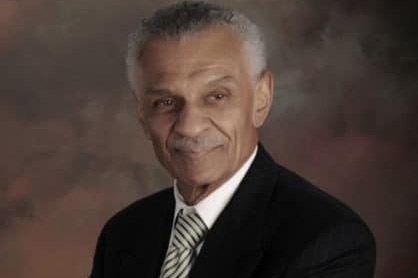
Rev. Dr. C.T. Vivian… A Remembrance

The Rev. Dr. C.T. Vivian, a beloved civil rights veteran who marched alongside the Rev. Martin Luther King Jr., died at his home in Atlanta, Friday. He was 95.


Vivian’s daughter, Denise Morse, confirmed her dad’s passing and told Atlanta’s NBC affiliate WXIA that he was “one of the most wonderful men who ever walked the earth.”
The civil rights titan suffered a stroke about two months ago but seemed to be on the mend before “he just stopped eating” and died of natural causes, friend and business partner Don Rivers said.


“He has always been one of the people who had the most insight, wisdom, integrity and dedication,” said former Atlanta Mayor Andrew Young, a contemporary of Vivian who also worked alongside King.

The following is from the History Makers
While studying for the ministry at American Baptist College in Nashville, Tennessee in 1959, Vivian met Rev. James Lawson, who was teaching Mahatma Gandhi’s nonviolent direct action strategy to the Student Central Committee. Diane Nash, Bernard Lafayette, James Bevel, James Forman, John Lewis and other students from American Baptist, Fisk University and Tennessee State University executed a systematic non-violent campaign for justice. 
On April 19, 1960, 4,000 demonstrators marched on City Hall where Vivian and Diane Nash challenged Nashville Mayor Ben West. As a result, Mayor West publicly agreed that racial discrimination was morally wrong. Many of those students became part of the Student Nonviolent Coordinating Committee (SNCC).


In 1961, Vivian, now a member of the Southern Christian Leadership Conference (SCLC) participated in Freedom Rides replacing injured members of the Congress of Racial Equality (CORE). Vivian was appointed to the executive staff of the SCLC in 1963, when Dr. Martin Luther King, Jr., named him national director of affiliates.
Two years later, in an incident that would make national news, Vivian confronted Sheriff Jim Clark on the steps of the Selma courthouse during a voter registration drive. After an impassioned speech by Vivian, Clark struck him on the mouth, portraying Clark to the world as a racist. In 1969, Vivian wrote the first book on the modern-day Civil Rights Movement, entitled Black Power and the American Myth. Also during 1969, Vivian worked closely with Vincent Harding and others in forming the Institute of the Black World in Atlanta.
By 1979, Vivian had organized and was serving as chairman of the board of the National Anti-Klan Network, which is known today as the Center for Democratic Renewal. Vivian also founded the Black Action Strategies and Information Center (BASIC), a workplace consultancy on race relations and multicultural training. In 1999, he turned the leadership of BASIC over to one of his sons.
President Barack Obama honored Dr. Vivian with the Presidential Medal of Freedom in 2013.

Blessings to his friends and family.

Race Men: Faithful to their Purpose and Mission

View From Here
By David Mark Greaves


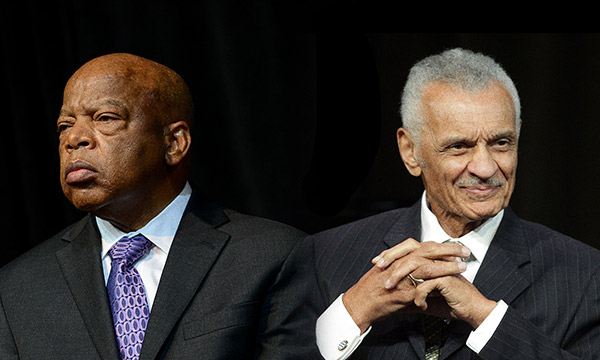
Rev. C. T. Vivian and Congressman John Lewis, the firebrands of the 1960’s Civil Rights Era,
were the hammer and the anvil of a fired-up people intent on bending the arc of the nation toward justice and equality.


They were “Race Men” who stayed faithful to their mission of paving the road forward for their people, making it smoother for everyone.
Leading the way out of Jim Crow was hard and dangerous work and these are two of the many who did what the times called for.
They took the handoff of freedom’s torch and now it is in our hands to be passed to the generations next in line. To remember John Lewis and Cordy Tindell Vivian and so many others, is to stand for self, family and community. It is to Believe in The Struggle. To know that you can live a life that makes a difference in the world. It is to resist tyranny and inhumanity, as they did with their Brother-Leader Martin. Like him, they practiced what they preached.


They fought together on the front lines of the struggle. Where Medgar Evers was shot in the back and where Andrew Goodman, James Chaney and Michael Schwerner were murdered. Out in front where Fannie Lou Hamer was beaten. In front where angry men were anticipating going to work with their dogs, batons and firehoses.


You can see the fearlessness in the eyes of Vivian and Lewis in a 1963 police photo, before they were sent to a Mississippi prison – for daring to enter a “whites only” bathroom. With Lewis, the wry beginnings of a smile seemed to say, “You only think you have me.”
Lewis and Vivian’s audacious courage and spirit in getting into “good trouble” during that Civil Rights era prompted President Barack Obama to award each the Presidential Medal of Freedom.


And now fate has brought them together, again, one last earthly time. They died within hours of each other, last Friday. Now, they lay in two closed caskets, side by side, in the same room at the Willie A. Watkins Funeral Home in Atlanta Ga.
“In 1965 in Selma, they were each brutally beaten just a month apart while trying to register Black voters and bring attention to the generational plight of disenfranchised Blacks,” reported The Atlanta-Constitution Journal, yesterday.
“They walked together, talked together and strategized together,” funeral director Watkins told AJC. “They took the beatings that others didn’t and survived unafraid. God took them at the ages of 95 and 80. And now here they are in the same room — together.”
But their lives will not end with their mortality.


They will soon have the actions they took and what they stood for, celebrated from the pulpit and put in song by the choir. There will be happiness and joy in those houses of worship that we were here in this time when men like these walked among us. And they walked so that we might have the right to vote.
We have the chance to honor them at the polls in November.

2020 Presidential Elections
Who will be Biden’s VP? Right now, we’re sure it’s a woman, but who? If Susan Rice is not the VP pick, then she’s a lock for Secretary of State.
But then who would be the best select for these times? My thinking: Elizabeth Warren. It must be someone who has a proven history of focusing directly on consumer complaints, concerns and issues, and health – the kinds of things that have impact at the kitchen table.
Warren already has cadres of experts with a plan for everything. All of which would have to be given a Covid 19 update. She’s also one of the few White women he can choose, that Black women will respect.


And with the appointments of Madam Secretary Rice and Attorney General Kamala Harris, I think everyone will respect the judgement. Then, there’s the dynamic Congressmember Val Demings! Another great VP choice.
Biden’s got nothing but talent to choose from. He can’t go wrong with any combination he comes up with.

Pray for Supreme Court Justice Ruth Bader Ginzburg, now facing a recurrence of her cancer. We know that Mitch McConnell, Donald Trump and the white supremacists they answer to, are circling our lioness. If the justice leaves the court in Trump’s term, then American Democracy as we’ve known it leaves with her.
John Lewis and C.T. Vivian have given us our marching orders. It’s all good, and it’s all good trouble.

John Lewis and C.T. Vivian: Civil Rights Icons, Pass in One Day, Leave Legacies for Generations To Come

Forty-eight senators introduced legislation on Wednesday to restore the Voting Rights Act after it was gutted by the Supreme Court in 2013. The lawmakers named the new bill after civil rights icon John Lewis, a member of Congress from Georgia who passed away Friday.
The “John Lewis Voting Rights Advancement Act”—sponsored by 47 Democrats and Republican Lisa Murkowski (Alaska)—would require that any state with a history of voting discrimination within the past 25 years seek federal approval before making any changes to its voting procedures. And it would mandate that any state, regardless of its history, obtain clearance from the Justice Department or a federal court in Washington, DC, before making any changes that would tend to burden voters of color, such as strict voter ID laws or closing polling places in areas with large numbers of minority voters.


In December, Lewis presided over the Democratic-controlled House as it passed identical legislation to restore the VRA. But Republicans have refused to take up the bill in the Senate, which has now been reintroduced and renamed after Lewis.


Lewis nearly died in March 1965 when he was brutally beaten by Alabama state troopers during a voting rights march in Selma—an event that helped lead to the passage of the original Voting Rights Act later that year. Lewis devoted his life to expanding access to the ballot, calling the vote “the most powerful nonviolent tool we have in a democratic society.”