Home Blog Page 365

U.S. Justice Department to End Investigation into the Lynching of Emmett Till

WASHINGTON
The Associated Press

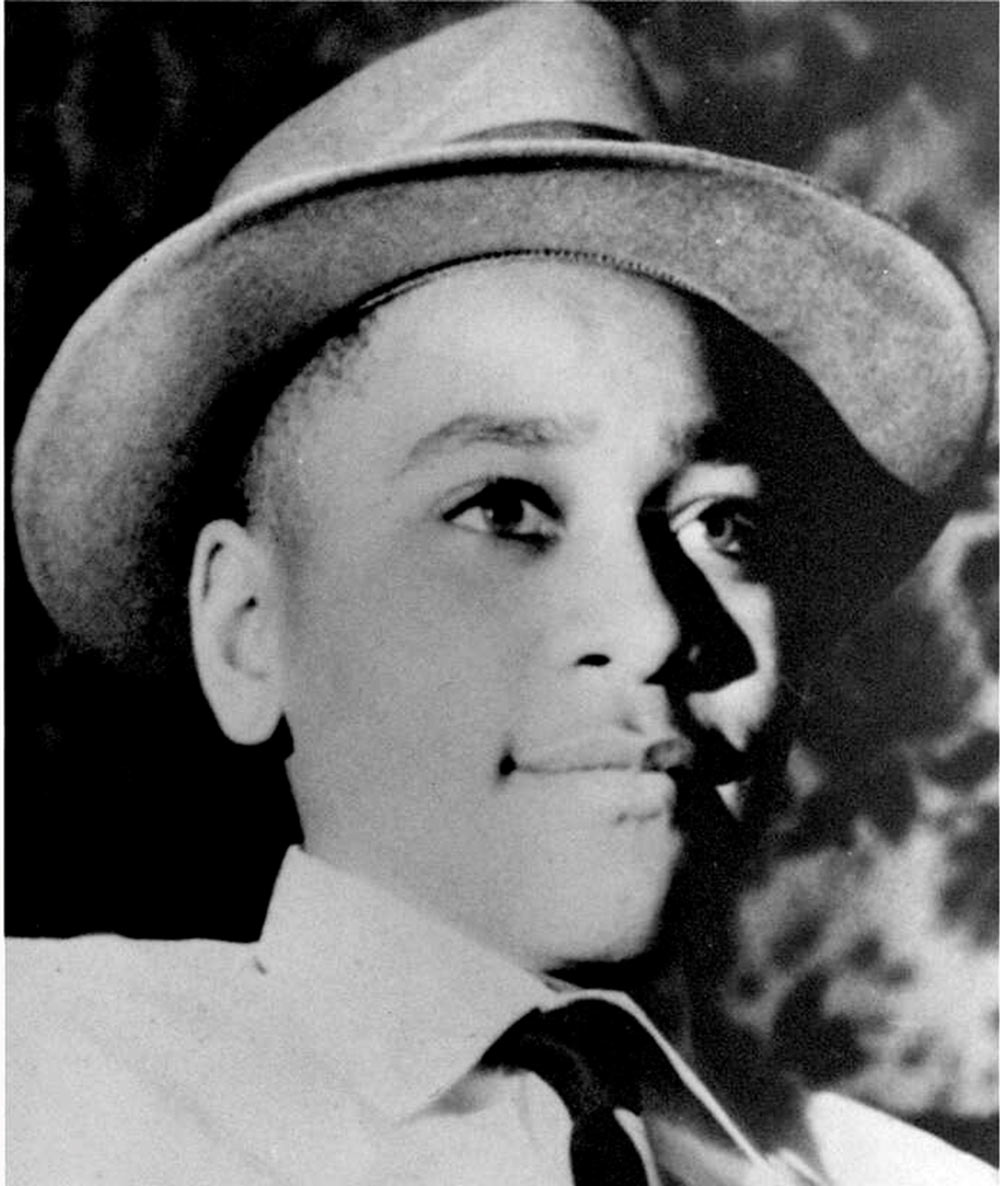
— The U.S. Justice Department told relatives of Emmett Till on Monday that it is ending its latest investigation into the 1955 lynching of the Black teenager from Chicago who was abducted, tortured and killed after witnesses said he whistled at a white woman in Mississippi.
A person familiar with the matter informed The Associated Press about the closure of the investigation and the meeting with Till’s family. The person could not discuss the matter publicly and spoke to the AP on condition of anonymity.


The department reopened an investigation after a 2017 book quoted a key figure, Carolyn Bryant Donham, as saying she lied when she claimed that 14-year-old Till grabbed her, whistled and made sexual advances while she was working in a store in the small community of Money. Relatives have publicly denied that Donham, who is in her 80s, recanted her allegations about Till.
The killing galvanized the civil rights movement after Till’s mother insisted on an open casket, and Jet magazine published photos of his brutalized body.
Days after Till was killed, his body was pulled from the Tallahatchie River, where it was tossed after being weighted down with a cotton gin fan.


Two white men, Roy Bryant and his half-brother J.W. Milam, were tried on murder charges about a month after Till was killed, but an all-white Mississippi jury acquitted them. Months later, they confessed in a paid interview with Look magazine. Bryant was married to Donham in 1955.
The Justice Department in 2004 opened an investigation of Till’s killing after it received inquiries about whether charges could be brought against anyone still living. The department said the statute of limitations had run out on any potential federal crime, but the FBI worked with state investigators to determine if state charges could be brought. In February 2007, a Mississippi grand jury declined to indict anyone, and the Justice Department announced it was closing the case.


Bryant and Milam were not brought to trial again, and they are now both dead. Donham has been living in Raleigh, North Carolina.
The FBI in 2006 began a cold case initiative to investigate racially motivated killings from decades earlier. A federal law named after Till allows a review of killings that had not been solved or prosecuted to the point of a conviction.
The Emmett Till Unsolved Civil Rights Crime Act requires the Justice Department to make an annual report to Congress. No report was filed in 2020, but a report filed in June of this year indicated that the department was still investigating the abduction and killing of Till.


The FBI investigation has included a talk with the Rev. Wheeler Parker, who previously told the AP in an interview that he heard his cousin whistle at the woman in a store in Money, Mississippi, but that the teen did nothing to warrant being killed.

NATIONAL SPOTLIGHT ON STACEY ABRAMS!

She’s Running for Governor of Georgia in 2022


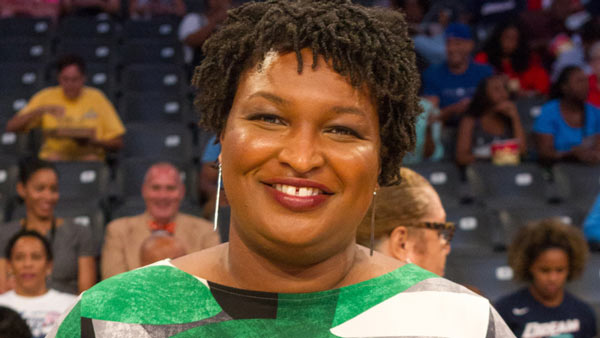
Democrat Stacey Abrams announced Wednesday she’s running for governor of Georgia in 2022, setting the stage for a possible rematch against the current governor, Republican Brian Kemp, who narrowly beat Abrams in 2018.
Her entrance into the contest keeps the political spotlight on Georgia, which has become one of the most competitive and closely watched states in the nation.


Abrams, a former Democratic leader in the Georgia House who has emerged as a vocal voting rights advocate on the national stage, rose to prominence in the 2018 race, representing, for some, a possible future of the Democratic Party.
Abrams ultimately lost that election to Kemp by a margin of just 1.4 percentage points — the closest Georgia gubernatorial race in decades, according to the Atlanta Journal-Constitution. Abrams refused to concede that election, citing what she called voter suppression on behalf of Kemp, who was then overseeing the election as secretary of state. Kemp denied her accusations.


Brian Goode in Diversity Inc. writes, She (Abrams) has since become one of the stars of the Democratic party, especially in the South, helping to bring Black votes into the polls and contributing significantly to key Democratic victories in the state last year, including those of President Joe Biden and Senators ​​Raphael Warnock and Jon Ossoff.”
Despite her national profile, Abrams focused on Georgia in a video announcing her candidacy.
“I’m running for Governor because opportunity in our state shouldn’t be determined by zip code, background or access to power,” Abrams wrote on Twitter.


Kemp would have to get the GOP nomination again. He’s drawn the ire of former President Donald Trump for not helping to overturn the 2020 presidential election in the state, and pro-Trump Republicans have already lined up to challenge Kemp.
“Next November’s election for Governor is a battle for the soul of our state,” Kemp wrote on Twitter, after Abrams announced her bid. “I’m in the fight against Stacey Abrams, the failed Biden agenda, and their woke allies to keep Georgia the best place to live, work, and raise a family.”
If successful, Abrams would be the first Black governor in Georgia’s history and the first Black female governor in the nation.


And for the bettors, here’s one from betting experts via Newsweek. “Georgia is changing demographically, which is why we make Stacey Abrams 8-11 favorite to overturn her defeat to Brian Kemp from 2018. State elections are now dominated by the left-leaning Atlanta metro area, with Kemp requiring a massive groundswell of support from the rural Republican heartlands to stand a chance,” Chad Yeomans, Betway spokesperson, told Newsweek.

Leaders Speak up for Homeowners as Predatory Investors Loom

Gentrification Brooklyn – 2021

Big Lien on Black, Brown and Other Distressed Property Owners Set for December 17 …

Ironic would appear to be the only word for the next tax lien auction scheduled to take place one week before Christmas.  But heartless fits the bill, and criminal, most likely, is best.

Note the following bold statements from websites to potential investors in Brooklyn lien properties:

“As of December 1, Brooklyn New York currently has 1,390 tax liens available. Are you looking to buy a tax lien in Brooklyn New York? What happens when you buy a tax lien? Home buyers and Investors buy the liens in Brooklyn New York at a tax lien auction or online auction. These buyers bid for an interest rate on the taxes owed and the right to collect back that money plus an interest payment from the property owner. The relatively high interest rate makes tax liens an attractive investment.” (taxliens.com)

“Investing in tax liens in Bedford Stuyvesant, NY, is one of the least publicized — but safest — ways to make money in real estate. In fact, the rate of return on property tax liens investments in Bedford Stuyvesant, NY, can be anywhere between 15 and 25% interest. (Foreclosure.com)

Leaders Al Vann and Annette Robinson — residents of Central Brooklyn –have consistently spoken up on the issue for more than a decade.  BK Reader has consistently covered 2021 lien story.  Last month, the media outlet printed an opinion in its November 22, 2021 Local Voices column. 

___________________________________________________________________

Op-Ed

STOP THE LIEN SALE

By Gregory Anderson,

President & CEO of  Bridge Street Development Corporation

For  many years, Bridge Street has conducted outreach to property owners on the lien  sale list in an effort to preserve homeownership by the residents of our community.  And for many years, as a direct result of the tax lien sale, the rate of homeownership  by black and brown people in our community has continued to decline.

The lien sale has served as motivation and incentive for deed theft and scammers that have preyed on our community, particularly elderly homeowners. In the  outreach to property owners on the lien sale list it has become clear that predatory investors have already positioned themselves to initiate foreclosure, become vulture  buyers and circumvent the rightful transfer of property to family members.

The lien sale has become a magnet for fraud because while the City is focused on  recouping an average lien of $15,000, the scammers are focused on the value of our property, which is likely to average in the hundreds of thousands of dollars. 

As the lien sale has historically had a disproportionately adverse effect on Black  and Hispanic homeowners, this lien sale, in the midst of a pandemic, will have a  devastating impact in the communities that have been hardest hit economically by  COVID-19. 

At a time when the Administration and Council have implemented several programs  and actions to address the racial income and wealth gap, the City should not  continue a fiscal and financial practice that only intensifies the wealth gap. The tax  lien sale should be cancelled and we look forward to working with the City to  develop alternative solutions that address both sides of this issue.  Stop the Tax Lien Sale…

_________________________________________

Another BK Reader story (Nov. 19, 2021) reported on a rally at City Hall calling for Mayor Bill de Blasio to cancel the controversial sale scheduled for Dec. 17.  The story called attention to the work of the Coalition for Affordable Homes, which comprises 28 housing nonprofits, community associations, local development corporations and legal services agencies, organized the rally and was joined by City Council members Adrienne Adams, Alicka Ampry-Samuel, Carlina Rivera and Robert Cornegy.  Following are excerpts:

Cornegy, who represents Bed-Stuy, said the City’s lien sale was intended to incentivize property owners to pay their taxes, but this year’s sale would ‘likely force minority property owners to lose generational wealth.’

“It also threatens the homes of many renters, all while we are still reeling from the impacts of the COVID-19 pandemic. It is clearly in the interest of New York City to delay the sale at this precarious moment,” he said.

The lien sale is held every year by the New York City Departments of Finance and Environmental Protection, where the tax liens on properties with unpaid property taxes and water bills are sold off in an auction.

This year, the Department of Environmental Protection has opted out of the sale, which will only include Department of Finance held property tax liens, not water and sewer liens.

However, the reduced sale still includes 11,194 properties that have outstanding property tax and emergency repair payments that are past-due to the City. There are 3,657 one-to-three family homes, 3,295 apartment buildings and 4,242 other properties on the list.

In a recent analysis, the Coalition for Affordable Homes found that of the liens sold in Brooklyn in 2011, nearly half of the one- to three-family homes were sold within five years of the lien sale, compared to 13% of similar properties in the borough during the period.

Christie Peale, CEO and executive director of the Center for NYC Neighborhoods, said with the pandemic still surging, it was “incredibly bad timing for another tax lien sale.”

“New Yorkers, especially in communities of color, have been so hard-hit by the pandemic, and homeowners and their tenants are still struggling to recover,” she said.

“Going forward with the tax lien sale would create undue burden and stress for our neighbors and their tenants at a time when they need more support than ever.”

The Coalition for Affordable Homes recommends that New York City lawmakers conduct a racial impact analysis to understand the impact of tax lien sales’ on vulnerable homeowners. Other recommendations include:

-Do not sell liens on taxes for homes with only one to three units (class 1), coops, or condos

-Improve payment plan accessibility

-Allow seniors to access property tax exemptions on a rolling basis, and to start receiving their exemptions at any point during the taxable year after an application has been approved. In cases where homeowners recertify their exemptions after they have expired (as they do annually by law), arrears should be retroactively reduced.

-In the case of a new tax lien or homeowner reapplication for tax exemption, the city should look back into three years of the owner’s tax history to look for exemptions and ensure the property actually does belong on the list. For seniors newly-enrolled in the exemption program who have outstanding tax balances, allow the same three-year lookback to check for previous exemptions– once again to determine if the property properly belongs on the list.

-Allow heirs to enter into payment plans.

-Improve pre-sale noticing, communications and outreach (including info on how to access housing counseling, legal services).

Earlier (in November),  a group of 57 elected officials from across New York led by the state’s attorney general called on de Blasio to stall the tax lien sale. In a letter to de Blasio co-signed by the other electeds, Attorney General Letitia James said New Yorkers must be given the chance to recover from the COVID-19 pandemic “without being forcibly removed from their homes.”
Abode for Joy … and African Voices

Citadels of Knowledge Make History as they Preserve It

One of the highlights of Spelman College’s 140th anniversary year, this year, was the announcement last spring that it would archive African Voices, a literary magazine founded by Brooklyn’s own, Carolyn Butts.
Spelman College, located in Atlanta, is a leading liberal arts college widely recognized as the global leader in the education of women of African descent.


Butts founded African Voices Communications, Inc., a nonprofit arts institution, in 1992 and exists currently as the umbrella for one of the few surviving print magazines documenting Black art, literature and culture.
Past editions of the magazine, along with organizational records, videos and digitized photographs that span three decades, are being preserved by Spelman College, alongside a historical archive of the Reel Sisters of the Diaspora Film Festival & Lecture Series, the first Academy Awards qualifying film festival dedicated to providing opportunities to women of color in the film industry. 

Holly Smith, Spellman College Chief Archivist Photo: Julie Yarborough


Through this partnership, granted funding by the New York Community Trust, the Archives will also have access to an extensive list of 5,000 films produced, directed or written by women of color since 1997.
It is no secret that Our Time Press views archivists as the new activists. In a time when great moments of our history are being lost or forgotten, both African Voices and Spelman College are committed to preserving remnants and whole catalogues of the history and the stories of people of color. We have here, one historic institution preserving the work of another.


Spelman has been committed to documenting its history since its founding in 1881. As the official repository of the College, the greater part of its Archives consists of administrative records, departmental and program records, publications, photographs and other material related to the history and administration of the College.
The African Voices archive includes magazine editions from 1993 through 2021, including issues guest edited by poets Sonia Sanchez and Quincy Troupe, and a speculative fiction issue edited by Sherée Renee Thomas that features an interview with Spelman’s former Distinguished Chair for the Humanities Tananarive Due, and a short poem by Audre Lorde, whose papers are also held by the Archives.


Past editions include rare photographs of a youthful Ntozake Shange by Puerto Rican artist Adál, world-renowned graffiti artist James Top, the celebrated photography of Chester Higgins, Jules Allen and Jamal Shabazz, and work created by master artists Otto Neal, Faith Ringgold, Verna Hart, Elizabeth Catlett, Danny Simmons and Ademola Olugebefola.


In addition to literature, photography and film, the preserved archive will include the work of several powerful artists whose visual language compliments the magazine’s literary contributions by emerging and established writers. 
“We’re proud to have a prominent HBCU and women’s college house nearly 30 years of writings, art and digital media by artists of African descent,” said Carolyn A. Butts, executive director and founder of African Voices. “As home to the work of author-filmmaker Toni Cade Bambara and others, it is an honor to have our collection archived in such a fitting institution that is aligned with our mission to support Black artists and women.”

“I am elated for the donation of the African Voices collection to the Spelman College Archives, and for the ongoing collaborative relationship. This partnership will amplify the work of the African Voices staff, board, the creative artistry of the contributors, and the depth and breadth of the Black diasporic cultural experience overall,” said Holly A. Smith, Spelman archivist, said last spring. “The connection will also facilitate important research on the experiences of Black women and Black communities nationally and internationally. Spelman’s archives will be a wonderful and careful steward of these materials for long term access and preservation of this critically important collection.”

More About Spelman:
Spelman is the country’s leading producer of Black women who complete Ph.D.s in science, technology, engineering and math (STEM). Other recent initiatives include a designation by the Department of Defense as a Center of Excellence for Minority Women in STEM, a Gender and Sexuality Studies Institute, the first endowed queer studies chair at an HBCU, and a program to increase the number of Black women Ph.D.s in economics. New majors have been added, including documentary filmmaking and photography, and partnerships have been established with MIT’s Media Lab, the Broad Institute and the Army Research Lab for artificial intelligence and machine learning. Outstanding alumnae include Children’s Defense Fund founder Marian Wright Edelman, Walgreens Boots Alliance CEO Rosalind Brewer, political leader Stacey Abrams, former Acting Surgeon General and Spelman’s first alumna president Audrey Forbes Manley, actress and producer Latanya Richardson Jackson. For more information: visit www.spelman.edu/about-us/archives.

“They’ll know more than I ever knew”

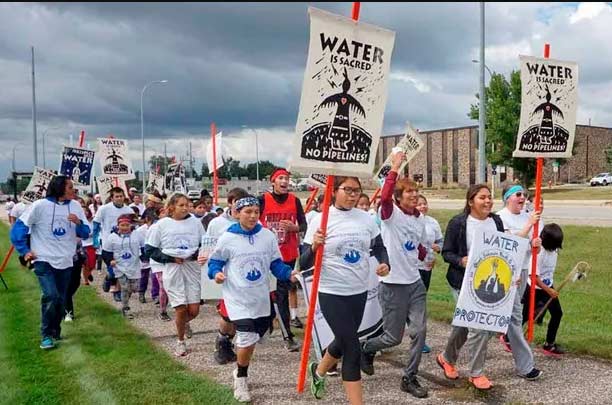
More states move to require lessons on Native American history and culture

In several U.S. states, thanks to the effort and dedication of educators from the Indigenous Peoples, progress has been made in incorporating basic information on history, culture, language, and cultural traditions of Indigenous Nations that originally inhabited this country. They are regional efforts that document a review of local history and the recognition of the provisions of the original inhabitants of this country.


In contradiction, there is a far-right effort to hide the history of colonialism and the genocide against Native Peoples, as a decree of the Governor of South Dakota (where Standing Rock is) to disappear the location of reservations of the tribes in geography classes as well as all cultural and historical references of specific originating peoples.
“What is even more disturbing is the effect removing our shared history will have on Lakota children in public schools in this state. Again, they will be relegated to the “bad guy” in every fantasy about the American conquest. Ignored will be our great leaders, people, culture, contributions, and rightful lands.” said Harold Frazier, chairman of the Cheyenne River Sioux Tribe.


However, this struggle has resulted in positive changes, so we shared below an encouraging report of Chalkbeat about community indigenous education construction.

When Jaylyn Suppah was a high school student, she had a lot of questions for her civics teacher.
Why were their lessons on Native Americans about tribes from the Midwest, with no mention of regional tribes like hers, the Warm Springs, Wasco, Shoshone-Bannock, and Yakama? Why did the textbook only spend a few pages on their history? And why were critical topics, like the forced assimilation of Native American children at US boarding schools, missing?


Arguing with her teacher, Suppah recalls, got her kicked out of class. The experience stuck with Suppah, who advocated for an Oregon law over a decade later that now requires public schools to teach from a fuller, more accurate history of the Native American experience.


Changes are coming: The state developed some lessons and has provided tribes with funding to develop their own specific materials. Suppah’s grandmother has even contributed to the curriculum her tribe is creating, giving Suppah hope that her own children won’t have to fight to see their languages and traditions represented at school.
“I just would like them to have a more inclusive, truthful experience as far as it comes to Indigenous perspectives and how our story is told,” she said.


Efforts like this are underway across the country, as momentum builds to improve how U.S. schools teach American history — including the more painful parts of it — and better recognize the contributions of Native Americans.
But tribes and school officials are up against a series of challenges. Many tribal nations were hit especially hard by the pandemic and are recovering from great loss. Many states don’t spend much, or anything, to help develop tribally specific curriculum or to train teachers.


And some educators worry that their efforts to teach a more accurate version of U.S. history, including about massacres of Native Americans and federal policies that limited their rights, could run up against efforts to restrict educators from teaching about the ways in which racism is embedded in the country’s policies and laws.
“There is the fear of doing it because of the backlash,” said Deborah Dennison, who heads San Carlos Unified schools in Arizona, where nearly all of her students are members of the San Carlos Apache tribe. Her state passed a law this month banning educators from teaching about who bears responsibility for historic acts of racism. “To me, it’s more important now than ever.”


More states are adding, or discussing, Native American curriculum
The push to improve what students learn about Native Americans at school has existed for decades, but recent advocacy by tribes and Native American educators has led several states to add requirements or expand their curriculum.
The latest state to do so, North Dakota, passed a law earlier this year that requires schools to teach Native American history, starting with the upcoming school year. About 10% of the state’s students are Native American.
“Something like this has been long-awaited, I think, especially by our parents and some of our educators,” said Lucy Fredericks, who directs North Dakota’s office of Indian and multicultural education.


Some schools and students have seen meaningful shifts
Though there’s been progress, many Native American students, who make up about 1% of U.S. students, or just under half a million, have little exposure to lessons about their history and culture at school. A recent survey of 27 states where many federally recognized tribes live found that only 11 required public schools to teach about Native Americans in at least some grade levels.


A nationally representative federal survey of more than 13,000 American Indian and Alaska Native students, released this spring, found that many elementary school students had teachers who never or rarely incorporated Indigenous culture or history into their language arts lessons.


Laws don’t immediately change those dynamics, as Washington illustrates. There, a 2005 law encouraged school districts to teach about the state’s tribes using a free curriculum called Since Time Immemorial that the state and tribes worked on together. But few districts chose to teach it.
A decade later, schools were required to use the curriculum or teach other tribally specific lessons. In 2018, the state went further, requiring teachers in training to learn about the materials.
Plenty of schools still haven’t started, advocates acknowledge. But Jennifer LeBret, who helped develop curriculum for the Spokane Tribe of Indians, is particularly hopeful about the impact of training teachers before they reach their first classrooms.


“They’ll at least have a taste of what they should be teaching and how to teach it and where to find the resources,” said LeBret, who has taught some of those classes.
For the students and families who have gotten to see these changes in action, it can be a powerful experience.
In Washington’s Wellpinit School District, which incorporates some of the Spokane curriculum, 12-year-old Isaac Park is learning Salish, one of the Spokane languages, and he learned about the menthol-flavored root that members of his tribe traditionally picked to soothe sore throats.


“We get to learn about what happened a long time ago, the stuff they had to go through when they were starving,” he said. “It feels like history, but the cool part is that there are still verbal stories that carry it on, so we know that it’s true.”
When school was remote during the pandemic, his mother, Teea McCoy, learned more about her tribe’s history alongside her son. That included lessons about Indigenous boarding schools, where many children died or were abused, which sparked her son’s interest in watching video interviews with his great-great-great grandmother about the local boarding school she attended.


“They’ll know more than I ever knew,” McCoy said. “Me, growing up, my history was all Christopher Columbus.”
And as schools work to recover from the pandemic, school leaders say culturally responsive education like this will be especially important for re-engaging students.
“It’s about the system meeting the needs,” she said, “And they’re not just all academic needs. It’s a lot more than that.”
Source: This story was originally published by Chalkbeat, a Nonprofit News Organization Covering Public Education. It has been edited for length.


Sign up for Their newsletters here: ckbe.at/newsletters.