Home Blog Page 360

Celebrating the Remarkable Legacy of Franklin Thomas

By Darren Walker, President,
Ford Foundation

Franklin Thomas was a giant—an American original; a singular leader; an iconic figure in the history of the Ford Foundation and philanthropy, our city and all cities, our nation and the world. And just as Frank shaped a half century of human progress in our neighborhoods and around the globe, he shaped the course of my life, as a mentor, counselor, and friend.


I first met Frank many years ago in Harlem when I, a fledgling nonprofit executive at Abyssinian, hoped to emulate his astounding work with the Bedford-Stuyvesant Restoration Corporation, the granddaddy of community development corporations.

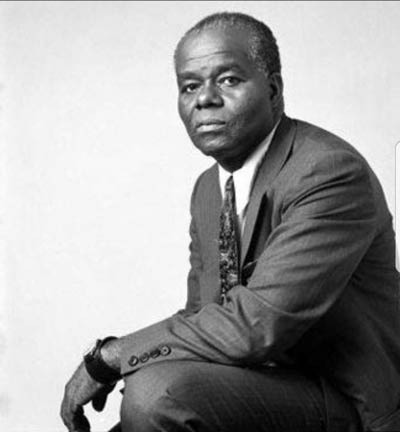
Franklin Thomas, right, joins Darren Walker, left, at the Ford Foundation. Thomas, who sat at the helm of Ford from 1979 to 1996, was a mentor, friend and counselor to Walker and many throughout the foundation.


To me, Frank was the consummate New Yorker. The son of immigrants from Barbados and Antigua, he made a life in Bed-Stuy and never left it behind. But he was also the quintessential leader of a new school of urbanism—a philosophy of revitalization that put people and communities at the center.


This philosophy found expression in the many institutions that Frank served and strengthened—at the agency that later became the Department of Housing and Urban Development, the United States Attorney’s Office for the Southern District of New York, the New York City Police Department, and, of course, in Brooklyn, where Frank’s profound legacy endures street by street, block by block.


At the Ford Foundation, Frank’s perspicacious voice still echoes and his long shadow still looms. During his tenure as president from 1979 to 1996, Frank presided over the groundbreaking Study Commission on US Policy toward South Africa, an indispensable ally of the anti-apartheid movement—and forged a fateful partnership with Nelson Mandela, championing South Africa’s constitution and opening the first foundation office in the country. He also helped to establish the Local Initiative Support Corporation, which has supported countless neighborhood revitalization efforts.
And in our own institution’s most perilous hour, after a 90 percent depletion in our endowment’s real value during the 1970s, Frank courageously rescued us from insolvency. He made painful, unpopular decisions that set us on a path to long-term sustainability and made possible two generations of impact to follow.

While Frank surely changed the world, perhaps equally remarkable is what never changed about Frank: his humility, his generosity, his equanimity. Long after his tenure at the Ford Foundation, he made time to dispense wisdom and perspective from a small office in the Chanin Building on East 42nd Street, guiding me through good times and bad.
He taught us all to do the right things in the right way—to act with righteousness, not self-righteousness. To be in Frank’s presence was to feel awe, reverence, and gratitude. I miss him, and appreciate every word and every moment we shared.


Today, my thoughts are with Frank’s beloved wife Kate, his four children, Kyle, Keith, Hillary, and Kerrie, and the entire Thomas family.


Let us all strive anew for the equanimity that Frank so graciously, gracefully embodied.
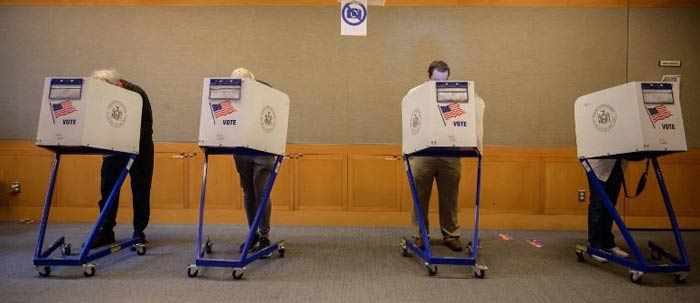
New York City gives noncitizens right to vote in local elections

New York (CNN)New York City on Thursday became the largest municipality in the US to allow noncitizens to vote in local elections
In a vote of 33 to 14, the Democrat-controlled city council passed the measure known as “Our City, Our Vote.”
Under the legislation, noncitizens who have lived in the city for at least 30 days and are legal permanent residents in the US — including green card holders, individuals with workers permits and DACA holders — will be allowed to vote in city elections, including mayor, public advocate, borough president and city council.
Councilman Ydanis Rodriguez, the prime sponsor of the legislation and an immigrant from the Dominican Republic, told CNN it’s about championing the issue of “no taxation without representation.”


“But the constitution of New York State and the New York City Charter is a live document that provides the opportunity for us to always look to make it better. I think that today we were able to make that important change that recognizes the contributions of immigrants,” Rodriguez told CNN after the vote, adding that his own background as a green card holder from 1983 to 2000 inspired his push for passage of the measure.


Before the vote, some members argued that it should be delayed, citing legal concerns about whether the city could make such a change. That motion, however, was defeated and the council moved forward on the measure.
Other council members brought up concerns regarding the impact the new bill would have on Black voters.
“Where do African American voters fit in,” said Majority Leader Laurie Cumbo, a Democrat, ahead of the vote. “This particular legislation is going to shift the power dynamics in New York City in a major way and we do not have the numbers or the information to know how that is going to impact African American communities who have been the most vulnerable in their existence in New York.”


Cumbo said that the bill would be a “win for the Dominican Republican” and voiced concern that Latino voters could vote “Republican” once given the right to vote.
The top five countries of birth for immigrants in the city are the Dominican Republican followed closely by China and then Mexico, Jamaica and Guyana, according to the most recent 2019 report on the immigrant population by the Mayor’s Office of Immigrant Affairs.


A handful of jurisdictions in the US allow noncitizens to vote, including nine Maryland cities, San Francisco and two Vermont towns — Winooski and Montpelier.
Noncitizen voting legislation is being considered in Massachusetts, Illinois and the District of Columbia.
New York City has nearly 800,000 noncitizens, according to Rodriguez’s office. Advocates of the bill say its about allowing everyone to participate in the democratic process.


“This is set to be a transformative piece of legislation that will really ensure that all New Yorkers — noncitizen New Yorkers who live here, who are raising children here, who shop in our stores, who own small businesses — have the opportunity to have a say, in our democracy. We think that we all will be better off when people who are invested in this city are able to participate in our democracy,” Anu Joshi, vice president of policy at New York Immigrant Coalition, told CNN. The legislation is set to go into effect January 2023.


Critics of the bill, including Mayor Bill de Blasio, say the legislation could potentially discourage legal permanent residents from becoming citizens.
“I understand if folks say, hey, I’m somewhere on the pathway to citizenship, I’d like to be more involved. I respect that. I do understand that impulse,” de Blasio said at a news conference late in late November when expressing reservations about the bill. “But I also have feelings about the value of citizenship and wanting to encourage people to become citizens fully, and there’s a lot of people who do not pursue full citizenship, even though they can, and that to me is an issue.”


Others have argued that voting is a right that should be extended only once a person becomes a citizen.
“I fully support our immigrant community, but I also respect our laws and cherish my privilege as an American citizen to vote,” said Bronx Councilman Ruben Diaz, a Democrat, in a statement last week.


The legislation has brought up some legal concerns, most recently from state Republicans who argue that the bill undermines the credibility of local elections and interferes with the integrity of state elections. The New York state GOP has vowed to take action against the legislation, including taking “any legal action necessary to prevent the bill from becoming law.”


The measure comes at a time when many Republican-led legislatures have moved to restrict voting access across the country. Nineteen states have passed 33 news laws this year that make it harder to vote, according to an analysis by the liberal Brennan Center for Justice.
Additionally, in 2020, three states — Alabama, Colorado and Florida — passed ballot measures that ensure that voting be limited to citizens only.


The Republican National Committee attributed the measure to a “power-hungry Democrat Party.”
“American citizens should decide American elections — full stop,” RNC Chairwoman Ronna McDaniel said in a statement after the vote. “Allowing our elections to be decided by foreign citizens is unacceptable, and the RNC is looking closely at our legal options as we continue our fight to protect your ballot.”
The RNC filed a lawsuit in September against Winooski and Montpelier, Vermont, over letting noncitizens vote.
This story has been updated with comment from the RNC.

In OUR TIME…Dr. John Henrik Clarke

The following is a reprint of a 2002 reprint of a 1996 interview with legendary historian and great teacher, Dr. John Henrik Clarke.


A recent report in the New York Times demonstrates how Republicans are redistricting African Americans out of political power wherever they can, and White supremacists are working on taking over the federal government, we thought this interview is still useful going into the new year.
Dr. John Henrik Clarke was born in Union Springs, Alabama and grew up in Columbus, Georgia. A professor emeritus in New York City, Dr. Clarke was recognized worldwide as a leading Pan-Africanist and authority on African and African-American history. Our Time Press interviewed him October 23, 1996, and as we ring in the New Year, we thought we’d once again share his thoughts, still meaningful and centering for a people.


Our Time Press: Where are we now? Where are we going?
John Henrik Clarke: We are a loose nation searching for a nationality. The population of African people in the United States is far in excess of six small European nations. Where we are going? We have to go back as best we can to where slavery and colonialism took us from. And they took us from a concept of nation management and nation maintenance. We have been so long away from home that we, unfortunately, have forgotten how we ruled states before the foreigners got there. We did very well. We produced a state that had no worth for jails because no one had gone to one; no worth for prostitution ‘cause no one had ever been one We did not produce a state with a whole lot of nonsense about rugged individualism, but we produced a collective state. You had to function in relationship with the total state. You didn’t do your thing unless it was in keeping with the maintenance of the whole people. It wasn’t a personal ego-personality type of thing that we have now. “I’ve got my rights. Mind your own business.”
In a collective society, everybody’s business is everybody’s business. Your behavior determines, to some extent, the destiny of your nation and your group. Therefore, your group has a right and responsibility to preside over your behavior and you have a responsibility to make that behavior in a manner that does not endanger the group. This kind of collective society — giving to each according to his need — existed in Africa not only before Karl Marx, but also before Europe.


In the African matrilineal society, the lineage of the bloodline comes down through the female side. The Arabs who invaded East Africa and other parts of Africa reversed it to the patrilineal, where everything comes down through the male side and the woman has no basic rights except that which the male is willing to grant her. In a matrilineal society, a woman has basic rights that no one has to grant her, but you can’t take it away from her because the society is based on the concept that the life-giver is equal to those she gave the life to.
You can see in our churches most of the males are pastors. Most of the deacons are males. But if the woman withdrew her support from our churches, you’d have to close the doors. Yet, she doesn’t shout about (what she does). She doesn’t rant about it. She just goes ahead and does it. This is where our movement differs appreciably from the white woman’s lib. The white woman has never had the co-equal status that the African woman has had.


OTP: What’s been the effect of racism? How has it changed the mental structure of Black people?
JHC: It has changed the mental structure of the whole world because it presupposes that God, in his lack of mercy, has made one people better than the other. To make one people better than the other would be ungodly in the first place. If God is love, then God has no stepchildren to love. The impact of racism has changed our look at ourselves because basically racism was meant to make us look unfaithfully at ourselves, and to not treasure our institutions. People rise and fall on the basis of the makings of institutions.


OTP: You speak to groups. You speak to individuals who have a level of consciousness that brings them to your lectures. But there are those — when you leave your house in Harlem — who you pass who just don’t have a racial consciousness that moves them towards empowerment of themselves and their people.
JHC: That’s because they have been programmed in thinking that hope is integrated into something belonging to someone else other than something that is distinctly their own.
Now, Jews integrate but they don’t destroy their institutions. They don’t close the synagogue. They don’t stop having special Jewish graveyards. They don’t stop having special Jewish holidays. Why can’t we understand that we can have things special to us and still comingle and integrate with others. But the one thing you never integrate at the ruin of your own pleasure is your institutions. This is what’s bothering me right now. The southern white Baptists now want to integrate with the Black Baptist church. I say that would be the end of it. In the first place, most white Southern Baptists can’t preach, their intentions are not that good and we make a different joyful noise unto the Lord than white people. When we say, “Lord Jesus, personal savior,” we may not mean the same thing as what they mean.
…If people do not know where they have been and what they have been they don’t know what they are. They don’t know where they are going to have to go or where they still have to be. History is like a clock, it tells you your time of day. You look at a clock and it tells you it’s eight o’clock, you know the number of hours that have been before eight, you know the number of hours you’ve got after eight. You can now measure your time to see if you can get done a number of things you’ve got to get done. History serves the same purpose. It’s a compass that you locate yourself on the map of human geography, politically, culturally, financially.


OTP: This is the closing out of 1996. In three years, there is the Millennium. What about Black folks?
JHC: I say if Black people don’t unite and begin to support themselves, their communities and their families, they might as well begin to go out of business as a people. Nobody’s going to have any mercy. And nobody’s going to have any compunction about making slaves out of them. No more religion anymore. No more of who’s a Muslim and who’s a Protestant. I have no faith in much-organized religion because I think it’s by a bunch of hypocrites and practiced by a bunch of hypocrites. They don’t mean what they say because all of them are in the slave trade one way or the other.


OTP: What about the whole issue of violence as it relates to our people in this society?
JHC: Violence among all people is based on dissatisfaction, frustration and crushed ambition and people who don’t know who to strike at and who to blame are not willing to blame themselves.


OTP: How do we counteract it all?
JHC: We counteract it by getting closer to our children. By talking to them. Someone asked me the same question one time when I was out lecturing and I gave them a true answer I still believe in. Break all the TVs, burn all the Bibles. Maybe you’ll get their attention. …Educating a child won’t be difficult if you get through to the parent. You have to convince the adults that if a child is to learn his culture, he or she will have to see his mother and father reading about it and explaining it to him. Then it gets a legitimacy it otherwise would never have. Until then, his learning is limited.
I came from a very poor background, a very loving home. My mother died when I was 7 or 8. My father was a sharecropper and he moved from Alabama to Columbus, Ga., hoping to make enough money to go back and buy land. My mother really held the family together. She was a perfect example of the kind of Black woman I would love to see again. She ruled my father with an iron hand, yet she barely ever raised her voice above a whisper. She would say, “John, I suggest…”. She would congratulate him for having the wisdom of such an idea as though it was his in the first place. She never impinged on his manhood. The worst thing I would hear was “Behave yourself. Wait ‘til your father gets home.” I could pull all kinds of games on her.   I couldn’t pull any games on my father.
I attended a Baptist church as a child and was an avid reader starting with the Bible. I taught the Junior Bible Class and Sunday School in Columbus, Georgia at age 10. The churches I attended included Friendship Baptist, Gethsemane Baptist and Macedonia Baptist in Columbus. Here in New York, I attended Abyssinian to help out with the plays and the activities there. I don’t attend any particular church now. I don’t believe in denominations, nor do I believe in organized religion. But I was always active. Attending church is one thing, belonging is another. I believe in spirituality which is out there. I believe in doing good for goodness’ sake. Service is the highest form of prayer, as far as I am concerned.
 

bell hooks, Trailblazing Feminist Author, Critic and Activist, has Passed

0

The prolific and trailblazing author, poet, feminist, cultural critic and professor bell hooks died Wednesday at age 69. Her death was first announced by her niece, Ebony Motley, who said that she had died at home surrounded by family and friends. No cause of death was reported, but Berea College in Kentucky, where hooks had taught since 2004, said in a news release that she had died after an extended illness.


Preferring to spell her name with no capital letters as a way of de-emphasizing her individual identity, bell hooks was born Gloria Jean Watkins as the fourth of seven children in Hopkinsville, Ky., on Sept. 25, 1952. Her pen name was a tribute to her maternal great-grandmother, Bell Blair Hooks.


She attended segregated schools in her native Christian County, Ky., before earning her undergraduate degree at Stanford University in California, a master’s degree in English at the University of Wisconsin and a doctorate in literature at the University of California, Santa Cruz.


She taught at Stanford University, Yale University, Oberlin College in Ohio and the City College of New York before returning to Kentucky to teach at Berea College, which now houses the bell hooks center.
The author of more than three dozen wide-ranging books, hooks published her first title, the poetry collection And There We Wept, in 1978. Her influential book Ain’t I a Woman: Black Women and Feminism followed in 1981. Three years later, her Feminist Theory: From Margin to Center explored and criticized the feminist movement’s propensity to center and privilege white women’s experiences.


Frequently, hooks’ work addressed the deep intersections of race, gender, class, sexuality and geographic place. She wrote about her native Appalachia and growing up there as a Black girl in the critical-essay collection Belonging: A Culture of Place and in the poetry collection Appalachian Elegy: Poetry and Place.


In a 2000 interview with All Things Considered, hooks spoke about the life-changing power of love — that is, the act of loving and how love is far broader than romantic sentiment. “I’m talking about a love that is transformative, that challenges us in both our private and our civic lives,” she said. “I’m so moved often when I think of the civil rights movement, because I see it as a great movement for social justice that was rooted in love and that politicized the notion of love, that said: Real love will change you.”


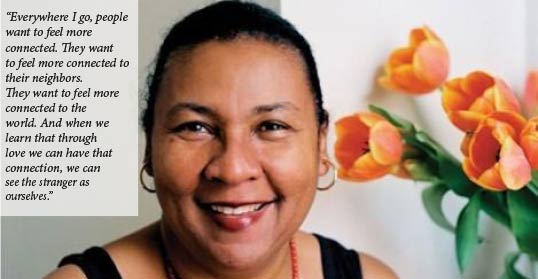
She went on: “Everywhere I go, people want to feel more connected. They want to feel more connected to their neighbors. They want to feel more connected to the world. And when we learn that through love we can have that connection, we can see the stranger as ourselves. And I think that it would be absolutely fantastic to have that sense of ‘Let’s return to kind of a utopian focus on love, not unlike the sort of hippie focus on love.’ Because I always say to people, you know, the ‘60s’ focus on love had its stupid sentimental dimensions, but then it had these life-transforming dimensions. When I think of the love of justice that led three young people, two Jews and one African American Christian, to go to the South and fight for justice and give their lives — Goodman, Chaney and Schwerner — I think that’s a quality of love that’s awesome. … I tell this to young people, you know, that we can love in a deep and profound way that transforms the political world in which we live in.” Additional reporting contributed by Steve Smith.

What You Need to Know About Variants

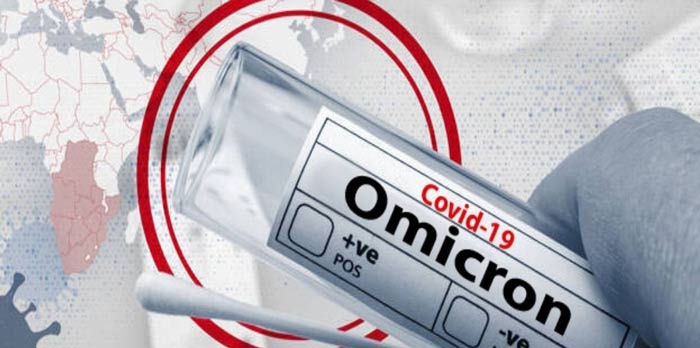
Omicron Variant
The Omicron variant has been detected in the United States. CDC and its public health partners are closely monitoring the emergence of this variant of concern.


Information about Variants: Viruses constantly change through mutation and sometimes these mutations result in a new variant of the virus. Some variants emerge and disappear while others persist. New variants will continue to emerge. CDC and other public health organizations monitor all variants of the virus that causes COVID-19 in the United States and globally.
The Delta variant causes more infections and spreads faster than the original SARS-CoV-2 strain of the virus that cause COVID-19. Vaccines remain the best way to reduce your risk of severe illness, hospitalization, and death from COVID-19.


Top Things You Need to Know
New variants of the virus are expected to occur. Taking steps to reduce the spread of infection, including getting a COVID-19 vaccine, are the best way to slow the emergence of new variants.
Vaccines reduce your risk of severe illness, hospitalization, and death from COVID-19.
COVID-19 booster doses are recommended for adults ages 18 and older. Teens 16–17 years old who received Pfizer-BioNTech COVID-19 vaccines can get a booster dose if they are at least 6 months post their initial Pfizer-BioNTech vaccination series.


Vaccines 
While vaccines reduce your risk of severe illness, hospitalization, and death from COVID-19, we don’t yet know how effective they will be against new variants that may arise, including Omicron.
Symptoms 
All previous variants cause similar COVID-19 symptoms.
Some variants, such as the Alpha and Delta variants, may cause more severe illness and death.
Masks 
Wearing a mask is an effective way to reduce the spread of earlier forms of the virus, the Delta variant and other known variants.
People who are not fully vaccinated should take steps to protect themselves, including wearing a mask indoors in public at all levels of community transmission.
People who are fully vaccinated should wear a mask indoors in areas of substantial or high transmission.
Wearing a mask is very important if you or someone in your household:
-Has a weakened immune system
-Has an underlying medical condition
-Is an older adult
-Is not fully vaccinated


Testing
Tests for SARS-CoV-2 tell you if you have an infection at the time of the test. This type of test is called a “viral” test because it looks for viral infection. Antigen or Nucleic Acid Amplification Tests (NAATs) are viral tests.
Additional tests would be needed to determine which variant caused your infection, but these typically are not authorized for patient use.
As new variants emerge, scientists will continue to evaluate how well tests detect current infection.
Self-tests may be used if you have COVID-19 symptoms or have been exposed or potentially exposed to an individual with COVID-19.
Even if you don’t have symptoms and have not been exposed to an individual with COVID-19, using a self-test before gathering indoors with others can give you information about the risk of spreading the virus that causes COVID-19.
Types of Variants
Scientists monitor all variants but may classify certain ones as  variants being monitored, variants of interest, variants of concern and variants of high consequence. Some variants spread more easily and quickly than other variants, which may lead to more cases of COVID-19. An increase in the number of cases will put more strain on healthcare resources, lead to more hospitalizations, and potentially more deaths.
These classifications are based on how easily the variant spreads, how severe the symptoms are, how the variant responds to treatments, and how well vaccines protect against the variant.

Variants of Concern
Omicron – B.1.1.529
First identified: South Africa

Spread: May spread more easily than other variants, including Delta.
Severe illness and death: Due to the small number of cases, the current severity of illness and death associated with this variant is unclear.
Vaccine: Breakthrough infections in people who are fully vaccinated are expected, but vaccines are effective at preventing severe illness, hospitalizations, and death. Early evidence suggests that fully vaccinated people who become infected with the Omicron variant can spread the virus to others. All FDA-approved or authorized vaccines are expected to be effective against severe illness, hospitalizations, and deaths.  The recent emergence of the Omicron variant further emphasizes the importance of vaccination and boosters.
Treatments: Some monoclonal antibody treatments may not be as effective against infection with Omicron.

Delta – B.1.617.2
First identified: India
Spread: Spreads more easily than other variants.

Severe illness and death: May cause more severe cases than the other variants
Vaccine: Breakthrough infections in people who are fully vaccinated are expected, but vaccines are effective at preventing severe illness, hospitalizations, and death. Early evidence suggests that fully vaccinated people who become infected with the Delta variant can spread the virus to others. All FDA-approved or authorized vaccines are effective against severe illness, hospitalization, and death.
Treatments: Nearly all variants circulating in the United States respond to treatment with FDA-authorized monoclonal antibody treatments.