Home Blog Page 358

Our Composite Nation

Frederick Douglass’ America Invites Visitors to Explore the Ideas of Liberty and Equality

Ongoing Special Installation on View Beginning February 11, 2022
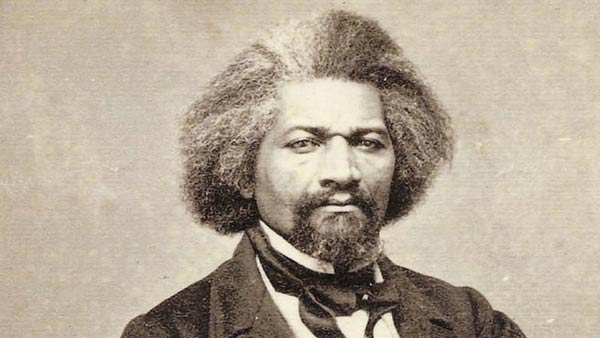
New York, NY January 5, 2022 The New-York Historical Society, the first museum in New York City, brings to life Frederick Douglass’ vision of freedom, citizenship, and equal rights in a new ongoing special installation, Our Composite Nation: Frederick Douglass’ America, opening February 11, 2022. Inspired by the speech “Composite Nation,” which Douglass delivered around the country in the years following the Civil War, this timely display is based on research from the Pulitzer Prize-winning book Frederick Douglass: Prophet of Freedom by New-York Historical Scholar Trustee David W. Blight. The mission of this new nation, Douglass declared, was to provide the world “a composite, perfect illustration of the unity of the human family.” For what was the U.S., he said, but “the most conspicuous example of composite nationality in the world.”


At the time of his speech, Frederick Douglass optimistically envisaged a multiethnic, multiracial, multireligious America “a nation that would,” as New-York Historical Trustee David Blight puts it, “spread liberty more broadly than any civilization had ever attempted. Alas we know now how, all too soon, Douglass’ optimism would be extinguished, his vision undermined by Jim Crow and other racist and anti-immigrant policies such as the Chinese Exclusion Act. Still, while Douglass’ vision remains to be fully realized, we have made progress as a nation. We hope that the story told by this exhibition will remind visitors of the hopes and dreams of one of our greatest Americans and inspire them to fulfill the ideals he championed in his words as well as his deeds.


Beginning in 1869 as Reconstruction unfolded across the country, Douglass took his “Composite Nation” speech on the road and shared his passionate vision for a reborn America, where rights and freedoms would be extended to all, regardless of race, gender, national origin, or faith. Lectures were popular in America, and Douglass was in high demand, traveling from the Northeast to the Midwest. Few speakers had his compelling personal story, skill at the podium, or moral authority. In his speech, Douglass advocated for absolute equality, which meant equal rights that were specific, inclusive, and protected by law. Yet during his lecture stop in Iowa, a hotel refused to serve him because of his race. This reinforced Douglass’ belief that rights and fair treatment must be fought for every day at every level, from constitutional amendments to life’s routine encounters.


On display is a range of artifacts and documents that illustrate Douglass’ vision during the postwar years when his goal seemed within reach. Among the highlights are illustrations from the popular press of the time and scrapbooks of articles by or about Douglass compiled by his sons that also documented his inexhaustible drive and never-ending commitment to a more just America. A speech excerpt from Douglass’ contemporary Frances Ellen Watkins Harper brings the question of gender to Douglass’ ideas about racial equality. His advocacy for Chinese immigration, a decade before the Chinese Exclusion Act. is also demonstrated through political cartoons and a copy of the newspaper Chinese American, a publication by Wong Chin Foo that asserted Chinese immigrants right to belong in the United States. Douglass argued the Chinese should be granted every freedom Americans expect, to become citizens, to vote, to run for office.

Also on view is the maquette of a statue of Douglass that was erected on the campus of the University of Maryland in 2015. The model was gifted to the late Congressman John Lewis and is on long-term loan to New-York Historical. A recreation of the Douglass statue that greets visitors to the Museum at the 77th Street entrance, painted to be lifelike, is also on display. 

Our Composite Nation: Frederick Douglass’ America is curated by Marci Reaven, vice president of history exhibits, Lily Wong, associate curator, and Dominique Jean-Louis, associate curator, New-York Historical Society.
White House Advisor Speaks on Open Schools and Omicron

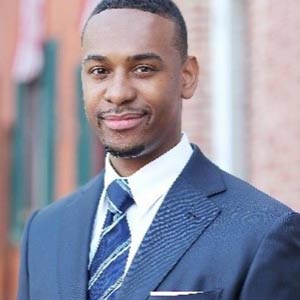
Mayor Eric Adams was adamant when he said, “Schools are the safest place for children.” With that in mind, Our Time Press had an opportunity to speak with Dr. Cameron Webb, a Senior Policy Advisor for the White House COVID-19 Response Team and asked about that policy.


Dr. Webb said, “It’s a social and emotional imperative for us to keep kids in school and that’s what we are going to work to do no matter what. Whether that means more testing in schools, whether that means we’re really encouraging parents to get more kids vaccinated…and making sure teachers are vaccinated getting students and teachers are all vaccinated, those are the things we’re trying to do to protect those schools.”
Noting he has two elementary school aged children himself, Webb said, “All parents have learned how critical it is for kids to be in school,” and “Most would agree we want to keep schools open and functioning as much as possible.”
“Of course, their safety is paramount, and part of their safety are the emotional and social dynamics and the importance of getting hot meals at school. Of having counselors and caring adults who are there to take care of them, to teach them and feed them, and nourish them in different ways. So we want to protect that space as much as we can.”


On Omicron
“Omicron move faster and is more unforgiving. That’s why masks are important. People are most likely to spread the virus in the two days before they’re symptomatic and the three days afterward, and that’s where the CDC guidelines came from, in terms of the science. They decided to cut that isolation period down to five days instead of ten. Trying to focus in on exactly what the science is saying.”
There’s a lot of information we’re still learning about this newest variant. We have learned that our vaccines are still effective and that’s a tool we continue to use.”
As they learn and the CDC updates based on the science, the policy follows.

Dr. B. Cameron Webb is a physician and lawyer who works at the intersection of health and social justice. He is an Assistant Professor of Medicine and Public Health Science at the University of Virginia, where he works as a hospitalist in the Department of Medicine and serves as co-director of the Department of Public Health Science’s Health Policy Program. He recently completed a year as a 2016-17 White House Fellow. In his time spanning the Obama and Trump administrations, his portfolio included education, workforce and criminal justice reform work through President Obama’s My Brother’s Keeper initiative, as well as White House healthcare policy work in both administrations [National Association of counties]

“Generals don’t lead from the back”

New York mayor Eric Adams seeks bold start, Significant challenges await the newly sworn-in leader of the most populous US city

This article appeared originally in The Guardian

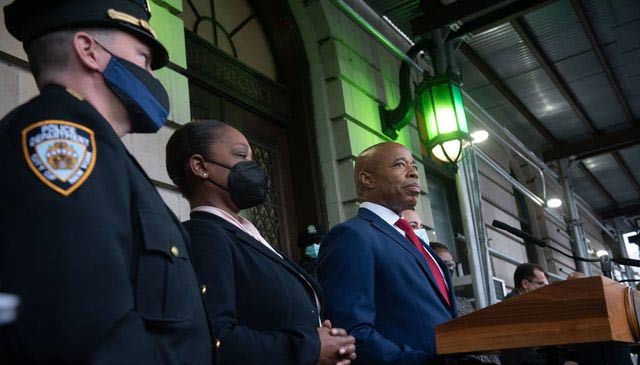
Eric Adams’s first two days in office would resonate with any weary New York commuter: a subway ride featuring a brawl requiring the attendance of police, then the challenge of negotiating Manhattan traffic on a rented bike.
“This is an amazing city,” the new mayor told ABC on Sunday. “You know, riding a city bike in, taking the train in, interacting with New Yorkers: generals don’t lead their troops from the back.
“They lead their troops from the front. I’m going to lead my city into this victory from the front. And people tell me this is a difficult job. Darn it, I want it to be a difficult job.”


Significant challenges await the newly sworn-in leader of the most populous US city, a Democrat who trounced the Guardian Angels founder Curtis Sliwa in November to become New York’s second Black mayor after David Dinkins, who was in office from 1990 to 1993.
“New York can and should be the center of the universe again,” said Adams in an inaugural address themed largely around getting to grips with an Omicron-fueled coronavirus surge that has slowed parts of the city to a crawl.
The police and fire departments are reporting sickness rates of around 20% and three subway lines have been suspended because of staff shortages.
Adams succeeds as mayor Bill de Blasio, another Democrat who despite becoming hugely unpopular has signalled a run for governor.
The city, the new mayor said, had endured “two years of continuous crisis, and that insults our very nature as New Yorkers”.


On Saturday, hours after his midnight swearing-in ceremony in Times Square, the 61-year-old rode the subway to work, greeting residents and calling 911 to report a brawl between three men.
By the time officers arrived, the fight – witnessed by reporters accompanying the mayor – was over. Adams, a cop himself for 22 years, said he wished police had stuck around longer.
On Sunday he was up early again, cycling to City Hall and an appearance on ABC’s This Week in which he called on New Yorkers to get vaccinated and boosted.
“It’s going to prevent you from dying,” he said. “It’s going to alleviate the possibility of you being hospitalised and going on a ventilator.


“To those who are not vaccinated: ‘Stop it. It’s time to get vaccinated. It’s time to have the booster shots. You’re endangering yourself and you’re endangering the public and your family as well’.”
Adams, who is keeping de Blasio’s vaccine mandate for private employers, said consideration of a booster mandate for city employees including cops, firefighters and sanitation workers was “our next move and decision”.
His host, George Stephanopoulos, challenged Adams on his campaign pledge to tackle soaring crime rates, especially gun violence.


“The balance is not just heavy-handed policing, it’s public safety and justice,” Adams said.
“We’re going to go after gangs, we’re going to take down some of the large gangs in our city. We’re going to zero in on gangs. We’re going to reinstitute a plainclothes anti-gun unit and zero in on those guns.”

Analysis: Haiti exits 2021 hamstrung by gangs and government gridlock as eyes turn to diaspora

A few months ago, Guerlinz Affriany returned from southwestern Haiti, where he helped provide relief after the Aug. 14 earthquake. But looking at a country plagued by gang violence, kidnapping that has only increased, he doesn’t know when he will go back. 


“They have the power to do whatever they want,” said Affriany, a retired military veteran in Elmont, New York, about the gangs. “Nobody wants to go to Haiti right now.” 


As Affriany noted, the kidnapping of American and Canadian missionaries in October went unresolved for about two months before the remaining 12 missionaries were freed Dec. 16. Analysts have also said the episode highlighted the weakness of the Haitian state, in a year plagued by instability and the assassination of President Jovenel Moise. 
The year 2021 has also been one of displacement for the diaspora as nearly 30,000 Haitians, many of whom lived in Chile or Brazil for years, attempted to cross the U.S. southern border in September. The crisis has led to deportation for thousands of migrants and new demands on the diaspora to assist those seeking asylum. 


Thus far the U.S. has stayed fairly silent on the crises facing Haiti, although the U.S. State Department has pledged to send technical and financial assistance to support the Haitian National Police. Brian A. Nichols, State Department secretary of Western hemisphere affairs, has met with the diaspora, encouraging them to play a role in rebuilding Haiti. 


Analysts say the crises facing Haiti will test the stated American commitment to democracy. 
“Haiti is a litmus test because of the current crises facing the country,” said Francois Pierre-Louis, a political science professor at Queens College, during a Dec. 7 conference call. “Haiti is facing an unprecedented crisis. The whole country is held hostage by gang leaders.” 

Political crisis in Haiti
Instability reigned well before the July 7 assassination of Moise. The former president’s penchant for decrees, attempts to rewrite the constitution and the controversy over his term limits provoked protests in February of this year. 
Led by the U.S., the international community backed Moise’s right to remain in office until February 2022 and later backed interim Prime Minister Ariel Henry, who was hand-picked by Moise, shortly before his assassination, to lead the country after the head of state’s murder. 


Now, Henry is tasked with forming a new government, in collaboration with opposition leaders, per the terms of a Sept. 11 consensus agreement. Henry installed eight new cabinet members in late November, including representatives from the FUSION, Popular Democratic Sector and ruling PHTK political parties. 


At the same time, a competing vision for a transitional government has been put forth by a civil society group, Commission for a Haitian Solution, which formed early this year and met at the Hotel Montana in the wake of Moise’s assassination. In a Dec. 1 op-ed, the group’s leader Monique Clesca proposed a transitional government that includes civil society representatives.

None of the three factions vying for power — not the “Montana group,” Henry’s consensus formation and not the “Jovenelist” wing of PHTK represented by Martine Moise — appear to have strong popular support, said Robert Fatton, a political science professor and Haiti scholar at the University of Virginia.


“We don’t have a state quite frankly, it’s not even a weak or failing state,” said Fatton. “The crisis persists as far as I can tell. Nothing has been resolved in terms of security, in terms of establishing a legitimate basis for elections.” 
Gang violence and kidnappings have occurred throughout the year, including unprecedented kidnappings of clergy and the American missionaries. Non-governmental organizations in Haiti reported more than 800 kidnappings in total this year. 


Both the Henry government and the civil society Commission have proposed elections. Henry himself has vowed elections by the second half of 2022 and the fulfillment of Moise’s promise for a referendum on a new constitution. 

U.S. urges crisis-laden diaspora to help Haiti
But international actors, including the U.S., have largely refrained from weighing in. During a Dec. 17 call, Nichols urged the Montana Group and Henry’s government “to come together” and name an electoral council to organize next year’s elections. 
Concerned about rising insecurity, some people like Affriany have asked the U.S. to do more to limit arms trafficking. 
“You have all kinds of American agencies in Haiti, how do the guns get there?” asked Affriany. “The guns do not come from Haiti.”


This fall, State Department officials including Nichols have met with diaspora leaders in Brooklyn and in Miami. During the meetings, officials vowed not to determine Haiti’s future unilaterally. 
“We hope that Haitians with ideas and dreams about building a democratic future will engage broadly with each other to chart their own path to restoring democracy through free and fair elections when conditions permit,” wrote Nichols, in an op-ed. 


The Haiti Tech Summit has also called for greater diaspora engagement in Haiti, holding a “Galvanizing the Diaspora” panel to its 2021 programming for this December. And, nonprofits like Kellogg Foundation have doubled down on their commitments to Haiti, asking potential donors to support its many grant programs for health and economic development. 


But the diaspora is facing multiple crises at home, including the need to care for at least 10,000 asylum seekers released into the U.S. this year. The diaspora has made demands for immigration reform. 
The year began with hopes that were only partially realized. In January when Biden was inaugurated, Haitian-Americans expressed hope for addressing the root causes of migration, a pathway to citizenship and additional protections for Temporary Protected Status (TPS) holders. 


Extending TPS in May was “low-hanging fruit,” and Haitians living in the U.S. still need a pathway to permanent residence, said Ludmilla Paul, a board member of the political advocacy group Avanse Ansanm. 
Echoing sentiments voiced by other Haitian-Americans, Paul also advocated for the repeal of Title 42, a law which fast-tracks deportation on public health grounds. 


“There are definitely some concerns that Biden is not doing enough, especially around Title 42,” said Paul, of Miami. 
Among those who cannot benefit from TPS protections are the roughly 13,000 who were released into the U.S. for asylum in September. Haitians have been migrating from South America to the U.S. border for at least five years, leaving service and construction jobs in Brazil and Chile due to economic hardship and changes in those countries’ immigration laws. 


Jensen Desrosiers, an activist who helped found the Haitian Powerhouse, recalled Biden’s fall 2020 visit to Little Haiti in Miami, where the then-candidate promised to give Haitians an “even shot.” 
“They had the opportunity with Texas to show that, to show that they were holding to their promise,” said Desrosiers, who is based in Brooklyn. 


Within two months of the Del Rio, Texas, immigration crisis in September, more than 8,500 people were deported back to Haiti, according to the United Nations.
“They know to tell the American people not to travel to Haiti,” Desrosiers said. “Why are they sending these people back? Only because they are less than Americans? So these are the missteps.”

What’s Going On – 12/31

NEWSMAKERS
RIP: Anti-apartheid leader and activist South African Archbishop Emeritus DESMOND TUTU, 90, died on December 26. Cleric and theologian, he was the first Black Archbishop of Cape Town. A revered man of faith, a nonviolence social change warrior, he campaigned at home and abroad against Apartheid, the system of white minority rule which prevailed in South Africa since 1948. A South African Afrikaans word, Apartheid means “apartness;” and it divided South Africans into four categories:1) Bantu the Blacks 2) Coloured, mixed race 3) white and 4) Asian Indian and Pakistani. Tutu was the moral center of South Africa during and after Apartheid ended in 1994. A 1984 Nobel Peace Laureate, he was an advocate of gay rights, and he opposed the U.S invasion of Iraq. He was never reticent about his convictions. He chaired the Truth and Reconciliation Commission in post-Apartheid South Africa. The commission focused on confession and forgiveness. Bishop Tutu said that the Commission was fundamental for the transition of power in South Africa from a white dominated Apartheid system to a democracy. Truth to tell, the USA should consider a similar commission.
A national hero, South Africa is observing a week of mourning.

RIP: FRANKLIN THOMAS: Philanthropist and corporate titan Franklin Thomas, 87, passed on December 22, in New York. Franklin Thomas is best known as the first Black President of the prestigious well-endowed Ford Foundation, a post he held from 1979 to 1996. He gave the Foundation a facelift with a focus on urban poverty, education, and public policy. In the 80s, Thomas’ Ford Foundation got involved in international efforts to dismantle the anti-apartheid South African governance system. A friend of Mandela by that time, Thomas persuaded his friend and FW de Klerk, SA’s last apartheid president, to meet with President Bill Clinton in Philadelphia. The Ford endowment in 1979 was $1.7 billion. It was $7 billion when Thomas stepped down. As Ford Foundation President Thomas had an interface with Corporate America’s business elites. He was invited and served on the Boards of corporations such as Citibank, CBS, Cummins, and Lucent Technologies.


Before the Ford Foundation, Franklin Thomas was the President of the newly-formed Bedford Stuyvesant Restoration Corporation. It was founded in 1967 as the nation’s first development corporation, born out of a partnership between America’s private and public sectors. BSRC was an extension of LBJ’s Great Society. Thomas was at the helm for 10 years. Wherever he worked, he left big footprints. In 2001, he hosted a book party at the Schomburg for his good friend Vernon Jordan’s memoir, VERNON CAN READ. He said that he was working on his bio.
Franklin Thomas was an example of the American Dream narrative. Born on May 27, 1934, in Brooklyn’s Bed Stuy area, Thomas was the son of West Indian immigrants whose mother was from Barbados and whose father was from Antigua. He enthused, “I grew up in a family that just assumed that one, you were smart and capable; two, that you were going to work hard and three, the combination of these mean anything was possible.”

HAPPY 2022!
The year 2021 was a provocative one, opening in the United States of America with a failed January 6 insurrection at the nation’s capitol, to nullify President Elect Joe Biden’s November 2020 victory. The mob that stormed the capitol was organized. Moreover, the insurrection seemed to have been planned and ordered by the POTUS 45 Donald Trump. Well, he did promise a dystopian America in his 2017 inaugural speech.
Who would have imagined that so many Americans would refuse the vaccine developed to rein in COVID19? Americans can forget about herd immunity with the level of resistance across country. Then there are the coronavirus variants, all named after letters of the Greek alphabet like Delta and her younger sibling Omicron now wreaking havoc with yearend season celebrations and forcing millions into quarantine.

And the American cynics are not alone. There is resistance to the virus across the planet. You see Europeans demonstrating in the streets against the vaccine. However, the latest variant seems to be scaring the manure out of the disbelievers and anti vaxxers, who are becoming believers, eager to get tested and to get the vaccines. No longer resisting the call for masks, social distancing. While there is resistance in many nations, I see that Israel is moving forward with a fourth vaccine jab.


Cynics are predicting that the Democrats will lose its razor thin majority in Congress next year. Wait a minute. Too many Congress members are retiring. Who really knows? Some state races are encouraging. A few Blacks are running for Maryland Governor, including Wes Moore, former head of the Robin Hood Foundation. Stacey Abrams is running for Governor of Georgia again. Florida Democrat Representative Val Demings is running for US Senator against Marco Rubio.
While the nation was shaken by a Trump inspired insurrection attempt, Biden continues apace with all of the vagaries that attend governance of 330 million people while remaining leader of the free world, such as it is.
But things will get better as they often due every new year.
To be sure, 2022 will usher in hope and promise!

AFFLUENCE/CULTURE
More Blacks have joined the billionaire ranks this year. There are the usual suspects. Robert Smith, who financed the education of Morehouse’s graduating class of 2019, Oprah Winfrey and Michael Jordan. New additions include Jay-Z; Rihanna, who was just named a national hero in her native Barbados; Kanye West; and Tyler Perry. It was speculated that Lebron James would be joining the B-club by 12/31/21.

THEATER: On Broadway, legitimate theater, was on a month pause during the latest Omicron variant spread. Revivals and new shows have been on pause for a few days. Crowd pleasers like TINA and AIN’T TOO PROUD, STORY OF THE TEMPTATIONS were on pause. THOUGHTS OF A BLACK MAN closed owing to far too many pauses. During this pandemic madness, it is oftentimes impossible “to go on with the show.”
Birthday greetings to Capricorn Oscar Bethune, who becomes a centenarian next week. He is the dad of NY influencer Joseph Bethune

A Harlem based management consultant, Victoria can be reached at victoria.horsford@gmail.com