Home Blog Page 344

The Beneficiary Bet

By TNJ Staff
I can’t stress enough the importance of naming the correct beneficiary for your retirement accounts — IRAs and 401(k) and 403(b) plans. It’s equally critical to update the named beneficiary on your old pension plans and life insurance policies, which you may have started years ago and likely forgotten. Otherwise, after your death a huge fight might break out with very unintended consequences.


These decisions — and new laws impacting beneficiaries — were the subject of a two-day workshop given by IRA expert Ed Slott of IRAHelp.com, as he educated the IRA expert planners who you can reach through his website. Mistakes in this simple task can be quite costly.


Naming a beneficiary
All financial assets that have a named beneficiary pass outside your estate plan (your will or revocable living trust) directly to the person(s) you have listed. You can name one or two primary beneficiaries, and then a contingent beneficiary in case your first choice predeceases you.


Changing or updating your beneficiaries for IRAs and workplace retirement plans policies is easy. Just contact the plan custodian or, if you have online access to your plan, you can instantly change beneficiaries. You don’t need signed documents.


Before deciding on a beneficiary, know the rules. If you leave money to a minor child, the courts will step in and name a custodian. You don’t want your estate to receive the money as beneficiary. That can impact future tax-deferred growth of your IRA and trigger a tax bill.


Make sure your beneficiaries understand the withdrawal rules. Before the SECURE Act (which applies to deaths after 2019), beneficiaries of retirement plan accounts could let an inherited IRA grow over their own lifetime, taking out only small, age-based required annual withdrawals.


Now, most non-spousal beneficiaries must withdraw all the money in an inherited IRA by the end of the 10th year after death. They can do it gradually or wait until the 10th year and then take the entire lump sum — a decision that could have important tax consequences.


(Notably, the 10-year withdrawal rule for non-spouses even applies to inherited Roth IRAs, which do not have required withdrawals for their original owners.)
These new 10-year withdrawal rules do not apply to a surviving spouse or minor children of the account owner up to the age of majority (or, if still in school, up the age of 26), or to those who inherited an IRA before 2020. These beneficiaries still get to stretch the IRA over their lifetime, taking only smaller age-based withdrawals.


The worst cases
Slott’s seminar documented numerous cases where courts ruled against intended beneficiaries simply because beneficiary forms were not updated or because pension laws superseded named beneficiaries.
Among the worst was an ex-spouse who has waived her rights to the retirement plan money as part of the divorce but whose name was still on the plan beneficiary form. The court ruled that the signed documents control, and his children did not get the money.


Or consider the man who actually did name his three adult children as beneficiaries on his retirement plan after his first wife died. But then he remarried and died shortly after. The children expected to share his company retirement plan, knowing they were named beneficiaries. But the courts ruled that under ERISA law, the current spouse of a participant is entitled to all the money in the plan — since he did not sign a waiver to remove his current spouse!
Importantly, IRAs are not subject to ERISA law, and so in this case the named beneficiaries get the money, not the spouse.


Revocation upon divorce
And here’s a new and shocking trend. More than 26 states have passed “revocation upon divorce” laws. Basically, they assume that an individual “meant” to take an ex-spouse’s name off a life insurance policy or retirement account — so they disinherit the ex and pass the money on to the “contingent beneficiaries” — typically the children. Yes, they can do that! So, if you meant to leave something your ex-spouse via an IRA, you need to re-sign the beneficiary form — after the divorce — to make your meaning clear!
Don’t make the mistake of failing to update your beneficiaries on all retirement plans and life insurance policies. Remember, when they discover the mistake, you won’t be around to fix it! And that’s The Savage Truth.
War in Europe, Voter Suppression at Home

View From Here
By David Mark Greaves

It’s 2022 and Vladimir Putin has ordered the Russian army to invade Ukraine, beginning a full-scale war in Europe, and here at home there are attacks on Black people and suppression of the Black vote. As a Baby Boomer, it feels like history is having a déjà vu moment and it is an unsettling time to be paying attention.


The war will be the largest European incursion since WW II. Headlines like “War in Europe” have no place in this time. Yes, we’ve seen tanks in the news rolling through the sands of the middle east, but seeing them today in the mud of Europe, same as in the black and white movies of the forties and fifties, says that something very dangerous is going on and must be stopped.


Recent reporting is that Vladimir Putin has an objective of reversing history and taking back countries once a part of the USSR, and taking Ukraine is only a part of that mission. He is a bully and he must be stopped.


Still Voter Suppression and Racism
Somehow I thought we’d be further along than this. All of our lives, we’ve either watched, or been in, battles for voting rights, jobs and equal education, to name the big three of a long list of the front lines we fight on. And now we see the racial progress clock being reset to where we came in, with votes being suppressed, and Black people being excluded from the polls in states across the country. After all the beatings Fanie Lou Hamer endured, after the Freedom Summer murders of Goodman, Chaney and Schwerner, after the thousands of miles marched and choruses of “We Shall Overcome”, we find ourselves facing a return to the fifties and to draconian anti-voting laws and 3/5th citizenship.


Individually, there has been progress. There are great talents in technology, arts, business, that can be pointed to. And yet when you begin to look at the numbers in any of the much-reported “Gaps” of wealth, health, treatment in law and more, in the aggregate, they show we still have a terrible long way to go.


Yes, there will be a super-qualified Black woman on the Supreme Court, a role model for girls of color, the fear is that it could be a hollow victory, sitting on an authoritarian court in an authoritarian country. It’s true however, in a generation’s time, perhaps after a great upheaval, she will be chief justice on a very different court, in a very different era, with that young Black girl having grown up with the Justice as a part of her life.


Our charge is to organize and have that great upheaval now and prevent that authoritarian state from ever coming into being. Such a world would be a horror for the nation, and if history tells us anything, it will devastate the Black community.


So all we have to do now is get the war, voter suppression, Covid-19, and the authoritarian state under control, and then we can get to the existential challenges of fighting climate change and pollution of air, land and sea.


Welcome to 2022. It’s shaping up like another year we won’t want to remember.

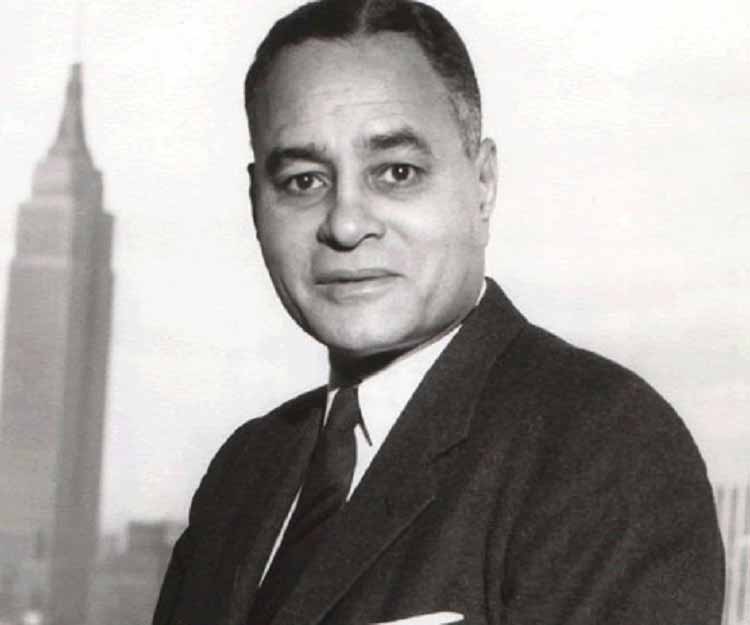
Dr. Ralph J. Bunch: Architect of Peace

The Nobel Prize Winner Mediated between Arabs and Jews in Palestine

Ralph Johnson Bunche (August 7, 1904-1971) was born in Detroit, Michigan. His father, Fred Bunche, was a barber in a shop having a clientele of whites only; his mother, Olive (Johnson) Bunche, was an amateur musician; his grandmother, «Nana» Johnson, who lived with the family, had been born into slavery. When Bunche was ten years old, the family moved to Albuquerque, New Mexico, in the hope that the poor health of his parents would improve in the dry climate. Both, however, died two years later. His grandmother, an indomitable woman who appeared Caucasian «on the outside» but was «all black fervor inside»1, took Ralph and his two sisters to live in Los Angeles. Here Ralph contributed to the family’s hard-pressed finances by selling newspapers, serving as house boy for a movie actor, working for a carpet-laying firm, and doing what odd jobs he could find.


His intellectual brilliance appeared early. He won a prize in history and another in English upon completion of his elementary school work and was the valedictorian of his graduating class at Jefferson High School in Los Angeles, where he had been a debater and all-around athlete who competed in football, basketball, baseball, and track. At the University of California at Los Angeles he supported himself with an athletic scholarship, which paid for his collegiate expenses, and with a janitorial job, which paid for his personal expenses. He played varsity basketball on championship teams, was active in debate and campus journalism, and was graduated in 1927, summa cum laude, valedictorian of his class, with a major in international relations.


Ralph Bunche’s enduring fame arises from his service to the U. S. government and to the UN. An adviser to the Department of State and to the military on Africa and colonial areas of strategic military importance during World War II, Bunche moved from his first position as an analyst in the Office of Strategic Services to the desk of acting chief of the Division of Dependent Area Affairs in the State Department. He also discharged various responsibilities in connection with international conferences of the Institute of Pacific Relations, the UN, the International Labor Organization, and the Anglo-American Caribbean Commission.


In 1946, UN Secretary-General Trygve Lie “borrowed” Bunche from the State Department and placed him in charge of the Department of Trusteeship of the UN to handle problems of the world’s peoples who had not yet attained self-government. He has been associated with the UN ever since.


From June of 1947 to August of 1949, Bunche worked on the most important assignment of his career – the confrontation between Arabs and Jews in Palestine. He was first appointed as assistant to the UN Special Committee on Palestine, then as principal secretary of the UN Palestine Commission, which was charged with carrying out the partition approved by the UN General Assembly. In early 1948 when this plan was dropped and fighting between Arabs and Israelis became especially severe, the UN appointed Count Folke Bernadotte as mediator and Ralph Bunche as his chief aide. Four months later, on September 17, 1948, Count Bernadotte was assassinated, and Bunche was named acting UN mediator on Palestine. After eleven months of virtually ceaseless negotiating, Bunche obtained signatures on armistice agreements between Israel and the Arab States.


Bunche returned home to a hero’s welcome. New York gave him a “ticker tape” parade up Broadway; Los Angeles declared a “Ralph Bunche Day.” He was besieged with requests to lecture, was awarded the Spingarn Prize by the NAACP in 1949, was given over thirty honorary degrees in the next three years, and the Nobel Peace Prize for 1950. www.nobelprize.org/

The Nobel Peace Prize for 1950
Ralph Bunche believed in the work of mediation in Palestine. The Nobel Committee referred to one of his lectures, in which Bunche “speaks of the qualities mediators should possess: ‘They should be biased against war and for peace. They should have a bias which would lead them to believe in the essential goodness of their fellowman and that no problem of human relations is insoluble. They should be biased against suspicion, intolerance, hate, religious and racial bigotry’.” Un.org

The Stories We Refuse to Tell

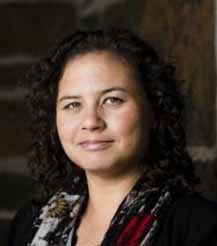
Dr. Kendra Taira Field recently spoke on behalf of Clinton Church Restoration as part of the Town of Great Barrington 5th Annual W.E.B. Du Bois Legacy Festival. On the occasion of Dr. Du Bois’ Birthday (February 23), we share her remarks.


It’s an absolute honor to share in this celebration of W.E.B. Du Bois’ 154th birthday and to speak on behalf of the Clinton Church Restoration project. Thank you to everyone who has come from near and far to be here for this momentous occasion, and especially to the descendants who are with us. 


I first came to know Du Bois as a young person. Driving through the Berkshires in the ’80s and ’90s, my dad would pull off here in Great Barrington, and point out its significance to me as the homeplace of W.E.B. Du Bois. David Levering Lewis’s biography of Du Bois was the last book my father gave me before he passed, and a few years later, unbelievably, I was given the incredible gift of the opportunity to edit those same two volumes down to one.

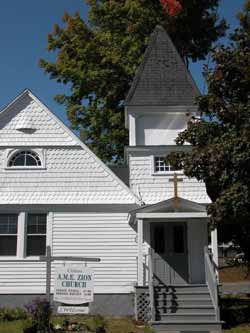
Clinton Church, Great Barrington, Mass.


Over the last couple of years, I received a second serendipitous gift with regard to Du Bois: the opportunity to work with the Clinton Church Restoration project to create a center that interprets the life and legacy of W.E.B. Du Bois and celebrates the Berkshires’ rich African American heritage. Located at the restored Clinton A.M.E. Zion Church, for me this work is about deepening public understanding of the black families, black communities, and indeed black institutions that shaped Du Bois’ early life. I’d like to share with you a bit about why this particular work and perspective matters.

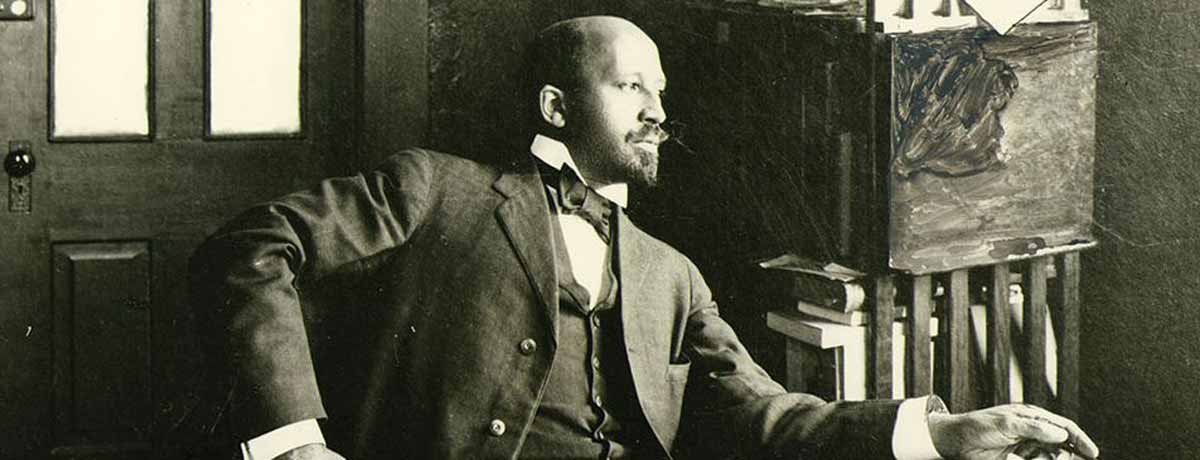
Following his mother’s death at fifty-four, William Edward Burghardt Du Bois boarded the train south to Fisk University, the first African American institution of higher education to emerge after emancipation and the emerging sacred heart of the black world. In a matter of days, William went from being the sole black student in his school to being awestruck, he wrote his former Congregational pastor in a letter his freshman year, “to know that I stand among those who do not despise me for my color.” At Fisk, for the first time, William came face to face with the immediate aftermath of slavery. Some of his new classmates were members of freedom’s first generation, enslaved as babies or toddlers amidst the Civil War.


Before closing his letter, having gleefully detailed his newfound black community, he added “yet I have not forgotten to love my New England hills…” And while Du Bois’s exposure to the Fisk Jubilee Singers stirred feelings of reverence, pride and belonging in sixteen-year-old William in Nashville, his first hearing of many of these songs was right here in Great Barrington. “Ever since I was a child these songs have stirred me strangely,” he recalled. “They came out of the South unknown to me, one by one, and yet at once I knew them as of me and of mine.” Indeed, Fisk was not his first introduction to the spirituals. During his high school years, while tending to his mother’s failing health, mother and son attended some services of the A.M.E. Zion Society. Unlike their involvement in the Congregational Church, these services took place in members’ homes. The group had grown significantly in the two decades since southern emancipation, and some of its members were freedpeople from the southern states. They, in turn, introduced a young William Du Bois to spirituals and expanded his understanding of African American song.


Du Bois’ relationships with white ministers like Rev. Scudder, teachers and principals like Frank Hosmer, and the white community more broadly left behind ample paper trails, from well-preserved letters to school records. It is just so easy to talk about their significance to William’s development, to the family’s survival during his mother’s illness, to his enrollment at Fisk. It is much harder – and yet all the more necessary – to rescue from relative oblivion the quieter evidence of Du Bois’ immersion in black family and kin networks, black communities, institutional life, and spiritual traditions reflected in the work, for instance, of the Clinton A.M.E. Zion church society of his youth. It was Rev. Esther Dozier, the first black woman pastor at Clinton, who in fact initiated the tradition of celebrating Du Bois’ birthday at Clinton Church two decades ago, at a time when yet few acknowledged his significance here. As writers, teachers, museum workers, activists, residents, and descendants, we must do better, and work harder, to illuminate these rich, yet hidden histories, the countless stories told behind closed doors. As Dr. E. Frances White has written, “The stories we refuse to tell… do matter.”

Dr. Kendra Taira Field


Dr. Kendra Taira Field is the author of Growing Up with the Country: Family, Race, and Nation after the Civil War (Yale, 2018) and served as Assistant Editor to David Levering Lewis’ W.E.B. Du Bois: A Biography (Henry Holt, 2009). Her current book project, The Stories We Tell, is a history of African American genealogy and storytelling. She is Associate Professor of History and Africana Studies at Tufts University and Director of the Center for the Study of Race and Democracy. Field is the recipient of numerous awards, most recently the 2022 W.E.B. Du Bois Award from the Berkshire County Branch of the NAACP.  Co-founder of the African American Trail Project, Field serves as a historian for the Clinton Church Restoration project. 
Photo credit: W.E.B. Du Bois as a young man, courtesy of New York Public Library
Bernice Elizabeth Green is editorial curator of Our Time At-Home: Echoes from the Past

 20,000 Historic African American Items in Elizabeth Meader Collection Up for Auction as Single Item

Traces Black experience in America from the Revolutionary War and beginnings of U.S. Slavery through the Civil Rights Movement and Black Lives Matter.  


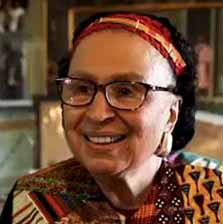
An unprecedented auction of more than 20,000 historic African American objects currently owned by 90-year-old Staten Island resident Elizabeth Meaders, 90, will be conducted by Guernsey’s auction house, March 15, 2022, 2:00 pm in New York City. This important collection will be offered as One Lot.

Elizabeth Meaders


Ms. Meaders says that she “designed this American history collection as a patriotic healing and teaching instrument to bridge the knowledge gap about African American history caused by the egregious reality that the American school system has failed to include African American history and African American contributions in its teaching curriculums nationwide.”


It was admiration for baseball great and Civil Rights legend Jackie Robinson that started Meaders, then a young New York City school teacher, on her quest to assemble a collection truly reflective of the History and Culture of African Americans from the early and painful days of slavery right up to present times.

Sixty years later, many qualified historians, including Henry Louis Gates, Jr., Harvard University and Gary B. Nash Endowed Chair in U.S. History, UCLA, view the Collection as being quite possibly the best, most comprehensive assemblage of items relating to the African American experience in existence.


Created to present the many facets of African American life, the Collection is divided into categories, including the Scourge of Slavery, the Struggle for Civil Rights, Blacks in the Military, in Sports, in the Arts and Entertainment, and Legendary Black Leaders. Other categories include Black Women, Religion, Politics, and Education. Rare medals awarded to Revolutionary and Civil War soldiers, the hateful robes of the Ku Klux Klan, baseball legend Satchel Paige’s rocking chair, posters from Harlem’s Apollo Theater and much more are part of the auction. 


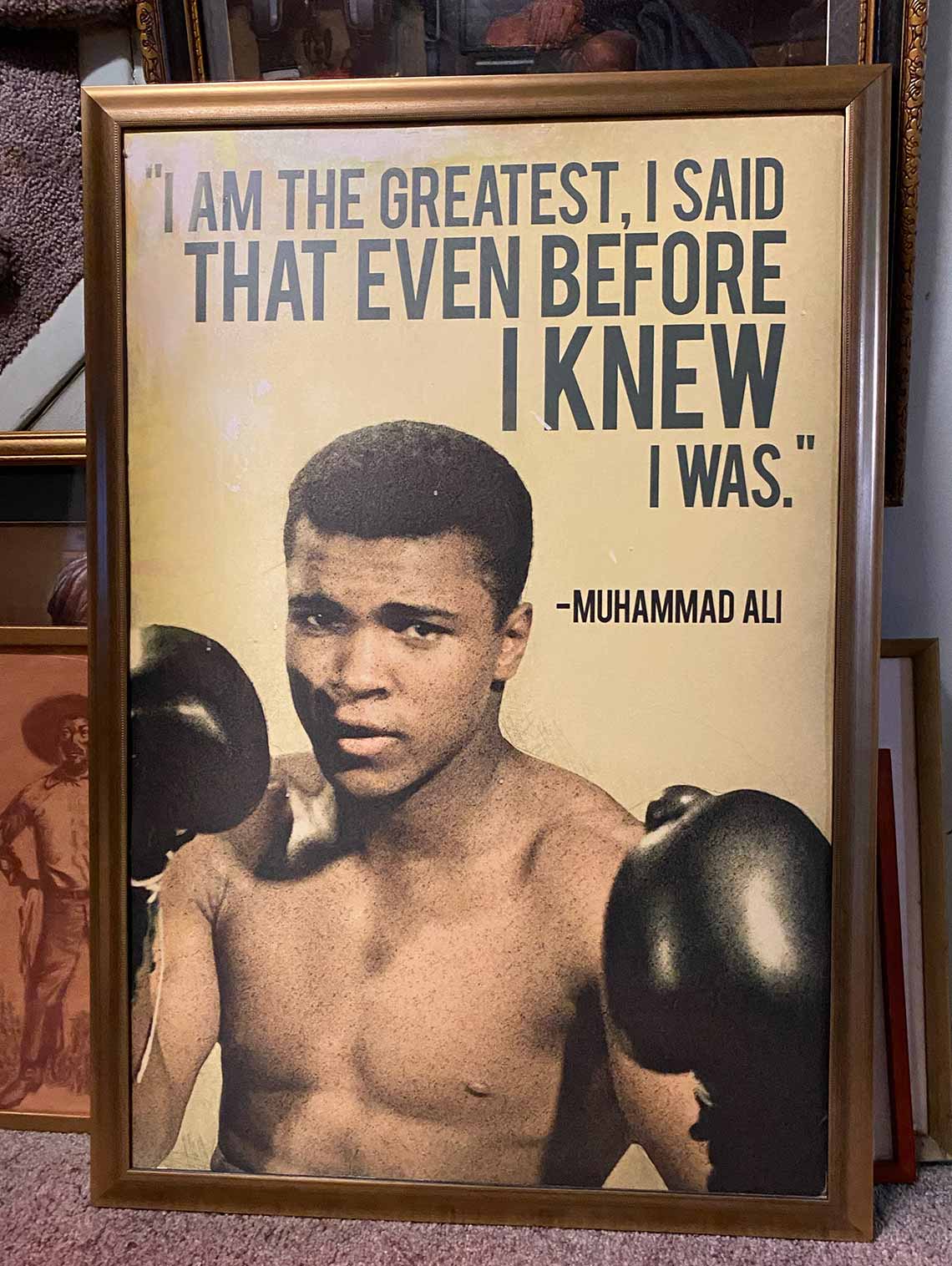
Historic figures represented in the Elizabeth Meaders Collection include Harriet Tubman, Robert Smalls, Mammy Pleasant, Crispus Attucks, Marcus Garvey, Booker T. Washington, George Washington Carver, Annie Malone, Col. Charles Young, Bill Richmond, Bessie Coleman, Bill Pickett, Father Divine, Dr. Martin Luther King, Medgar Evers, Paul Robeson, Jackie Robinson, Muhammad Ali, Hank Aaron, Satchel Paige, Bill “Bojangles” Robinson, Louis Armstrong, Josephine Baker and Barack Obama.


The Elizabeth Meader Collection reflects a 60-year continuous commitment to preserve artifacts, memorabilia and historical items and records related to the Black Experience in America and beyond for the purpose of educating young people.  Scholar Robin D. G. Kelley, Distinguished Professor and Gary B. Nash Endowed Chair in U.S. History, UCLA; has said: “Elizabeth Meaders is the most extraordinary collector of Black memorabilia I’ve ever encountered… for years her personal archive has been a rich source of knowledge for historians like me. Her collection is a treasure.”


Wyatt Day, the noted historian and appraiser of African American Artifacts, commented, “Ms. Meaders has carefully assembled literally thousands of pieces that not only relate to each chapter of this 400-year-old story but in many cases fill in the gap where many history books have either omitted or distorted them. Ms. Meaders’s lifelong efforts give proof to the statement that black history matters.”


Editor’s Note: Next week, Our Time Press will feature journalist Fern E. Gillespie’s interview with Ms. Elizabeth Meader. For more information: www.guernseys.com. (All photos on this page are courtesy of Guernsey’s.)


— Carolyn McClair PR Agency submitted this information for OTP readers. Bernice Elizabeth Green is Editorial Curator of Our Time At-Home: Where Black History Lives