Home Blog Page 34

Brooklyn Curator Pamela Ford and Sculptor Helen Ramsaran Check Out the New Studio Museum in Harlem

0

Fern Gillespie
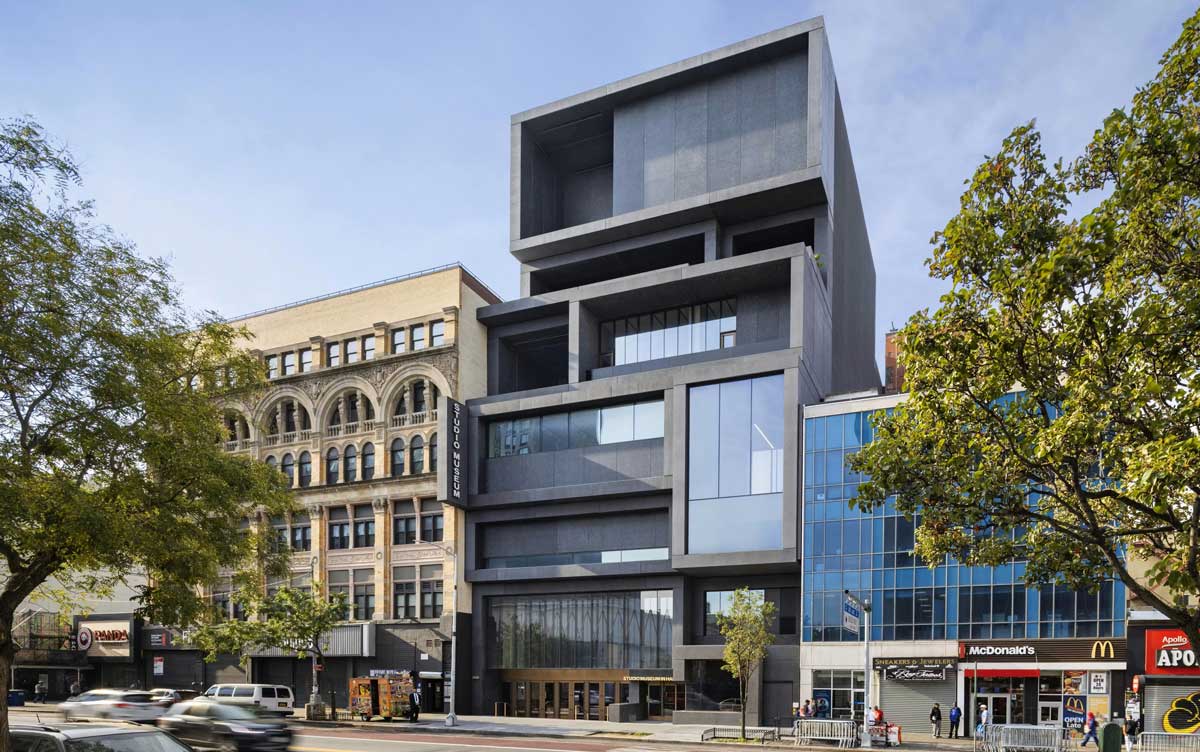
When Brooklyn sculptor Helen Evans Ramsaran returned to the Studio Museum in Harlem (SMH) for the unveiling of the new building, she was amazed.


“I was just overwhelmed with the beauty of this space. The flow of space,” the 82 year-old artist told Our Time Press. “Another thing that impresses me too is there are places in that building where you can just go and sit and be quiet. The space in the basement rises up. You have teers like bleachers. It seems that someone very sensitively sat down and said, this is what I would like a new African American museum to be like. I think the whole museum is amazing.”


Ramsaran is an integral part of the Studio Museum in Harlem history. In 1973, after a career as an art professor in the 1960s at HBCU colleges FAMU and Bowie State, she moved to New York to work as the exhibition coordinator at the Studio Museum in Harlem’s first location on Fifth Avenue. Under Ed Spriggs, the director, she worked with the early group legendary master artists like Betye Saar, Benny Andrews, Romare Bearden and Bob Blackburn.


In 1994, her Afrocentric organic bronze sculptures were showcased in her major solo exhibition, “Sanctuary Group,” at the Studio Museum in Harlem. Her bronze sculptures explored African spiritual traditions. The artwork was also featured in the Studio Museum in Harlem’s first Sculpture Garden.


Last year, her exhibition “Strange Fruit” was held at Bed Stuy’s Welancora Gallery. Artnet press championed her work as “UnSung.” She is a part of a small veteran group of Black women sculptors who work with bronze like Babara Chase Riboud and the late Elizabeth Catlett. Located in Crown Heights for 26 years, she creates small and enormous sculptures. “When I went off to Africa, I was impressed with what African people had done with natural forms.

You know, they would take these natural grasses and they could create a whole house with grasses,” she said. Currently, she focusing a major project honoring Black children who have been killed called “Seeds.” “It takes certain conditions for seeds to grow,” she said. “I feel like these children had been put in the position where their potential was about to be realized. Everything been bowed down. I’m working on that series now.”


For Pamela Ford, the Studio Museum in Harlem’s former Director of Education from 1996 to 1999, visiting the new building was “a very different world.” “The building itself is giving you that feeling,” she told Our Time Press. “When I went to the reception for the Studio Museum in Harlem alumni, I found myself standing in the heart of the building and going, wait, what was here before? The structure is so magnificent.

Of course, it’s needed because of the kind of art that necessary to show in really high ceilings. The old building was nice and it was certainly an upgrade from what they originally had on Fifth Avenue. But this is magnificent. And even the little touches like addressing this idea of the public stoops they put in the front. So people could sit so it becomes a community space.”


“The roof deck positions you in Harlem looking down at the rest of downtown from this the wonderful vantage point,” she continued. “It addresses things like a space for programming, a new cafe downstairs, all these things that we envisioned in earlier capital projects in the 1990s.”


Ford, a Brooklyn art consultant and educator and good friend of Ramsaran, still fondly recalls her education work at the museum. “The biggest challenge was getting the local community come in and some of the things that I think we did a good job with was like when I started doing some programming in sculpture garden for free. That was visible from 125th St. and it actually got some people to come in. It was kind of like meeting your neighbor over the garden fence.”


A Studio Museum in Harlem art collaboration that Ford initiated with the Board of Education still exists in Brooklyn. “We established a program for African American and Latin American teenagers to create a mural project that was related to our exhibition about African American artists going to Mexico in the 1930s to work with the Mexican muralists. They were learning techniques like print making and true fresco murals. They created a mural,” she said. “In the last couple of years, I’ve stumbled on it at Paul Robeson High School in Brooklyn. It was the pride of the place in the front.”


Brooklyn is a base for many of America’s top Black artists. These Brooklyn artists are part of the Studio Museum in Harlem’s history — Kehinde Wiley, Kara Walker, Lorna Simpson, Mickalene Thomas, David Hammons, Sonia Louise Davis, Malcolm Peacock, Nari Ward, Sable Elyse Smith, Tschabalala Self, Devin N. Morris, Kevin Beasley, Jeffrey Meris, Charisse Pearlina Weston, Sonia Louise Davis , Zoe Pulley, Hank Willis Thomas. Even Thelma Golden, the Director and Chief Curator at the Studio Museum in Harlem, was a longtime Brooklyn resident.


Currently, Ford is a consultant tour guide for the Brooklyn Museum. For several years, she served as Program Director at the Romare Bearden Foundation and curated the exhibition “From Process to Print: The Graphic Works of Romare Bearden.” The acclaimed exhibit traveled to eight cities including Chicago, Baltimore and Austin.


“I met Bearden as a teenager, when he was doing a film in my neighborhood. He was very kind to myself and my boyfriend. We were both art students in college. So, I felt like it was coming full circle when I got the job at the Bearden Foundation,” she said. “People who knew him, would tell me that Bearden, a co-founder of the Studio Museum in Harlem, was an educator and supporter. That he was concerned. That’s the genesis of the Studio Museum in Harlem. Understanding what Black artists need.”
Of Faith, Fortitude, and New York’s Bravest

0

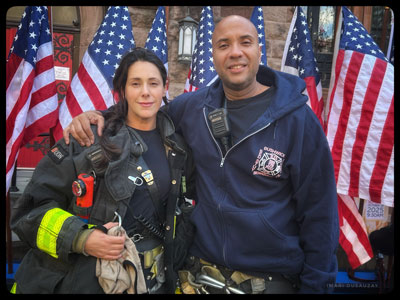
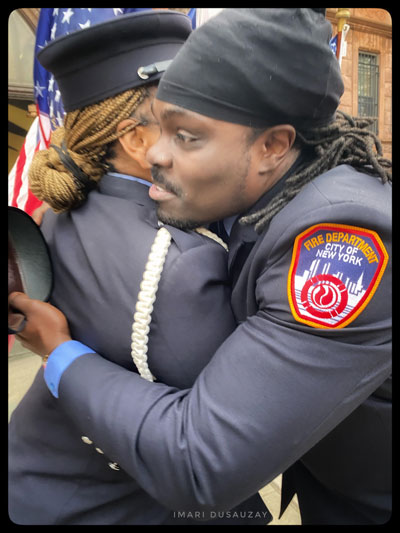
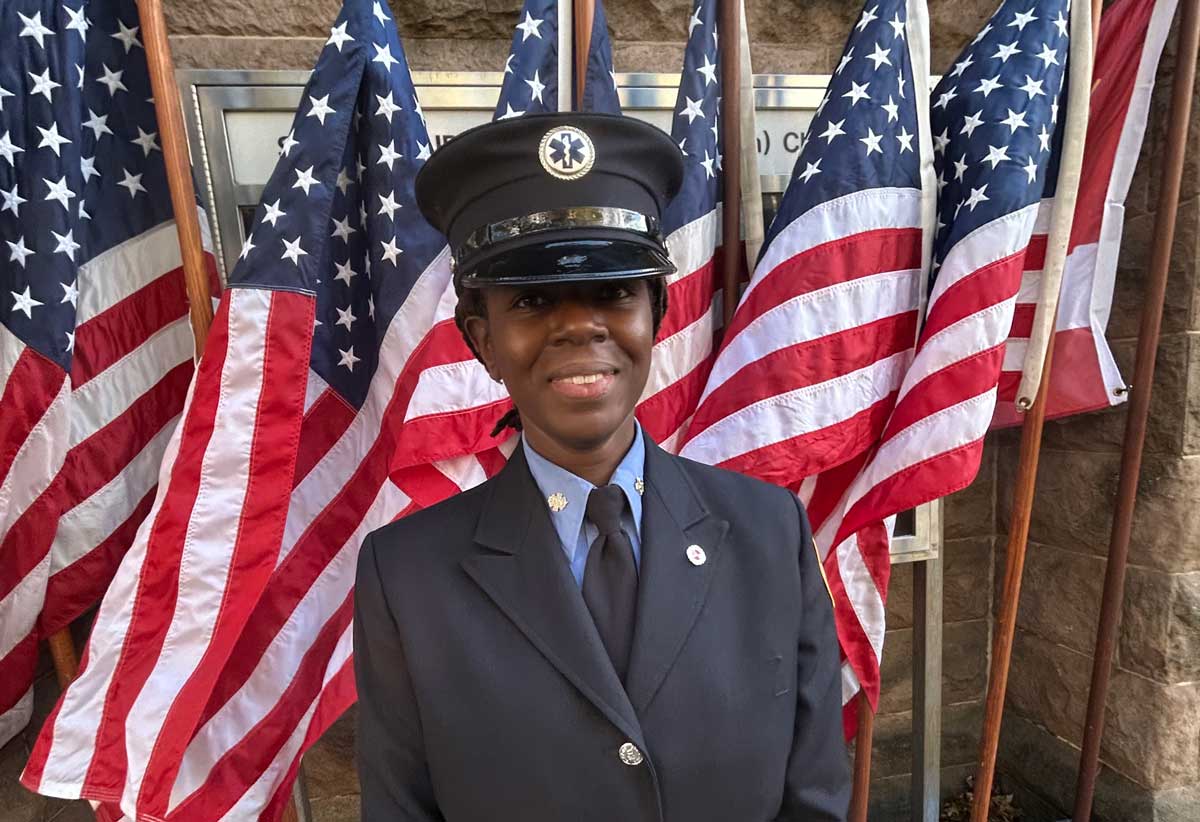
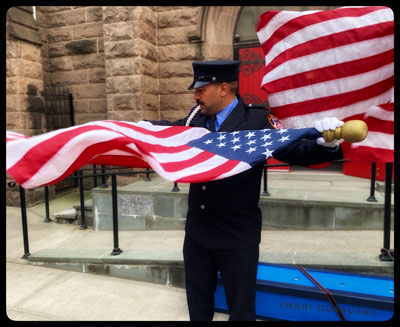
The Vulcan Society Inc held its 2025 Annual Memorial Service in honor of departed members, on Sunday at St. Philips Episcopal Church on Macdonough Street in Bedford-Stuyvesant. The Rev. Dr. V. Simpson Turner delivered the stirring invocation and sermon — with special messages in honor of three firefighters who passed recently, and Attorney General Letitia James spoke of the awesomeness of the “warriors” departed and present.

FDNY Vulcan Society president Jonathan Logan delivered the opening welcome assisted by Captain Andrew Brown, emcee, and Phyllis Wright. Outside the historic church, an honor guard stood on MacDonough Street at military attention, as flags were waved and taps played. The Vulcan Society of Black Firefighters is celebrating its 85th year. (All Vulcan Society event photos were taken by Imari DuSauzay for Our Time Press.)

“History Must Look His Way”

0

“Black is Beautiful: The Kwame Brathwaite Story” documentary debuted this week in New York City, and Brathwaite family members are sending us their commentaries on the film about the beloved photojournalist.
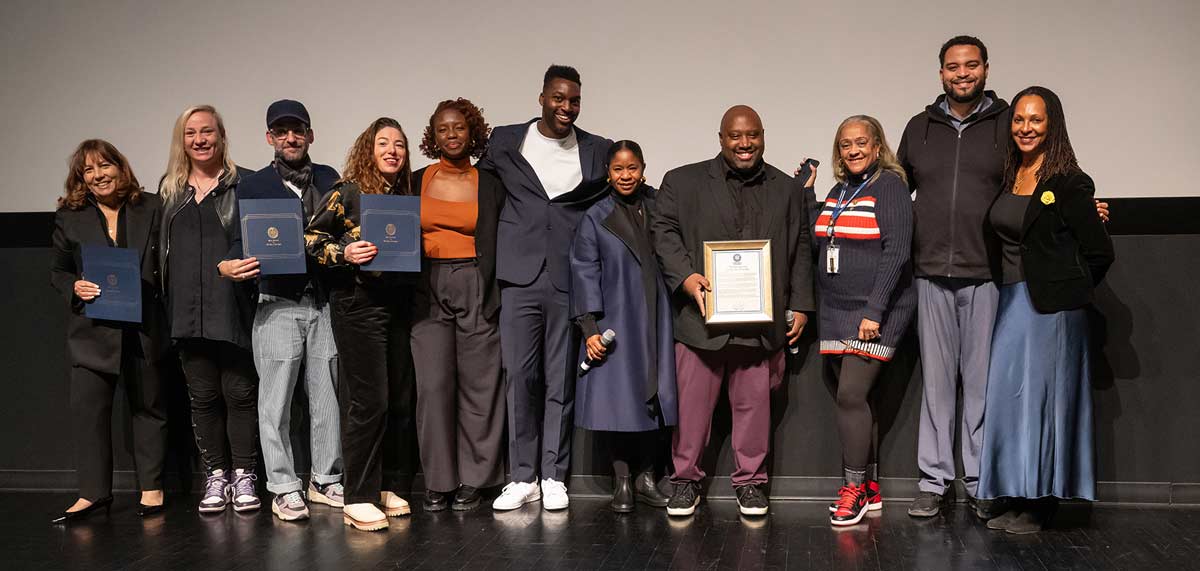
The documentary Black is Beautiful: The Kwame Brathwaite Story, directed by Yemi Bamiro and produced by Joanna Boateng of Misfit Entertainment, made its North American debut, last Thursday, Nov. 13 during the DOC NYC 2025 Documentaries Festival presented at the School of Visual Arts in Manhattan (DocNYC.net)

“History Must Look His Way”
Cinque Brath
I had the privilege of attending the world premiere of the documentary, in London, a month prior.
Yet, Kwame Brathwaite’s legacy is not just photographic history—it is cultural history. And this documentary, even as a glimpse, ensures that history finally has to look his way.
Seeing it a second time, I found myself appreciating it even more, noting a few minor edits but also sensing a deeper emotional resonance in this new viewing.

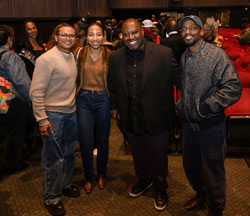
Writer-producer Cinque Brath with Grandassa models Ama Tanks & Nana Bakaa. Photo by Val Styles


Through interviews with family members, former subjects, and the occasional celebrity, the documentary paints a portrait of a man who never chased fame. Kwame moved quietly—with his camera, his love for Black people, and a profoundly patient spirit.
Yet despite his artistic brilliance, history almost erased him. For decades, his photographs went largely unseen by major institutions, overshadowed by louder and less committed figures who received recognition he never sought. His work, however, is indispensable. It is historical.


Brathwaite captured movements, moments, and emotions with a clarity and depth equal to, if not surpassing, many celebrated photographers we are taught to revere.
The music and entertainment powerhouse duo, Swizz Beatz and Alicia Keys, appear determined to rewrite that imbalance, partnering with Misfit Entertainment to bring Kwame’s story to the forefront.


The documentary uses a powerful emotional arc—culminating in the unveiling of his first cinematic posthumous exhibition.
In that final scene, as visitors stand quietly, visibly moved by images they never realized they were missing, the film fulfills a long overdue cultural responsibility.


Black is Beautiful: The Kwame Brathwaite Story reminds us that some of the world’s greatest storytellers work in silence, tucked away from the spotlight, creating legacies that deserve far more than history ever offered them.
Still, there are moments in the film where deeper context or fuller recognition of his accomplishments could have been explored. As his nephew, someone who traveled internationally with him and worked closely on numerous projects, I feel those omissions more sharply than most.
Yet, the documentary succeeds in its most important mission: introducing the world to who Kwame Brathwaite truly was and affirming the significance of his life’s work.


While the phrase “Black is Beautiful” was first coined by Marcus Garvey, the actual movement was built and sustained by the African Jazz Art Society and Studio (AJASS), founded in the South Bronx in 1956.
JASS later created the Grandassa Models in 1961, debuting them in Harlem in 1962—women who redefined beauty standards and sparked a global cultural shift. Kwame documented their efforts with extraordinary vision. His photographs remain living proof of the saying; a picture is worth a thousand words.


Yet, Kwame Brathwaite’s legacy is not just photographic history—it is cultural history. And this documentary, even as a glimpse, ensures that history finally has to look his way.

They did the work because they loved their People
Elombe Brathwaite II
“My uncle’s photographs are proof positive of the historical role that he and my father, Elombe Brath, played in promoting black consciousness and pride, and in changing the narrative of how we define ourselves in relation to a European perspective.”
“As I sat and watched the screening of the film, I thought to myself that now history is forced to acknowledge them. They are getting their just due for all their tireless sacrifices. They did the work because they loved their people; they never looked for monetary rewards.

Kwame Brathwaite family members, including his son, Kwame S. Brathwaite and partner/wife Robynn Brathwaite, are carrying the photographer’s legacy forward. photo by Barry L. Mason


I think of all the people who were inspired by the work they were doing, but never gave them credit……. In the long run though, the work speaks for itself and is far more valuable than any material rewards that they could have received in their lifetimes.”

On Kwame’s Genius
John Brathwaite
“The film is a wonderful story about my brother’s conceptualizing, planning and implementation of a massive change of our people’s self-awareness and self-esteem. It is a wonderful work of art, deserving of international awards.”

He Harnessed Beauty
Beth Arnold
This film celebrating Kwame Brathwaite, the international photo-journalist and my brother-in-law, was so inspiring and warm-hearted.
Kwame’s photography harnesses the beauty and uniqueness of Black women throughout the world, just as the documentary illuminates him. I left the theatre feeling like the most beautiful woman alive.
This documentary portrays every aspect of Kwame Brathwaite’s persona that fueled his artistry, social justice activism and political advocacy.


He was always saying, “DO IT!,” and he did it all with perfection.


Next week, Our Time Press presents more family reviews of “Black is Beautiful: The Kwame Brathwaite Story” and members of our team, Bernice Green, David Greaves and Barry Mason, share personal stories covering three decades on Kwame’s extraordinary legacy.

The Fall of NY Football

0

By Eddie Castro
By no means necessary, Jets and Giants fans would catch themselves looking away from the TV screen when it came to their beloved New York Football teams. Although coming into the 2025-26 NFL campaign, there weren’t many expectations coming into this season, but no one could have expected it would look this bad. Through 12 weeks, both the Jets and the Giants sit in last place in their respective divisions with a combined win-loss record of 4-17.

Coaching, front-office issues, injuries, poor quarterback play, and poor draft decisions that probably go back to my High School days are the many reasons why both teams are where they are today. The Jets and Giants have endured a lot, and unfortunately, it does not appear that things will improve, at least not this year.


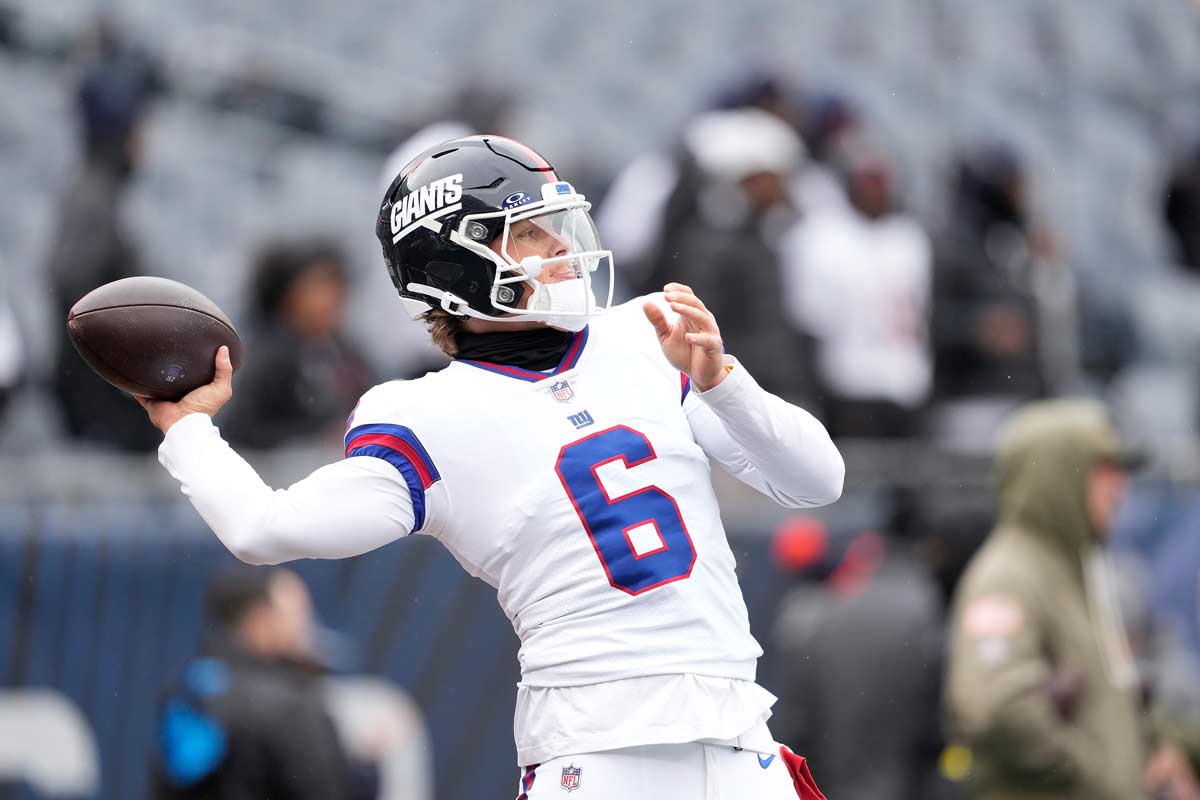
For the Giants, things got off to a pretty rocky start with quarterback Russell Wilson. In three starts for the Giants, Wilson was hit just as often as a piñata on a birthday. His ineffectiveness led the organization to make a change at quarterback to rookie Jaxson Dart. In seven starts with Dart under center, the team has shown signs of improvement, and there seems to be quite a connection between Dart and Coach Brian Daboll. Despite that connection still in progress, the front office decided to part ways with Daboll after a fourth-quarter collapse against the Chicago Bears.

Daboll posted a record of 20-40-1in 4 seasons as the Head Coach. He led the team to the playoffs in his first season, but the team has since gone 11-33. Injuries have also decimated the team. Their secondary has taken hits all year long, and the team lost their top offensive playmakers in receiver Malik Nabers and Cam Skattebo to season-ending injuries.


Ironically, the New York Jets are dealing with similar issues to their neighbor, the Giants. The team has continued to struggle for some time, leading to the playoff drought that will now be 16 years if you count this season. The team has struggled to find consistency at the quarterback position. Coach Aaron Glenn has decided to bench Justin Fields (whom the team invested big in this offseason) in favor of Tyrod Taylor for this Sunday’s game against the Baltimore Ravens.

The team’s overall performance is a reflection of a larger pattern of instability, hence why the organization elected to trade top-tier players like Sauce Gardner and Quinnen Williams a few weeks back.

There’s no other way to put things into perspective. Both organizations have continued to show no signs of progress when it comes to the rebuilding process, leaving fans drowning in their sorrows. Both franchises have not gotten it right with recent draft picks, adding to a quite dysfunctional decade of New York football.


Sports Notes: (Football) police are looking for a suspect who shot Jets player Kris Boyd outside an Asian Fusion restaurant in Manhattan over the weekend. Boyd was taken to Bellevue Hospital, where he is reportedly in critical but stable condition.

We here at Our Time Press want to send our biggest prayers to Boyd and Boyd’s family, friends, and loved ones during this time. The New York Giants will head to Ford Field to play the Detroit Lions on Sunday. (Basketball) The Knicks battle the Orlando Magic in the third game of a five-game road trip. As we go to press, the team is still seeking its first win of the season away from Madison Square Garden.

Helping Jamaica After Hurricane Melissa

0

By Kazembe Batts
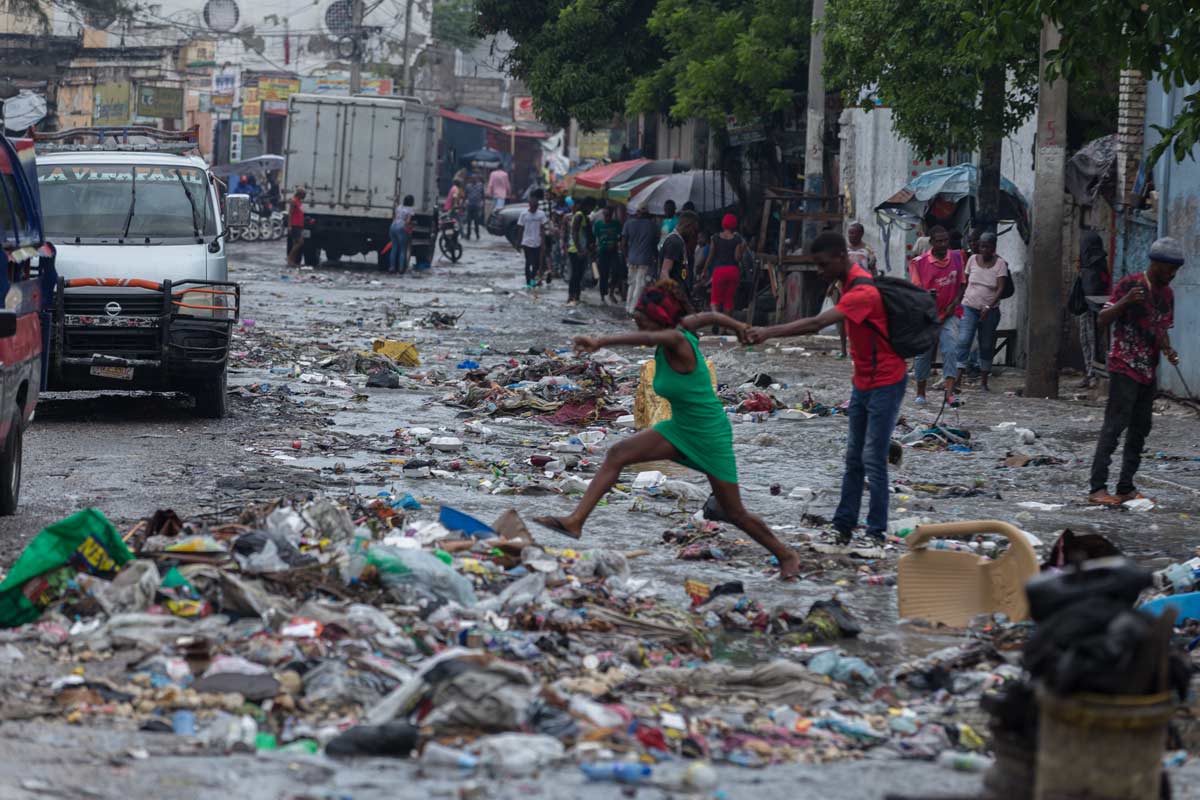
On October 28th, Hurricane Melissa ravaged Jamaica, Haiti, Cuba, and other parts of the Caribbean. In Jamaica, the storm, which touched down on the western side of the island, caused tremendous infrastructure damage, landslides, roadblocks, and electrical blackouts. Melissa left entire communities isolated and surrounded by water. Nonetheless, since the storm made landfall as a Category 5 hurricane with wind speeds of up to 190 mph, opportunities to assist Jamaica, a nation of 3 million people, are being realized.


Led by International Reggae Day founder Andrea Davis, Jamaica Arts Holdings (JAH)updated diasporans about conditions on the ground as the storm approached and after it had caused catastrophic damage. From the capital Kingston, where electricity remained functioning, JAH used wi-fi and WhatsApp links to inform the Jamaican diaspora of conditions. This communications system was crucial because immediately after the storm, 72% of the island lost electricity, and only 35% of cell phones worked.


Recording star Shaggy stepped up to help after getting guidance from Chat GPT regarding what to do. Commandeering a friend’s plane, he flew from Miami with loads of batteries, sanitary pads, tarpaulins, Pampers, and other supplies. According to Shaggy, “We’re very resilient people, there is a lot of love and kindness. Kingston now operates as a hub that can get food and supplies in and out; you’re feeling the community camaraderie within the Jamaican society. I love that”. Besides his own initiative, Shaggy also recommended two organizations that he believes are credible: the Global Empowerment Mission (GEM), which uses an Amazon link so items purchased can quickly get to GEM, which then distributes the supplies. Seeing the impact, he also recommends the well-established multi-national charitable organization, Food for the Poor. Another verifiable organization is Helping Hands Ministry Jamaica, which is operating out of Florida.


The government of Jamaica is not sitting idly during this period of hardship. To inspire the nation, Jamaican Prime Minister Andrew Holness proclaimed, “Jamaica, we are strong and will get through this…the devastation is truly heartbreaking, yet the spirit of the people remains unbroken.” At a recent gathering in Washington, D.C., Jamaica’s new Ambassador to the United States, Antony Anderson, told a crowd of interested listeners, “We have to ensure that the supplies sent into Jamaica go into the right hands for distribution.” He then shared some steps his government has taken to facilitate assistance and donations: launched a dedicated email address where Jamaicans abroad can send inquiries and make pledges – disasterresponese@jamaqqicaarmbassy, compiled a database of reliable 501(c) 3 organizations, and another database of people with specialized skills to be ready to be deployed.


Mindful of current national politics and immigration policy, New York City Immigration Coalition Executive Director Murad Awawdeh added, “Everything from homes to local businesses has been destroyed, widespread power outages have occurred, and families are struggling to recover…currently, Jamaica is not designated for TPS…TPS has enabled our immigrant neighbors to work legally, support their families, and contribute to the local economy…we urge the administration to immediately designate TPS for Jamaica, ensuring they have legal protections, stability, dignity to continue to rebuild their lives without the fear of being ripped away from their loved ones…in contrast, deporting Jamaicans back to a country in the middle of a humanitarian crisis would be reckless and inhumane.” Many believe that TPS and American foreign policy toward the Caribbean, whether in Haiti or Jamaica, is a growing concern for humanitarians.


Artists, charity organizations, and government officials are focused. Walking down Nostrand Ave. you may stop and get some jerk chicken while hearing classic sounds of Bob Marley or the more contemporary Buju Bunton. These are signs of Jamaicans’ cultural influence in Brooklyn that many of us enjoy. Culture is important, but now is the time to help the Jamaican people and nation in their struggle for a better material quality of life and to turn Hurricane Melissa into a unifying, nation-building time of Black Solidarity.