Home Blog Page 319

Post Traumatic Slave Syndrome

Anger, Self-Hatred and the Twisting of the Human Spirit – Pt. II

The following is part II of a series
based on the lectures of Joy De-
Gruy (Nee Leary), M.S.W., that first ran
in Our Time Press in January of 1999.
With the ending of Mental Health Month in May, and the reliving of the massacre in Tulsa, Oklahoma 100 years ago, we thought it appropriate to remind of the ongoing trauma African Americans have endured over the centuries.
It took aerial bombings to destroy Black Wall Street in Tulsa, but the minds of a people can be subject to ongoing violence by forgotten forces as deadly as fire and bullets. Here, Dr. DeGruy walks us through that process.

Black Mothers
One of the other symptoms that I see is the behavior that you will notice with African American people. A lot. If you see and African American mother in a bank right now, and she has children around her, three, four, five years old, that kind of age. Where are the children in proximity to her? Sometime they are literally adhered to the mother. And then, if they should try to move, “Get yourself back over here.” Now I’m observing this behavior and in the same bank there’s a white mother. Children with her are roaming around, “Honey come back. No No No. I’m sorry. Put that down.” Sliding down the rail. Here’s the same bank and the Black child looking at little Johnnie sliding down the aisle. It’s so deep that when the mother goes to the teller, this is the child’s chance to escape. But in the line there’s another Black mother. Now she doesn’t know this other woman, but when she sees that child start to slide away, she gives him that “Death Stare” that only Black mothers can give.

The child looks at her and slides right on back. What that behavior is, this mother has her back. She taking care of it, it’s part of community, it’s part of what we learned. It’s social learning, it’s what we adapted to, but here we have to ask a question. If I walk up to the mother and asked her how come you’re not letting the child explore, which is normal by the way. In order for a child to develop emotionally, they need to explore. It’s a natural phenomenon of human development. They walk up to you, “Hi, what’s your name? That’s an interesting color you have on.” They ask questions. It’s how they take in their environment. So we’re actually stifling their development when we say no. When I asked the mother, how come she won’t let him go, she doesn’t really have an answer because that’s what she was taught. We don’t know why we do it, but what the Black child gets to know in 1998, is that it’s okay for Johnnie because it’s his world. “I can’t do it because I’ll get into trouble. It’s not for me.” No one said it, but that’s the message that that child gets. Now when we look at that behavior, we have to understand it in terms of adaptation. We must understand that it was appropriate because there was a time you would get in trouble. There was a time when everything could break down right there and you’d beat him before you’d let him move.

Protecting the Child
There’s another phenomenon which is very important. How many people saw “Soul Food”? This phenomenon is so familiar to us they wrote it in the script. You come up to a white mother and say, “You know, that Johnnie of yours he’s really doing well, isn’t he?” she goes, “Oh yes, he’s quite the man. He’s in the talented and gifted program, the little league, he’s taking after his uncle, I think he’s going to be an engineer…” you have to cut here off. She’s so proud, you have to stop her. Black mother, same attributes, same qualities, the white woman attempts to praise her son. “You know, that Johnnie of yours he’s really coming along isn’t he?” Black mother responds, “Yeah but you should see his butt at home, he’s a mess. Girl you shoulda, honey, yeah, well…” She’s proud, isn’t she? She really is proud, she really is happy, but it’s not coming out verbally. Why is she doing it. I did it myself. I don’t know where it came from, it’s knee jerk. But then I started to do the research. I started reading slave histories and all of that, and I rolled it back. Let’s roll it all the way back to slavery. I’m the white master, “You know what, that Johnnie, he’s really coming along.” What is she going to say to the master? “No, No, No, master. He’s shiftless, he’s stupid, he’s lazy, he can’t do nothing.” because she doesn’t want him, what? “Don’t sell my baby! I don’t want you to sell him.” So, I denigrate him to keep him with me. That is adaptation, which is appropriate, but what did it do to Johnnie? And what does it do to Johnnie in 1998? But nobody stopped to say, let’s do that mass therapy. Let’s get rid of some of those behaviors of adaptation we no longer need. No one did that for us. So we get those behaviors and there are a million more that you know and I can’t even remember. But if we don’t look at them, if we don’t understand them, if we don’t do this work then we will never get to it.

Therapy
Do you think somebody white can? I’m not saying other people can’t be good therapists, but without the understanding of culture, you actually injure people. Everything in my clinical training, I have to go completely against. Everything about therapy, all of it. I have to go completely against it because I understand what my people need to do to heal. Sometimes when you get in those little therapy rooms and they tell you to bare your soul, well guess what happens when a Black person says, “Let me show you my scar and how I got it. What do I expect you to do next? Show me yours. Because I need to know that you understand that you are not undefeated too. Just like I’m not undefeated, you’re not undefeated. And you showed it to me, because you showed me your scar too.” The rule says you’re not supposed to get in that close with clients. They would say that sharing is inappropriate. But the client feels, “I’m showing you all my scars, I expect you to show that you have some too.” Because it validates our humanity. But that’s not what they teach you in therapy because it’s a man-object oriented system. I can’t go through all of the symptoms but let’s look at some of the cures.

Next Week, Part 3
Self-Enhancement Program Therapeutic Model, Strength of Positive Feedback
Griot Calling

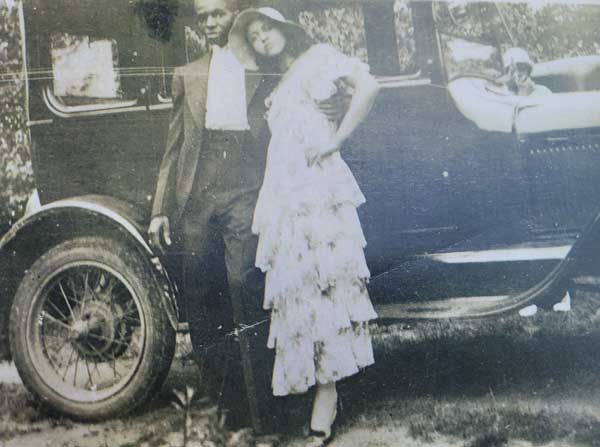
The late patriarchal principal of Boys & Girls H.S., Frank C. Mickens, was the subject of Our Time Press first Father’s Day cover story in June, 1996.  The issue resonated with readers of all ages, particularly those who were Mickens’ cheerleaders. For community activist, Baabasurya the feature story on this writer’s father Daniel C. Green, a World War II vet, attracted immediate attention.


As a boy growing up in Westchester, Baaba knew and heard of Danny way before I was a thought.  Baaba eventually contacted us, and confirmed information I knew about my father, and added unknown facts to the existing history.


Thankfully, from Baaba and scholars like Professor William Mackey and Dr. John Henrik Clarke, we learned early in the life of Our Time Press that that including the human experience element to our form of news telling was essential.  


As a footnote to the above, one day, Baaba showed up at our former Lafayette Avenue office announcing he would distribute our paper in his native Westchester County.  For about a year, rain or shine, on Thursdays or Fridays weekly, he sojourned by subway, with shopping cart from The Bronx to Bedford-Stuyvesant to make special deliveries for us.  In recent years, we meet up with Surya on-line. He assesses his many years being in good health and shares his thoughts on what the community’s priority should be. 
(Bernice Elizabeth Green)

Baabasurya, 88: Organic is the Way to Live

as told to Bernice Elizabeth Green
From Scarsdale, NY’s Saxon Woods Road area to Tuskegee, Ala., thanks to my grandparents, I grew up “country”.  On country food, that is.


I attribute my health now at 88 and in those younger years to my experiences growing up with family in Black communities where Nature and its bounty were understood and valued.  Looking back, I see my family’s lifestyle was an active political statement.


 I have been a strict vegetarian for more than 30 years. We are what we eat, and I feel we need to help our people move toward that knowledge.  Good health and nutrition is a daily thing. 
Unfortunately, taste has captured the five senses, and we are eating our way towards sickness. 
Sugar, salt is leading the way to most diseases of the body. 
We must read and study the labels.  
My motto is:  Organic is the way to go, less medical bills later. 
 Yes, hospitals, nursing homes, clinics, assisted-living places are needed.  In fact, they are essential, but would you want to depend on them?


Home is the most essential place — where family is.  The greatest LIVING room is NOT the living room, as we know it; it’s the Kitchen. I call it the Healing Center.  It is where we can build up our IMMUNE center daily, at home: green leaf veggies, fresh fruit, all available at the farmer’s market or at some grocers. 


We should be moving away from dependency-food like Dairy products. Even eggs can have bad bacteria.  We can start by drinking more water, especially alkaline water. Many books are available to lead us toward better health and more knowledge about eating natural food.

Even the fast-food industry is trying to catch up. You can find Impossible and bean burgers, and avocado and hummus on their menus.
Much of this education on nutrition and food should be taught and practiced at home and in the public schools.  


My grandparents and great-grandparents were not taught about nutrition in college. 
We all have family who came from the country when country was country.  Maybe moving to the country is an answer.
But this is 2022, and I realize that as the song goes, “everything must change.”   
What should change is companies like Monsanto and Bayer.  Hard for me to imagine that companies can create seedless grapes. They are creating food that contains NO nutrition. Corn syrup is in everything. Canola is called healthy. It’s a no-no. So are packaged bleached, white flour products.


 It›s been three years since I moved to Tuskegee.  I was a strict vegetarian before then. For decades.
What will not change for me is my parents and grandparents understanding and knowledge that the immune system can fight sickness.  
On my family’s property in Westchester, there were grapevines, and three different varieties of apple trees; and pear, plum and cherry trees all planted in 1905 by my father’s father on property he received from the Purdy family.  Rhubarb, currants, gooseberry bushes, strawberries and blueberries grew wild in the woods.


Yes, we raised chickens and pigs.  We got fresh fish from Tony’s Fish Truck every Friday.  
(Note to readers: The first story of Baabasurya’s boyhood years in Westchester County appeared in the (2008) edition of “Our Time At Home”.)

Assemblymember Phara Souffrant Forrest, Candidate 57 AD & Accomplishments of Olanike Alabi, Candidate 57th AD

In the May 26th issue, we published information on the two candidates for Assembly District 57, a list of accomplishment for incumbent Phara Souffrant Forrest, and the background of challenger Olanike Alabi. Candidate Alabi brought to our attention that we should have listed her accomplishments as well. Below is Ms. Forrest’s background and Ms. Alabi’s accomplishments.

Phara Souffrant Forrest

Phara Souffrant Forrest is serving her first term in the New York State Assembly representing the 57th Assembly District, which consists of the neighborhoods of Fort Greene and Clinton Hill as well as parts of Bed Stuy, Prospect Heights and Crown Heights. 


As a lifelong Brooklynite, Phara is a proud product of Brooklyn’s public school system, attending both Phillipa Schuyler Middle School and Benjamin Banneker Academy for Community Development. She then went on to attend SUNY Geneseo where she majored in political science before moving on to obtain a nursing degree at CUNY City Tech. Before being elected to the Assembly, Phara worked for several years as a maternal child health field nurse, where she would care for new mothers after they gave birth. 


In addition to her work as a nurse, Phara is president of her building’s tenant association and has been an active member of the Crown Heights Tenant Union. Phara credits her run for the Assembly to her work in tenant organizing and her work to help pressure the state Legislature to pass the Housing Stability & Tenant Protection Act of 2019. As part of her work, Phara participated in a demonstration at the Capitol, where she was arrested fighting for her fellow tenants. Phara credits this moment with inspiring her to run for the Assembly and stand up for tenants just like her across the state.

Olanike Alabi

  • Olanike sponsored legal clinics, town hall meetings and community forums on public education, housing, public safety, the healthcare system, domestic violence, redistricting, “Stop-and-Frisk”, electoral politics and many other topics.
  • Established “News – Events – Updates”, a widely dispersed weekly 
  • e-newsletter.
  • Convened Annual Community Food Drives in support of local food pantries
  • Created a process to ensure the appointment of individuals to staff polling sites who were capable and committed to ensuring democracy especially in light of the enactment of the Help America Vote Act (HAVA).
  • Was elected to serve as a pledged delegate at the 2008 and 2012 Democratic National Conventions in support of the Honorable Barack Obama.
  • Served as an independent voice as it relates to rules, procedures, local issues and the selection of candidates for judicial and public office.
  • Worked with clergy, elected officials and community leaders to resolve constituent complaints
  • Hosted a major community fundraiser in support of a local school in financial distress
  • Sponsored toy drives for children in our community. 

The Middle Passage 

Annual Tribute to Our Ancestors Returns for 33rdYear, this Saturday, June 11

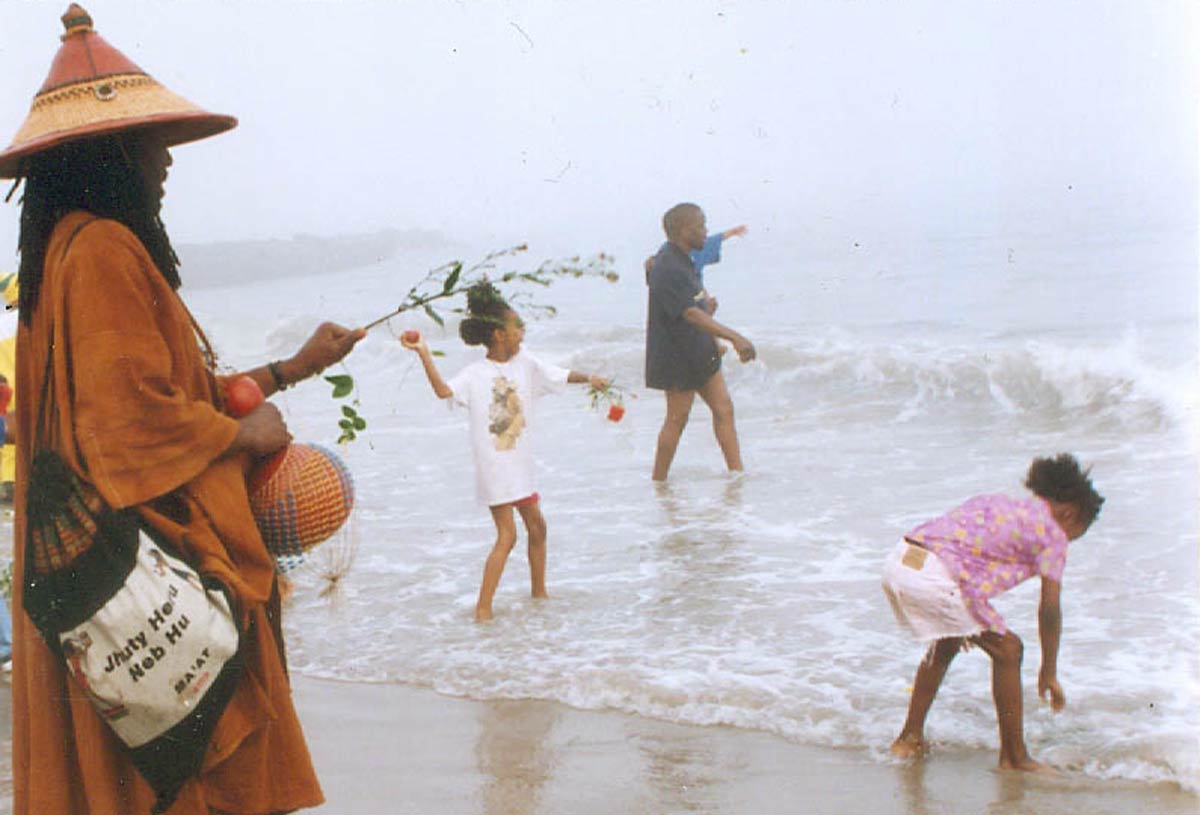
The People of the Sun Middle Passage Collective is pleased to announce that, after two years under Covid restrictions, we will be holding the 33rd Annual Tribute to Our Ancestors of the Middle Passage, Saturday, June 11, 2022 on the Coney Island Boardwalk @ 16th Street (The Ancestors’ Circle)  from Noon to Sundown to remember, honor,  and celebrate the lives of our ancestors.

There will be ancestral drumming, dance, musical, and spoken word performances.  We will offer libation at the beginning of the events of the day and lay flowers on the ocean at the end of our Tribute.

Gardens over Guns

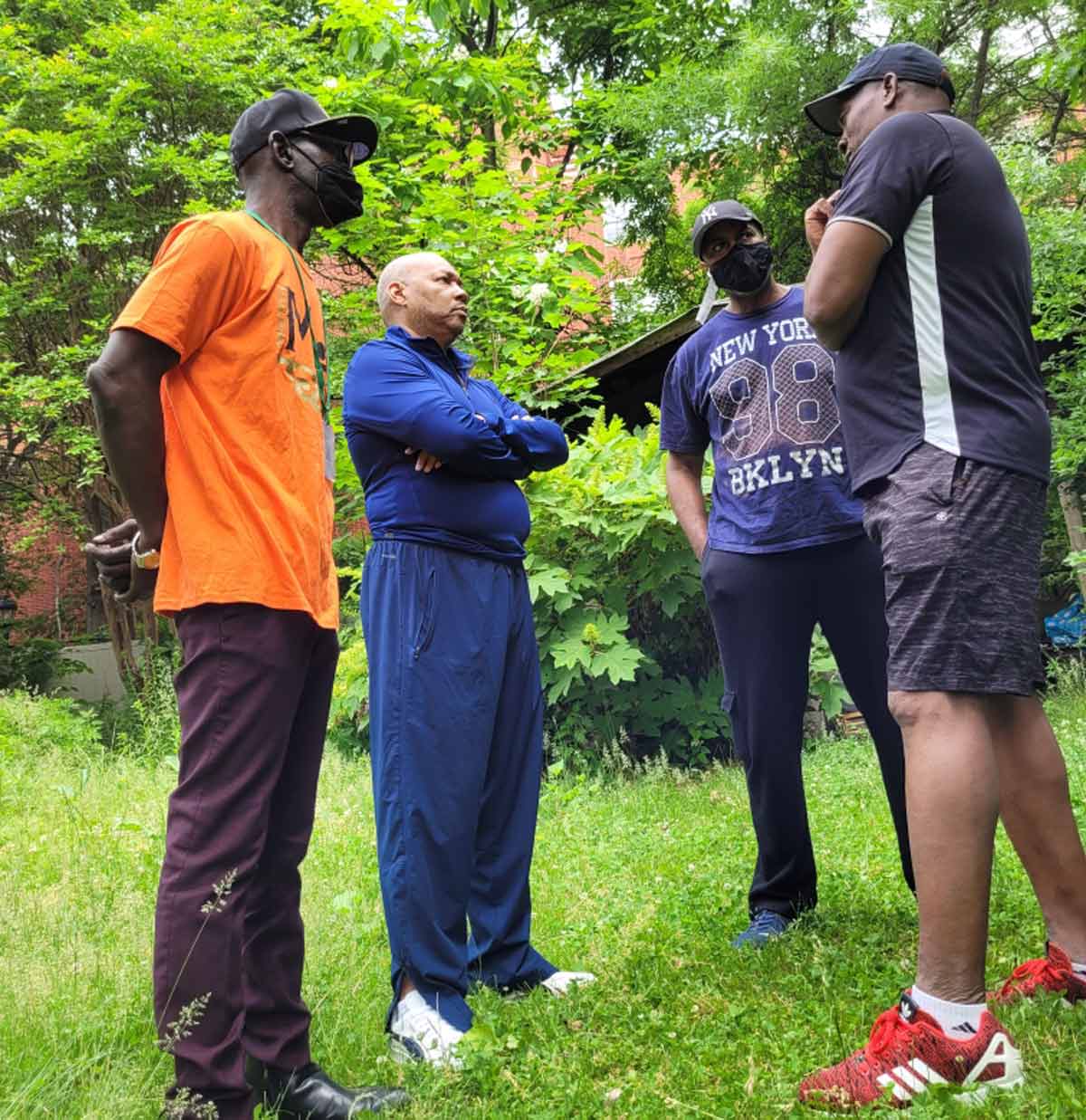
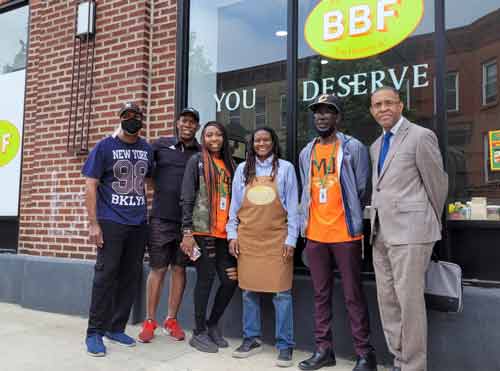
POWERING UP A NEW SUSTAINABLE PEACE MOVEMENT: There’s a new energy rising in North Bed-Stuy, and Our Time Press was witness to it on Wednesday, June 1, the first day of National Gun Violence Awareness Month. 

The Bedford-Stuyvesant residents, faith leaders and business owners, seen here, are working together with the newly arrived MAN-UP! organization to refurbish and make safe the Kosciusko Garden on Lafayette between Marcus Garvey Blvd. and Lewis. “That’s just a start,” said a community advocate, whose Vietnam Vet older brother returned from his tour of duty and was tragically killed by gunfire in New York City. 

 “We’re seeding the community with new strategies for sustaining the presence of long-time residents and small businesses here. It’s about more than transforming an over-weeded area into a sanctuary. It’s transforming lives, children’s lives.”