Home Blog Page 316

Climate change: Bonn talks end in acrimony over compensation

By Matt McGrath, BBC
Environment correspondent, Bonn

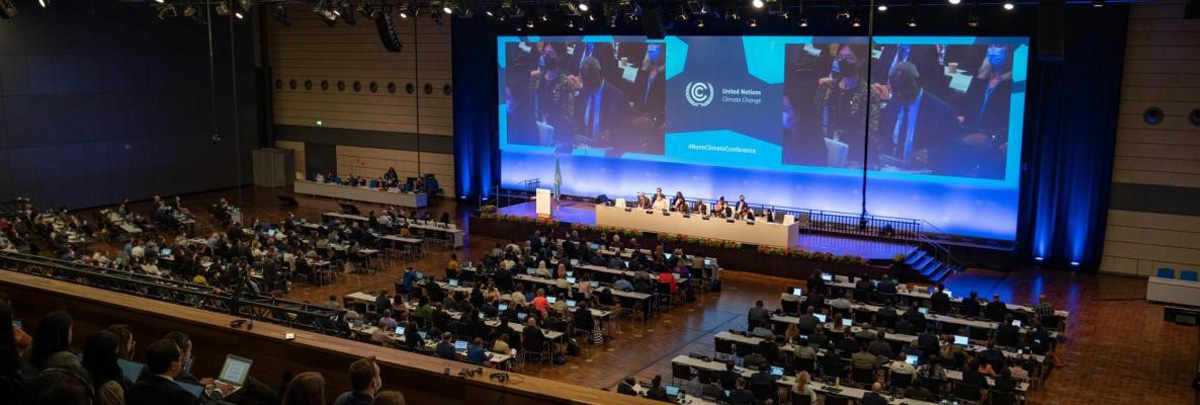
Two weeks of climate talks in Germany have ended in acrimony between rich and poor countries over cash for climate damage.
Developing countries say they are reeling from climate change caused by richer countries’ emissions over hundreds of years.


They hoped to get compensation onto the official agenda for discussions by world leaders in November.
But here in Bonn they couldn’t get the US and the European Union to agree.
“The climate emergency is fast becoming a catastrophe,” said Conrod Hunte, lead negotiator for the Alliance of Small Island States (AOSIS).
“Yet within these walls the process feels out of step with reality, the pace feels too slow,” he told delegates at the end of the meeting.


Developing nations say they need money to deal with the impacts of climate change, because they suffer the effects more than richer nations and have less financial capacity to cope.
They argue that the climate change they are experiencing has been caused by carbon emitted by richer countries as they developed their economies. They say that Europe and the US have a responsibility now to compensate them for this.


The US and Europe don’t agree. They fear that if they pay for historic emissions it could put their countries on the hook for billions of dollars for decades or even centuries to come.
The issue is termed “loss and damage” and has become a running sore in these negotiations.
At last year’s COP26 conference in Glasgow, island states and developing countries agreed to prioritise cuts to carbon emissions on the back of promises that richer nations would finally set up a compensation process this year.


It was a compromise they hoped would pay off.
But despite two weeks of discussions here in Bonn, they have been unable to get the issue of a funding facility on the agenda for the COP27 conference in Sharm El-Sheikh, Egypt in November.


“The compromise was based on an understanding that countries would be willing to start talking and taking decisions on dealing with how to get that finance flowing for loss and damage,” said Alex Scott from E3G, an environmental think tank.
“And we haven’t seen that come to fruition here. Instead, we’ve seen a workshop set up to talk about how we can fix some of the problems.”


The EU in particular has come in for heavy criticism.
“The EU consistently blocked discussions on finance for loss and damage in Bonn,” said Harjeet Singh, from the Climate Action Network International.
“The last two weeks exposed its hypocritical stance, with major countries like Germany sourcing new fossil fuels abroad while denying support to developing countries facing devastation from climate-induced superstorms and rising seas.”
Many participants from poorer regions of the world brought their own personal testimony of the impacts of climate change.


“We are already living with loss and damages for the last 25 years,” said Adriana Vasquez Rodriquez from La Ruta del Clima, a Costa Rican environmental group.


“We have families who have lost their houses, their crops, their lives, and no-one is paying for that, we are running out of resources, and at the same time, we are depending on debt.”
Bridging the divide between rich and poor on this issue will not be easy.


While the question of a financial facility will now not be on the official discussions at COP27 in Egypt, developing countries are certain to continue to insist that their voices be heard on this question.


Follow Matt on Twitter @mattmcgrathbbc.
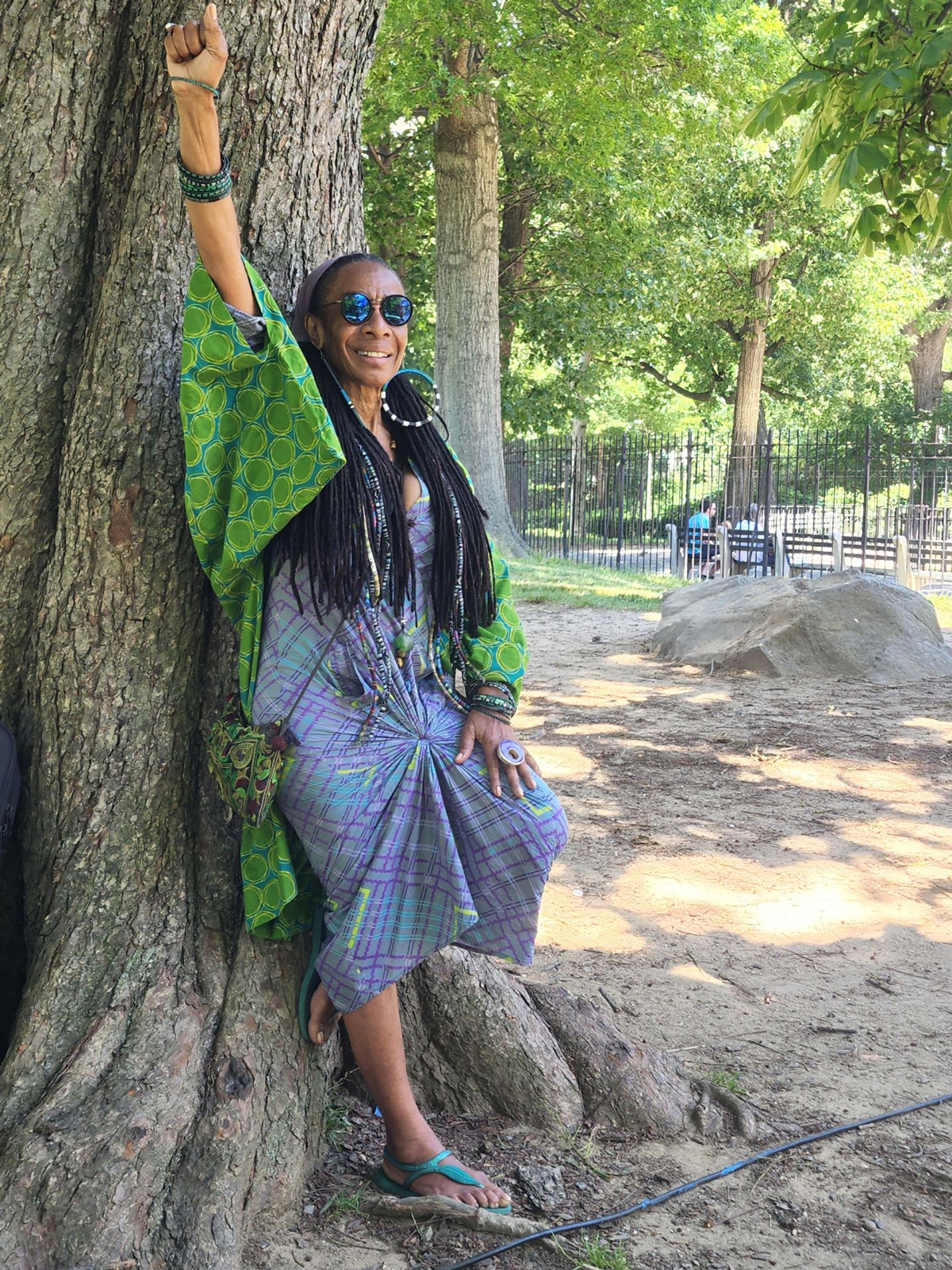
Forgotten Sacred Ground

Yaa Asantewaa Nzingha

“If you are the son of a man who had a wealthy estate and you inherit your father’s estate, you have to pay off the debts that your father incurred before he died. The only reason that the present generation of white Americans are in a position of economic strength is because their fathers worked our fathers for over 400 years with no pay. We were sold from plantation to plantation like you sell a horse, or a cow, or a chicken, or a bushel of wheat. All that money is what gives the present generation of American whites the ability to walk around the earth with their chest out like they have some kind of economic ingenuity. Your father isn’t here to pay. My father isn’t here to collect. But I’m here to collect and you’re here to pay.”
– Malcolm X

What are reparations?
N’Cobra (National Coalition of Blacks for Reparations in America) describes reparations as a process of repairing, healing and restoring a people injured because of their group identity and in violation of their fundamental human rights by governments, corporations, institutions or families.


I attended several events around the New York area commemorating and celebrating Juneteenth, the anniversary of the announcement by Union Army General Gordon Granger on June 19,1865 proclaiming all enslaved Africans free in Galveston, Texas. Ironically, this proclamation came two years after the January 1,1863 official Emancipation Proclamation freeing enslaved Africans.


Although Juneteenth has been celebrated across the United States, many had not heard of it until recently when the senate voted “unanimously” to make it a holiday on June 17, 2021.
President Joe Biden signed it into law declaring “Great Nations don’t ignore their most painful moments”. He was not the only one voicing concerns about the United States’ egregious history of enslavement. Several politicians and officials made similar statements.


Mayor Eric Adams is quoted in the New York Post comparing the displacement of Black New Yorkers to slavery in a speech delivered at Central Park Conservancy’s Juneteenth celebration. He went on to say, “When I was in Ghana last year, I saw how families were displaced, torn apart and brought over to America through slavery in the hulls of the ship’s, living in dungeons, spending months and months living in their human waste, having their babies taken from them, and saw them dispersed and displaced. That’s no different here.”


I enjoyed observing dancers, speakers, poets, storytellers, fashion shows, vendors, parties, cookouts, Black folks hugging, loving and rejoicing. But what I found disturbing was the acceptance of this government’s trivial bestowment of a holiday in lieu of reparations for violating the human rights of Black people.


Even though the U.S. president called enslavement, “a most painful moment” and the mayor of New York compared the displacement of Black New Yorkers to slavery, no one I witnessed speaking on Juneteenth demanded reparations for the damage that continues to exist today.
Standing on the forgotten “Sacred Grounds” of Seneca Village in Central Park witnessing the pouring of libation and praising of the Ancestors, I couldn’t help but ponder the question, “Are the people involved in this celebration, including the Mayor, oblivious to the atrocity that took place here?”


I’m sure they are aware of the history, but what about the sacredness and value of the land on which they stood. Not only were schools, churches and homes demolished, but hiding places for runaway enslaved Africans in the basement of several of these homes were also destroyed. In addition, Black men lost their voting privileges because they no longer owned land and property.


Armed with this knowledge, who would dare take the mic and not address compensation from a government that paid reparations to the Japanese, Aleuts of Alaska, the Navajo and several other Indigenous groups?


Given the enormity of the injuries imposed upon Black people by the United States government and the lasting effect on future generations it is imperative we cease “Barbershop” talk and engage in activities that produce tangible results.


The grandstanding at the mic I experienced during Juneteenth celebrations sounded preposterous without mention of reparations for the healing and restoring of Black people nationwide.

Uterine Cancer at Crisis State for Black Women

By Fern E. Gillespie
When the New York Times released a story last week about the rising prevalence of uterine cancer among Black women, I was not surprised. Over the last 20 years, I’ve had several relatives diagnosed with uterine cancer including my mother and her sister. Both my mother and my aunt were diagnosed in their 70s and survived the disease. However, my mother had critical life-changing complications. Her abdomen was infected with necrotizing fasciitis (the flesh-eating bacteria), which landed her in ICU for six weeks and the remainder of her life in a nursing home.


According to the New York Times, cancer of the uterus, also called endometrial cancer, is increasing so rapidly that it is expected to displace colorectal cancer by 2040 as the third most common cancer among women, and the fourth-leading cause of women’s cancer deaths. Uterine cancer was long believed to be less common among Black women. But newer studies have confirmed that it is not only more likely to strike Black women, but also more likely to be deadly.


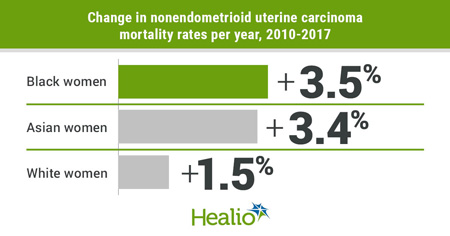
A March report from the American College of Obstetricians and Gynecologists stated that Black women die of uterine cancer at twice the rate of white women. The gap is one of the largest racial disparities observed for any cancer. Black women are also more likely to develop a form called non-endometrioid uterine cancer, which is more aggressive. In addition, Black women were less likely than white women to undergo hysterectomy, less likely to have their lymph nodes properly biopsied to see if cancer had spread, and less likely to receive chemotherapy, even for a more threatening cancer.


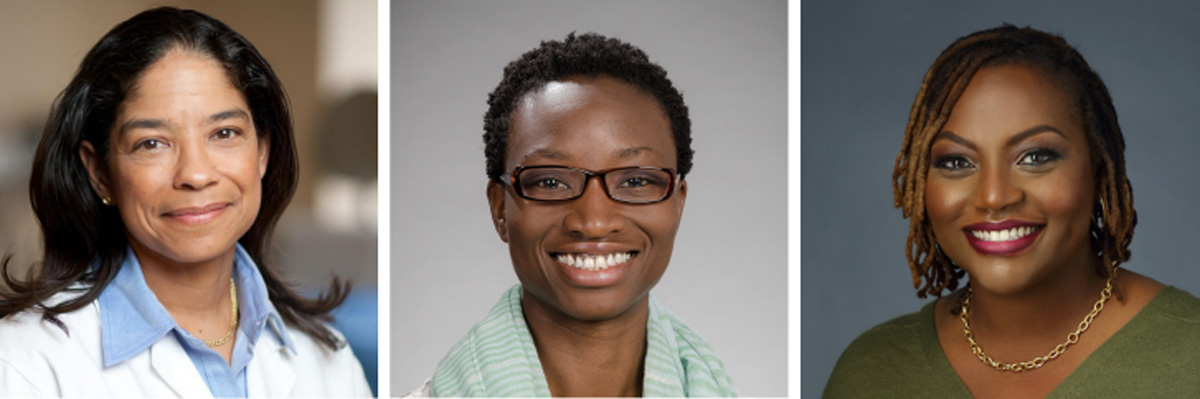
Several notable Black women physicians, who specialize in gynecologic oncology, have been working with Black patients to study methodology and treatments to combat this uterine cancer crisis. At New York’s Memorial Sloan Kettering Cancer Center, Dr. Carol Brown, a gynecologic oncology surgeon and MSK’s Chief Health Equity Officer, launched the Endometrial Cancer Equity Program (ECEP). Endometrial cancer develops in the lining of the uterus (womb) and is also sometimes referred to as uterine cancer. The program’s goals are to educate Black women about endometrial cancer, help those diagnosed find appropriate care, and ultimately find treatments to improve outcomes for all women facing the disease.
“Traditionally, providers have focused on symptoms that include bleeding in post-menopausal women, who often have other symptoms such as obesity and diabetes,” said Dr. Brown. “But this cancer can present as just a heavier-than-usual period bleeding in your 40s. That’s true of all women and particularly Black women.”


The ultimate goal of research at MSK’s Endometrial Cancer Equity Program is to better understand these biological differences in endometrial tumors, down to the molecular level, and then use this knowledge to identify weaknesses in the tumors that are more common in Black women. Then, it’s about finding therapies to treat them.


A study from the National Cancer Institute has shown that Black women with endometrial uterine cancer have a 90% higher 5-year mortality risk compared with white women. There’s a 5-year mortality rate of 39% among black women compared with 20% among white women. Only 53% of black women receive an early diagnosis.


Transvaginal ultrasound (TVUS) screening missed over four times more cases of endometrial uterine cancer among Black women than white women, pointed out Dr. Kemi Doll, the lead researcher, and a gynecologic oncologist with the University of Washington School of Medicine. She is a founder of ECANA: Endometrial Cancer Action Network for African-Americans.


“Black women have an over 90% higher mortality rate after diagnosis of endometrial cancer when compared with white women in the U.S.,” she wrote in her 2021 study published by JAMA Oncology. In this study using a simulated cohort, TVUS endometrial thickness screening missed over four times more cases of endometrial cancer among Black women versus white women owing to the greater prevalence of fibroids and non-endometrioid histology type that occurs among Black women.


Premenopausal women who have erratic menstrual cycles may not recognize that they need to check for uterine cancer because they think of the irregularities as normal, said Dr. Doll. And women in perimenopause who expect abnormal bleeding may also not recognize when something is wrong.

This disparity has been witnessed firsthand by Dr. Ebony R. Hoskins, a gynecologic oncologist at MedStar Washington Hospital Center and assistant professor of clinical obstetrics and gynecology at Georgetown University Medical Center. “I’ve seen women who have the symptom of heavy bleeding or irregular bleeding, and the workup hasn’t been thorough like it should have been,” she told Health.com. Dr. Hoskins explains that a routine workup when any woman of any age presents with endometrial cancer symptoms—pelvic pain, heavy vaginal bleeding, weight loss—should include an ultrasound. Sometimes, it necessitates a hysteroscopy, a diagnostic procedure that allows a doctor to inspect a woman’s uterine cavity.
Black women undergoing treatment for gynecologic cancer reported significantly higher levels of race-associated stress compared with white women, according to a March 2022 study by Dr. Hoskins. Presented during Society of Gynecologic Oncology 2022 Annual Meeting on Women’s Cancer, the study also showed that the racism Black women experienced resulted in increased treatment interruptions, longer time to treatment initiation, and longer treatment interruptions.


“Our study demonstrates the toll of racism experienced by Black women with gynecologic cancer affects their standard cancer care,” Dr. Hoskins stated in the press release. “Expanded studies are needed to examine race-related stress and its possible contribution to worse clinical outcomes in these Black patients. With further understanding, we can work toward solutions for more equitable cancer care.”

What’s Going On – 6/23

SUMMER IN THE AMERICAS
SOUTH: On Sunday, Colombia elected leftist Gustavo Petro, as president and Afro-Colombian Francia Marquez, 40, his running mate as vice president, a first in the nation’s history. A single mother at 16, Marquez worked as a maid and in the gold mines. As an Afro Colombian, she was totally marginalized from the corridors of the Colombian power elite. Black Colombian lives were defined by disproportionate poverty, land rights appropriation, and racism. A rigorous fighter of civil rights, she began her life as an environmental activist. She earned a law degree. She made the BBC’s List of the 100 Most Influential and Inspiring Women in the World. She entered politics in 2020.


Afro-Colombians are the second largest group of people of African descent in Latin America, representing 6.2% of Colombia’s population. Brazil has the largest group of people of African descent. It’s a new day in Colombia and Francia is a key protagonist who wants to reduce the nation’s inequalities. Kamala Harris is not alone as the only Black woman vice president in the Americas! Heretofore, Colombia was the United States’ key ally in South America.

NORTH: Saw a cartoon recently which read “It’s 10 pm. Does anyone know where American democracy is?” This is the year of American midterms, American confusion, American delusion, and American division. How will the televised January 6 hearings play with the 2022 American electorate? The nation is divided on abortion, voting rights, revision of gun culture laws, Critical Race Theory, white supremacy, the 2020 election, found, lost, and found again!!

Washington, DC two-term Mayor Muriel Bowser won the June 21 primary, vanquishing three Black male challengers. Now she can look forward to a third term. The city has undergone changes since the Trump presidency. Like most American cities, homelessness and surging crime rates.

BUSINESS MATTERS
Mellody Hobson, Ariel Investments Company Co-CEO, joins the Walmart family led by Rob Walton. who won the bidding for the NFL franchise, Denver Broncos for $4.6 billion. A minority investor, Hobson, 53, comes to the table with deep, deep pockets. Her net worth probably qualifies her for billionaire status. She is Chair of the Starbucks Board and a director at JP Morgan Chase Board. Her husband, filmmaker George Lucas, is the architect/creator the “Star Wars” franchise.

Sports legend/philanthropist Los Angeles Laker LeBbron James was admitted to the billionaires club this month. He is the first active NBA player to become a billionaire. This was forecasted in WGO weeks ago.

Jay-Z wanted to bring financial literacy to his old neighborhood at Brooklyn’s Marcy Projects. He planned a Bitcoin Academy with classes exclusive to Marcy residents. His old neighbors were unimpressed; and met his offer with skepticism and annoyance. They say that they are not interested in losing money.

ARTS/CULTURE
STREET CO-NAMING: Antigua-born Bishop James P. Roberts Sr will be honored with street co-naming on Saturday, June 25, from 12 noon to 3 pm at Malcolm X Blvd/Lenox Avenue at 122 Street. James Roberts came to New York as a young man and settled in Harlem. He operated elevators and attended college, studied theology, and acquired multiple degrees before becoming a bishop. He established a community-based church, St. Thomas Liberal Catholic Church in 1926. He and fellow Antiguans established the Antigua Progressive Society to provide charitable assistance to newly- arrived Antiguans and Blacks from the US south, who migrated to Harlem, during the Depression. Its mission has expanded through the years. It merged with the Antigua and Barbuda Progressive Society, later purchasing the building at 12 West 122 Street, its headquarters. It continues to serve the local community and Antigua Barbuda with support for charitable, religious, and educational programs.

MUSIC: JAZZMOBILE 2022: Nat Adderly Jr., July 6 at Grant’s Tomb. Craig Harris, July 8 at Marcus Garvey Park, Antoinette Montagu and Danny Mixon at MacDonough Street, Brooklyn. Visit jazzmobile.org for full summer schedule.

TALK: A Virtual Discussion, “EQUITY And INNOVATION FOR AFRICA’S RECOVERY,” featuring Nigerian writer Chimamanda Ngozi Adiche, Melinda French Gates, Dr. Shivon Byamukama, Dr. Corine Karema, and Memory Kachambwa will be held on Thursday, June 23. Africa.com CEO Teresa Clarke hosts the distaff event. To register, visit africa.com

EDUCATION UPDATES
Attorney Rosemonde Pierre-Louis was appointed new Executive Director of the New York University McSilver Institute for Poverty Policy and Research effective July 1. Current McSilver Institute’s Chief Operating Officer, Pierre Louis is recognized as a driving force for social and economic change. Some of the highlights of her public service life include the Manhattan Deputy Borough Presidency, from 2006 to 2013, a first for a Haitian American; Commissioner of the Mayor’s Office to Combat Domestic Violence; and Senior Advisor to the Commission on Gender Equality. Before public service, Pierre-Louis spent 17 years in private practice as an attorney with a focus on women’s and immigrants’ rights. She graduated from Tufts University and the Case Western University School of Law.

Congrats to Ryan Brooks, a Central Connecticut State University junior, who is one of 14 college scholars who are recipients of the 2022 Ralph Bunch Summer Institute Class and who will participate in its annual five-week intensive program hosted by Duke University. A former OTP GenZ contributor, and a Dean’s List student for 3 years, Brooks majors in Political Science with a minor in Philosophy. After graduation next year, he will pursue a Ph.D. in Political Science and will launch a nonprofit consulting firm targeted to those in communities of color who are interested in Academia.

A Harlem-based business consultant/griot, Victoria can be reached at victoria.horsford@gmail.com

“He Targeted Me”: Lady Ruby Freeman of Georgia Spoke Truth to Power, Moved the Nation

Analysis by Chris Cillizza,
CNN Editor-at-large


Wandrea “Shaye” Moss was nervous.
She couldn’t get the microphone in front of her to work. She initially struggled to find the words to express herself.
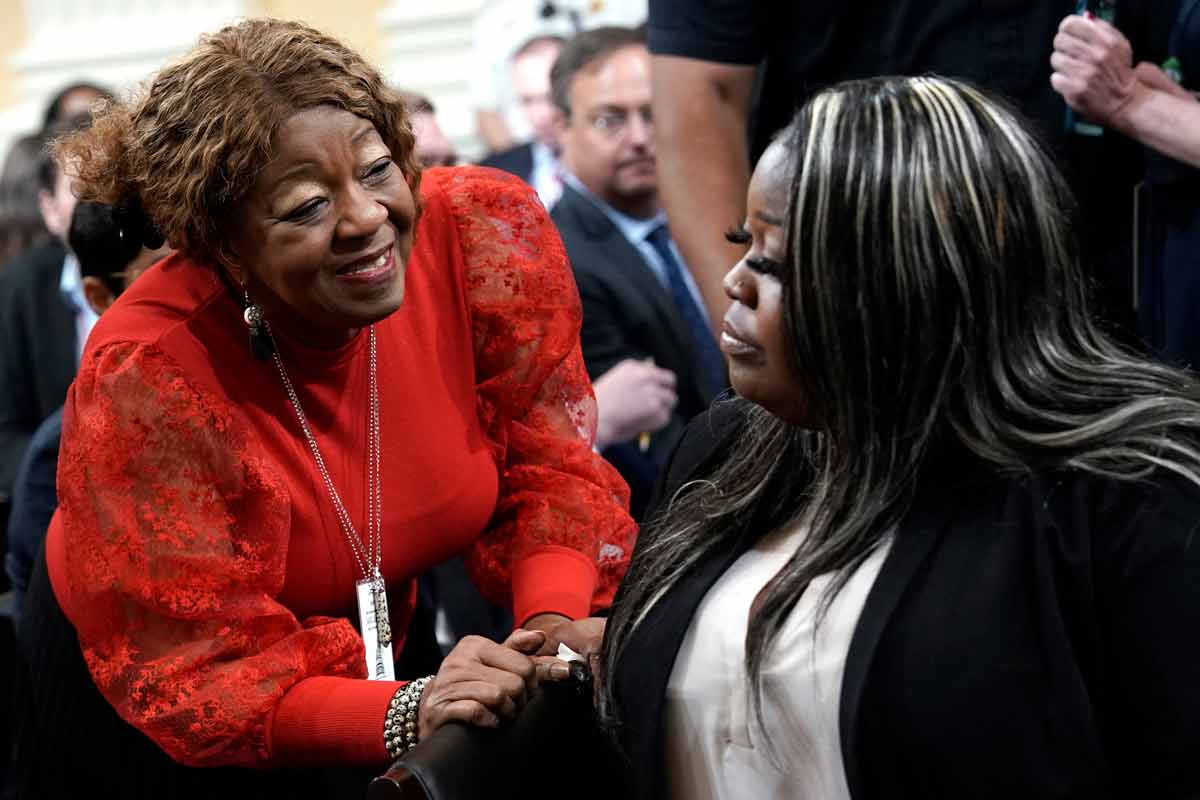
But as the former Georgia election worker unspooled her story of being unfairly targeted by then-President Donald Trump and his lawyer Rudy Giuliani on Tuesday before the House select committee investigating January 6, she transformed into the single most powerful witness to appear in these public hearings so far.
Moss and her mother, Ruby Freeman, had been working in relative anonymity in Fulton County until, without warning, Giuliani and Trump fixated on the notion that they had somehow committed actions that were proof positive of votes being stolen for Democrats in the 2020 election.
Trump called Freeman a “professional vote scammer” and a “hustler.” Giuliani said that Moss and Freeman had been passing around USB ports like “vials of cocaine or heroin.” (Moss said at Tuesday’s hearing that her mother had been handing her a “ginger mint,” not a USB drive.)
In the wake of those false and racist allegations, Moss detailed how people had tried to barge into her grandmother’s home and how Trump supporters had villainized her and her mother. (Her mother, who was known as “Lady Ruby,” said she no longer liked being called that.) Moss said of the threats she had received: “A lot of them were racist. A lot of them were just hateful.”
“I haven’t been anywhere at all,” she said through tears.
Her testimony drove home a powerful point that too often gets lost when we talk about the logistics of who knew what and when on January 6: The lies told by the former President and his ilk had real-world – and deeply negative – impacts on the lives of people who were, effectively, innocent bystanders.