Home Blog Page 192

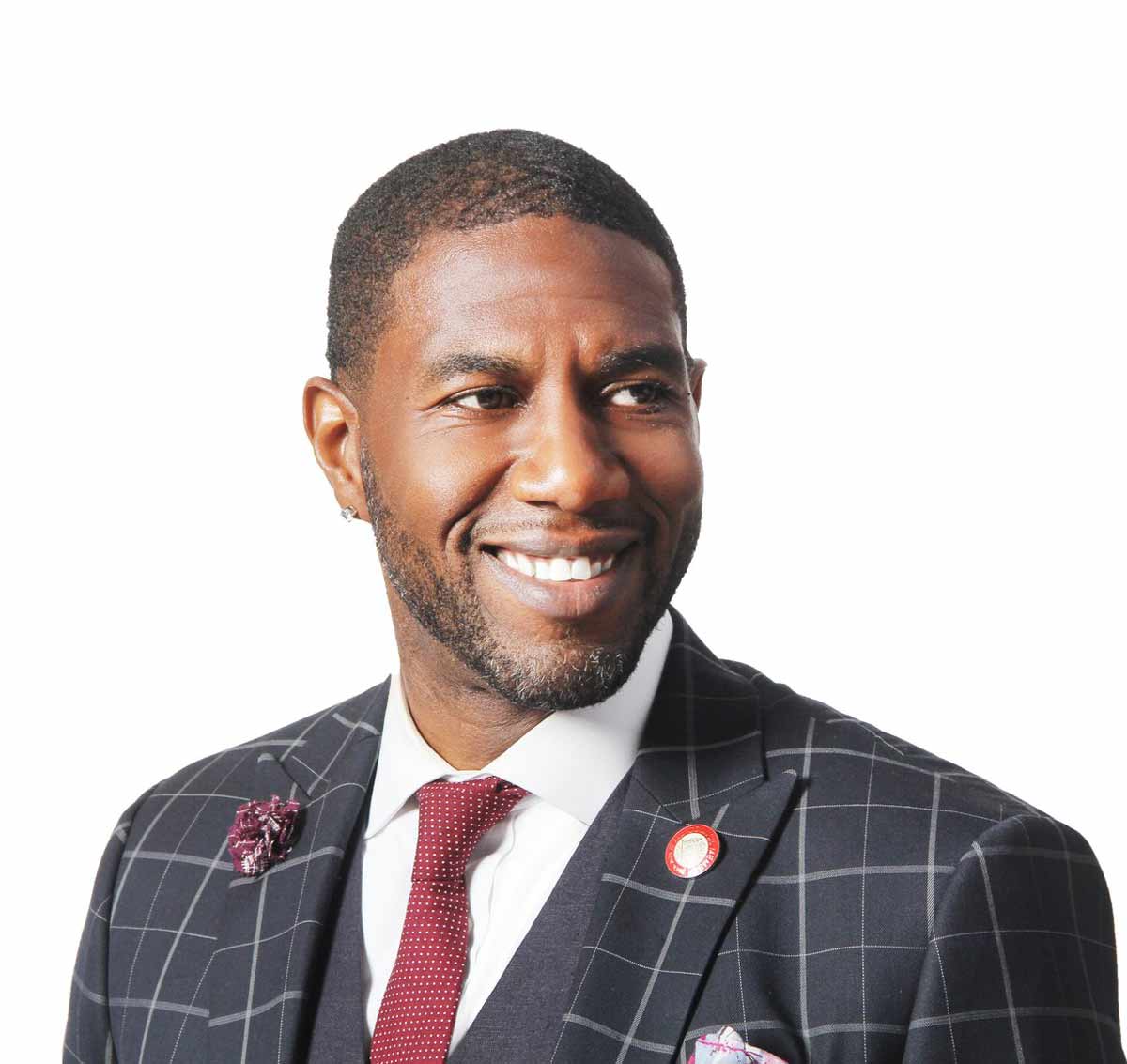
Public Advocate Jumaane Williams Speaks Out on the Humanitarian Crisis Facing Migrants in New York City

By Our Time Press Staff
Our Time Press reached out to Jumaane Williams, New York City’s Public Advocate, for his insights on how the government and New Yorkers are dealing with the humanitarian crisis facing asylum-seeking migrants.
What migrant assistance programs of the recent past, in your opinion, worked and should be retained?
Probably the most effective one is making the migrants, particularly those here, apply for asylum and the legal services they need. Once they can do that, it unlocks a whole bunch of other services that they otherwise couldn’t get.

What migrant programs are not working and should cease immediately?
For me, it’s more about framing. There’s an incessant framing that everything that’s happening in New York City is the migrants’ fault. That’s the problem. There’s a need to bash their right to shelter. The right to shelter is not the problem. The problem is that our government has not put enough into building the housing that we have needed for many years. Our governor and our White House are not stepping up to assist New York City and to help with the pressure of trying to deal with a national crisis.

What are your thoughts on how the influx of new migrant populations into the Big Apple will impact Gov. Hochul and Mayor Adams’ ambitious “New” New York Plan?
I think the governor has been bad in assisting New York City. Especially by not trying to get the rest of the state to help. To accept the right to shelter as a statewide right. It would help to relieve the pressures that are on New York City. It’s a national humanitarian crisis going on now. We are not getting the assistance that we need from the governor. The governor had a lot to answer for on why she was not providing the assistance needed. I think there would’ve been problems with the New York Plan whether we had migrants here or not. The presence of so many migrants at one time obviously makes things harder. It makes things a bit more acute. But the notion that we would not have had problems with the New York Plan when we are not doing what we need to build housing. We’re not doing things to push back on affordability in the city and the state. That’s not truthful. It’s actually harmful.


Regarding migrants and the NYC Public School System, do you predict major changes in the NYC Department of Education?
On one hand, you have the mayor blaming budget cuts being put forth on the asylum seekers. But on the other hand, one of the main reasons that the education system is not getting some cuts they may have is that the asylum seekers have boosted the NYC Department of Education’s public school system’s numbers. Without some of these students, they might’ve lost even more money. That influx, in this case, was helpful in terms of the bottom line. But we need to get class size under control. I think we’re always trying to make sure that we have a well-rounded and diverse field of study. I think that those things are real conversations about whether or not we have asylum-seekers or migrants. We would be dealing with them if the migrants were not here.

As the Public Advocate, how does the migrant crisis affect your role?
It’s trying to make sure that the messaging is correct. What we have now too often is that sometimes the leadership is trying to pit new and incoming New Yorkers against longtime New Yorkers. They are trying to pit people who have very little against people who have none. Trying to get folks to make sure that their righteous anger is directed to the right place. New Yorkers who have been here for a while, particularly Black and Brown New Yorkers, long-time urban New Yorkers, and working-class New Yorkers, have been struggling and trying to get the housing that they need at affordable prices. They are trying to get the food that they need at affordable prices. Trying to stay in their neighborhoods and have not gotten the type of assistance that they need from this government. They have a very real right to be angry. I can understand how that anger can turn to fury when they see people coming in, and they seem to be getting things that you didn’t. I can see why that would make some people angry. I want to make sure that we help direct that fury and anger at the government that failed them. Not at the human beings that are trying to do the best that they can for their family.

Do you think the influx of migrants will have a long-term positive impact on New York City?
If you look at any large immigration that has happened in this country, there were complaints and pushbacks. But, in the long run it’s always been beneficial. We can see some of that now. There are a lot of jobs not being filled right now by long-time New Yorkers and Americans. These migrants need to get through the legal process so they can be hired. They are not taking jobs from people who are long-time New Yorkers or Americans. What we have seen is the influx of talented workforce and labor. It’s always been beneficial for New York City and the country. We can get through this. I believe the same will happen.


Do you think the Public Advocate will be or is the voice of the New Immigrant?
I think the Public Advocate is the advocate for the public. Whether they are new New Yorkers or long-time New Yorkers, making sure that everyone’s voice is heard. In particular, that conversations happen with humanity. That we don’t lose humanity in our angst and anger. The governor and the White House are not stepping up. The day before the first migrant bus came, there were 50,000 people, long-term New Yorkers, in the shelters, and they had been there for over a year. If we provided the housing that they needed, this housing crisis wouldn’t be as bad as it is. We need to do what’s right for people. We have enough for everybody. We need to try to deal with this humanitarian crisis with as much humanity as possible.
Brooklyn NAACP 2024-Black Brooklyn Agenda Gathering

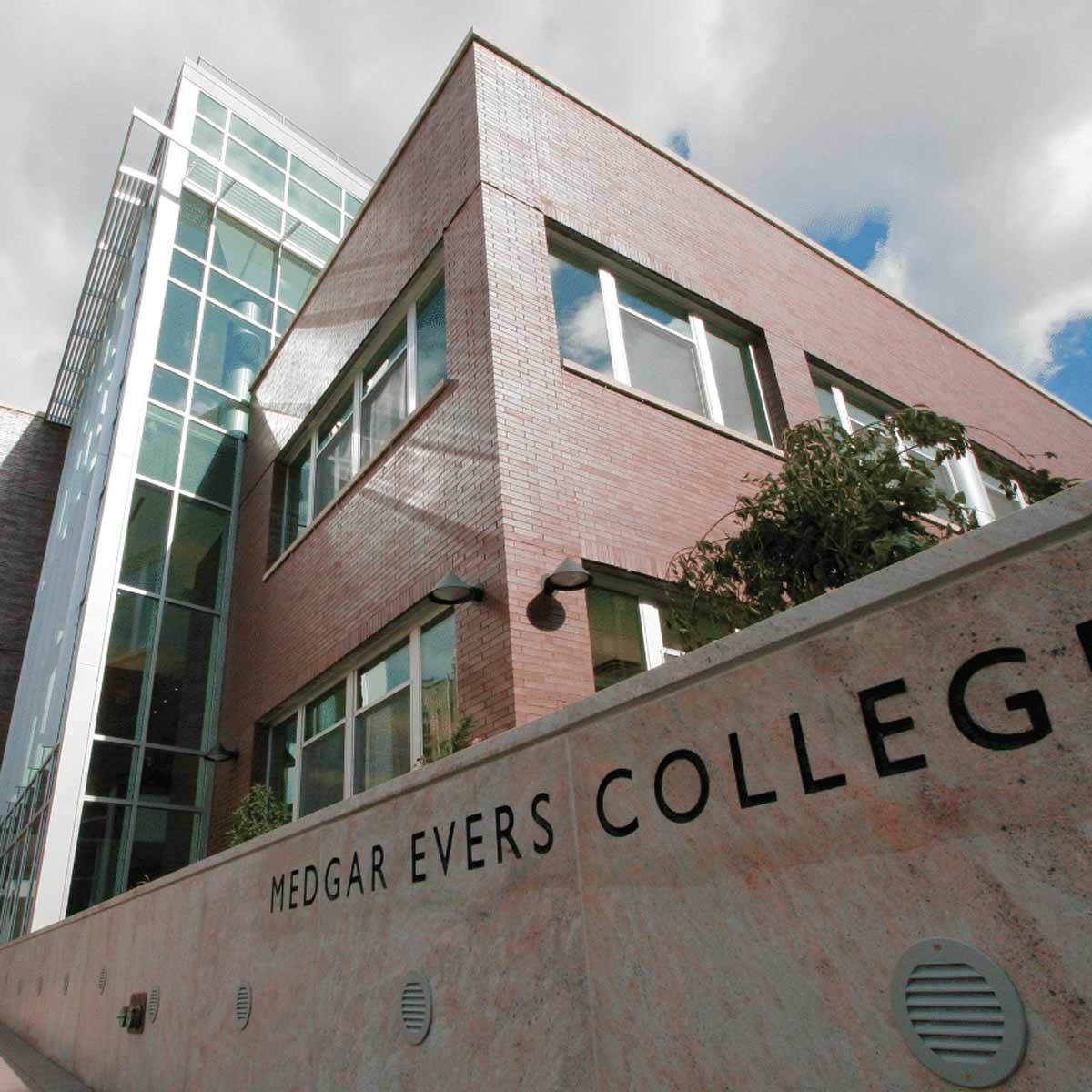
Open to the public: Sat, Jan. 6th, 2024 Medgar Evers College from 1 pm-4 pm

By Nayaba Arinde
Editor-at-Large

New Year resolutions notwithstanding, there is a community call to come up with a strategic 2024 Black Brooklyn Agenda.
With so many Black Brooklyn politicos in top elected positions – Attorney General Tish James, Mayor Eric Adams, Public Advocate Jumaane Williams, Congress Members Hakeem Jeffries and Yvette Clarke, and a host of state assembly and senate members, and City Councilmembers – the borough should be in pole position to formulate a substantial all- encompassing Black Brooklyn agenda for 2024.
There’s much to focus on. Long-term residents are concerned with seemingly unfettered developers throwing up ultra-expensive condos on many Brooklyn streets, further leading to unbridled gentrification; despite City-promoted stats – there’s still the entrenched perception of unsafe streets, the home-budget-assaulting increased cost of living, the eternal housing crisis, the lack of real, average-Black income-related affordable housing, the massive impact of the migrant crisis, the adverse effects of youth unemployment, and the unrelenting variety of health care and mental health care issues.


Public Advocate Jumaane Williams told Our Time Press, “Black communities in New York City continue to face some of the most direct effects of compounding crises in our city, many rooted in affordability. With rents skyrocketing and housing quality deteriorating, housing remains a top priority for communities of more color and the people elected to serve them. The same communities are facing complex challenges in public safety- trapped between very real street violence and over-policing tactics, which often fail to combat this violence. Recognizing the needs we face, the complexity of the issues, and the political courage to address them are top priorities for Black Brooklyn, and for my office, in the coming year.”
Having a Black agenda and controlling that agenda is one of the topics that Brooklynites will grapple with as 2024 kicks off.
It is appropriate then that the Brooklyn NAACP is hosting their 2024 Black Brooklyn Agenda gathering on Saturday, January 6th, 2024, at Medgar Evers College, 1 pm-4 pm.


For weeks, the NAACP has called on the community to bring their “collective wisdom and innovative ideas, share thoughts and insights.” Because their input will make this a “pivotal gathering where community voices converge to shape the future of Black Brooklyn. This assembly is more than a meeting; it’s a collaborative space where participants receive training on the New York City and New York State legislative and budget processes and actively contribute to developing an agenda that prioritizes the needs and aspirations of Black Brooklyn residents.”
In order to form a relevant and representative agenda that addresses the requirements and demands of the community, the objective of the civil rights organization is to seek Black Brooklynite’s “valuable input to understand the pressing issues, legislative needs, and budget priorities that should be addressed to better support Black residents in Brooklyn.”
A number of new laws hit the books as of the first of January, such as the minimum wage being raised to $16 per hour in New York City.
Once again, Gov. Kathy Hochul vetoed the Wrongful Death Act, denying grieving families the ability to claim damages for the loss of loved ones. She signed the Clean Slate, which allowed certain criminal records to be sealed years after an individual is sentenced or released from incarceration, so long as the individual was not “subsequently convicted of an additional criminal act.”


As Gov. Hochul prepares for her January 9th State of the State address, she touted her “Consumer Protection & Affordability Agenda (CPAA) – one that combats the effects of illness, disability, unfair business practices, and low wages.”
About the CPAA, an optimistic Attorney General, Letitia James, said, “From taking on the companies responsible for the opioid crisis to stopping price gouging, predatory debt collectors, and other deceptive business practices, we have taken on countless companies for harming New Yorkers. While we have stopped the most egregious actors, this new bill will expand and strengthen our ability to stop unfair and abusive business practices that hurt too many people.”
Last month, consistent community pressure led to Gov. Hochul signing the Reparations Bill, which just simply establishes a commission on reparations remedies.
“With the establishment of this commission, it will give us the chance to review and look at the history of African Americans in New York State,” said the President of the NAACP New York State Conference, Dr. Hazel N. Dukes. “And when the report is done, it will give us the necessary tools – where we should go for economic growth, for quality health, equity in education, job training, job creation, housing – and many more things.”
Echoing the sentiment of many around the state, Brooklyn NAACP President L. Joy Williams said, “This step is significant but just one step.”
Whilst calling it “groundbreaking legislation,” noting “that our journey is far from complete,” the Brooklyn NAACP said that they are “resolutely committed to staying actively involved throughout the lifespan of this commission – from its initial meetings and deliberations to its formulation of recommendations, and most critically, in our continued advocacy for the legislature to act upon the commission’s recommendations.”


Before the December bill signing, City Councilman Charles Barron was affronted by the removal from his original reparations bill of community input via long-time reparations advocates such as the National Coalition of Blacks for Reparations in America, the December 12th Movement, and Ron Daniels’ Institute of the Black World. “Those who have fought hard for reparations should be part of any decision-making apparatus,” he said. To that end, now-former City Councilmember Barron told Our Time Press, “In early 2024, we will be organizing a People’s Commission to make the state commission do the right thing for the Blacks whose blood, sweat, and tears built this capitalist economy in New York state.”
It is a presidential election year. The cycle begins. The political horse-trading, terse banter, and convoluted commercial axioms begin. The national hankering after the Black vote will probably be on steroids. There is also the congressional redistricting issue on the table, and eyes are looking at next year’s mayoral election, too.


Mr. Barron said that Black people in 2024 should simply “vote their interest as a collective. We have to stop looking for the lesser of evils, and instead unite around what is good for us. In 2024, Black Brooklynites must continue securing and promoting our communities.”
The Black vote should not come cheap. Sponsored by the Department of Public Administration, Medgar Evers College, CUNY, the Brooklyn NAACP states that Saturday’s event aims to provide in-depth training in order for locals to “understand the legislative and budgetary frameworks that shape our city and state, empowering you to advocate effectively for our community.”
All to “review insights, discuss priorities, and formulate actionable agenda items…by passionate individuals dedicated to making a difference in Black Brooklyn.”
The power of the people is so much greater than the people in power is the old new adage, so flexing a collective muscle is the move.
Demands are all for naught if there is no direct community-driven pressure for legislative changes, representative public policy, and budget allocations for city, state, and federal community-focus agencies to “significantly impact and improve the lives of Black people in Brooklyn.”

Hip Hop @Fifty Where Do We Go From Here?

0

By Brenda Greene

African Voices, founded in 1992 by Carolyn Butts, is an organization dedicated to preserving art, literature, and film. This special edition of the print magazine, African Voices, Hip Hop @Fifty, Where Do We Go From Here, (Nov/Dec 2023 Issue, www.blurb.com ) is in alignment with the plethora of books, exhibits, performances, essays, and visual projects in celebration of 50 years of Hip Hop. What distinguishes this representation of voices on hip hop in African Voices, guest-edited by the prolific writer, activist, and cultural worker Kevin Powell, is the intergenerational and diverse range of artists, poets, scholars, and activists from the arts, entertainment, education, and politics who define hip hop, provide its legacy, analyze its impact and future, and expand its narrative.


Mayor Ras Baraka, in “Nothing But Sweat Inside My Head.” provides a context for when hip hop began. “WE several hundred years from slave revolts and Blk codes still searching . . . Between jazz riffs and beat boxes. We painted against the backdrop of broken buildings and dirty mattresses. Danced our way through poverty with linoleum and old cardboard.” Abiodun Oyewole, a founding member of The Last Poets, calls hip hop “another genius creation, a rolls royce of a literary vehicle to express ourselves, entertain ourselves, teach ourselves, what we need to know.”
Media personality Jill Tracey meditates on how “Fifty years of hip hop has allowed us to tell new stories with cadence and glory formerly reserved only for men.” Professor of African American Studies Dr. Siobhan Brooks who describes herself as a lover of hip hop and not a hip hop head, underscores why, in this current climate of attacks on critical race theory and gender studies, we need hip-hop-based education more than ever as an educational tool for students to unpack racism, sexism, and classism.


Poets Nikki Giovanni and Sonia Sanchez reflect on the legacy of 2PAC Shakur. Nikki reminds us that “2PAC told the truth, there were those who never wanted to be angry at the conditions but angry at the messenger who report . . . your house is in disorder.” Sonia Sanchez writes of Tupac: “we anoint your life in this absence; we anoint our tongues with your magic, your genius.”
The presence of hip hop as a tool for fighting for social justice and in our political spaces is expressed by poet, playwright, and cultural critic Charlie R. Braxton, in “A Poetic Flow for Big Floyd.” Braxton remembers the agonizing cry of George Floyd: “I can’t breathe, I can’t breathe, I can’t breathe, I can’t . . . . the agonizing pain in his voice rang all the way up to high heaven, his last cry, an ancestral call for his mother as the last essence of his soul slipped away.” And Congressman Hakim Jeffries describes the initial pushback he received when he decided to go to the House Floor to deliver a tribute to the Notorious B.I.G. to commemorate the 20th Anniversary of his tragic death. He responded by checking the Congressional record and affirmed his suspicion that prominent artists like Elvis Presley, Frank Sinatra, and Bruce Springsteen had been acknowledged by members of the House in the past.


Karen Gabay and Gil Griffin draw attention to the global impact of hip hop. Gabay, a radio podcast host, notes that hip hop is firmly rooted in Jamaica and the wider context of Caribbean culture from where she resides in the United Kingdom. Hip hop journalist Griffin introduces readers to the group Sudden Rush that has inspired a growing group of Hawaiian hip hop artists to embrace all aspects of their identity and fight for Hawaiian sovereignty.
April R. Silver, activist, writer, and founder of AKILA Worksongs, reminds us that hip hop cannot be discussed without examining its impact in the corporate world as well as its commercialization. In “What is Hip? More Commentary on the Never-Ending Debate of “Culture vs. Commerce in Hip Hop,” Silver acknowledges that: “There is no question that the marriages of commerce, community, and the academy have produced positive works. Artists and their assemblies have been feeding their families for decades, but “at what cost?” Actor, musician, and poet Malcolm-Jamal Warner analyzes the history, nature, purpose, and elements of hip hop in his poem “Golden Anniversary.” Warner points a way to the future: “We have raised you, like a village-less child. It is time we pitch in, dust you off, and help you grow.” “It is time we take you back.”


Our artists have always been the truth tellers in our culture. African Voices’ Hip Hop @Fifty, Where Do We Go From Here? adds to the ever-growing canon of hip hop culture and poses questions for the future of hip hop. Talib Kweli, hip hop artist, activist, and writer in reflecting on this charge submits that: “In 50 years hip hop has gone from solely being the voice of the marginalized youth to being the voice of many generations. We are in unchartered waters now. What happens now will be defined by those who don’t just consume hip hop but by those who actively participate in it.”
Dr. Brenda M. Greene is Professor of English and Founder and Executive Director of the Center for Black Literature at Medgar Evers College, CUNY. For more information, visit https://www.drbrendamgreene.com

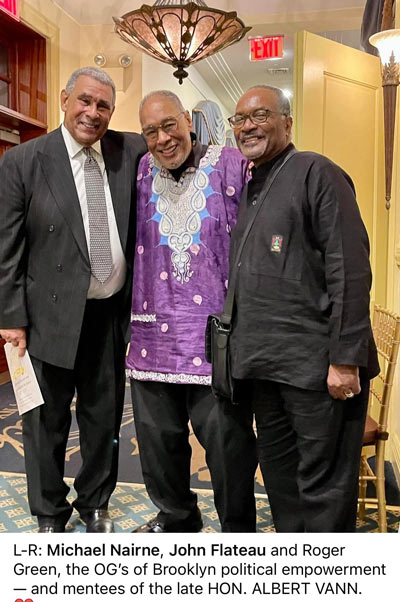
Dr. John Louis Flateau: beloved professor, public servant, political strategist

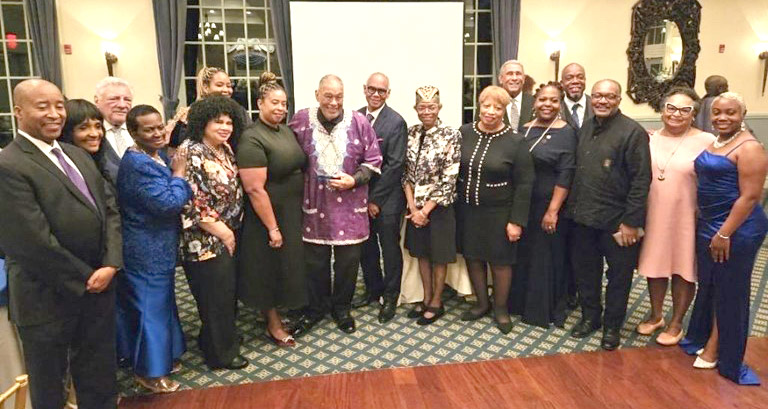
A lifelong public servant, community activist, political strategist and a dedicated mentor throughout his decades-long career at Medgar Evers College, Dr. John Louis Flateau has passed away, his family announced.
Dr. Flateau served as a beloved professor and chair of the Department of Public Administration at Medgar Evers College, while also the director of the Dubois Bunche Center for Public Policy.
He was also the former dean for both MEC’s School of Business and Office of External Relations.
“We are heartbroken to learn of Dr. Flateau’s passing and send our deepest love and sympathies to his family, friends, colleagues and former students,” said Dr. Patricia Ramsey, MEC’s president.
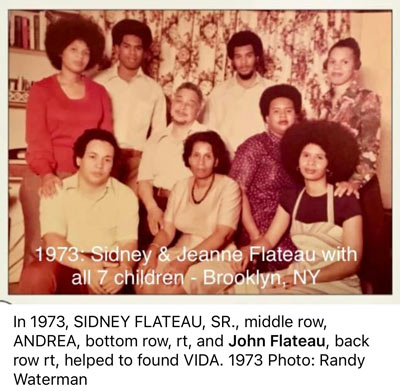
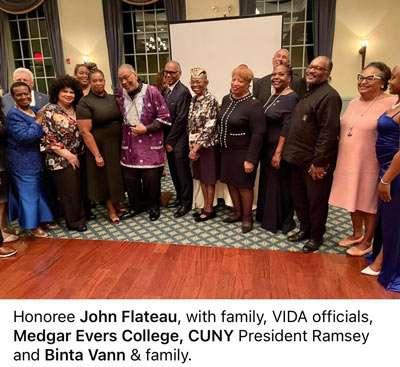
““His impact on not just the Medgar Evers College community, but the greater Brooklyn and New York communities, is profound and unparalleled. In response to a congratulatory email that I sent him for being honored by the Vanguard Independent Democratic Association (VIDA), he replied, ‘Thank you President Ramsey! Holding up the banner for Medgar!-John.’ His level of dedication to this campus is unmatched, and our Medgar Evers College family is better because of his perspective on the world. I am blessed to have known him for the less than three years that I have served as President, and will miss his encouraging words and regular emails, keeping me abreast of local, state, and national matters.”


A lifelong learner, Dr. Flateau led by example when it came to his students, earning a Phd in Political Science, Public Policy and American Politics from CUNY, while also obtaining Masters degrees in Philosophy in Political Science, Public Administration and Political Science, Urban Policy. He secured his Bachelor of Arts degree in English Literature from New York University’s Washington Square College.
But it was what he did with this education that made Dr. Flateau a community pillar — for students or even those looking to run for Congress.


Dr. Flateau’s resume was impeccable, showing his servant’s heart from a young age and prior to joining Medgar Evers College in 1994. A look at his career path is aspirational to many:
Deputy Secretary for Intergovernmental Relations, New York State Senate (2009-10)
Chief of Staff to Mayor David N. Dinkins (1991-93)
Senior Vice President and Chief Diversity Officer for the NYS Empire State Development Corporation (1983-1990)
Executive Director, NYS Black and Puerto Rican Legislative Caucus, New York State Legislature (1975-1982)
District Council 37, AFSCME Education Department (1971-74)
NYS Division for Youth, Harlem Youth Worker (1978-79)
Brooklyn Catholic Diocese, Summer Youth Program director (1968-72)
But beyond his professional accomplishments, Dr. Flateau became well-known for his public service, where he took on a number of key roles, including this partial list:
Member, NYS Legislative Task Force On Demographic Research and Reapportionment
Commissioner, New York City Districting Commission
Member, Redistricting Advisory Group, NYC Board Of Education
Chairman, US Census Advisory Committee on the African American Population
National Steering Committee., Census Information Centers
Co-Chair, NYC Black Advisory Committee, Census 2000
Chairman, Board Of Trustees, Community School Board 16, Brooklyn


Dr. Flateau’s impact on every corner of the community was recognized by a plethora of local political figures on Sunday.
“I am extremely saddened to hear of the passing of Dr. John Louis Flateau – a cerebral giant, acclaimed educator and dedicated public servant for the city and state of New York,” said Jumaane D. Williams of the Office of the Public Advocate in an official statement released on social media.
“His long tenure as a professor, administrator and dean at Medgar Evers helped shape the lives of countless students, and his work in both the city and state government helped advance justice and equity for communities across New York. As a former commissioner of the NYC Districting Commission, he helped ensure our districts accurately reflect the population and demographic changes of our city. Without his work, I’m not sure I would be where I am today.
“Dr. Flateau was a tremendous leader that uplifted and inspired his community, and his enormous contributions will have a lasting impact for many years to come.”

Dr. Flateau’s public service was only overshadowed by his dedication to community service, where he was involved with a plethora of organizations, including:
American Society For Public Administration;
American Political Science Association;
American Association Of Political Consultants;
Population Association Of America;
National Forum For Black Public Administrators;
NAACP Brooklyn Branch;
Community Board 3, Brooklyn;
Citizens Union, Board Of Directors;
Chairman of the Board: Achievement First Endeavor Charter School;
Vannguard Urban Improvement Association;
Bridge Street Development Corporation;
DELBAC Inc., Board of Directors,, Delta Sigma Theta Sorority, Brooklyn Alumnae Chapter;
Senior Board Of Stewards,
Bridge St. AWME Church;
Thurgood Marshall Scholarship
Fund, Inc., Academic Advisory Board;
Chairman, Medgar Evers College Community Council;
NY Voting Rights Consortium;
Majority Coalition Of Redistricting Professionals

Congressman Hakeem Jeffries of Brooklyn and U.S. House of Representatives Minority Leader, offered his insight into Dr. Flateau’s lasting impact.
“Deeply saddened by the passing of Dr. John Flateau, a brilliant strategist, electoral tactician, scholar and community leader,” said Jeffries said in an official statement released on social media.
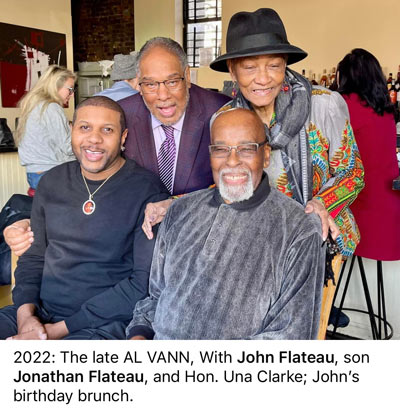
“An important part of a powerful movement led by the late, great Al Vann, Dr. Flateau helped to usher in an era of Black political empowerment in Central Brooklyn in the 1980s and 1990s that positively transformed the community and lives on to this day.
“May Dr. Flateau forever rest in power.”
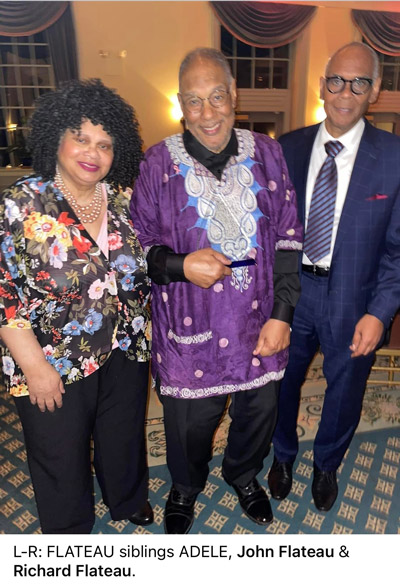
Dr. Flateau is survived by his wife, Lorraine; his two sons, Marcus and Jonathan, and their families; and four siblings, Anne, Alice, Adele and Richard.

REFLECTIONS on Dr. Flateau…

Hon. Annette M. Robinson on “A Legacy of Purpose”

I started out with Dr. John Louis Flateau back in 1973. I speak from the perspective of being supported and encouraged by him. I will never forget that relationship.
John was a brilliant servant-leader. He talked about representation on the community school board, and we had the whole school board movement back in the 1970s. I was elected to Community School Board District 16 in 1977.
He recruited me while I was attending Our Lady of Charity Church in Bedford-Stuyvesant. He said, ‘You need to come and volunteer, and you also need to run for county committee.’ Little did I know what that meant at the time, that I would become a local elected official of the 56th Assembly District.


Dr. Flateau leaves a legacy of purpose. He understood what the mission was and executed it. I would call Dr. John Flateau an architect of redistricting, voting rights, and the movement itself (in reference to the Coalition for Community Empowerment).
John was there, drawing lines and counting people when we didn’t know there were lines to be drawn and people to be counted. He looked to see where we could find additional districts so that we could have more empowerment for our communities.
Any time that I needed to consult on the lines for my district when redistricting came, and I was in the Assembly, I consulted with Dr. Flateau. He said, ‘This is what you need to do to make sure that most of our people were in districts that had majority representation.
John represented the Talented Tenth in our community and across this country. He was one of the most brilliant people in the city, state and this nation, I dare to say. I can’t express enough how much he impacted Central Brooklyn and the movement for empowerment.
John created charts so that we could write the numbers as they came in and know who won in certain districts. We calculated the numbers manually. Inspectors of elections would have sheets at the end of the night, and they brought them in so that we knew what the numbers were. We calculated the numbers in the Assembly Districts when they came in. We could compare our numbers to the Board of Elections. Sometimes, they might be off because people might not have transferred the numbers over correctly.
(Because of John Flateau), we had a process in place to be able to have the numbers so that we would know exactly what went right at that polling site. We did this until it started coming out on television. John had put a procedure in place so that we could check our numbers against the other numbers. People have taken his design and replicated it.


The 36th Council district was created by John, Esmeralda (Simmons), and others who were part of that (early) movement for community empowerment.
They created those seats not only in Brooklyn but throughout the State of New York. They drew those lines to make sure that we had more representation. John was sitting at the table drawing lines to ensure that we had representation.
Hon. Robinson’s statements are excerpted from a recorded interview conducted Tuesday by reporter Mary Alice Miller for Our Time Press

(Distinguished Brooklyn leader Annette Robinson, who currently enjoys national recognition, was elected to the New York City Council in 1991 to represent Bedford Stuyvesant. Term-limited from her City Council position in 2000, she was chosen in a special election held two years later. She captured more than 90% of the vote and served as the District Leader/State Committeewoman for the 56th Assembly District. After her retirement in 2016, she continued to serve as the female Democratic District leader in her district and the Vice Chair of the Kings County Democratic Party, making her second in command. Hon. Robinson is the Vice Chair of the New York State Council of Black Elected Democrats. Her ongoing, impactful work is a testament to the enduring legacy of Dr. John L. Flateau.)

Dr. Brenda M. Green on “A Brilliant Servant/Leader”

Dr. John Louis Flateau, writer, activist, scholar, and professor, was a friend, colleague, and deeply committed public servant. I first met Dr. Flateau (John) when I attended NYU in 1968 as a Martin Luther King (MLK Scholar). He was a key member of the Black Allied Student Association (BASA) that organized to bring 500 Black students to New York University on scholarships and created the Institute for African American Affairs, the African American Student Center, the student newspaper, The Faith which was later renamed Imani, and the literary magazine, Black Creation.


The students who organized to bring in Black men and women had foresight and wanted to ensure that we understood the struggle that they undertook to increase the Black presence at NYU. They encouraged all of us to become active members of BASA and assigned a Big Brother or Big Sister to each of us. John was assigned as my Big Brother. Lennie Burg, a BASA alumnus, said, “John was one of the most harmonious brothers I have ever met. His calm, thoughtful, level-headed input helped keep BASA on an even keel. . all with a spicy sense of humor. He was part of the glue that kept us together.”
Dr. Flateau sowed the seeds of activism at NYU, but I am sure that he was doing this as a teenager. This was part of his spirit and demeanor. He continued in this vein by taking on numerous critical roles, including Chief of Staff for Mayor David Dinkins, Executive Director of the NYS Black and Puerto Rican Legislative Caucus, and Chairman of the US Census Advisory Committee on the African American Population.
When Dr. Flateau came to Medgar Evers College nearly 30 years ago, he worked on completing his doctorate in political science, public policy, and American politics and became the first director of The DuBois Bunche Center for Public Policy (DBC). His appointment as professor of public administration and his leadership as the Center director provided a platform for the publication of his books on urban policy. The book The Prison Industrial Complex: Race, Crime, and Justice in New York (DuBois Center for Public Policy, 2002) documents much of the work from Dr. Flateau’s dissertation and his book Black Brooklyn: The Politics of Ethnicity, Class, and Gender (2016) provides an analysis of his work on the census, redistricting, and politics.


As I reflect on the legacy of Dr. John Flateau, I think of a man who put students first and who was a tireless advocate for social and political justice. His constant refrain has been the importance of voting. He was always involved in organizing and supporting students and the community. Joanne Challenger, a friend and colleague who worked at VIDA with Dr. Flateau in the 70s, called him “a foot solider” and reflected on his accessibility and resourcefulness. She shared how, despite his busy schedule, he took time to meet with her daughter and to give her points on interviewing and applying for perspective jobs. Providing support and guidance to the next generation of scholars, activists, and public servants was important to him.
Dr. Flateau’s spirit and service are ingrained in the soul of the community of Brooklyn and in our city. He has left an indelible legacy by which we should be guided.

Dr. Brenda M. Greene is Professor of English, Founder and Executive Director of the Center for Black Literature, and Senior Special Assistant to the Provost at Medgar Evers College, CUNY. For more information about Dr. Greene, visit https://www.drbrendamgreene.com