by Fern Gillespie It’s ironic that February is both Heart Month and Black History Month –especially with Black Americans continuing to make medical history as the major victims of heart disease. In 2022, the University of Pennsylvania Medicine reported that Black adults are 40 percent more likely to have high blood pressure than white adults and less likely to keep it under control. Also, Black adults are 60 percent more likely than white adults to be diagnosed with diabetes, which contributes to the narrowing and hardening of arteries. The American Heart Association states that among Black women ages 20 and older, nearly 59 percent have cardiovascular disease, which kills more than 50,000 Black women annually. Stroke is a leading cause of death among Black women. According to the American Heart Association, only 39 percent of Black women are aware that chest pain can be a sign of a heart attack, and only 33 percent recognize that pain spreading to the shoulder, neck, or arms is another potential heart attack sign.
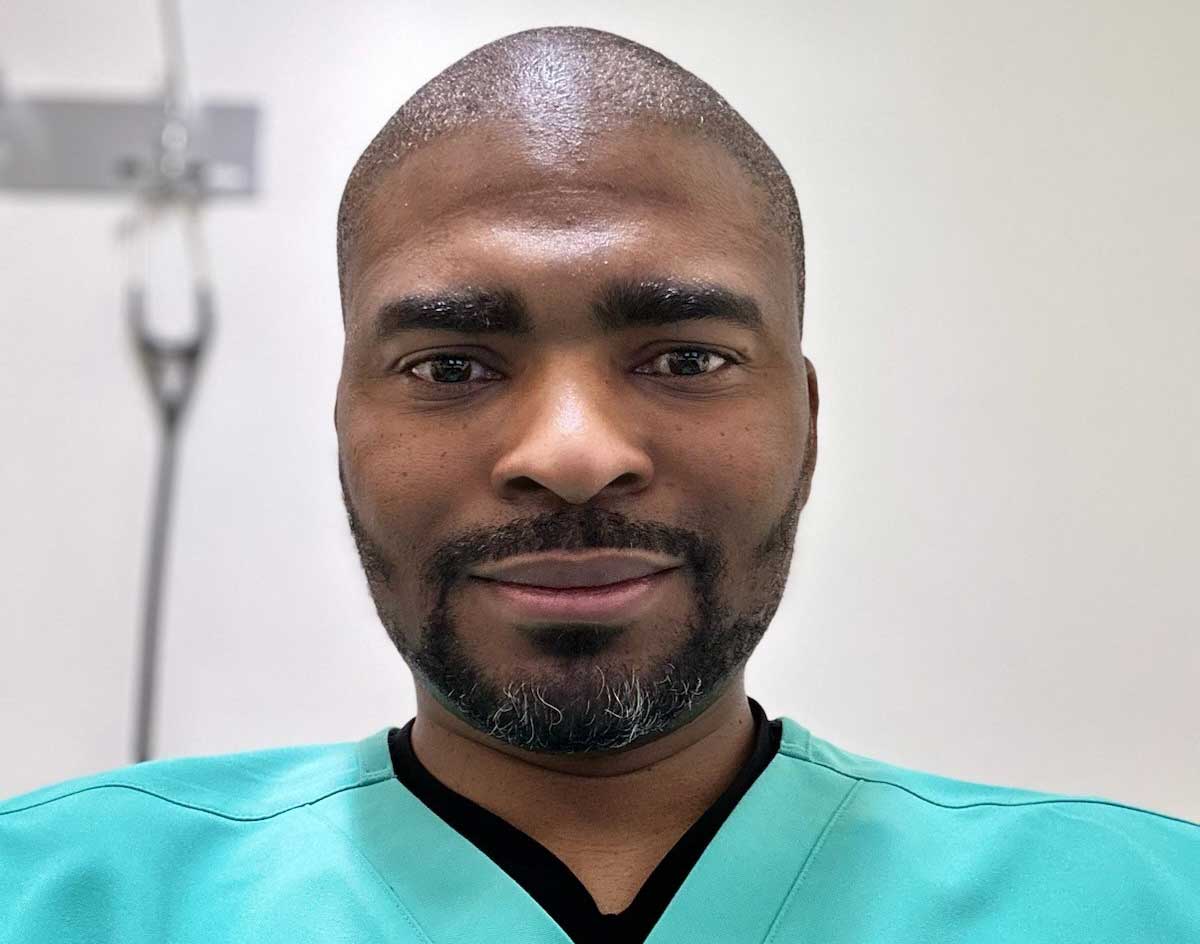
Why do African Americans have a greater risk of heart disease? “It’s a multiplicity of factors which can be institutional and historical.” Dr. Ajibola Adedayo, an interventional cardiologist at Brookdale Hospital, One Brooklyn Health, told Our Time Press about poor exposure to understanding heart disease. “When I say historical, there’s a long-standing history of African Americans having a distrust of the medical system where African Americans have sometimes been used as guinea pigs. So, those issues are very fresh in the minds of the Black community.” As an interventional cardiologist, Dr. Adedayo specializes in conducting heart and blood vessel procedures with a catheter. He has expertise in treating coronary artery disease, genetic heart defects, heart rhythm disorders, heart failure, and coronary artery disease (narrowing of the blood vessels caused by the buildup of plaque and cholesterol.) Dr. Adedayo received his medical degree from the University of Ilorin Faculty of Health Sciences in Nigeria and has been in practice for more than 20 years. He has worked on major research studies regarding African American healthcare and is a member of the Association of Black Cardiologists. A 2023 study from WebMD, reports that Black men are 70 percent more likely to develop heart failure than white men. “Generally, men tend to be , for lack of a better word, more “macho” in the approach to things. African American men tend to belittle (health) things. They ignore stuff and say there’s nothing wrong with me. The disease will be far gone and cause complications. They need to go to routine screenings and checkups,” explained Dr. Adedayo. “We know many of these manifestations and complications of diseases of the heart come in later years, like in the 40s. This is the reason why the number one reason for dialysis is diabetes. Number two is amputation. It’s a reluctance to get routine annuals. They don’t go to the doctor to screen them and check their blood pressure. A complication of a heart attack or a stroke or renal or kidney failure becomes an issue.”
To Dr. Adedayo, African American outreach and awareness programs on heart disease are urgently needed. “It’s not until you have symptoms that you go to see a doctor. You should already be routinely seeing a doctor,” he said. “People need to remain connected to the healthcare system. These things can be taken care of when complications arise. It’s as simple as doing routine EKGs once a year, checking the blood pressure, and getting blood work.” “The conditions for heart disease are lifestyle choices. Having a sedentary lifestyle, not exercising and not eating healthy,” said Dr. Adedayo. “Everything has to do with education. It begins with the family. If the family can encourage and institute a good healthy attitude in their kids. They are the ones who are going to be the future. Down the line, they’re going to be the adults. They are going to spread the same healthy concepts in their home with their own family and friends. The education is empowering.”
By Nayaba Arinde Editor-at-Large On Saturday, January 27, 2024, It was like a Who’s Who of grassroots activists and community organizations attending this past weekend’s Queens wake and Brooklyn funeral of December 12th Movement Matriarch – Viola Plummer. From Brooklyn to Zimbabwe the accolades came in thick and fast. From Bed Stuy, Brooklyn, to St. Albans, Queens, NYC, all the way to the African Continent and Cuba, too. Hundreds of people came out to both services this past weekend. The December 12th Movement hosted the services for their core co-founder of the organization, which just celebrated 36 years of existence. Some of Ms. Plummer’s colleagues had known her for up to 50 years. At the wake and the funeral, December 12th Movement (D12) co-founder Omowale Clay got emotional as he spoke. Folks caught their breaths. They told him to take his time, as they, too, fought the urge to break down with grief. It has been like this since news of her passing on January 15th. She was 86 years old.
The wake was held on Friday, January 26, 2024, at the J. Foster Philips Funeral Home in St Albans. Coaches, buses, and dozens of cars were parked around the building, where perhaps a hundred people milled around while Man Up! Inc and December 12th Movement members kept everything flowing smoothly. The same was the case at the Brooklyn funeral at Rev. Herbert Daughtry’s House of the Lord Church in Brooklyn on Saturday. It was a heavy weekend.
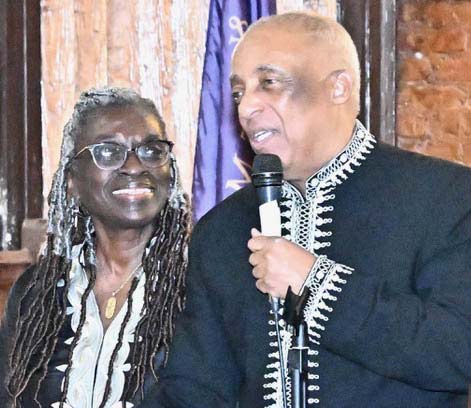
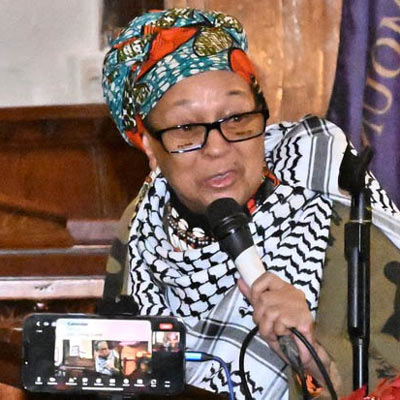
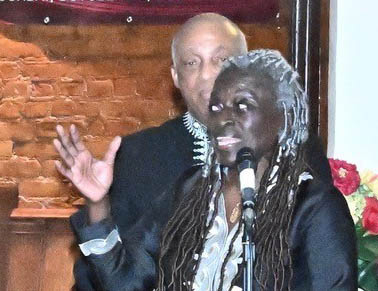
While Man Up! Inc. helped manage the crowds and hosted the repast; the December 12th Movement organized and hosted both services. Steadfast and working through the pain of the loss of their long-term leader, Attorney Roger Wareham, and Omowale Clay used some humor through the sadness to send their ‘Vi’’ home. Of course, political theory was delivered, a call to action sounded, and rallying cries were heard to continue. Ms. Plummer’s lifelong mission was, of course, to have Black people fight deep-rooted local, national, and global institutionalized racism, oppression, subjugation, and injustice against Black people. She was unapologetic about her mission of seeking Black liberation and self-determination. That mission would not change, said December 12th members and speakers like Rev. Karen Daughtry, Pam Africa, Bob Law, and Chairman Fred Hampton. Rev. Dr. Karen Smith-Daughtry blessed the funeral with impassioned recollections of Ms. Plummer – her work and her dedication to the community, which she implored must continue. “This is a hard one…Viola was my friend.” Rev. Daughtry told of her long history with Ms. Plummer and of some of the notable visitors to the historic House of the Lord church, including Winnie and Nelson Mandela, Rev. Jesse Jackson when he first decided to run for president, former NYC’s two Black mayors – David Dinkins and current mayor Eric Adam; as well as a host of groundbreaking grassroots organizations such as the National Black United Front.
Fired up, the Reverend said that they were there to celebrate a “life committed to the causes of our people…The life of a revolutionary, a woman full of fervor and no-nonsense … …Fear was not in her vocabulary…she spoke truth to power.” “Stay strong,” Rev. Daughtry told individual December 12th members present in the sanctuary, as she called them by name. To the audience, she said to emphasize the commitment of Ms. Plummer, “We didn’t even know she was sick…There’s a job to be done…She has left a sacred assignment. Finish your gig.” Original December 12th member Loretta Vaughan told Our Time Press that Ms. Plummer’s legacy is intact. “There are no words to describe the impact of sister Viola. I developed clarity of thought and focus that allowed me to bring out the Dragon when necessary. Mad love for her love of Black people.” Many organizations came through with bountiful respect. It was heartwarming and impressive. The panoramic cross-section of local and national groups who came out to actively support and participate in the homegoing services would have delighted Movement Matriarch Viola Plummer. She always worked to unify the many community advocacy groups. In death, she once again succeeded in the assignment. To quote her, she ‘Finished the Gig.’ The Nation of Islam with Daleel Jabir Muhammad , East Coast Regional Protocol Director, and cure violence community advocacy groups such as A.T. Mitchell’s East New York-based Man Up Inc. and Queen’s Life Camp came through with many members. Philadelphia came out in full effect with grassroots Pam Africa, Razakhan Shaheed, and the United Negro Improvement Association was represented by Basiymah Bey.
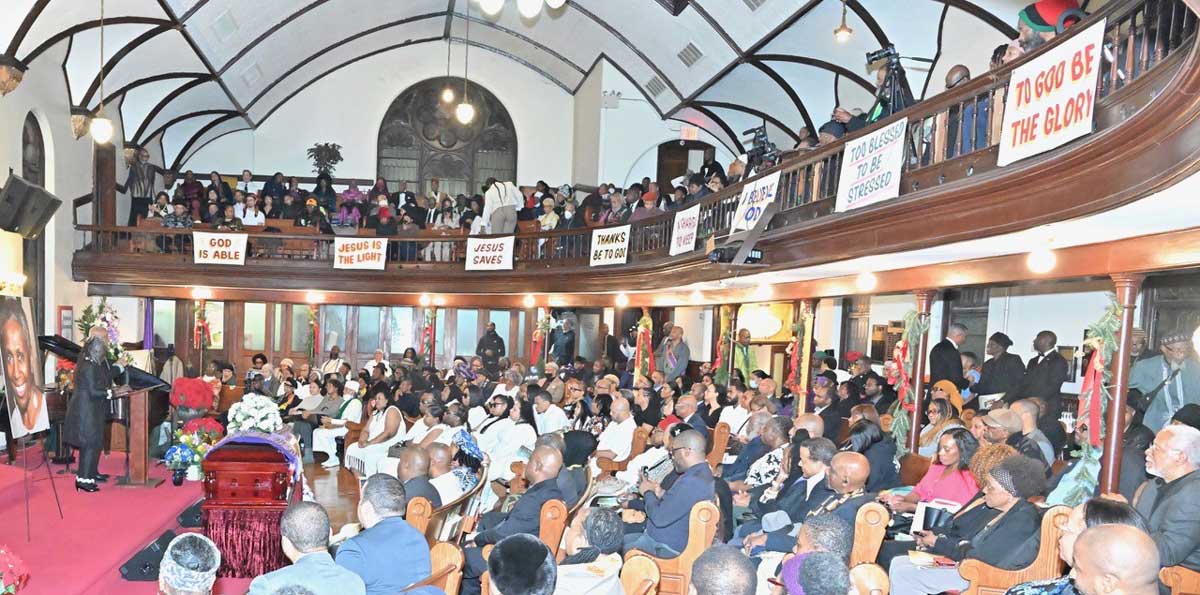
With what seemed like a thousand people, the House of the Lord Church was literally packed to the very rafters. It was the epitome of how to send a beloved, world-renowned activist home. Bed Stuy Brooklyn Assemblywoman Stefani Zineman thanked the family, dressed in white, for “sharing her with us. It was an honor and a privilege to live in the time of the age of Viola Plummer. She was just fearless…and she taught us how to love one another and to continue the fight for freedom and liberation.” Miguel Mario Díaz-Canel y Bermúdez sent word through Amb. Yuri Gala, and praised Ms. Plummer’s “pursuit for social change,” whilst December 12 also fought against “the unjust and inhumane US blockade of Cuba.” He reminded the audience of the D12-coined phrase “When Africa called – Cuba answered,” in terms of the support in the anti-imperialist struggles in the Continent. In a message delivered by Fortune Z. Charumbira, Zimbabwean President Emmerson Mnangagwa spoke of the “sense of shock and loss…Ms. Plummer was a committed and dedicated activist…Her voice echoed around the world in the fight against racism and apartheid.”
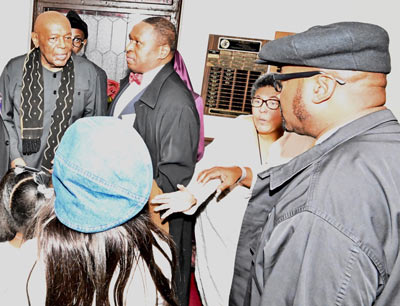
Cinque Brath, son of another worldwide respected activist, Elombe Brath, read a letter from the government of Namibia, thanking Ms. Plummer and D12 for all their consistent contributions to their anti-colonial fight for complete liberation. At the wake, to the quiet surprise of many, without addressing the people at all, Mayor Eric Adams quietly stood at the open casket with some of Ms. Plummer’s family members. Longtime activists told their Viola stories, and many shed tears as their voices cracked. It was respectful, emotional, and an oft-repeated pledge to ‘Finish the gig,’ Activist judge Lionel Jean Baptiste stood before the open casket and praised Ms. Plummer and concluded that the work’s not done because we’re still doing it. The number of young people who came out to honor her was a testimony within itself. “I thought she would be immortal,” a young speaker Nas, said at the wake. “I never thought she would leave,” said Erica Ford, founder of Life Camp, the Queens-based cure violence organization, and longtime family friend. National social justice advocate Tamika Mallory told Our Time Press that one of the attributes that she so admired was how Ms. Plummer “never let the boys think they could win! She always let them know that women were equal to the task , were strong, and were formidable partners to do this work that needed to be done.” It was the tone set for the weekend.
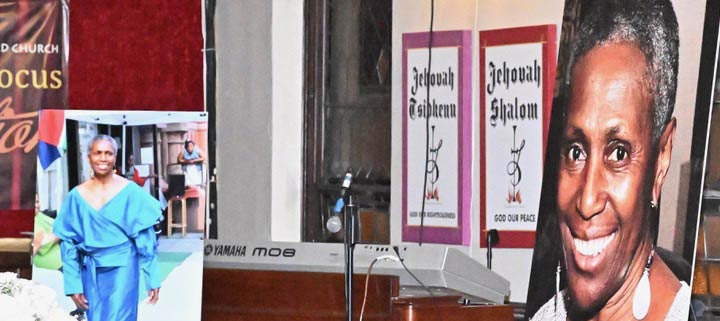
The ‘People’s Republic of Brooklyn ’ gave international activist Viola Plummer a head of state-style 5-hour funeral home-going. Ms. Plummer, a local, national, and global Black community activist – modest, yet honest as she was would have approved. Government representatives from Cuba and Zimbabwe were present, and there was a letter from Namibia – all thanking Ms. Plummer for her unwavering support and contribution to their national struggles turned international. Elected New York State and NYC City Council officials came through to show their respect. Proclamations and official acknowledgements came from Public Advocate Jumaane Williams and New York State Senate Cordell Cleare. State Senator Jabari Brisport praised Ms. Plummer’s fortitude, and City Councilmember Yusef Salaam read a poem and expressed gratitude for all the unwavering support he received from D12 as a member of the Central Park Exonerated 5. Founder of the African Socialist Party Chairman Omali Yetshitela also sent a message of condolences. Urging the continuation of the fight to free political prisoner Mumia Abu Jamal, whilst the recently-freed Sundiata Acoli looked on, an impassioned Pam Africa lauded Ms. Plummer and the December 12th Movement with respect for, amongst other things, their support for incarcerated Black Panther and Black Liberation Army people who had been imprisoned for over 50 years. From the wake to the standing-room-only funeral, she was honored over and over again as the virtuous and courageous Black Power ambassador, with the pursuit of Black politically-economically and culturally-empowered self-determination as the singular goal. Black liberation in all its forms was her agenda. Pushing through institutionalized racism-imposed walls and smashing confining glass ceilings was a regular and obvious concept that Ms. Plummer taught by doing.
“We didn’t always agree, but our church was always open,” House of the Lord’s Rev. Herbert Daughtry told Our Time Press. The emeritus and National Bishop added. “What was driving us is that we have a fire in our belly , so to speak, is to see the freedom of our people as soon as possible and as extensively as possible.” The accolades were heartfelt and relentless, spoken -sometimes tearfully so, over the open casket at the wake and just as impassioned at the funeral the next day. Many people struggled to maintain their composure as they recalled their Viola interactions and gratitude. Some let the tears flow. Others let their grief do the talking. With “Culture as a Weapon” as their mantra, the December 12th Movement began the homegoing services with drumming from Baba Neil Clarke.
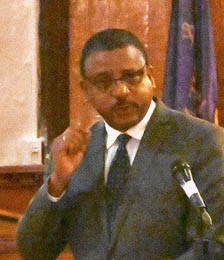
Minister Akbar Muhammad put aside his own physical challenges to attend the funeral, bringing condolences and words of praise and commitment from Minister Louis Farrakhan. “His love for Viola was the kind of love that people don’t feel all the time, but he loved her.” He spoke of the struggle of the people around the world and the need to get rid of fear. “So we can have better days as Africans…Stand up like Viola.” It would be left to former Assemblyman/City Councilman Charles Barron to state that his “beloved friend for 40 years,” Ms. Plummer, would approve of his use of the occasion to berate “hypocritical” elected officials, whom in spite of all the disparate issues negatively affecting the Black community, he said, decry conditions that lead to families having to hold funerals, then pass budgets and policies that gentrify Black neighborhoods that create harsh quality of life issues, ultimately leading to going to more funerals. The House of the Lord sanctuary audience stood up as they applauded. He said that Ms. Plummer, who helped write his reparations resolution, would expect him to speak on it. He slammed politicians who now have some power but no cohesive Black agenda. “Viola was a revolutionary. She would not settle for the traitors or the sellouts in our leadership,” Charles Barron told Our Time Press shortly after the wake where he said goodbye to his “dear friend.”
Continuing, he said he had cried a lot over her loss, but now he was completely focused on staying on course with the plan. “Viola called out people in power who betrayed the community, and we should continue to do that. As she would say – that is the gig.” It can be conversely empowering and heart-wrenching to witness stoic men crying openly for a real-life, modern-day icon – who people could – and did – reach out, touch, and talk to. Brothers got caught with feelings in their throats and were unafraid to show how they felt about this powerful woman who inspired thousands of people. Sisters held each other and understood that if one cracked, it would have been an avalanche. That was the energy at both the wake and the funeral. During the services, the accolades were heartfelt and relentless, spoken -sometimes tearfully so, over the open casket at the wake and just as impassioned at the funeral. The sanctuary, seating hundreds, had no room for folks eager to enter, the overflow room had no seats left, and the lines of people trying to just get into the church stretched down the block for hours, late into the evening. Reminiscing on her loyal and dedicated friend, who never veered off her Black empowerment focus, former Brooklyn Assemblywoman/Councilwoman Inez Barron spoke of Ms. Plummer’s work ethic. Her Raison d’être was to encourage people to “advocate, agitate and organize – that’s the gig.”
Her continued fight was for the young. Political education, letting the youth hear alternative ideologies to the narrative of the status quo was her strategy. NYC Public Advocate Jumaane William said, “Viola did amazing civil rights work lifting Black people up in the cause.” Speaking to Our Time Press in the sanctuary, he continued, “She had no problem telling them they weren’t doing right. She cut her eyes at me a couple of times – probably deserved. But, she did so much work. Job well done. We are going to miss her.” Activist attorney Michael Tarif Warren went online to say, “Viola, my beloved sister, I will forever miss your principled spirit and deep love for African People! I pray that continued journey be imbued with light and peace. Much love and respect to you forever!” Man Up! Inc., founder and CEO A.T. Mitchell told Our Time Press, “We are the children of the movement, and Mother Viola is one who taught us, and kept us focused on our community, to push us forward, and achieve equality, safety, justice and greatness. We are heartbroken by her passing, but we know that she would not accept us grieving for her to the point that we stopped the work. Even through our great pain and sadness we must continue the task moving towards stable, thriving and successful Black communities.”
Milton Jemmott said that he joined the December 12th Movement in his youth. “During the late 80’s the then Black Men Movement used to have call-out-and-response saying ‘No Justice…No Peace,’ ‘Who Streets…Our Streets?’ and ‘Freedom or death,’ he told the paper. “Some people responded to our call out, but one…’Freedom or death.’ I raised that to Vi as to say that we shouldn’t use that call out at this time. Vi’s response to me was, ‘If you don’t tell them, how would they know?’ I say to the Black Nation ‘FREEDOM OR DEATH!’” The services brought out movement heavyweights such as representatives of the Nation of Islam’s Min. Louis Farrakhan Black-community-focused talk radio hosts Bob Law and Bernard White. Government representatives from Cuba and Zimbabwe were present, and there was a letter from the Namibian government – all thanking Ms. Plummer for her unwavering support and contribution to their national struggles turned international. Ms. Plummer, a local leader with national and global Black community impact – modest, yet honest as she was–would have approved. She was a disciplined organizer of thousands of rallies, demonstrations, community meetings, and protests, from the neighborhood avenues to the United Nations and local, national, and international government chambers. Her reputation preceded her. Fueling her take-no-prisoners, sometimes-harsh approach was a love for– and commitment to her community. She was close to world-renowned leaders such as Zimbabwe’s President Mugabe and the Nation of Islam’s Min. Louis Farrakhan, Cuba, but she was also really close to the streets where everyday people walked. She spoke of it often – whether it was at street corner rallies or in legislative halls – for the disenfranchised and the put-upon, she wanted freedom from oppression, redress for historic racist injustice, and the rebuilding of Black families and subjugated communities. With hundreds of members and associates throughout the decades, the December 12th Movement has garnered a reputation for not politely nor quietly objecting to injustice. They are loud, and brash, with intellectually considered arguments and reasoning for their position. They are the epitome of what the young people say with ‘debate me.” The people said. Pushing through institutionalized racism-imposed walls and smashing confining glass ceilings was a regular, was the obvious concept.
“I knew Viola Plummer for 51 years,” Omowale Clay told Our Time Press. “She was the last of the five original core founders of the December 12th Movement: Abubadika Sonny Carson, Coltrane Chimurenga, Elombe Brath, and Father Lucas; they are all gone now.” The power of the love shown, spoke to the high regard in which Ms. Plummer was held. It was a magnificent display by any standard. While her mission was completed now, the constant refrain during her homegoing services was “finish the gig.” And the gig speaker after speaker reminded the audience both physically present and watching the livestream. “The marching orders” were given ; Movement Matriarch Viola Plummer had sounded the alarm for 60 years; the community should fight to gain justice, equality, and reparations for the continued racist-inspired injustices.
“I joined the December 12th Movement because I studied them first. Not only what they said, but what they did,” December 12th Movement member Amadi Ajamu told the paper. “Although there was a collective founding leadership including Sonny Carson, Coltrane Chimurenga, Elombe Brath, and Father Lawrence Lucas; the day-to-day leader and master teacher was our Chairperson Viola Plummer. She saw and focused on developing all the talents that we didn’t even know we had and nourished them patiently. She was a political theoretician who could make it plain and clear. She was active, courageous, unrelenting, and demanded your best. She was my mentor on a whole other level. She believed in our people and our struggle for freedom or death. She gave every ounce of her being toward our liberation until the end. We will continue to do our work. Long live the essence of Viola Plummer that resides in everyone she touched worldwide. One of a kind. I thank you and love you.”
Cultural activist, singer, author and multimedia performer Nana Camille Yarborough told the paper, “What and when I think of Viola Plummer– the first thing that comes to me is the word VICTORY. In the meaning of the word – I see Viola. In the energy of its vision – I see Viola. In the impossibility of failure. I see Viola. In the ultimate success of its long-sought goal. I see Viola. In its mission, in its fearless – verbal and visual presentation on the battlefield for justice for people of African ancestry, I will always see, hear, speak, shout, and sing the magnitude of the VICTORY of my Sister-in-Struggle Viola Plummer. In truth and victory.” The name December 12th Movement is synonymous with avant-garde, anti-status quo activism. With hundreds of members and associates throughout the decades, they have garnered a reputation for not politely nor quietly objecting to injustice. They are loud and brash, with intellectually considered arguments and reasoning for their position. They are the epitome of what the young people say with ‘debate me.” They are ready to defend their position on academic, historical, cultural, economic, and political levels. It may be: the Black Men’s Movement Against Crack, the African Peoples Farmers Market, the Million Youth March, the Durban 400 to the UN Conference Coalition Against Racism, the Katrina Support Coalition, the Founding Meeting of the CARICOM Reparations Commission, the Stop Ethnic Cleansing Campaign, the current stop the Killing Campaign, or the United Front Against Fascism Campaign. Arguably, these are events from which movie plots, jazz songs, conscious rap lyrics, barber shop tales, and urban legends are created.
December 12th co-founder Omowale Clay explained how the organization got its name after defending three Black Men’s Movement activists–the Goshen Three: Majid Barnes, Abdul Hack, and Viola Plummer’s son Robert Taylor, who he said were targeted by law enforcement. “We were formed around a number of issues that converged at the time, including the Tawana Brawley case – where she was found with feces on her and KKK written on her. We held the protest in Newburgh in 1987. Chimurenga Coltrane said that we were going to march on December 12th because that was just the date that was chosen. That is how we became the December 12th Coalition.” The most energetic person in the room at 86 years old, many young people praised how Ms. Plummer embodied that vibrant, fierce, always-respected mother-figure-leader. Utilizing strategy and tactics was her strong point. The bravest, ready-to-rumble, or intellectually-debate anyone from the hallowed halls of political office to the grimy Brooklyn streets. She was at home in any arena.
Those who knew her would say, that whether it was meeting with President Mugabe to discuss breaking U.S sanctions on Zimbabwe; or making a nice hot cup of tea for visitors to Sista’s Place on a cold winter’s afternoon, Ms. Plummer was comfortable, and at ease. She was humble. She understood the mission. You cannot lead if you cannot follow. You cannot require service if you cannot serve, was at least one of her mantras. A founding member of the Harriet Tubman- Fannie Lou Hamer Women Collective, Ms. Plummer stayed active, whether it was: shutting down the ‘Scottsboro Boys’ musical in 2009, closing down retail stores on 125th Street in Harlem in honor of Malcolm X’s May 19th birthday; bringing awareness and demanding justice for U.S. political prisoners; successfully campaigning to get rid of inexperienced Schools Chancellor Kathy Black in 2011; and mainstay fighting against police brutality, the influx of drugs and guns, and gentrification also known as ‘ethnic cleansing,’ in the Black community.
She was intuitive. She was a connector of people and a builder of careers and character as she recognized and helped develop individual skill sets of young people who did not even recognize or believe in their own abilities. Tough love, mother love was her superpower. As tears were fought back, the words of the December 12th Movement’s first lady came to mind. When she went to the February 2022 funeral of Atiim Ferguson, Chief of Staff in Abubadika Sonny Carson’s Committee to Honor Black Heroes, Ms. Plummer stated, “Atiim knew there were no issues other than, ‘We have to fight to win!’ I know your hearts are broken, but we still have a war to win.”
By Mary Alice Miller Community improvement starts at the hyper-local level: the community board. Community boards are mandated by the NYC Charter to serve an advisory role and make recommendations about land use, zoning, budget, and service delivery.
The Community Board is an official municipal body whose primary mission is to advise elected officials and government agencies on matters affecting the social welfare of the district. Community boards have no power to implement their decisions, but city leaders take their recommendations into serious consideration.
The City Charter requires that community boards are diverse, representative, and inclusive. Brooklyn has 18 local community boards out of 59 citywide, with up to 50 members each. Any NYC resident age 16 and older can serve on the community board where they work, live, or have a professional or significant interest within the board’s district. The Brooklyn Borough President has several criteria for professional or significant interests: an employee of a city agency or organization located in the district and serving its residents; a member of the board of directors of an organization in the district; a student attending a school located in the district; or a property or business owner.
Serving on your community board takes commitment. Each community board has a monthly meeting that members are required to attend in person or virtually. In addition, there are various hearings, committee meetings, land use meetings, and trainings that require attendance. Serving on a community board is an unpaid position for two-year staggered terms. New members are appointed to the community board each year.
Mercedes Narcisse said, “I am a strong proponent of being active and civically engaged. Being actively involved in your local community board is a meaningful way to be a vital part of the change you wish to see in your neighborhood.
“Prior to my election to the City Council, I was a proud member of Community Board 18; as such, I make it my practice to encourage folks to consider joining their local community board. If you are ready to make a difference, it’s crucial to communicate this interest to your council member who can appoint you. Such collaboration is critical in helping one get appointed and increases the effectiveness of our collective efforts to bring real change to our city.”
Community boards, the most grassroots level of local government, are local bodies that weigh in on topics ranging from local land use matters to restaurants’ liquor licenses, transportation projects, and more.
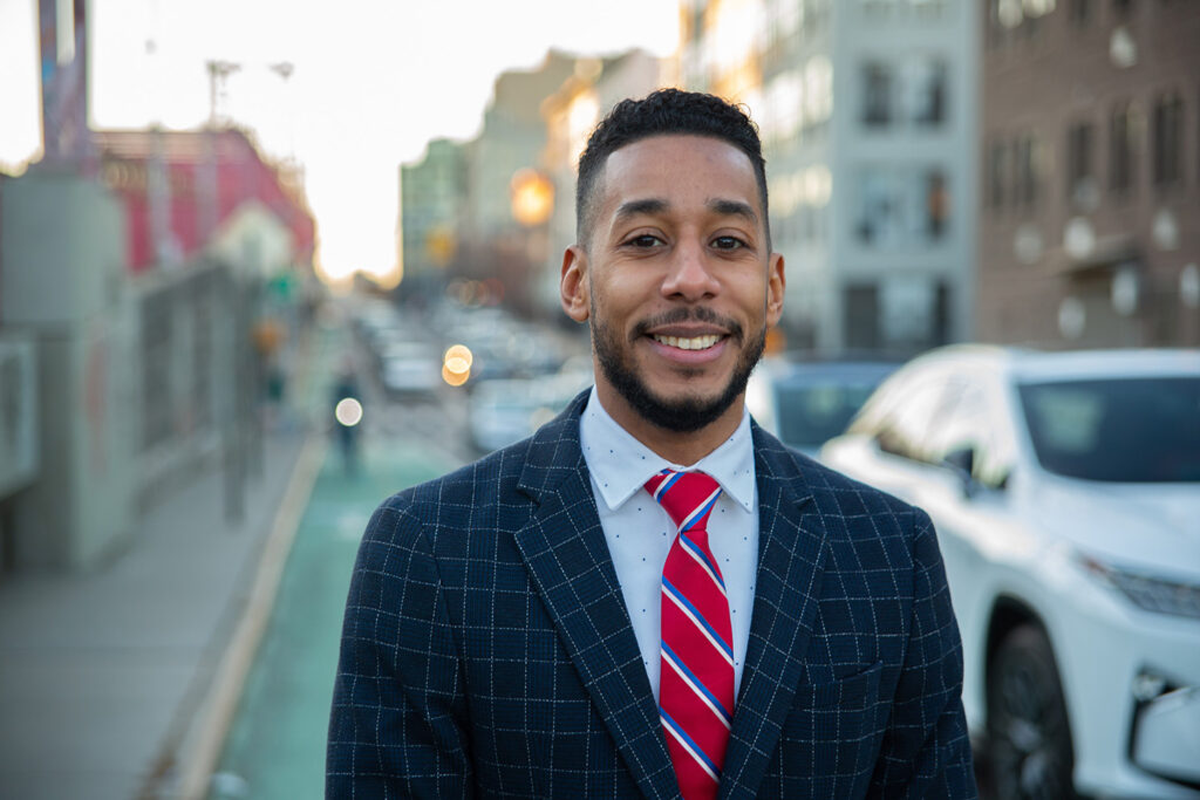
“Community boards give New Yorkers a unique opportunity to have a say in matters that impact their communities,” said Brooklyn Borough President Antonio Reynoso. “In order for community boards to achieve their full potential, they must be as diverse as the neighborhoods they represent – and here in Brooklyn, my administration is laser-focused on ensuring that community boards are representative and well-resourced. To meet this goal, we need involvement from everyday Brooklynites! No matter your background or story, we want to hear from you. Apply today!”
One essential function of a Brooklyn Borough President is to oversee the borough’s 18 community boards. The staff and membership of each board dedicates their time to addressing constituent concerns, liaising with City agencies and elected officials, informing the public about government programs and budget allocations, providing a platform for stakeholders to weigh in on land use decisions, and much more. Changes to the City Charter and decades of under-resourcing, however, have made it difficult for Brooklyn’s 18 community boards to deliver on their charter-mandated responsibilities and advocate for the needs of their community district. Demographic studies have also shown that board membership often does not reflect a community’s diversity.
Borough President Reynoso’s vision of a Brooklyn for all requires that community boards – the grassroots of our local government – are fully funded, fully resourced, and as diverse as the people of this borough. As agency head, Borough President Reynoso has redirected Borough Hall resources toward furthering the independence and long-term sustainability of community boards through operational training and support, as well as advocating to relevant City agencies to provide critical resources.
Submit the application and supporting documentation to the Brooklyn Borough President’s office electronically, on paper by mail, or in person. This year’s deadline is February 19, 2024. Anyone seeking a council member’s nomination should contact that council member’s office after submitting the application.
Brooklyn’s House of The Lord Church on Atlantic and Nevins was filled to capacity when we arrived last Saturday evening to witness leader Viola Plummer’s homegoing. So, we joined the long, orderly line outside. Inside, there was an ecumenical revolution of sorts happening. The church rocked with great words, poetry, praise litanies, condolences, music, drumming, and the great communal spirit of Viola Plummer. We could only imagine that the humble space had transformed into Sista’s space.
Covering for OTP were the tireless Nayaba Arinde, scribe (and a great friend of Viola); Gary Williams, in from Philadelphia, our community connector; Geraldine and Audrey Baker, friends since childhood; and photographer Althea Smith. Outside, we were warmed by the extension of Viola’s spirit wending through and owning that block. We also observed the “evidence” of the leader’s nearly life-long skill and genius in creating leaders focused and charged with purpose, warriors from Man Up! Inc., who were organized to stand guard, to usher, to attend to the needs of and serve the queue of mourners outside and inside the church. They stood godly and on guard. We were honored to be in their presence as much, as according to Man Up! Inc. founder A.T. Mitchell, the focused team, itself, was honored to be the “evidence of (Viola Plummer’s instruction and example).” When team members silently distributed programs to the grateful waiting crowd, even that action spoke to Viola Plummer’s regard, respect and “love for her people.” It also spoke to her constant “imperative” — when she lived — that precision planning be “carried out on all levels” including having enough programs and handouts. Knowledge for the People! The program read, “When receiving plaudits for her work, she would always firmly state that it was a collective effort which produced the victory and (it was) not the work of one person.” About his personal regard for Plummer’s legacy and how the community should remember it, Mitchell said, “We (should) honor Viola’s legacy by continuing on the path she created and being ready. Viola created leaders by being one. I am grateful to be doing this work as a steward in the community and doing it unapologetically.
“The spirit of Mama Viola, Mama Tubman and others, resonates beyond walls, beyond this city, beyond borders, beyond boundaries,” Mitchell told Our Time Press in the phone interview. His comments are an apt description of our feelings that night. We left the street sanctuary filled with Viola’s all-pervasive spirit, proud to have had the experience of observing it in human action, up close. It was like being in church.
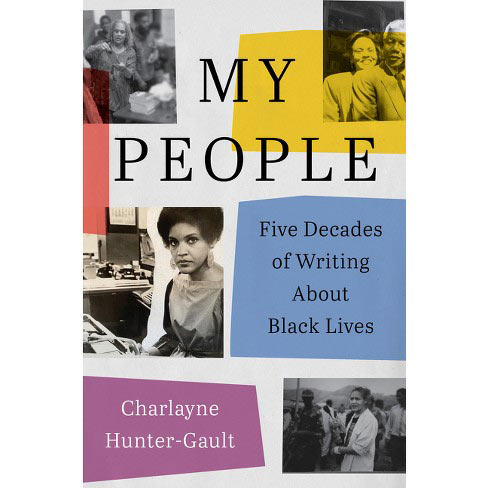
Book Review by Dr. Brenda M. Greene My People, Five Decades of Writing About Black Lives By Charlayne Hunter-Gault Harper Collins Publishers, 343.
The speaker in Dr. Margaret T. Burroughs’ poem “What Will Your Legacy Be?” asks what deeds have you done in your lifetime which will be left for you to be remembered by? Charlayne Hunter-Gault, the award-winning journalist who made history in 1961 when she, along with Hamilton Holmes, mounted a legal challenge that resulted in making her one of two students to integrate the University of Georgia, has a legacy that is devoted to speaking “truth to power.” She understands the significance of her pen and has written My People, Five Decades of Writing About Black Lives (Harper Collins, 2022), a moving chronicle of her life as a reporter. Through essays, articles, and interviews in The New York Times, The New Yorker, and various magazines and journals, and in her role as a PBS NewsHour anchor and national correspondent, Hunter-Gault has spent more than half of her lifetime reporting on Civil Rights, Harlem, the Black Power Movement, the Apartheid Movement in South Africa, the Black Lives Matter Movement, the impact of COVID, the rise of Trump, and her personal life in Florida and Martha’s Vineyard. Nikole Hannah Jones informs readers in the foreword to the book that Charlayne Hunter-Gault “provided a template for me and countless other journalists in the world.”
Upon admission to Georgia University, she and Hampton are forcibly suspended for their own protection and they have to attend classes under guard. Readers embark on Hunter-Gault’s journey as they read of an attack by racists in her dorm room on her first night at the University. However, she is not deterred. Her ability to persevere and resist had begun before she entered college. As young activists, she and Hamilton had written for the Atlantic Inquirer on demands for racial justice throughout the country. After obtaining her degree in journalism, Hunter-Gault moves to New York City and recognizing the trajectory of racism up and down the East Coast, she states: “So, along with my clothes, I packed my racial consciousness.” She ultimately becomes the first Black reporter for the “Talk of the Town” section in The New Yorker, and then a reporter at The New York Times, where she establishes the Harlem Bureau. Her reporting and persistence place her in a position to document levels of struggle for quality education, economic equity, self-determination, and social justice in communities representing Black people. Hunter-Gault’s story of the Patterson School for Heritage and Learning, an African-American centered afterschool in Harlem, is an example of her skill in finding stories in New York City where people are educating young Black youth about the power, self-esteem, and success that comes from having knowledge of self. This story touched me for I was among the first group of teachers in 1971 selected to teach African American history, literature, and culture at the Patterson Heritage School to children in grades three to four. A writer’s ability to craft prose that interweaves the personal and political takes a special kind of skill. Hunter-Gault achieves this balance as she writes of her experiences in meeting Lewis Michaux, the founder, aka, the Professor, of the famous Memorial Bookstore on the corner of 125th Street and Lenox Avenue or when she provides moving and inspirational accounts of freedom fighters, and civil rights icons such as Malcolm X, John Lewis, Julian Bond, Rosa Parks, Constance Baker Motley, Shirley Chisholm, and Gwen Ifill. Hunter-Gault also includes literary activists in her praise of liberation writers who have made a difference. Lorraine Hansberry, J.E. Franklin, and Phillis Wheatley are among those cited by her. Readers journey with her to South Africa and gain first-hand perspectives of her interactions with Nelson Mandela and freedom fighters who view the Civil Rights struggle in America as a blueprint and motivation for their struggle against Apartheid. They learn of the violent acts and imprisonment of journalists who give up their freedom to resist terrorism and of dictators who violate the freedom of people in African countries such as Ethiopia, Zimbabwe, and Nigeria. My People, Five Decades of Writing About Black Lives is divided into six parts: Toward Justice and Equality, Then and Now; My Sisters; Community and Culture; A Single Garment of Destiny; The Road Less Traveled; and Honoring the Ancestors. This structure reflects a continuum of overlapping themes that intersect and resonate across the five decades of Hunter-Gault’s life.
As a politically and socially conscious journalist, Hunter-Gault has been at the frontline in reporting and documenting racial inequality and the complex experiences of Blacks in America. Her purpose has been a personal and moral one. In discussing the role of the journalist in this country, Nikole Hannah-Jones notes: “As long as the architect of racial inequality remains, so does the journalists’ mandate to investigate and report on it.” Hunter-Gault’s My People, Five Decades of Writing About Black Lives is an enduring legacy and a testament to this mandate.
Dr. Brenda M. Greene is Professor of English, Founder and Executive Director of the Center for Black Literature, and Senior Special Assistant to the Provost at Medgar Evers College, CUNY. For more information, visit https://www.drbrendamgreene.com