Home Blog Page 171

On the Billie’s “Fabulation” Revival: It’s Fabulous, and a “Best” in All Categories

by Bernice Elizabeth Green
The Billie Holiday Theatre’s revival of two-time Pulitzer winner Lynn Nottage’s “Fabulation, or The Re-Education of Undine,” is so good that even the scenery and moving props should “walk” away with an award.


We went to the theatre to see how the great scribe-playwright and wordsmith fashioned two words Undine (after Ondine, a water nymph) and fabulation of Undine into a full-length play with plot for Black characters.


And we were captivated by that and more, the brilliant cast, featuring stunning supporting actors, a kind of Greek Chorus to the story of the title-role character.
In the shared title role are actress Felicia Curry (through May 6) and Kedren Spencer (who picks up the baton, performing, from May 7 – May 19). The supporting cast includes Evander Duck Jr., Alex Gibson, Sharon Hope, Mariyea, Roland Lane, Tito Livas, James A. Pierce III and Kimberlee Walker.


Now, in its 20th anniversary year, the play tells the story of Undine Barnes Calles, a fierce careerist, sharp businesswoman and hot-shot owner of a top public relations firm, who grew up on the other side of town in public housing, loses “everything” when her husband disappears with her bank account, and everything else.

Her friends abandon her, she discovers she’s pregnant, and she has only one option: to go back where she came from her. And when she does, she’s not exactly welcome.


In the hands of another, the play would drift into melancholia and soap opera drama, sudsing with all kinds of allusions to “comeuppance” and “morality” and ‘melodrama” and getting punished. Fabulation, after all is a Nottage play with storyline twists and turns like you’ve never experienced before.


Yet, it is Martavius Parrish’s excellent direction of a superb ensemble cast that brings Nottage’s words to life and makes those words dance. There is not a weak portrayal in this revival. The supporting actors mesmerized, even when standing still, or in the midst of Tutsi high-jumping or low-to-the- flo’ undulating. Actresses who portrayed the girlz-on-the-block, showed up in some scenes as down-home elder-lady roles, later in the script.

The actor who portrayed the money-grabbing cad of a Romeo husband, portrayed, in other scenes, the nice guy Undine, the entrepreneur, would never have looked at twice, but once Undine returned home (and herself) she did. The point is: Parrish made it work, possibly beyond its first incarnation, and right down to scenery and all its uses.

Something we, as playgoers, never imagined we would see at a small theatre, outdoing Broadway. Simple yet magical. So much so we still don’t want to know how the scenic designer and Parrish made it work.


Others behind the scenes deserving credit include Ama McNeil, Lighting; Christopher Vergara, costumes; German Martinez, sound; Nikiya Mathis, make-up, and hair (wait till you see the transformative wig work Ms. Mathis does for Undine); Karen Thornton, Movement (Beautiful!) and Miranda Holliday, dramaturgy.


And Our Time Press congratulates Billie executive director Shadawn Smith, coming up on her 1st year of joining the theatre. Smith oversaw everything and made it all work.
Our Time was well spent viewing this production with other pleased theatregoers.
The Billie Holiday Theatre, 1368 Fulton Street. Tickets: $60. For more information: visit eventbrite.com/e/fabulation-or-the-re-education-of-undine-tickets-861921700007
Eyeing Juneteenth bill passage with skepticism

By Peter M. Williams
NABJ Black News & Views

As we come upon the second celebration of Juneteenth as a national holiday, I question why this year’s legislation passed a politically polarized Congress. As a Black American, I am happy to celebrate Juneteenth, which observes the final, formal end of slavery. But I am suspicious of the reasons why it became a federal holiday with overwhelming bipartisan support.

The June 16, 2021, passage of the legislation establishing Juneteenth as a federal holiday reminds me of the Compromise of 1877, which was an unwritten deal that settled a dispute over the winner of the 1876 U.S. presidential election.

Through it, Republican Rutherford B. Hayes was awarded the White House on the understanding that he would remove federal troops from South Carolina, Florida, and Louisiana. This move effectively ended the Reconstruction era and killed Southern Democrats’ promises to empower Black Americans politically. It symbolized a betrayal to Black Americans.


In 2021, upon the passage of the Juneteenth legislation, Republicans wanted to demonstrate that they were not anti-Black. The Juneteenth bill passed unanimously in the Senate and 414-21 in the House. This bill was one of the
few bipartisan measures related to Black people and civil rights in recent years to pass the Congress.
I wondered if the enactment of the Juneteenth measure was a strategy by Republicans to support non-contemporary legislative measures that do not provide any real political empowerment — giving them something to ease their collective racial conscience.


This idea that Republicans are strategically voting for non-contemporary legislation tied to history over measures that provide concrete, modern-day political empowerment or civil rights became more evident to me with Republican’s overwhelming support of the Emmett Till Antilynching Act, signed by President Biden in March. The measure recognizes lynching as a hate crime. It passed the House 422-3 and passed unanimously in the Senate. This was a departure from history.


For about the past 100 years, members of Congress have tried to pass antilynching legislation. The first attempt came in 1918 with the Dyer Anti-Lynching Bill. It passed in the House but failed in the Senate, and several other attempts failed over the years.

These failures came despite the fact that about 4,440 Black people were lynched in the United States between 1877 and 1950, according to the Equal Justice Initiative, the Alabama-based non-profit founded by civil rights advocate Bryan Stevenson. The question that arises for me is why our racially polarized body of federal lawmakers would pass a bill after all this time.


I pose that there are several alternative proposed pieces of legislation that are more contemporary and deal with racism in how it shows up in America today. Ever since the Supreme Court struck down Section 5 of the Voting Rights Act in 2013 in Shelby vs. Holder, erasing preclearance voting rule requirements for jurisdictions with a history of race issues, there have been many legislative attempts to restore voting rights for marginalized groups in the United States.

Among them are the proposed Freedom to Vote Act and the proposed John R. Lewis Voting Rights Amendment Act, which have languished in Congress and have not seen any legislative daylight.


If Congress really wanted to move race fairness forward, it could pass bills such as the George Floyd Justice in Policing Act, which seeks to eradicate racial profiling and the unnecessary use of force, and restricts action such as no-knock warrants, chokeholds, and carotid holds.
I am not against the Juneteenth or antilynching bills, but I question their utility in fighting racism in its current form.

A holiday is symbolic and does not address racial inequities. And while I believe that making lynching a hate crime is appropriate, I do not see it as timely.


My ask for Republicans is to go all the way, if they are serious about political and economic empowerment, and vote for the George Floyd, John R. Lewis and Freedom to Vote pieces of legislation.
Peter M. Williams is a lecturer at Harvard University and a former civil rights executive.

The History of the Annual Brooklyn Juneteenth Arts Festival

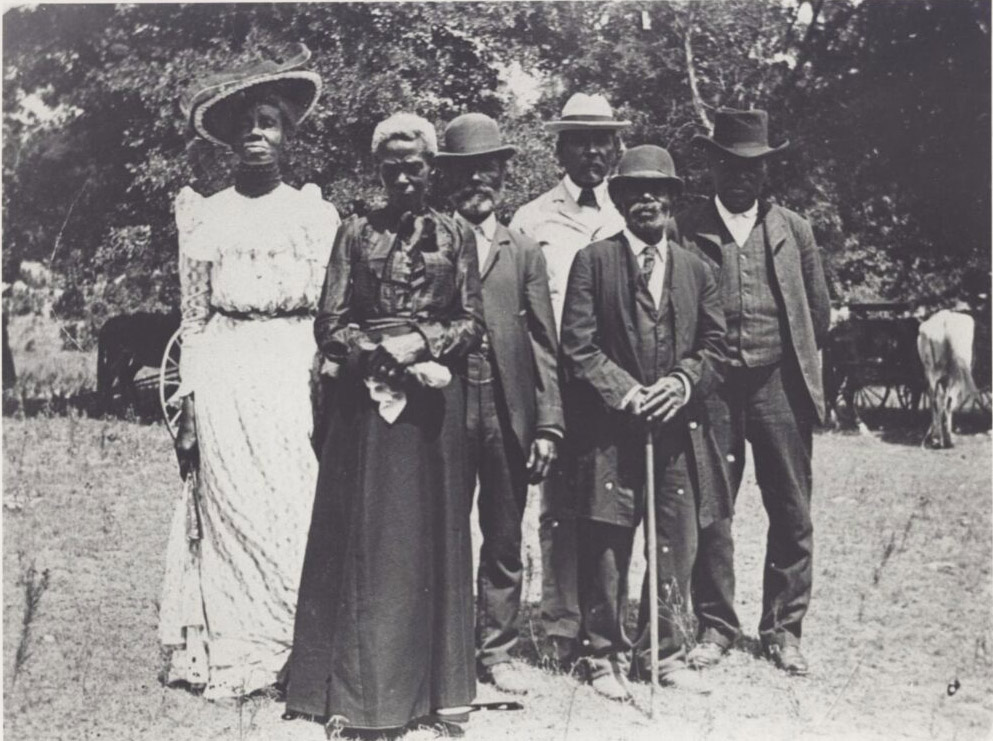
June 19, 1865 is the date that slaves in Texas and other parts of the south learned about their freedom, which happened nearly two years after the Emancipation Proclamation was signed. This occasion became know as “Juneteenth”, and has been acknowledged with community celebrations throughout the south for nearly 140 years.

The Annual Brooklyn Juneteenth Arts Festival began in 2000 as a day long, in store event at 4W Circle of Art and Enterprise in Fort Greene, Brooklyn under the leadership of 4W collective member and fashion designer Brenda Brunson-Bey (Tribal Truth Collection).

Bey, a native of Georgia, grew up participating in Juneteenth festivities, and established the 4W Circle celebration because few Brooklyn residents knew about this vastly important, but little-known moment in American History.

One year later, Bey recruited other artists and entrepreneurs living and working in Brooklyn to help move the celebration outside and into the community. This core group of people included Spring McClendon (The SCM Consultants), Selma Jackson (4W Circle of Art and Enterprise), Marcia Pendelton (Walk Tall Girl Productions) and Charles Reese (Teeth and Eyes Communications).

The group formed The Cooperative Culture Collective (TCCC), an organization founded to grow the festival and to produce other programs commemorating the arts and culture of the African Diaspora.
Funding from such organizations as the Brooklyn Arts Council, BAM Local Development Corporation, Fulton First and Rush Philanthropic Foundation enabled the festival to move from 4W Circle of Art and Enterprise to Cuyler Gore Park (Carlton Avenue and Fulton Street) in 2001.

That celebration included an entertainment stage, pony rides, face painting and games, as well as information tables and booths for art, business and community service organizations. In 2002, TCCC added another day of programming to the Juneteenth Arts Festival by hosting a community reception at Lafayette Presbyterian Church, a stop on the Underground Railroad.

Two years later TCCC created the “Juneteenth Uplift Award” to honor Brooklyn citizens whose life and work exemplified the spirit of Juneteenth. Author/ activist Kevin Powell and artist / activist Miriam B. Francis were the first recipients.


The Annual Juneteenth Arts Festival, which is held the third Saturday in June has presented nationally renowned artists as well as community-based talents.

These performers have included Grammy Award winning singer/ song writer Gordon Chambers, Grammy nominated jazz vocalist Carla Cook, such outstanding dance ensembles as Urban Bush Women and Creative Outlet Dance Theater of Brooklyn, acclaimed musicians Benny Russell and Tulani Kinard, and the Carter G. Woodson Steppers, a youth services organization.

Historically The Brooklyn Steppers, the only New York City marching band chosen to march in President Barack Obama’s Inaugural parade has opened the celebration.


The goal of TCCC is to continue to educate Brooklyn residents specifically, and the five borough area generally, about the history and importance of Juneteenth through the festival and other related programs. In addition, the vision of TCCC includes making the festival a destination event that will attract visitors from all over the world, thereby contributing to Brooklyn’s economy and its reputation as a place where arts and culture flourish.

From These Roots, Communities Grow

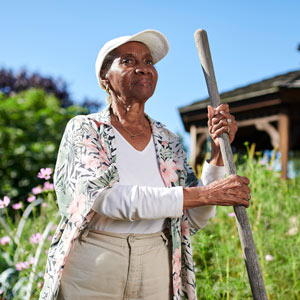
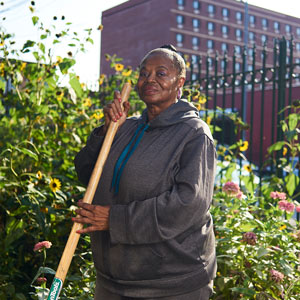
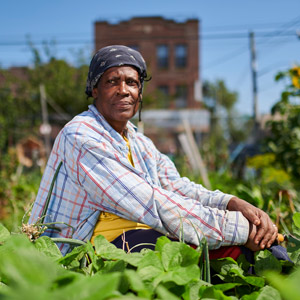
Ada Smothers, McIntosh Neighborhood Association Garden, Elmhurst, Queens

The garden was founded in 1978 by the neighbors in the McIntosh Neighborhood Association.

This was an empty lot. People would use it to dump their debris and garbage. And we got together as a group of neighbors to clean up the lot and start planting.

We planted vegetables, fruits, herbs, flowers. At that time, most of us were working people. I worked full-time. But we would do it in the afternoon and on Saturdays when we got home from work. And that’s how we worked this garden.

It gives me a peace of mind. I can come by here and it’s like a safe haven to me. I come out here and nobody bothers you. It’s relaxing. That’s what it is to me, a safe haven. It makes my life more bearable. The beauty of it, it’s so relaxing.

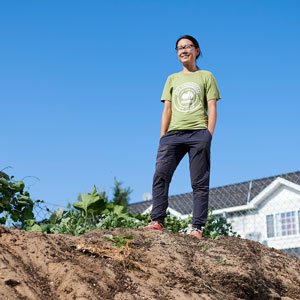
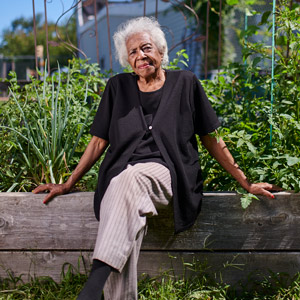
Anita Chan, Wortman Avenue Garden, East New York, Brooklyn

When people saw that we were cleaning it up, they took a lot of interest. When we told them, “Hey, you can have a garden bed here,” a lot of people were actually very excited. Being able to grow your own food is a very unique and special experience.

The Healthy Soils Project helps remediate soils that are contaminated with heavy metals, mostly lead. New York City soils have been historically known to be contaminated, and we really want to combat that.

The [Healthy Soils] Project was trying to find [garden] sites that can receive large deliveries [of clean soil], because a lot of construction projects [affiliated with the Healthy Soils Project] dig pretty deep down where they dig up glacial sediment, which is not contaminated because it’s very deep down, and it is safe to grow in.

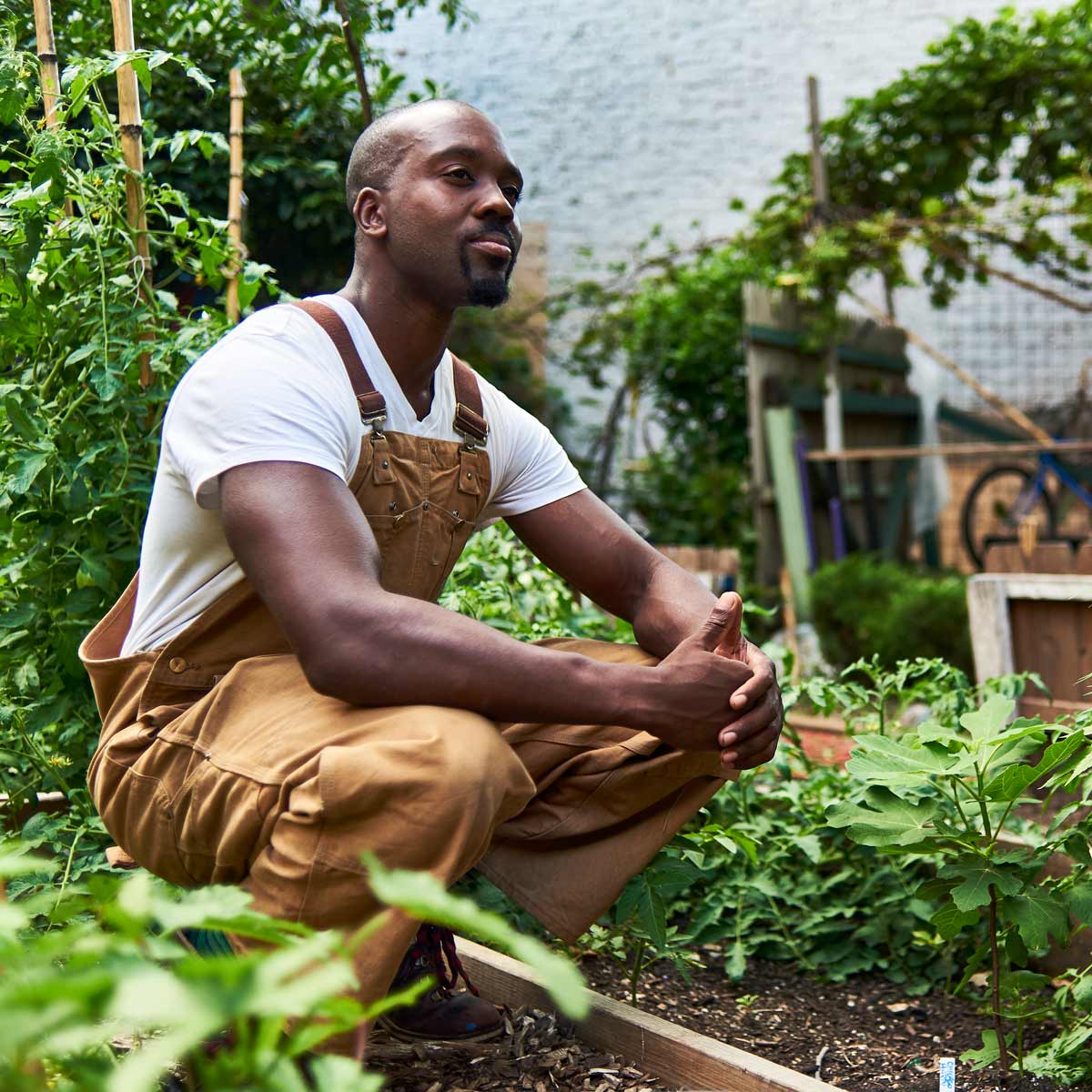
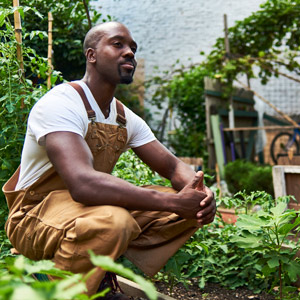
Efrain Estrada, United We Stand Garden, Mott Haven, The Bronx

We grow a lot of things. We have Mexican vegetables like papalo. We got jalapeños, and we have eggplant, we have okra, we have collard greens.

Before, early in the spring, we had lettuce. Now we’ve got tomatoes and corn. We have peppers, potatoes, sweet potatoes. We have cabbage. We have all kinds of greens. A lot of greens.

People like to eat the greens when they are fresh. They love that.

My favorite part of the garden? Well, you know I always go for agriculture and I like the people to plant. I like to help the people when they don’t know much, so they can have a good product.

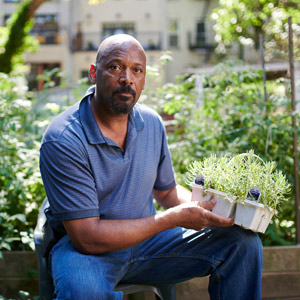
Iola Sims, Rogers/Tilden/Veronica Place Garden, Flatbush, Brooklyn

Everything is bust right open now, so we’re gonna need some kind of sanctuary to come through, to heal, to talk. I think the garden will be one of those places for thought.


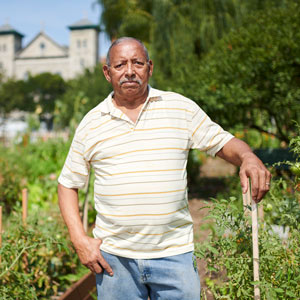
Joan Belton, Merrick Marsden Neighbors Association II Garden, South Jamaica, Queens

I’m proud that it’s a community garden and that we’re able to grow vegetables to distribute among the neighbors.


Kofi Thomas, The People’s Garden, Bushwick, Brooklyn

It really became more apparent that this was a place of mental health. A lot of people were suffering from anxiety or depression, which is common in our neighborhood.

I’d get text messages from people asking if I could open the garden for a couple of hours because they were feeling very dark and lonely and just wanted to sit outside for a while.

There was definitely a time during this pandemic when we were one of the only places people could come and sit down.

Lionel Mapp III, Five Star Garden, Harlem, Manhattan

I plant the flowers up front just to draw people in; people are attracted to the smells of the garden.


Marlene Wilkes, Hands and Heart Garden, East New York, Brooklyn

I want to share with everyone that even though gardening and farming are physically stressful, they are mental de-stressers. Because once you get into the garden and the plants command your attention, everything else disappears from your head until you finish gardening.

It really is a mental de-stresser. Yeah, I know that as a fact. I’ve experienced it so many times.

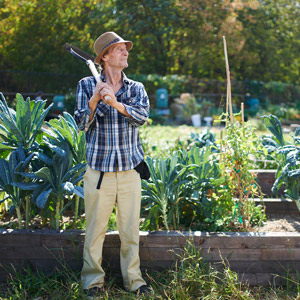
Mike DiGiacomo, Hill Street Community Garden, Stapleton, Staten Island

I’ve been here for 22 years. This was a dumping ground when I got here. And I took it upon myself to start removing the tires, the old air conditioners, about a thousand paper bags that were festooned all over the place, the beer cans, the coffee cups.

Eventually, I started calling [New York City Department of] Sanitation to get some help. They started to do this whole leveling thing. They came in here with a bulldozer, and they scalped everything and left a muddy mess behind. So I came in and cleaned up all the trash that they left behind. And little by little, it started to recover.

Whenever it rained, there was a washout of muddy, brown water rushing into the street, and it would pond down the street here. And when it eventually subsided, there was this nice fine powdered dust, and the cars would run over it. And there’d be a dust cloud every time. Guess who was breathing that in? Now, when it rains, it’s clear water because the vegetation is restored on top, and it holds the clay in.


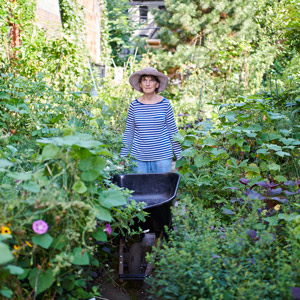
Patti Hagan, St. Marks Avenue / Prospect Heights Community Garden, Prospect Heights, Brooklyn


A number of people in the neighborhood who are recovering from cancer and chemotherapy like to come in and watch the bees.

There are butterflies and Cabbage Whites right now, but we have lots of swallowtails, commas, and painted ladies. People birdwatch a certain amount here.

I’ve seen hawks here, cardinals, robins, and bluejays. Usually, one or two days in the spring and in the fall, hummingbirds come through either headed north or south and if you’re lucky enough to be here [you can] catch them. In the spring we always have praying mantis, this being a praying mantis sanctuary of many years. In May, the little teeny babies were all over the fennel.

Then, they started moving to other plants at the same time that the swallowtail caterpillars were hatching. It was really wonderful. Anybody who would come into the garden had never seen creatures like that, and it’s fun to show them, especially the children. [The garden] seems to draw people together.

People recovering from cancer can find a quiet place to be outdoors here. It seems to do wonderful things for them.

WENDY WILLIAMS: The Queen of All Mean-ia

By Lisa Durden
Once hailed as the uncensored voice of gossip, her recent documentary series, “Where Is Wendy Williams,” has left audiences in shock and scrutiny when it premiered on Lifetime, February 24, 2024.

The world tuned in to see Wendy Williams’ comeback story, but what they got instead was what appeared to be a fallen-down drunk, who was barely coherent. The nation witnessed the rise, fall, and now, the perplexing resurgence of a media icon.

As a long-time admirer of the audacious “Hot Topics Queen” since her days in radio on the WBLS- FM show, “The Wendy Williams Experience,” with Artie Artie Life of The Party and, of course, Goose, it’s both painful yet necessary to unravel the layers of her narrative — to confront the good, the bad, and the downright ugly.

So, I felt compelled to write this think piece to break down why many people don’t feel sorry for her and why Wendy Williams, “The Queen of All Mean-ia” is catching “Karma.” Let’s get into it!

Before y’all come for me, don’t! As a staunch feminist and advocate for women’s empowerment, critiquing Wendy Williams isn’t an act of tearing down a Black woman, but rather an examination of a public figure’s impact. #GoodTryTho!


Off the rip, let’s dispel a prevailing misconception: Wendy Williams’ struggles with alleged dementia and addiction are not manifestations of karma. That’s not how that works. Illness does not discriminate based on one’s moral compass. Bad people get sick and good people get sick, too.

No, I do not think that Wendy is facing karma because she is the “Gossip Queen” who talked about everybody and they momma like a dog.

She was simply doing her job and standing on the business that paid her the big bucks, no different than shock jock Howard Stern, TMZ and all the other tea-spilling gossips up in these media streets.

However, it’s undeniable that Wendy Williams: “The Queen of All Mean-ia” is on a tumultuous journey, riddled with drug and alcohol abuse, that has undoubtedly exacerbated her health issues.

So, the notion of karma finds resonance not in her physical ailments, but rather in her relational dynamics.

NOW, I do feel however, Wendy’s conspicuous lack of genuine friendships speaks volumes about her karmic energy. While fame may forge connections, it cannot substitute for authenticity.

Her betrayals, from disclosing confidential information, to mocking personal struggles, have rendered her a pariah. The notion of loyalty seems foreign to her, evidenced by the fact that she exploited personal confidences for public fodder.

She blabbed on the radio that Method Man’s wife had cancer after he swore her to secrecy off the record.

Although she claimed to be NeNe Leakes’ friend, Wendy all but called her broke when she was allegedly “fired” from The Real Housewives of Atlanta.

I remember in the early years of #TheWendyWilliamsShow, she was talking about lunchtime cosmetic procedures like Botox that she takes advantage of and how the show’s creator does it, too.

SHE WAS PISSED! Again, celebrity gossip during hot topics is par for the course if you are an entertainer, but Wendy telling people’s personal business, particularly if you profess to be their friend, IS A ROAD TOO FAR!


Perhaps this is precisely why when others observe her betrayal of those whom she claims to be friends with, they’re not inclined to forge a relationship.

The definition of karma is “the sum of a person’s actions in this and previous states of existence, viewed as deciding their fate in future existences” – which is precisely why SHE DOES NOT HAVE ANY FRIENDS!

Wendy Williams is “The Queen of All Mean-ia” because she’s done too much wrong, for too dayum long! Which is also why many people don’t feel sorry for her now. They feel like she’s getting what she deserves.

Although I don’t fully agree, I can certainly understand why some folks feel that way.

Do y’all recall the incident when Wendy was on the radio, where she had Goose-drop cow mooing sound effects during an interview, in studio, with MoNique?? Hearing that made me sick to my stomach, to be honest.

She thought that mean shyt was funny! I did not, but I was glad that Mo remained cool as a cucumber.

Sadly, I also encountered firsthand the collateral damage wrought by Wendy’s vindictiveness just because she could. Remember back in 2008 when the talent booker Nicole Spence’s sexual harassment complaint against Wendy and her husband unraveled after it was reported by TMZ?? Welp, it serves as a poignant example cuz I got caught in the crossfire.

Ok, here’s the strong, hot, Lipton Tea. I was my cousin Terrance Bankston’s publicist at the time. He was running for Essex County Freeholder, and I had booked him as a guest on #TheWendyWilliamsExperience.

When we arrived at the studio, Nicole told me that Wendy changed her mind and she wouldn’t be interviewing him. I WAS MORTIFIED!

When I asked her why, she replied, “You know Wendy is crazy.” My response: “Wendy was crazy before you booked my client. So that’s nothing new.”

Once I pushed back, Nicole came clean and told me that Wendy was canceling her bookings, last minute, to make her look inadequate, so WBLS would fire her.


She was retaliating against Nicole for filing the lawsuit, because she had a callous disregard for her professional reputation.

Miss Wendy’s behavior underscores her capacity for cruelty beyond the studio walls and she didn’t care that I got harmed in the process. Of course, I WAS HEATED!

Beyond the hot topics chair, clearly Miss Wendy has been harming people with impunity! Which is probably why after watching “#WhereIsWendyWilliams” people in these internet streets are saying that they don’t feel sorry for her.

And NO, they don’t have to! So y’all need to STOP telling folks how they should feel about her. Wendy did what she did and people feel some type of way about her. #PERIODT!

However, the reason I do feel sorry for her has nothing to do with her health problems and financial issues, it’s because of her tumultuous upbringing.

Wendy’s narrative is filled with the scars of childhood trauma. Wendy herself said that growing up, her own parents called her fat.

Once she even said something to the effect that her father told her she would be pretty if she just lost some weight. When I heard her say that I thought..WHAT THE #CLUCK! Think about it..her own father basically called her ugly. THAT MUST REALLY HURT!

Can you imagine?? Her parent’s rejection and body shaming cemented her insecurities and left lasting scars, in my view.

The profound impact of this emotional neglect cannot be ignored. In many ways, Wendy Williams is the “#TheQueenOfAllMeania” because she is the product of her negative past, grappling with inner demons and unchecked hubris.

The way I see it, Wendy’s downfall is not a cause for celebration, but rather a reminder that “hurt people hurt people.”

#

Lisa Durden is a prominent National Media Contributor and TV Personality, renowned for her appearances on prestigious platforms such as ABC 20/20 as an ABC News Contributor, Revolt TV’s ‘Revolt Black News,’ and Fox Soul’s ‘Being Black With Tammi Mac.’
Her contributions extend to CBS News, The Dr. Oz Show, and as an #APlusPanel Contributor on #TheOpinionZone for the former ‘Chasing News Series’ on the My9 Network. Her distinctive voice and activism echoes through her storytelling, establishing her as a vocal Social Justice Journalist and thought leader, recognized by media outlets like Newsweek, Ark Republic and Our Time Press.
STAY CONNECTED:
Instagram: @lisardurden
X(Twitter): @Lisardurden
Facebook: @LisaDurdenTVPersonality
TikTok: @lisardurden