Home Blog Page 157

Father’s Pledge – Allies, Activists, Advocates

By Nayaba Arinde
Editor-at-Large

Father’s Day presents the opportunity for reflection, gratitude, or even a reset if necessary. While commerce collects major consumer dollars, culturally, it is also utilized by some to shine a spotlight on issues in the community.


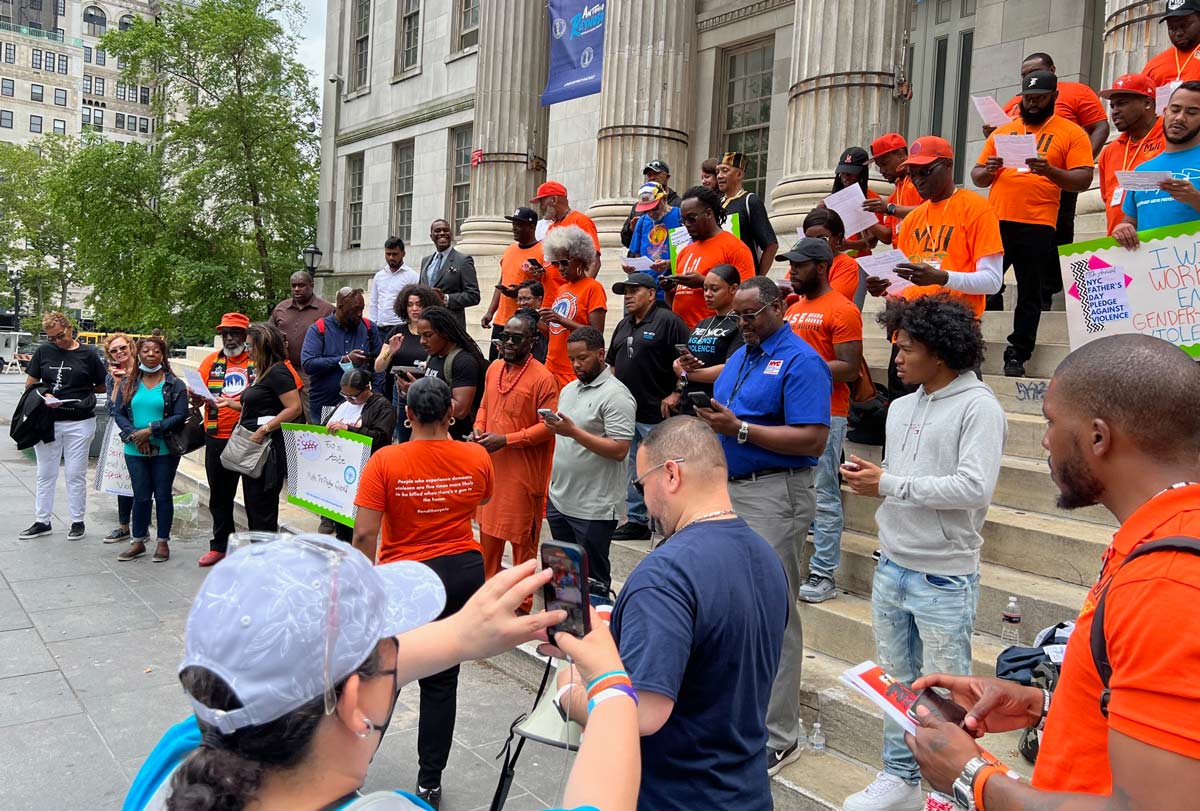
Calling all fathers and father figures, for 15 years, Quentin Walcott, executive director and co-founder of the anti-violence organization Connect NYC, has had hundreds of men recite The Fathers Pledge Against Violence on the steps of Brooklyn’s Jay Street Borough Hall or Manhattan’s City Hall. Today, Thursday, 13th June, the Pledge was recited on the steps of City Hall in Manhattan.


The first of the 11 points is, “Never commit, condone, or remain silent about domestic violence, intimate partner violence, and violence in our homes and communities.”
“This year’s theme is about men’s mental wellness because we believe that healthy men equals healthy relationships and healthy communities,” Walcott told Our Time Press. “This is about women and children, and standing as allies and activists, doing the work daily.”


Walcott’s origin story began as a CUNY’s York College student activist. Since protesting police brutality, and fighting for justice for political prisoners, he has been called to be an international speaker at anti-violence forums as far as Kenya, South Africa, and Brazil. He has served on the city’s Domestic Violence Task Force Steering Committee, spoken at the White House for the United States of Women Summit, and won multiple awards for his advocacy for women’s rights.


For 15 years, he has encouraged men to take accountability for their families and strive to look within to make solid and positive contributions to the community. Stating that over 85% of abusers are men, Walcott told the paper, “We work with men as partners against violence against women and girls. Unfortunately, when you scratch the surface of all forms of violence, there’s usually a man standing there. Part of it is about accountability, but more importantly, it is about getting men the help they need to change their attitude and belief systems towards women and girls and other men.”


Walcott added, “Many of the root causes of domestic violence are the same as other forms of violence – gun violence, systemic violence – it’s all about power and control, gaining and maintaining that…We look at the things that people use to rationalize the behavior. The reality is that a lot of people are not getting help for things like gender roles, patriarchy, and the idea that we are more important than women in this society. A lot of times, men are challenged by systems that make them feel powerless. We end up taking it out on our loved ones, and often that is our women, children, and families.”


Walcott said, “The main issue is how we see ourselves as men, how we are socialized to be men, and our attitudes in a relationship. Sometimes, when we are not meeting that, we feel emasculated, not as macho or masculine, and sometimes we take that out on women.”
A lot of time, poverty doesn’t create domestic violence, he said. “Domestic violence creates poverty…someone goes to jail, or breaks down someone’s self-esteem, or your living conditions or quality of life create poverty as well, so it is a causational thing. This idea of living up to your role as a man, you’ve got to be the breadwinner, you’ve got to be strong, you’ve got to be powerful, you’ve got to make all these major decisions – and when you’re not able to do that–sometimes you take it out on your loved ones, and intimate partner.”
Solutions?


‘We give them a safe space to talk and break down what they are feeling. Particularly during Covid because that’s when manhood was being challenged the most: losing your job, you might become homeless as a result of the conditions. So we asked, ‘How are you doing? We said it is okay to talk to someone, get therapy, speak to your peers. Seeing vulnerability as a strength rather than a weakness.”
CONNECT NYC strives to be “helpful around economics, finding them jobs and keeping their housing.”


Walcott said, “There’s not enough resources, particularly for men. There are not enough Black and Latino therapists. So we continue to pressure state, city, and federal levels to financially support the idea that men and boys need help around this issue.”


With the pledge recited in three countries and in over 50 US cities, Walcott told Our Time Press that “in light of what is going on with P Diddy [rapper and businessman Sean Combs accused of multiple cases of violence against women] – and other forms of domestic violence, we put a lot of onus on the women to be safe and leave, but we are not doing the work with men to look at their behavior and give them alternatives to violence.”


With Public Advocate Jumaane Williams and Speaker Adrienne Adams among the invited to the Father’s Day Pledge Against Violence program, Walcott called it an “Opportunity to leverage the City Council as this is budget negotiating season, to make sure that they fund organizations that are looking at domestic violence, and also supporting men and the work around mental health and wellness.”
Contact https://www.connectnyc.org/
Brooklyn Arts Council’s Rasu Jilani is Granting Social Justice in the Arts

By Fern Gillespie
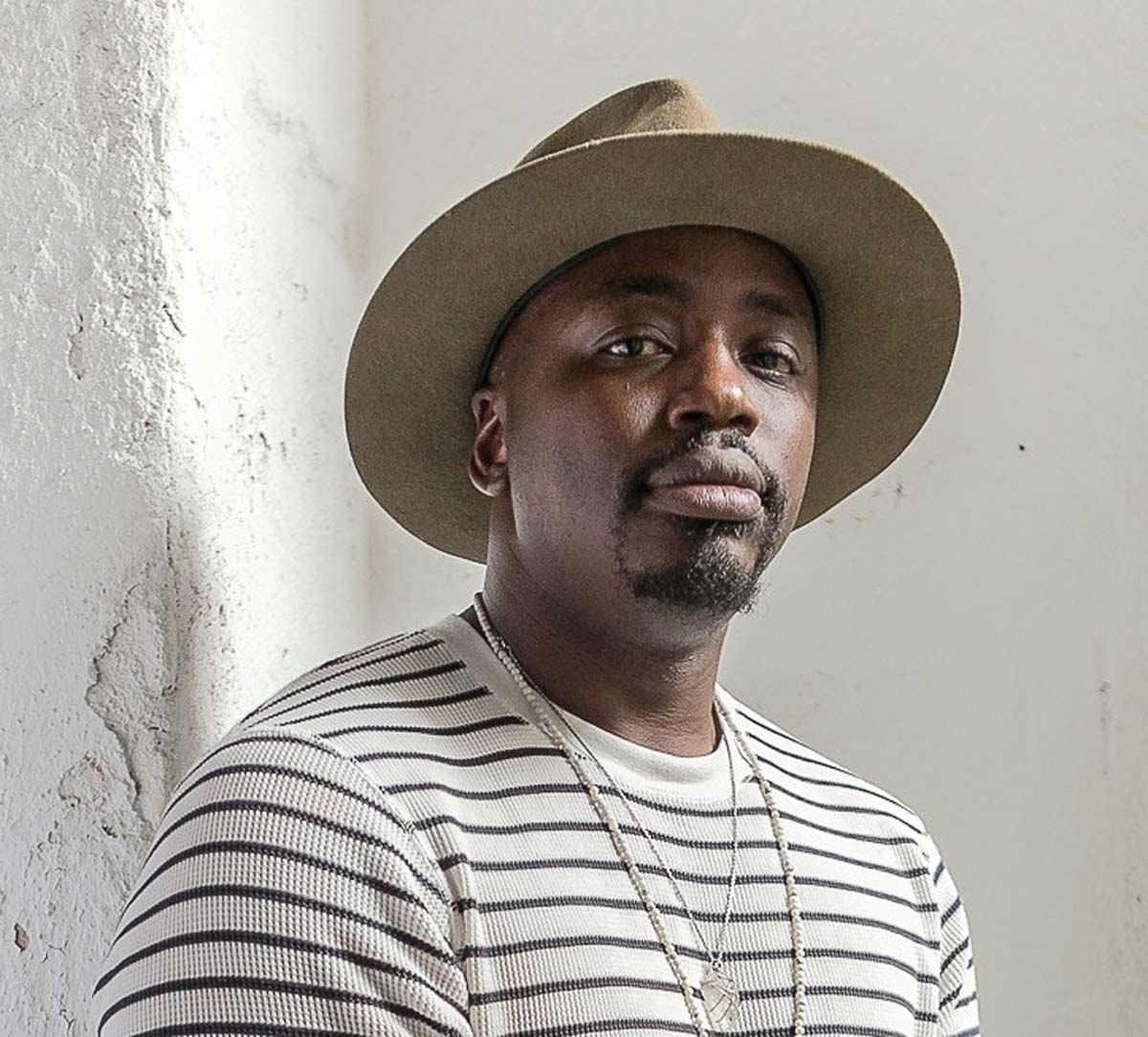
Rasu Jilani is a self-described “social sculptor.”
As Executive Director of the Brooklyn Arts Council (BAC), he creatively sculpts his leadership experience in arts, tech, business, foundations and social justice and molds it with his skills as a curator, producer, artist and cultural steward to create arts grants that have a social impact on the lives of Brooklyn residents.


“We are one-part philanthropic organization and one-part cultural institution. Our institution engages communities from kindergarten to retirement.” Jilani told Our Time Press. “At Brooklyn Arts Council, our frame is really social justice because we believe that art is not created in a vacuum.”


BAC empowers artists and communities through holistic programs focused on creativity, wellness, and social justice. It champions racial, gender, and ethnic equity and cultural heritage by partnering with art communities for inclusive programming. It also focuses on the wellness and professional development of artists.


“Most of the artists that are funded are first-time artists, early-stage artists and mid-career artists,” explained Jilani. “Almost 33 percent of the grantees are getting their first grant in the arts.” Approximately 76 percent of BAC funding comes from the government–city, state, and national. There are also foundation and private philanthropy donations and collaborations with SU-CASA with senior and youth projects. BAC is one of five Arts Councils in New York City. There is one in each borough. At BAC, grants range between $2,000 to $15,000. In 2023, BAC’s Brooklyn Arts Fund distributed $592,000 to 136 projects across Brooklyn. The BAC Local Arts Support distributed $255,000 to 56 projects across the borough. The Creative Equations Fund donates $10,000 to groups.


“You can’t create artwork without saying how it is going to impact your community or what frame or lens your artwork is responding to. It holds the artist accountable to
be a messenger of the time,” he said. “Brooklyn artists are able to articulate in ways they show up in the world. They are socially conscious and creative. That’s what makes Brooklyn unique.”


BAC impacts communities in Sunset Park, Brownsville, East New York, and Crown Heights, which are sometimes overlooked. “These neighborhoods are typically, historically, out of the reach of the cultural arm of New York City,” he said. “They are forgotten communities when you think about resources. They have a rich culture, but the culture may not have been valued, interpreted, preserved, or acknowledged by the cultural sector.”


BAC partners with churches, city officials, organizations, block associations to engage the public. “We are there in schools, adult centers, libraries, block parties, gatherings, shows, or theater. We are funding. We are programming,” he said. “That’s the reason why these partnerships are so important.”


Jilani brings a certain panache for social justice culture to the Brooklyn Arts Council. He was born in St. Croix, U.S. Virgin Islands, and raised by his mother in Queens. Cross-cultural curatorial skills were honed in positions like Cultural Network Curator at Lambent Foundation, Director of Recruitment/Community Engagement at the New Museum’s art and tech incubator, and working with artists, designers, tech, and entrepreneurs at NEW INC. As an artist-activist, he founded Coup d’etat BROOKLYN and Coup d’etat Arts and was also a producer for Afropunk. Jilani earned his Bachelor of Science degree in Information Technology and African American History from Syracuse University.


There is a new generation of Black executive leadership heading Brooklyn nonprofits. Jilani is part of that. “After the ‘racial reckoning,’ the folks being called to be advisers, deputy directors or curators found roles starting to open up. Paradigms were shifting,” he said. “A new wave of leadership was being called in. We saw a Black and Brown leadership emergence specifically focused on Brooklyn.”


BRIC, BAM, Brooklyn Org, 651 ARTS, Laundromat Project, and the Brooklyn Children’s Museum are some of the organizations also being run by a Black executive. “I’ve never seen this much Black leadership in Brooklyn,” he said. “We’re all working together, forming coalitions. We are collaborating programs with each other on how to apply for mutual funding together in ways that our predecessors would never imagine.”


As a social sculptor, Jilani looks at the next generation of artists. “I believe our next generation of grantees are currently in middle school. If you look at middle
schoolers, they are on their devices all day,” he pointed out. “So how does BAC intercept their attention or meet them where they’re at in the digital space and fund their interest? There might be a space for digital art in the future. Creative technology in the future. We should be there.”

New York passes legislation to ban ‘addictive’ social media algorithms for kids

The New York state legislation will ban social media platforms from algorithmically recommending content to children.


New York’s Legislature passed a bill on Friday that would ban social media platforms from using “addictive” recommendation algorithms for child users.
It’s expected that Gov. Kathy Hochul will sign the bill into law. On Friday, she posted on X celebrating the bill’s passage.


The bill could fundamentally change how children use social media in the state.
The Stop Addictive Feeds Exploitation (SAFE) for Kids act will prohibit social media platforms like TikTok and Instagram from serving content to users under the age of 18 based on recommendation algorithms, meaning that, instead, social media companies will have to provide reverse-chronological feeds for child users.
The legislation describes algorithmic feeds as “addictive” and says they negatively affect children’s mental health.


The New York legislation defines an “addictive feed” as one that recommends, selects or prioritizes media based on information associated with a user or their device. It would compel the state’s attorney general to disseminate rules for enforcement. A company found in violation would have 30 days to correct the issue or face remedies of up to $5,000 per user under the age of 18.


On Monday, the bill was amended to remove provisions that would have banned platforms from sending notifications to children between midnight and 6 a.m.
Legislation related to restricting social media use for children has been a popular in both state and federal venues. A California bill that passed the state Senate in May is very similar to the New York bill, while at the federal level, the Kids Online Safety Act would open the door to holding social media companies liable for recommending harmful content to children.


The bill could face challenges if it is signed into law.
NetChoice, a trade group that represents major tech and social media companies like Google, Meta and TikTok, has challenged multiple state laws in the past two years claiming violations of the First Amendment. NetChoice was granted a preliminary injunction in Ohio and Arkansas and is awaiting judgment in California. Many of the recent legislative efforts to regulate social media have focused on children.


“If you can frame something as being about protecting kids, it automatically has more political weight behind it,” said Evan Greer, the director of nonprofit digital rights advocacy group Fight for the Future.


Some of the New York bill’s backers include a coalition of parents who have protested against Meta during congressional hearings and outside the company’s office. Some of the parents have children who died by suicide after the parents say they viewed harmful content on social media. Julie Scelfo, a former New York Times journalist, created the group Mothers Against Media Addiction (MAMA) and has advocated for the New York bill.


“We’re in the middle of a national emergency in youth mental health and it’s abundantly clear that one major contributing source of that is social media and its addictive algorithms,” Scelfo said. “It’s not social media in and of itself, but it’s the addictive design that is contributing to children’s emotions being exploited for profit.”


Many proponents and detractors of these bills agree that tech platforms have harmful effects on children, but there isn’t full agreement on how to address the issue.
The New York bill was introduced by Democrat Andrew Gournardes. It has had bipartisan support in the New York Legislature from more than two dozen state senators. Both Democratic and Republican-led states and coalitions have pushed for similar legislation.
The bills aren’t universally loved, though.


Greer and other civil liberties advocates have argued that such laws would trample on the rights of companies and users, when “strong privacy and antitrust legislation” could be considered, instead.


“The courts have actually been very clear that we can regulate the commercial surveillance practices companies engage in, we can regulate specifically harmful business practices like autoplay and infinite scroll,” Greer said. “What we can’t do is put the government in charge of what young people can and can’t see online. That’s when it becomes about content and that’s when you run into the First Amendment.”


Greer also said that commercial age-verification methods, which would likely be required to enforce the law, further threaten the privacy of social media users and could pose a danger to civil liberties and anonymity online.


“When one state passes a law that incentivizes companies to move in this direction of engaging in invasive age verification, which is incompatible with anonymity, that actually creates real human rights concerns globally,” Greer said. “There’s broad consensus among human rights experts that the ability to speak out and use the internet privately and anonymously is a fundamental human right that needs to be protected, because it’s so essential for the most vulnerable and marginalized people on Earth.”
This article was originally published on NBCNews.com

Students Melec Rivera and Marc Joseph Recognized as Samuel Dunston Sr. Scholars

The Brooklyn Hospital Community Advisory Board (CAB) and The Brooklyn Hospital Center (TBHC) & Staff presented their first annual Honorable Samuel Dunston Sr. Scholarship Award Ceremony with the Class of 2023-2024 last month during an evening event in TBHC’s Main Dining Room.


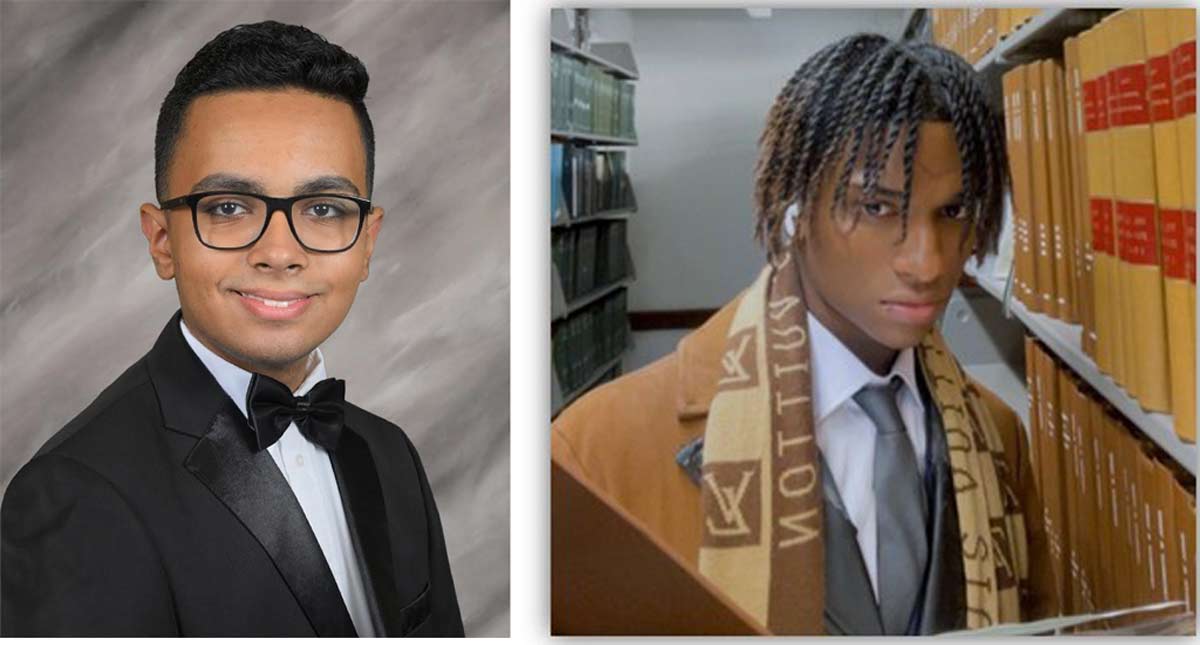
The scholarship honorees were Marc Joseph and Melec Rivera, and the event was a warm tribute to the excellence, innovation, and enduring spirit of achievement that characterized the beloved Bed-Stuy entrepreneur, Mr. Dunston.


Praising and applauding the accomplishments of the outstanding scholarship awardees and their families were: hosts Dr. Kim Best, chair of the Brooklyn Hospital Community Advisory Board (CAB); Reverend Earl Jones, Sr., Brooklyn Hospital Community Advisory Board and Scholarship Committee Chair; Gary G. Terrinoni, President & CEO of the Brooklyn Hospital Center, and event emcee Lenny H. Singletary, III, Senior VP of Eternal Affairs, Strategy & Marketing of the Brooklyn Hospital Center, among a legion of other influential community leaders.


In addition to Dr. Best and Rev. Jones, the scholarship committee included Dr. JoAnn Joyner, Committee Co-Chair; Fulvia Forbes, Mavis VeronicaYon, Ray Knights, Pearl Jones, Stephanie Gumbs-Bennett, Habib Joudeh, and Delia M. Hunley-Adossa.


Pernon Dunston, son of Samuel Dunston Sr., and CEO of Golden Life Group, LLC, said his father, Samuel Dunston, who passed December 24, 2020, would have been proud to honor “two such well-deserving young men with the first Samuel Dunston Sr. Scholarship”. Mr. Dunston Sr. was the founder and President of National Allotment Insurance Agency, Ltd. He was recognized as a matchless innovative leader in the insurance and employee benefits field.

A graduate of The Academy of Urban Planning in June 2023, Melec Rivera is currently in his first year at Borough Manhattan Community College, pursuing a Liberal Arts degree in Animation and Motion Graphics. He is a graduate of The Academy of Urban Planning in June 2023. Melec, a natural leader among his peers, is praised his for his exceptional organizational skills and ability to overcome ability to overcome challenges.

A graduate of The Williamsburg High School for Architecture and Design in June 2023, Marc Joseph graduated in the top 10% of his class. Known for his dedication to community service, Marc was actively involved in extracurricular activities and served as captain of the volleyball team, a student tutor, and a student ambassador. His willingness to assist his peers, coupled with his dynamic and original approach, exemplifies the core values of the Samuel Dunston, Sr. Scholarship Award.

Remembering D-Day: Honoring the Black, Buried, Missing at Normandy American Cemetery

By Col. (Ret.) Edna W. Cummings,
U.S. Army
Special to the AFRO
“All last night, guns shook on the ground on which I slept. Our long toms slugged it out with German 88s in a duel that has no end.” – Ollie Stewart, Afro American Newspaper, correspondent with Invasion Forces, France, July 15, 1944.
Eighty years ago, the most heralded battle of World War II, June 6, 1944, or D-Day, consisted of Allied Forces landing along the 50 mile stretch of beaches along the coast of Normandy, France.


The beaches held code names of Utah, Omaha, Gold, June and Sword.
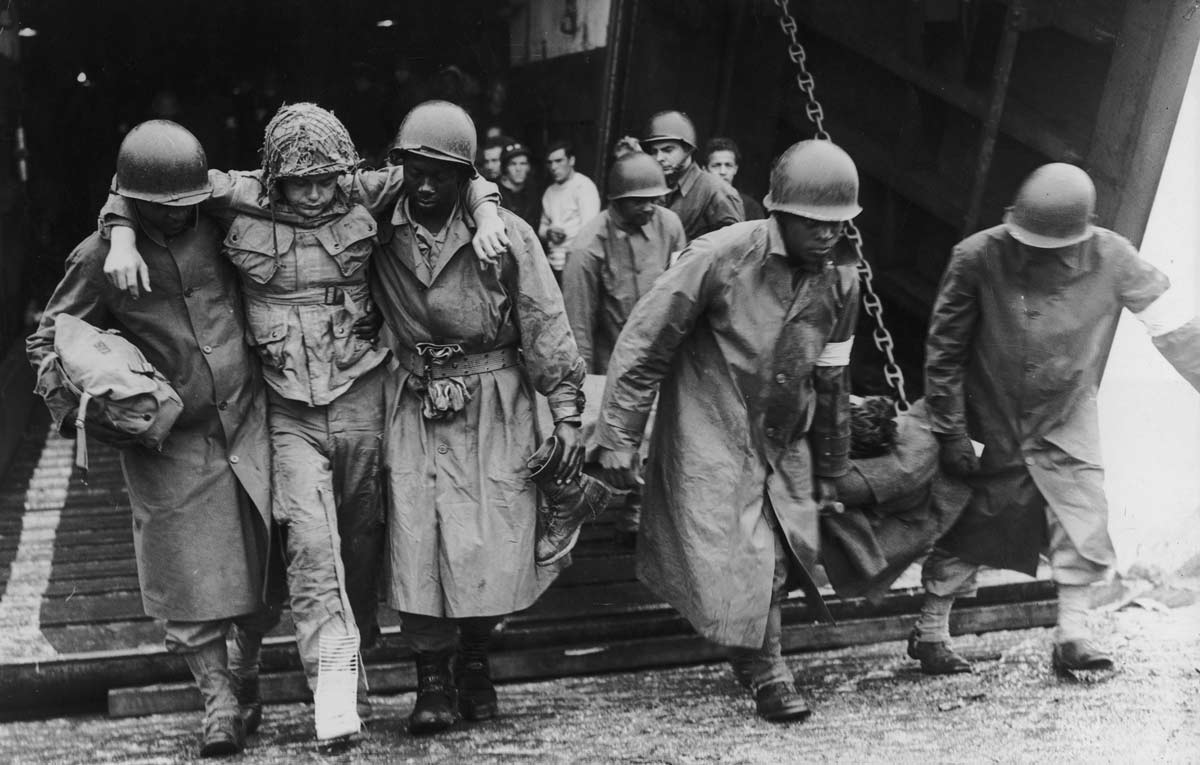
Approximately 2,000 Black troops participated in Operation Overlord and the full Battle of Normandy that lasted until August 1944. Relegated to service units, they moved supplies (e.g., Red Ball Express), built bridges, and dug graves for the fallen.
Of the 9,387 military personnel laid to rest at Normandy American Cemetery in Colleville-sur-Mer, France, 135 are African-Americans men, three are women, and five are listed on the Wall of the Missing.

Shown here, 6668th Photo (6668th Quartermaster Truck Company, 82nd Airborne Division, (Red Ball Express) Local Identifier: 208-AA-32P-3, National Archives Identifier: 535533) Only one Black combat unit, the 621 member 320th Barrage Balloon Battalion, landed on D-Day.


Only one Black combat unit, the 621 member 320th Barrage Balloon Battalion, landed on D-Day at Omaha and Utah Beaches. Three soldiers from that unit died on June 6, Cpls. Brooks Stith from North Carolina, Henry Harris originally from Pennsylvania, and Private James L. Simmons, of Upper Marlboro, Maryland. Brooks and Stith are buried at Normandy and Simmons is buried at Mt. Carmel Cemetery, Upper Marlboro.


A July 1944 Afro American Newspaper reported on the death of Simmons, who arrived in France in December 1943. Three days before he died, he wrote to his family, “The way things are going now, it won’t be long before I’ll be going home.”


At 22 years old, Sgt. Willie Leroy Collins from Macon, Georgia, also died on June 6, 1944. He served with the 490th Port Battalion. He was killed by German artillery while unloading cargo onto Utah Beach. He was the only reported D-Day casualty from his unit.

Beyond D-Day
Planning for the catalytic D-Day battle began several years prior, and in December 1943 the engagement strategy developed into Operation Overlord that lasted until June 30, 1944. However, the full Battle of Normandy did not end until August 1944 with the liberation of Paris.


The war in the European Theater of Operations ended with Germany’s surrender on May 8, 1945. According to the Department of Defense, between June 1944 and May 8, 1945, there were 552,117 U.S. casualties in the European Theater of Operations with 104,812 killed in action. Some of these deaths occurred in segregated units that constructed and repaired roads, airfields and bridges.


The 364th Engineer Service Regiment has five members buried at Normandy who died from July-August 1944: PFC Earlie Carothers, 25, of Mississippi, July 7; Sgt. Melvin Jones, 22, of Georgia, July 8; PFC William L. Ryerson, 24, of New York, July 7; Cpl. General U. Walker, 25, of Florida, July 7; and Master Sgt. James W. Kersh, of Tennessee, Aug. 11.


The only Black officer buried at Normandy is Second Lt. Eddie May. He was originally from Mississippi and joined the Army in Wisconsin and served with the 1349th General Service Regiment. In 1942 he graduated from Beloit College and Beloit refers to him as one of the finest athletes in World War II. In 1964 Beloit inducted him into the Hall of Honor.
Also buried at Normandy is one Black Merchant Marine, Mess Steward Earlie J. Gabriel, and several Navy personnel. Two days after D-Day, Clarence N. Copeland was killed. He was a Navy Steward’s Mate Second Class from Jersey City, Hudson County, New Jersey. Copeland was assigned to the USS Rich that sank from hitting an underwater mine and a follow-on attack by the Germans.


In July, 1945, three Black women from the 6888th Central Postal Directory Battalion lost their lives in a vehicular accident, Sgt. Delores Brown and Private Mary Barlow, of Connecticut, and Private Mary Bankston, New York. Barlow and Bankston were members of the 6888th’s entertainment troupe that performed two months earlier at a show hosted by the Birmingham, England Hospitality Committee. Unlike other troops buried at Normandy under combat conditions (i.e., mattress covers, parachutes, tentage, or similar materials), these women were buried in their military service dress uniforms. The 6888th’s commander, Maj. Charity Adams collected funds to ensure burial in a casket built by German prisoners. Like other wartime interments, initially, the women were buried at another location, and with their families’ consent, relocated to Normandy American Cemetery in 1948.
On March 14, 2022, President Biden recognized the 6888th’s service with the nation’s highest honor, a Congressional Gold Medal.


Normandy’s Wall of the Missing bears 1,557 names, and three are from the segregated 364th Engineer Service Regiment who died on July 7, 1944: PFC Sylvester D. Haggins, New York; PFC Mack Homer, Georgia; and Tech 5 Daniel Wyatt, Louisiana. Two other names of Black troops appear on the wall: Tech 5 Reese G. Boone from North Carolina, 514th Port Battalion and TSGT Raymond Heads, Texas of the 3688th Quartermaster Truck Company.


As we honor the fallen on Memorial Day and commemorate the 80th Anniversary of D-day, I hope that we continue to honor the service and sacrifice of the thousands of troops who are missing or resting in hallowed grounds away from their loved ones.