Home Blog Page 156

Black Male Teachers’ powerful impact on Black male students

0

By Nayaba Arinde
Editor-at-Large

Reports say that Black male students who have Black male teachers– are usually able to relate and engage at deeper levels than other teachers.
“All Black boys grow up to be Black men, and Black teachers show them that representation which is counter to what the general narrative is,” former Boys and Girls principal Bernard Gassaway told Our Time Press.


In a city with 1.1 million school children, the majority of which are Black and Brown, there is an outrageously small number of Black teachers.
This is a city charged by some with having the most reported segregated school system in the country.


Chalkbeat noted last year that “Black students make up around a quarter of the city’s more than one million public-school pupils. However, Black instructors are disproportionately underrepresented among the faculty who teach them… Only 19% of educators in New York City’s public schools are Black—and only 4% of the city’s educators are Black men.”
A 20-year New York City educator, Sam Adewumi retired from his alma mater, Brooklyn Technical High School, where he worked as a teacher for 12 years.
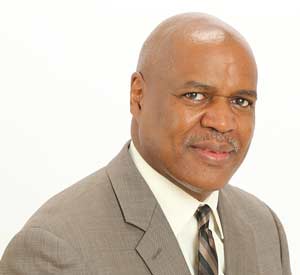
former Boys and Girls principal Bernard Gassaway


“Absolutely, I think Black male teachers are essential in our schools,” he told Our Time Press. “Especially in light of the number of students that I’ve had – depending on how we carry ourselves, we are seen as father figures, and even those who are not, I think they play a role in recreating a narrative regarding who Black men really are. So that students can see from an early age Black men standing strong and being responsible, respected, giving, strong, and representing love. So, they can see from their own experience what Black men are contributing to this country.”


A former middle-school student bumped into him while shopping one day and told him how he had motivated him to go to high school and college and go on to get his master’s degree. He went on to teach math and science just like Adewumi, and now, “this year he opened his early childcare center, and he said, ‘This is because of you.’ I inspired him,” Adewumi said quietly but obviously touched.


EduColor is an organization co-founded by Jose Vilson, who says that its raison d’etre “advocates nationwide on issues of educational equity, agency, and justice.”
Educolor said, “In recent years, our country has seen a larger demand for educators of color in our K-12 classrooms. As our public-school student body becomes more racially diverse (more than 50% of all public school students identify as students of color), our public school teaching staff is still predominantly white with few signs of budging.”


Recent research, says the organization, shows that, even though “teachers of color are being recruited at the highest rate since this measure was recorded in the 1980s, teachers of color are leaving much faster than their white counterparts. Recruitment and retention are levers for the development of the teaching profession for teachers of color.”


Dr. Bernard Gassaway was with the Department of Education for 24 years, the principal at Boys and Girls High School for five years, and taught there first for three years.


Now working as a consultant, coach, and teaching an education leadership course, he told Our Time Press, “I think it is important for Black boys in particular – as well as girls – to see positive role models to inspire them to see what they can become. It provides them with someone to whom they can relate on many levels, including empathy and understanding. One of my goals was to help Black boys navigate the difficult experiences they are likely to face by just being Black and male.


When it comes to Black teachers, unfortunately, the system doesn’t promote Black masculinity in terms of–they don’t want to promote the Black man as being a strong pillar of the community. Young Black men need to see someone who understands what they may be going through.”


A response he said he would get when he would attempt to discipline a student was “‘You are not my father,’ expressing that they did not have one in their lives, but they really wanted one. Many Black boys respected my strength as a leader.”


Not complaining, just stating, Gassaway told Our Time Press, “It is not easy being a Black male teacher because there’s not many of us, and there is strength in numbers, which would be even greater if they were unified. That’s the last thing they want – unity. It is feared. Look at the Black Panthers. Look at the Nation of Islam. In the school system, they have the Hidden Curriculum when the teacher closes the door and teaches what they really want to be taught–not the Explicit Curriculum like Christopher Columbus discovered America.”


“We need Black male teachers who are conscientious. We need strong Black men leading the family and the community. That is what we want and what we need.”


Retiring last year, math, engineering, and computer science teacher Sam Adewumi is still influencing students to make the best of their academic best with his after-school, weekend, and summer school CASPrep – Creativity, Activity, Service tutoring program. It teaches first through sixth graders academic fundamentals and prepares seventh and rising eighth-grade students for the Specialized High School Admission Test.


“We are taking students to the highest level in their educational experience in math and ELA,” he said. “We cater to the whole child by adding culture and creativity, financial literacy, business development, and entrepreneurship.
For more information, contact Casprep1@gmail.com
40 Acres Given to 1200 Former Chattel Slaves, Then Taken Away

By Mary Alice Miller
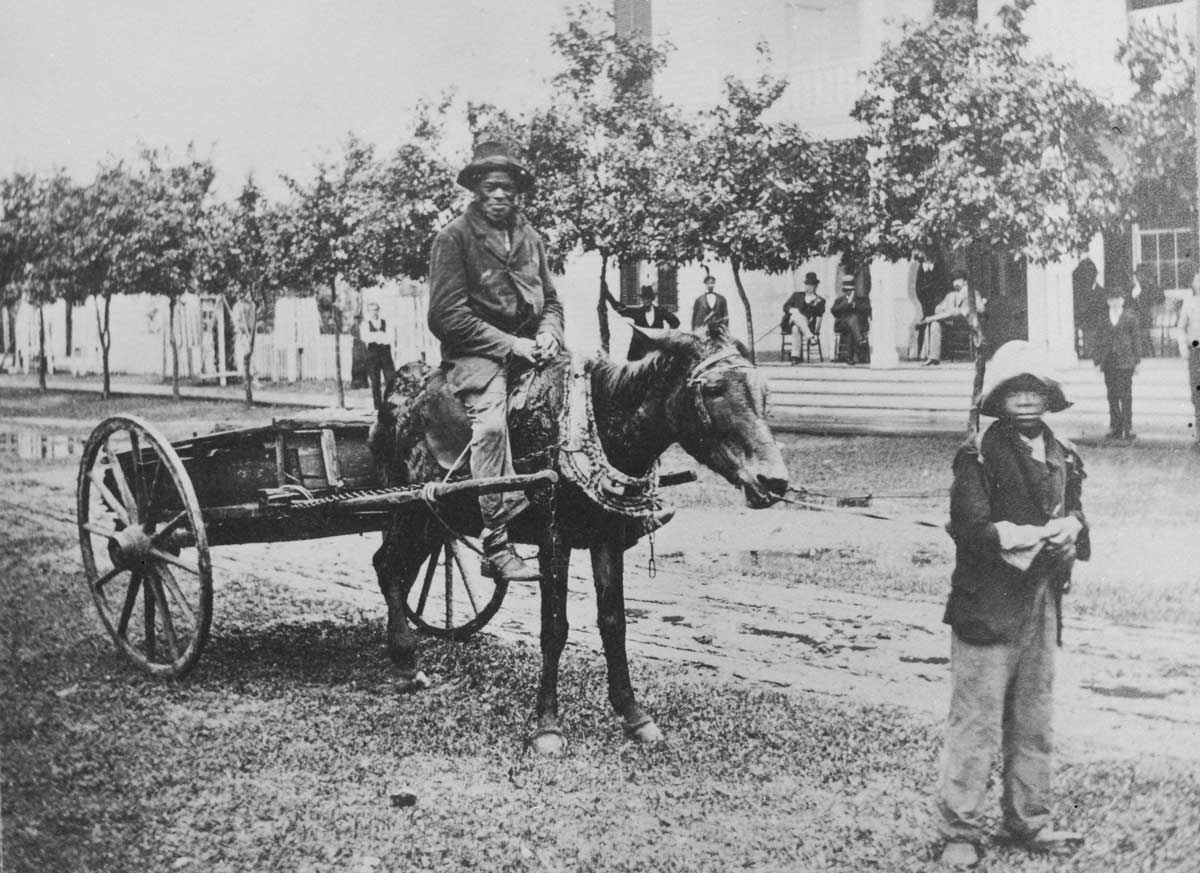
Most Black Americans have heard that after the Civil War, former chattel slaves were promised 40 acres and a mule, this country’s first attempt at reparations. As far as we knew, none ever received the land. It was yet another among a long line of broken promises to make good on 244 years of the brutal chattel slavery system.


New research from the Center for Public Integrity has found that upwards of 1,200 or more former chattel slaves did receive acreage, which was promptly taken away. Hundreds of titles for specific plots of land between 4 and 40 acres in size were uncovered and found among more than one million Freedman’s Bureau records.


Freedmen and women built houses on the land, farmed it, and established local governments.
After President Abraham Lincoln was assassinated, his successor, President Andrew Johnson, stripped the property from those formerly enslaved people and returned it to their former slave owners.


Investigators at the Center for Public Integrity conducted research for two and a half years and identified 1,250 Black men and women who had been granted land as reparations after the Civil War.


On January 16, 1865, Union General William T. Sherman issued Special Field Order No. 15, an edict that set aside coastal land in South Carolina, Georgia, and northeastern Florida for former enslaved men and women to work, live on, and govern themselves. A group of Savannah, Georgia Black ministers persuaded Sherman to issue the edict.


The land pledge from Sherman would become known as “40 Acres and a Mule.” The Freedmen and women were not promised a mule, although some did receive one.


Sherman’s Special Edict stated that the islands and coastland of Georgia, South Carolina, and northeastern Florida were to be for exclusive “settlement of the negroes now made free by the acts of war.” It granted the head of each family up to 40 acres of land on seized or abandoned plantations. It gave them military protection “until such time as they can protect themselves, or until Congress shall regulate their title.”


Further, the Special Edict stated that “in the settlements hereafter to be established, no white person whatever, unless military officers and soldiers detailed for duty, will be permitted to reside; and the sole and exclusive management of affairs will be left to the freed people themselves.”


Sherman later explained in his memoirs that he had not necessarily intended that the Freedman and women had rights to the land indefinitely, but at least through the end of the war and until federal officials took more permanent measures.


During the early Spring of 1865, President Abraham Lincoln hedged against the broad reach of Sherman’s edict when he signed into law a bill stating that Black families could rent their chosen plot of land for three years, with the option to buy them. That same bill created the Freedman’s Bureau, an agency charged with coordinating services – temporary housing, food, healthcare, education, and work – for the 3 million formerly enslaved people residing in the United States.


Lincoln’s first vice president (1861-1865) was abolitionist Hannibal Hamlin, who advocated for the arming of Black Americans. Andrew Johnson, a known drunk and senator from a Confederate state (Tennessee), was elected Lincoln’s second vice president. Both Lincoln and Johnson supported national unity and the return of seceded states to the Union, but Johnson did not favor federal protection for freed former enslaved people.


One month after Lincoln signed the bill creating the Freedman’s Bureau, he was assassinated.
As president, Johnson opposed the 14th Amendment that gave newly emancipated freedmen and women citizenship rights and believed Black suffrage should be addressed under States’ Rights. He supported the Southern Black Codes, which bound freedmen to work on their former plantations and subjected them to arrest for loitering and vagrancy, with renting out their labor as punishment.

Johnson vetoed the Congressional extension of the Freedman’s Bureau and every Congressional bill that sought to treat formerly enslaved people fairly, including the Civil Rights Act of 1866 and the First Reconstruction Act. Congress systematically overrode almost all of Johnson’s vetoes. Johnson’s efforts to circumvent Congress’s intent to address the rights of Freedmen and the position of former Confederate states led to 11 Articles of Impeachment against him, which Johnson survived in the Senate by one vote.


By June of that year, about 40,000 Black people had settled on land set aside for them under Sherman’s edict. A year and a half later, almost all the land had been taken back.


The land titles were first discovered in 2021, part of records created by the now defunct U.S. Bureau of Refugees, Freedman, and Abandoned Lands. These records were digitized within the last ten years, an effort that resulted from the Freedmen’s Bureau Preservation Act passed by Congress in 2000.


The initial discovery of land titles was found in a digitized roll of microfilm labeled “Unbound Miscellaneous Records.”
The discovered land titles covered over 24,000 acres on 34 plantations seized by the Union Army from Confederate landowners, just part of the land holdings distributed under Sherman.
Some of these land titles have been known to exist among the National Archives paper records since 1991, and one has been featured on the National Archives website since 2007.

The paper records led historian Karen Cook Bell to write “Claiming Freedom: Race, Kinship, and Land in Nineteenth-Century Georgia” (2018), in which Cook Bell identified nearly 400 formerly enslaved men and women who had received land titles in Georgia.


The Center for Public Integrity used the land titles to conduct genealogical research to find what happened to the descendants of the 1,250 Freedmen and women in the one-and-a-half centuries since Sherman’s edict. Of those who could be placed in about 100 family trees, 41 living descendants were found.


It should come as a surprise to no one that the lands titled to Freedmen and women, then taken away, are now developed into affluent communities owned by white people.

CEO Steven A. Williams Leads WBGO’s 45th Anniversary of Jazz

0

Fern Gillespie
“At WBGO, you have a fiercely loyal group of listeners. It’s been that way for a long time,” Williams, a former Bed Stuy resident, told Our Time Press. “WBGO is fully independent. It’s a public radio station and doesn’t really have any corporate obligations.


Every year, listeners give about $2 million to support this radio station. That’s about half of our total revenue. If you think that over time, tens of thousands of people have given money to keep this radio station on the air. They have a vested interest in its survival.” In addition, the station is supported by government grants, corporate sponsors, and philanthropic foundations.


Music is part of the family legacy of Steven A. Williams, President and CEO of WBGO “Jazz 88.” Growing up in Cincinnati as a teen in the 1970s, he was surrounded by his father, grandfather, and cousins, who all worked as singers or managers in R&B. By age 15, Williams entered a radio production program. As fast as you can say the 1970s radio sitcom hit “Cincinnati WKRP,” he became hooked on a radio career that remains almost 50 years later.


Williams’ radio career has spanned over 20 jobs, including WBGO Director of Programming, WAMU Managing Producer, CBS radio producer, Michael, Eric Dyson Senior Producer, Sirius XM Jazz Manager, and New York’s CD-101 Program Director. He’s worked in Detroit, Washington DC, Philadelphia, Denver, San Francisco, New York City and Seattle. For the last four years, he’s been heading WBGO in Newark, where the station is a cultural fixture and celebrating its 45th Anniversary as Jazz 88.


WBGO has over 300,000 listeners in the New York metropolitan area and between 50,000 and 100,000 listeners globally online. As a content provider to NPR, WBGO reaches millions of listeners nationwide. The station hosts award-winning concerts, education, and news programming. It produces popular programs such as Felix Hernández’s Rhythm Revue, Jazz Night in America, produced in partnership with NPR, Jazz at Lincoln Center, and Pat Prescott’s Favorite Things.


Even though WBGO has a racially diverse constituency, Williams pointed out that the core of its audience is Black listeners. “It’s the segment of our audience that drives the station’s longevity and popularity.


“And, of course, we play music that is derived from the Black American experience,” he explained. “Another remarkable story in broadcasting is WBLS. It is a legacy station, just like WBGO. It’s been formatted for Black people for its entire existence, and that’s part of its success. It’s astonishing in a city of 10 million people – three million of those people are people of color — Black folks — there are only three Black radio stations amongst 60 or so signals that serve Black folks. It’s WBGO, the new station called the Block and WBLS.”


While New Orleans is the first city for jazz, New York is the second largest city for jazz aficionados. Still, there’s historically been an argument about the state and survival of jazz music. “Jazz has been amongst us and played listen to for over 100 years. Nothing stays around for 100 years that’s not valid and doesn’t mean anything to the world,” said Williams, a nationally recognized expert in jazz programming.

“There’s more commerciality that exists with jazz than any other form of music in this world. There are very strong, foundational artistic ideals that jazz represents. They are social and even political ideals that jazz represents. For anyone that says that jazz is dead or jazz is not valid, I have to disagree. Jazz is very much alive.”


At WBGO, there is a link to the next generation of jazz artists and listeners, from Millennials to Gen Z. This is especially true for young musicians who are in high school and college. “The secret of longevity is the tap into what I call the youthful vigor of this music and institutions,” said Williams. “WBGO celebrates Jazz Appreciation Month and invites student musicians to come in and then they play the music on the WBGO airwaves.”


Another young jazz marketing tool is the WBGO podcasts. “Podcasts have been a marvelous vehicle for reaching younger audiences. They don’t necessarily listen to radio the way that previous generations listened to radio,” he said.


Through podcasts and radio streaming, WBGO is an international site for jazz. “WBGO has more listeners around the world than any other jazz radio station on the planet,” he said. “There’s every single continent across the globe. I recently got a letter from a listener in Antarctica. I have a map that monitors real-time, listening and streaming across the globe.”
The WBGO 45th Anniversary celebrations have already happened in Newark and Brooklyn, and upcoming events are scheduled throughout the year. “WBGO has been one of the most rewarding career and personal experiences in my 60-plus years on this planet,” said Williams. “WBGO is something special. I feel honored.”

Saying a final goodbye to Willie Mays, baseball’s ‘Say hey kid’

By Lincoln Mitchell , School of International and Public Affairs, Columbia UniversityTheconversation.com

In 1959, when Soviet Premier Nikita Khruschev visited San Francisco and members of the International Longshoreman’s Union greeted him with cheers, newspaperman Frank Coniff quipped: “This is the damndest city. They cheer Khruschev and boo Willie Mays.”
It was the height of the Cold War and, for Coniff and many of his readers, there was no better symbol of America than Mays. At that time, Mays was a 28-year-old centerfielder for the San Francisco Giants and the best ballplayer in the world, and he was occasionally booed by fans of his own team.


A decade before that, Mays was playing for the Birmingham Black Barons, a Negro League team near his hometown of Westfield, Alabama, while still in high school.


Mays, who died on June 18, 2024, at the age of 93, was not only the greatest baseball player of the last 80 years, and quite possibly ever, but he was an enormously important figure in American sports, culture and history. His journey from the segregated Deep South of his childhood to being honored by President Barack Obama with the Presidential Medal of Freedom spans much of America’s racial history in the 20th and early 21st century.


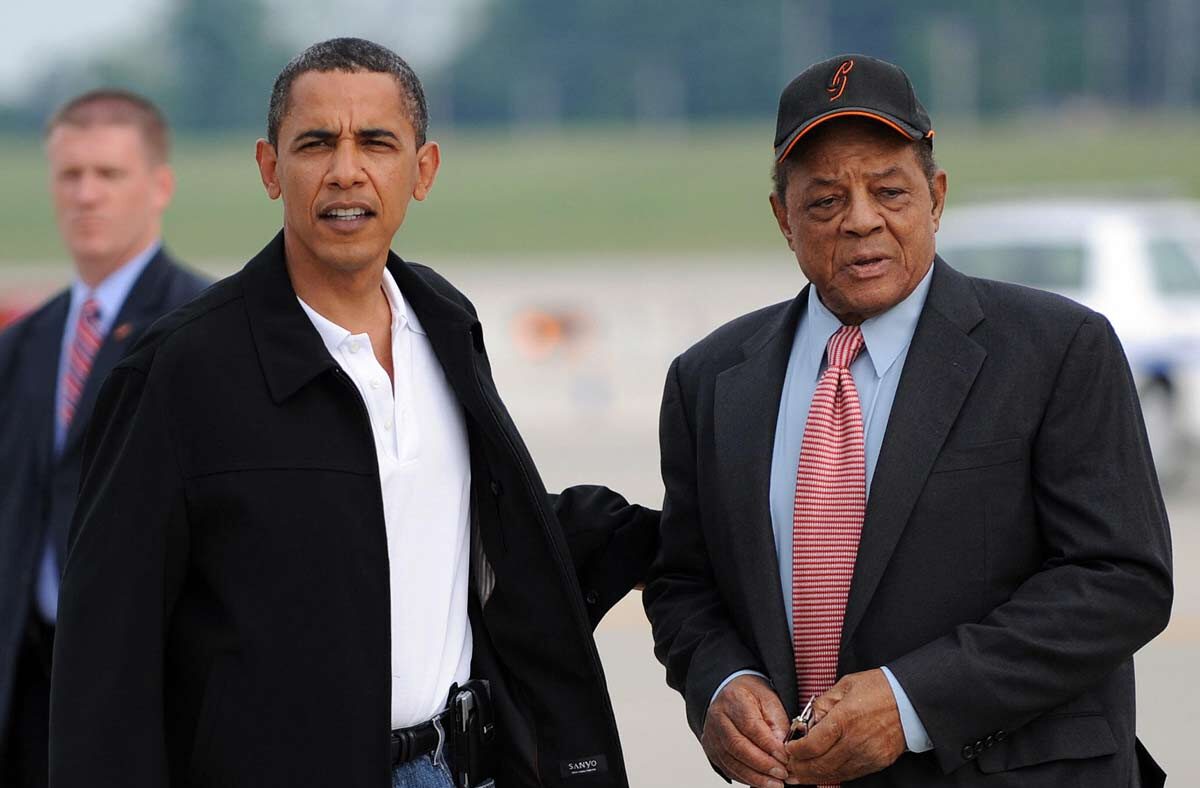
In 2009, Mays traveled to the All-Star Game, in which he had played a record 24 times (from 1959-1962 there were two All-Star Games a year), on Air Force One, where he told a rapt and smiling President Obama how much it meant to him after “growing up in Birmingham” to see an African American elected president.


Mays repeated several times how proud he was of Obama. The president responded, “If it hadn’t been for folks like you and Jackie (Robinson), I’m not sure I would have ever got elected to the White House.”


‘Racism and racial epithets’
Mays began his career with the New York Giants in 1951, four years after Jackie Robinson played his first game with the Brooklyn Dodgers. He became known as the “Say Hey Kid” because of his youth, exuberant style of play and habit of greeting people with the phrase, “Say Hey.”


In those years, the integration of the National and American Leagues was still in its earliest stages. There was an informal rule limiting each team to no more than three non-white players. Many teams, including the Yankees and the Red Sox, were still entirely white.
Although the Giants played on the northern edge of Harlem, where Mays lived early in his career and was widely beloved, when the team traveled to more southern cities and during spring training in Florida, Mays was subject to the same racism and racial epithets as Robinson.


The centrality of baseball to American culture during this period made Mays even more significant. This was still a time when baseball players were by far the most recognized athletes in the U.S. and when much of the country tuned in to the World Series every fall.
By the late 1950s, Mays was, along with Mickey Mantle, the most famous ballplayer in America.

For decades it has not been unusual for African American athletes to be broadly admired, but Mays was the first. Mays’ appeal to all fans was not just due to how good a player he was, but also the panache with which he played the game, wowing fans with basket catches and daring base running, as well as a public personality that was outgoing and friendly.
Robinson was a trailblazer and a unique figure in American history, but Mays’ impact on the culture was broader and at least as important.


Frank Guridy, a professor of African American and African Diaspora Studies at Columbia University, summed this up: “Mays was this Black mega-superstar in this country who was somehow able to transcend his background as somebody from the Jim Crow South to become appealing to white America. He was able to be Black and represent the Black intervention in the sport, while maintaining a regal stature that is appealing to all people.”

During the 1960s, when Mays was the best and most famous baseball player in the world, he was criticized by some for not being radical or outspoken enough. That criticism seems a bit unfair now.


Unlike many other great African American athletes of the era, like Bill Russell, Tommie Smith, John Carlos, Wilt Chamberlain, Jim Brown or Robinson, Mays was a product of the Deep South and, on some level, carried that trauma with him.


It is often overlooked that, for the last decade or so of his career, he was deeply respected by almost all African American baseball players because of his ability and his role as an early trailblazer. As the best player, with the most seniority, on the San Francisco Giants in the 1960s, he set a tone and kept the peace in what was then by far the most diverse clubhouse in baseball.

Because Mays played in San Francisco for the Giants from 1958 until he was traded to the Mets, and back to New York, during the 1972 season, his off-the-field activities did not always receive the attention they deserved. However, for decades he worked with youth in San Francisco’s Bayview-Hunters Point community, a largely African American neighborhood where Candlestick Park was located.


Transcending racist history
Mays, who played his last game during the 1973 World Series, was a baseball star at the very end of the period when baseball was a massively important cultural institution, and at a time when baseball led the country on civil rights and integration.


His extraordinary statistical accomplishments speak for themselves, but the grace, joy, energy and intellect with which he played the game allowed him to separate himself from other great players of his, or any, era.


Mays’ death is not only a loss for baseball, but for all of America. Willie Mays is a reminder of what America can produce and how there is always hope that the country can transcend its ugly racial history and embrace a graceful, talented and proud African American man as a uniquely important national hero.

Tributes to Willie Mays

“Willie Mays wasn’t just a singular athlete, blessed with an unmatched combination of grace, skill and power,” Obama wrote in a statement posted Tuesday evening on social platform X. “He was also a wonderfully warm and generous person – and an inspiration to an entire generation.
“I’m lucky to have spent time with him over the years, and Michelle and I send our deepest condolences to his family.”
“From his professional debut with the Birmingham Black Barons at age 17 through his 24 All-Star Games to his Hall of Fame induction in 1979, Willie’s skill on the field and impact off it elevated him to a stature that was larger than life.” — Tony Clark, MLB Players Association Executive Director Tony Clark.


“Best player I’ve ever seen. Greatest player. … he was an extraordinarily good five-tool player. You’d go to a game and he would do something. Whether it would be a great catch, a great throw, a stolen base, hit a home run or he’d do them all. He was just that kind of player. … What always came off was that he was the ‘Say Hey Kid.’ He had that ebullient personality. Infectious and genuine, and I got to tell him he was the greatest player I ever saw.” — Former player Keith Hernandez.


“I am beyond devastated and overcome with emotion. I have no words to describe what you mean to me- you helped shape me to be who I am today. “Thank you for being my Godfather and always being there. Give my dad a hug for me. Rest in peace Willie, I love you forever. #SayHey.” Barry Bonds, Godson of Willie Mays


“We have no idea what these guys have been through…To try to be great at a sport, and then deal with all the racial strife that these guys had to deal with, that’s what makes them heroes.” Charles Barkley


“My father has passed away peacefully and among loved ones,” said Michael Mays. “I want to thank you all from the bottom of my broken heart for the unwavering love you have shown him over the years. You have been his life’s blood.”
Barry Bonds said, “I am beyond devastated and overcome with emotion. I have no words to describe what you mean to me- you helped shape me to be who I am today. Thank you for being my Godfather and always being there. Give my dad a hug for me. Rest in peace Willie, I love you forever. #SayHey


“Like so many others in my neighborhood and around the country, when I played Little League, I wanted to play center field because of Willie Mays,” President Biden said in a statement. “It was a rite of passage to practice his basket catches, daring steals, and command at the plate — only to be told by coaches to cut it out because no one can do what Willie Mays could do.”


Mays was “more than just a baseball icon,” California Governor Gavin Newsom said.
“He broke barriers and inspired millions of Americans – setting records, bringing joy to countless fans, and becoming a role model for a generation of future athletes.”
I’m sure going to miss him, we all are,’’ says Baker. “He had this big old golf ball muscle in his hands. He and Hank Aaron both. Strong handshake. He was something, wasn’t he?’’ Dusty Baker


Mays was a “true Giant on and off the field”, “All of Major League Baseball is in mourning today as we are gathered at the very ballpark where a career and a legacy like no other began,” said. “Willie Mays took his all-around brilliance from the Birmingham Black Barons of the Negro American League to the historic Giants franchise. From coast to coast … Willie inspired generations of players and fans as the game grew and truly earned its place as our National Pastime.” Rob Manfred, MLB Commissioner


He told me, ‘don’t ever play this game in fear. If there’s a ball hit over your head in center field, don’t worry about that wall young man, go get it’. It was just that confidence he talked with.
“The confidence in which he spoke, the passion in which he spoke, he loved this game. This was his life. From a young boy to his dying days, he represented baseball with the utmost respect. I think he’s one of the finest men to ever represent this game. We know he’s here for us. Really, we’re here for him. He’s up looking down at us smiling, knowing that we’re celebrating him in a great way.’’
-Adam LaMarque Jones, former pro baseball outfielder and four-time gold glove winner and five-time MLB All-Star

From These Roots: Job Mashariki’s Enduring Leadership

2nd in Series of June Men’s Month Stories

By Marlon Rice
One of my earliest recollections of Baba Job Mashariki is of his staunch discipline. It was the Spring of ‘88 or ‘89, and I was in his living room with his sons and a couple of other friends watching Wrestlemania. We were doing what young boys do at that age, watching wrestling and having a ball, when in walks Baba Job from the front door.

He walked into his living room, saw a half dozen boys watching television and horsing around, and spoke in a tone that was as simple as it was definitive.
“It’s time for you to go home.”
Nothing more had to be said. It was time for us to go home.

Maybe a year or so later, I accompanied Black Veterans for Social Justice down to Washington, DC, for a rally. I can’t remember what the rally was for, but again, it was a group of us boys – his sons, myself, and a couple of other boys from the neighborhood. We were maybe 14 or 15 at this time. I can remember that when the bus pulled into its parking space, everyone went silent as Baba Job levied instructions. Another elder came to the back of the bus and gave me and the other boys these earpieces.

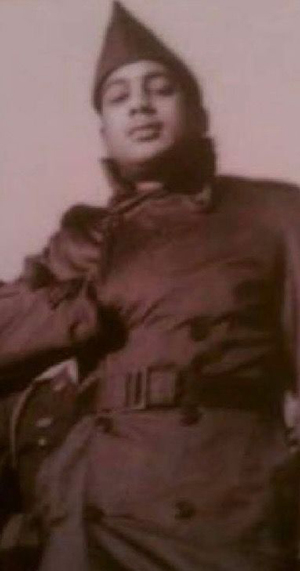
Job Mashariki, 20, at a USAG Army Base in Hanau, Germany, 1963.

We were told that our responsibility was security. I hadn’t thought about being responsible for this road trip; I was just going because my friends were going. But, by the time I got off that bus I had a very real responsibility and a mode of how I was to operate that day.


35 years later, I find myself sitting on the porch of the man who is a grandfather to my two young children, a man who has been a positive and reaffirming reflection of Black Male Leadership to me for most of my life. Today, though, we share laughs as he tells me about his life and the environment and circumstances that shaped him.


Job Mashariki was born January 16, 1943, in Brooklyn, New York, and lived in the heart of Bedford Stuyvesant, right on Clifton Place. He was the second son and one of seven children by Mardesta Mealing, a progressive-minded woman who actually ran for political office in the 57th District. He remembers his community as diverse and tight-knit,
“Bed Stuy was integrated when I grew up. It was a multi-ethnic community. All different races lived here. We had sports and all kinds of stuff that brought us together. We played together, we worked together. I’m not saying that we wouldn’t fight, but there was a collective framework that we shared.”


That paradigm shifted though in the 50’s and 60’s during the era of White Flight. White Flight is the term used to describe the sudden migration of white families from areas that were racially diverse, and the settling of those families into communities that were more racially homogenous, specifically places called suburbs. Baba Job remembers the feeling of that time,
“I remember when some changes began to take place. White folks started moving away. Then, when they returned to visit family or friends, their attitudes were different. We weren’t connected in the same way. We used to eat at each other’s houses and be together. But, that changed.”

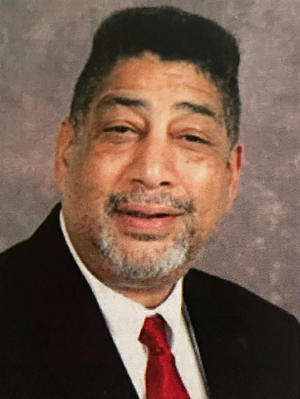
Job Mashariki


A young Job was precocious, and he began to become aware of the disparities that accompany race and class issues in America. He remembers one particular incident from his childhood that sparked questions in him that he would champion as an adult.


“My first understanding of injustice was this Black kid in Brownsville that needed an iron lung. He was sick, and he needed an iron lung to live. He wound up dying because he never got the iron lung. His family didn’t have the money to get the iron lung, but I thought to myself back then that the government had the money to get him the iron lung. Why wouldn’t they do that? Why wouldn’t they provide that for him? It seemed unfair. When I entered the military, it became clear that it was unfair.”


After High School, Baba Job entered the military and was shipped overseas to Germany. And, there, he realized how systemic and unjust racism could be.


“When I went into the military, it became very clear that things were unfair. I would fight with the white soldiers, racist white soldiers, and I would get punished, and the white soldiers wouldn’t. I was very cognizant that a lot of this stuff isn’t just about the individuals, but it was the authorities that enforced racism. My mother ran for political office.

There was always that effort of people trying to work together to bring a more progressive stance. My mother, as poor as we were, she only had two years of college education. But, she came from a family that was very progressive.

That really translated to me. So, in the military, as Blacks, we got together to protect our interests. While I was stationed in Germany, we did some things to raise funds for Dr. King. A meeting was called, and other soldiers were told that they needed to stay away from us because we might be communists because we were raising funds for Dr. King. Of course, they knew that we weren’t communists.

But they used to raise funds for the Salvation Army and for other things, and so what we said was that you put something in there for the Salvation Army, then you can put something in here for Dr. King.”


With a spirit to organize stoked by his upbringing and his experiences in the Armed Forces, Baba Job came home and began applying these sensibilities in his community.


“What I knew was that we need to get young people who are angry, and we need to be able to help them see other paths so that they could express that anger and be productive about it. I would just show up at various meetings, and when I got to talk, I was angry, and so they heard the anger. I went back to school to educate myself and to allow myself opportunities.

Because of my brothers Jitu Weusi and Al Vann, I always stayed with many of those teachers, and they always saw me as being down to teach, but I was more along the lines of Sonny Carson, wanting to organize. I went with them and helped them organize the boycott in Ocean Hill (The Ocean Hill-Brownsville Teachers Strike of 1968). I helped them organize the African-American Teachers Association, which was the Negro Teachers Association.

Vann used to take me around to teachers’ meetings with him. I was also working with Jitu. The East had stepped forward with the young people so I was working over there. I also worked with Yusuf Iman on the cultural piece, and I realized that some of the things his family was putting out there I had to build an understanding because, at that particular point, I had begun to start my own family and how do you deal with family? For this brother, family was all in.”


And while Jitu Weusi and Al Vann were organizing for community control of the schools, Baba Job was coming to the realization of his base.
“I had more of a base because I had gone into the military and had been exposed to the raw racism that exists.”


The positioning of this base and its development started out as a result of a reaction to the killing of Randolph Evans at the hands of Officer Robert Torsney on Thanksgiving Day, 1976.
“I got exposed to Reverend Herbert Daughtery when he was picketing downtown at Abraham and Strauss. Jitu had intersected with him, but this was the first time that I had gotten with him. They were picketing the shooting of Randolph Evans. I went down there and started picketing with them.

So after the picketing, they began holding rallies and discussions at his church, The House of The Lord. One night, Daughtery was talking about people who were considered able to get government help, and when he asked the congregation if anyone knew of anyone who would fall under that consideration, I stood up and said, Yeah, Veterans!

So, what happened from that is that guys that we were working with in The East, or down at Gowanus, or over at the church or with the Black United Front started coming up to me and saying, you’re a veteran?? I’m a veteran, too! We knew one another but didn’t know that we were veterans.

So, after some time organizing these veterans, we decided to have a meeting. We had a meeting down at the East, and we went through the democratic process, and we finally reached the name Black Veterans for Social Justice. There were two of us contending for the leadership position. Me and some other guy that just threw his name in. They elected me. And that’s how it started.”


Black Veterans for Social Justice began its work advocating for veterans in 1977, in a make-shift office on Fulton Street. Baba Job explained how the office came together,
“So, one of the guys, Orlando from the East, owned the building and let us use the space. One of the brothers saw some discarded desks and file cabinets out on Bedford Avenue and Willoughby. He told us, and we went and got it.

We painted it all black, put it in the office and boom, we have an office. And then people started coming to us to discuss their grievances.”


Building an organization from the ground up means creating and implementing a climate of professionalism. And, just like most organizations that start grassroots with the people who are on the ground with you, bad professional habits can creep into the system. Baba Job experienced that in the first days of BVSJ, with employees drinking on the job and random acts of shiftlessness.


“They started drinking and eating lunch in the office, and I had to clear that out. Because I wasn’t doing that stuff. My mother didn’t drink. Even though she had a hard time, she never did that. She maintained herself. So, I never did that. We were dedicated to the work, and I would see how drinking and drugs ruined people both in the movement and in the military. So, I couldn’t accept that. My level of discipline became the organization.

When you come into this place, you have a responsibility to yourself and to your peers to be disciplined, follow instructions, and do what you have to do to keep the organization thriving. You’re the ambassador to the organization. People see the organization through what you do, and you have a responsibility.

Certain policies I put into place to build discipline. Like, if you take off a Monday or a Friday you ain’t getting paid. You aren’t going to party and not handle your responsibilities. Eventually, I had to change that, but even then, you’d have to provide a doctor’s note if you took off a Monday after a weekend.”


Black Veterans for Social Justice recently celebrated its 47th year serving this community. The organization has evolved from strictly veteran advocacy into fighting homelessness through the opening of shelters, job training and placement, and community development. It’s the spirit of discipline and responsibility that Baba Job breathed into the institution that has given it the foundation for the last decades.


It’s the same spirit of discipline and responsibility he instilled in me when I was on that bus in DC as a teen.