Home Blog Page 14

“We Refuse to Be Silent”

Women’s Voices on Justice for Black Men

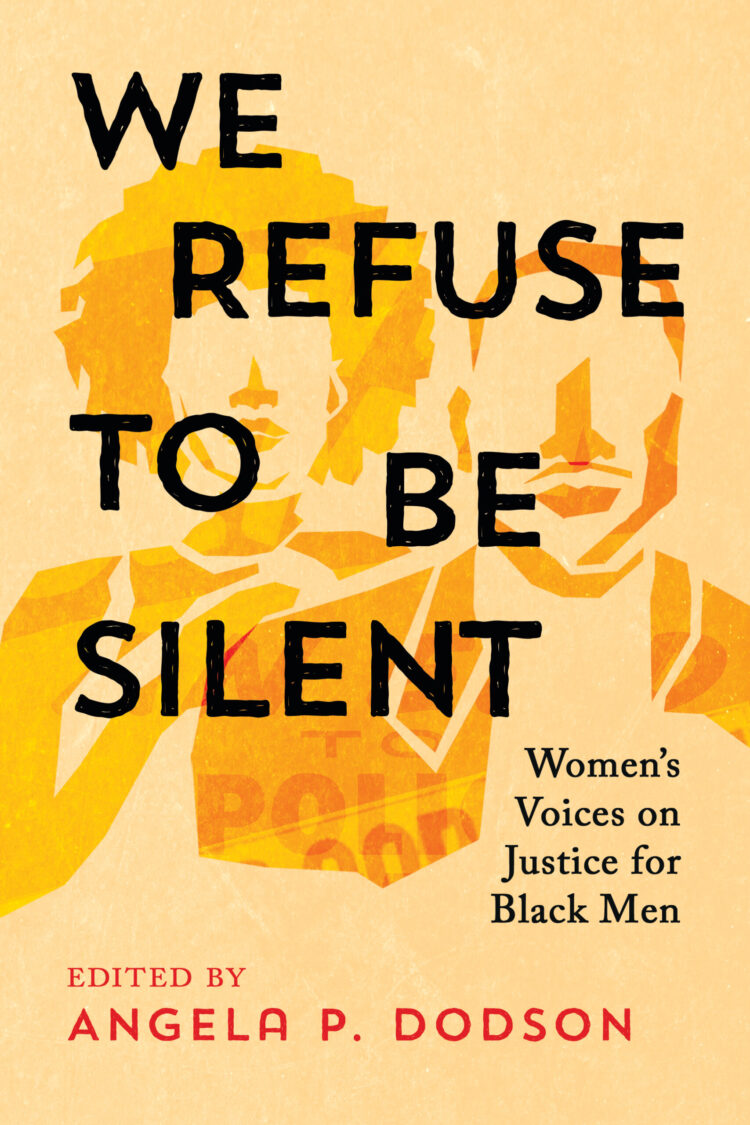
We Refuse to Be Silent: Women’s Voices on Justice for Black Men
Edited by Angela P. Dodson
Broadleaf Books, 33 pages. 2024

“When I think about my son sometimes, I can’t breathe. I can’t allow myself to even visualize him out of the world, moving, just being a young man in America. If I did, I would never let him out of my sight.”
Donna Hill, Author
“A Mother of Suns” in We Refuse to Be Silent


Donna Hill’s fear for her son speaks to the premise of Angela P. Dodson’s edited collection of compelling essays in the book, We Refuse to Be Silent: Women’s Voices on Justice for Black Men (Broadleaf Books, 2024). Dodson’s book contributes to the national conversation on the nature of injustice and the strategies needed to address police brutality, reforms in policy, prison reform, systemic racism, the rise of a police state, and the violent arrests and brutality levied towards Black men and, more recently, immigrants of color in this country. Drawing on essays by 35 women journalists, scholars, psychologists, and ministers, Dodson has compiled a powerful testament that documents Black women’s refusal to remain silent regarding injustice and their responses and analyses of this state of affairs in the United States of America.


The introduction to We Refuse to Be Silent opens with the words “Another Black man, some mother’s son, some woman’s husband, somebody’s brother, some child’s father will die.” “Emotion” and “Activism,” parts one and two of the volume, present essays from writers including Elizabeth Alexander, Donna Brazile, Tananarine Due, Audrey Edwards, Gloria Browne-Marshall, and Isabel Wilkerson, among others.


“The Trayvon Generation.” This is the name that Elizabeth Alexander gives to young people who have grown up in the past 25 years. These are the young people who have been witnesses to the killing of Trayvon Martin, George Floyd, Breonna Taylor, Eric Garner, Tyre Nichols, Sean Bell, and others. The media has inundated them with images and stories of violence and tragic killings in a variety of public spaces.

Alexander advocates immersing our sons in experiences that give them joy and the power of communal self-expression. She provides examples of poets, filmmakers, playwrights, musicians, and artists who have given us ways to express our fears. “We are no longer enslaved. Langston Hughes wrote that we must stand atop the racial mountain ‘free within ourselves’” are the closing lines of her essay.


In “I’m Just Different;’ Disabled at High Risk of Harm by Police,” Dodson recounts the tragic story of Elijah McClain, a twenty-three year old massage therapist and violinist who, while walking home from a convenience store in Aurora, Colorado, is stopped by police officers because someone has called in about seeing a suspicious character. Elijah is wearing a ski mask because he is cold.

When the officers approach him, they put him in a carotid-control while he pleads to them: “ I was just going home. I’m an introvert. I’m just different. That’s all. I’m so sorry. . .” His words are a desperate call from a man who may have mental challenges. Elijah is eventually taken to the hospital and is announced dead as a result of cardiac arrest. An image of his words goes viral on social media, and cam video footage of the officer’s violent actions becomes available.


The response to Elijah highlights the fact that many Black men who are targeted by the police suffer from some form of disability or mental illness. Dodson cites research documenting the fact that up to half of all people killed by police in the United States are disabled and that almost all well-known cases of police brutality involve a person with a disability.


Jackie Jones’s story of her 20 year old son being arrested because of mistaken identity in the essay “Two Tonys: Black Man and Prison,” is a chilling account of what can happen to Black men who do not have the support and resources to turn to when they are subjected to intense interrogation by police officers because they may have the same name as another person. Her son, Anthony P. Jones, narrowly escapes being sent to the penitentiary. Jones’s opening statement, “Every parent of a teenager or young adult fears the phone call in the middle of the night,” will resonate with many mothers.


Keeanga-Yamahtta Taylor in the essay “The Emerging Movement for Police and Prison Abolition,” introduces readers to Mariame Kaba, an educator and organizer whose book We Do This Til We Free Us: Abolitionist Organizing and Transforming Justice provides an overview of the literature on abolitionist politics. Writers in the book advocate that increasing rates of incarceration have a minimal impact on crime rates.

In other words, if there is a mismatch between crime and harm, what is the intent of the criminal justice system? Kaba argues that the criminal justice system is really a “criminal punishment system.” This concept is at the core of abolitionist politics, a concept based on the belief that people can change in changed situations. It is antithetical to the current criminal justice system, which assumes that millions of people require policing, surveillance, containment, and prison.


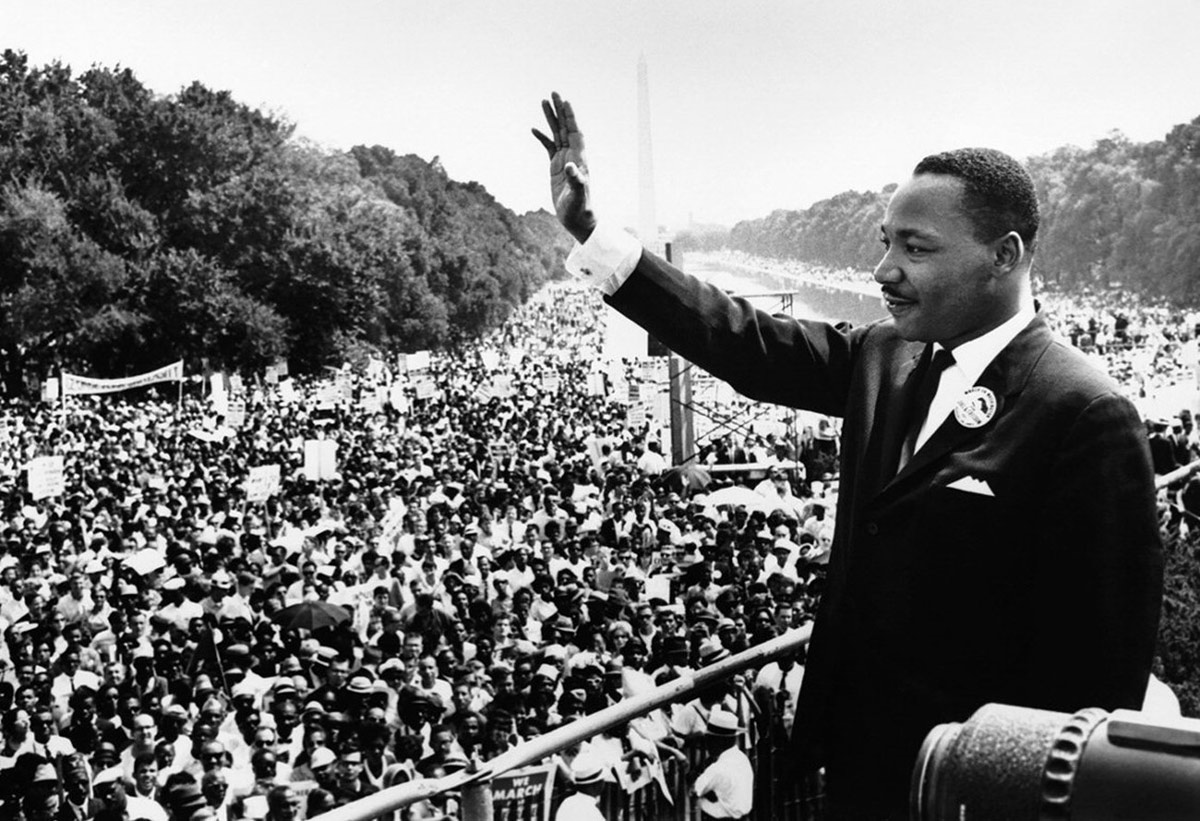
Gloria Browne-Marshall, in her essay “Why They Kill Us,” issues a call to action: “We can heal generational trauma and push back against the murders with litigation, legislation, and protest.” Her statement affirms Rev. Dr. Martin Luther King Jr.’s warning that “Injustice anywhere is a threat to justice everywhere.”
Angela P. Dodson is a journalist, author, a former senior editor for the New York Times, and a former executive editor of Black Issues Book Review.


Dr. Brenda M. Greene is Professor Emeritus and Founder and Executive Director Emeritus of the Center for Black Literature at Medgar Evers College, CUNY. For more information, visit https://www.drbrendamgreene.com

Theatre Icon Woodie King, Jr. Passes

By Fern Gillespie
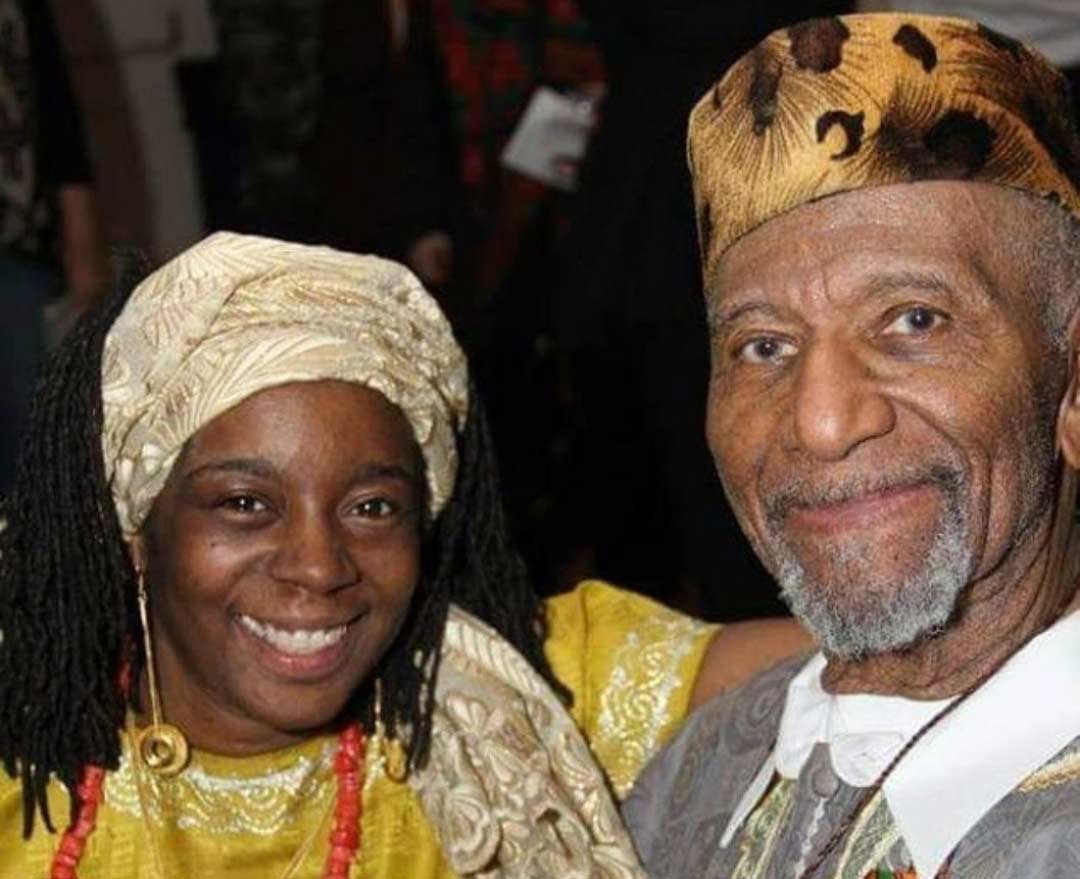
Legendary griot theatre producer-director Woodie King, Jr, The King of Black Theatre, has died at age 88. King’s New Federal Theatre has been at the forefront of producing critically acclaimed plays with social justice themes, for over 50 years. He has mentored actors who are now global stars.

Woodie produced Glynn Turman in his first adult starring role on Broadway in 1974’s “What the Wine Sellers Buy,” produced Ntozake Shange’s “For Colored Girls…” in 1976, and Denzel Washington in his star turn as Malcolm X in the 1981 play “When the Chickens Come Home to Roost.” It was a show that inspired a young Spike Lee, and the rest is cinema history.


Woodie started mentoring Chadwick Boseman when he was a Howard student and produced Boseman’s first starring role in a New York play. Issa Rae worked at New Federal Theatre’s office from 2007 to 2009 as his assistant, where she became inspired her to create “Awkward Black Girl” which became “HBO’s Insecure.” Woodie King’s story is about a legacy that dates back to working with Langston Hughes, producing “Simple” plays, to being a founder of the Black Arts Movement with his friend and colleague Amiri Baraka to creating vital productions that launched the careers of superstars.


“To understand that the 60s and 70s ushered in the Black Arts Movement. Then the Black Arts Movement ushered in the Black Theatre Movement,” King said. “At that time, there was the exception of three or four actors who Hollywood did like, for example Sydney Poitier and Harry Belafonte.

Then the Black Arts Movement started introducing plays that Black people stood in line to see. White people saw that. They said wow we better hire him. That’s what I think happened. The actors we got into television and film had to be brilliant so the more would get in.”


When New Federal Theatre celebrated its 50th Anniversary Gala, the stars were actors with careers spanning span from the 1970s to 2020. Phylicia Rashaad, Glynn Turman and Ted Lange were a few of the stars, The co-hosts were DeWanda Wise, who starred as Brooklyn artist Nola Darling in Spike Lee’s 2019 Netflix series “She’s Gotta Have It,” and her husband, Alano Miller, who starred as Cato in the 2016 WGN award-winning thriller series on slavery “Underground.” “DeWanda was working with New federal theater before “She’s Gotta Have It.”

I directed her in Leslie Lee’s play “Sundown Names and Night-Gone Things” in 2009 and I directed Alonso in a play for the Negro Ensemble Company,” King said. “When you give people their shot and they remember, they come to help. They came out of Black Theatre they give back to Black Theatre.”


Ted Lange first met Woodie King in the early 1970s. An actor, director and screenwriter, Lange kicked off his TV career with 1970s hits “That’s My Mama” and his iconic Isaac in “The Love Boat.” However, he had a long history working in New York and California Black theatre. In 2018, he starred as Elijah Muhammad in the NFT 2018 revival of “When the Chickens Come Home to Roost.” “ Woodie provided the opportunity for Black artists to be Black artists.

He provided the venue and all the things we needed as artists to express our art,” Lange recalled. “When 9-11 happened, Woodie was there with the rest of the theaters producing art for the healing process of New York City. He did maybe 20 play readings. I happened to take part in those readings. At that time, artists responded to the attacks with a healing process.”


Woodie King, Jr.’s New Federal Theatre has produced over 450 mainstage plays, an astonishing and influential record of achievement, sending multiple plays to Broadway and launching numerous minority and women playwrights and actors into prominent careers. Its alumni are an honor roll of artists of color from the 1970s through today. Several early successes brought NFT to national prominence: “Black Girl” by J.e. Franklin, won a Drama Desk Award, “The Taking of Miss Janie” by Ed Bullins moved from NFT to Lincoln Center and won the Drama Critics Circle Award; “For Colored Girls Who Considered Suicide When the Rainbow is Enuf” by Ntozake Shange performed on Broadway for ten months (co-produced with the late Joseph Papp) and was nominated for the Tony Award before embarking on a three-year national tour. Woodie King’s impact has earned him accolades: Tony Honor for Excellence in Theatre, Obie Award for Sustained Achievement, induction into American Theatre Hall of Fame, NAACP Image Award and many Audelco Awards.


The theater and its workshop have helped bring to national attention such playwrights as Ed Bullins, Amiri Baraka, J.e Franklin, Ntozake Shange, David Henry Hwang, Ron Milner, Joseph Lazardi, Damien Leake, Genny Lim, Laurence Holder, Alexis DeVeaux, and others. Actor veterans include Morgan Freeman, Denzel Washington, Debbie Allen, Samuel L. Jackson, Laurence Fishburne, Chadwick Boseman, Robert Downey, Jr., Ruby Dee, Leslie Uggams, Jackée Harry, Phylicia Rashad, Dick Anthony Williams, Glynn Turman, Taurean Blacque, Garrett Morris, Debbie Morgan, Lynn Whitfield, Reginald Vel-Johnson, Vondie Curtis-Hall, Ella Joyce, Starletta DuPois, Issa Rae, S. Epatha Merkerson, Oz Scott, Trazana Beverley, Pauletta Washington, Morgan Freeman, Anna Maria Horsford, Lloyd Richards, Charles Nelson Reilly, Melba Moore, Vinie Burrows, Art McFarland, Kathleen Chalfant, Earle Hyman, Ellen Holly, Giancarlo Esposito, Max Roach, Shauneille Perry and many more.


“New Federal Theatre’s mission is still to provide opportunities for people of color and works by African-Americans and others to be presented and then be produced. New Federal Theater is essential. There aren’t that many avenues for them to develop their work as playwrights and actors,” said Beth Turner, who has covered Black theater in her magazine Black Masks since 1984. “Woodie King has the historical memory of Black theater for the 20th century and on to today. He’s able to call upon those archives in this day and age when it’s hard to be producing new work. This archived work really speaks to Black Americans contribution in theater.”


In addition to New Federal Theatre, Woodie King’s influence in Black theatre spans serving as Chairman of Coalition of Theatres of Color, founder and producer of Black History Month Play Festival, and founder and producer of National Black Touring Circuit. Friends continue to support the work of New Federal Theatre.

Both Denzel Washington and Glynn Turman are New Federal Theatre board members and Turman is a producer of the award-winning documentary “King of Stage: The Woodie King Jr., Story.” Woodie was also an admirer of Our Time Press. Bernice Green, co-founder of the paper, was an active member of the theatre’s board of directors and hosted major events. Staff writer, Fern Gillespie, was a long-time public relations consultant on special theatre projects for Woodie King.


Our Time Press sends condolences to the King family and to Woodie’s widow, actress/director/producer Elizabeth Van Dyke, Artistic Director of New Federal Theatre, who is carrying on his legacy in Black theatre.

#

NYers say Black History Month should be 24/7/365

0

By Nayaba Arinde
Editor-at-Large

“Black History is Everyday,” posted poet Lisa A. Muhammad on social media.
Sean M. Brennan-Byrd doubled down, “I am Black every month, but this month I’m Blackity Black Black.”
In fact, Delvin Lawson of The Pan African Movement stated, “Always remember that’ Black History Month’ is actually Indigenous history.”


Morgan State University Research Professor Ray Winbush posted in red, black, and green writing, “Friendly reminder: Black History month starts on January 1st and ends December 31st.”
Black history–past as in yesterday and before, present, as in today, and creation as in right now. It is fluid.
Writing about, preserving, and representing said past and recent history is one of the main functions of Black journalists.


“With the press under censorship, subject to harassment and arrest, it shows that the Black press is indeed soldiers without swords,” poet and author Marc W. Polite told Our Time Press.
These are crucial times. The government is expanding regulations while reducing social safeguards.
Daily, there are protests against militarized police and federal law enforcement agents in several states.
This, as essential worker nurses spend a third of a week on picket lines in below-freezing temperatures, demanding better pay, a tighter ratio, and security for staff and patients.


“At a time when Black history and Black people are under attack, [we are] returning to some of the lessons we have in our recorded experience in the United States,” Polite continued. “This particular February, Black History Month, turns 100. Initially conceptualized by early 20th-century scholar Carter G. Woodson as Black History Week in February 1926, Black History Month is a time of reflection. The achievements of Black History go far beyond the one month that was created to acknowledge our history. The focus of one month is really for the purpose of correcting the record and fighting the erasure of our collective accomplishments.”


Michael Ferguson, son of famed activist Herman Ferguson, told Our Time Press Black History has particular proactive significance, “It started off as a week, and then the shortest month, and I remember as a school, we only heard about people like Marian Anderson and Ralph Bunche, and half a dozen people.

But you didn’t really get a feel for our contributions and what we have been through to get to this point. It should definitely be celebrated every day of the year. Black nationalists celebrate times like African Liberation Day and Black August, some of the slave rebellions, and every other month, there is something.

We should tell our children, and make them aware of the contributions we have made throughout the year, and just what our history is, and take control of it, rather than the larger society telling us when they are going to allow us to celebrate and commemorate our people.”


A former assistant principal, Herman Ferguson was the Chairman of Education in Malcolm X’s Organization of Afro-American Unity. He was also the Minister of Education, and a lieutenant colonel in the Guyana Defense Force, after his 19 years residing in Guyana, after his conviction for his grassroots activism in the U.S. Yet, he was encouraged to rejoin the community-building in New York by fellow activists Abubadika Sonny Carson and Elombe Brath.


Following his father as a member of the Malcolm X Commemoration Committee, Ferguson added, “My Dad–like the name of his book, ‘The Unlikely Warrior,’ was a revolutionary Black nationalist who was in the liberation struggle, and a devotee of Malcolm X. He was co-chair of the Jericho Movement. He furthered Malcolm’s teachings that we have to control the politics, the economics, and the culture in our communities.”

Black History Month happenings.
With culture-as-a-weapon sentiment, on Eastern Parkway, Saturday, February 7th, 2026, the Brooklyn Museum is launching its First Saturday: Imitate No One exhibition, paying “homage to the innovators—those fearless artists who re-envision tradition while building community along the way.”
Entitled after the late poet Jayne Cortez’s rallying cry to “imitate no one,” on display will be legendary Malian photographer Seydou Keita’s ‘A Tactile Lens’ exhibition.


On Friday, February 20, the Bed-Stuy, Brooklyn-based Asase Yaa Cultural Arts Foundation will kick off its third annual Rhythms & Movements Festival at the BRIC Ballroom, a 9-day celebration of its 25th Anniversary.
With its “Educate, Enrich, and Entertain” mission, ‘An Artivist Experience’ will feature artists like Kweku Sumbry, Immanuel Wilkins, and Joel Ross. Asase Yaa said the concert will be immediately followed by a moderated in-depth conversation with the artists hosted by Chief Ayanda Clarke, to “discuss the intersection of African music, activism, and revolution in today’s world.”


On Wednesday, 4th February, the office of State Assemblymember Stefani Zinerman hosted an Albany to Brooklyn ‘Evening of Black Truth Telling – The Freedom Reading Circle’ district-wide read-aloud session, honoring A Century of Black History Commemorations and defending the right to read, stating, “We read for freedom. We act with purpose.”


In commemoration of Black History Month and the 27th anniversary of the tragic shooting of Amadou Diallo, The People’s Film Festival has announced the screening of “365 Days of Marching: The Amadou Diallo Story,” directed by filmmaker Veronica Keitt.


This screening will take place on Friday, February 13, 2026, at Manhattan Neighborhood Network studios. Keitt said, “The film recounts the heartbreaking story of Amadou Diallo, a 23-year-old immigrant from Guinea who was tragically gunned down in a hail of 41 bullets by four New York City police officers on February 4, 1999. His death became a rallying cry for justice, sparking a year-long movement of marches and protests against racial profiling and police misconduct.”


“At a time of organized reaction and backlash coming from the highest office in the land against Black Americans, this is important to understand,” determined Marc Polite. “When you have armed bodies of men acting at the behest of the current president of the United States, we realize that they are channeling the spirits of slave catchers in their approach to terrorizing people.”


Polite declared, “As many scholars have stated, Black History is American history. Woodson, in his book ‘The Mis-Education of the Negro,’ cautions us against making the observation of our history focused solely on the gaze of others outside our community.


Woodson once wrote: ‘History shows that it does not matter who is in power or what revolutionary forces take over the government, those who have not learned to do for themselves, and have to depend solely on others never obtain any more rights or privileges in the end than they had in the beginning.’”


When Brooklyn manages to dig itself out of these frigid and grimy ice block streets, grassroot activists told Our Time Press that there’s a whole spring and summer of building, protesting, politicking, celebratory cultural and economic reinforcement–from organized rallies, to Dance Africa, African Liberation Day/Month, the International African Arts Festival, the West Indian American Day Carnival, Juneteenth, African American Day Parade, African Day Parade, Black Solidarity, day and then there is the fall and winter traditional observations too.

Donna Hill: Prolific Author of 100 Novels, Heads National Black Writers Conference

0

by Fern Gillespie

When author Donna Hill, Executive Director for the Center for Black Literature at Medgar Evers College, first joined the college in 2012 as a professor, the Brooklyn native already had a reputation as a prolific pioneer in publishing. Her page-turner novels on African American romance were acclaimed for spotlighting Black women as the sheroes of their stories. Since 1990, she has published almost 100 novels telling “her stories” about Black women in romance, mystery, historic and suspense fiction.


“In January 2025, I became the Executive Director for the Center for Black Literature, which hosts the National Black Writers Conference,” Hill told Our Time Press. “I was asked by Dr. Brenda Greene, the founder, who was retiring. She had been my mentor for quite some time. I want to make sure that the Center for Black Literature as well as the National Black Writers Conference continues.”


Renowned Black authors from the African Diaspora will be at Medgar Evers College for the 18th National Black Writers Conference, from March 25 to March 28. The conference theme is “Expanding Conversations on Environmental Justice, Popular Culture, Resilience and Peace.”


This year’s conference kicks off with a panel moderated by Dr. Greene with speakers Nikole Hannah-Jones (“The 1619 Project”) and Michael Harriot (“Black AF History: The UnWhitewashed Story of America”). Some of the other speakers during the conference include: Lee Hawkins (“I am Nobody’s Slave: How Uncovering My Family’s History Set Me Free”) Honoree Fanonne Jeffers, poet and novelist (“The Love Songs of W.E.B. DuBois”), Dr Uche Blackstock (“Legacy: A Black Physician Reckons with Racism in Medicine”), Natalie Baszile (“Queen Sugar”), Dolen Perkins-Valdez (“Wench: A Novel”), Abby West (Amistad Books), and Trymaine Lee (“A Thousand Ways to Die: The True Cost of Violence on Black Life in America”).

The conference also will host a special tribute honoring Camille Dungy (“Soil: The Story of a Black Mother’s Garden”), Kassahun Checole (publisher Africa World Press and The Red Sea Press) and Imani Perry (“South to America”).
“When we look at the theme of the conference, we look at writers and scholars who speak to that topic through their work, speaking engagements, literature, the articles that the write,” said Hill.

The conference also includes Dr. Edith Rock Writing Workshop for Elders, student roundtables and the poetry café.


At the Center for Black Literature at Medgar Evers College, Hill directs year-round literary programs and workshops for children to elders. “The goal is to inform, increase and expand on the work of Black writers across the Diaspora. We choose an absolute variety of programs beyond the National Black Writers Conference.

We have an online book club. We are responsible for the Re-Envisioning Our Lives through Literature (ROLL) program for our young people from primary grades through high school,” said Hill.


“In addition to that, we also have the Wild Seeds Writers Retreat for writers of color. We do that in the winter, and we do that in the summer to bring in aspiring writers to work with seasoned writers over a period of time, one-on-one. While the program in the winter is virtual, the one in the summer is in person and we go to CUNY Polytech for our writer’s retreat.

We partner with local bookstores and host authors at Medgar Evers College. We also have annual Black History Month and Women’s History Month programs.”


During her 36 years in publishing, Hill has observed a growth of Black authors getting their voices and stories to the public through being published by major publishing houses and independent self-publishing. “When I first started writing, it was sort of a new thing and there weren’t many Black writers being published.

Now there are so many Black writers who are writing in a variety of genres from contemporary fiction. There are a lot of historical writers now who are looking at our history from a variety of lenses and rewriting those stories. We have science fiction writers. We have writers who are writing for children,” she said.


“Once the publishing industry realized that this was a market they had ignored, a lot of Black imprints wound up coming up in these major publishing houses. Also, a lot of Black writers publish independently. There’s a lot more opportunities to be to get published and to be seen. There’s a lot more acceptance. Black authors are no longer an anomaly.”


Hill, who holds a creative writing MFA from Goddard College, not only balances three careers as a college executive, adjunct professor of English and creative writing and a moonlighting novelist, she also has her work published by various publishing houses. She’s a longtime author at Harlequin Romance with several different genres of stories. Her two recent novels were historical fiction published by Entangled Publishing.

In November, her novel “Nola and Baldwin” will be published by Amistad Press, the African American imprint at HarperCollins. “Nola and Baldwin,” set in 1930s during the Great Depression, is about a young Black couple fleeing racism in the Mississippi Delta for the North looking for a better life.

The novel is a sweeping saga that also explores Baldwin’s life as a Pullman Porter traveling on the railroad. The novel has been referred to “Their Eyes are Watching God” for a new generation. Nola is inspired by the independence of Zora Neale Hurston’s protagonist Janie.


Hill’s visionary creative fiction focusing on Black women protagonists has resulted in three of her novels being adapted as television films for BET. In the film “Intimate Betrayal” starring Monica Calhoun, Khalil Kain and Erica Gimpel, a reporter investigates the murder of her brother. Vanessa Bell Calloway stars in “A Private Affair” with co-stars Clifton Powell and Lou Myers, about a famous novelist whose life is unraveling.

“Masquerade” is a romantic comedy about online dating co-stars Simbi Kali, Cress Williams, and Kelita Smith. In 2023, her novel “Confessions in B-Flat,” a romance during the Civil Rights Movement era in Harlem, was opted by Oscar winner Octavia Spencer to be adapted for the screen by Amblin Partners.


“I think, romance in general for Black readers and writers, is one of the main forms of literature that showcase the positivity of Black life. It’s not about the struggles and misogyny and tough life of living on the street and drugs, and all that. It’s really about what a great majority of Black folks are, which is essentially middle-class American.

Who are educated, who have jobs, who have struggles like everybody else and are looking for that relationship,” said Hill. “You see these positive Black men and Black women, (and) how we can and do love each other. Of course, we have our struggles and communication issues but, ultimately, it’s about seeing ourselves in a positive light.”

For more information on the National Black Writers Conference, visit www.centerforblackliterature.org.

The Nation Needs MLK Jr.

Last week, Dr. Bernice A. King, CEO of The King Center in Atlanta, Ga., announced a schedule of programs and events in celebration of this year’s King Holiday Observance, commemorating what would have been Dr. Martin Luther King Jr.’s 97th birthday.


The 2026 theme is Mission Possible 2: Building Community, Uniting A Nation — the Nonviolent Way.
Programs and events around the country began Monday, January 12, 2026, and continue through Monday, January 19, 2026.

This year’s schedule includes events being replicated throughout the nation, among them the Beloved Community Global Summit and Youth Summit, Community Children’s Book Reading, Community Teach-In, King Day Community Service Projects, and the Martin Luther King, Jr. Beloved Community Commemorative Service. The observance commemorates what would have been Dr. Martin Luther King, Jr.’s 97th birthday.


“This year’s King Holiday Observance theme and corresponding experiences and events reflect a call up and in, to the collective, critical work of building community, uniting a nation…,” said Dr. Bernice A. King, CEO, The King Center.


“There is not a more urgent bell we must answer than the one signaling that it is indeed beyond time for us to realize our interconnectedness in what my father called the “World House,” and to learn to live together well.


On Monday, Jan. 19, The Rev. A.R Bernard Sr., founder, senior pastor and CEO of the Christian Cultural Center in Brooklyn, N.Y., will be the keynote speaker at the 57th Annual Commemorative Service, the hallmark of the King Holiday Observance, from Ebenezer Baptist Church in Atlanta. The event will be livestreamed on Facebook, YouTube, and broadcast live on Fox 5 Atlanta (Monday, Jan. 19th) from 10:00am to 1:00pm at the King Center’s Atlanta campus.


The service will feature special musical performances by Pastor Shirley Caesar, Lady Tramaine Hawkins, American Idol winner Jamal Roberts, Bishop William Murphy, and Mark Gutierrez. Reverend Natosha Reid Rice and Pastor Reginald W. Sharpe, Jr. will preside.


“KHO 2026 is purposed to galvanize us for answering that bell and prepare us for the love-centered strategic work ahead,” Dr. Bernice King said.