

The New York state legislation will ban social media platforms from algorithmically recommending content to children.
New York’s Legislature passed a bill on Friday that would ban social media platforms from using “addictive” recommendation algorithms for child users.
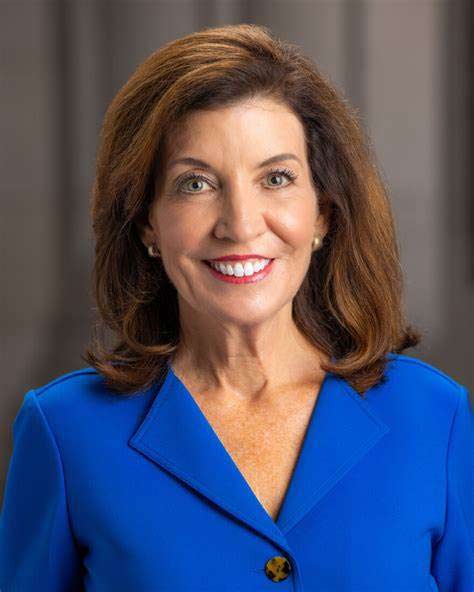
It’s expected that Gov. Kathy Hochul will sign the bill into law. On Friday, she posted on X celebrating the bill’s passage.
The bill could fundamentally change how children use social media in the state.
The Stop Addictive Feeds Exploitation (SAFE) for Kids act will prohibit social media platforms like TikTok and Instagram from serving content to users under the age of 18 based on recommendation algorithms, meaning that, instead, social media companies will have to provide reverse-chronological feeds for child users.
The legislation describes algorithmic feeds as “addictive” and says they negatively affect children’s mental health.
The New York legislation defines an “addictive feed” as one that recommends, selects or prioritizes media based on information associated with a user or their device. It would compel the state’s attorney general to disseminate rules for enforcement. A company found in violation would have 30 days to correct the issue or face remedies of up to $5,000 per user under the age of 18.
On Monday, the bill was amended to remove provisions that would have banned platforms from sending notifications to children between midnight and 6 a.m.
Legislation related to restricting social media use for children has been a popular in both state and federal venues. A California bill that passed the state Senate in May is very similar to the New York bill, while at the federal level, the Kids Online Safety Act would open the door to holding social media companies liable for recommending harmful content to children.
The bill could face challenges if it is signed into law.
NetChoice, a trade group that represents major tech and social media companies like Google, Meta and TikTok, has challenged multiple state laws in the past two years claiming violations of the First Amendment. NetChoice was granted a preliminary injunction in Ohio and Arkansas and is awaiting judgment in California. Many of the recent legislative efforts to regulate social media have focused on children.
“If you can frame something as being about protecting kids, it automatically has more political weight behind it,” said Evan Greer, the director of nonprofit digital rights advocacy group Fight for the Future.
Some of the New York bill’s backers include a coalition of parents who have protested against Meta during congressional hearings and outside the company’s office. Some of the parents have children who died by suicide after the parents say they viewed harmful content on social media. Julie Scelfo, a former New York Times journalist, created the group Mothers Against Media Addiction (MAMA) and has advocated for the New York bill.
“We’re in the middle of a national emergency in youth mental health and it’s abundantly clear that one major contributing source of that is social media and its addictive algorithms,” Scelfo said. “It’s not social media in and of itself, but it’s the addictive design that is contributing to children’s emotions being exploited for profit.”
Many proponents and detractors of these bills agree that tech platforms have harmful effects on children, but there isn’t full agreement on how to address the issue.
The New York bill was introduced by Democrat Andrew Gournardes. It has had bipartisan support in the New York Legislature from more than two dozen state senators. Both Democratic and Republican-led states and coalitions have pushed for similar legislation.
The bills aren’t universally loved, though.
Greer and other civil liberties advocates have argued that such laws would trample on the rights of companies and users, when “strong privacy and antitrust legislation” could be considered, instead.
“The courts have actually been very clear that we can regulate the commercial surveillance practices companies engage in, we can regulate specifically harmful business practices like autoplay and infinite scroll,” Greer said. “What we can’t do is put the government in charge of what young people can and can’t see online. That’s when it becomes about content and that’s when you run into the First Amendment.”
Greer also said that commercial age-verification methods, which would likely be required to enforce the law, further threaten the privacy of social media users and could pose a danger to civil liberties and anonymity online.
“When one state passes a law that incentivizes companies to move in this direction of engaging in invasive age verification, which is incompatible with anonymity, that actually creates real human rights concerns globally,” Greer said. “There’s broad consensus among human rights experts that the ability to speak out and use the internet privately and anonymously is a fundamental human right that needs to be protected, because it’s so essential for the most vulnerable and marginalized people on Earth.”
This article was originally published on NBCNews.com