

Today, Black people make up 12% of the US population, but over 30% of deaths from COVID. Patrice Peck, founder of the newsletter Coronavirus for Black Folks, reported in The Atlantic, end of December, “More than 50,000 Black Americans were dead of COVID-19, according to data from the COVID Racial Data Tracker, a collaboration between the COVID Tracking Project at The Atlantic and the Boston University Center for Antiracist Research. (And even that number is likely an undercount: We don’t know the race or ethnicity of roughly 20,000 of the 319,000 Americans whose lives have been claimed by COVID-19.)” As of yesterday, March 10 the count of total COVID-19 deaths in America is at 541,870.
A 2019 Ebony Magazine noted “In 1953, Ebony magazine reported there were 3,000 black-owned funeral parlors across the country. Today, there are about 1,200.
Maria K. Sealy and Renaye Brown Cuyler of Sealy-Cuyler Funeral Home Frank R. Bell Funeral Home
Frances Bell Henry, CEOLLC; Joan P. Gilbert, Directress,
Lewis Funeral Service
Thursday, March 11, President Biden delivered his first primetime address to the nation, marking the one-year anniversary of the COVID-19 pandemic, as declared by the World Health Organization (WHO).
We are a nation of observances, and since 2008, March 11 has been designated by the U.S. Congress as National Funeral Director and Morticians Recognition Day. Funeral directors are essential. Many people outside of the profession are unaware of the many ways funeral professionals devote themselves to others.
Everyday can be considered by families dealing with Covid-19 related bereavement as an anniversary for memorialization of a departed.
Here at Our Time Press we think it is a good day to acknowledge the essential work of funeral professionals and to thank the several funeral homes — most run by women — who have supported us personally and professionally since the paper’s inception.
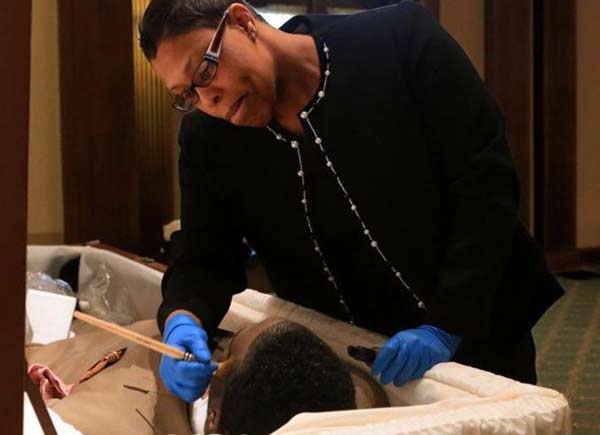
Funeral Homes are not just where you go as a final step or a beginning of the arrangement process. Funeral directors are, indeed, for the living, too. After the service is over, they provide guidance on estate documents, social security and memorial products. And throughout the process, they are counselors, social workers, educators, community comforters and finance specialists. They are listeners, event planners, caretakers of wishes and memories. They are guides through the toughest times, and throughout 2020 when COVID-19 took hold up to the present, their jobs have been especially grueling and stressful.
Indeed, they also support the community in many ways. We salute them.