
Fern Gillespie
This summer was a season of loss in New York City communications. Between July and August, three Black women who were media power players died. Diana King, Flo Anthony, and Pauline Barfield were trailblazers in their fields. Each of these women used their skills and knowledge to create communications opportunities that were seen and heard by millions. Diana King’s upbeat on-air personality style is still duplicated by Black women radio personalities. Flo Anthony took her communications skills and contacts and became America’s first famous Black gossip reporter. Pauline Barfield broke barriers and became a leading nonprofit and government public relations specialist in New York. Our Time Press salutes these remarkable women.
Diana King “Miss Thang”
Diana King, known to millions of New York City radio listeners as “Miss Thang Diana King,” on WBLS-FM and KISS-FM, died in July. During a career that spanned over 40 years, the multi-talented Bronx broadcaster was a voice-over artist, columnist, actress, and beauty consultant whose on-air studio style ranged from spinning R&B to hip-hop to talk to gospel.
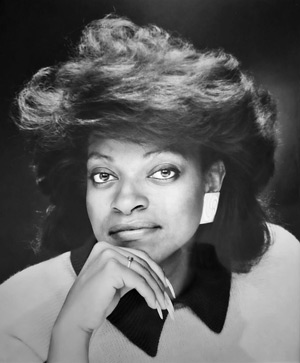
Diana’s first New York City radio job is part of radio folklore. In 1984, while a student at Northeastern, she approached legendary Frankie Crocker on the WBLS elevator with a tape of her broadcast style. It was an actual elevator pitch. Crocker was impressed and hired her as his personal WBLS-FM sub-host. For many years, her smooth, upbeat voice was heard on America’s #1 radio station, filling in for Crocker’s famous #1 evening shift and filling in for WBLS-FM’s other personalities on weekends. She became renowned as Frankie Crocker’s mentee.
In 1979, Diana began her radio career while she was a communications major at Northeastern University in Boston. During college, she was a star on Boston’s popular WILD and WCAS radio, spinning songs from R&B to gospel. In her bestseller “Wendy’s Got the Heat,” Northeastern University grad Wendy William talks about Diana King, her college classmate and colleague, as an inspiration to her early career in broadcasting. Wendy even tapped Diana to appear in the acclaimed Lifetime documentary “Wendy Williams: What a Mess.”
In the late 1980s, Diana took a bold step and spent two years as an actor touring throughout the U.S. and Europe in Vy Higginsen’s Off-Broadway hit “Mama, I Want to Sing.” She co-starred as the narrator of the theatrical gospel musical telling the tale about family and fame. Later, she landed a spot at 98.7 Kiss FM and even created the station’s first gospel program, “Kiss Inspirations.” Other stations included Jammin’ 105, WMCA-AM and WWRL-AM. Through radio, Diana was a fixture on the club scene, emceeing and hosting live broadcasts from New York’s hottest spots, including venues spanning Madison Square Garden to Broadway stages.
The beauty industry has always fascinated Diana. While balancing her radio career in the 1990s, she received national recognition as a spokes model for Ashley Stewart, a nationwide fashion boutique with the full-figured woman. During that era, she was also a columnist for Black Elegance magazine’s spin-off publication Belle, where she interviewed top women celebrities on beauty and style.For almost 20 years, she was a New York State licensed esthetician and specialized in facials and skin therapy.
Dr. Bob Lee, the community broadcaster and on-air talent at WBLS, was good friends with Diana. “People used to come on-air with newspapers, but Diana came in with no newspapers but knowledge, prepared to go on the air,” he said. “She was smooth. She was intelligent and people loved it.” Her upbeat, fun, smart style inspired a generation of Black women broadcasters on urban radio.
When she died, Diana was the voice of “The Studio 54 Show” on Sirius Radio. The disco that Frankie Crocker made famous.
Pauline Barfield
Pauline Barfield, Founder and Chairman of Barfield Public Relations, was an influencer before the word was popularized on social media. Barfield, who died in August, was a pioneering communications leader with more than four decades of experience shaping public relations, community engagement, and media strategies across New York City. A Brooklyn College communications graduate, she began her career as an associate producer at NBC radio and television.
By the early 1980s, she switched careers and became one of the first Black women account executives at a major New York City public relations agency. In 1989, she launched Barfield Public Relations, Inc., a full-service public relations, advertising/marketing, media buying, and communications firm.
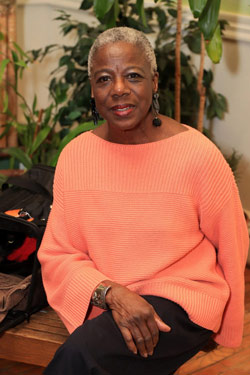
Barfield Public Relations, based in Brooklyn, has garnered a reputation as one of the most influential Black women-owned public relations agencies in New York City. Her vision and integrity have guided the agency’s growth to a trusted partner for city agencies, nonprofits, and corporate clients. Her firm primarily serves non-profits, pharmaceutical companies, city/state government agencies, educational institutions, and arts and culture organizations.
An outspoken advocate for minority businesses becoming certified to bid on NYC and NY State government contracts, she had M/WBE certifications with Empire State Development Corporation, New York City Small Business Services, and Metropolitan Transportation Authority.
Barfield Public Relations’ corporate clients have included McDonald’s, Verizon, Pfizer, Aaron Davis Hall, CUNY, New York State Independent Living Council, 100 Black Men of America 100 Black Men of America, US Census, New York Minority Business Development Agency, NYC Health + Hospitals, and The Astor Home for Children.
She has been profiled in Crain’s, The Daily News, Newsday, Westchester County Press, Black Enterprise, and she is the recipient of numerous awards including the History Maker award from the Brooklyn Borough President and The Media Communications award from 4W Circle of Arts and Enterprise.
“I think as a Black woman, she had a perspective on how PR should be done and could be done in a different way,” said Barfield’s son Jameel Barfield, Managing Director of Barfield Public Relations. “How you can be more integral with community organizations. I think her impact was very integral in bringing a lot of people together. The clients that she had were from all parts of New York City. All different races, different backgrounds, and different religions. I think she was her impact was in bringing a lot of people together.”
Flo Anthony
The entertainment and sports world lost a pioneering voice with the death of journalist Flo Anthony in August. For over 40 years, Anthony broke star-studded stories and broke racial barriers. Leaving a career as an entertainment and sports publicist in the 1980s, she got an office job at the New York Post’s sports section and used her knowledge and contacts to promote sports heroes.
This resulted in her becoming the paper’s first woman sports reporter. Switching to the New York Post’s famed entertainment section, “Page Six,” she became it’s first Black gossip columnist, and then Hollywood beckoned.
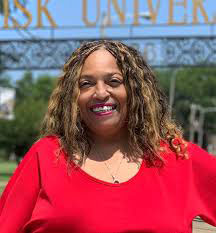
Then Hollywood beckoned, and she became the co-host on E! Entertainment Television’s “The Gossip Show.” TV’s top talk shows like Joan Rivers, Ricki Lake, Rolonda Watts, Geraldo Rivera, and Sally Jessy Raphael made her a regular. She was on call as an entertainment analyst for CNN, MSNBC, Fox News Channel, HLN, Inside Edition, and “Entertainment Tonight. The supermarket tabloid National Examiner tapped her as its first Black gossip columnist.
Anthony had blasted glass ceilings on Black journalists covering mainstream entertainment and inspired a generation of Black entertainment journalists to work in major media. Still, the Howard University graduate remained in the Black press. She was a regular contributor to TV One’s “Unsung,” “Unsung Hollywood,” and “Life After.”
Her Amsterdam News column “Go With the Flo” was syndicated to Black newspapers. She penned four novels about Black women heroines. She did gossip segments on Black radio stations.
Through her company, Dottie Media Group LLC, Anthony was the publisher and editor-in-chief of Black Noir magazine and publisher of the sports magazine Black Gladiator.
“What made Gladiator unique was its distinction of being completely published by Black staffers, fully encompassing and independently funded,” said Anthony’s longtime friend and colleague, award-winning journalist Vinette K. Pryce, the first and only editor of Gladiator Sports Magazine. “She contributed much more than gossip.
She was a publicist, accredited and represented at the Academy Awards; was an author of books and made a tremendous impact in sports reporting. I never really regarded Flo as a gossip; in my opinion she was a colleague and contributor to informing a niche market community.”
Several months before she died, Anthony married boxing champ Michael Spinks, her longtime boyfriend. Flo also co‑authored Michael “Jinx” Spinks: An Authorized Biography with her husband.