

By Nayaba Arinde
Editor-at-Large
“Tax the Rich,” some elected officials and NYC activists are calling for racial and economic justice. Too many New Yorkers say they face the dilemma of paying for food, rent, childcare, or medicine, or being forced to relocate from the city.
With New York City facing a $5 billion deficit, Mayor Zohran Mamdani, in agreement with fellow Democratic Socialists of America elected officials, has asked the state to increase taxes by 2% on New Yorkers earning over $1 million annually.
Mamdani has also proposed a possible property tax hike.
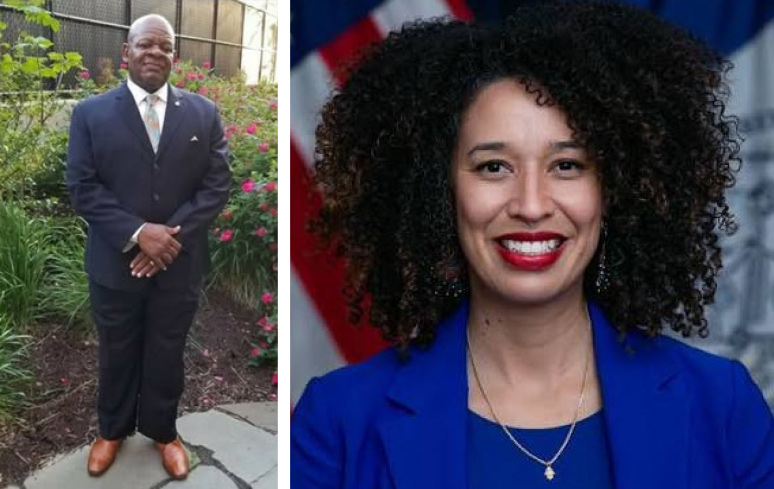
“It’s a disproportionate tax,” activist Brother Paul Muhammad told Our Time Press. “Black, oppressed, and poor people pay taxes. Rich people pay tax lawyers and tax accountants.”
Gov. Kathy Hochul has reiterated her opposition to taxing millionaires and billionaires. “I’m going to be smart about this budget and care about affordability,” she declared. “New Yorkers can’t pay anymore. We have to cut their cost of living. Job number one in this budget.”
“The wealthiest New Yorkers [should] give just a little bit more, so that we can cover the basic needs, and keep the city operating,” said Brooklyn City Councilmember Sandy Nurse.
Declaring the need for financial accountability and equitable contributions as opposed to continued harsh economic austerity measures, Nurse continued, “The cost of living is extremely high and our wages are extremely low, and we need those who can–to kick in a little bit more, so that everybody can enjoy life, everybody can make their basic needs, and ultimately that helps the business community.
It helps our state economy. So, we really need to see some action here at the state level. I’m hoping that the governor supports a proposal to tax the rich, and the Fair Share Act.”
Comptroller Mark Levine is projecting a NYC $2.2 billion gap for Fiscal Year 2026, and a much larger $10.4 billion gap for FY2027. Mamdani has estimated a $12 billion gap over two years, prompting proposals for tax hikes and potential service reductions.
If the state does not agree to a tax increase on wealthy earners to tackle the $5.4 billion city budget gap, Mamdani has proposed a “last resort” 9.5% property tax increase in the preliminary FY 2027 $127 billion budget. Hochul has refused to consider the plan, citing her affordability agenda instead.
With incomes static, or even worse, declining, opponents, fixed-income, and property and homeowners decry the property tax proposal, stating that it could disproportionately affect Black middle-class property owners. Property tax critics add that homeownership is how many Black middle-class families have built their relative wealth.
Hochl constantly refers to her affordability agenda.
“No New York senior should lose their home because they can no longer afford their property taxes,” said Hochul. “We are working to make New York more affordable for our seniors on fixed incomes and empowering them to age in place, at home, in the communities they know and love.”
Hochul’s affordability agenda also includes a Middle-Class Tax Cut for about 8.3 million New Yorkers, bringing middle-class taxes to their lowest levels in 70 years.
With a Tale of Two Cities narrative, to balance the obvious economic inequality, Nurse is supporting resolution 0240-2026, requesting that the state enact legislation requiring the wealthiest in the city to pay their fair share to support working-class New Yorkers.
She suggests that even minimally raising taxes on millionaires and large corporations can invest with noticeable results in public infrastructure and help fund city services like housing, transit, healthcare, and schools. Last year, Nurse sponsored legislation to create more affordable housing by targeting newly constructed city-funded units for very low-income households.
Representing District 37: Cypress Hills, Bushwick, City Line, Ocean Hill, regarding the property tax hike speaking with Brooklyn News 12 Nurse said, “Certainly, we don’t want to balance the budget on the backs of homeowners, particularly in districts like mine in the outer boroughs, Black communities, Latino communities that have worked really really hard to secure the American dream of a home.
But the reality is, we are facing a tight budget. I am not in favor of raising the property tax; I am in favor of raising the taxes a little bit more on the wealthiest New Yorkers. We are a state that is home to over 100 billionaires. They can afford to peel off a little bit to help us all out.”
If Hochul says no, Nurse replied, “We’re fortunate enough to have a Mayor who is thinking very thoughtfully about this, as opposed to the previous administration which just did broad cuts. So hopefully, between the Council, the administration, and the state, we can look for ways to generate revenue. We can look for effective cost savings that don’t hurt the people who need it the most.
We have a strong social services network. We need to make sure that our services are there to protect the most vulnerable New Yorkers, and so we’re going to be having that conversation over the next few months about what we are going to do. I’m optimistic that with the leadership we have across. the board, across these institutions, that we will come to some kind of agreement, but as of right now, we’re just starting the conversation.”
Community activist Muhammad told the paper, “The Black Community needs a Black Prioritized Agenda. Black people are barely hanging on from the scourge of COVID, and landlords like me became unpaid adjunct shelters with non-paying tenants. Now you’re going to tax us less than five years later, and there is a disproportionate slide rule when it comes to the Black community.”
The East New Yorker continued. “The tax laws proportionately have the Black community suffering more when it comes to tax increases proportional to our wealth–$700–800,000, that’s our community, $2.3 million, that’s Park Slope. The tax laws would hit us disproportionately, causing hardship. A property tax increase would further destabilize generational wealth and homeownership in the Black community.”
As for taxing the rich, Muhammad suggested “Tax by zip code,” he explained that lawmakers “should eliminate those large extended tax abatements for the developers. Stop giving 20 years tax-free. They are not paying their fair share, and the burden is falling on us. They should change the current tax structure when it comes down to taxing certain zip codes that mainly holds Black and brown. Taxes in Park Slope are different from taxes in East New York.”
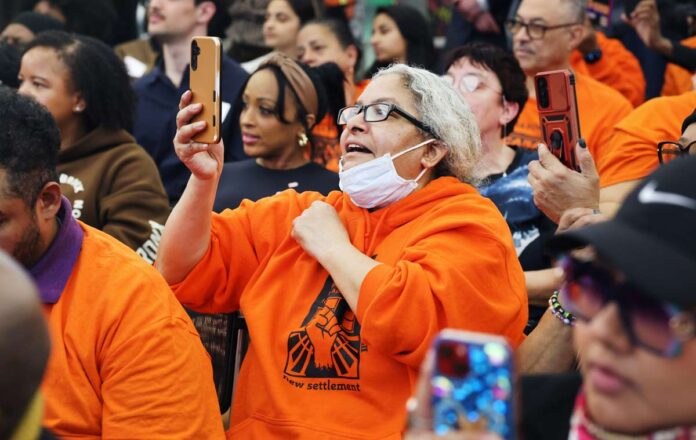
At a Tax the Rich rally, Queens District 36 Assemblywoman Diana Moreno declared, “I am sick and tired of the lies of hearing that it is the wealthy that are leaving this great city when we tax them, because we did in 2021, and guess what, we have more millionaires now than we did then. Who is leaving the City? It is working New Yorkers, specifically working parents with young children.”