OTP Interview with Professor John Henrik Clarke
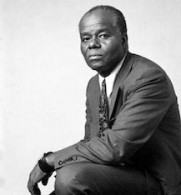
Dr. John Henrik Clarke was born in Union Springs, Alabama, and grew up in Columbus, Georgia. A professor emeritus in New York City, Dr. Clarke is recognized worldwide as a leading authority on African and African-American history. A prolific writer and lecturer, Dr. Clarke recently completed a book on the African slave trade, Critical Lessons in the Slave Trade and Slavery. He is currently working on a book entitled Pan-Africanism or Perish.
OTP: Dr. Clarke.
JHC: Yes sir.
OTP: Where are we now? Where are we going?
JHC: We are a loose nation searching for a nationality. The population of African people in the United States is far in excess of six small European nations. Where we are going? We have to go back as best we can to where slavery and colonialism took us from. And they took us from a concept of nation management and nation maintenance. We have been so long away from home we unfortunately have forgotten how we ruled states before the foreigners got there. We did very well. We produced a state that had no worth for jails because no one had gone to one; no worth for prostitution ‘cause no one had ever been one. We did not produce a state with a whole lot of nonsense about rugged individualism but we produced a collective state. You had to function in relationship with the total state. You didn’t do your thing unless it was in keeping with the maintenance of the whole people. It wasn’t a personal ego-personality type of thing that we have now. “I’ve got my rights. Mind your own business.” In a collective society, everybody’s business is everybody’s business. Your behavior determines, to some extent, the destiny of your nation and your group. Therefore, your group has a right and responsibility to preside over your behavior and you have a responsibility to make that behavior in a manner that does not endanger the group. This kind of collective society — giving to each according to his need — existed in Africa not only before Karl Marx, but also before Europe.
We have forgotten what kind of arrangement we had. If you struck your mother or your father, it was punishable by death because you struck at the whole society. You struck at the morality of the society itself. This is what we have lost. And we ‘ve lost something else: the relationship between men and women. In Africa, the woman was co-equal. In Europe, the woman was a vassal. To some extent, she still is. Under Islam, the woman was a vassal, and to some extent, she still is.
In the African matrilineal society, the lineage of the bloodline comes down through the female side. The Arabs who invaded East Africa and other parts of Africa reversed it to the patrilineal where everything comes down through the male side and the woman has no basic rights except that which the male is willing to grant her. In a matrilineal society, a woman has basic rights that no one has to grant her but you can’t take it away from her because the society is based on the concept that the lifegiver is equal to those she gave the life to. And that will remain … until you find a pregnant man. (Laughter)
OTP: In that case, my wife and I have a very African relationship because she is definitely co-equal, if not more so.
JHC: Yes, that’s right. You can see in our churches most of the males are pastors. Most of the deacons are males. But if the woman withdrew her support from our churches, you’d have to close the doors. Yet, she don’t shout about (what she does). She don’t rant about it. She just go ahead and do it. This is where our movement differs appreciably from white woman’s lib. The white woman has never had the co-equal status that the African woman has had.
OTP: What’s been the effect of racism. How has it changed the mental structure of black people?
JHC: It has changed the mental structure of the whole world because it presupposes that God, in his lack of mercy, has made one people better than the other. To make one people better than the other would be ungodly in the first place. If God is love, then God has no stepchildren to love. The impact of racism has changed our look at ourselves because basically racism was meant to make us look unfaithfully at ourselves, and to not treasure our institutions. People rise and fall on the basis of the makings of institutions. If the Africans and Arabs were ruling Spain from 711 to 1492, had they destroyed the Catholic church, they still would be ruling Spain to this day because that’s the institution that held them together. The institute that gave them the only hope was their church. This is why we are so depressed because the institutions of hope that would cause fulfillment amongst us has either been destroyed or laughed at. And when people laugh at your institutions and convince you that you have to adopt theirs — adopt their dress, adopt their taste in food — you are a prisoner to those people. And that sense of prisonership is what we have to deal with right now. To what extent our mind is wedded to the values or the lack of values of the TV set, the mass media, the movie and the concept of the hero. We never see ourselves as heroes and sometimes when we do it is a hero that has made a fortune as a clown or a boxer. And there is no lasting value in either one of those. ‘Cause clowns don’t build institutions, nor do boxers. Passing fantasies.
OTP: What about concepts of beauty? How we see ourselves?
JHC: Our concept of beauty is taken from Hollywood, which is anti-black. We don’t see ourselves as beautiful in most cases. Although we are naturally one of the most beautiful peoples out there, we don’t see it. We don’t get the point. Hollywood sets the standards. Who’s the one that just had a baby?
OTP: Madonna.
JHC: They think that’s beauty. She’s a lot of makeup and no morality. She’s just a tramp. But a millionaire. A millionaire tramp.
OTP: You speak to groups. You speak to individuals who have a level of consciousness that brings them to your lectures. But there are those — when you leave your house in Harlem — who you pass who just don’t have a racial consciousness that moves them towards empowerment of themselves and their people.
JHC: That’s because they have been programmed in thinking that hope is integrated into something belonging to someone else other than something that is distinctly their own.
Now, Jews integrate but they don’t destroy their institutions. They don’t close the synagogue. They don’t stop having special Jewish graveyards. They don’t stop having special Jewish holidays. Why can’t we understand that we can have things special to us and still comingle and integrate with others. But the one thing you never integrate at the ruin of your own pleasure is your institutions. This is what’s bothering me right now. The southern white Baptists now want to integrate with the black Baptist church. I say that would be the end of it. In the first place, most white southern Baptists can’t preach, their intentions are not that good and we make a different joyful noise unto the Lord than white people. When we say, “Lord Jesus, personal savior”, we may not mean the same thing as what they mean.
There has been a struggle to reclaim the African self. That struggle has been on the part of a minority of dedicated African-Americans who never gave up our African identity at no time during our stay here. We probably have, right now, after the Civil Rights movement — and this was very unfortunate — the most glaring time of giving up on Africa, saying we’re Americans. We are Americans. I’m not arguing that point. So are the Italians. So are the Germans. So are the Jews. We’re Americans with an historical geography of origins outside of the United States as all people, maybe except the indigenous Americans who came here so long ago, who have generations of people whose historical origins are right here but whose initial historical origins are somewhere in Asia. They moved into the Americas and began to multiply.
There are some indications that the Africans were here long before slavery. You don’t have to argue that point. (It is revealed in) Ivan Van Sertima’s work, Africans in Early America, a three-volume work on African exploration in the Americas. It’s been positively proven there were Africans here at least 800 years before the Christian era, and some of what we think of as the Indian medicine and Indian dance is patterned after Africans. The period in the 1500’s and 1600’s came after a thousand years of great independent states in West Africa. After the Moslem Africans lost control over Spain, they began to prey on the Africans further to the south. They destroyed the great independent states in West Africa, and subsequently set Africa up for the Western slave trade and the Arabs were in the slave trade before Islam and they are still in the slave trade.
OTP: Immigrants. When they come here, they speak fondly of their homeland, they …
JHC: They speak fondly of their homeland because the concept of their homeland has never been washed out of their minds. We don’t speak fondly of ours because Tarzan has demeaned our homelands.
They generally don’t call us the immigrants. But we are immigrants against our will. Other immigrants who come to America generally come here with preconceived prejudice against us.
OTP: The most famous immigrants were the Pilgrims who are celebrated in elementary schools at Thanksgiving? What are your thoughts about this?
JHC: Thanksgiving was not about us. It wasn’t about the Indians either. It was about the salvation of a bunch of ne’er-do-wells called the Pilgrims. It’s not applicable to the people who were brought in for labor. I consider myself out of it. I make a special point of working on Thanksgiving Day. I have friends I go out with but I even make it plain to them. The standard reason for Thanksgiving doesn’t mean nothing to me.
If people do not know where they have been and what they have been they don’t know what they are. They don’t know where they going to have to go or where they still have to be. History is like a clock, it tells you your time of day. You look at a clock and it tells you it’s eight o’clock, you know the number of hours that has been before eight; you know the number of hours you’ve got after eight. You can now measure your time to see if you can get done a number of things you’ve got to get done. History serves the same purpose. It’s a compass that you locate yourself on the map of human geography, politically, culturally, financially.
OTP: People often speak about the worth of being tested by fire or tempered like steel.
JHC: This is, this is … a total misinterpretation of the Bible. Kind of a misuse of … We’re all in a test. With or without God, we’re in a test. You walk out in the street, we don’t know if we’re going to get across. It’s a test. Eat bread. You don’t know if it’s been polluted. Drink water, you don’t know whether it’s been polluted. So living is a test. But there are some tests we have identified as being more dangerous than others. All life is a test one way or the other.
OTP: Seems like Africans here in America have been tested more than most. Does that make us stronger?
JHC: Makes us stronger in some cases. Makes us more confused in other cases. Some of us say, “Lord knows how much I can bear”. I think you can assume that you can bear more than you have a right to bear. Some things you should throw off. You should not bear insults. You shouldn’t bear humiliations. You certainly shouldn’t bear hunger. Because whoever the Lord is, he’d give us a facility. He’s given you hands, legs and might so you use that facility to rise above the lowly status. Failing that, he gave you two good legs, just run like hell. (Laughter)
So I think many times we charge the Lord for things we can do ourselves. If only we realized how well we have been equipped. If you don’t like the situation, if you are afraid and can’t deal with it, nothing wrong with your legs, get out of there.
OTP: A lot of slaves did that.
JHC: A lot of slaves did that and some were successful. Some were not. I think that Jesus-dependency has taken over our minds, and too many of our institutions. But I think that you’re just as close to Jesus if you use the equipment he gave you other than to call on him to do for you what you can do for yourself.
OTP: God helps those who help themselves.
JHC: That’s right.
OTP: Last month, we interviewed Dr. Neil Tyson, the director of the Hayden Planetarium. We talked about ancient times, etc. He said: “People had no deductive way of thinking about the universe ’til methods of science were developed. It took a long time, the scientific method has only been around for about 400 years.”
JHC: That’s a scientist’s opinion. Let’s leave it in that area. He studied ancient man in their relationship to the universe long before he was literate. The African had opinions about the universe that eventually turned out to be true. I will accept his analysis if he says that the formal way of thinking about it … He’s talking about the improbable way of looking at (the universe) was not recognized ‘til men organized the procedures. But with no specific procedure, man arrived at sweeping conclusions about the universe that have proven to be true. So, accept his as a scientist speaking and addressing himself to the origin and development of his particular discipline. But man’s attitude towards the universe and his opinion of the universe predates the scientific probe of the universe.
OTP: Also about the Pyramids. In terms of their alignment …
JHC: You look at the Pyramids. They’re not one fraction of an inch off in terms of their alignment. They were built without a bonding agent. The weight is balanced in such a way. Man’s most intelligent age may have gotten lost in history. I have gone up in the Pyramids and the stones are so close together you can’t force a playing card between them and (they are) in perfect alignment. So those people must have had some hydraulics or something. You take 20 men, put them around a big stone, their legs would get in the way. Even if they could lift it, 20 pairs of legs hitting against each other would throw it off balance. And they would not have it in exact alignment. Not even a fraction of an inch off. What we might have been dealing with here — with the building of the Pyramids — is an age that got lost. Man had to learn again what they previously had known.
OTP: Are the Pyramids aligned with the stars? Or no?
JHC: Most of the Pyramids were observatories in perfect alignment. Some Pyramids were aligned so that the sun would hit them at a certain time of the year. And yet, it could rain all year, and not a drop of rain could get inside. No one covered the hole. So that took some high intelligence to line a thing up so that the exact time of year when the sun was in the exact position, it would light up the inside of that crypt.
OTP: The Egyptians invented the calendar…
JHC: There were sun calendars, water calendars. But the first recognized calendar that we know of came from that period and those people. It could have come from the south because the people who populated Egypt did not come from the north; they came from the south. This has been proven to the point that you don’t have to argue about it. John Jackson’s work, “The Ethiopian Origins of Civilization”. Chancellor Williams’ second chapter of “The Destruction of Black Civilization”. You don’t have to argue about this anymore. Even white writers wrote about the southern African origins of the people who became the Egyptians. There’s such a craving to make Egypt white or Asian, people don’t just even listen to you. When you explain why would anyone build anything as enduring as the Pyramids in Africa before they would build anything of that nature at home?
What example do you have of anything like the Pyramids outside of Africa? You have them in Mexico, but that can be traced to early African migration. So the African created mound culture. The difference between the Pyramids in Egypt and the ones in Mexico is there is nothing inside the Mexican Pyramids. In the African Pyramids, the whole inside is a burial chamber. So they were really gravesites to nobility.
OTP: What books would you recommend for folks who don’t know?
JHC: Peter Thompson’s “Mystery of the Pyramids”. Gardner’s book called “The Pyramids”. There’s no shortage of information about this. People don’t have to argue about it anymore.
OTP: What would be your suggested book list for people who would say, “I want to learn about African history, African culture but I don’t know where to start”. What would be your suggested reading list?
JHC: A small reading list. You need an overview to start. J.C. DeGraff Johnson’s “African Glory”. It’s been republished by the Black Classic Press in Baltimore. Joseph Harris’ work “The Africans and Their History” is a good introduction and a book I did for the Black Classic Press called “The African People in World History”. There’s no shortage of good information. Even John Hope Franklin, and his misguided self, gives us a kind of overview in an introduction to his book “… In Slavery”. Lerone Bennett has the same thing. I have a book called “The African: New Dimensions in World History”. In the back is a long reading list based on the lesson plans of my teaching. It’s the longest one I ‘ve ever published. I take the bibliographies from four courses and combine them.
Now, there is a good book dealing with the people in the South by Lusilla D. Houston published in 1927, a major black woman and historian. Of course, John Jackson says she patterns it too much after Baldwin’s work, “Prehistoric Nations”, but I think she did very well though.
OTP: What is your latest book about?
JHC: I just finished my last published book only a few weeks ago, “Critical Lessons in the Slave Trade and Slavery”, published by Native Son publishers in Virginia. “Pan-Africanism or Perish” is a program for the unity of African people throughout the world and my assumption is if we don’t unite, chances are we will go back into slavery.
OTP: This is the closing out of 1996. In three years, there is the Millennium. What about black folks?
JHC: I say if black people don’t unite and begin to support themselves, their communities and their families, they might as well begin to go out of business as a people. Nobody’s going to have any mercy. And nobody’s going to have any compunction about making slaves out of them. No more religion anymore. No more who’s a Moslem and who’s a Protestant. I have no faith in much organized religion because I think it’s by a bunch of hypocrites and practiced by a bunch of hypocrites. They don’t mean what they say because all of them are in the slave trade one way or the other.
OTP: The slave trade?
JHC: Oppression of people. The Arabs are deep in the slave trade right now. Mauritania, Sudan. We have different levels of slavery. We’ve got educational slavery. All the major religions of the world, even Christianity and Islam, are engaged in some form of servitude of people. I don’t look favorably on either one although I think properly practiced all religions are basically good. But what has been imposed on religion is not religion itself but the custom of those who have been converted to it. I think that the most atrocious of all of this is Islam. They were in the slave trade before Islam. The Arabs were natural slave traders. They were the people who were called on to conquer us, unfortunately.
OTP: You talk about Africans supporting each other and we were talking about how the paper is supported by advertisers. Some of our advertisers — small businesses — complain that black people will pass them by to go to the white store across the street.
JHC: That’s the mental training. That’s the heartbreak, but it’s true. It’s true. The ice is colder. The fire is hotter. The water is wetter. We’re in a world of propaganda. Some of it is all to effective.
OTP: What about the Civil Rights movement? Some say it set us back.
JHC: I’m one of the people who believes that our losses were greater than our gains. Because before the Civil Rights movement we had entrepreneurship in the black community. Right now, in Harlem, if I wanted to get a shoe repaired, I would have a hard time finding a black shoe repairman. On near about every third corner, you could find a decent black barber, decent black laundry, had restaurants in the neighborhood that were open 24 hours. The food was good at 3 o’clock in the morning as at 3 o’clock in the afternoon.
OTP: And we lost that.
JHC: We lost a lot of just basic community-ness. We used to have such reverence and respect for Seventh Avenue. We wouldn’t walk down Seventh Avenue on Saturday and Sunday without our coat on.
OTP: I have heard this before. It was like a real strolling …
JHC: It was a community custom. Ain’t got no money, you get your one pressed suit. You grabbed your lady and you would walk down Seventh Avenue just showing her off. Then go back. Sometimes she’d walk 15 blocks. They don’t make women like that anymore.
OTP: Well, I don’t know about that. My wife will walk ..
JHC: Fifteen blocks?
OTP: Fifteen blocks. Sure. She does that in one day.
JHC: Remember the old Dunbar apartments at 151st St? We would walk from there to 125th St. No qualms. No nothing. You could go in the movies for 20 cents. Get a banana split for …
OTP: You have any pictures of yourself then?
JHC: Not from that period. I have staid publicity stuff, but right now I can’t even locate that.
OTP: You did a project with Wesley Snipes and Danny Glover recently.
JHC: It’s an interview on my life and career. And Snipes’ company along with Danny Glover’s company did an adaptation of my short story, “The Boy Who Cries Black”. It’s been on HBO about five times. I wrote the story when I was 23 and I’m 81 now. It’s the story of a boy who gives a present to his teacher. He paints a picture of Christ resembling his father, and the black principal defends his right to do so. The white superintendent of schools fires him. St. Clair Bourne filmed it. Are you any relationship to Bill?
OTP: Yes. He’s my father and we filmed and interviewed you here many, many years ago. About 15 years ago.
JHC: I’ve known Bill — he probably wouldn’t acknowledge 50 years but I would. I remember when Bill went to Canada. I remember when he was in “Finnigan’s Rainbow” on Broadway. He was in two movies that I know about. We used to hang out at the Harlem Y. Bill was always smart. He had so much confidence in himself. It makes a world of difference.
OTP: He had some tapes by …
JHC: Leo Hansberry. I don’t know what he ever did with them.
OTP: Well, he had me make copies of them. He had me listen to them. He told me they would be good to listen to.
JHC: He was right. I’ve done several other things with Bill., three or four things over the years and I saw his work on Ida B. Wells.
OTP: When you mention that you made me remember a book store owner we interviewed, Richard B. Moore.
JHC: Yes. A good friend of mine. He passed long ago. He sold his collection to Barbados.
OTP: Are there any booksellers around like him?
JHC: Nahh. Not like him, not like Oscar Micheaux either, who had the store around the corner. That was a fine era – that postwar era. Bill never promised, never… I guess like myself I’m as much to blame as he is. Never doing no chronological book on it. We met people who later became famous. We met them personally eating cheap food at the Harlem Y. It was cheap and good and clean.
OTP: What about the whole issue of violence as it relates to our people in this society?
JHC: Violence among all people is based on dissatisfaction, frustration and crushed ambition and people who don’t know who to strike at and who to blame, and not willing to blame themselves.
OTP: What about the allegations of CIA involvement in the crack epidemic?
JHC: I really have not had time to read the documentation on it but it is something that I suspected and it really started during World War II. It was really part of mind control. It’s not unknown to most people. It’s just that most people don’t want to do nothing about it. It’s deliberate that crack and cocaine are threatening our community and physically.
OTP: How do we counteract it all?
JHC: We counteract it by getting closer to our children. By talking to them. Someone asked me the same question one time when I was out lecturing and I gave them a true answer I still believe in. Break all the TVs, burn all the Bibles. Maybe you’ll get their attention. People get overwhelmed with folklore as fact. Take the Exodus. The Exodus did not occur. It could not have occurred. Wasn’t necessary for it to occur. The Jews walked into Africa over a 16-mile land until they built the Suez Canal–that land is still there. Why would they have to leave by the sea. They didn’t come by the sea. Certain people think you are against their religion when you use common sense.
OTP: A number of teachers use Our Time Press in their classes. Teachers like Meredith Brown, for her Griot class and Mr. Barclift at the W.E. B. DuBois Institute at P.S. 81; use it for their creative writing classes. Miss Brown and Mr. Barclift and Frank Mickens of Boys & Girls High and Richard Greene of the Crown Heights Youth Collective are all exceptional people; they are good, strong examples of role models. Unfortunately, on the flip side, there are many more adults who are not. How can young people learn about their culture from people who are confused?
JHC: Educating a child won’t be difficult if you get through to the parent. You have to convince the adults that if a child is to learn his culture, he or she will have to see his mother and father reading about it, and explaining it to him. Then it gets a legitimacy it otherwise would never have. Until then, his learning is limited.
I came from a very poor background, a very loving home. My mother died when I was 7 or 8. My father was a sharecropper and he moved from Alabama to Columbus, Ga., hoping to make enough money to go back and buy land. My mother really held the family together. She was a perfect example of the kind of black woman I would love to see again. She ruled my father with an iron hand, yet she barely ever raised her voice above a whisper. She would say, “John, I suggest…”. She would congratulate him for having the wisdom of such an idea as though it was his in the first place. She never impinged on his manhood. The worst thing I would hear was “Behave yourself. Wait ‘til your father gets home”. I could pull all kinds of games on her. I couldn’t pull any games on my father.
I attended a Baptist church as a child and was an avid reader starting with the Bible. I taught the Junior Bible Class and Sunday School in Columbus, Georgia at age 10. The churches I attended included Friendship Baptist, Gethsemanee Baptist and Macedonia Baptist in Columbus. Here in New York, I attended Abyssinian to help out with the plays and the activities there. I don’t attend any particular church now. I don’t believe in denominations, nor do I believe in organized religion. But I was always active. Attending church is one thing, belonging is another. I believe in spirituality, which is out there. I believe in doing good for good’s sake. Service is the highest form of prayer as far as I am concerned.
Alright. I guess you have wrangled as much out of me as you can.
OTP: Thank you, very much.
JHC: (As he rises from the couch to show us to the door) Arthritis, prostate. Who doesn’t have prostate? I guess you can measure its impact by how many don’t have it. Really. If a disease prevails amongst certain people more than others don’t you think we need some specialists to find out why?
OTP: They say zinc is good for that.
JHC: I always include that zinc in my diet. But the cancer is contained. It is not spreading.
OTP: Good. Sir, thank you so much for this.
JHC: Get home safe.